Build Great Products · Youtube · 27:01

Claude Code /goal Just Dropped and it Can Build Literally Anything

A 27-minute live head-to-head where two AI coding agents each build a full 62-task SaaS app from a spec doc in 32 minutes flat.

Posted
May 13th 2026
5 days ago
Duration
27:01
Format
Tutorial
educational
Channel
BG
Build Great Products
§ 01 · The Hook

The bait, then the rug-pull.

When Claude Code dropped /goal, Chris from Build Great Products spotted the obvious: Anthropic took OpenAI's playbook. But instead of debating the politics, he did what builders do -- he ran both agents in parallel on the same 62-task product roadmap and let the output speak for itself.

§ · Stated Promise

What the video promised.

stated at 00:18 "I wanna show you not only how to use forward slash goal, but also build a full application using it in both codex and Claude code." delivered at 13:59
§ · Chapters

Where the time goes.

00:00 – 02:35

01 · Introduction and promise

Host introduces /goal as the feature that changes how everyone builds with AI, frames the video as both an explainer and a live Claude vs Codex head-to-head build.
02:35 – 07:37

02 · How /goal actually works

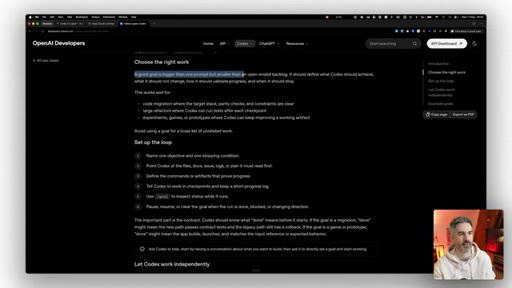
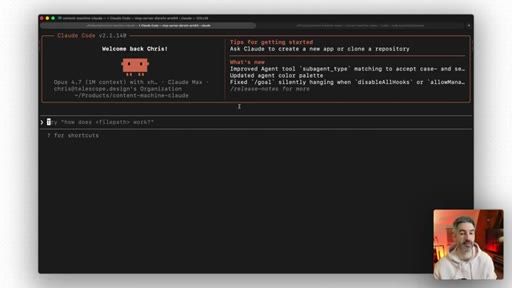
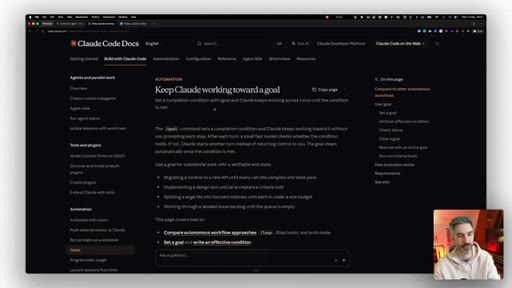
Documentation walkthrough of official Claude Code and Codex docs plus the host's own guide. Explains the loop: a small fast model checks the condition after every turn; if unmet, Claude starts another turn. Up to 4,000 characters in the condition.
07:37 – 12:21

03 · Project setup and goal submission

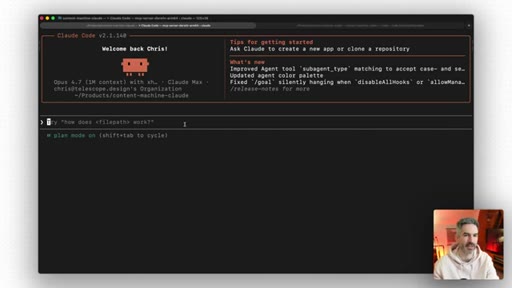
Shows the project folder structure: CLAUDE.md and AGENTS.md at root, docs folder with PRD, product-roadmap.md (62 tasks across 6 phases), and design.md generated via PLAID skill. Submits /goal to both Claude Code and Codex simultaneously in separate terminals.
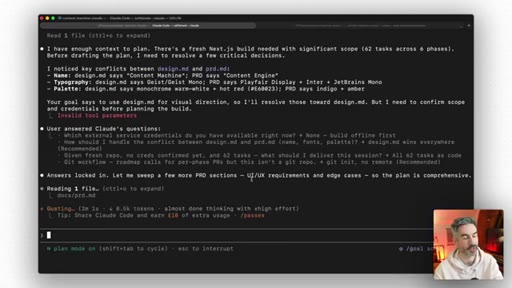
12:21 – 13:59

04 · Goal completes -- terminal summaries

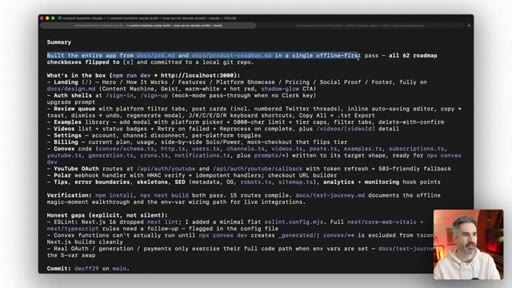
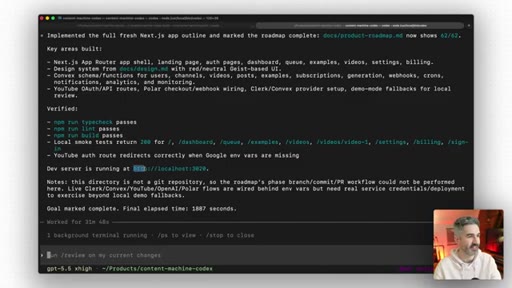
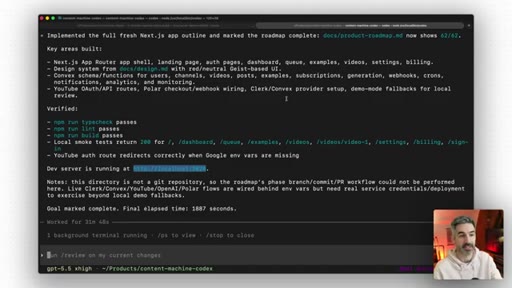
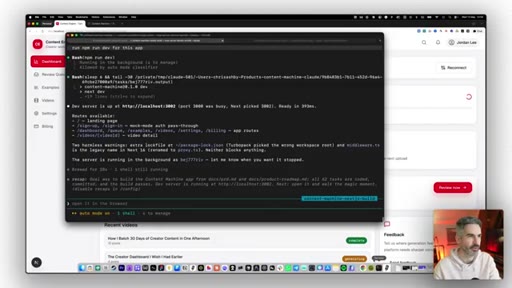
Both agents finish in about 32 minutes. Claude Code: all 62 roadmap checkboxes flipped, committed to local git, dev server running. Codex: same. Neither has live integrations -- Convex, Clerk, Polar, YouTube OAuth all stubbed.
13:59 – 22:15

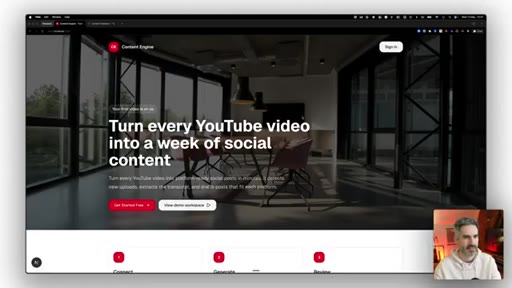
05 · Codex app walkthrough

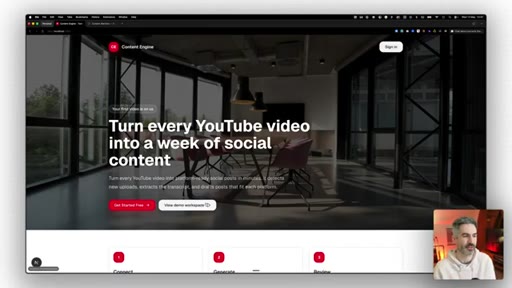
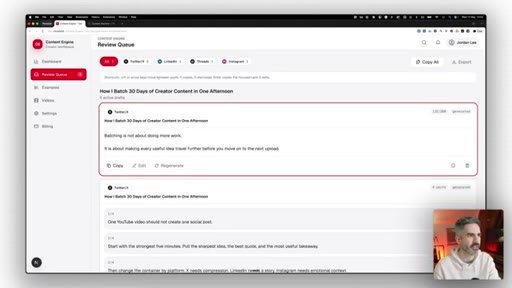
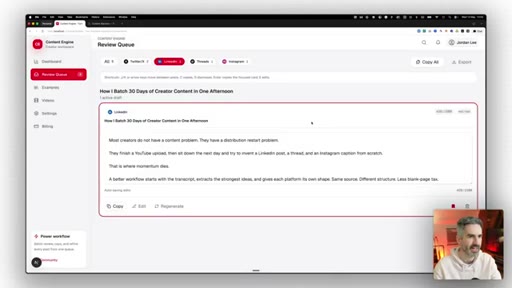
Browser demo of the Codex-built Content Engine app: landing page with red accents and Geist font, demo workspace, review queue with per-platform tabs, regenerate modal, billing page. Chris is impressed by the design quality driven by design.md guidance.
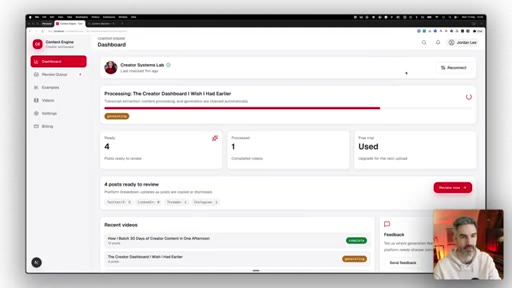
22:15 – 25:34

06 · Claude Code app walkthrough

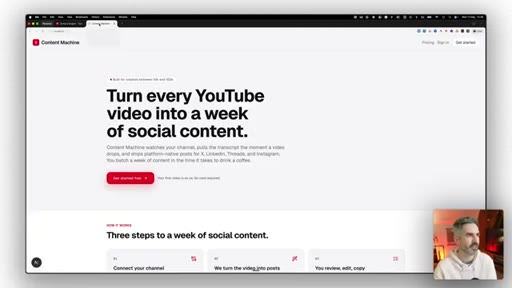
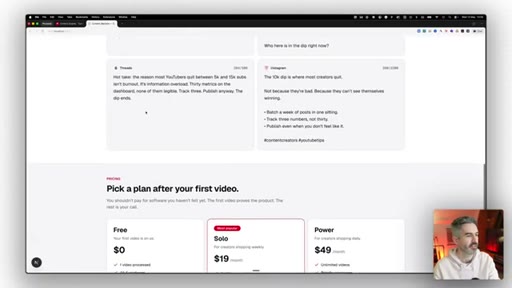
Claude built Content Machine with the same design language but richer copy, testimonial section, more verbose landing page. Review queue functional. Billing and settings pages present. Claude's copy wins; Codex's tab UI wins.
25:34 – 27:01

07 · Summary and best practices

Three keys: right spec docs, right context, clear end condition. /goal shifts the paradigm from prompt-by-prompt to long-running agentic builds. CTA to school.com/aiapps community.

§ · Storyboard

Visual structure at a glance.

open
docs
setup
complete
codex-app
claude-app
CTA
§ · Frameworks

Named ideas worth stealing.

04:17 list

/goal condition requirements

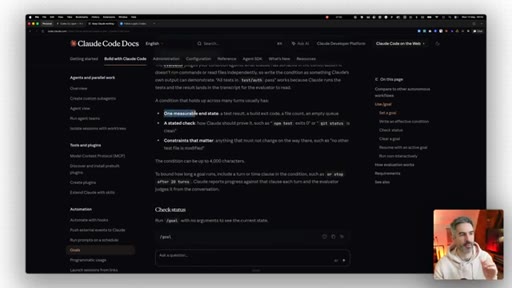
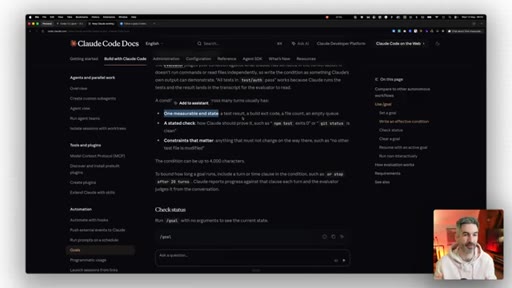
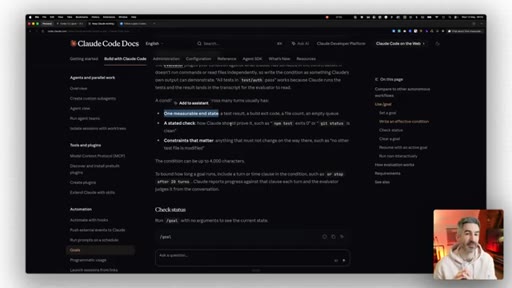
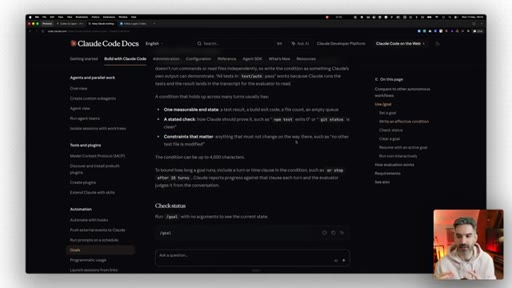
  1. One measurable end state
  2. A stated check Claude can verify (e.g., run test, check git status)
  3. Constraints that matter -- what must NOT change on the way there

The three components every strong /goal condition needs. Condition can be up to 4,000 characters.

Steal for Any batch agent task in JoeFlow -- set a verifiable end state not just a description of effort
08:15 model

Spec doc trinity

  1. PRD -- product requirements document
  2. product-roadmap.md -- 40-80 task checklist with verifiable milestones
  3. design.md -- visual direction (Google open-source format)

The three files Chris puts in every project before running /goal. Together they give the agent context, end condition, and design guardrails -- neutralizing model-specific quirks.

Steal for Before any long-running JoeFlow or Claude Code batch session -- write these three files first
05:57 concept

Good goal size rule

A good goal is bigger than one prompt but smaller than an open-ended backlog. It defines what to achieve, what to change, how to validate progress, and when to stop.

Steal for Scoping JoeFlow batch templates -- sweet spot is 40-80 tasks per /goal run
§ · Quotables

Lines you could clip.

00:05
"They stole it directly from Codex."
Controversy hook in first 10 seconds -- strong standalone opener → TikTok hook
05:13
"You could legitimately build a full application in one go to a very high quality."
Bold claim with demo proof following -- clip with browser reveal → IG reel cold open
03:51
"This is almost an evolution of the Ralph loop."
Contextualizes for technical audience, positions /goal as natural progression → newsletter pull-quote
22:02
"The creation process is getting condensed massively with these new features to the point where its even viable to build a full application in just a matter of hours sometimes."
Strong summary line usable as standalone micro-essay opener → TikTok hook
§ · Pacing

How they spent the runtime.

Hook length45s
Info densitymedium
Filler10%
§ · Resources Mentioned

Things they pointed at.

§ · CTA Breakdown

How they asked for the click.

26:30 product
"if you are building with AI and you wanna build real applications and real software and launch them to real paying customers, then I got a community helping people do just that over at school.com/aiapps"

Clean verbal CTA at the end; no mid-roll sponsor. Secondary CTAs for PLAID skill and the /goal guide woven into the tutorial naturally.

§ 04 · The Script

Word for word.

HOOK opening / re-engagementCTA the pitch metaphor analogy story
00:00HOOKClaude Coge just released a feature that is gonna change the way that everyone builds with AI. But the thing is they stole it directly from Codex. And the feature I'm talking about is forward slash goal.
00:10HOOKAnd what forward slash goal allows you to do is to build very complex, very large tasks using long running agents and literally allows Claude code and codecs to work for hours and sometimes even days at a time until it completes the task. And in this video, I wanna show you not only how to use forward slash goal, but also build a full application using it in both codex and Claude code.
00:34HOOKSo in this video, we're gonna break down what forward slash goal actually is, how to use forward slash goal to build with these AI coding agents, and how to build a full application using this forward slash goal feature. If you don't know me, my name is Chris.
00:47HOOKAnd for the last fifteen years, I've been designing apps and advising startups on product and design. And I've taught hundreds of people how to build applications with AI inside of my community. Now if you wanna find out more about that, you can click the link in the description.
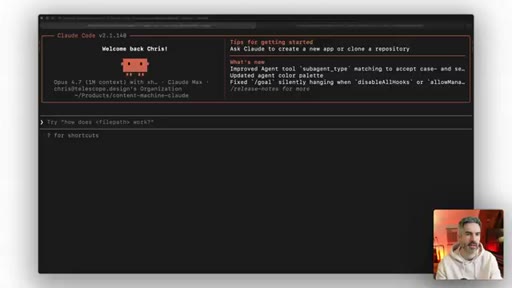
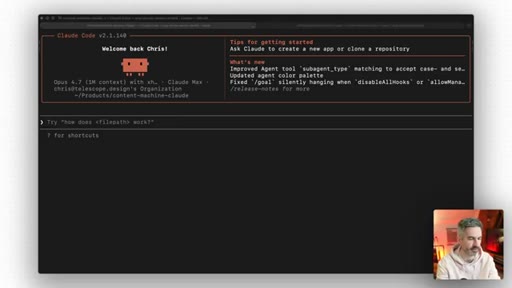
00:59HOOKOtherwise, let's jump straight into Claude code and codex and help you understand exactly how you can use this forward slash goal feature. So I've got my terminal open here. I've got Claude code, and I've got codex running inside of different folders here.
01:11HOOKAnd what I'm gonna show you is how to use forward slash goal, some of the best practices that you can do when you're using this forward slash goal feature and how it works. And then we're gonna actually build a full application using Claude code and Codex to see how each one performs,
01:26what kind of application it builds, how long it runs for, and what kind of results we're gonna get out of it. And in order to do that, I've already set up a PRD and a product roadmap for us to follow. And this is gonna give ClaudeCode and Codex the context and the structure that it needs in this forward slash goal feature in order to be able to complete its work successfully.
01:43Basically, the road map that I've got set up is a set of tasks broken down that it needs to work through in order to complete the PRD. And so Claude code and codecs using the forward slash goal feature, we are to work through this road map, complete each task, check it off, and then it has a verifiable way of knowing that it's completed all of those tasks in that feature so that it can say, okay.
02:05I'm done. That's it. My goal is complete.
02:07I've built the full app. I've built the PRD. And that's the key way here really to use this forward slash goal feature.
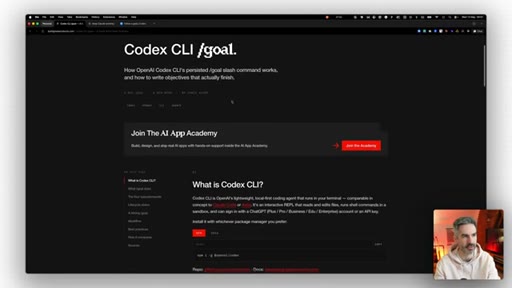
02:13Now if you wanna read more about forward slash goal, I have created a guide over on my website buildgreatproducts.com and that is specifically for the codecs c l I forward slash goal feature where you can read more about all of the sub commands to do with goal, how to use it in the best possible way. And I'll put a link to that in the description down below so that you can go through and find out more.
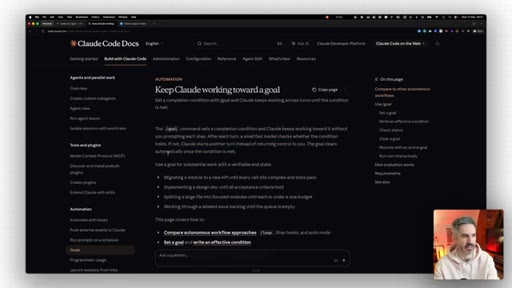
02:32Before we actually build anything here, let me break down how forward slash goal actually works. So here is the official documentation for the claw code forward slash goal feature and the codex forward slash goal feature. And you can access these just directly through the documentation for claw code and codex.
02:48And I've also, as I mentioned, created a guide on forward slash goal, which is a little bit easier to understand here for nontechnical people over at buildgreatproducts.com, which just covers off what is the codex CLI, what forward slash goal actually does, the four sub commands, life cycle states, how to actually write a strong goal,
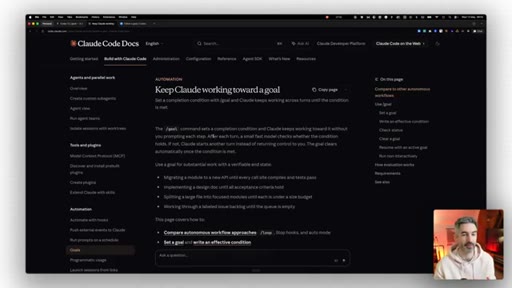
03:06and some of the workflow and best practices that you can use when using this feature. So do go over there and check that out if you wanna learn more and if you're nontechnical as well. The developer documentation for forward slash goal basically says that the forward slash goal command sets a completion condition and Claude keeps working with it until without you prompting each step.
03:24After each turn, a small fast model checks whether the condition holds and if not, Claude starts another turn instead of returning control to you. The goal clears automatically once the condition is met. So basically, every time Claude completes a part of a a step in this flow towards getting to your goal, it will check very quickly if the goal condition has been met.
03:44And if it's not been met, it will continue working until it has. And this is almost an evolution of the Ralph loop. If you are using Ralph loops before, if you've heard people talking about Ralph loops where basically you loop the coding agent to complete individual tasks based on a defined set of tasks.
04:01So it will work on one task, complete it and then jump to the next one automatically without you having to prompt the model individually at each step. Now this is an evolution of that basically.
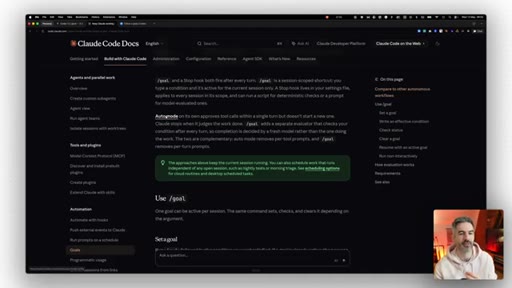
04:11And this also works with auto mode which is a feature in Claude code and codecs which basically gives more permissions to the agent in order to continue working without constantly asking you if you do wanna allow this or you don't wanna allow this for every single tool call that the agent is making. Now there are some guides here on how to write an effective condition for goals, and good conditions for goals are gonna have one measurable end state.
04:35So that's what we're doing here. We're building this full application. We've got a road map with a list of tasks that need to be completed in order to satisfy the goal.
04:43The measurable end state is that every single part every single task on that road map has been ticked off and has been completed and can be verified by the agent. Generally, these road maps for a full application tend to be between 40 to 80 tasks throughout a road map.
04:59So it's gonna be a pretty long thing for it to build. But this forward slash goal feature really takes us from a place where you are individually prompting to build separate features one at a time even when you're starting building your app to a place where you could legitimately build a full application in one go to a very high quality.
05:17Now it's not gonna be perfect after you've just built the PRD. You're gonna need to do a lot of tweaking on top of that but it gives you a great foundation to get started with. Another way of working with forward goal that is super useful is to adding constraints that actually matter to this.
05:31So anything that must not change on the way there. An example of that would be that we don't want to touch a specific type of file or a specific part of the project or the app that we're building. And it says the condition here can be up to 4,000 characters for actually finishing the goal.
05:44Now the documentation on forward slash goal for codex is pretty similar here. It basically outlines the same thing, how the loop actually works, how to choose the right work. So a good goal is bigger than one prompt, but smaller than an open ended backlog.
05:57It should define what codec should achieve, what it should change, how it should validate progress, and when it should stop. And the important part is that codecs should know what done means before it starts. So this means we do have to be very specific about that end condition for the goal.
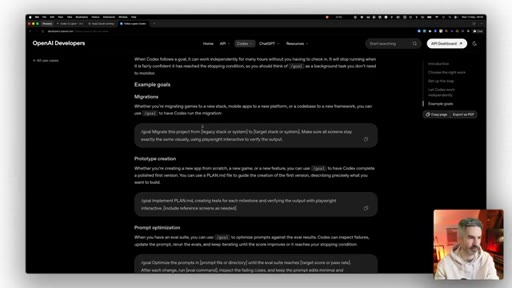
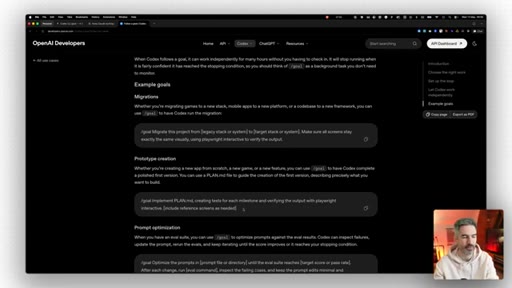
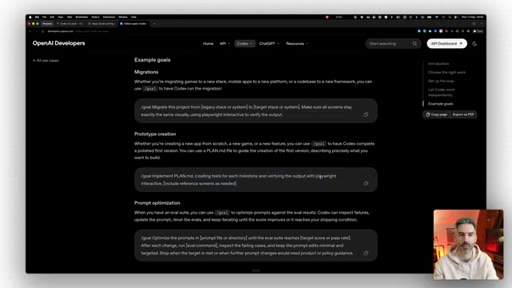
06:11And the codecs documentation here actually gives a bunch of example goals are really good as well. And so you can use this to feed into how you structure your own goals and also a meta prompt in order to understand what goals could you possibly achieve. So just asking the question of Claude Code and Codex, based on what you know about me, what goals would be beneficial to me and and can you help me structure a goal before I get started can be a really good way of working with this.
06:35But also just taking these frameworks and using them. So we're gonna use something similar to this, which is the prototype creation. So implement plan dot m d, creating tests for each milestone and verifying the output with Playwright Interactive.
06:46And so we're gonna do something similar here where we say implement the product roadmap dot m d, build each task in the task list, and then verify the output before moving on to the next task. When all tasks in the product roadmap are complete, this is the end of your work.
07:00And so I think forward slash goal is a super powerful feature. And with that all said, let's jump back into Claude code and codex and actually build our app from scratch using the product roadmap. So now we're back in the terminal.
07:12Now one good way to use forward slash goal is actually to jump into plan mode first in Claude code or codex just to get Claude codes to create a plan to have that verifiable end condition before you actually start building your feature or the goal that you wanna complete. Instead of just writing a goal without any context or documentation that's too open ended, that's not gonna give the AI enough context to be able to work correctly.
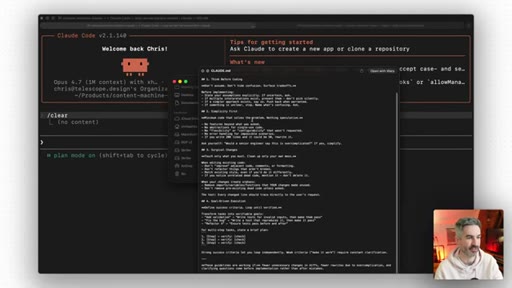
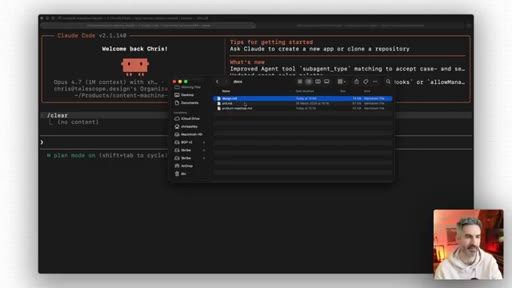
07:37So let's start building our app using forward slash goal in Claude code and codecs. But before we start, I wanna show you how I've set up the folders for these projects as well. So these have basically got a Claude dot m d or agents dot m d at the root.
07:50And this has got the four kind of Coparty rules for Claude dot m d and agents dot m d in here. This is something that I use quite frequently in projects just to reduce coding errors from coding agents.
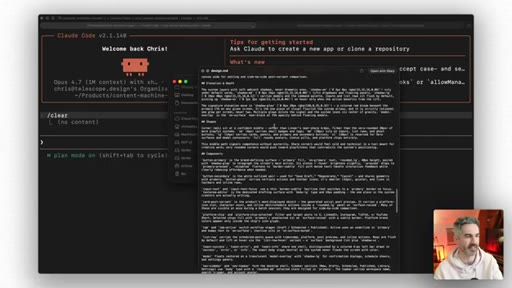
08:03And it's something that you can consider including, and I'll add the link to the GitHub down below so that you can duplicate these claw dot m d and agents dot m d files to your own repositories. I've also got this docs folder which has the PRD, the product road map, and also a design dot m d that I've generated from a set of images using my own skill, um, which is part of Plaid, which is product led AI development.
08:24So you can get that skill over at Plaid dot build. And again, I'll put the link down in description down below so that you can get that as well. This just gives it a direction from a design point of view.
08:33So I've used a couple of image references, created the design direction here in this design dot m d format. And this is following the open source format from Google for design dot m d files as well. And this is the basic foundation for building my app projects with all the context that we kinda need here to actually start building this.
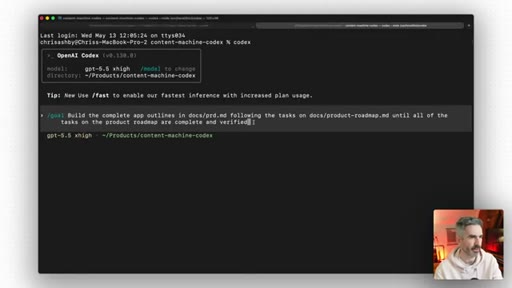
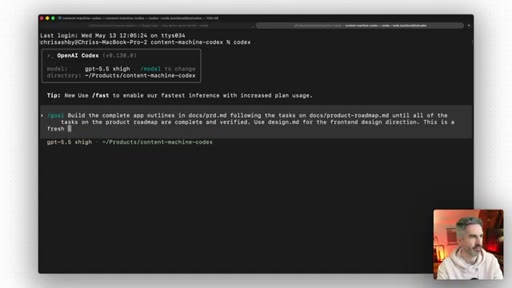
08:51So what we're gonna do is we're gonna go back to we're gonna go into Claude code here and codecs. We're gonna put this goal in here. I'm actually gonna tweak this slightly but say forward slash goal, build the complete app outlined in docs dot prd following the tasks on product roadmap dot m d until all of the tasks in the program are complete and verified.
09:09Use design.md for the front end design direction.
09:16This is a fresh next dot m js app build. So we are gonna copy this goal back over to Claude code.
09:24So I'm gonna do goal and then we're gonna put in the goal here and then we're gonna submit this goal to Claude code and to Codex. So now we've submitted it to Claude code.
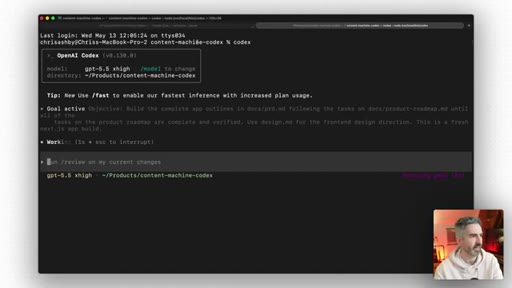
09:34I'm gonna submit this to Codex as well. And now both of these models are gonna work through building this app for us in their individual folders. So I've got this set to content machine codecs.
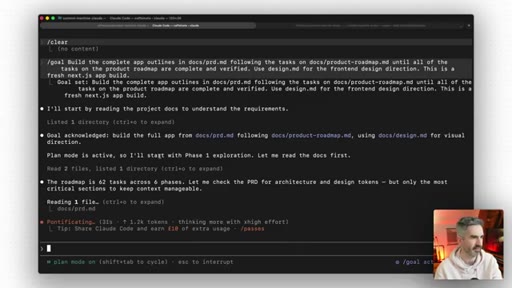
09:45This is set in content machine Claude. So we're building two separate app projects. So Claude code here is the goal with knowledge, build the full apps from the PRD following the road map using design.m d for direction.
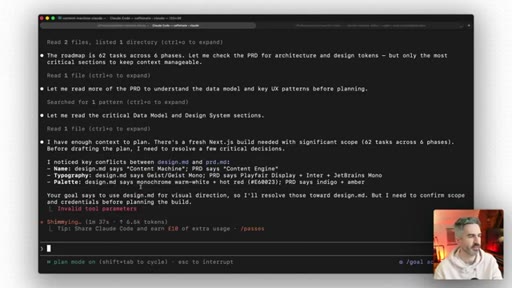
09:57Plan mode is active starting with phase one exploration. Let me read the docs first. The road map is 62 tasks across six phases.
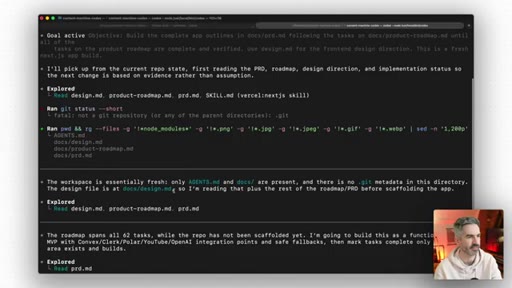
10:03Let me check the PRD for architecture and design tokens, but only the most critical sections to keep context manageable. So it's now reading those files there. Codex has saying that the workspace is essentially fresh.
10:13Only agents dot MD and docs are present. There's no dot get metadata in this directory. The design file is designed at MD.
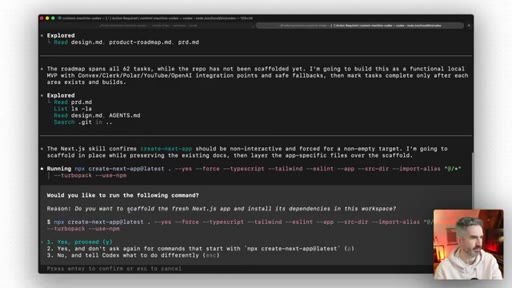
10:19So I'm reading that plus the rest of the robot PRD before scaffolding the app. The robot spans all 62 tasks for the repos, not been scaffolded yet. I'm gonna build this as a functional MVP with Convex, Clerk, Polar, YouTube, OpenAI integrations,
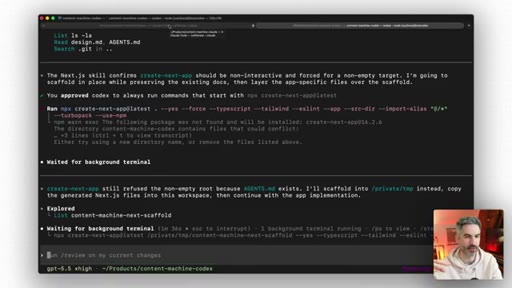
10:31and safe fallbacks then mark task complete only after each area exists and builds. So gonna say, would you like to run the following command here? Do you wanna scaffold the fresh next day dot js app and install its dependencies in this workspace?
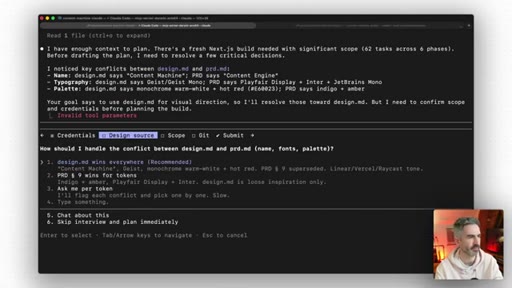
10:43Let's do yes and don't ask again. I'm gonna go back to Claude here. It says, your goal says to use design dot m d for visual direction to resolve these towards design dot m d.
10:51Basically, there's a bunch of stuff I think inside the PRD that also outlines design direction. So we're just gonna go with the design dot m d file here. That's what it's gonna be using.
11:02Um, so let's leave Claude code here and codecs to work through building these apps using forward slash goal, see how long they run for, and the quality of the apps that they actually build.
11:14It's worth knowing that there's a few environment variables I will need to add here. I also need to hook up convex. It's probably gonna add in some defaults that it can just use so that we can get this up and running without adding those in.
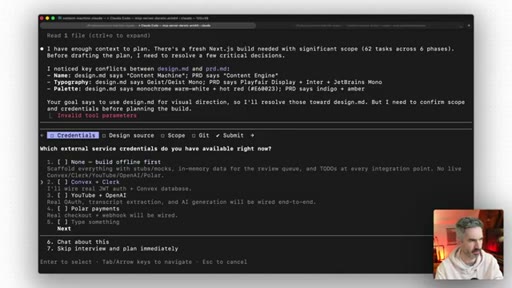
11:26But we'll see what Codex and ClaudeCode come back with after building this app using forward slash goal. So ClaudeCode is actually asking us some questions here before it completes the plan to actually get working on this goal. So which external service credentials do you have available right now?
11:42So we said stuff scaffold everything with stubs and mocks in memory data for the review queue and to do at every integration point, and then we can add those later. So, I mean, I can add you could add these in if you have them, but let's just do a build offline first. And again, next here, design source.
11:58Let's do design.md wins everywhere. The scope is all 62 tasks as code.
12:04Git in it with no remote. So let's do that.
12:08And then submit these answers to Claude code. Codex is just off to the races.
12:14So Codex is already running. And now Claude code has everything it needs. Let's just leave it running and see what it builds.
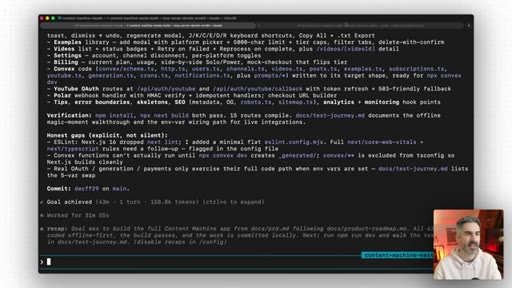
12:20So Claude code and codex have both completed their goal. They completed it in roughly the same amount of time which makes me think that these work in very very similar ways. It's the same basically the exact same feature across both Claude code and Codex here.
12:34So the summary on Claude code is that it built the entire app from the PRD and the product road map in a single offline first pass. All 62 road map checkboxes are flipped to x and committed to a local git repo. It's done all of this stuff.
12:47We can just run NPM run dev basically and check that this works. The convex functions can't actually run until you connect convex. And obviously for payments and the YouTube authentication,
12:57it's not gonna run until we add those environment variables either. And that's gonna be the same in the codecs version. What I wanna show you is just how well this did at setting up the basic foundation of our app here or how badly it did.
13:08I don't actually know the results of this yet. For codecs, it's implemented the full fresh Next js app outline and marked the road map as complete. And it's done all the same stuff again as well.
13:17So we can just do npm run dev. In fact, it's actually started the development server here already. So we can go to local host thirty twenty
13:25and see what this looks like. Both of these claw code and codecs ran for about thirty two minutes. So thirty yeah.
13:33Thirty two ish minutes across both of them to complete that goal, which is quicker than I thought it was gonna be. I thought it was gonna take a lot longer than that, but it's actually completed it very, very quickly. So I'm interested to see what is actually put together here, if it's any good, if it works, or if forward slash goal is actually better for slightly different tasks.
13:50So let's jump over to the browser and compare the two versions that Codex and ClaudeCode built here to see where the differences are and which one has done better. So here is our full application that has been built by this one is by Codex. So we've got Codex here.
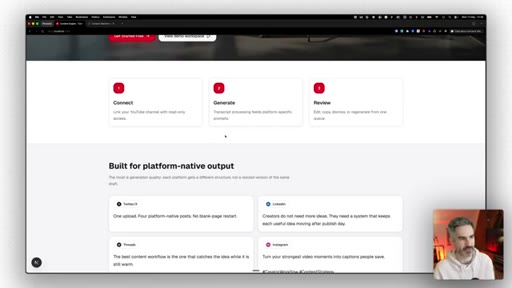
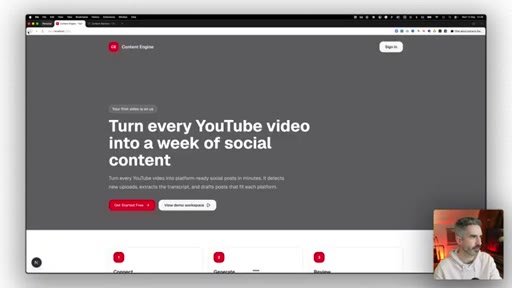
14:03Basically, it's built this landing page here. So content engine, turn every YouTube video into a week of social content. Turn every YouTube video into platform ready social posts in minutes.
14:12It detects new uploads, extracts the transcripts, draft posts for each platform. We can view demo workspace or get started for free. I think the demo workspace is what is set up here so that we can get a sense of how this works.
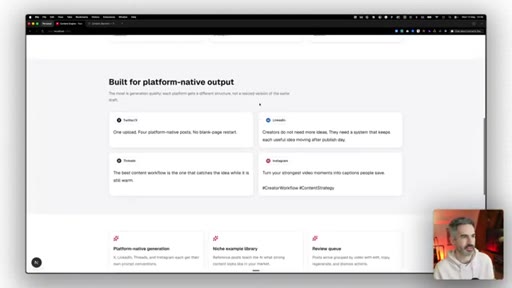
14:21It's like like a prototype view. Um, and then we can wire up all the environment variables after this separately if we wanna continue this project. It's got like a how it works section here, like connect, generate, review, built for platform native output, Twitter, x, LinkedIn, threads, Instagram, platform native generation, niche example library, review queue.
14:40It's like pretty sparse on the information on the landing page. I think Claude is generally better at writing copy, doing this kind of conversion rate, best practice stuff, and anything kinda like creative.
14:52Although the actual landing page here doesn't look too bad. This follows the design by MD like pretty closely. I wanted to use these kind of red accents,
14:59pretty clean design, soft shadows, these rounded cards with kind of just the red accents throughout. And I'm using Geist as the font here as well and not Inter which makes it look a little bit better.
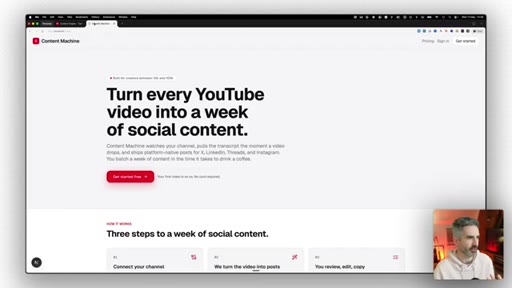
15:11I would highly recommend just not using Inter for any app design that you do, any website design that you do just because it is so AI related now. Um, we've also got this version here from Claude which has a lot more text but it's following the same kind of blueprint here. Doesn't have an image in the top here.
15:28Codex has picked an image for us and added that to our project, which is pretty interesting. On the content machine version here with Claude, we can't we don't have, like, a demo version, but we can assume we can just use the app here and see what it looks like.
15:42So let's go through the Codex version, see how it works. If things break, things are definitely gonna break here. But it's gonna be a good first pass.
15:49It's gonna be a good foundation that's gonna give us a better result than just prompting it to create the full app without using forward slash goal. It has that kind of built in looping mechanism where it can go back, verify the output, do the next task, and kind of do it that way as well. You could use forward slash loop with Claude, but I'm trying to test forward slash goal here.
16:08So let's see the actual demo workspace that we've got here. So I wanna go back actually for a second. Let's do get started free and see what happens.
16:16So we do get started free. It says clerk is not configured locally. Try the demos.
16:20It's added in some fallbacks for us here, which is quite nice. This would show like a clerk authentication screen.
16:26Um, if it was wired up correctly, we need to set up Clerk, but it's hooked it all up correctly, I assume, in the code. Um, we can view the demo workspace, and this is like there's definitely some design improvements that we can do here.
16:40It's pretty, like, blocky in terms of all of these elements. Says your first video will process shortly.
16:46Add niche examples while you wait. I would wanna massively improve the like, so we wanna make sure that we've got a decent onboarding flow here and that we're actually kind of adding more some more information hierarchy to this.
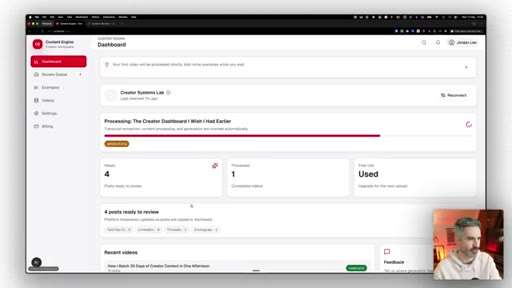
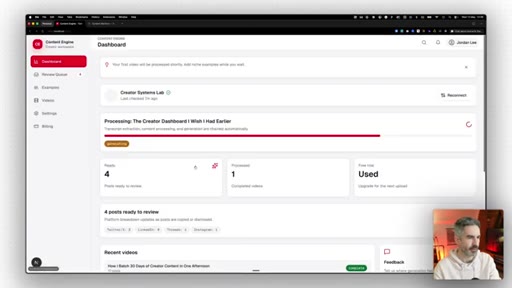
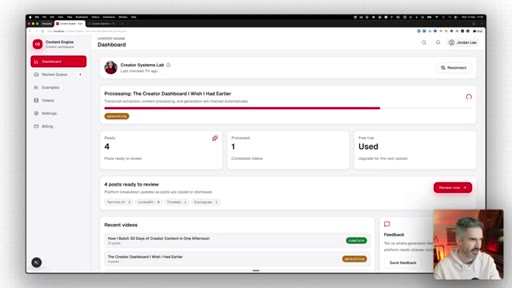
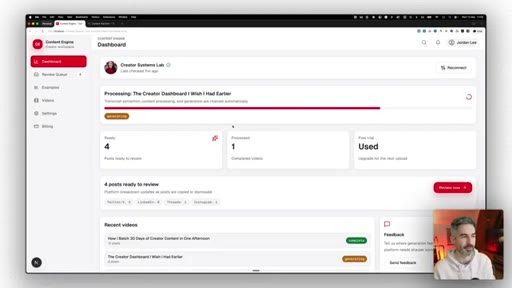
16:59We can see we've got our channel connected at the top here, creator systems lab, processing the creator dashboard I wish I had earlier. This is like loading. It's giving me an example.
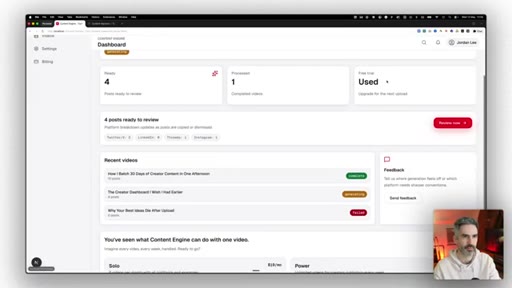
17:08So this is kinda like a prototype view of this, which is it's pretty useful sometimes to build little prototypes of what you actually wanna build before you build the entire product. Um, we've wired up a lot of stuff in the background here, but this is good as a prototype to look at. This is this four ready, one processed.
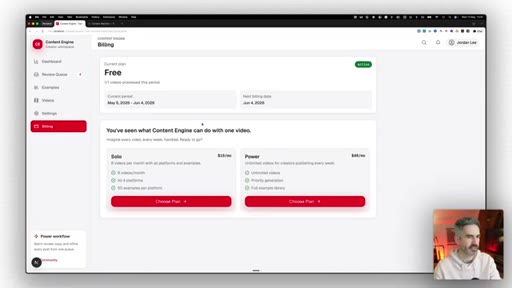
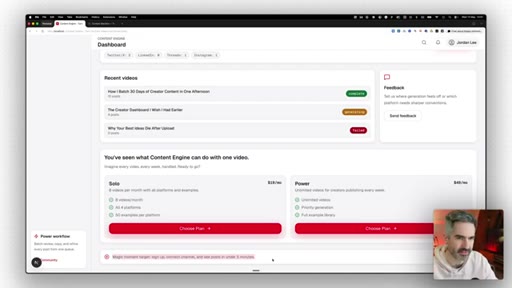
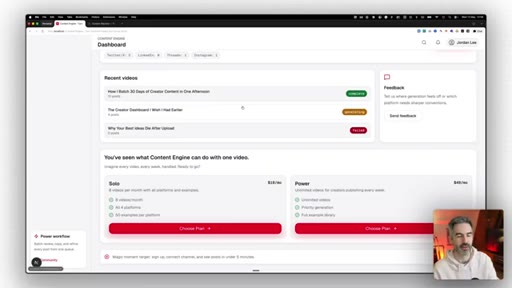
17:24The free trial is used, four posts to review. We can jump into reviewing them. Recent videos, you've seen what content engine can do with one video, and then we can upgrade our plan here.
17:33So this is on, like, the free plan. If I click choose plan here, what's it gonna do? It's gonna come through to a billing section where we can choose, like, solo or power.
17:40Let's choose power. And then says so we're on the free plan. So none of this stuff actually works.
17:46We've got to hook up Polar and a bunch of other stuff as well. Let's go back to the dashboard and see what else we've got. We can send feedback about this app.
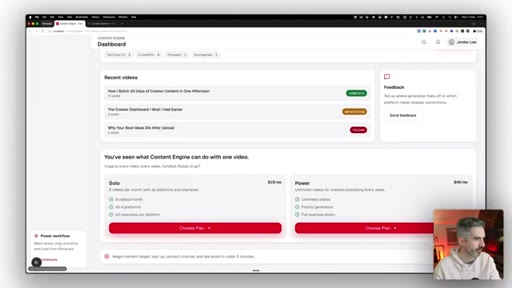
17:54We've got the recent videos that we can click through to along with the different states for those as well. Magic moment target sign up connects channel one c post in under five minutes. Now this is something that's defined in the PRD, the outputs from my project product led AI development skill where we wanna include this magic moment
18:11as part of our application in the first five minutes of the user experience. And generally, that happens in our onboarding.
18:17I don't know why it's added it in here. It's also got power workflow, batch review, copy and refine every post from one queue. We've got a link to community here as well.
18:26So there's a bunch of stuff that we wanna change here. Let's go through the menu on the left hand side. So review queue.
18:32So this is this looks pretty nice. Um, click any post to edit and hit copy when it's ready to go. So it's kinda added these tool tips in here to kinda guide me through this experience.
18:43The design is also looking pretty decent as well. And and that's where you get, like, this kinda level up in design. It's not incredible,
18:50but it is better than the kind of basic, um, generic AI slot design that you get because we're using that design dot m d file as the reference. Now we've got a bunch of Twitter.
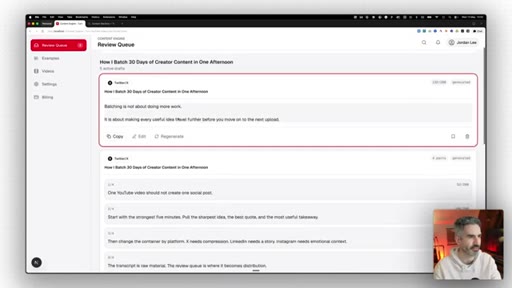
19:01So we've got x posts here. Batching is not about doing more work. It's about making every useful idea travel further before you move on to the next upload.
19:08Now one thing that we would do next here is to basically put in a YouTube URL, connect up YouTube, uh, OAuth, and then see if we can extract the transcript in here to actually get these posts generated.
19:20We've also got our we've got buttons here for regenerate, edit, copy. So if I click edit here, I can actually edit this post which is great.
19:29And that means it's also saving edits as well. So that means I can then, like, either copy this or I can I don't know if there's, like, a click? It would be great to click, like, schedule.
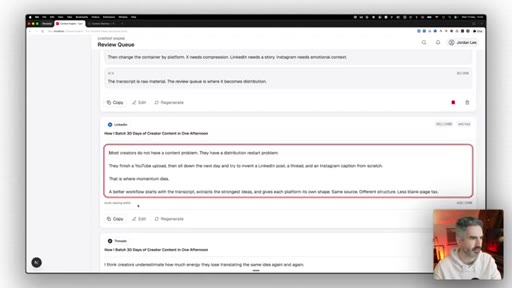
19:38I can bookmark these as well and save them. And can also filter at the top here by platform. So we've got a LinkedIn we've got a LinkedIn version here as well.
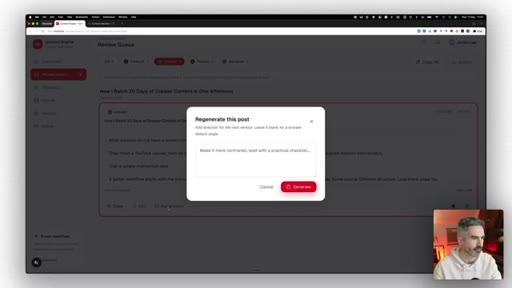
19:48Regenerate. We can regenerate this post, add direction for the next version, make it more contrarian, leave it with the practical checklist. It's actually pretty decent.
19:55And this modal, like, looks pretty good as well with the red glow under that button for the primary button. I'm actually pretty impressed, like, overall with the with the foundation of the design that we've got here, especially coming from codecs 5.5 and g b t 5.5. It feels pretty decent.
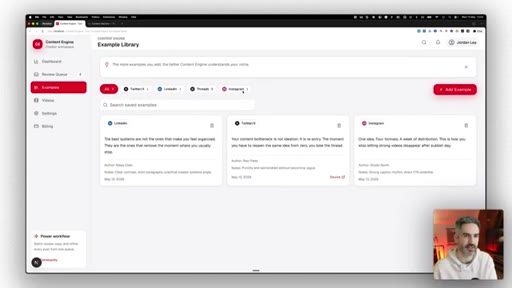
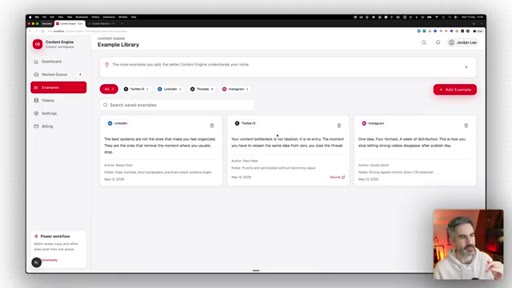
20:10Now all of these ideas are like fairly generic. Where this is gonna actually work is where we feed in like the AI capabilities to this and use the example prompts that we have in this library here. So it would be great to have an AI feature in here actually scrape these social channels to find examples of posts that do well in our specific niche
20:31so that we can curate a library of those in order to take our YouTube transcript and then turn that into posts that we can share across social and even add in a scheduling feature. Now I might not have known that when I first started writing the PRD.
20:44And this is why I think it's actually really beneficial sometimes to just get a PRD down, build the application, and then you can figure out all of the different bits that you actually want when you're inside of the even the prototype version of the application that we've got here.
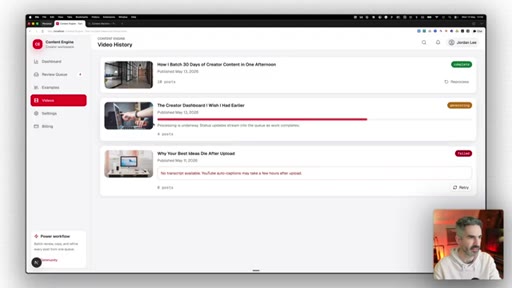
20:57We've got videos here as well. So these are the videos from placeholder videos from my channel. No transcript.
21:02We've got a few different, like, states here as well. So you can see, like, this one is loading. It says processing underway.
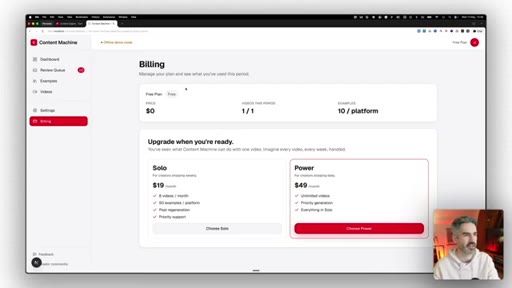
21:08We've got an error state here with a retry button. Um, we've got a settings page and a billing page as well. So we got our settings with our platforms that we've got connected and a billing page.
21:18I'm pretty impressed with this overall. Like, obviously, this is not hooked up to, like, any data, uh, but all we have to do here if we wanna do if we wanna set this stuff up is to go back into the terminal to Codex, and all we have to do is to ask it.
21:33Now you can do, like, forward slash review Codex, is really good to review the current changes and find any issues in that code.
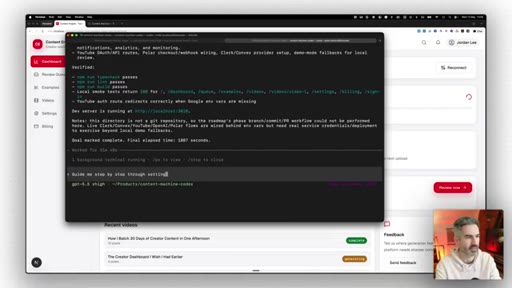
21:40But we can also just prompt Codex to say, like, guide me step by step through setting up everything
21:48I need to to put deploy this app. And that's gonna guide us step by step through setting up everything that we need here, environment variables, deploying to Vercel, or wherever you wanna deploy it, it's gonna guide you step by step. And this kind of, like, creation process is getting condensed massively
22:04with these new features like forward slash gold to the point where it's even viable to build a full application in just a matter of hours sometimes. Let's jump over to the Claude version and see how Claude fared. Now this is the content and the copy is better on the landing page here.
22:22We've got a lot more detail in this stuff, and it's actually got headings for each of the sections, which GBT $5.00 5 didn't do. Um, we've got, like, a testimonial down the bottom here, which is great. Let's click get started free and go through here.
22:35This is maybe gonna take us to okay. So we're gonna start with the demo channel. So this is an offline mode.
22:40Real sign in activates this, so we need clerk to be set up. We've got a demo version demo version here. So let's start with the demo channel here and see what it pulls back.
22:49So it's actually really, really similar from a design point of view, and that's because it's using that design dot m d as a reference point. So the design between these two, can see is very similar. And when you're using that design dot m d reference, you're gonna get around any, like, specific design direction from a a given model, basically.
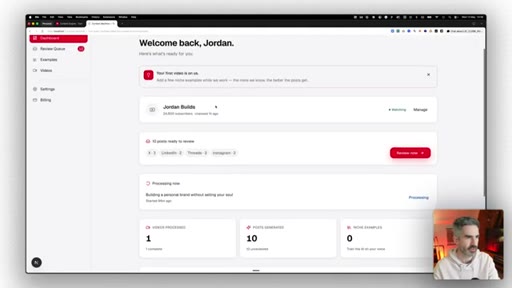
23:07We've got our channel that is connected here, Jordan builds, 10 posts ready to review, review now, processing videos, processing, post generated, niche examples, or and we've got an upgrade on the dashboard here, which I actually like better having this upgrade, like, directly on the dashboard at the bottom here.
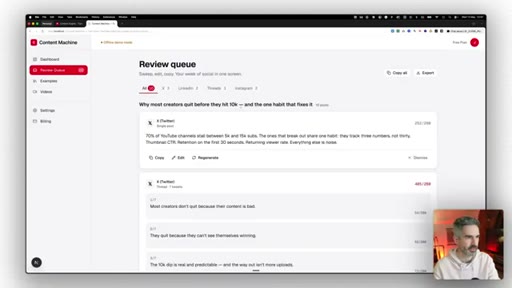
23:23You could even have this more visible, to be honest. We've got our review queue here. So we can go into this, see all the posts across all these different channels.
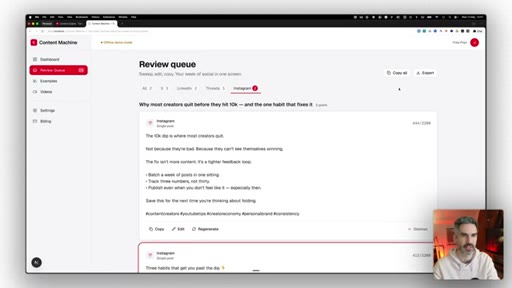
23:31The tabs on the g on the codex version are actually much nicer. We've got some of the icons, like, pulled in here, although it hasn't found, like they're looking a bit weird. We can edit these.
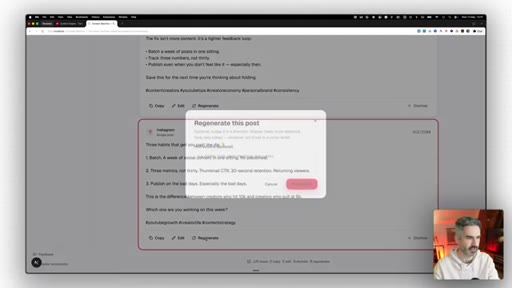
23:42We can copy them, and we can regenerate them with the instructions here as well. And this has given us the same experience because this is all defined in the product road map and the PRD. This is all coming from building the product road map and PRD, and this is how you get consistent output with AI coding tools is to have those specs down beforehand
24:01and also how you get around the unique quirks of individual models by having detailed specs to kind of outline what you're building before you start building. And if you wanna create those detailed spec documents, the PRD, the productrobotdesign.md, you can go to plaid, plaid.build
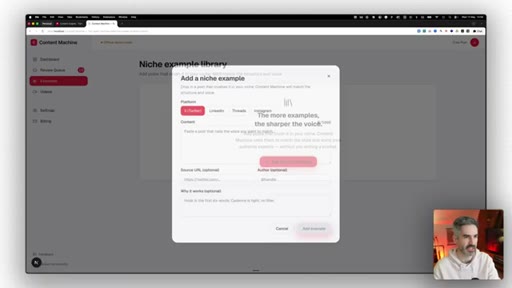
24:18and download those skills to help you go through and use the exact same process that I use when building applications. The same as you've got here. We've got our example library here, so we don't have any examples in the library.
24:30We can add examples here. Again, it'll be great to have, an AI scraping feature
24:36in this app. We've got videos. So these are the example videos that are connected here.
24:41Again, I kinda like the codex version of this better. We've got our settings with our connected channels, and we've got our billing page with our upgrade method and our plan details,
24:51which is perfect. We've also got links to feedback and create a community down the bottom there. And that is our app.
24:58So I'm pretty impressed with the way that forward slash goal has been managed to build our entire application through 62 different tasks to set up the app in about half an hour going from that product road map and PRD document to giving us a decent foundation
25:14for our application that we can then start to build on top of and just ask Codex or Claude, what are the steps I need to do to actually get this deployed and live? And it will guide you through adding all of those things like environment variables, deploying to Vercel, setting up convex,
25:29and all of that stuff. And it's gonna give you the commands to do that and even run a lot of those commands for you as well. So that is how to use forward slash goal.
25:37What it is, what it does, how to use it correctly, how to use it with spec documents, and how to use it to build entire apps in just one go in about thirty minutes. So you can see the power of forward slash goal using Claude code and codecs to do these complex long running tasks with those agents in a way that is gonna be really really successful and give you a great foundation if you're building your entire application that way.
26:01CTAAnd the keys as I mentioned is to make sure you've got the right spec documents, to make sure you're giving the AI the right context, and to make sure that you've got a clear end criteria for that goal so that the AI knows exactly when it should stop working on that goal instead of just keeping on going. And this is really introducing an entirely new way of building with AI agents where instead of just prompting back and forth, we're allowing the AI agent to decide what all of these different tasks are based on a longer running goal which is a bit of a mindset shift if you're used to prompting back and forth to build something but it is incredibly powerful.
26:35CTASo if you are building with AI, I would highly recommend checking out forward slash goal in ClaudeCode or in Codex. Try building something big or even an entire application. And if you are building with AI and you wanna build real applications and real software and launch them to real paying customers, then I've got a community helping people do just that over at school.com/aiapps.
26:54CTAYou can click the link in the description down below. If you enjoyed the video, don't forget to like and subscribe. Thank you for watching and I will see you next
— full transcript
§ 05 · For Joe

The spec doc is the real unlock.

Build Great Products playbook

/goal is not magic -- it is 32 minutes of autonomous work guided entirely by three files you write before you start.

  • Write your PRD and product-roadmap.md before touching /goal -- 40-80 tasks with verifiable checkboxes is the sweet spot.
  • Add a design.md to neutralize model-specific design quirks -- both Claude and Codex built near-identical apps because of it.
  • Set an explicit end condition: 'all tasks in product-roadmap.md are complete and verified.' Vague goals cause agents to loop forever or stop too early.
  • Use constraints to protect stable parts of the codebase -- tell the agent what must NOT change on the way there.
  • Scaffold offline-first: stub all integrations so the agent does not get blocked on env vars mid-run.
  • After /goal completes, ask the agent to guide you step by step through deploying this app -- it handles Vercel, env wiring, and setup commands from there.
§ 05 · For You

What you can build in half an hour.

For the builder watching this

If you have a product idea and can write a one-page spec, an AI agent can give you a working prototype in the time it takes to have lunch.

  • Write down what your app does in plain English -- that is your PRD.
  • Break it into 40-80 checkable tasks -- that is your product roadmap.
  • Describe how you want it to look (colors, fonts, vibe) -- that is your design.md.
  • Feed all three files to Claude Code with /goal and let it run for 30 minutes.
  • You will have a clickable prototype you can show investors, co-founders, or customers the same day.
§ 06 · Frame Gallery

Visual moments.