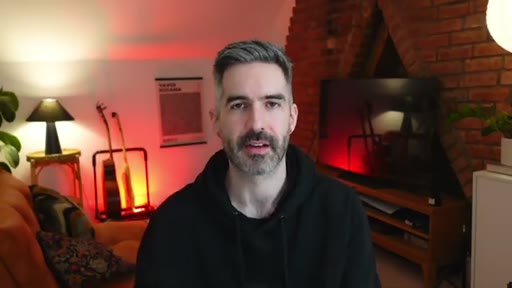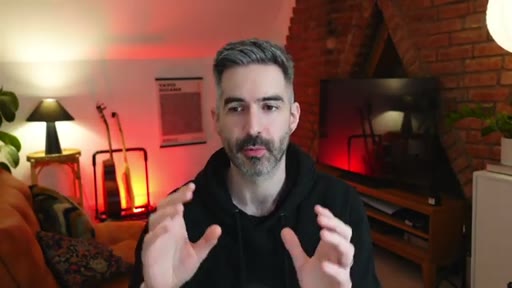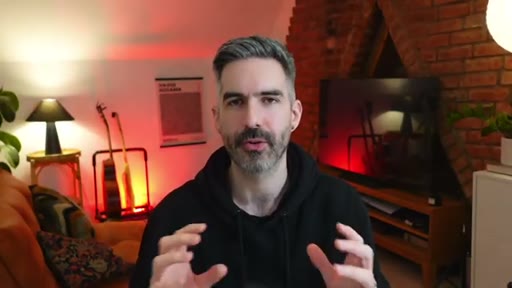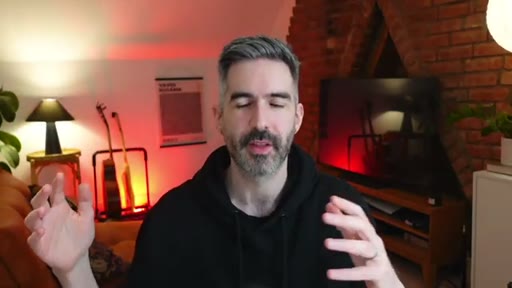
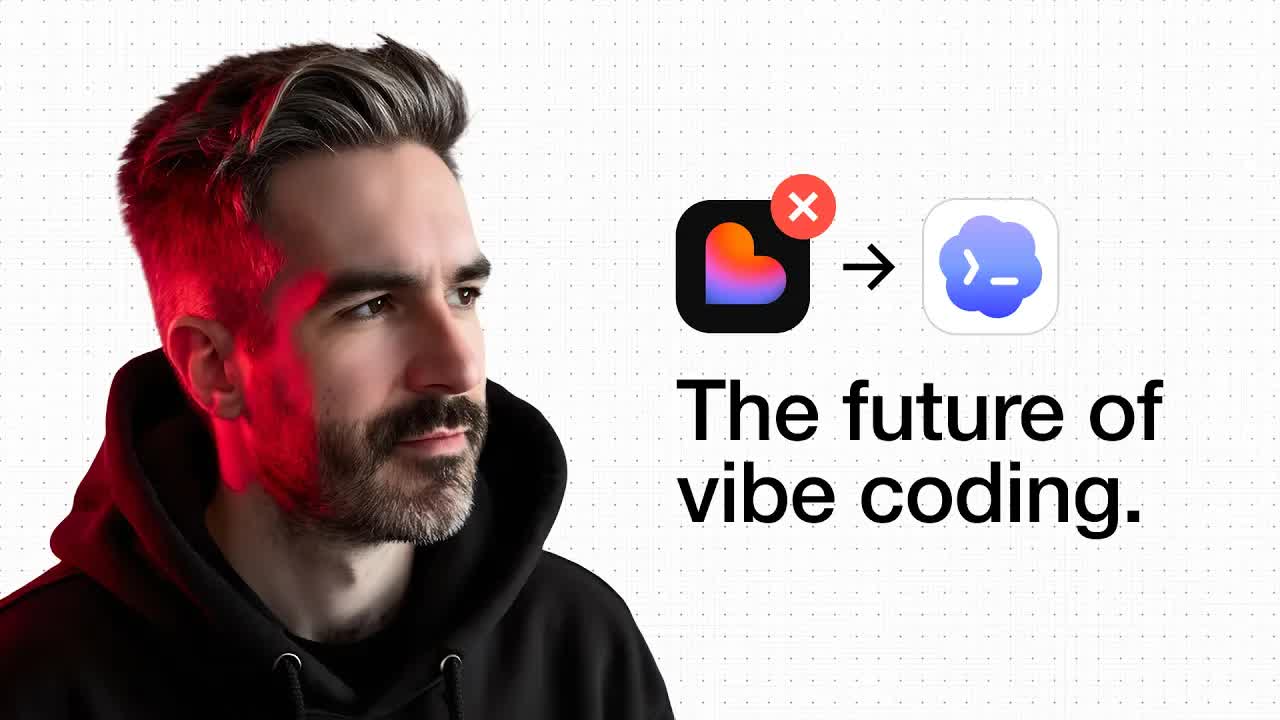
The bait, then the rug-pull.
Twelve minutes. One camera. No B-roll. And a host who opens by declaring the genre he is talking about dead. Chris from Build Great Products is not being contrarian for sport. He is tracking five structural shifts he thinks most AI builders are sleeping on, and his case lands because he names actual tools, actual people, and one embarrassingly relatable image: sitting there hitting yes yes yes yes approve while the agent just works.
What the video promised.
stated at 00:15 "I wanna break down the five big shifts that are happening in vibe coding today so that you know exactly how to build with AI the right way going into the rest of 2026." delivered at 11:09
Where the time goes.
01 · Cold open and promise
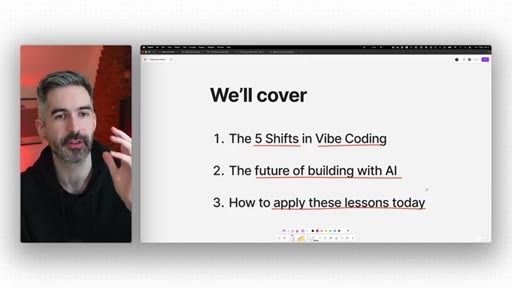
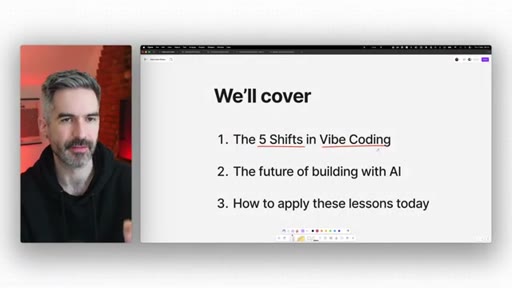
FUD hook: vibe coding changed more in recent weeks than most realize. Promise: 5 shifts, the future of AI building, how to apply them today to be ahead of 99%.

02 · Shift 1 - Agents code anywhere
Moving from AI inside an IDE to agents accessible from phone, terminal, any environment. Tools: Claude Code remote control, Cursor Cloud Agents, Replit and Lovable mobile apps. Sessions transfer across devices.
03 · Shift 2 - Auto-compaction
Manual context management is becoming obsolete. Frontier models ship auto-compaction that preserves critical context without context rot. Amp leads the way.
04 · Shift 3 - Stack the queue
As agent quality rises, stop send-wait-review loops. Queue multiple prompts; automate daily code review at EOD. Codex desktop shows this: stack messages, drag to reorder, interrupt mid-chain.

05 · Shift 4 - Let the agent cook
Power users already run dangerously-skip-permissions 100% of the time. Sub-agents generate so many tool calls that manual approvals are pure friction. Anthropic and OpenAI ship auto-review modes for this reason.
06 · Shift 5 - Multi-agent multi-project
Run multiple agents across multiple projects simultaneously. Orchestrate so they do not conflict. Non-code tasks (research, launch videos, social, presentations) belong in the agent queue too.

07 · CTA and outro
Community pitch: school.com/aiapps, 250+ members.
Visual structure at a glance.

Named ideas worth stealing.
The Five Shifts of Vibe Coding
- Agents code anywhere (not just inside an IDE)
- Auto-compaction replaces manual context management
- Queue-stacking replaces send-wait-review
- Permission delegation - let the agent cook
- Multi-agent multi-project orchestration
A sequential framework mapping the behavioral evolution of AI-assisted coding from 2024 babysitting to 2026 fleet orchestration.
Lines you could clip.
"You can be ahead of 99% of other people."
"You can just sit there hitting yes yes yes yes approve constantly until the AI agent actually completes its work and 99% of those approvals actually did not need your input at all."
"Part of being able to do this is actually just a skill issue in terms of how you use these AI coding tools."
"There are people who are already doing this months ago using dangerously skipped permissions pretty much 100% of the time."
How they spent the runtime.
Things they pointed at.
How they asked for the click.
"If you are building with AI and you wanna build apps and software that actually work and launch to real customers, I have got a community helping people do just that over at school.com/aiapps."
Soft sell - mentioned twice (60s and 11:49). No hard pitch, no price, just community size (250+) and outcome promise. Low friction.
Word for word.
Steal the five-shift frame.
One bold provocation plus five numbered shifts plus one concrete tool per shift plus one action per shift equals a 12-minute talking-head that holds attention with zero B-roll.
- Lead with a funeral: declare something dead. The provocation is the hook.
- Each shift needs a villain (the old behavior) and a hero (the new behavior). Name them explicitly.
- Ground every shift in one tool people can install today. Abstract gets skipped. Specific gets subscribers.
- End each shift with a start-today action - even one sentence. It transforms advice into instructions.
- For Joe: the multi-agent shift maps directly to JoeFlow and Claude Code Sessions. That angle is yours to own.
- The skill issue framing is a steal: stops the listener from blaming the tool and puts them back in the driver seat.
Two habits worth changing today.
Most of the friction in AI-assisted development is self-inflicted - you are still treating a 2026 agent like a 2023 autocomplete.
- Queue your tasks. Instead of sending one prompt and waiting, write three to five tasks in a row and let the agent work through them.
- Lower your permission guard. If your tool supports an auto-approve or reduced-permission mode, try it for a focused session. Most approvals are noise.
- Let sessions continue across devices. If your tool has a mobile or cloud component, try picking up a session on your phone. The continuity is real.
- Treat the agent as a general-purpose knowledge worker, not just a coder. Research, outlines, strategy docs, video scripts - all valid tasks in the same queue.