Dr. Matt Jones · Youtube · 15:06

Why Doing Less Helps You Achieve More

A physician makes the neuroscience case for subtraction over addition — backed by research, personal burnout, and a two-filter audit you can run today.

Posted
May 9th 2026
5 days ago
Duration
15:06
Format
Talking Head
sincere
Channel
DM
Dr. Matt Jones
§ 01 · The Hook

The bait, then the rug-pull.

Most people's first move when they feel stuck is to add more. Dr. Matt Jones — a physician who once passed out in clinic from overoptimizing his own life — opens this video with a quiet gut punch: the people who actually move forward year after year have fewer commitments, not more. And neuroscience, it turns out, is why.

§ · Stated Promise

What the video promised.

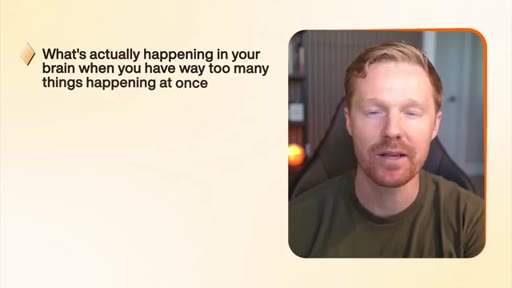
stated at 00:48 "I am going to walk you through what I figured out. What I am about to cover is what is actually happening in your brain when you have way too many things happening at once, why adding more almost always backfires, and then what you can actually do about it." delivered at 09:13
§ · Chapters

Where the time goes.

00:00 – 02:22

01 · Why Adding Backfires

Counterintuitive premise: successful people have less going on. Adding feels like effort — but the data says it is usually the wrong move.
02:22 – 04:46

02 · Brain Background Apps

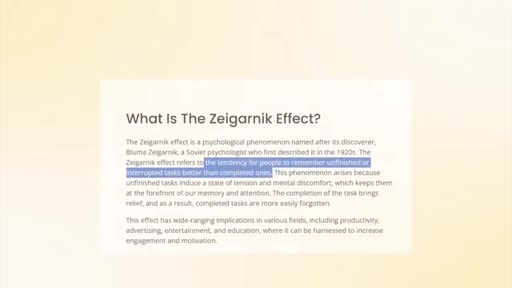
Every unfinished goal runs as a background process draining cognitive bandwidth constantly. The Zeigarnik Effect: unresolved decisions drain more energy than unfinished tasks.
04:46 – 06:01

03 · Competing Goals Trap

Research shows multiple goals sharing the same limited resources actively reduces performance on all of them. People sacrifice quality for quantity and chase easy wins.
06:01 – 07:26

04 · Doing Less Is Not Lazy

Social media rewards visible effort — 7-books-a-day content — but the people making that content usually have a very small actual to-do list. Subtraction gives no dopamine hit, which is why it gets ignored.

07:26 – 09:13

05 · Focus Compounds Deeply

Sequential deep focus on fewer things compounds far more over time than scattered surface-level effort. The people who execute well protect few things with significant intensity.
09:13 – 10:21

06 · The Subtraction Exercise

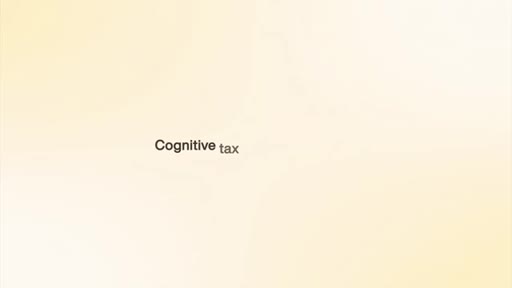
Practical audit: write everything down, filter by what you have done consistently in 30 days, filter again by what produced real results. What remains is your priority list. Everything else is cognitive tax with no return.
10:21 – 12:39

07 · My Burnout Wakeup Call

During medical training Matt was tracking sleep, logging nutrition, running two workout protocols, journaling, optimizing social — all at around 40%. He passed out in clinic from exhaustion. Cutting back to 2-3 things changed everything.
12:39 – 13:09

08 · Remove Before You Add

Closing argument with three questions: what is not producing anything meaningful, what are you holding on to out of guilt, what would happen if you just stopped.
13:09 – 14:39

09 · Resources: Book And Links

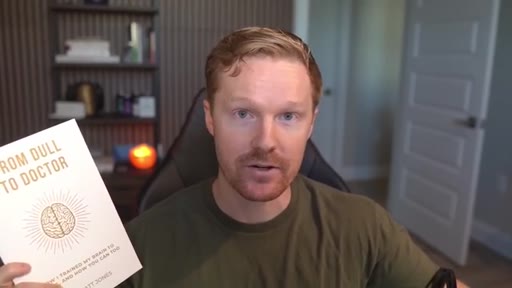
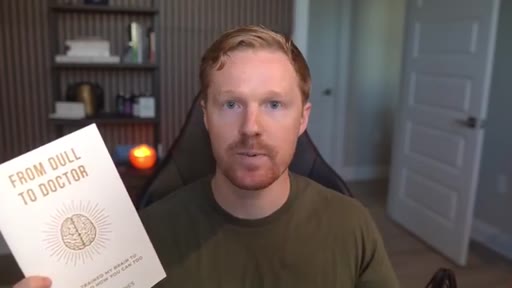
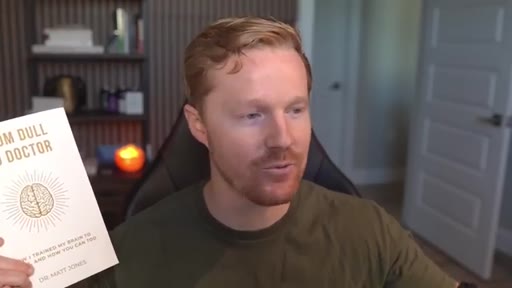
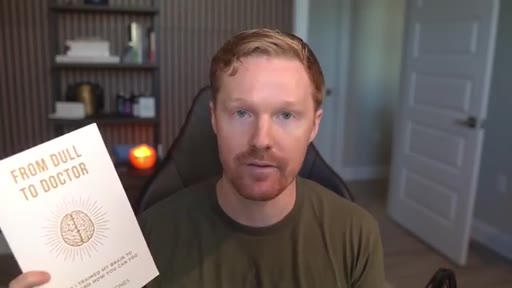
CTA for book 'From Dull to Doctor' and free 30-day blueprint. Matt holds the physical book to camera for roughly 30 seconds.

14:39 – 15:06

10 · Final Thanks And Subscribe

Standard outro: subscribe, like, share with someone who needs it.

§ · Storyboard

Visual structure at a glance.

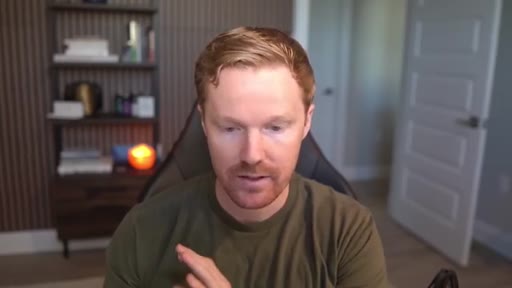
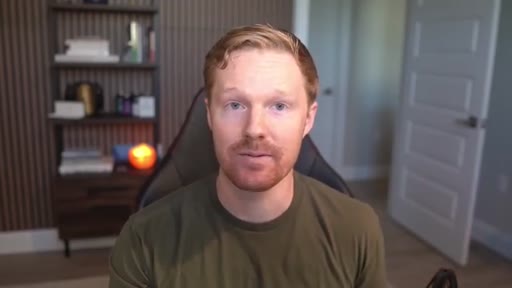
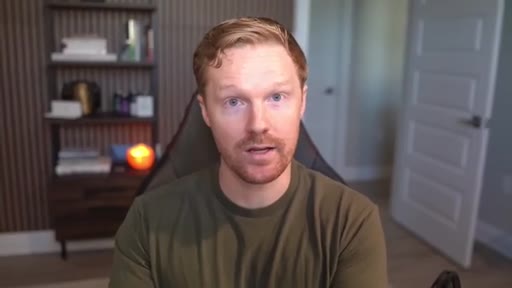
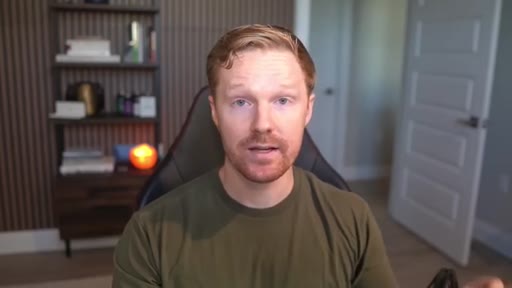
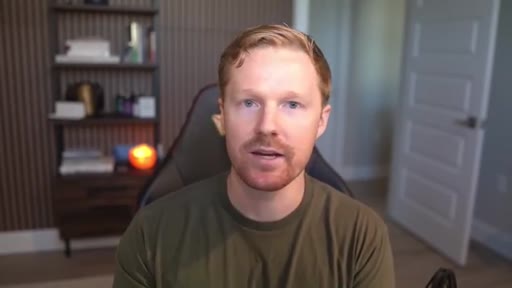
open — cold face-cam
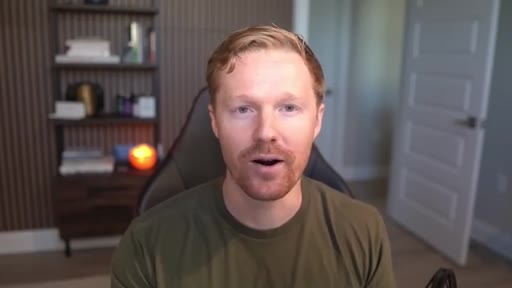
promise stated
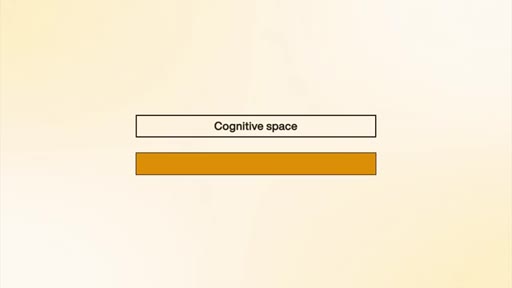
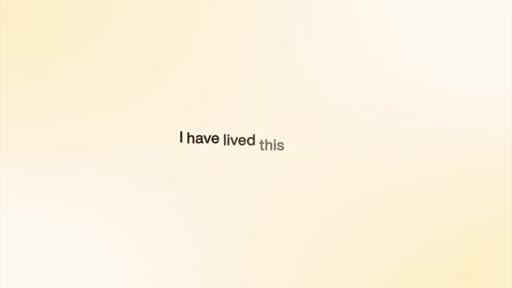
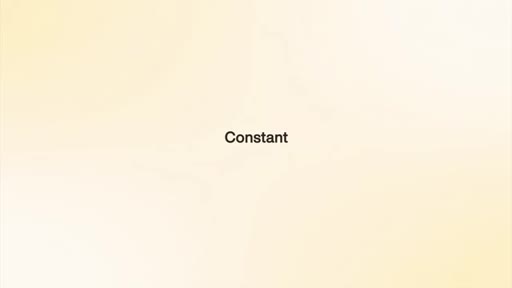
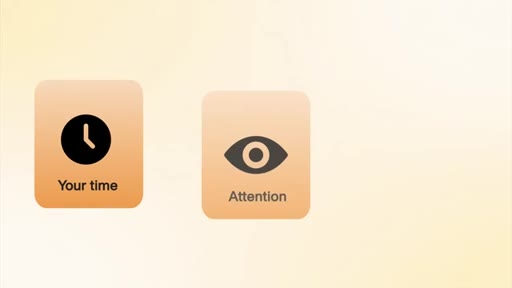
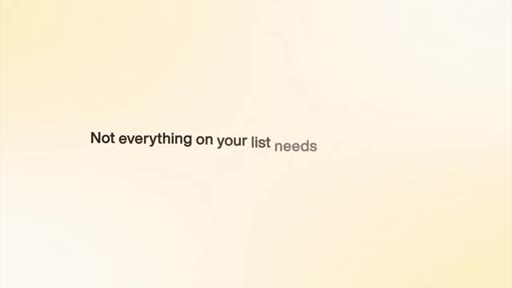
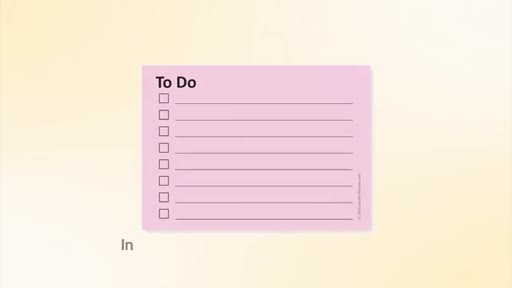
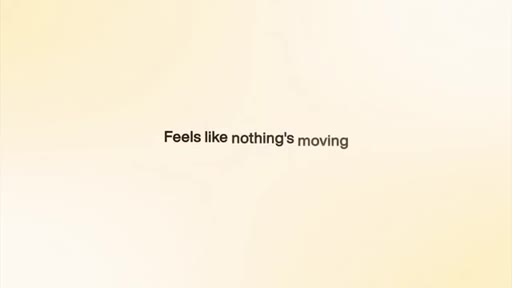
Zeigarnik / background apps text card
competing goals research
subtraction exercise — cognitive tax card
remove before you add
book CTA — physical hold
§ · Frameworks

Named ideas worth stealing.

02:22 concept

Brain Background Apps (Zeigarnik Effect)

Every unfinished commitment runs as an open background app draining cognitive load constantly. Deciding definitively NOT to do something closes the tab and frees bandwidth. Unresolved decisions cost more than unfinished tasks.

Steal for Any productivity or morning routine content — hook for why to-do lists exhaust us before we start
09:13 list

The Subtraction Audit

  1. Write down everything you are currently doing (habits, goals, systems, commitments)
  2. Filter: which have you done consistently in the last 30 days?
  3. Filter: of those, which produced something real (energy, output, health, happiness)?
  4. What remains = protect these at all cost
  5. Everything else = cognitive tax with no return — close the tab

A two-pass filter that converts an overwhelming list into a defensible priority list grounded in actual behavior and actual results, not aspirations.

Steal for Morning routine reset content, newsletter issue, live coaching exercise
00:00 model

Credibility Stack

  1. Authority (physician credential)
  2. Personal stakes (passed out in clinic)
  3. Research (6 PubMed citations in description)

Matt earns trust from three angles simultaneously. No single layer would be as convincing as all three together.

Steal for Any content where Joe is teaching from experience — stack credential + personal failure + data point
§ · Quotables

Lines you could clip.

01:06
"The people who actually progress and move forward over time, genuinely succeed year after year, have less going on, not more."
Counterintuitive thesis stated cleanly — no context needed → TikTok hook
06:19
"Adding things feels like the effort. Subtracting something gives you no feedback."
Tight paradoxical two-liner that explains why the wrong behavior feels right → IG reel cold open
10:15
"You are paying a cognitive tax without any return."
Quotable metaphor, six words, universal applicability → newsletter pull-quote
12:46
"Before you look for something else to add — ask what you can remove first."
Actionable inversion, usable as a standalone prompt → IG reel cold open
13:01
"What would actually happen if you just stopped?"
Rhetorical challenge that lands as a standalone text overlay → TikTok hook
§ · Pacing

How they spent the runtime.

Hook length48s
Info densityhigh
Filler8%
§ · Resources Mentioned

Things they pointed at.

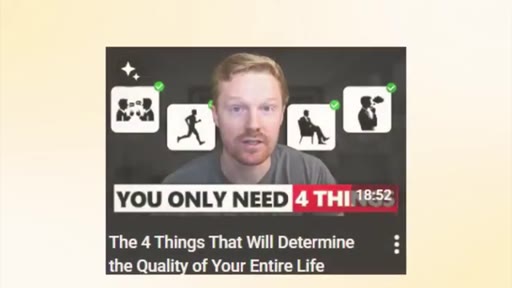
09:17channelCompanion video: The 4 Things That Will Determine the Quality of Your Entire Life
§ · CTA Breakdown

How they asked for the click.

13:09 product
"If you want the full blueprint, the step by step version of how I stripped things back and rebuilt from the ground up, that is in my book. It took me three years to get this to you."

Physical book hold to camera for roughly 30 seconds. Clean and credible. Personal stakes baked in — three years of work, not a lead magnet. Secondary CTA: free 30-day blueprint immediately after, positioned as meeting people where they are at.

§ 04 · The Script

Word for word.

HOOK opening / re-engagementCTA the pitch metaphor story
00:00HOOKSo there's a thought that I've been toying with lately. And, honestly, the more that I think about it, the more that I think most people have this completely backwards.
00:11HOOKThe thought is when someone feels stuck, and I'm in a very unique position, I see this a lot as a physician, when they feel like they're super behind or not making progress,
00:24HOOKthe first thing that people do is add something, a new habit, a new system, something new that they read about, some new goals or structure that they saw in a video on YouTube, more hyperoptimization.
00:39HOOKI can't tell you how often I see this, and it seems like the best thought. I get it. That feels like you're doing it the right way, like you're being much more serious about moving forward. But, again, here's what I keep seeing, and I see this with patients. I see this with the people that I work with as clients. I have lived this myself. Trust me. I'm not trying to be a hypocrite here. I've been there many times.
01:05HOOKThe people who actually progress and move forward over time, like, genuinely succeed year after year,
01:15HOOKhave less going on, not more. They have fewer commitments. They have fewer active goals at the same time, and we're gonna get into that in a minute, yet somehow they get significantly more done. Because I used to be over here in that group that just had
01:32HOOKthe biggest plate of all time, and I thought that adding was the only move to be more successful because you see people, oh, just outwork the others. Just do this. Do that. I wanted to understand it because it was bothering me that I didn't. And now I'm gonna walk you through what I figured out. You are really gonna wanna stay for this because what I'm about to cover is what's actually happening in your brain when you have way too many things happening at once,
01:59HOOKwhy adding more almost always backfires, and then what you can actually do about it. I'm going to move through this efficiently because I respect your time. This doesn't have to be a thirty minute video. I may talk fast at times, but just rewatch it if you need to or slow it down. Stay with me because the practical part at the end is going to be incredibly useful in your life. So let's start simply. Let's start by kinda putting it into more computer terms because that'll make sense for people. Your brain is running background processes constantly.
02:31I mean that literally. Okay? Every unfinished commitment, every goal you've set that you haven't touched, everything on your to do list that you're going to get to, been there. Those are all just open background apps running,
02:47and they don't just sit there not taking any cognitive load waiting for you to open them again. They're running in the background all the time. They're taking up cognitive space, burning through your mental energy whether you're aware of that or not. And there's good research on this. Unresolved decisions actually drain more cognitive energy than unfinished task,
03:09meaning that the things you keep pushing off, that goal that you haven't really started, but that habit you've told yourself you're gonna do, that is costing you a lot more mental bandwidth than if you just decided to not do it at all. The point is is you just decided not to do it at all, you would have at least closed that background task. Does that make sense?
03:29When you have 15 things that you're technically working on, your brain isn't just carrying 15 things when you sit down to focus and work. It's carrying 15 things all the time. That cognitive
03:43tax and load is constant, and what you end up with is a constant low grade exhaustion. I'm sure that resonated.
03:54This is also really hard for people to trace back to the cause. And, honestly, this is something that I can kind of feel out in the room with patients sometimes when I'm talking to them. But in a doctor patient setting, it's oftentimes
04:09I find it difficult at least to trace that back to the root cause as well. This is really something that I'm making a video about because I think it's something that's best that you work through yourself. But a good way, I think, to describe this feeling is like you sit down to do one thing, but you already feel worn out before you've even started. Or maybe you get worn out within a few minutes. A lot of people think that this feeling of burnout that they feel is because they're lazy, but oftentimes,
04:37I don't really think that's the case. You just have way too much going on. You've been running way too many things at the same time for too long, and it feels like nothing's moving. So here's the part that really surprised me the more I looked into this. The research on goals is pretty clear that having multiple competing goals, things that require the same limited resources, your time, attention, your mental energy, this actually reduces performance.
05:02When people are given quantity goals and quality goals at the same time, more often than not, they sacrifice quality for quantity. People gravitate towards whatever feels completable rather than whatever actually matters.
05:16And I see this a lot. I've made videos on how to set up a to do list, not just putting a million things on there to hit that dopamine hit every time. It's this similar concept. People will hunt for easy wins, and the important stuff just gets pushed back and deferred. This is why I say that not everything on your list needs to be a priority. There's also some interesting research across organizations showing that companies with fewer strategic priorities
05:39significantly outperformed those with a bunch of them. And listen. I know you're not a growing company, but I feel like the same dynamic plays out individually in most people every single day. When you're trying to run 10 things at the same time, you pretty much make process on everything but finish nothing or at least not the things that you should. So I know what you're probably thinking. I've heard the do less advice before,
06:07particularly from this channel, and it always feels like they're telling me to be lazy. So let's address that directly because that is not what I'm saying at all. I wanna make sure I can articulate this correctly, but
06:19adding things feels like the effort. It feels like you're taking the problem seriously. Subtracting something
06:28gives you no feedback. There's no moment of satisfaction when you remove a goal from your list. And if you spend any time on social media, which ironically is the context which most people are consuming self improvement content, including this one, the culture
06:44there rewards this very visible effort. The perfect morning routine,
06:50reading a book a day or, like, five. I literally saw a video about someone who's like, I read seven books a day. No. You don't. But it rewards a growing list of things that you're working on. But you have to keep in mind, so many of the people saying that actually have a pretty small to do list themselves. They are being rewarded for looking good by telling you they're reading seven books a day.
07:15That's, like, their one thing. The problem is doing less doesn't look very ambitious when it's usually the much more ambitious move because it's going to get you a lot further. The people that I have watched execute well over long stretches of time, and I mean really freaking execute. Okay? Not just talk about it or post about it.
07:37They protect few things with significant intensity. And I've adopted this in my life over the past year, and my goodness has my life improved
07:48astronomically. They're not doing less because they're less serious than others. They're doing it because putting a focused effort compiles
08:00way more over a longer period of time than this scattered fizzling out effort that's much more performative. One thing done and then the next after the other consistently at a nice depth. I wanna add that part. I mean, you really do need to commit. This drastically changes things. 10 things done at a very surface level that don't move the needle forward
08:26indefinitely if you want will just make you feel busy and really not get you where you wanna be. We have turned ourselves
08:36into robots that are just getting through tasks. That is not what you were put on this earth to do. I don't have the answer to that probably,
08:47HOOKbut it's not that. I can confidently say that. Invest in things passionately in your life, and your enjoyment will go up astronomically. I actually just released a video on this about four things that I think are very important if you do want a goal, a target to aim for. It might be worth watching. I'll make sure it's at the end of this video. You might really, really find a target here based on this conversation.
09:13HOOKAlright. So let's get to the practical piece, and thank you for still being with me here. Your attention span is better than about 99% of the population at this point, so drop a comment if you're still here. I'm really curious. Okay. So I actually do want you to try this, though. Okay? This is gonna be a really good exercise. Write down everything that you're currently doing, every habit, every goal, every system, commitment that you've made to yourself. Don't filter it out. Just get it out on paper or a notes list or something. Then I want you to ask yourself,
09:40HOOKin the last thirty days, which of these have I done consistently? Circle those or put a star next to Then ask, of the things that I have actually done,
09:51HOOKwhich ones have produced something real? Better energy, better output, more happiness,
10:00HOOKbetter health, something you can actually point to. Circle those or put a star next to it. What's left after that second filter there?
10:11HOOKThat is probably what you should pay attention to and put some extra focus on. Everything else, you are paying a cognitive tax without any return. I went through a stretch during training in medical school and part of residency where
10:27I was trying to optimize everything at once. Look. You were around superhumans. We are in this field. Okay? Some of these people are absolutely amazing.
10:38They're just leaps and bounds in productivity productivity above what you think a human is even capable of. And you're like, oh my gosh. I've gotta match that. But priorities are different for different people. Okay? I was sleep tracking, nutrition logging, reading goals out loud. I was doing two workout protocols, meditation,
10:58journaling, social media, and optimizing that to a t, so much more. And I was doing all of it at maybe,
11:08at best, 40%. My schedule was so intense and so loaded. I hardly had any social life. I acted like I did. But the entire time I was with other people, I was thinking about the next post I was gonna make, how I can optimize this, what I'm doing here, how this is a waste of my time, horrible way to live. I was taking nuggets that I was reading from books every single day and trying to implement them into my life pretty much every day, making the list longer and longer of things to do. This got so bad that I actually passed out in clinic one day from exhaustion.
11:42Quite a wake up call. I'm trying to stop you before you get there. And I know many of you watching this video aren't near as extreme, but I do still think the principles really resonate. Once I cut back to two to three things that actually moved the needle for me, training consistently, protecting my sleep, not touching my phone in the morning, my output
12:04went up drastically because I stopped spending energy managing systems that were way the heck too complex to actually maintain. The goal isn't to build the most impressive looking routine unless you're a social media influencer, But the goal is to find the few things that genuinely move your life forward
12:26and protect those at all cost. That is what it actually looks like from the outside when someone is doing well. It might be boring, but it's simple and it works. So before you look for something else to add, and I know the temptation,
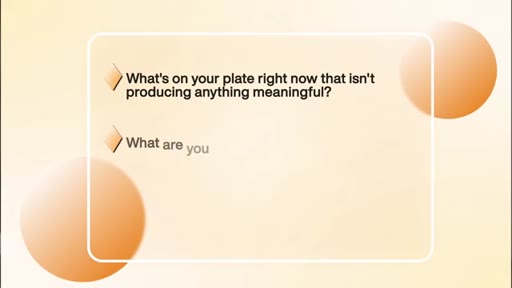
12:44believe me, I do, ask what you can remove first. What's on your plate right now that isn't producing anything meaningful? What are you holding on to
12:56CTAout of guilt rather than because it's working for you? What would actually happen if you just stopped? Those questions alone can make more of a difference in your life than almost anything else. Now I did mention a lot of research here. And as always, when I mention research like this, I will post the link to the articles in the description. Check them out if you want. And if you wanna go much further and deeper than this video, because I can only post so much information in a YouTube video at this point,
13:24CTAif you want the full blueprint, the step by step version of how I stripped things back and rebuilt from the ground up, That is in my book. It took me three years to get this to you. I worked tirelessly on it. It is fully comprehensive across all aspects of your life. It is called from doll to doctor, how I rewired my brain and body for success and how you can too.
13:49CTAThis is everything that I wish I had when I was struggling in the thick of it, going from tutoring seven days a week to try to get through school and being behind so many of my peers to
14:05CTAa medical doctor with multiple master's degrees, which one of which I got simultaneously while I was in medical school, thriving social media career, relationships, and a beautiful life. I say that because I deeply wish I had this guide, and that is why I wrote it for you. I will link to the top of the description. I truly hope it helps. And I wanna meet people with where they're at. That's why I offer things like this. I do have a free thirty day blueprint that I'll also link in the description.
14:33CTATruly, I'm trying to make health accessible. It's why I do what I do, and I love what I do. Okay. Thank you for watching. If you enjoyed this, subscribe, drop a like, comment, all the things. I really wanna know your thoughts. Okay? It the feedback helps me tremendously. If this video helped you, if it resonated, share this with a loved one or someone that you care about. It's completely free and the least that you can do to help them. And as always,
15:01I'm doctor Matt Jones. Thanks for watching, and I'll see you in the next one.
— full transcript
§ 05 · For Joe

Steal the subtraction frame.

Creator playbook

The 'do less' counterintuitive hook is evergreen — it will always outperform hustle content because it contradicts the cultural default, and the credibility stack (credential + personal failure + research) is the formula worth copying.

  • Lead with the inversion: 'most people do X' then 'the research says the opposite' — works in any niche.
  • Stack credibility three ways before making a claim: credential + personal failure story + cited research.
  • The two-filter audit is a standalone short — clip it from any talking-head piece, no extra production needed.
  • Text-card word-drop overlays carry key phrases for muted viewers — worth adding to any monologue-format video.
  • Physical book hold is underused as a CTA format — it signals permanence in a way a link-in-bio never does.
  • Personal burnout story lands harder than any stat because it gives the viewer permission to stop without guilt.
§ 05 · For You

The two-filter audit.

Try this today

Before you add one more thing to your plate, run this 15-minute audit — it will tell you exactly what to protect and what to drop guilt-free.

  • Write down every habit, goal, and commitment you are currently carrying — do not filter, just get it all out.
  • First pass: circle what you have actually done consistently in the last 30 days.
  • Second pass: of those, circle what has produced something real — better energy, output, health, or happiness.
  • What remains after both filters: protect these. These are your actual priorities.
  • Everything else: close the tab. Deciding not to do something frees more cognitive bandwidth than carrying it unresolved.
  • The guilt of dropping something usually costs you more than the thing itself — the research backs this.
§ 06 · Frame Gallery

Visual moments.