

The bait, then the rug-pull.
Hudson opens with a parlor trick most of us have witnessed — the colleague who is physically at the table and completely invisible by the time the meeting ends. The cold open names a feeling everyone recognizes, then drops the thesis underneath it: all of the fear of being seen is a belief that there is something inherently wrong with you.
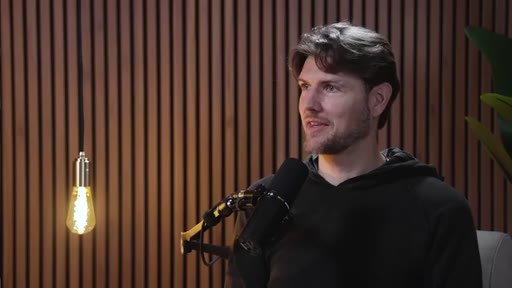
Who's talking.
Where the time goes.

01 · Cold open: the meeting magic trick
Hudson opens with the disappearing colleague — physically there, mentally gone — then states the thesis: the fear of being seen is the belief that something is inherently wrong with you.

02 · Two flavors of the pattern
Acute social anxiety (the magic trick of invisibility, often rooted in childhood lessons about not standing out) versus the universal existential version everyone has.

03 · How it limits you in life and work
Career ceiling — leadership requires being seen. Loneliness compounds because hiding ensures you stay misread.

04 · Devastating in love
If you cannot share what you actually need, want, think — even small things — the relationship erodes from underneath. Resentment grows because you cannot be considered if you will not show yourself.

05 · The golden algorithm
Hiding generates the very signals (smallness, hesitation) that cause others to read you as not-confident — which becomes the evidence that confirms you were right to hide. The emotion you avoid is exactly what you invite in.

06 · Head, heart, body — where the fear lives
Each layer of the stack can fire on or off. The head self-corrects and beats itself up; the emotional layer is fear and shame; the nervous system goes fight/flight/freeze. Often they fight each other.
07 · Where to start working on it
Brett pivots: out of all of this, what is the entry point?
08 · The amazing-woman story
Hudson tells the story of a hyper-accomplished woman at dinner who could not admit her own needs even with her husband present. The pattern in microcosm.
09 · Open your heart to yourself: what do I need?
Asking what do I need directly opposes managing other people perception. If your needs are not safe, you take care of theirs by proxy — it never works.
10 · Soul dysmorphia + false vulnerability
Most of us see ourselves like an anorexic looks in the mirror. To break the dysmorphia: be vulnerable about a truth you do not want to admit (often a counter-story — somebody actually liked me and I could not let it in), not the story you have already told yourself a hundred times.
11 · Invert the familiar story
If your vulnerable story is the same one you always tell, it is not vulnerable. Look for the counter-evidence. Your nervous system (the pucker) will tell you when you have actually landed somewhere true.
12 · Open your heart to the other person
By worrying about what they think, you have already disconnected, objectified, and rejected them. The counter-move is to actually connect with them — and notice that the connection itself dissipates your concern with what they think.
13 · Wonder as antidote
Replace concern with curiosity: what are you seeing, how upset are you, how are you feeling about this. A thousand questions teach you most of what you are afraid of is false.
14 · What if they actually do not like you?
First question back: is the version of you they are not liking actually you, or just the frozen-scared part? Are you happy with how you are showing up?
15 · Am I proud of how I am showing up?
Shift orientation from outcomes to self-feedback: how do I want to behave such that I would be proud no matter what happens? Everything else (predicting, taking personally) falls away.
16 · The role of exposure
Repeated small acts of being seen (Connection Course, group therapy, 12-step) desensitize the shame. The places you are still scared to be seen are the places where the shame still lives — which means that is where the freedom is.
17 · The cure for loneliness
Hudson tells his daughter Esme: ask where you are not being yourself. Three days later she had three hard conversations and was no longer lonely. Loneliness can be cured fast by saying the things that matter to you.
18 · Beware of I should be more vulnerable
Should is just the shame loop wearing a new costume. Reframe: what do you need to take care of yourself? Self-care cannot coexist with self-criticism.
19 · Honoring your need for safety
The hiding pattern protected you. Honor that. The fix is not I have been doing it wrong all this time — that is just turning the eye on yourself again.
20 · Do not turn the eye on yourself
Any self-criticism in service of un-doing the pattern reinstates the pattern. Useful test: would you criticize someone else for it? For most people that move alone kills 80% of the shame.
21 · One concrete move: open your heart to the other person
If you freeze in a meeting or a tense conversation: open your heart to that person. Stop objectifying them. Notice you have already done to them everything you are scared they will do to you.
22 · The grief underneath + the Sauron bit
When the shame relieves, grief shows up — because you finally see how you have been treating yourself and others. Hudson catches himself: he has been saying eye of Siren the whole episode. They turn it into a live demo of the thesis: be willing to be seen wrong.
Lines you could clip.
"All of the fear of being seen is a belief that there's something inherently wrong with you."
"The more that I am scared to be seen, the more evidence that I can collect that shows: oh, if somebody sees me, there's gonna be a problem."
"The emotion that we are scared to have, we are avoiding the exact way that we are actually inviting it in."
"You've turned the eye of Sauron on yourself."
"Most of us have soul dysmorphia. We see ourselves the way that an anorexic person looks in the mirror and sees themselves as fat."
"If I choose to be connected with you, it doesn't really matter if you're connected to me from my experience."
"If you aren't doing that, you're not actually with anybody. You're by yourself in this reality."
"Loneliness can be cured if you actually show up in a way that you're proud of saying the things that are important to you."
"Everything you're scared they're going to do to you, you've already done to them."
"If I actually see how I've been treating myself and I see the way that I've been treating others, then I have to feel a fuck-ton of grief."
Things they pointed at.
Word for word.
Steal this episode structure.
Open with a parlor trick everyone recognizes, name the thesis in 20 seconds, then spend 30 minutes teaching the way out — and make the product the next logical step inside the teaching itself.
- Cold open with a universal recognition moment (the person nobody can remember was in the meeting). Don't explain it — just describe it. Trust the audience to feel seen.
- State the thesis once, early, in one sentence (the fear of being seen is the belief that there's something inherently wrong with you). Then earn it for the next 35 minutes.
- Build a 'golden algorithm' loop for whatever you're teaching — the trap that confirms itself. This is the single most clippable idea in the episode.
- Use a three-layer stack model (head/heart/nervous system, or any equivalent). It explains why your audience already knows the answer intellectually but still can't move.
- Soft-CTA your offer by making it the answer to the question you're already coaching. Don't break frame to pitch. Repeat the same soft mention twice across the episode.
- End on the meta-demonstration. Hudson's Sauron mispronunciation became proof of the thesis — be willing to be seen wrong. Look for the moment in your own recording where the lesson actually happened to you on camera.
What to actually try.
Next time you freeze in a meeting or shrink in a hard conversation, the move isn't to push yourself to be more visible — it's to open your heart back to the person across from you.
- When you catch yourself hiding, ask 'what do I need right now?' — the question itself reverses the pattern, because hiding requires you to be focused on what they think.
- If you tell yourself the same vulnerable story you always tell ('nobody likes me'), that's not vulnerable. Look for the counter-evidence — a time someone actually liked you and you couldn't let it in. That's the truth you're hiding.
- Before a hard conversation, change the question. Not 'will they like me?' but 'will I be proud of how I show up regardless of what they do?' Then orient to that.
- When you're scared someone is judging you, notice you've already judged them — boxed them, made them an enemy. The fix is to open your heart back to them, not to manage them.
- Use wonder. Ask the person what they're seeing, how they're feeling, what they think. A thousand questions teach you most of what you feared was never real.
- Be seen in small ways every day. Each one chips at the shame. Hudson's daughter had three hard conversations in two days and her loneliness lifted.
- When the shame starts to relieve, expect grief. You're going to see how you've been treating yourself and others. That grief is the work — let it land.