DevOps Toolbox · Youtube · 14:20

I Gave Pi Access to Obsidian And I'm Not Looking Back

How Obsidian's new CLI turns your personal knowledge base into a scriptable memory layer for AI agents, chained with Pi and Graphify for 11x fewer tokens.

Posted
May 8th 2026
10 days ago
Duration
14:20
Format
Tutorial
educational
Channel
DT
DevOps Toolbox
§ 01 · The Hook

The bait, then the rug-pull.

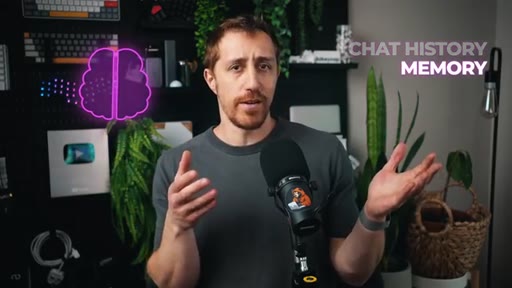
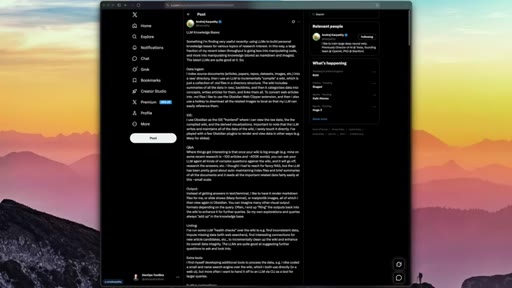
Andrey Karpathy posted a deceptively simple framework: take notes, have a place to read them, Q&A on demand. DevOps Toolbox takes that three-layer cake and asks the uncomfortable question: if chat history isn't memory and a summary.md isn't a system, where does agent knowledge actually live?

§ · Stated Promise

What the video promised.

stated at 01:34 "Obsidian might be the perfect interface layer between you and your agents, and we're going to take it from this to a context-aware system." delivered at 09:36
§ · Chapters

Where the time goes.

00:00 – 01:37

01 · Karpathy frame + problem statement

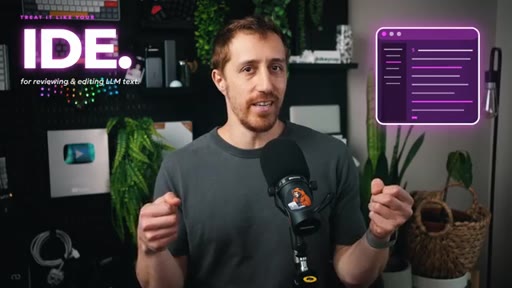
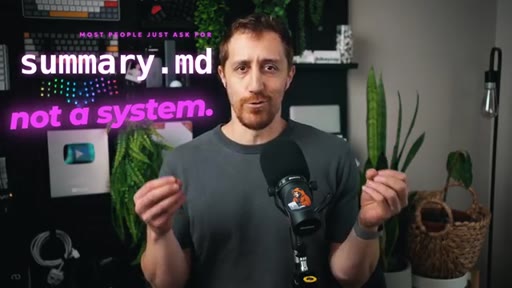
Chat history is not memory. summary.md is not a knowledge system. Obsidian positioned as the IDE for reviewing and editing LLM text.
01:37 – 02:50

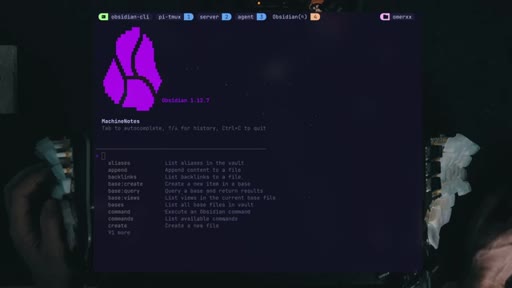
02 · Getting the Obsidian CLI

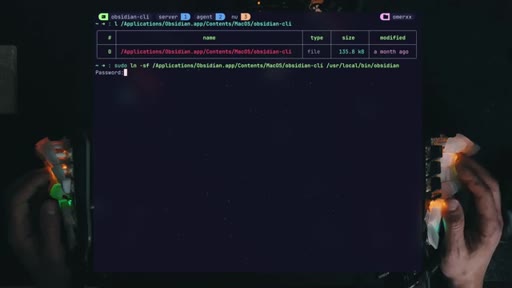
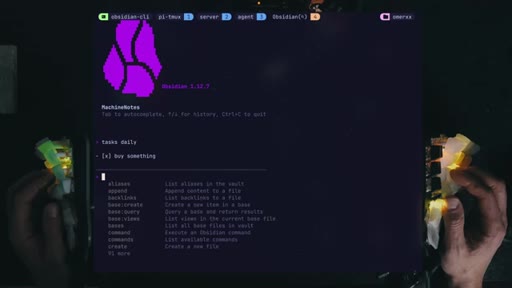
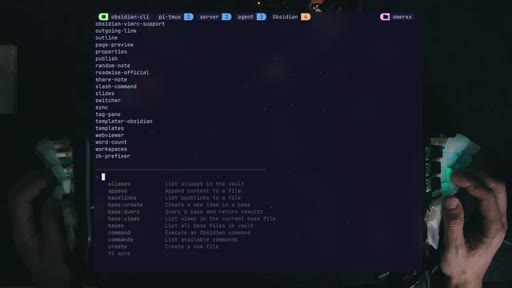
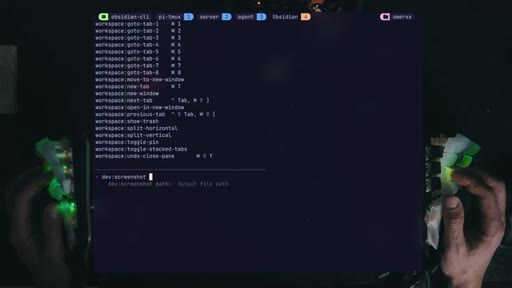
Upgrade to Obsidian 1.12, enable CLI in settings, symlink obsidian-cli to /usr/local/bin. Tour of available commands.
02:50 – 04:16

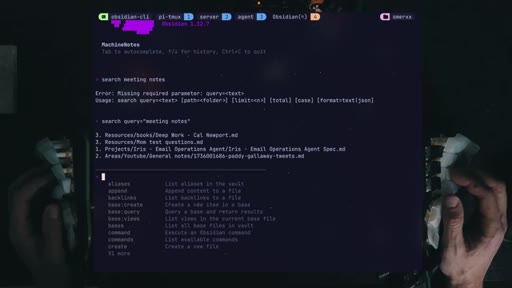
03 · CLI basics: notes, search, tasks

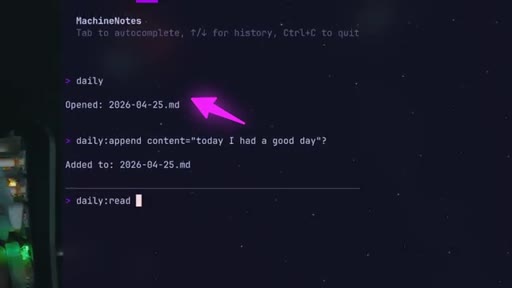
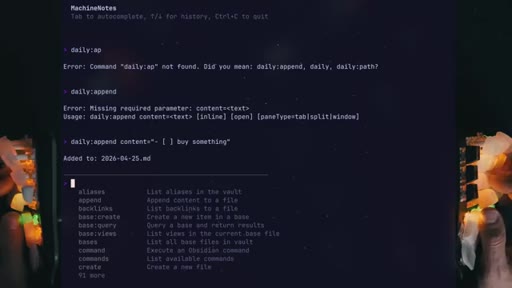
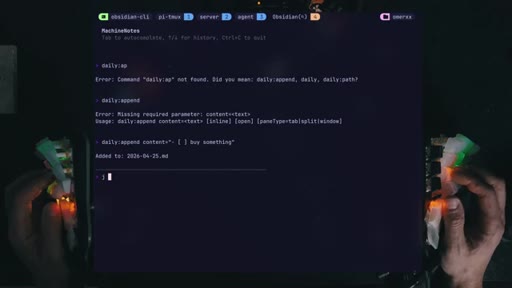
Daily note creation and append, search returning ranked note titles not grep lines. Honest UX critique.
04:16 – 05:12

04 · Sponsor + context quality argument

Oracle Developer Center sponsor. Bigger models won't fix weak memory -- fix the surrounding system first.
05:12 – 06:08

05 · Tasks + morning automation script

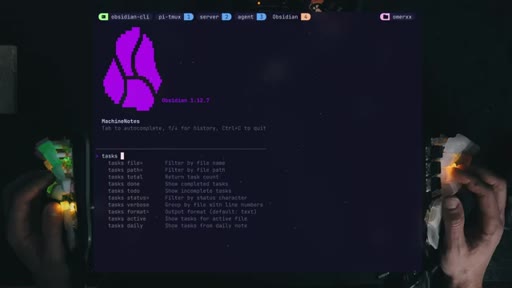
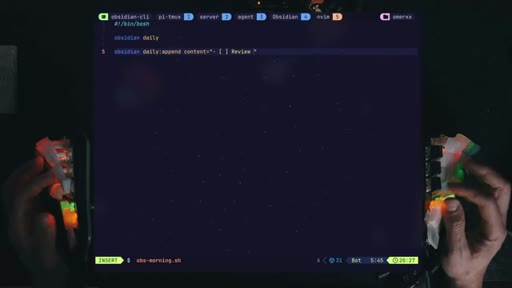
tasks daily, tasks active, filter by status. Morning script: open daily note, add inbox-review todo, follow up on unresolved items.
06:08 – 07:14

06 · Backlinks, graph intent, random-read

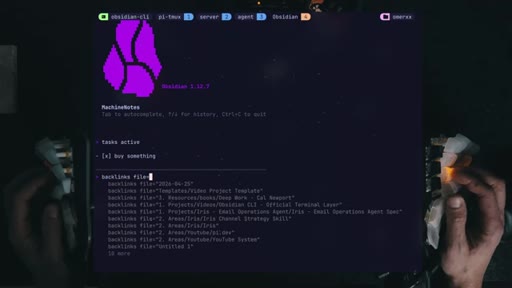
backlinks command gives agents a graph mental model. Links let agents forge knowledge connections. Random-read note for daily recall.
07:14 – 08:14

07 · dev:screenshot + TV TUI

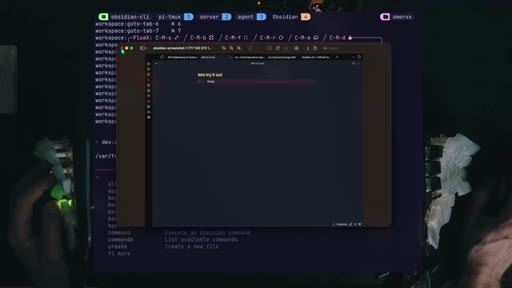
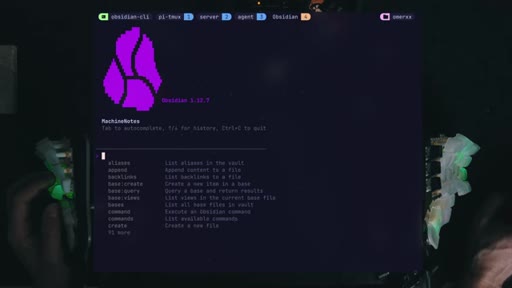
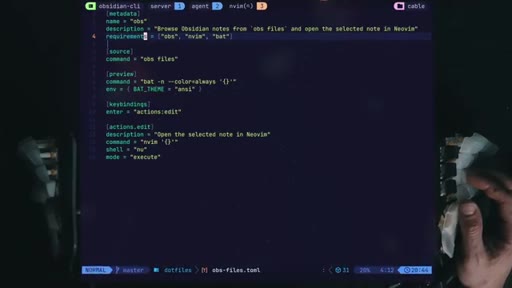
Screenshot command exposes full Obsidian UI for visual-context agents. TV fuzzy TUI for human terminal retrieval with Neovim keybindings.
08:14 – 09:36

08 · Pi agent + pi-obsidian extension

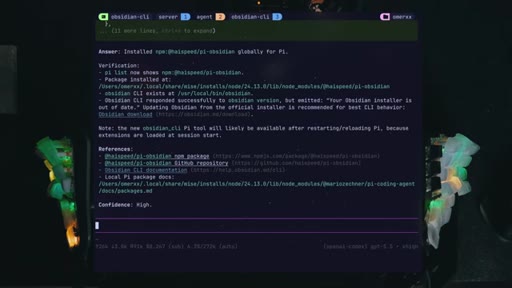
Install Pi coding agent, add pi-obsidian skill. Pi self-evaluates: compares its own CLI wrapper to extension, keeps its own, removes the package.
09:36 – 10:22

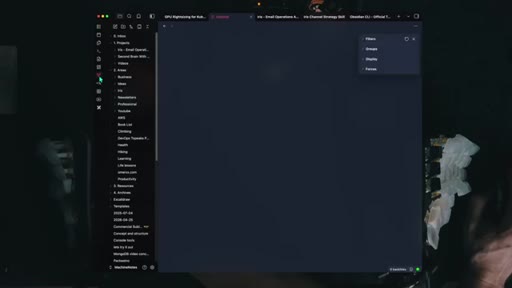
09 · Graphify introduction

Knowledge graph tool originally for code repos. Claims 70x token reduction. Host runs it on his Obsidian vault.
10:22 – 11:24

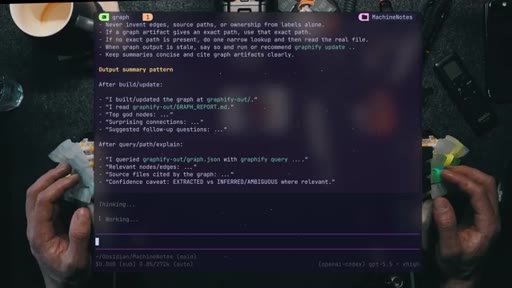
10 · Graphify + graphify-pi setup

ppex install graphify, pi install graphify-pi. Graph and skill installed. Supports Claude, Gemini, Cursor, Copilot, OpenCode, Kiro.
11:24 – 12:48

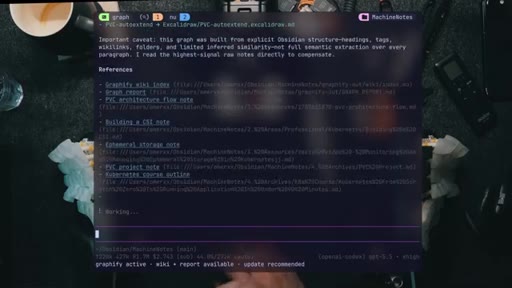
11 · Graphify in action on the full vault

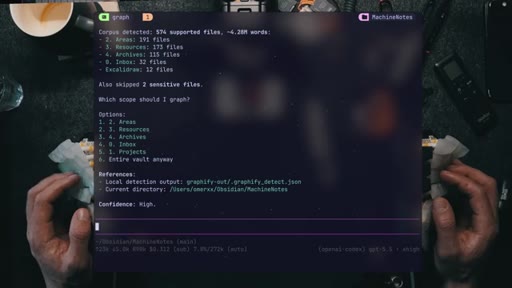
574 files, 4.2M words. God notes, surprising connections. graphify explain and query return structured responses with references.
12:48 – 13:07

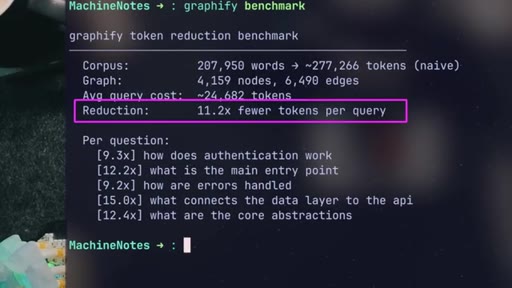
12 · Benchmark: 11.2x token reduction

207,950 words vault yields 11.2x fewer tokens per query. Not 70x, but this is a knowledge base not a code repo.
13:07 – 14:19

13 · Closing: markdown is boring and boring wins

Scriptable beats new tool. Markdown is portable, diffable, git-compatible. Warning: a big graph is useless if you don't read your notes.

§ · Storyboard

Visual structure at a glance.

open
summary.md not a system
obsidian --cli tease
CLI welcome screen
grep vs CLI
morning script
dev:screenshot
Pi agent
Graphify intro
11.2x benchmark
closing argument
§ · Frameworks

Named ideas worth stealing.

00:12 list

Three-Layer Knowledge Cake

  1. Take notes
  2. Have a place to read them
  3. Q&A on an ongoing basis

Karpathy's framework for an effective personal knowledge system.

Steal for Any second brain / AI memory video opener
11:59 concept

God Notes

Graphify's term for highest-edge nodes in a vault -- notes referenced most by others. Reveals the architecture of your thinking.

Steal for Content audit framing: what are your god posts?
00:51 concept

Obsidian as IDE

Treat Obsidian not as a note-taking app but as an IDE for reviewing and editing LLM-generated text. The CLI is the API surface.

Steal for Any reframe-a-familiar-tool video structure
§ · Quotables

Lines you could clip.

00:26
"Chat history is not only memory."
Punchy counterintuitive thesis, no setup needed → TikTok hook
00:37
"Most people just ask for a summary.md -- not a system."
On-screen text + spoken, tight contrast, speaks directly to AI audience → IG reel cold open
13:33
"I don't want another place. I want the place I already used to become scriptable."
Standalone anti-SaaS take, no context needed → IG reel cold open
13:56
"Markdown is boring -- and boring wins."
Six words, counterintuitive, quotable closer → Newsletter pull-quote
§ · Pacing

How they spent the runtime.

Hook length97s
Info densityhigh
Filler8%
Sponsor blocks
  • 04:16 – 05:12 · Oracle Developer Center
§ · Resources Mentioned

Things they pointed at.

00:12linkAndrey Karpathy LLM OS post
07:40toolTV (fuzzy TUI)
09:51toolGraphify ↗
10:55toolgraphify-pi
04:16linkOracle Developer Center
§ · CTA Breakdown

How they asked for the click.

14:01 next-video
"If you want the human side of this workflow, the Obsidian and Neovim setup is still one of my favorite videos I've ever made. If you want the agent side, watch OpenCode or Pi videos next."

Soft, no subscribe push -- two content-relevant next-video nudges.

§ 04 · The Script

Word for word.

HOOK opening / re-engagementCTA the pitch metaphor
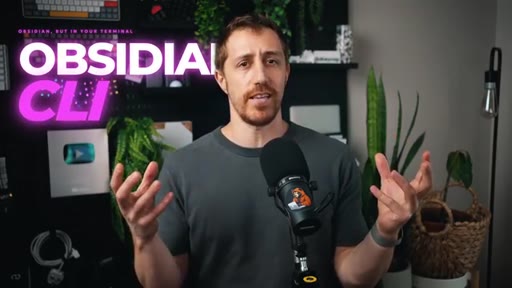
00:00HOOKThis recent Anray Karpathy post was a bit of a light bulb moment for me. It talks about the strong link between LLMs and knowledge base or in simple words AI and your second brain. It's a simple three layered cake, taking notes, have a place to read them, and then q and a on an ongoing basis.
00:16HOOKSimple, but it gets complicated if you dive in. Agents don't really have a good place to put pieces of information that we will actually use later. Chat history is not only memory,
00:26HOOKit has some lessons learned. Right? Some for the agent, sure, but some for you, the slave.
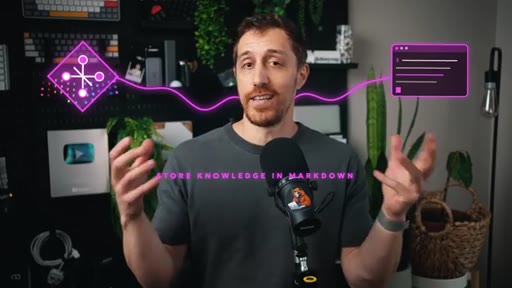
00:30HOOKI mean, the user. Many people just ask it to create a summary MD five, but that's not a knowledge system. If you tell them to store information they gathered as MD files in a central place, just like you're asking them to store code in Git repos, you now have your own handwritten notes along with knowledge you've read as ZLM responses,
00:49HOOKbut never actually captured. It can now be stored in your second brain. Now you can review this information with Obsidian.
00:56HOOKBy doing that, you're kind of treating it as your IDE. It's used to review and edit LLM text. See the connection?
01:03HOOKNow you can start asking your second brain questions, and that is exactly why Obsidian's new CLI is so interesting. And on top of that, I added another open source to bring this concept to life but on god mode because the goal here isn't LinkedIn fluff. It's actually getting around my own personal second brain and using it.
01:22HOOKSo this video is not just Obsidian runs in the terminal now. That's cool. Not the point.
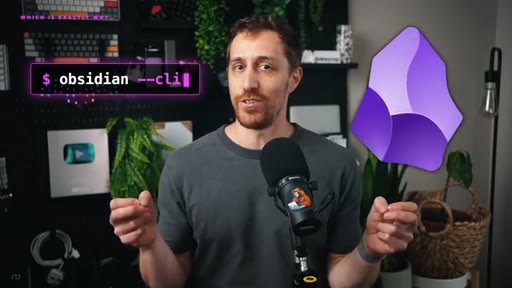
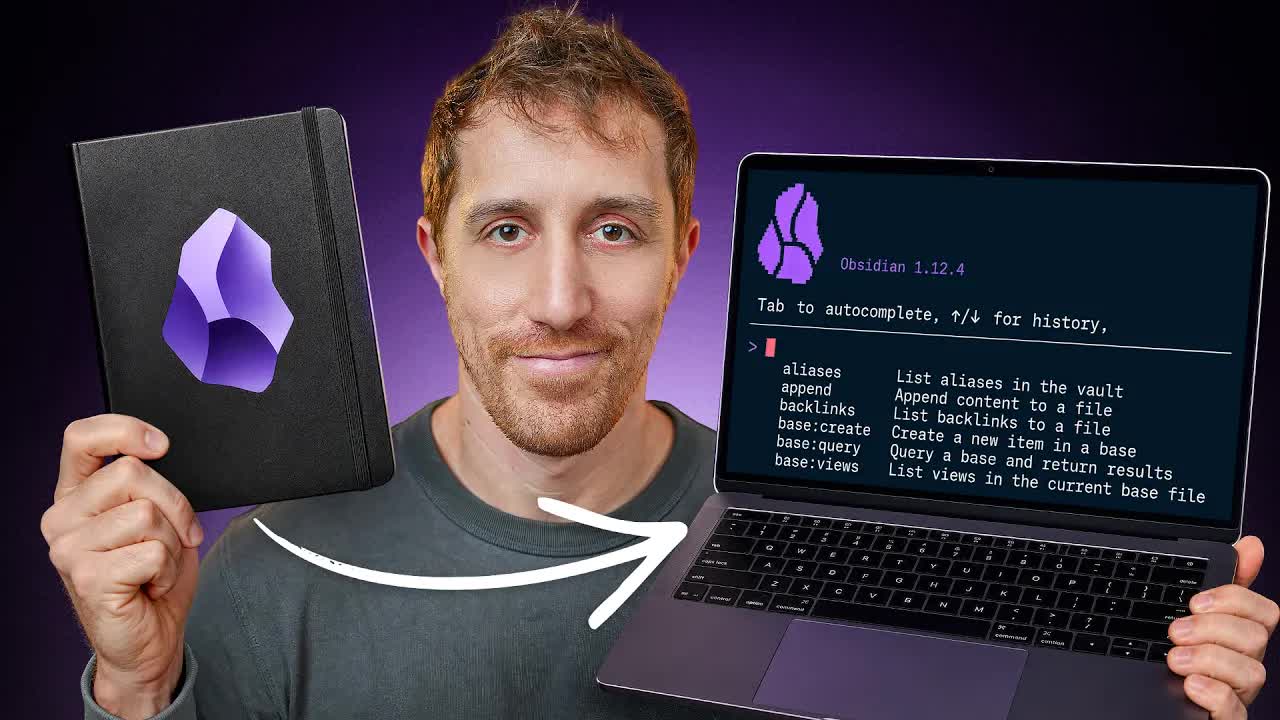
01:26HOOKThe point is Obsidian might be the perfect interface layer between you and your agents, and we're going to take it from this to, well, this, a context aware system. Let me show you.
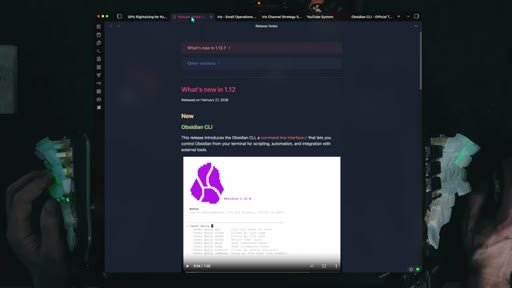
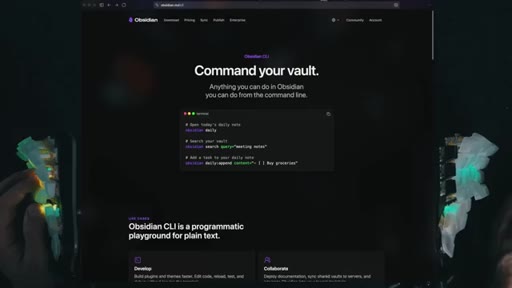
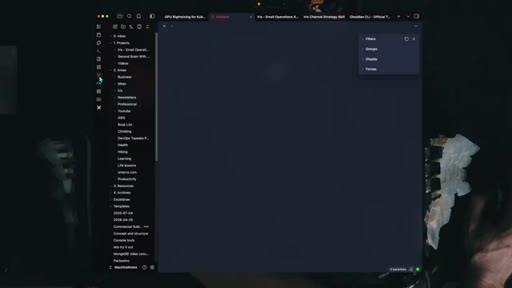
01:44Let's first get the thing to try out before we dive deeper into what we can do, but more importantly, how to do it. If you've upgraded Obsidian recently, you have noticed this, an Obsidian command line interface
01:56where you can pretty much do anything you like with Obsidian through the terminal. Obviously, the point isn't regular note taking, but rather scripting automation and integrating with tools. You'd want the latest Obsidian installer downloaded and updated to the latest release.
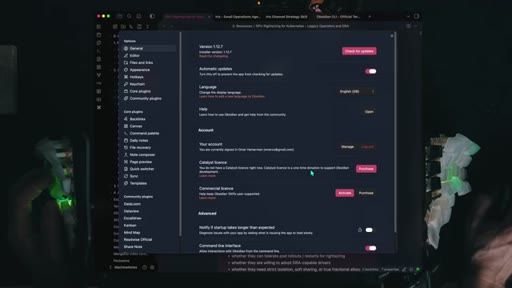
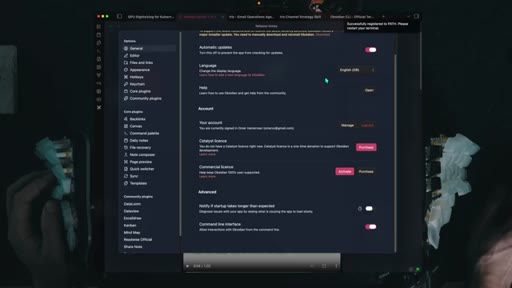
02:11Next, head over to your settings or command comma for Mac users where you'll now see a command line interface activation on the bottom. This button is helpful, but I can tell you it doesn't always do the full job, and you may head overexcited to your terminal just to see Obsidian command is not found.
02:28Not to worry. The CLI is now under the Obsidian app path, but an executable called Obsidian hyphen CLI, which you can symlink to local bin.
02:37That's it. Pop it open. Oh, and make sure Obsidian's
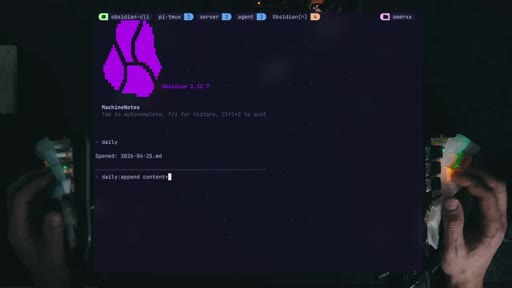
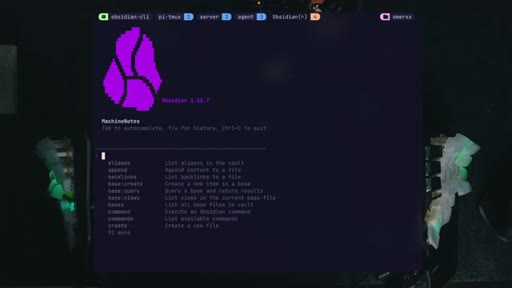
02:40open at the same time to see the same vault welcoming you. It's not fancy. It does look like they've used charm to build it and it's a list of commands that you can find and use.
02:50You can start simple and create a daily note with thoughts, journaling, and tasks if you use these. The syntax alone here already feels like it's not intuitive or user friendly, if I may. You have to set sub commands and add parameters like it's a curl request.
03:05Nevertheless, new note from the CLI. You can read it directly, and if you pop Obsidian, you'll see the same note waiting for you opened.
03:13You can keep appending content to your note like so and the syntax would get translated to proper markdown like Obsidian's to do slash done lists. But writing notes from the CLI is not very exciting.
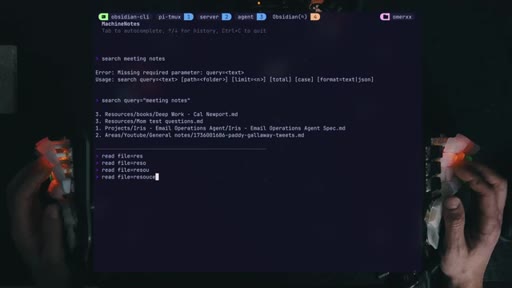
03:25Sure. It's very helpful for the agent which will soon connect, but let's talk about searching. If you search for something like meeting notes and it finds a bunch, some not exactly what you'd expect from this kind of a search term.
03:38Here's why. Before the CLI, your agent searches like this with grep, rip grep or even worse, just scanning files manually. That gives you raw matches, no structure, no ranking unless you built it, and of course, no awareness,
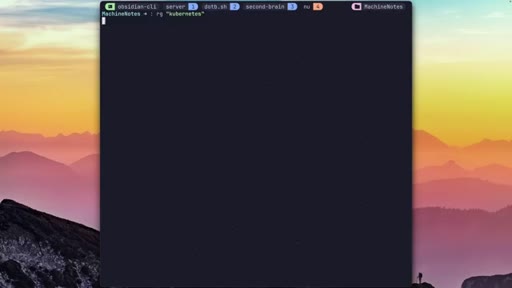
03:51non Obsidian semantics. So fast but dumb. With the CLI, instead of here are 200 lines that match Kubernetes,
03:59you get something closer to no titles, relevant matches. That means your agent can pick pick notes, not lines. Obsidian search isn't just text search.
04:08It understands your notes tags, the path in the vault, your front matter fields, the entries on top of your notes. And lastly, probably the most important bit of everything, understanding links.
04:18Now if you actually want to read one of these findings, you'll be very disappointed to find this UX was not made for you. I mean, you'd expect at the very least that the results are fed into a fuzzy list, but nope. Not even auto completion when you do get the name right.
04:32Literally provide the full name or path to use. You can view it directly or have it pop up in Obsidian. One thing I keep noticing with AI tooling is that people reach for bigger models before fixing the surrounding system.
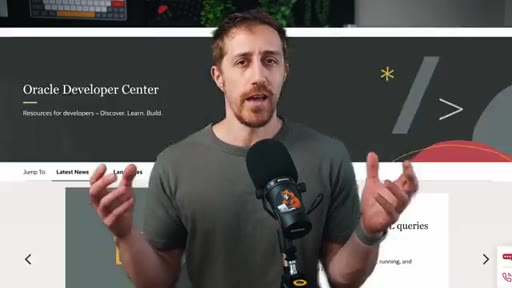
04:45If your agent has weak memory pool retrieval or no use for grounding, a larger model usually just gives you more expensive confusion. I was reading through Oracle's developer resources and two things stood out. One was getting more out of your smaller language models.
04:59The other was agent memory and why so many agents lose context once a task gets a bit longer. That feels much closer to the real engineering problem than generic AI hype. If you're building internal tools, Copilot, or automations,
05:12the real leverage usually comes from better context, better memory, and better data flow, not just swapping in a larger model and hoping for the best. If you want to dig into that side of the stack, Oracle has a developer resources page with articles, code, and examples worth browsing. Link in the description.
05:29Thank me later. And now back to the video. Some commands just shorten the path for automation.
05:34So if your tasks are built into daily notes and they should, we can talk about that another time, you can get them very quickly like so. These are daily tasks. If you just go tasks, well, you'll see every single task in your system.
05:48You can filter by file. You can actually get the ones that are done or in to do or any status you've set. A morning automation script can open the daily note then add a to do line to check your notes inbox, which is a critical step in the power method if you're following the second brain structure.
06:05And you could also tell your procedure to follow-up on unresolved items. Now this is where intent starts showing. You can find links and backlinks for notes, which basically gives you the mental model of a graph to work with, allowing an automation that collects data to search but also forge knowledge.
06:22Hear me out. Links are part of what makes note taking in Obsidian, Notion, and other similar systems so good. You can use them to break down notes or simply link to other relevant written pieces.
06:33Implementing the para method in Obsidian or Notion relies heavily on these links. You link a resource to a project or an area and maybe another resource.
06:43You've made the connection because it makes sense. You can now hand over that information to your automation or AI or what have you. When you ask the information, the context is not only bigger, it's smarter.
06:54When you create knowledge, bringing up the Carpathi post again, you let the agent give you context. Starting to get it? There are some fun ones too, like a random read note that you can have your personal assistant fetch for you every morning or just add it to the morning script.
07:09This is a real way to slowly recall old yet relevant notes over time. But if there's one thing that LLMs absolutely suck at is understanding visual concepts.
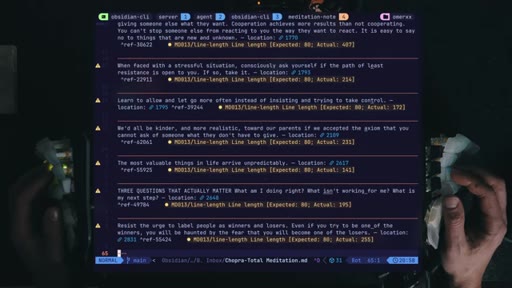
07:20If you're debugging or building a plugin or just want to fix workflows in Obsidian using an agent through the CLI, its API is exposing a screenshot that you can take on demand exposing the full UI. Open notes, tabs, menus, whether collapsed or expanded, adding context to the flow you're trying to achieve with an agent running underneath.
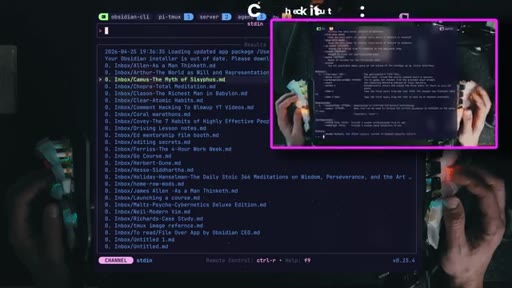
07:40Now if for whatever reason you are picking up notes on your own as a user through the terminal, I've recently shared a video around TV, a fuzzy searchable TUI where you can just pipe over your Obsidian files and enjoy a quick retrieval from the comfort of your terminal. My god. That was a nerdy sentence.
07:56I need to put that on a t shirt. TV also has channels where you can configure the preview and different actions with key bindings, like you'd probably want a key to pop a note to Neovim and another to open it on Obsidian or other actions that you can take with the CLI like tagging, aliasing, etcetera. More about TV in the video on the channel.
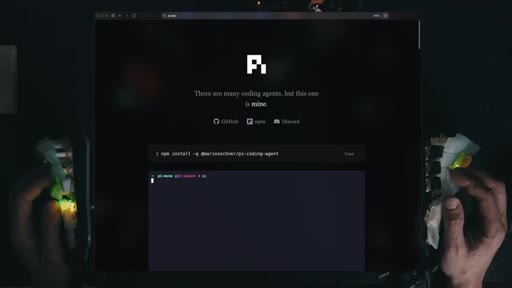
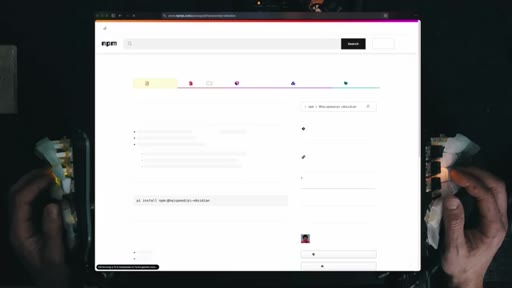
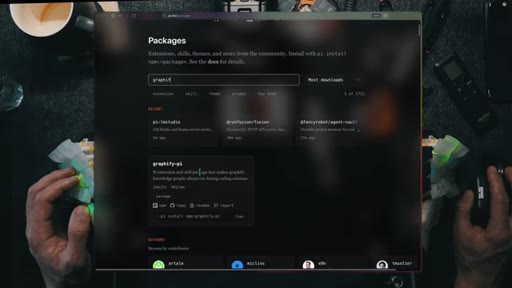
08:14Now we've been dancing around the CLI, it's time to actually let the agent use it. Another video I recently made was around PY, a lean agent I've been falling in love with recently. So I'll head over to its packages repo and grab pi obsidian,
08:27a small extension that adds a skill for the obsidian CLI. You can install it with pi install command or b me and let it figure out stuff on its own, which is an incredible inefficient token usage. And just like that, it's now on top of the CLI.
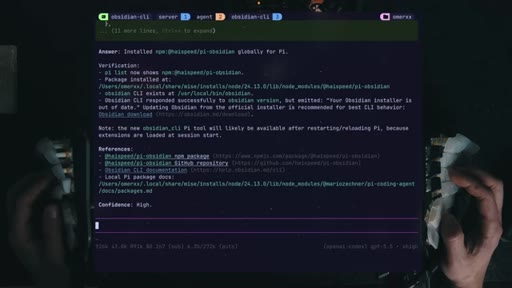
08:41By the way, one of the beautiful things about Pi is its ability to change itself according to your needs. So earlier, I asked it to teach itself about the Obsidian CLI. After installing extension package, I actually asked it to compare the two solutions, and until it gives us the result, we can use Py's on demand inline session to query my Obsidian Vault already.
09:01Now mind you, this took twenty seconds, not ideal, but in my defense, I am running highest reasoning model here, which may force its hands trying to overkill a simple task. Regardless, the note is opened and PY realized it had done a better job itself by wrapping around the CLI, so it kept its own thing and removed the extension.
09:19The CLIs in our tool belts and the agents. You can script around it, type results to your favorite TUIs, and then join notes through the terminal. But we've mentioned tokens usage a lot earlier, both the fact that the CLI should improve the consumption, but also
09:32the quality of usage. Just scanning files is fine, but not extremely efficient. The CLI improves capturing notes and improves the results.
09:40But if we take a quick look again at Karpathy's previous LLM post, we're now at stage three, q and a. We want to query the knowledge base and maximize both docking usage and quality of results. Someone actually went ahead and built it.
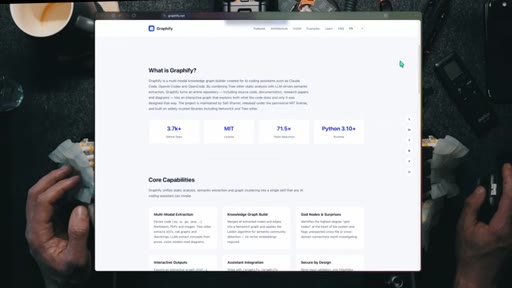
09:54Graphifi graphifi graphifi is a knowledge graph for coding assistance, and I'm pretty sure this was designed for code repos. So you can improve the questions on top of these, like how the author is implemented, where's the data layer, and so on. It uses tree seater and every context it can find to build a graph that should reduce up to 70 times token usage.
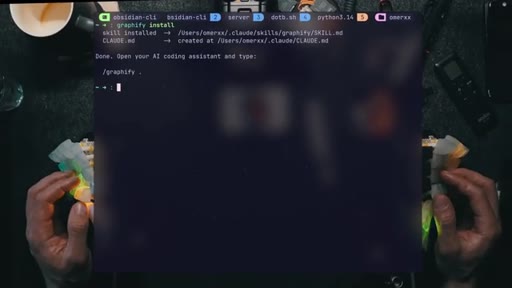
10:15Now that graph made me think of this immediately. So I thought what the hell, let's run it run on my notes fault. Ppex install graphifi with two y's and you can start working.
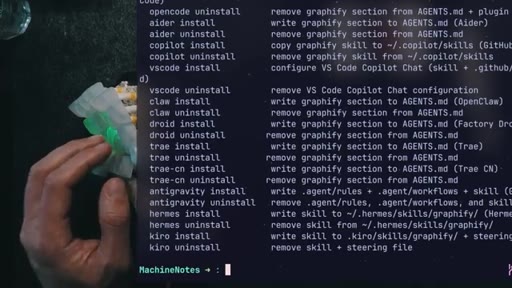
10:27If you run install, it'll create a Claude skill and instructions, but I'm not a Claude fan. It comes with installations for Gemini, cursor, codecs, OpenCode, Ader if someone still uses that, Copilot, Versus Code, Claw Hermes. If an AWS has attempted an IDE, Kiro is here.
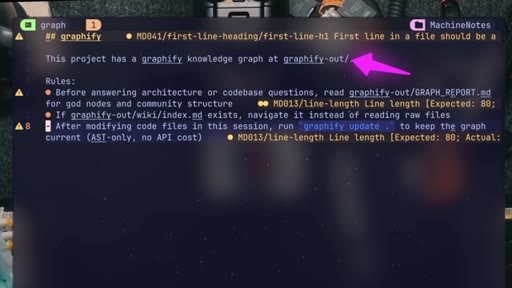
10:42Long list, no PIE. If I pick open code and check the instructions, they added a reference to Graphify out directory and a request to check the graph, report, and index, then update when necessary. If you're a PI user, someone took care of that for you and there's a GraphifyPy package ready that adds roughly the same workflow to PI.
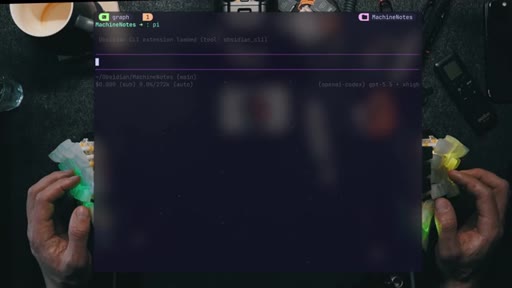
11:03It'll use the same out path there, remind the agent to traverse it before any search, etcetera. PY install, give it a minute, and we're good to go. We now have graphifi and a matching skill because the extension ships with both.
11:16You can use the command from PI or a generic skill command. If you let it run with no instructions, it'll just print the commands itself and other options. But we want actual work.
11:26Let's build a graph, mister. And after a minute, get this. It actually stopped itself because it's past the intended size.
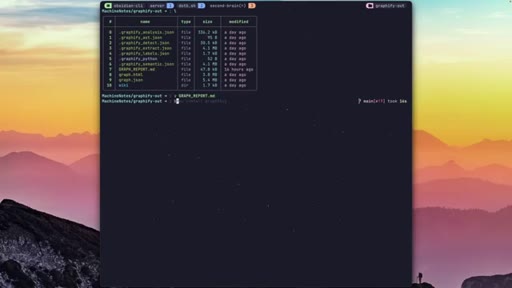
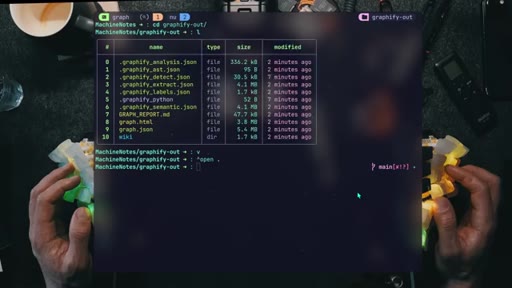
11:34Like I mentioned, this was made to provide answers to relatively small repos with a bunch of files in the system and forcing its hand into something massive. So let's do the entire vault, and I'll try to show you the result in hopes my Mac doesn't start smoking. Over five minutes later, we've got a report, a JSON, Wiki index, and other stuff.
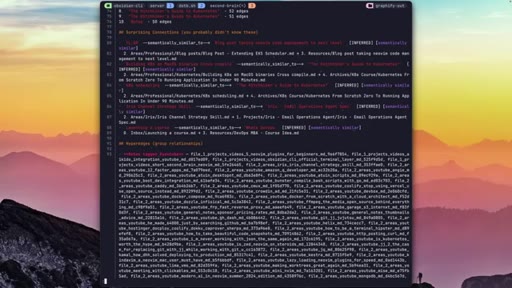
11:53The report, while a bit much to go into, looks for what's described as god notes, the notes with most edges, most well connected. It also lists surprising connections like launching a course note that I have is semantically similar to what's DevOps.
12:08Then there are tags and many other indexes, cohesion calculations of found notes. But here's the fun part. Graph HTML opens this, and while it's beautiful, I don't think you'll learn anything by just watching it.
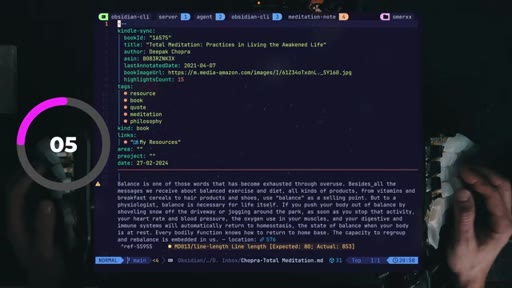
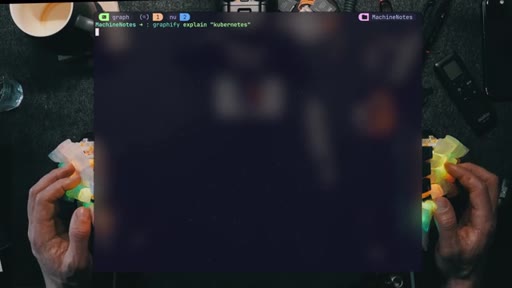
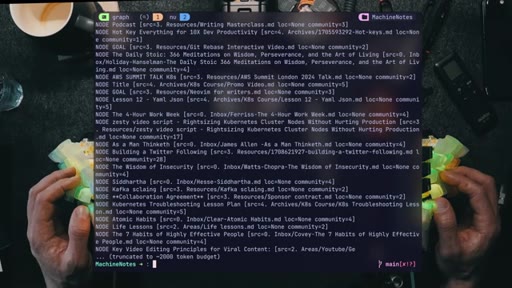
12:21What you can, however, do now is run explain a topic and the system would yield connections for that context. This is basically a reasoning layer that checks the graph and adds a touch of context. If you want proper answers to questions, you can query things like everything I know about Kubernetes.
12:36You'll get all the relevant nodes ready to compile a response. When you finally actually do it from the agent, you'll get response you're looking for properly structured for review, references, and everything you like. Lastly, while I'm not one to get excited about benchmarks, surely not from the tool we're benchmarking,
12:54Grafify comes with its own internal benchmarking tool that tries to analyze reduction of tokens per query based on the index and the graph it's generated. In our case, not the 70 x promised, but again, this is a knowledge base, not a repository. You be the judge.
13:09At this point, you might ask, why not use one of a million AI note taking tools that promise to organize your life, summarize your meetings, write your emails, and probably raise your kids if you upload enough PDFs? But I don't want another place. I want the place I already used to become scriptable.
13:24That's a very different thing. Obsidian doesn't force agents worldview on me. It doesn't say here's your AI workspace, here's your AI memories, here's your AI graph that only exists inside our subscription.
13:36It just says here are your markdown files. That's powerful because markdown is boring and boring wins. Boring means portable, it means diffable, it means I can use git, and I can edit in NeoVim.
13:46And if Obsidian disappears tomorrow, I still have my notes. Lastly, I must say, this does not make Obsidian a magical second brain that thinks for you. You can't outsource thinking
13:56CTAyet. If you don't compile notes and read them, this isn't knowledge. Not only it's not cemented in your brain, it doesn't even get there.
14:03CTAA large graph is great, but that's just a fancy way to waste even more token. And if you want the human side of this workflow, the Obsidian and Neovim setup is still one of my favorite videos I've ever made. If you want the agent side, watch OpenCode or Py videos next.
14:17CTAThank you for watching. I'll see you on the next one.
— full transcript
§ 05 · For Joe

Steal the reframe.

DevOps Toolbox playbook

The whole video is built on one reframe: the tool you already use should become scriptable -- and that structure is fully portable.

  • summary.md is not a system is a repeatable hook for any you're-doing-X-wrong video -- find the naive workaround your audience uses and name it.
  • Honest UX critique before the audience gets there (the syntax feels like a curl request) builds credibility fast.
  • Markdown is boring and boring wins is a standalone short -- clip the last 8 seconds, no context needed.
  • The three-layer cake frame (notes > read > Q&A) is a clean structural scaffold for any knowledge or productivity video.
  • God notes concept: what are your god posts? is a hook for any creator strategy or content audit video.
§ 05 · For You

Make your notes actually useful to your AI tools.

If you use Obsidian and want smarter AI

Your AI assistant is only as good as the context you give it -- and right now, most people are giving it nothing.

  • Install Obsidian 1.12+ and enable the CLI -- 5 minutes gives AI agents structured vault access instead of raw file dumps.
  • Run Graphify on your vault to find your god notes -- the ones everything else connects to. Review those first.
  • A morning automation script (open daily note, check inbox, follow up on unresolved items) takes 30 lines of bash and compounds over time.
  • You don't need another AI note-taking app. You need the one you already use to become scriptable.
  • Markdown is portable, diffable, and git-compatible. Your notes survive any tool shutdown.
§ 06 · Frame Gallery

Visual moments.