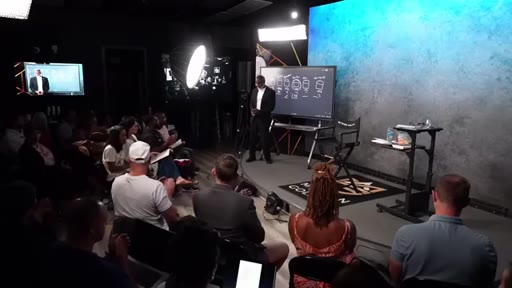

Myron Golden · Youtube · 18:29

Regardless Of Your Income You Can Get Rich

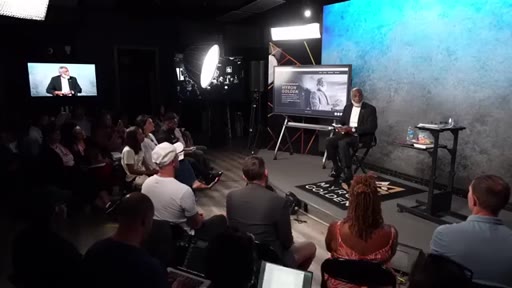
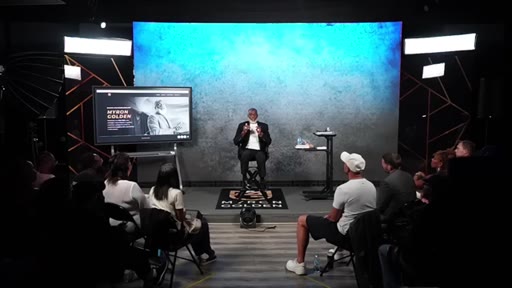
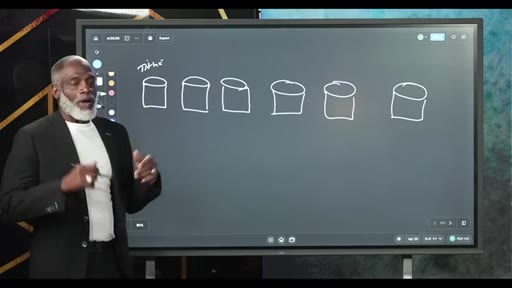
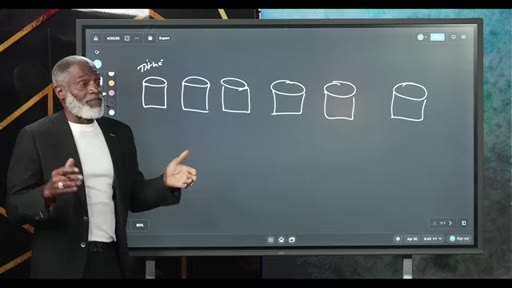
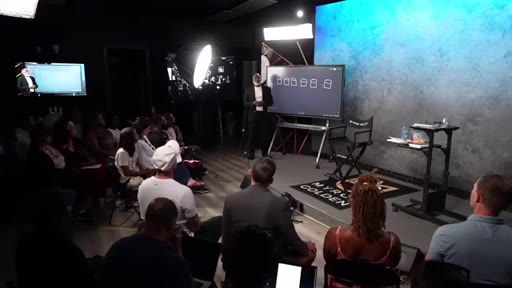
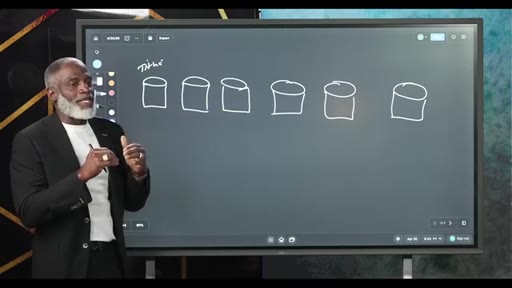
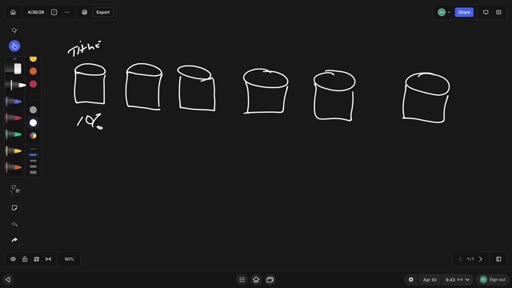
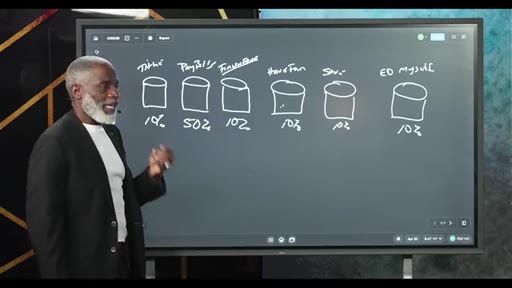
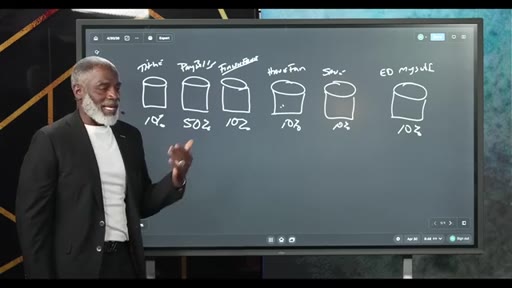
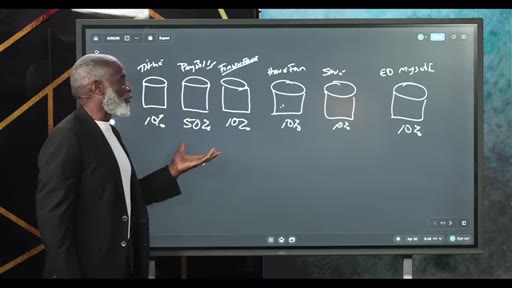
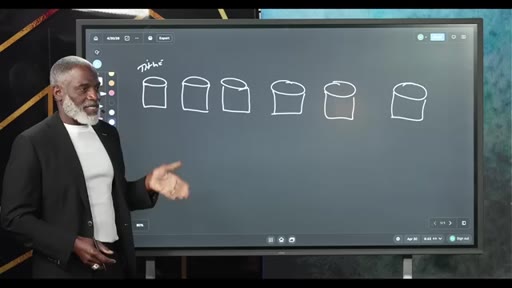
An 18-minute live seminar where Myron Golden draws six cans on a whiteboard and proves that income never made anyone wealthy — systems did.

Posted
May 4th 2026
17 days ago
Duration
18:29
Format
Tutorial
educational
Channel
MG
Myron Golden
§ 01 · The Hook

The bait, then the rug-pull.

Myron Golden opens with a line that sounds like every other wealth guru — then immediately earns it. He was driving a trash truck for $6.25 an hour in 1987, newborn at home, and thought $300 a week was a life goal. That origin story is the hook payload: the promise of millionaire wealth lands differently when the speaker started with less than you have right now.

§ · Stated Promise

What the video promised.

stated at 00:10 "I am gonna show you how to become a millionaire regardless of how much money you make." delivered at 09:58
§ · Chapters

Where the time goes.

00:00 – 01:38

01 · Origin story + promise

Trash truck at $6.25/hr, $300/week as vision ceiling in 1987. Sets up the core thesis: income alone never made anyone wealthy.
01:39 – 02:26

02 · Problem reframe

You do not have money problems because you do not have enough money. You have money problems because you do not have a systematic way of managing the money you make.
02:27 – 05:22

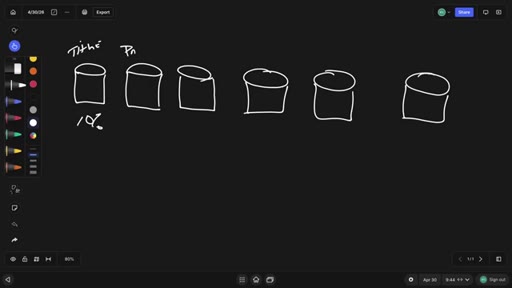
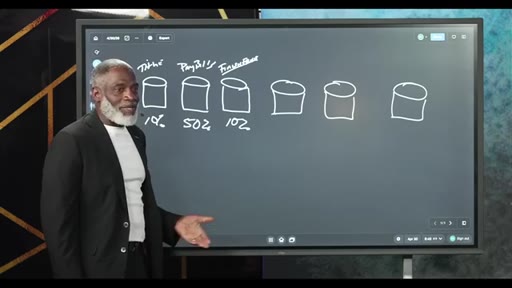
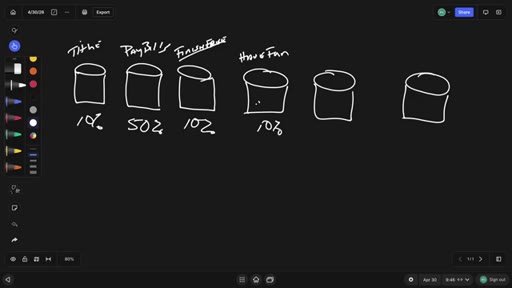
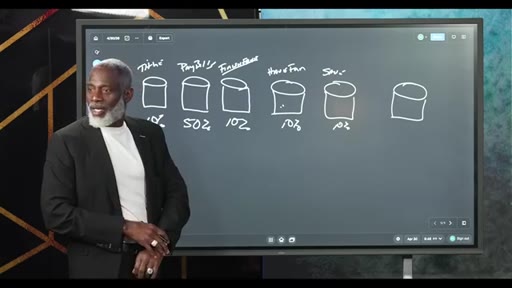
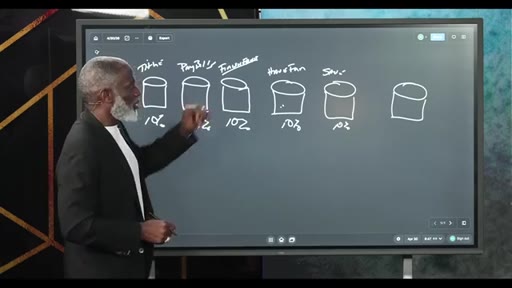
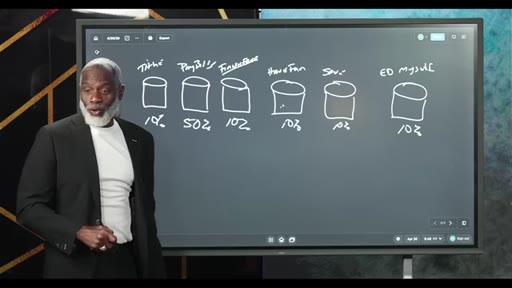
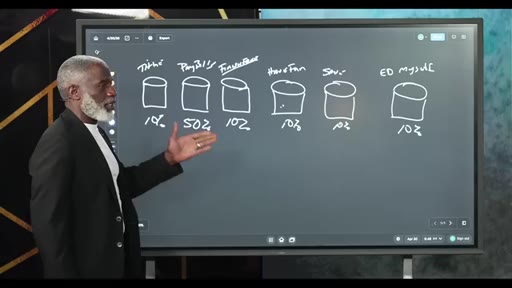
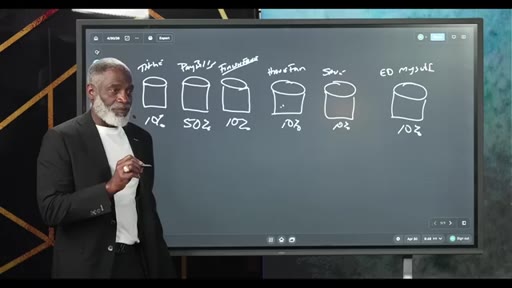
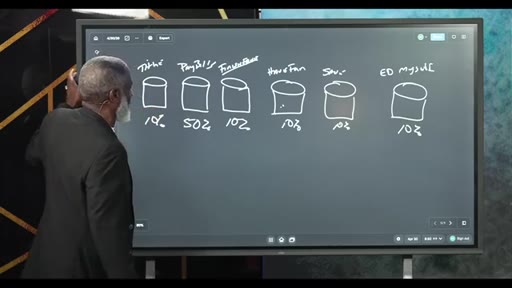
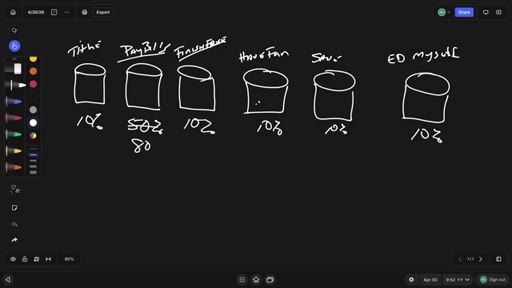
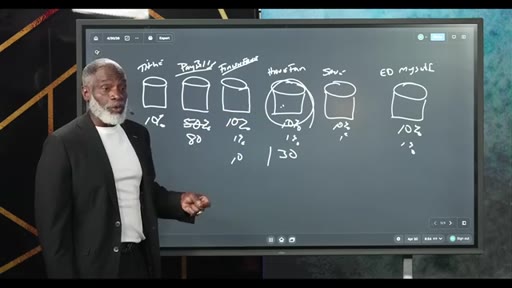
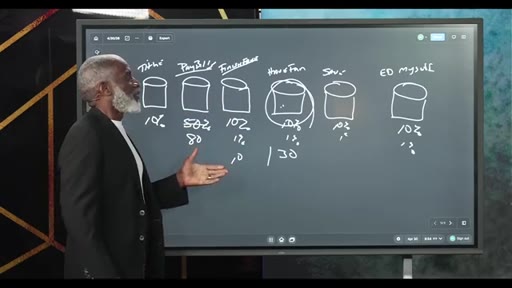
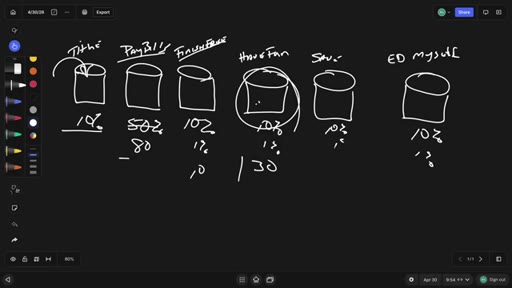
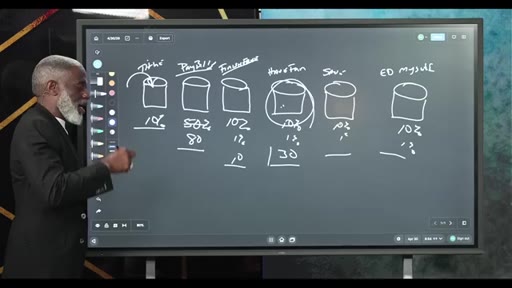
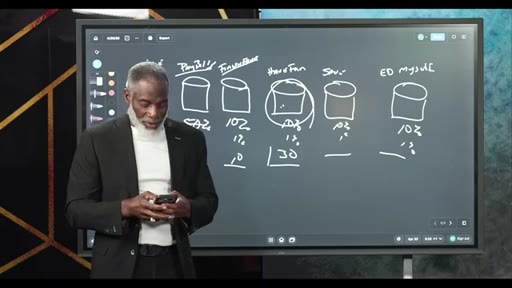
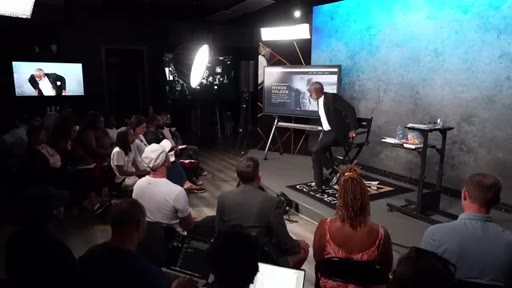
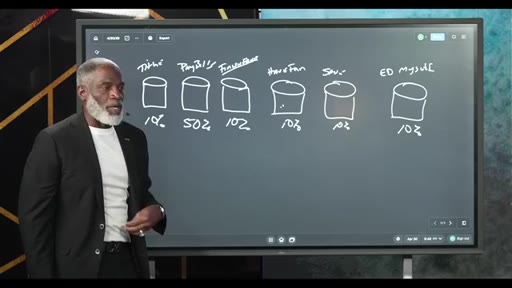
03 · Can 1: Tithe (10%)

Extensive theological explanation of tithing — Old/New Testament model, church misapplication of tithe funds. Lands at 10% as the first allocation.
05:23 – 06:45

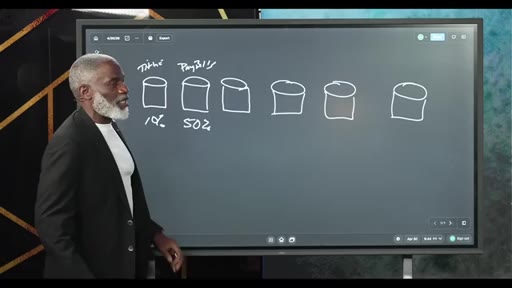
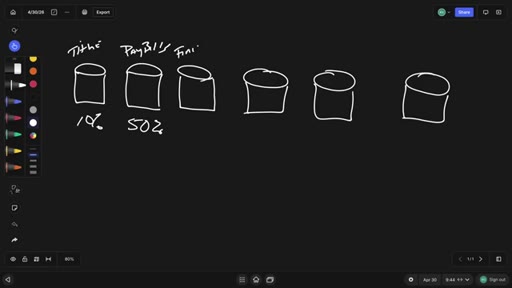
04 · Can 2: Pay Bills (50%)

Live on 50% of income is the target state, not the starting point. Reframes listener resistance directly.
06:46 – 07:31

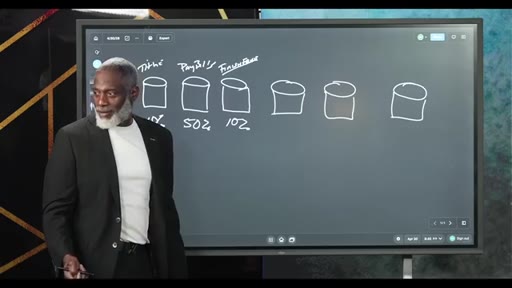
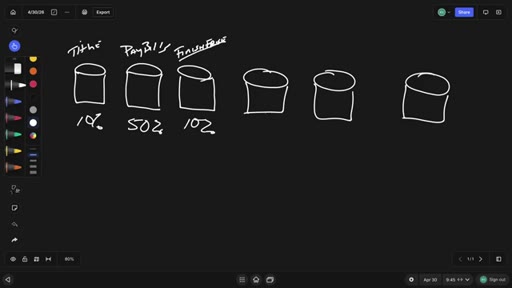
05 · Can 3: Finish Free (10%)

Legacy wealth account — no one in his family after him starts from scratch. Rejects retirement as a concept.
07:32 – 08:16

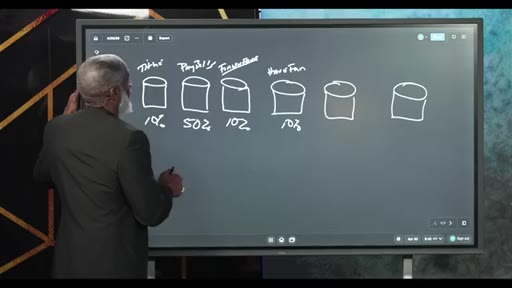
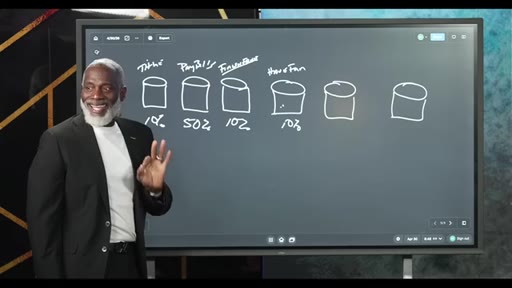
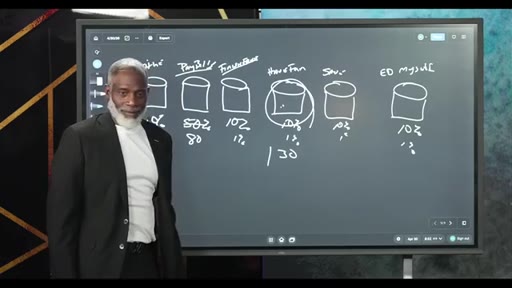
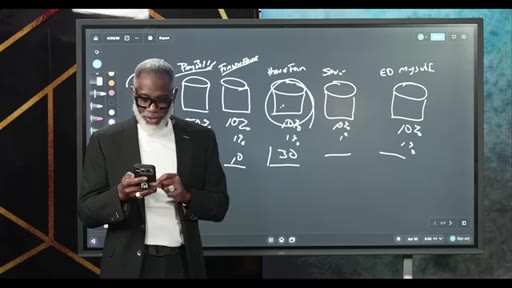
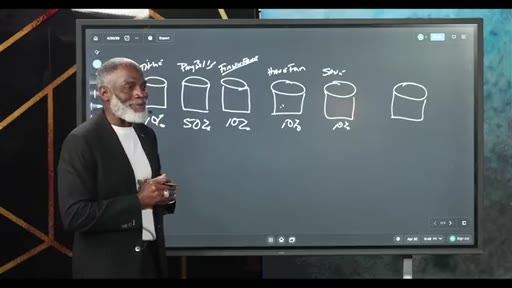
06 · Can 4: Have Fun (10%)

Must spend it ALL every month. The highest-leverage earning motivator in the system — forces you to earn more to fill it.
08:17 – 09:01

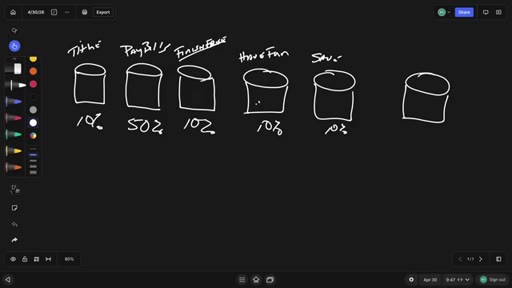
07 · Can 5: Save for What I Want (10%)

Down payments, big purchases. Uses bank debt strategically when terms are favorable.
09:02 – 09:58

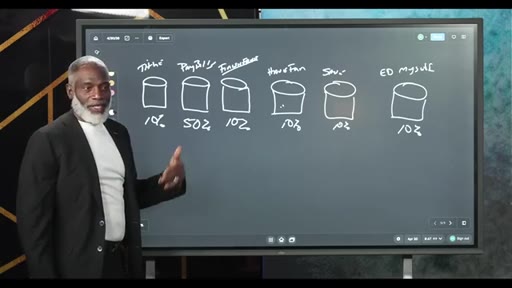
08 · Can 6: Educate Myself (10%)

Self-development, books, courses. Six cans total 100% of take-home income.
09:59 – 13:07

09 · Entrepreneur sidebar + objection handling

Pay yourself a W-2 salary. Addresses the cannot-live-on-50% objection via multi-family household example. Digresses into adult children living at home until marriage.
13:08 – 16:54

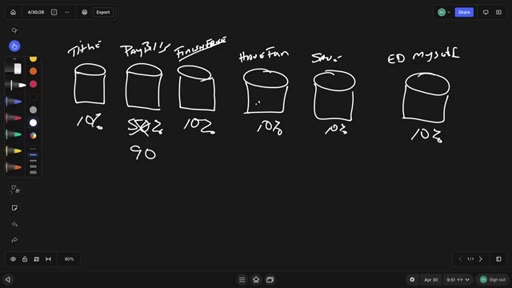
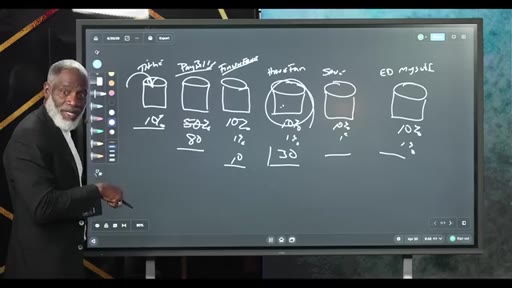
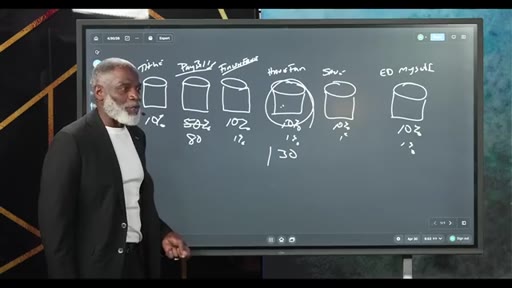
10 · The ratchet method

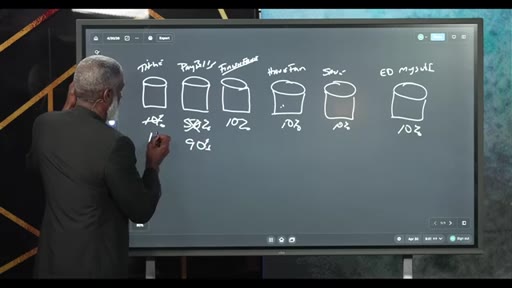
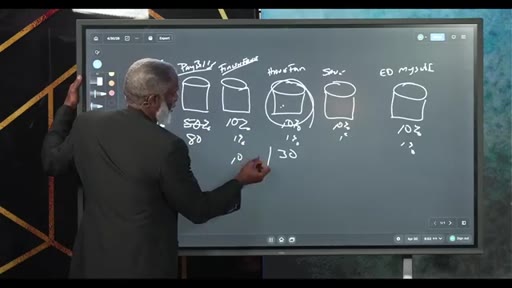
If you cannot hit the target ratios, start where you are and add 1% per month to each non-bills can. Cut cable, Netflix, restaurants. Money is not in the habit of hanging around with people who do not manage it well.
16:55 – 18:29

11 · William Blake close

Reads an 1801 Blake quote about doing good in minute particulars as a frame for financial detail-orientation as mastery.

§ · Storyboard

Visual structure at a glance.

open
problem reframe
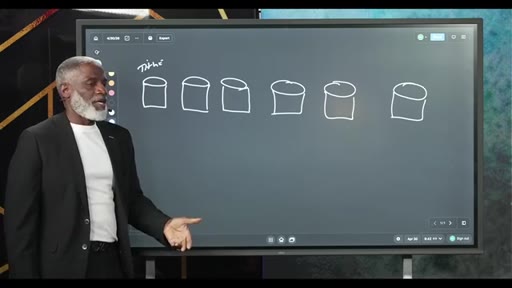
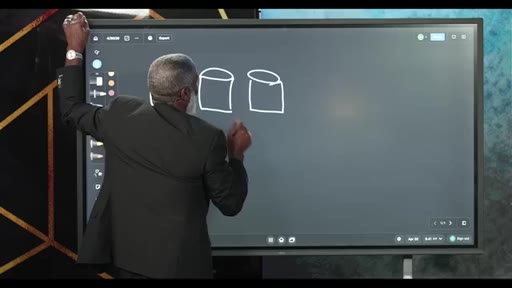
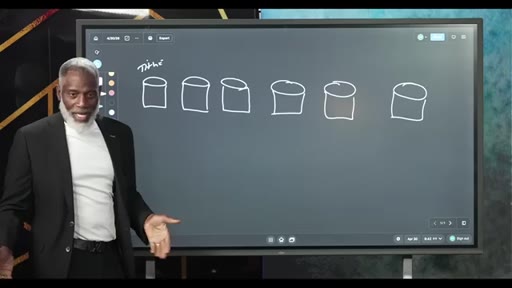
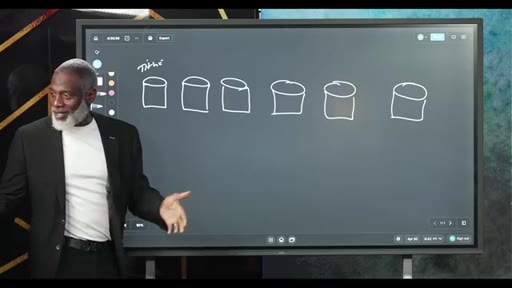
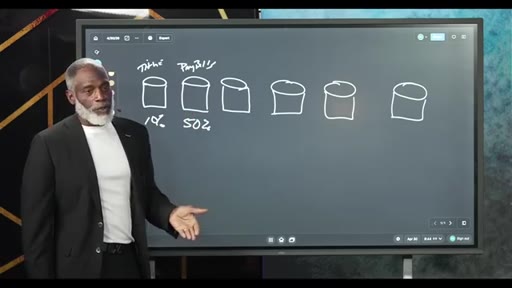
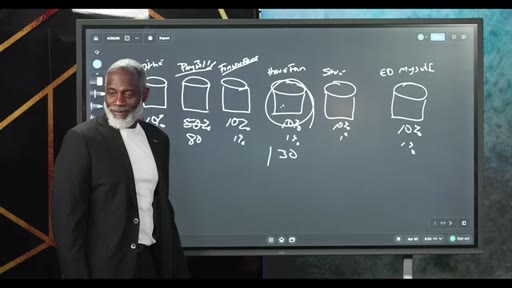
6 cans whiteboard intro
fun can reveal
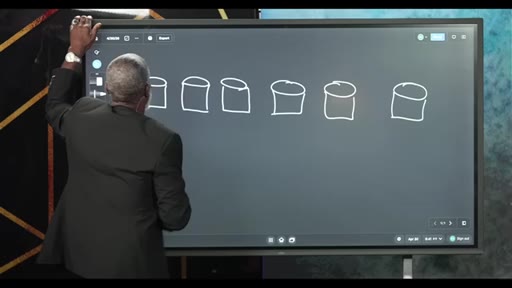
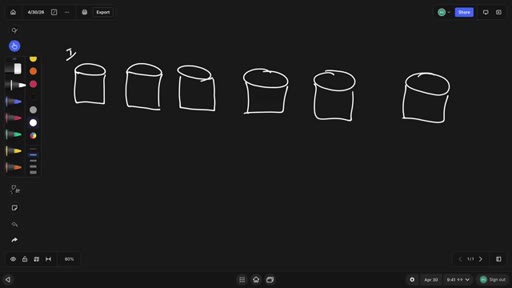
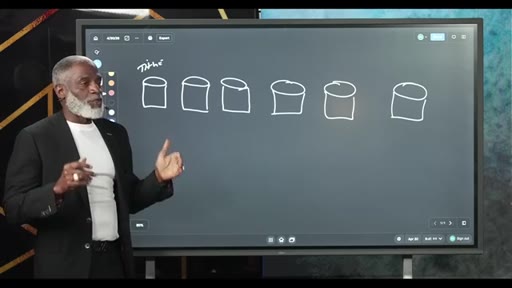
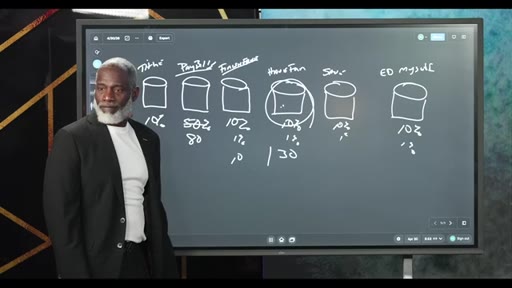
full 6-can system complete
ratchet method
Blake quote close
§ · Frameworks

Named ideas worth stealing.

02:27 model

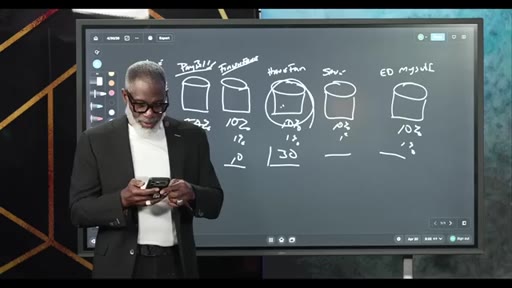
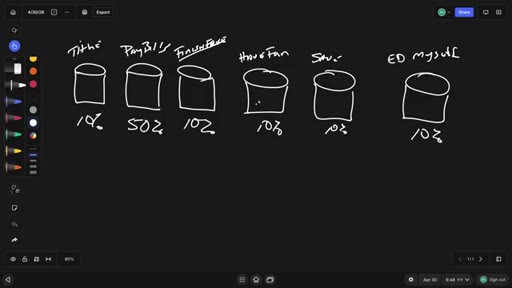
The 6 I-Can Cans

  1. Tithe 10%
  2. Pay Bills 50%
  3. Finish Free 10%
  4. Have Fun 10%
  5. Save for What I Want 10%
  6. Educate Myself 10%

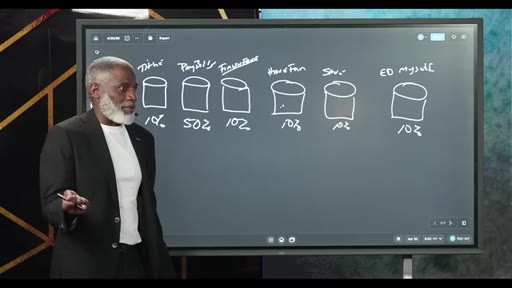
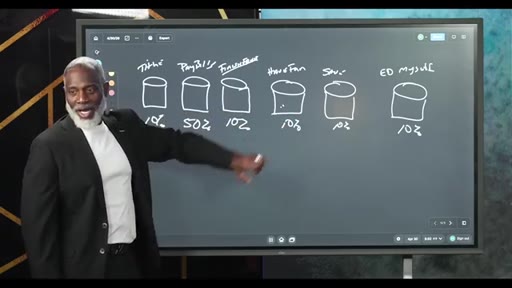
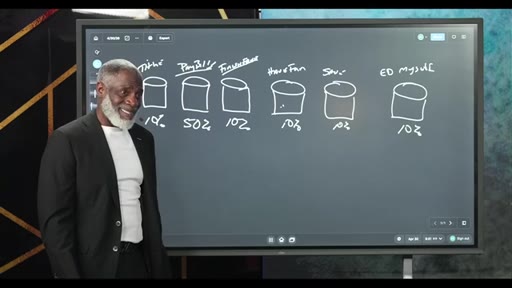
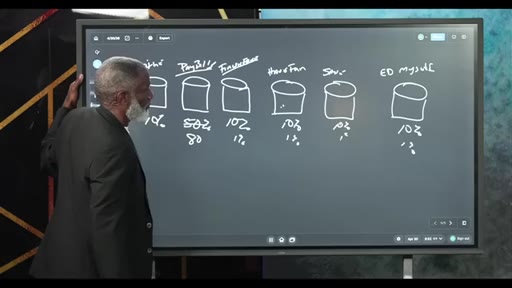
Percentage-based income allocation across six dedicated accounts totaling 100% of take-home pay. Bills capped at 50%; all others at 10% each.

Steal for Any money mindset content, financial education offer, or tool that touches income allocation
13:08 concept

The Ratchet Method

If you cannot yet live on 50%, start at your current spending ratio and add 1% per month to each savings/investment can. Never change the goal — change the approach speed.

Steal for Habit-building frameworks, starting-from-zero content, patience-framing for big goals
07:32 concept

Fun Can Motivation Engine

The Fun Can must be fully spent monthly. This behavioral constraint turns it into an earning motivator: you want to earn more because you want more fun money. Designed to make financial discipline feel like abundance rather than restriction.

Steal for Reward-system design, habit stacking, anti-frugality messaging
§ · Quotables

Lines you could clip.

01:49
"You do not have money problems because you do not have enough money. You have money problems because you do not have a systematic way of managing the money you make."
Complete thought, no setup needed, hits the core thesis in one breath → TikTok hook
15:02
"Instead of disciplining themselves in the present to pay for their future, they steal from their future to pay for their present. And then wonder why when their future becomes their present, they do not have anything."
Tight parallel structure, memorable phrasing, stand-alone insight → IG reel cold open
15:14
"Money is not in the habit of hanging around with people who do not manage it well. And if you cannot manage it when you have a little, you will not manage it better when you have a lot."
Personification of money is sticky and quotable; second line is the twist → TikTok hook
17:41
"He who would do good to another must do it in minute particulars. General good is the plea of the scoundrel, the hypocrite, and the flatterer."
William Blake 1801 applied to finance — surprising source creates shareability → newsletter pull-quote
§ · Pacing

How they spent the runtime.

Hook length98s
Info densitymedium
Filler18%
§ · Resources Mentioned

Things they pointed at.

§ · CTA Breakdown

How they asked for the click.

18:25 subscribe
"Become detail oriented when it comes to your money. It will change your life for the rest of your life. Thanks for watching."

Soft close — ends on Blake quote application, no explicit subscribe ask in video. CTAs in description only: Make More Offers Challenge, two books.

§ 04 · The Script

Word for word.

HOOK opening / re-engagementCTA the pitch
00:00HOOKYou're about to discover that you can become a millionaire. In fact, in this video, I'm gonna show you how to become a millionaire regardless
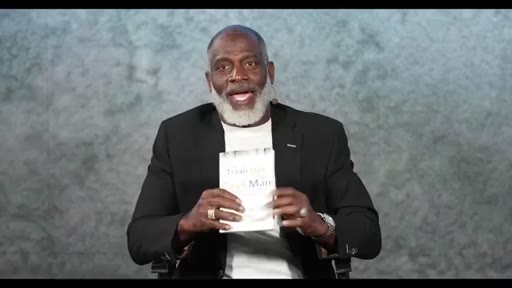
00:10HOOKof how much money you make. I wrote this book called From the Trash Man to the Cashman, How Anyone Can Get Rich Starting From Anywhere because my story is that I started as a my my family when I started my family and had a wife and my first child, the first job I ever had was driving a trash truck for $6.25
00:32HOOKan hour, but I got $9.50 an hour for overtime.
00:38HOOKSo needless to say, I worked a lot of overtime. And I can remember saying to my wife
00:44HOOKafter our child was born and I got this job, babe, if we can just make $300 a week take home, we're gonna be okay.
00:56HOOKThat was as big as my vision was in 1987 when I got that job. And
01:04HOOKand I made $300 a week. And you say, how can you live off $300 a week? Well, our rent in our one bedroom apartment was $250
01:11HOOKa week. My car payment was a $188 a week.
01:14HOOKSo I was making $1,200 a month, but, you know, I had insurance and utilities and all that stuff. I was still broke. Right?
01:21HOOKBut but I learned a concept later that made me wealthy and it was many, many years later.
01:30HOOKAnd I believe that even if I were a trash man today making $6.25 an hour, I could become a millionaire.
01:37HOOKAnd I'm gonna show you how. People think that money will solve their money problems, but I submit to you that you making more money with the same mindset that you have right now
01:49HOOKis not going to make you richer, it's going to multiply and amplify your money problems. If you have money problems right now,
01:57HOOKyou don't have money problems because you don't have enough money. You have money problems because you don't have a systematic way
02:04HOOKof managing the money you make. And I'm gonna go into a lot more detail
02:11HOOKin this video than I did in my trash man to cash man book in chapter 11, I think it is, or maybe chapter 13, which is the money management principle of millionaires.
02:20HOOKIf you will learn to manage your money, you can become wealthy. Now, here's how you do it. In my book,
02:28the chapter is called I can if my cans say I can. I can if my cans say I can.
02:36So in that book, I wrote this principle about my money cans, my I can cans.
02:43And so I've we've got six I can cans,
02:49and my six I can cans. And you'll you'll know what I mean when I say I can cans in a minute. One, two, three.
02:56Maya, you're gonna have make them smaller, son. Okay. So
03:00and then I make one bigger. Okay. Okay.
03:06Okay. We got six cans. Okay.
03:08So the first one is my
03:13eye. Well, in fact, I'm not even gonna write all that. I'm not gonna write all that.
03:18My first one is my I can tithe can.
03:22My I can tithe can. Now tithe means tenth. Some people ask me, well, Myron, what do you believe about tithing?
03:30I believe that tithing in the Old Testament was God's way of taking care of
03:37the ministers of the tabernacle and the temple, the God's ministers, the priests and Levites.
03:44They didn't receive an inheritance. Their inheritance was the tithe. Now, our modern day
03:51Christianity church doctrine
03:55teaches that while the church is the new testament version of the old testament, it's not. But I do believe that God says that our laborers worth is higher and I don't believe there's anything wrong with people who do ministry
04:09living from the ministry they do. That's biblical. Thou shalt not muzzle the ox that treaded out the corn.
04:14And the scripture says, if they sow to you spiritual things, you sow to them carnal things. In other words, you give them you pay them money.
04:21I believe though that one of the reasons there's so much confusion is because even churches that do teach that you should give your tithe to the church, they don't use the tithe in a biblical way. They use it to pay the bills of the church
04:35and including the salaries of the people who work for the church, which is why most ministries are, in my opinion, understaffed because they're using the tithe
04:46to pay for the building and they're using if there's some left over, they'll pay the people who do the work of the ministry. I believe the exact opposite should take place.
04:57And I believe that if we did it the biblical way, if indeed you wanna give your tithe to a church, I believe if the tithe was used to pay the pastors, the assistant pastors, the the people who work in the church ministry, if the tithe was used for that and the offering was used to pay for the buildings and the electric bill, and I believe
05:15that it would just be better because it would be closer to a biblical model. Okay.
05:20I can tithe can. Tithe. What's tithe?
05:2210%. I believe that as believers that we ought to that it would be a good idea for us to tithe and to give an offering.
05:31Why? Because because under grace under grace, it's grace is not does not exclude us from law.
05:39Grace gives us the power and the desire to fulfill law. K. So I can tithe can.
05:45And so you'd basically put 10% of your money in your I can tithe can. Your next can is your
05:53by the way, I'm giving you I'm giving you the ideal example first, and then I'm gonna show you how to pair it backwards depending on where you are financially. Okay?
06:01So I'm gonna give you I'm gonna give you the the objective that would be a good idea for you to work towards getting to. Everybody got it? Say, got it.
06:08Okay. So your next one is I can pay my bills can. Now in your I can pay my bills can,
06:16you wanna put 50% of your money and use 50% of your money to pay your bills. And I know what you're thinking, but Marian, I can't live off a 100% of what I'm making. I'm not gonna live off 50%.
06:23This is where you're working towards. This is not where you're starting. This is where you're working towards.
06:27I'm gonna show you how to get to the place you can live off of 50% of your income if you're willing to have some financial discipline, which most people many people are not no. Most people are not willing to have.
06:39Okay. So I can I can finish I can pay my bills can? Your next can is your I can finish free can.
06:46Now finish free to me means that I have to me means legacy.
06:53So I put 10% of my money in my I can finish free can so that my family has financial freedom and nobody in my family after me ever has to start from scratch. Like, some people wanna use that for retirement.
07:05I don't believe in retirement. I believe in retirement. I'm not gonna ever retire.
07:09I'm gonna work until I die. Now, I may work less as I get older.
07:15I don't know how much less. I mean, I I'm gonna work as much as I feel like it. I'm gonna work as much as I want to
07:20And and then I'll play some as well. Okay. So I can finish free can.
07:24And like I said, I will play some as well, which brings me to the next most important can. And it is your I can have
07:33fun can. And you put 10% of your money in your I can have fun can. Other than these three, this is the most important can.
07:41This can will make you more money than all your other cans. I'm gonna show you how in a minute.
07:47This can is gonna inspire you to go out and figure out ways to make more money. Now the caveat with the I can have fun can is you have to spend all the money in it every month. You can't have anything left in your I can have fun can at the end of the month.
08:05K? Then you have your I can save
08:11for what I want can. So if I want a new car, I save. How much do I save?
08:1510%. And depending on how you use debt or don't, like I use debt, some people don't like to use debt, I like to use debt, I can use the bank's money cheaper than I could use my money. I sometimes pay cash for cars.
08:28I don't like to do that. But if the bank gets on my nerves and they take too long to loan me the money because, oh, but then we don't usually loan money and encourage them to use it. You know what?
08:36I'll just write a check, and then you get to leave me alone, I get to keep my interest. Okay. Or but sometimes, if they'll loan it to me and they'll do it in an ex expeditious
08:44manner, then I'll just borrow the money to buy a car because I can use the bank's money cheaper than I can use my own. K.
08:49So some of my most of my cars are paid off, but some of them I have notes car notes on. And you save your money for your down payment if you use a car note. Okay?
08:58So I can save for what I want can. And then your last can is I can educate myself can.
09:05And that's where you put your money that you're using for self education, personal development, etcetera,
09:12etcetera, and you put 10%. So you got you got 50%,
09:16ten, ten, ten, ten, 10. That's a 100% of your money. That's the objective.
09:21Get to the place if you can get to the place in your life where you're living like this now, you know what?
09:29I haven't done this before, but I just got a great idea. I'm gonna develop a can system for businesses so you can because businesses don't need an I can't have fun So I'm gonna develop an I a business can.
09:40Your business can. Blah blah blah. Okay.
09:42But I haven't done that, and I just thought of it, so I don't know how it would look until I think about it. So in the meantime, if you have a business, you're an entrepreneur. Where are my entrepreneurs?
09:51And you don't have a job. You just you don't have a job also. You're just an entrepreneur.
09:55Like, you're just an entrepreneur. Okay. So one of first thing first and foremost,
09:59pay yourself a salary. Become a w two employee of your own business.
10:05It'll save you so much headache and heartache if you're not doing that already. Become a w two, but I don't know how much money I'm gonna be able to make.
10:13Figure it out. Figure out the minimum that you know you're not gonna, like, mess it up. Put yourself on salary.
10:19Give yourself a salary. Okay? I'm a w two in I'm a w two wage earner of Scilly Enterprises LLC.
10:26I'm a w two. And so so what happens when you first get started, you can't like, let's say, Myron, I can't live off of I can't live off of 50%. Well, you you could.
10:39You could. Because here's what you could do that you're not willing to do. You could do what
10:44legal immigrants do when they come to The United States Of America. You could live three families in one house,
10:51share expenses, and then one of the families makes enough money to eventually buy their own house.
11:01But they all work in the same business, and they work, and they work, and they work, and they and and they so they don't even have time to go blow money on junk because they're too busy working to build something for the future where if they wanna buy some junk, they have the money for the junk. How many are all tracking?
11:17Wave at me. Okay. So so you but you could.
11:20But see, like, I don't I need to be a man. I need to be on my own.
11:24I I don't need to share an apartment with my brother. Okay. Good.
11:28So you and your brother can both struggle for the rest of your lives. I'm just like like, chilled young people get in a hurry to move out of their house.
11:38Well, here's what here's God has an ideal time for young people to move out of their house, and there's nothing in the Bible that says, thou art 18, thou shalt get out of my house. That's right. But here's what the scripture says.
11:49The scripture says, a man shall leave his father and mother and cleave unto his wife and they twain shall be one flesh.
11:57Oh, what if young people didn't move out until they got married? That's right. Like, I don't want my kids in my house till I get married.
12:03Know because you've been programmed by the world and not by the word.
12:08Right? And you're getting in too big a hurry. I I was in no hurry for my for my children to move out of my house and they were grown.
12:14I don't care. That's my job. It's
12:17my job to be their father until they get married. Now if they wanna move out, move out. You're an adult.
12:21Go do your thing. But not you're 18, you gotta get out of my house. Not you graduated from high school, you graduated from college.
12:31Like, what if you taught your children this when they were got their first jobs and they practice it and became a habit? And now because your children
12:42could live off of 50% of their income and you could teach them a habit that would change their life forever. Okay.
12:48But you can't do that yet. So let's say you can't do that. Let's say let's say you can't live off of you can't live off of 50%.
12:55Right? So maybe you can only live off of 90%.
12:59Okay. Great. So you change this to one per well, you don't change you don't change that.
13:04I wouldn't change that to 1%. Let's say you can only live off first of all, here's here's what you do.
13:10Let me let's start with this.
13:13Let's let's get let's get rid of some of this stuff. You can't you can't live off 50% of your income. You don't need cable television.
13:21Amen. Amen. There's a 100 a month right there.
13:24Mhmm. You don't really need Netflix or Prime
13:30unless you're ordering stuff off of Amazon and save money on the shipping. That's fine. Like, don't so many things that we think we need that we don't need.
13:37You don't need to eat out at restaurants more than once a month. You don't need to eat out at restaurants at all. In fact, restaurant food has so much salt in it.
13:43Yeah. That's sodium. Yep.
13:45It's it's insane because they know it's anyway, so so
13:52keep your tied. Let's say you're gonna live off 80% of your income. So now you've got 10% tied, ten percent's, uh, ten percent's tied, 80%.
14:00So now you're up to 90%. You do 1% here, 1% here, 1% here,
14:061% here until you can do better. But you make sure the 1%
14:13so which means, by the way, if you're if you're let's say you're bringing home $3,000 a month, that's your take home pay, you're putting $30 in your I can't have fun can, but you're making sure you spend that $30 on something that you show enough to believe is fun.
14:28Now when I started doing this, golf was my fun,
14:33and I was putting a relatively significant amount in there. I was like, man, this is really hard
14:40to spend this much money every month on golf. But you know what I would do sometimes? I would fly to Florida when I lived in Pennsylvania to play golf in the wintertime.
14:51Why? Because I had enough money in my I can't have fun can. And see what most people do, instead of
14:57instead of disciplining themselves in the present to pay for their future, they steal from their future to play pay for their present. And then wonder why when their future becomes their present, they don't have anything.
15:10How many are tracking? See, money is not in the habit of hanging around with people who don't manage it well.
15:18And if you can't manage it when you have a little, you won't manage it better when you have a lot. I know you think you will, but you'll manage it worse when you have a lot. More money will amplify your money habits whether they be good or bad.
15:30And so maybe you say, Myron, I can't put 1% in there. Okay.
15:34Put $10 in each one of those cans. You can sit down and look at your money, figure out where you're wasting money, and stop. You don't need to go shopping.
15:44Like, you wanna get somebody a birthday present? Make them something.
15:49Make them something. Like, use your creativity. And
15:55what'll happen is what'll happen is when you develop this discipline, you'll start having financial strength. And when you start having financial strength, opportunities that only people with financial strength can take advantage of will you will begin to recognize them.
16:09That and they've been passing you by because you're blind to them, because you're living in so much lack, because of your poor money management habits. Now you're you're not actually putting the money in these cans.
16:20Now this is the part that's gonna be challenging for you because the bank is gonna give you a hard time. So go find a bank that won't give you a hard time, and we'll let you do this. You open up a bank account for your iCanTive can.
16:31You open up a bank account for your iCanPayMyBills can. You open up a an account for the finish free can.
16:38You open up a can one for the I can have fun can, save for what I want can. And then as soon as your direct deposit hits your account, you move that money into the appropriate
16:48bank account. And so that account is a can. And so what you do with those accounts is you take the ledger from each account
16:55and you put it into the can that it represents, and you start managing your money meticulously. I just I just I just heard I was I'm listening to an audiobook,
17:06and the guy had a phrase this morning. I said, that is so good. And I wanted to make sure I got it captured,
17:14and so I did. And so so I don't know if y'all do this or not.
17:20But so what I did was I went into I went into chat GPT, and I said, go find me the William Blake quote from eighteen o one about he who would
17:33he who would do good to another in particulars. Okay.
17:37CTASo here's the quote. Here's the quote. I'm gonna end the video with this.
17:40CTAThis is so good. He said, uh, William Blake in eighteen o one said, he who would do good to another must do it in minute particulars. General good is the plea of the scoundrel,
17:54CTAthe hypocrite, and the flatterer. For art and science cannot exist but in the minutely organized particulars and not in the generalized
18:03CTAdemonstrations of the rational of the rational power. Like, that is so good.
18:11CTAWhat does it mean? It means the beauty of the arts and the functionality
18:16CTAof the sciences is in the details. Wow.
18:20CTABecome detail oriented when it comes to your money. It'll change your life for the rest of your life. Thanks for watching.
— full transcript
§ 05 · For Joe

Steal the 6-can framework.

Killing Excuses playbook

The most dangerous idea in this video is that the Fun Can is the highest-leverage earning motivator in the system — it turns financial discipline into a chase.

  • Open 6 bank accounts and auto-route your direct deposit on day one — the physical separation is the whole system.
  • Lead with the Fun Can when selling this framework to anyone who pushes back on budgets. Lead with the pleasure, not the discipline.
  • Use the ratchet method as the onramp: never ask someone to jump to 50% living. Ask them to move 1% this month.
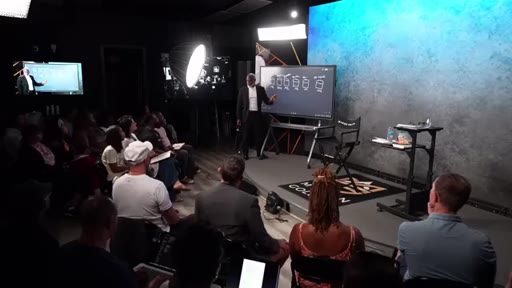
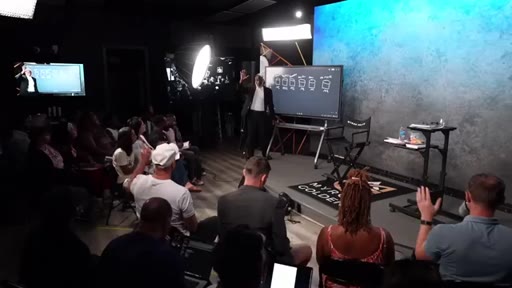
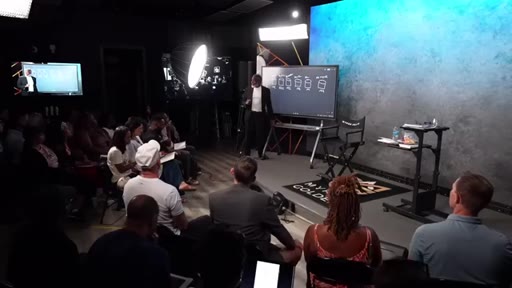
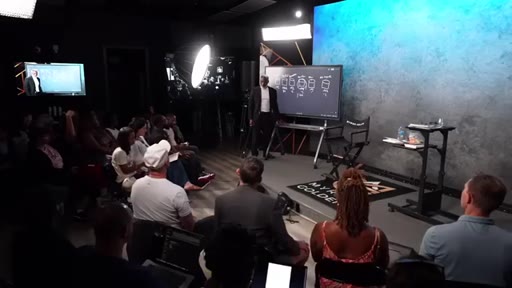
  • The whiteboard build is a format worth stealing — draw the system live as you teach it, let the audience watch it get constructed.
  • The Blake close is a pattern: end with a literary quote that reframes the whole lesson. Detail-orientation is artistry. That is a newsletter-closer, not just a YouTube outro.
  • Myron origin story (trash truck, $6.25/hr, $300/week vision) is the proof mechanism. Your version of that story is worth 10x any credential.
§ 05 · For You

What you could actually do this week.

If you want to start

You do not need more income to start building wealth — you need a place to put every dollar that lands in your account, even if the amounts are tiny.

  • Open a second checking account today and label it Fun. Put 1% of your next paycheck in it and spend it entirely before the next payday — on something you actually want.
  • Write down the six cans on paper and put a realistic percentage next to each one that adds to 100. You will immediately see where the problem is.
  • Do not try to hit 50% on bills on month one. The 1%-per-month ratchet is the actual path — pick one subscription to cancel and redirect that $12 somewhere with a name.
  • The Fun Can is not a reward for good behavior — it is a scheduled monthly obligation. Treat it like a bill you owe yourself.
  • If you cannot manage $300 a week on a system, more money will make it worse, not better. The system comes first.
§ 06 · Frame Gallery

Visual moments.