Ritesh Verma · Youtube · 13:58

How to Start a 1-Person AI Business with Claude Code in 30 Days

A 14-minute operating system for solo founders: from idea to polished proposal using Claude Code, Design, and Dispatch.

Posted
May 1st 2026
25 days ago
Duration
13:58
Format
Talking Head
educational
Channel
RV
Ritesh Verma
§ 01 · The Hook

The bait, then the rug-pull.

The promise is specific enough to be uncomfortable: one person, no team, no agency, just three Claude tools and a system that runs while you sleep. Whether that claim holds depends on whether you can shift from doing the work to managing work that Claude already did.

§ · Chapters

Where the time goes.

00:00 – 01:02

01 · Introduction

States the three-tool premise and the full-stack promise: idea to proposal to remote operation, alone.

01:02 – 02:03

02 · The NEW Claude Ecosystem

Positions Claude Code as backbone, Claude Design as Figma replacement, Claude Dispatch as remote mobile control.
02:03 – 04:43

03 · Ideation with Claude Code

Claude Code as market research agent: ranked idea lists, Reddit pain-point mining, competitor gap analysis on G2 and Trustpilot.
04:43 – 05:51

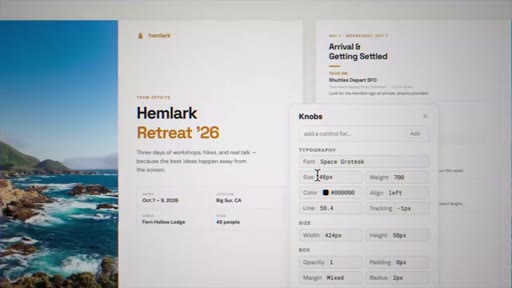
04 · Building Powerful Apps

Design-first workflow: prototype in Claude Design, one-click export to Claude Code, production frontend built in a single afternoon.

05:51 – 07:27

05 · Controlling AI Agents

Parallel sub-agent pattern: three Claude Code sub-agents handle API routes, database schema, and frontend components simultaneously while a main agent orchestrates.

07:27 – 08:45

06 · Marketing

Build best practices before shifting to marketing: product brief discipline, MVP mindset, no feature bloat before first sale.

08:45 – 10:30

07 · How I Use Claude to Market

Voice memo into Claude Code writes X/LinkedIn/reel scripts, auto-posts via API; Dispatch stages entire content calendar overnight for 8-minute morning review.

10:30 – 13:58

08 · The Full Claude Pipeline

B2B outreach pipeline via Claude Code; Claude Cowork drafts proposals trained on past winners; Claude Design produces polished pitch decks; mentee results as social proof CTA.

§ · Storyboard

Visual structure at a glance.

open
ecosystem intro
ideation
build
sub-agents
marketing pipeline
full pipeline
CTA
§ · Frameworks

Named ideas worth stealing.

02:03 list

The Four-Phase Solo AI Operating System

  1. Ideation (Claude Code research + Reddit + competitor analysis)
  2. Build (Claude Design prototype + Code sub-agents in parallel)
  3. Market (Claude Code content pipeline + Dispatch overnight queue)
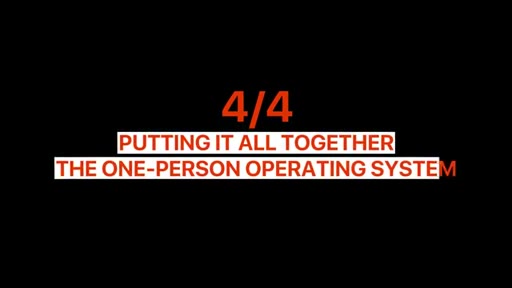
  4. Close (Claude Cowork proposals + Claude Design pitch decks)

A sequential operating model where each phase uses specific Claude tools with defined handoff points between them.

Steal for Any solo consulting or SaaS business that needs a repeatable pipeline from idea validation to signed client
03:00 model

Reddit Pain-Point Mining

  1. Find five Reddit communities where the pain is discussed
  2. Pull the most upvoted complaint posts
  3. Summarize the language people use to describe their frustration
  4. Use that language verbatim in marketing copy and positioning

A four-step research sequence that converts Reddit posts into market-validated customer language for copy and positioning.

Steal for Product positioning, landing page copy, cold email subject lines
06:00 model

Parallel Sub-Agent Build Pattern

  1. Main orchestrating agent holds the full product spec
  2. Sub-agent 1: backend routes and business logic
  3. Sub-agent 2: database schema and migrations
  4. Sub-agent 3: frontend components from Claude Design handoff

Concurrent Claude Code sub-agents each own an isolated workstream, report back to a main agent, and share context to avoid stepping on each other.

Steal for Any multi-track build (SaaS, API product, client deliverable) where parallel tracks normally require a team
§ · Quotables

Lines you could clip.

06:56
"Well, it should take me a week of solo building. I am now doing it a day."
Concrete time-compression claim with zero setup needed, lands on its own. → TikTok hook
10:24
"You are not doing the work, you are managing the work, and your employees are Claude Code, Cloud Design, and Cloud Dispatch."
Tight thesis statement that reframes the entire operating model in one sentence. → IG reel cold open
03:12
"This is my market research and I have exact words my customers are using to describe their own problem, which is gold for marketing later."
Practical insight with a payoff planted for later, strong newsletter pull-quote. → newsletter pull-quote
§ · Resources Mentioned

Things they pointed at.

03:12toolReddit ↗
03:40toolG2 ↗
09:00toolWhisper Flow
13:17productAgentRise ↗
§ · CTA Breakdown

How they asked for the click.

13:17 product
"click the first link in description below"

Soft sell after a long social-proof montage of mentee results (three named examples with specific revenue numbers). Ends with a next-video recommendation, classic watch-time retention play.

§ 04 · The Script

Word for word.

HOOK opening / re-engagementCTA the pitch
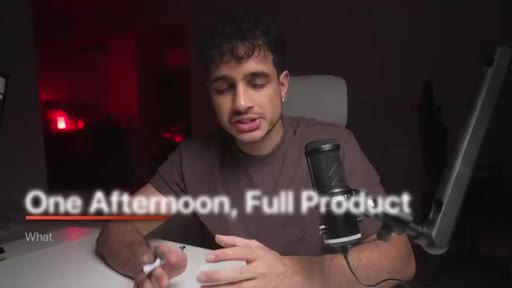
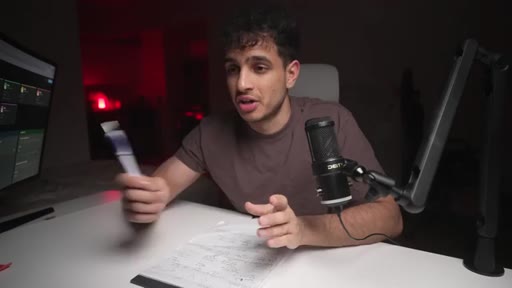
00:00HOOKThe smartest entrepreneurs making 6 to 7 figures online are one person business machines, and they're using Claude's entire ecosystem, code, design, and dispatch to do 90% of their work. So in this video, I'm going to show you step by step how to use Claude code, Claude design, and Claude dispatch to find a winning AI business idea, design it, and build an MVP with a high converting website, handle your entire marketing pipeline, close 5 figure deals with polished proposals,
00:25HOOKand run the whole operation from your phone while you're at the gym. In one person, no team, no agency, just you and three Claude tools running an entire business. Well, this sounds like a lot, Ritesh.
00:35HOOKLuckily, Claude makes it easy. Now as an ex big tech software engineer turned AI entrepreneur, I built apps that got $200,000 offers, scaled 200 plus AI businesses, and I spend most of my time building, shipping, and marketing while showing other people how to do the same.
00:49HOOKIn fact, just a month ago, I made a video on this exact topic and it'll enviro hundreds of thousands of views, and I got flooded with DMs and messages saying, did this just change how I think about building a business? Oh my god. This is amazing.
01:00HOOKBut since then, the Cloud ecosystem has evolved massively. Let's say Cloud Code is still the backbone. You give it a go and it plans, reasons, writes files, runs commands, reads your entire code base, and iterates like AI Superman.
01:12But now you also have Claude design, which lets you go from idea to polished visuals from pitch decks, landing pages, UI prototypes, all through just a conversation. This kinda makes things like Figma and Canva no longer needed.
01:25So you're saving yourself, like, $50 per month of subscriptions. And the best part about Cloud Design is that you can hand off your design directly to Claude code, which can make it into production. And then there's Claude dispatch.
01:35This is the one that kinda blew my mind when it came out. It basically connects your phone to your desktop so you can text a task from your phone, walk away, and Claude execute it using your actual computer. Your files, your apps, your developer tools.
01:47HOOKIt's like having a remote employee that never sleeps. Kinda like a real human, which is scary. Most people don't even know these tools exist, but by the end of this video, you're going to know exactly how to use all three to build a real one person AI business.
02:00HOOKAlright. Everyone wants a million dollar idea, and everyone thinks about it all wrong. And you are probably one of those people.
02:07You say, I don't know what to do. It isn't even something people will pay for. It is good enough.
02:12Should I build some more? So instead of taking any action, you get analysis paralysis or you're just constantly in the building loop and months pass by with no sales, no clients. So here's how you use Cloud Code to fix that.
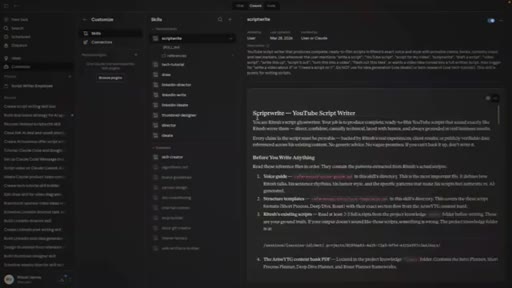
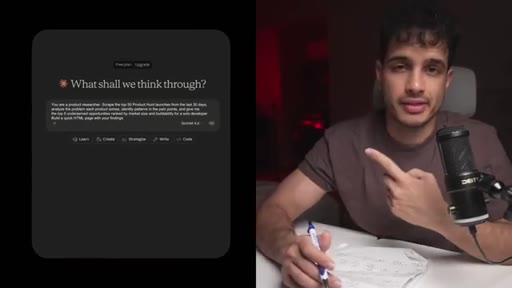
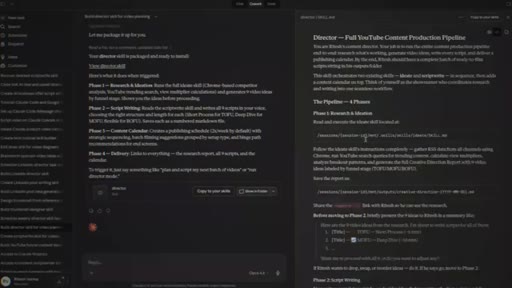
02:23You use its research and reasoning abilities to do the ideation for you. Open Cloud Code and get a structured prompt something like this. It browses, it reads, it synthesizes,
02:33and hands me a ranked list of ideas with reasoning, all in nice beautiful HTML page. That's not just going to chat your tea, you know, and getting generic list. That's an agentic system doing real research in real time.
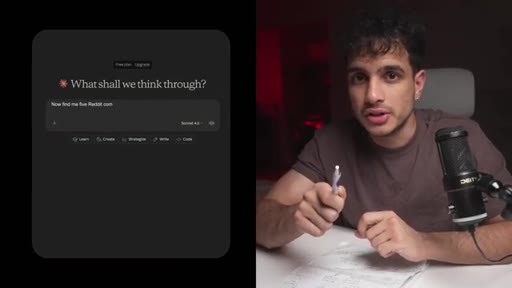
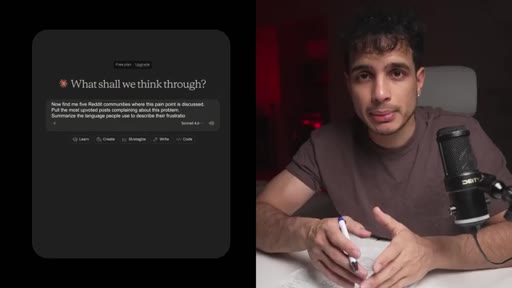
02:44But listen closely, because this is where I take it one step further. I take the top idea and I say, now find me five Reddit communities where this pain point is discussed. The reason is Reddit is, like, unfiltered opinion.
02:55I mean, people don't lie on Reddit. They give their honest thoughts cause it's so anonymous. And then what I ask you to do is pull the most upvoted post complaining about the problem, summarize the language people use to describe the frustration,
03:05so then kinda give a sentiment of how people are looking at this pain point. This is my market research and I have exact words my customers are using to describe their own problem, which is gold for marketing later. And later on the video, I'm gonna show you how to turn that gold into profits.
03:20Now before committing to an idea, I asked Cloud Code to search your competitors, analyze their pricing, look at their views on g two or Trustpilot, and tell me the top three complaints users have about the existing solutions. This gap that we get from the research, that's where your product can live in. And here's the next step.
03:35Once I have my idea validated, I pull up Cloud Dispatch, and while outside or no longer by my computer, I don't just let Cloud Code be idle. No. I make sure that I'm able to control my Cloud Code through Cloud Dispatch.
03:47Anytime I see that it stopped working or the task is done, I simply tell it to do the next task and it gets right to it. See, this isn't checking emails on your phone anymore. This is running an entire research and even building operation remotely.
04:00The ideation phase used to take me weeks. Now it's a two hour cloud code session, and if I'm outside, I can use dispatch to make it come to life. So by the end of this part of the pipeline, I walk out with a validated idea, competitive analysis, and customer language from just one ecosystem.
04:14Alright. You've got your idea. Now let's actually build it.
04:17I completely vibe code my apps now. I'm a software engineer who's been coding for over ten plus years and I still let Claude Co do all the heavy lifting. It's just faster and for an MVP, speed is everything.
04:26It is not about being perfect. So I know a lot of you constantly wanna add more and more features and cool things to your solution and you never go out and market, that's wrong. You just need to MVP.
04:35That's all. Now you might be like, oh, okay. So I was gonna go to Claw.
04:38Killer shop dirty. Wait. Let me explain why Claw Design has changed everything.
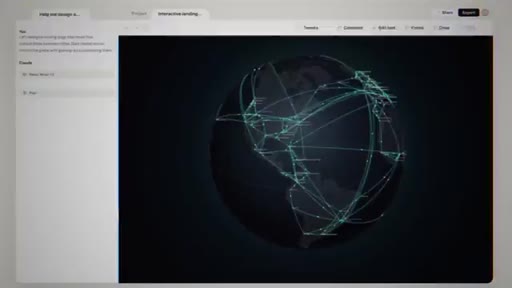
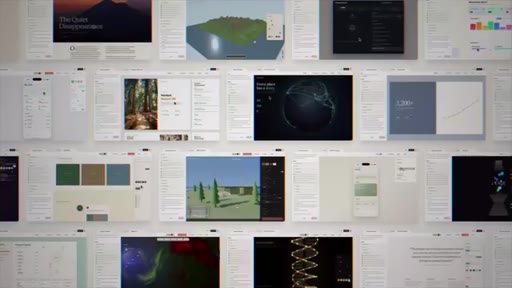
04:42See, Claw Design lets you describe what you want and build it on a visual canvas. I'm talking getting full UI prototypes, landing pages, dashboard layouts, onboarding flows, all from a conversation.
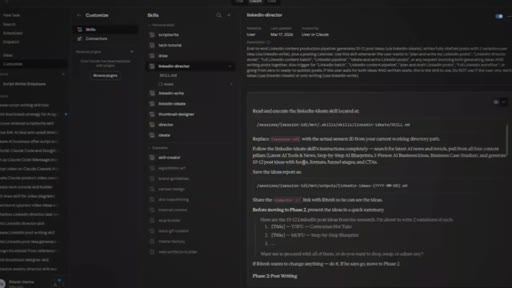
04:53This has reduced the design planning time immensely and saves you hours of prompting Cloud Code to fix this margin, fix this button, edit the color scheme. Oh, you're doing this wrong. Please save your time.
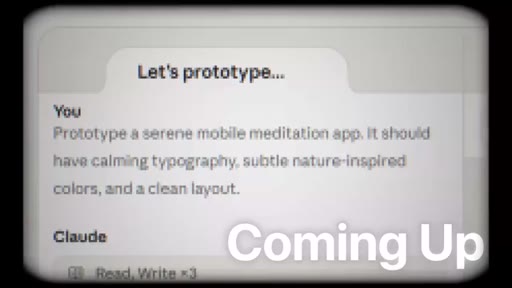
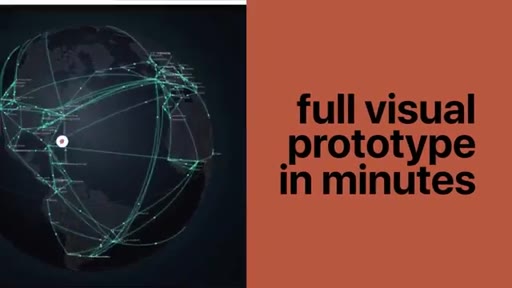
05:04Simply pass a prompt like this into Cloud Design and just watch what it creates. You can get a full visual prototype in minutes, and then you can make your change directly to Cloud Design or you can talk in the conversation to get Cloud Design to update it on its own. And here's a part that makes it insane for a solo founder.
05:19Once I'm happy with the design, I hand it off to Claude Co. By clicking this one option right here. Claude Co.
05:24Looks at design, understands the layout, the components that's facing the color palette, and writes the actual production front end code to match my design with no errors. This is how you go from idea to design prototype to coded front end in a single afternoon without Figma, without having three designers from Upwork, all through just yourself and your own Claude ecosystem.
05:45And now comes the next part, using sub agents via Cloud Code, and this is where you might take a seat back because this gets kinda crazy. When you're building complex app, there are multiple tracks of work happening simultaneously. You have your back end APIs.
05:58You got your databases. You got your fun and building. You got your authentication layer, third party integrations.
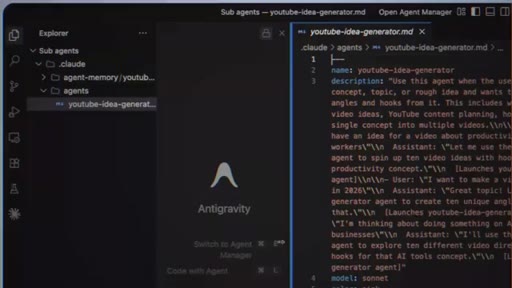
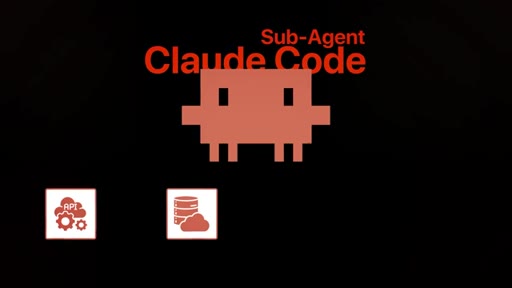
06:03Even with AI coding tools, you will tackle these one by one most likely. Now with Claude code sub agents, you could spin up parallel agents that each handle a specific slice of the build concurrently. One sub agent is building your API endpoints.
06:14Another is setting up your database models. Another is taking that claw design handoff bundle and building out every front end component. They all work simultaneously.
06:22They all share context, so no one's stepping on each other's toes, and they all report back to the main agent who which is orchestrating everything. Should I call a main agent which or who? Is it person?
06:32No. Right? Well, it should take me a week of solo building.
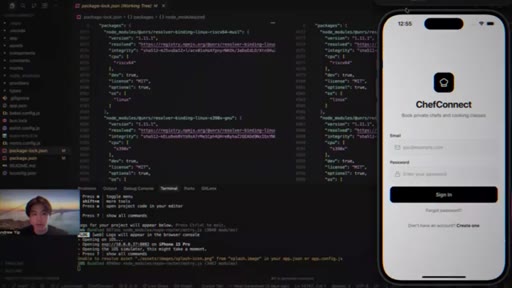
06:35I'm now doing it a day. In fact, two of my mentees right now are building a Chef app right now for a client that I gave them. They gave Cloud Code the full product spec, design UI and Cloud Design first, and then told to spin up three sub agents.
06:47Sub agent one handled all background routes and business logic. Sub agent two handled the database and schema migrations, and sub agent three took the design hand off and built every UI component in parallel. The main agent stitched everything together.
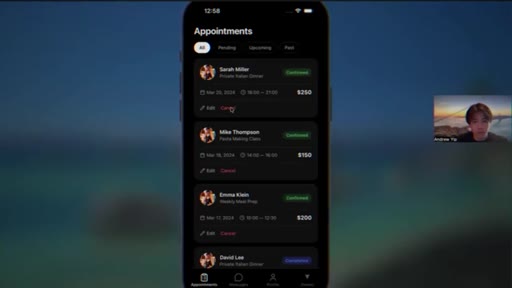
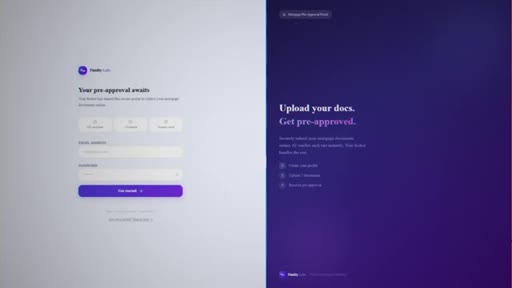
06:59Some of my other consulting clients I work could do the same thing and get products that look like this. Absolutely beautiful. So if you don't know how to code or you don't have the funds to hire developer team and you're completely on your own, you can still design and build any app you want.
07:12It's crazy because I remember when I was a software engineer, I would have spent like tens of hours on something that takes like ten minutes now. It's crazy. Now, before we move on to marketing, which is where most people fail and probably you've had the most struggle on, here are the best practices you need to follow to make sure you build apps super effectively so you move on to marketing.
07:28Before you start any build session, drop in a short product brief or whatever the task is. Two paragraphs, you know what the app does, who it's for the tech stack, and what you're building today. That alone
08:49Cloud Code as a knowledge base. I give Cloud Code a voice memo through, like, Whisper Flow or a quick bullet list of what I've been building or learning that week. Cloud Code takes that, writes three different X posts of my voice, a LinkedIn post, and a short form script for an Instagram reel or YouTube Short.
09:03Once I approve the written posts and scripts, I have Cloud Code auto post these on their respective platforms using Potato API. Now you're probably looking at me like, so why why using Cloud Code not just Cloud if these are all Cloud tests? Well, I have this beautiful OS I built with Cloud Code where I have all my mini AI employees for x, for LinkedIn, for Ishram, for YouTube doing all the work for me, and they can connect with each other and handle my entire content pipeline end to end.
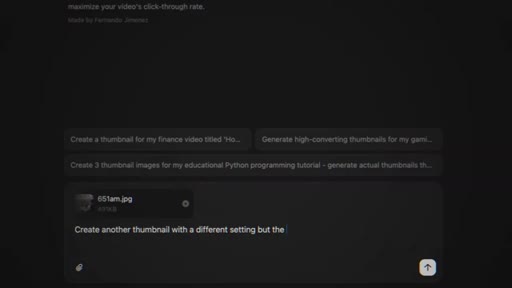
09:26Now if you don't have this, which you probably don't, you could then get your LinkedIn post or your x post and go to Claude Design, pass a LinkedIn post in, pass the X post in, and it can generate a very high converting visual for you that you can attach into your LinkedIn post, into your X post. I'm even using Claw Design to create some of YouTube thumbnails now, and some of them have been generally fire.
09:43I mean, you can describe the layout, the text, the vibe, and it generates options like this. This one got a 165,000 views, by the way. It is AI generated.
09:49And now here's where Dispatch ties the whole thing together. Imagine this. Sunday night, you're watching football or basketball.
09:55You're on the couch. You pull out your phone, and you tell Claude Dispatch, review this week's content calendar, draft three posts from my latest bill notes, create a LinkedIn Carousel about the Chef app results, generate two thumbnail options for today's video, have everything staged on my desktop for review in the morning because I'm too lazy to get off my couch and stop eating my chips.
10:14And then you go to bed. Monday morning, you open your laptop, everything is sitting there, written posts, design visuals, thumbnail options. All I do is review, approve, and hit publish.
10:24That entire content pipeline that used to taking forty five minutes to an hour a day, eight minutes, because I'm just reviewing and improving work that Claude already did while I was sleeping or doom scrolling on Instagram and TikTok. This is what it actually means to operate as a one person business. You're not doing the work, you're managing the work, and your employees are Claude Code, Cloud Design, and Cloud Dispatch.
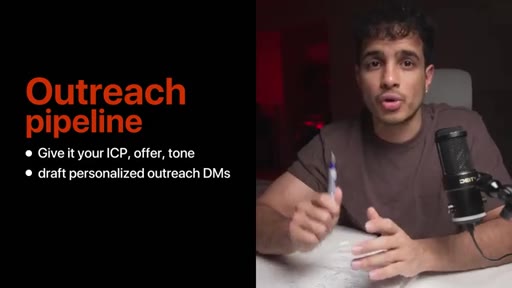
10:43Now real quick, if you made to this part of video, there's some more sauce for you. If you're building a b to b tool, Cloud Code can also run your outreach pipeline, give your ICP, your offer, and your tone, and it will draft personalized outreach DMs for LinkedIn, cold email sequences, and follow-up messages and store them a nice little UI that you can just copy paste the results from.
11:00And having this content pipeline automated is what's gonna help you stay motivated to market, stay consistent with marketing, so then your app can actually go from zero to 10 k plus MRR or your agency that you're running can get more clients. Now that you have your product and you got eyeballs on it, this is the last part you have to do.
11:17Most technical people completely fumble here because a potential client might tell you, hey, send a proposal. Right? And suddenly, developer who can build anything in a week takes two weeks to write a two page document.
11:26I used to be that person. Now, I use Claude Cowork. Yep.
11:30Holy shit. I'm using Cowork two now. You guys thought it was just dispatch, just design, just code.
11:35Nope. Claude Cowork is what I use to draft all of my proposals. In fact, I made a video on this very recently.
11:40I get the sales transcript of my proposal of, like, the the sales call. I put it into my AI employee that writes proposals for me. That's powered through a co work.
11:48It builds a proposal, writes it for me, and I send it to the client as is. It's trained on all my previous proposals that have worked so it knows how to write a banger proposal. And if I want to make this very pretty, I use Claw Design to make it have very clean layout, beautiful colors, have my branding, my system architecture diagram, and a nice beautiful pricing page.
12:06And now this is how when you send that proposal, maybe with a polished deck that Claw Design built to the client, they're like, oh my god. This is amazing. Because they're so used to, like, boring Word docs and PDFs.
12:16Right now, they're getting a very thorough side deck and a beautiful proposal, like, who put the time to doing this? You're not really putting the time, Claw Design is, but they don't know that. And even if they do, they will still be amazed by how beautiful the proposal and slide deck looks because you took that extra step and went that extra mile.
12:31That's all biopsychology right there. Now at this point, you're probably thinking, oh my god. After so much, Ritesh, she has so much experience.
12:38What about me? Well, I work with over 200 plus business owners in the AI niche one on one. One of my mentees, Gleb, sold a single automation for $5,000
12:47that turned into over $22,000 worth of follow-up projects with the same client. Every proposal he sends looks beautiful.
12:55Everything he builds with Claude code. He uses a Claude design to visually make the everything visually super aesthetic, and he uses Dispatch to operate the entire operation when he's no longer computer. My other mentee, Keshav, is working on real AI projects for mortgage clients,
13:11CTAand he's charged anywhere from a thousand to $2,000 per project. He's even doing his own AI consulting business, and he's making over 3 k in four days. I'm in T.
13:19CTABen using Claude to work to run his own AI employee operation, and his SaaS is at $11,000 a month, and he just made $1,000 in a single day selling a enterprise license.
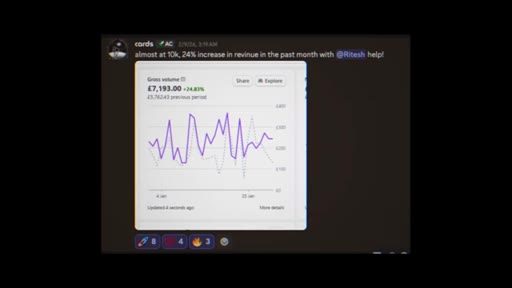
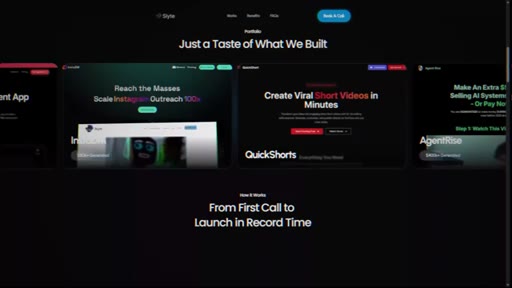
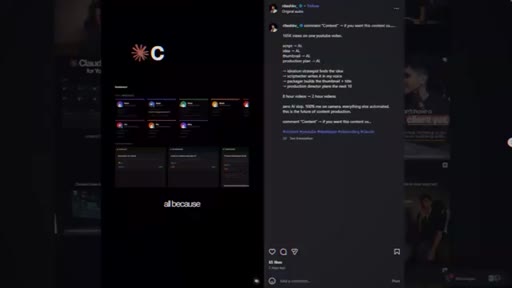
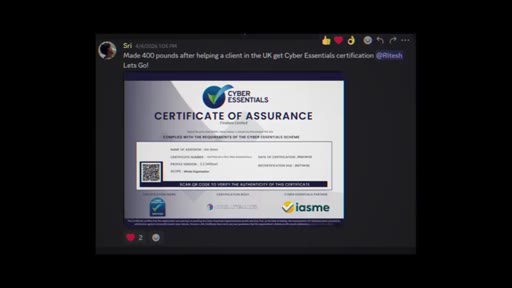
13:28CTAAnd if you want to work with me one on one to build a one person AI business that is actually profitable and successful, then click the first link in description below. And here are a bunch of success screenshots from our mentees in the program, so you know that it is right for you. Now your final question is this, can one person really do all this?
13:45CTAWell, you literally just watched me show you how. The question is, are you going to keep watching videos or are you going to start? If you want to see me build a one person AI business for a stranger like you, watch this video next.
— full transcript
§ 05 · For Joe

Four phases that compress a solo AI business into one system.

WHAT TO LEARN

The bottleneck in a one-person business is never capability -- it is the time cost of switching between research, building, marketing, and sales when all four have to happen simultaneously.

  • Using an AI agent for ideation produces ranked ideas with Reddit-sourced customer language baked in, so the output is ready for copy without a separate research pass.
  • Competitor analysis on G2 and Trustpilot surfaces complaints existing users have already articulated -- a cleaner product brief than any brainstormed concept.
  • Designing in Claude Design before writing a line of code removes hours of iterative prompting spent adjusting margins and colors inside a coding agent.
  • The parallel sub-agent pattern (three concurrent agents, one orchestrating main agent) makes a solo builder's output resemble a small team's output without the coordination overhead.
  • A two-paragraph product brief dropped at the start of every build session prevents context drift across long Claude Code sessions and eliminates repeated corrections mid-build.
  • The overnight Dispatch queue converts passive hours into production time: posts are drafted, thumbnails are staged, and the content calendar is built while the founder is away from the computer.
  • Automated publishing via API removes the daily friction of deciding whether to post; the system publishes and the founder only reviews, which is what sustains consistency over weeks.
  • A proposal that looks like a polished pitch deck closes faster not because the content is better but because most competitors send Word docs -- visual quality signals competence before a word is read.
  • Training a proposal-drafting agent on past winning proposals is a compounding asset: every closed deal improves the language and framing for every future proposal it drafts.
§ 06 · Frame Gallery

Visual moments.