Vendasta · Youtube · 27:30

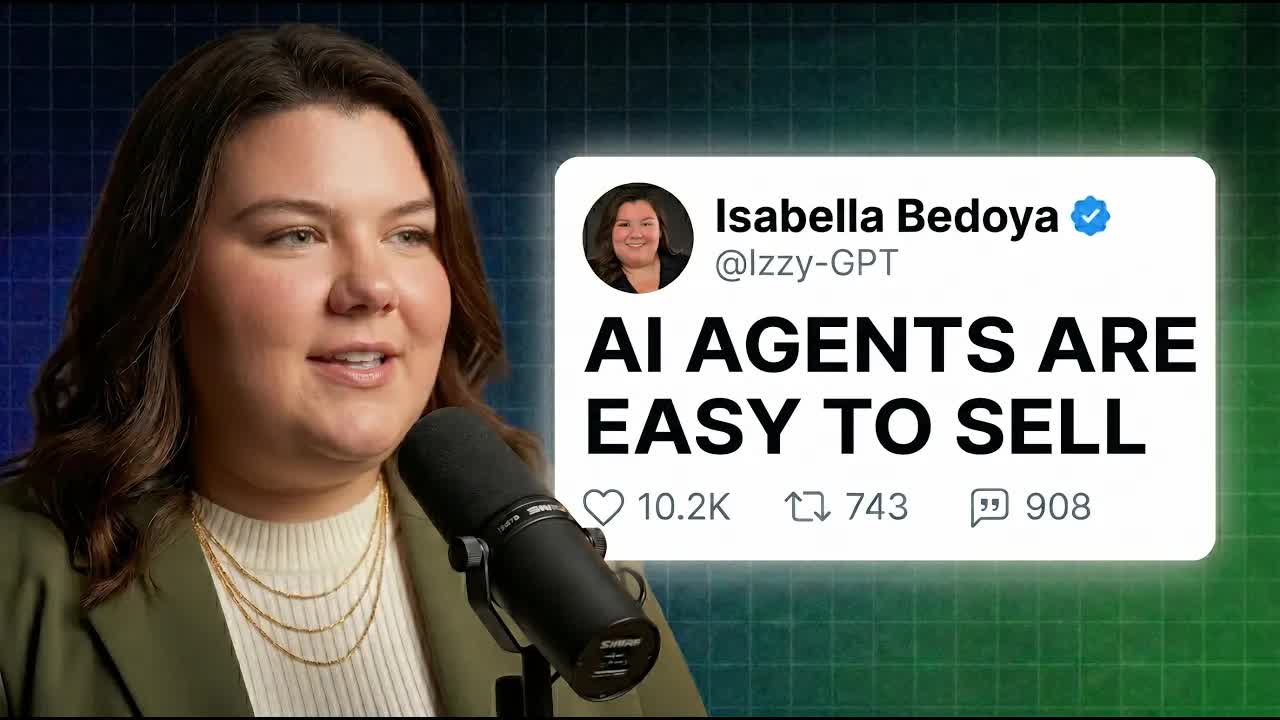
She Made $1.2M Selling AI Agents (EXACT 4-Step Framework)

How Isabella Bedoya eliminated discovery calls, built 47K LinkedIn followers, and crossed $1.2M with a four-step system any agency can copy.

Posted
April 29th 2026
26 days ago
Duration
27:30
Format
Interview
educational
Channel
VE
Vendasta
§ 01 · The Hook

The bait, then the rug-pull.

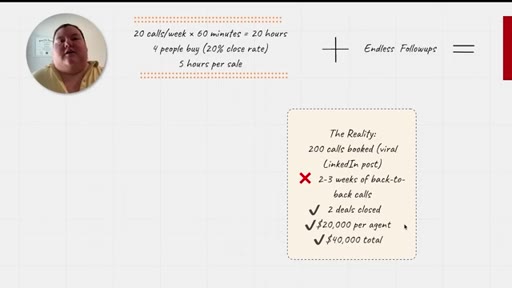
Two hundred calls. Two deals. Forty thousand dollars. That was the reality of Isabella Bedoya's voice-agent agency before she scrapped the discovery-call model entirely and replaced it with a $47 bootcamp that generated $150K without a single one-on-one pitch.

§ · Chapters

Where the time goes.

00:00 – 02:04

01 · Hook -- $40K from 200 calls vs $150K from one system

Isabella's origin story: viral LinkedIn post, 200 calls, 2 closes, and the moment she decided there was a better way.
02:04 – 03:36

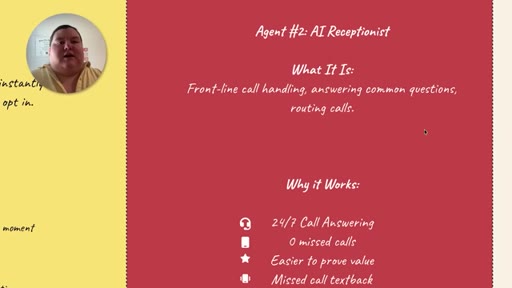
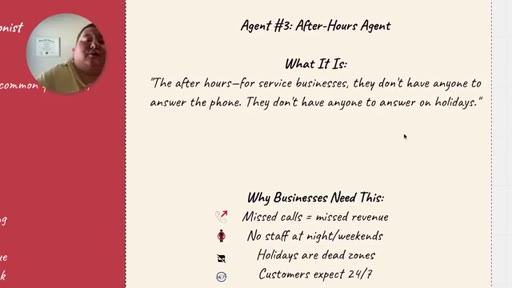
02 · Top 3 AI agents businesses are paying for now

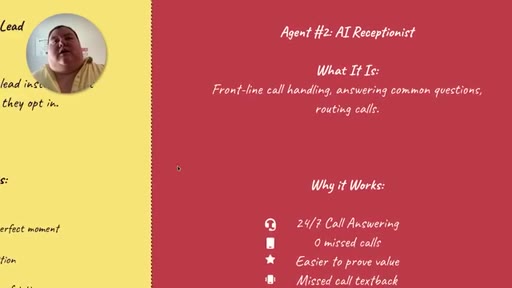
Speed-to-lead, AI receptionist, and after-hours agent -- with specific use cases and upsell logic for agencies.
03:36 – 05:43

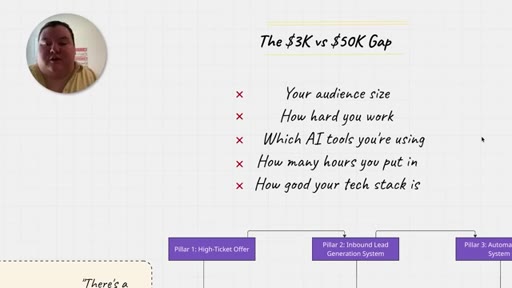
03 · The $3K vs $50K/month gap

The structural difference between low-revenue and high-revenue agencies is the system, not effort or tools.
05:43 – 06:32

04 · The 4-step framework overview

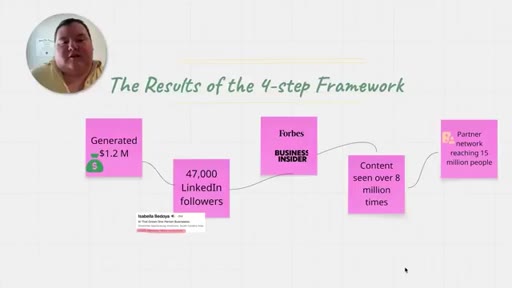
Results snapshot: $1.2M, 47K LinkedIn followers, Forbes features, 8M content views, 15M partner reach.
06:32 – 08:41

05 · Step 1: Attract -- LinkedIn personal brand

Why LinkedIn beats other platforms for B2B; personal brand as the only unfair advantage that scales without ads.
08:41 – 11:29

06 · LinkedIn posting mechanics

60/30/10 formula, 111 rule, hook writing, carousel strategy, and CTA-without-links technique.
11:29 – 14:12

07 · Step 2: Capture -- Lead magnet bridge

Converting rented social followers to owned email subscribers via hyper-specific lead magnets.
14:12 – 15:40

08 · 8-email nurture sequence and BANT opt-in

Email sequence structure, behavior tracking with links instead of PDFs, and discovery-mode opt-in questions.
15:40 – 17:39

09 · Step 3: Convert -- Why she quit sales calls

The anatomy of a typical 60-minute call, the 200-call reality check, and the $150K bootcamp pivot.
17:39 – 21:26

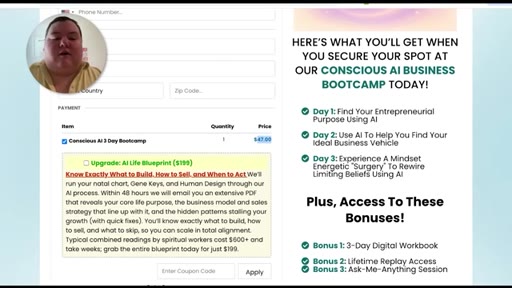
10 · The $47 bootcamp mechanism

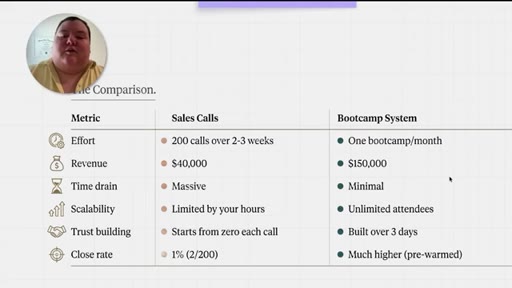
Three-day structure, First Dollar Principle, psychology of the low-ticket entry, comparison table.
21:26 – 23:15

11 · Deal room / self-checkout system

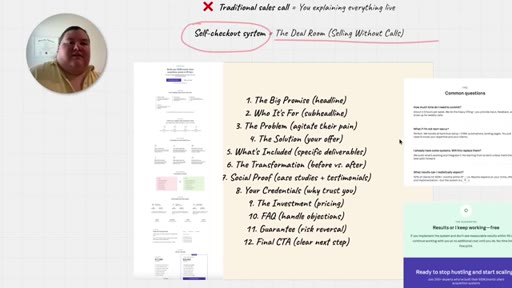
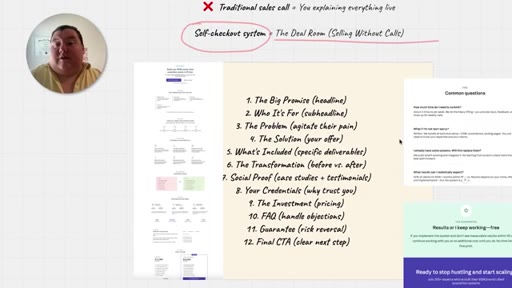
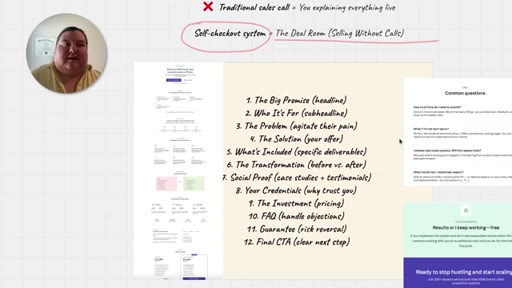
12-element landing page structure, chatbot as qualifier, buyer enablement, 60-80% close rate.
23:15 – 24:14

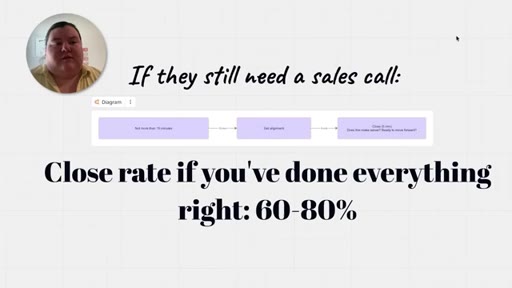
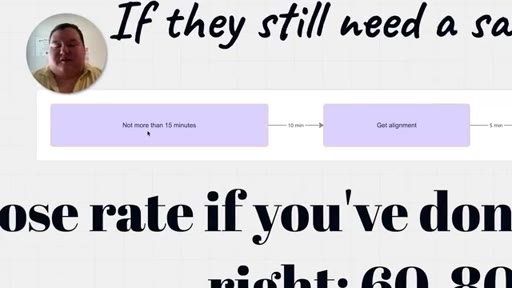
12 · When to take a call

15 minutes max, logistics only, decision already made; 60-80% close rate when system followed.
24:14 – 27:30

13 · Step 4: Ascend -- Full value ladder

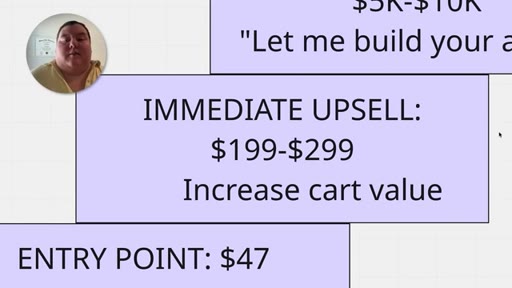
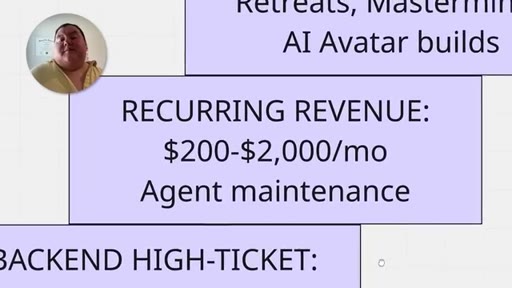
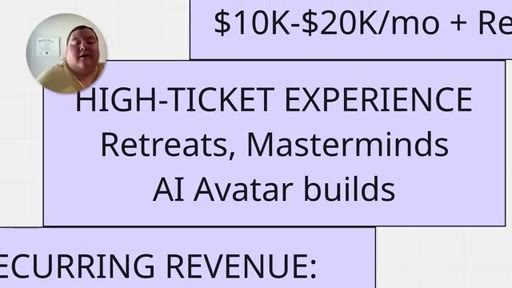
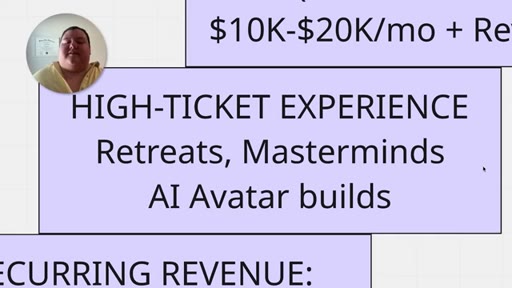
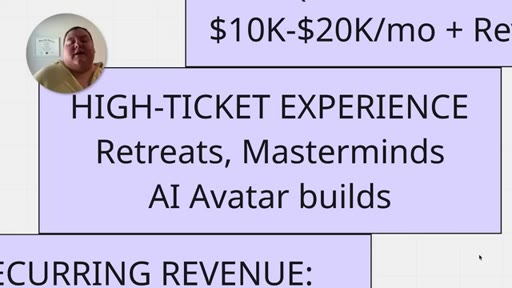
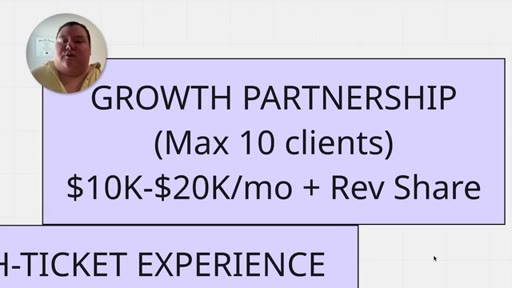
From $47 entry to $199 upsell to $3K-$10K build to $500-$2K/month maintenance to retreats to $10K-$20K/month growth partnerships.

§ · Storyboard

Visual structure at a glance.

open
agents
results
step1
step2
step3
bootcamp
deal-room
step4
§ · Frameworks

Named ideas worth stealing.

05:43 model

The 4-Step Framework: Attract, Capture, Convert, Ascend

  1. Attract
  2. Capture
  3. Convert
  4. Ascend

The complete agency operating system from first-touch content to recurring revenue partnerships.

Steal for positioning any service-based business that wants to replace outbound with inbound
08:41 list

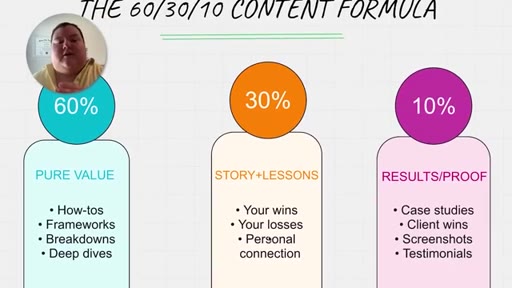
60/30/10 Content Formula

  1. 60% pure value (how-tos, frameworks, breakdowns)
  2. 30% story and lessons
  3. 10% results and proof

Keeps LinkedIn content growing an audience without tipping into pure promotion.

Steal for any creator or agency owner posting on LinkedIn daily
10:20 concept

111 Rule

One problem, one solution, one ideal client, one offer -- maintained until $1M. The fastest path through noise.

Steal for any early-stage agency or solopreneur who is spreading across too many niches
17:39 model

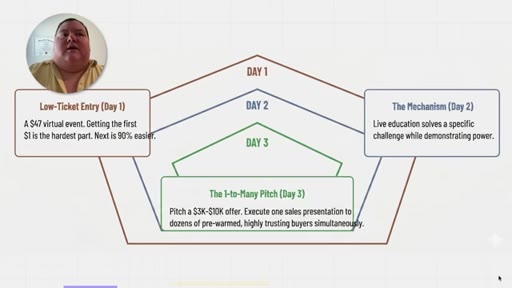
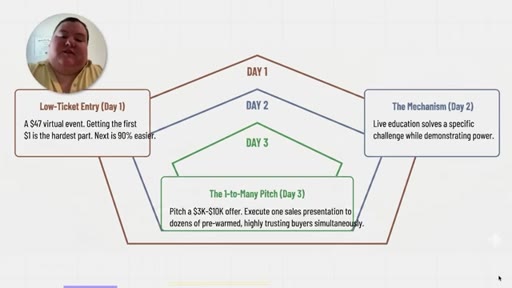
The 3-Day Bootcamp Mechanism

  1. Day 1: Low-ticket entry ($47) + First Dollar Principle
  2. Day 2: Live education solves a specific challenge
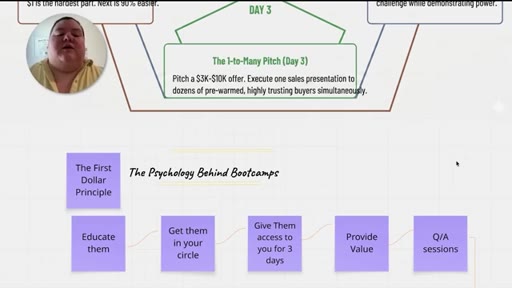
  3. Day 3: One-to-many pitch ($3K-$10K offer)

Replaces individual discovery calls with a single group presentation to pre-warmed buyers.

Steal for any service business selling anything above $1K
21:26 list

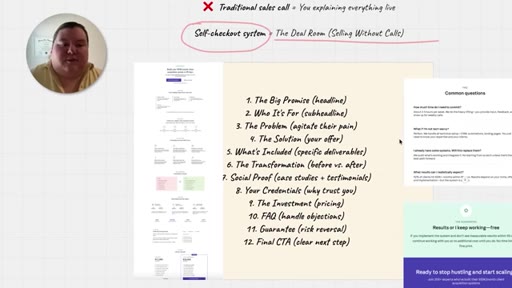
12-Element Deal Room

  1. Big Promise
  2. Who It's For
  3. The Problem
  4. The Solution
  5. What's Included
  6. The Transformation
  7. Social Proof
  8. Your Credentials
  9. Investment
  10. FAQ
  11. Guarantee
  12. Final CTA

A self-checkout landing page structure that handles all objections without the seller being present.

Steal for high-ticket offers priced $3K-$20K sold to warm audiences
14:12 list

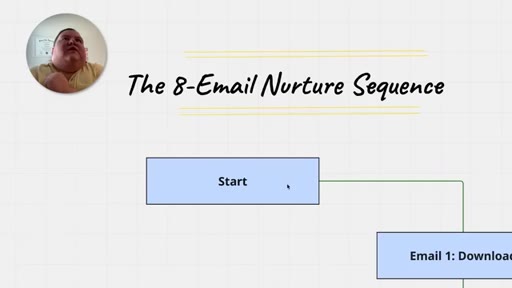
8-Email Nurture Sequence

  1. Email 1: Download delivery
  2. Email 2: Rapport building
  3. Email 3: Pain point awareness
  4. Email 4: Start to convert
  5. Email 5: Convert
  6. Email 6: Testimonial
  7. Email 7: Convert
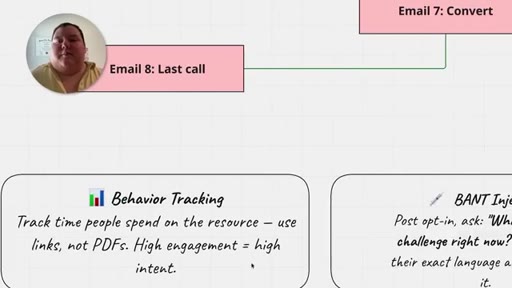
  8. Email 8: Last call

A complete post-lead-magnet follow-up sequence that moves cold subscribers to purchase-ready.

Steal for any lead magnet that needs a conversion backend
§ · Quotables

Lines you could clip.

04:17
"The difference between an agency making $3,000 a month or $50,000 a month is the system."
punchy standalone thesis, no setup needed → TikTok hook
20:27
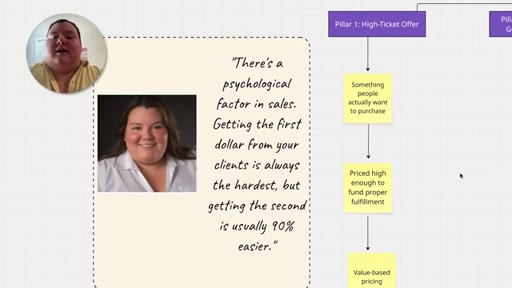
"Getting the first dollar out of your clients is always the hardest, but getting the second is usually 90% easier."
counterintuitive, memorable, immediately actionable → IG reel cold open
00:47
"200 calls. Two deals. $40,000 total."
tight before/after with numbers → newsletter pull-quote
§ 04 · The Script

Word for word.

HOOK opening / re-engagementCTA the pitch
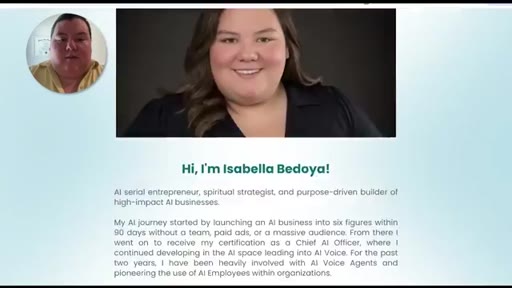
00:00HOOKI built a million -dollar business by showing up online and giving value first. No sales team, no ad budget, no paid ads, just me, my expertise and a system that works. That's Isabella Bedoya, founder of Izzy GPT, who turned AI into something productized and scalable
00:15HOOKand built a 1 .2 million -dollar business with no funding, no sales calls, no ads. But that wasn't always the case. I was one of the first agencies in the world to get a license to be able to
00:27HOOKagents to automate sales and customer support. I think we did like 200 calls and we were back to back to back to back for like two, three weeks back to back calls.
00:35HOOKAnd I think we closed two deals. It was just like the worst thing. Those two deals, we sold $20 ,000 each agent.
00:42HOOKSo we generated like $40 ,000 from all of that work. But then I said, you know what, there's a better way. And then that whole system, it generated us $150 ,000 with like not even that same amount of work.
00:53HOOKWhat Isabella discovered next didn't just change her business. In this episode, it challenges almost everything agencies believe about where the real money is in AI.
01:02HOOKThere's a psychological factor in sales. Getting the first dollar out of your clients is always like the hardest, but getting the second is usually 90 % easier.
01:10HOOKHow that realization led to a very specific shift in what she sold, how she packaged it, and how she differentiated in a crowded AI market. The biggest gold rush is when you productize your AI agents and your AI employees.
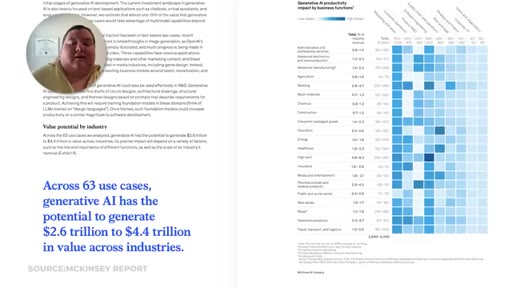
01:24HOOKAnalysts estimate like a multi -trillion dollar services market is becoming productized. Instead of just being another $2 ,000 a month agency, now you're actually charging $10 ,000 a month, $20 ,000 a month.
01:36HOOKAnd unpack her exact step -by -step system. Agencies can copy and package and sell high -ticket AI offers. You're probably spending money on paid ads that stop working the second they
01:46HOOKand cold outreach that gets 2 % reply rates, SEO that takes 12 months, and Google owns that data anyways. And maybe it's even referrals that you can't control or predict.
01:57HOOKSo I built a million dollar business just by doing none of that.
02:04For agencies listening, which types of AI agents are businesses paying the most for right now? Yeah, so first one is speed to lead.
02:13Speed to lead is basically if you're running ads, right? When they opt in, usually have a human callback within 48 hours. That's way too long.
02:22So speed to lead is someone opts in, your AI agent calls right away. So anyone that's running ads, that's an easy. So if you're an agency actually selling ads, that's an easy add -on, right?
02:31That's an upsell. If you are, let's say another one is the receptionists. So the receptionists, these are a little bit interesting
02:42because some businesses might actually have like really extensive knowledge bases, like 30 different things that they can do. So if you are selling an AI receptionist,
02:50just start with like a minimum viable agent essentially. Just say like, okay, let's automate the top three questions that you get or the top five questions that you get
02:59and don't put all those services at once because that is going to be like a big task. But that's a really popular one, the AI receptionist.
03:06So they call into the business and it just routes you to the right place. And then the third one, I would say, so we have speed to lead. The AI receptionist, the third one is the after hours, right?
03:17The after hours for service businesses, they don't have anyone to answer the phone. They don't have anyone to answer on holidays.
03:26So those are good agents that they can have, that businesses can easily add on and agencies can easily set up
03:32to handle those inbound calls that are happening after hours. What is the difference in your mind between an agency that's billing $3 ,000 a month selling AI employees
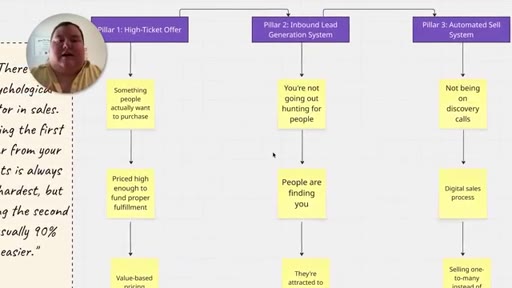
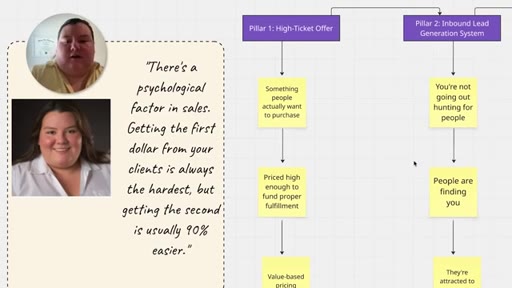
03:43and one that's billing $50 ,000 a month? So the difference between an agency that's making $3 ,000 a month or $50 ,000 a month, a lot of the times is the system.
03:51It's not how big your audience is. It's not how hard you're working, how big your team is or what AI tools you're using.
03:58It's having a proper system. And the way that I figured it out is you need to have a high ticket offer, right?
04:04Something that people actually want to purchase and high ticket so it actually funds the fulfillment. This is where I use value -based pricing, right?
04:13So we're creating value for a business. Charging high ticket is not out of the question and it just has to be appealing enough
04:19and it has to be valuable enough for people to buy it. Second thing is having an inbound lead generation system. So you're not going out hunting for people.
04:26People are finding you. And when people find you, it's a way better sales process because they're coming to you.
04:33They're being attracted to your content. They're building trust. They're building maybe curiosity of what you do.
04:39So when they reach out to you, you have higher leverage because they're coming to you. You're sending cold emails
04:45and you're essentially getting replies like, don't talk to me. Go away.
04:49Unsubscribe, right? So having an inbound lead generation system is very effective because of that
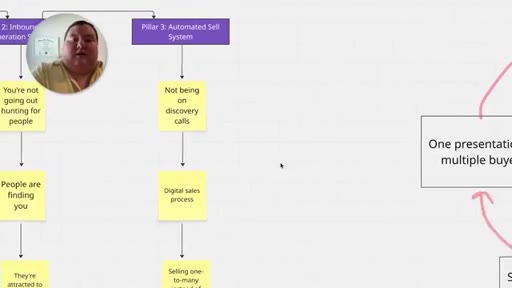
04:54because you're building that trust and that brand equity. And then the third thing is having an automated sales system. So essentially something that can help you
05:04not be on discovery calls. And that could even look like you using your own AI voice agents to take an initial discovery call.
05:11If you are still setting up calls and stuff like that for sales, then you could just automate it by having
05:17a discovery call agent to do the appointment qualification, all of that, and then pass it on to a sales rep. Or if you want to explore ways
05:24that you can sell without sales calls, then you can use more of a digital sales process where you're taking them in maybe to a webinar
05:31or a boot camp, train them on how you work, educate them on your processes, and then pass on to selling them something,
05:38HOOKsharing an offer with them while you have them in front of you. So you sell one to many instead of one to one.
05:43HOOKYou've built your entire business around a simple four step framework. Can you walk us through how this works
05:49HOOKspecifically for agencies selling AI employees? So because of this four step system, I have generated over $1 .2 million.
05:58HOOKI have grown to over 47 ,000 followers on LinkedIn. I have been featured on Forbes four different times in Business Insider and a bunch of different publications
06:11HOOKwhere it was all earned media. They came to me. I didn't have to go and pay PR to get published.
06:17HOOKI think my content has been seen over 8 million times and I've created also a strategic partner network that reaches 15 million people
06:27HOOKthrough all the partners that also share my content and my offers. The first step to the whole thing is like,
06:33how do we attract more people? And this is where normally people will run cold email, they'll run ads,
06:39maybe they'll even post on Instagram or on TikTok or whatever. In this case, I figured back in 2023, when I started going all in on AI,
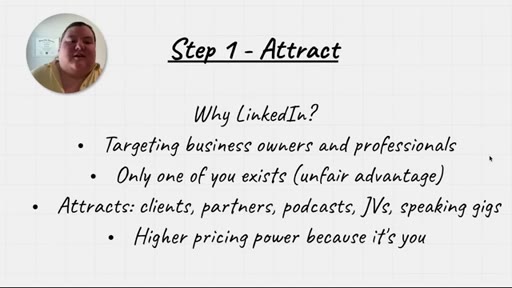
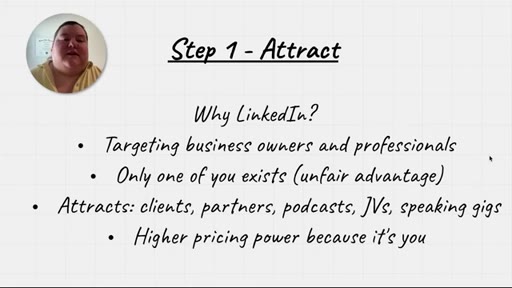
06:50I figured if I'm trying to attract business owners and professionals, I want to build on LinkedIn. And I had already been on Instagram for a few years.
06:58I probably grew to like 2000 followers. But on LinkedIn, I just started posting all of my business insights.
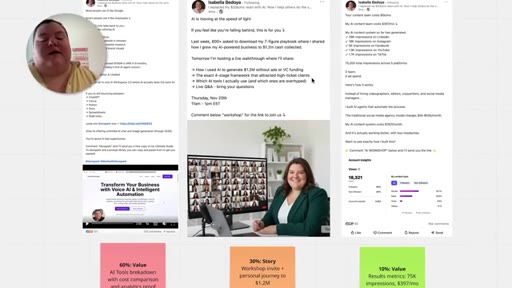
07:04I started posting like actual valuable posts. I'll share with you a few examples. The biggest name of the game here
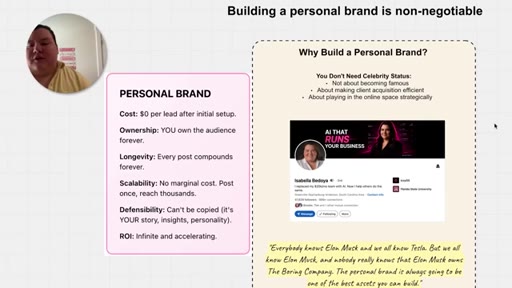
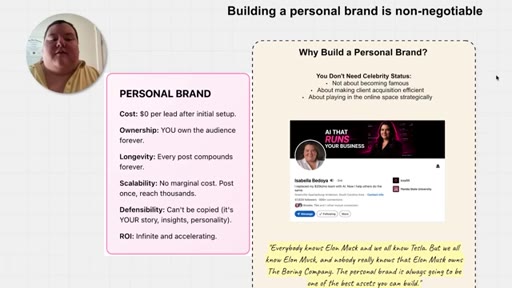
07:11is actually building a personal brand. And the reason why you want to build a personal brand is because there's only one of you.
07:17And when you are sharing like your story, your experiences, your lessons, your wins, your losses, all of that,
07:24the right people will find, will not just like find you and find your stuff maybe appealing,
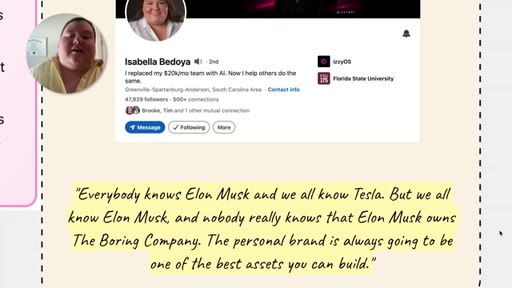
07:30but it will actually build that resonance with your ideal clients. For example, everybody knows Elon Musk,
07:38and we all know Tesla, but we all know Elon Musk. And nobody really knows that Elon Musk owns like the Boring Company, right?
07:44So it's like that personal brand is always going to be one of the best assets that you can build for yourself. You don't have to become a celebrity,
07:53but at least if you're playing in the online space, you're building an agency, you're building a business, this is going to be a non -negotiable
08:01as we continue going down this path. So if you just want to make your client acquisition more efficient, then building a personal brand,
08:09posting content that attracts your clients, attracts the right people, attracts partners that actually want to work with you.
08:15It attracts podcasts, joint ventures, speaking gigs, whatever the case is, you're attracting those, they're coming to you.
08:23They already have some sort of trust that they've built because of your content and who you are.
08:27So better deals will come to you. And then you have that leverage that because they want to work with you,
08:32you also have the advantage that you can price higher because it's you and it's you're only one person versus being one of the many, right?
08:41If an agency owner is starting from scratch on LinkedIn, what types of posts should they be creating? I post on LinkedIn daily.
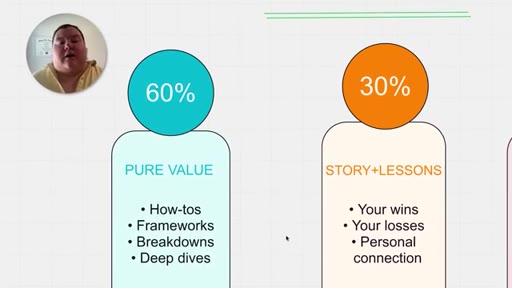
08:49Usually I use a 60 -30 -10 formula. So basically it's a 60 % pure value. So this is where I share how to,
08:55frameworks, breakdowns, how the funnels work. These are just like deep dives where I'm just educating what I've learned.
09:0130 % is usually story and lessons. So this is like my story of how I've, my story and like my lessons
09:09that I've learned in entrepreneurship. So it creates that resonance with people. And then the last one is results and proof.
09:16So basically this is just sharing like case studies or like actual things that have happened like client wins or whatever.
09:24But yeah, it's basically if you keep that formula and also one that's not mentioned is the 111 formula. When you are posting content,
09:31always talk about one problem, one solution to one ideal client and have one offer. And if you keep it consistent,
09:39one problem, one solution, one ideal client, one offer, you focus until you scale up to 1 million and then you can start talking about
09:46different offers and services and expand. But keeping it like that focused will help you grow a lot faster.
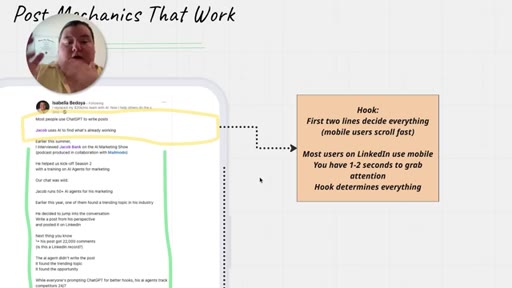
09:52And then the other thing is a hook. If you don't have a good hook in the first two lines, people are gonna scroll past your post.
09:58So what I do is I have usually a strong hook and of course I'll play around and tweak these and all that.
10:04But then I have usually like how like my theories work, my actual strategies work and all of that. And that's essentially what this post is doing.
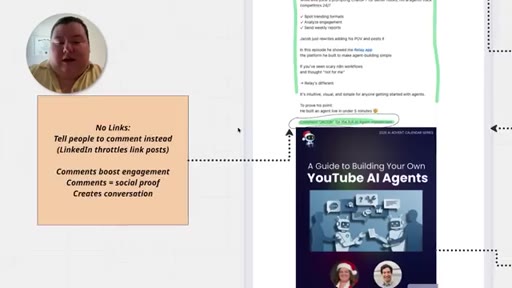
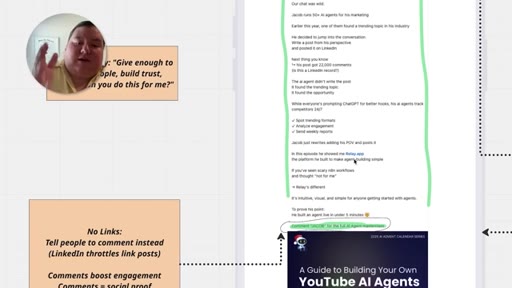
10:15But then what I do at the end is usually I'll have some sort of call to action. And the call to action, I never share links.
10:23Instead what I do is I tell people to comment below. So and then a carousel, this is a carousel basically. These get like a lot of engagement on LinkedIn.
10:33On the second page, I added an offer with a QR code. So now I'm attracting people, I'm getting their attention, I'm providing value, I'm building trust,
10:42I'm building more of that personal rapport. I'm telling them to comment so I can get people actually commenting in the comments.
10:48And then I'm giving them something to convert into within the post without violating any of LinkedIn's rules or how they would normally like you know
11:00throttle the post if you put the link in the comments. If you know Alex Ramosi, he's a big proponent of this, right? Like just give everything away.
11:07I'm not saying give everything away, but like just give enough that will attract people, that you'll build trust.
11:13And they'll start building a relationship with you. And then naturally they'll want to take the next step. It looks like you've made an incredible system.
11:20And it's not extremely complicated, but it's terribly focused and efficient it seems. At capturing and converting customers.
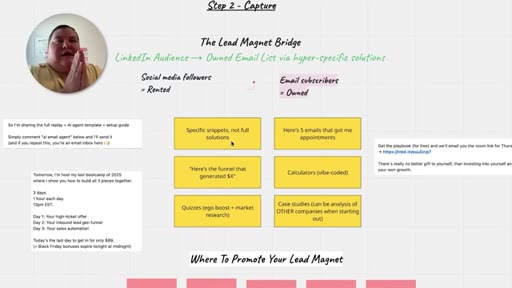
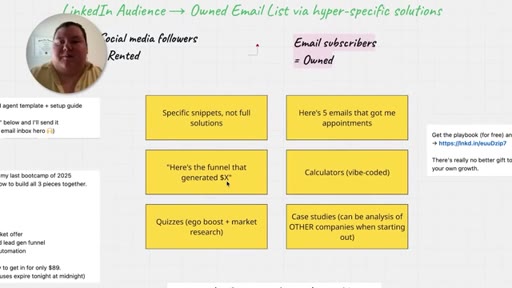
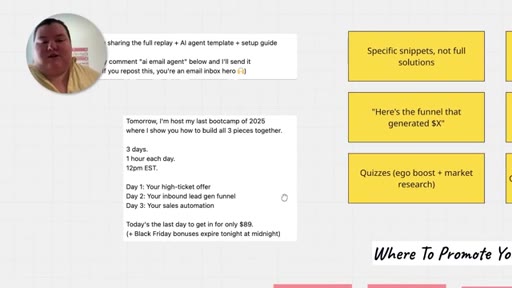
11:29Tell us a little bit about that. For example, when we were doing the voice agents, I would give snippets away.
11:35Like I would say like I figured out how to automate like how to automate. If you're running ads, I figured out how to automate
11:42not losing that person that opted in. So it's like speed to lead, right? So it would just be that specific solution
11:50instead of saying here's the whole thing of how you automate the whole thing. So it's just finding very specific examples
11:56that it doesn't even have to be like giving away the most important part. It could just be like,
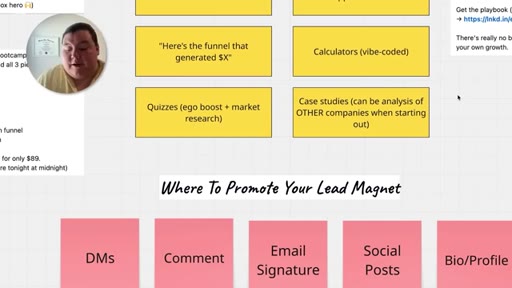
12:00here's five emails that I sent that got me appointments. Here's a funnel that I used that generated X amount of money, right?
12:08It's like it's sharing little tidbits because it's gonna increase people saying, wait, how did you do that?
12:14Can you do it for me? Because most people don't want to do it themselves. And that's where like agencies come in, right?
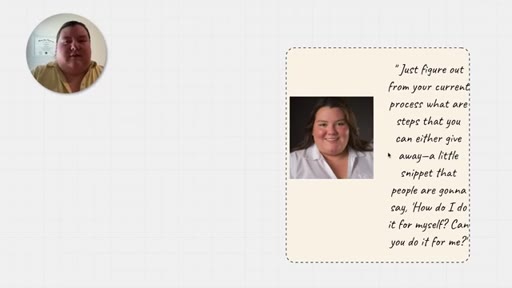
12:18We all have the power now of like, oh, we can actually do this for you. So it's just figure out,
12:24I'm not saying like for any agency owner, right? I'm gonna say like go in and start a whole new offering. Just figure out from your current process.
12:31What are steps that you can either give away a little snippet that people are gonna say, how do I do it for myself now?
12:36Can you do it for me? And then that's essentially what you want to trigger. Some people want like, they'll want like case studies, right?
12:43Like here's a case study of how I did this. And the cool thing about case studies is that you don't necessarily have to start
12:51with like your own success stories. When I was trying to break into the SaaS space and like see if I could attract anyone in this space,
12:59I did case studies on like other companies and other tools. And it was just my analysis of like how I saw it work. And that's enough to like also build trust
13:09until you get your own case studies. But people like case studies, they like to see like how other people or competitors
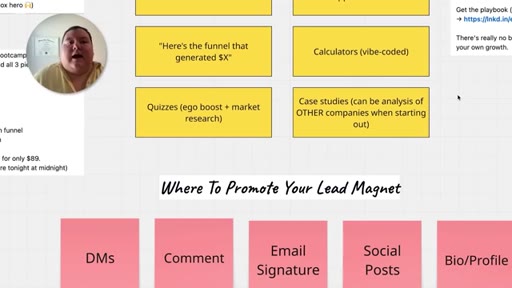
13:15are doing the things that they want to achieve. If you can build calculators, there's tools that, there's like a lot of vibe coding tools
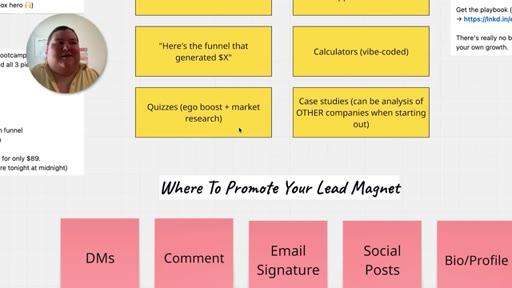
13:23that you can use to build calculators, quizzes. Quizzes are also really effective because first it's an ego boost for them, right?
13:33Like let me see what I score, but also for the person posting that as a lead magnet, it also sort of like gives you insights
13:41into who you're attracting. All of these are on AI agents generated, I think like $180 ,000 in like six weeks.
13:50All of the agent ones, these are all the lead magnets. So this one, this one, this one, they all got launched around the same time.
13:56It was all through LinkedIn content. And then same strategy, I sent everyone to a boot camp, then I sold them a, let me build your AI agents for you.
14:07I priced it at like 8 ,000. And then people just bought it without sales call straight off the website.
14:12Once you've captured people with your fantastic lead magnets, following up with them and converting them is the next job at hand.
14:21And just like your four step system, you've got a really simple but focused and efficient follow up sequence.
14:27Tell us a little bit about that. The first email is usually like, here's your download.
14:30Second email is report building. Hi, I'm Isabella, this is my track record. Third email is like pain point awareness.
14:38Fourth email is like starting to convert. Fifth email, convert. Sixth email, testimonial.
14:42Seventh email, convert. Last call. One of the things, I track how much time
14:45people spend on the resource, which is why a lot of the resources are links and not PDFs.
14:51So I'll track how much time people are spending on the resource. Then I'll track some of those questions for opt -in.
14:56It's like a Bant questioner, so budget authority need and time, timeline for solution.
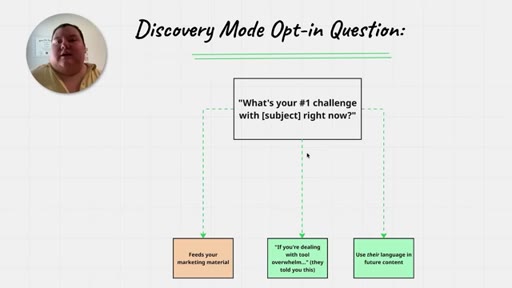
15:01So I'll ask that. If I'm in discovery mode and like what language do I need to be using,
15:07then instead of doing Bant, I'll do opt -in for the lead magnet. And then what's your number one challenge
15:12with this subject right now? Why do you need an agent? What's your number one challenge
15:16that you think you need an AI agent? And then people will tell you, oh, it's the tech, it's this, it's that.
15:22So then that feeds my marketing material. So when I post content, I create emails or whatever,
15:28I use their language. I'm like, oh, if you're dealing with tool overwhelm,
15:32here's five steps to do it. And they told me that. So I just use their language back
15:36the people that are being attracted by all this. This sounds really counterintuitive, but you stopped doing sales calls.
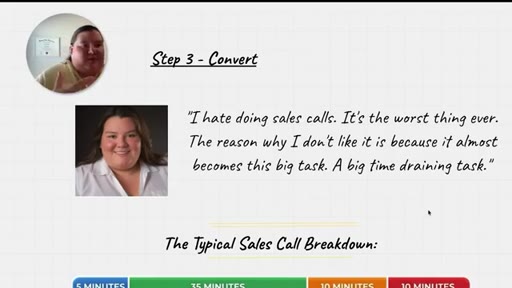
15:44So what replaced them? I hate doing sales calls. It's the worst thing ever.
15:49And the reason why I don't like it is because it almost becomes like this big task.
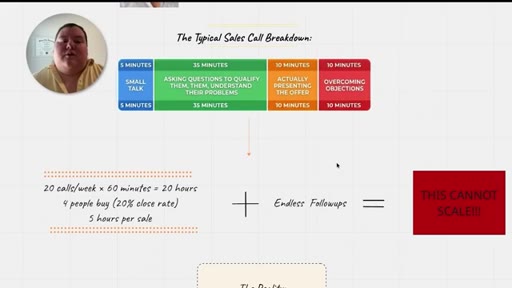
15:55It's like a big time draining task. Usually it's the sales call. Typically it's five minutes of small talk,
16:0135 minutes of asking questions to qualify them to see how you can help them to understand their problems.
16:06Then it's 10 minutes of actually presenting the offer. And then it's 10 minutes, usually of overcoming objections.
16:11And if you're doing this from a cold audience, even more because they don't trust you. So I didn't like that
16:17because I felt like it was always a game of like who has a bigger, almost like a bigger ego
16:22to out overcome the objections or like, it just comes from a place of power. I didn't really like that.
16:28I don't really want to be the type of person that's convincing people to work with me. If you don't see the value,
16:33you don't see the value. When I started the voice agency, when I merged it with someone else,
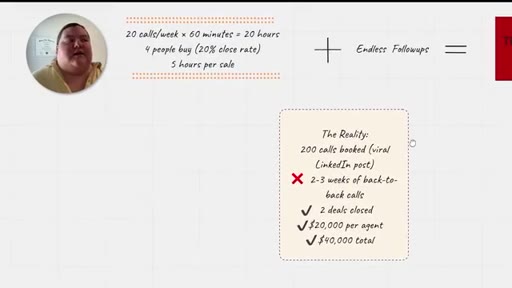
16:38our first few calls, like we did, I think we had like 200 calls. I posted on LinkedIn.
16:45The post went viral. It booked us like 200 or 300 calls on our calendar. And we were back to back to back to back
16:51for like two, three weeks, back to back calls. And I think we closed two deals and it was just like the worst thing.
16:59And those two deals, we sold $20 ,000 each agent. So we generated like $40 ,000 from all of that work.
17:05But then I said, you know what? There's a better way. So I introduced my old partner to my bootcamp system.
17:11And I'm like, I'm going to post content. I'm going to drive them to a LinkedIn to a bootcamp. And then I'm going to upsell them
17:16into buying our agents. And then that whole system, it generated us $150 ,000
17:22with like not even that same amount of work. So I was just like, this is ridiculous. We're spending all this time getting on sales calls
17:28when we can just do a bootcamp once a month or maybe even like once every three weeks or something. And then upsell them to our high ticket offer
17:35without having to get on all these calls. It's just so much better of a process. You use low ticket bootcamps instead of discovery calls.
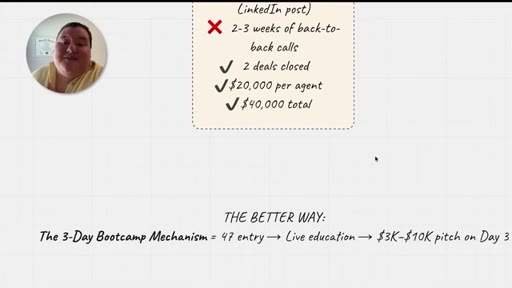
17:42Why does that work so well for warming people up? A bootcamp is like a $47 a month type of offer. Sorry, not a month, a $47 virtual event.
17:54I'll usually do this like once a month. And that virtual event is usually like a three day, it's like a three day, one hour a day training.
18:06And I'll teach them like how to go from point A to point B of a really specific challenge really, really fast. So basically it's three days and those three days
18:15they get like a little training. And then those three days, my whole purpose is to actually like show them
18:21and educate them on what my services are doing. So this is essentially just like an education layer that I added so that when people are coming
18:29and warm for my content, this three day bootcamp really, really warms them up into like, okay, what am I actually missing for my business?
18:35At one point I showed how to use AI as a personal coach. So this is just one of the offers. So I just build a funnel.
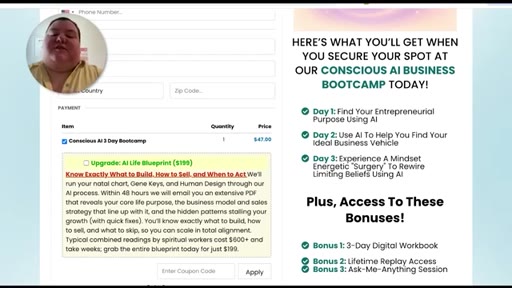
18:45And then if I just scroll down here just to go through the pricing.
18:50Or is it? Here we go. So basically it's three days
18:55and those three days they get like a little training. And then those three days my whole purpose is to actually like show them and educate them
19:04on what my services are doing. So this is essentially just like an education layer that I added so that when people are coming
19:10and warm for my content, this three day bootcamp really, really warms them up into like, okay, what am I actually missing for my business?
19:17And then so I'll have like the actual bootcamp $47. And then I'll have some sort of upsell to try to increase the cart value.
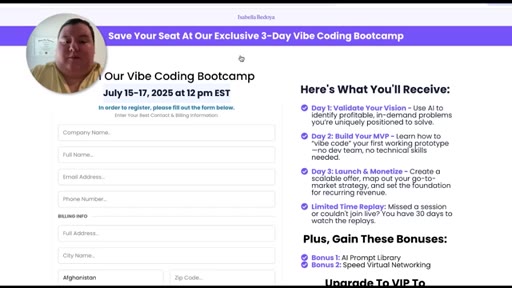
19:25And usually I'll put that at like $199. Now this is, I don't know if I have another one that's active right now.
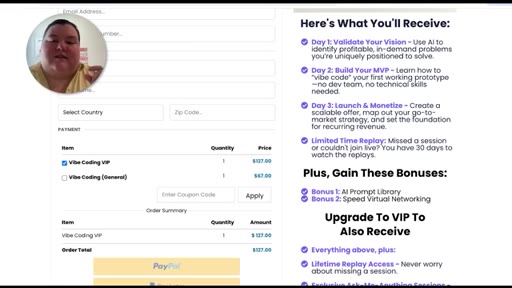
19:32Let's see. Yep. Vibe coding, right?
19:35So I did one on how to build apps. And then, yeah, the whole thing. It just tells you, it walks you through a whole thing.
19:43Build it on how to build apps. So my content for that whole week or that whole month was around like vibe coding and building apps
19:49and stuff like that. And then the backend when we're in the bootcamp then I'll say, oh, and here you can see
19:56I'm also testing your own pricing, right? I'm saying like, well, what if I do VIP general? What if I do add -on?
20:01So I'm constantly testing, just see what works. But the thing about this bootcamp is that it's creating this,
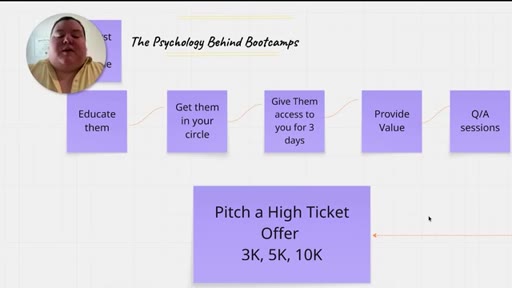
20:08there's a psychological factor in sales. Getting the first dollar out of your clients is always like the hardest,
20:14but getting the second is usually 90 % easier. So the whole ideology is what if I can just educate them,
20:20get them in my circle, get access to me for like a few days, actually make it live.
20:25They can ask me questions. I'll provide a lot of value so that we can build that trust
20:29and that connection a lot faster. So now on day three, when I pitch an offer and it's pretty much just here's my service, right?
20:39Like here and here's how it works. And it's like some sort of high ticket offer, 3000, 5000, $10 ,000 offer, whatever the case is.
20:47But because we spent three days together and we have Q &A time, it's essentially doing one sales call
20:55for multiple people all at once so that I don't have to then go on multiple sales calls one by one and pitch the same thing over and over again.
21:02And then when it comes time to like actually saying like, okay, here's the next step, continue working with me. It's just a no brainer
21:08because now they know they have a problem and now you're the right provider that's in front of them that they built trust
21:15and that like connection with the last few days. You do a virtual event that eliminates a lot of the resistance
21:21and it also eliminates the fact of having to do a bunch of one -to -one sales calls. So what has to exist on a landing page or deal room
21:28for someone to confidently buy a high ticket AI employee without talking to you? If you want to sell it without sales calls,
21:35you have to be extremely like very focused on your ideal client because you literally have to lay everything out for them
21:43so that it makes sense. So if you're selling AI voice agents, and you're trying to sell gym owners and realtors
21:52and business loan brokers, that's going to be all over the place. It should only be focused to one specific person
21:59and the term is called buyer's enablement. So up until now we've all been in a seller's enablement market.
22:07I think like maybe two years ago things started shifting where now it should really be buyer's enablement.
22:11So how do we enable our buyers to buy from us because buying has changed. And now people know that when they get on a call
22:18they're going to be sold. People hate getting on calls. And then you just create a like a deal room.
22:23It can be a PDF. You can look at tools that create deal rooms and that deal room you add everything that they need.
22:31You add what is the value proposition? What is their problems? Why is this the solution for them?
22:38How you can solve it? What are some examples of how you solved it? What is maybe an agent that they can play around with?
22:46Everything that they need. Everything that they need to make a proper decision. So then usually at that point
22:51it's like I fully understand it. I usually put a chat bot on every landing page and then essentially it'll just ask you
22:57like you'll ask it whatever questions but it's trained to be kind of like a ninja salesperson because you'll ask like where do I find this?
23:05And it's like, oh, go to page seven. By the way, tell me more about your business, right? So it's like doing that qualification.
23:10It's still following the same sales principles. It's just in a different way that it doesn't have to be you doing it.
23:15You've designed your system so people can buy without calls. So if someone asked to hop on a call with you what does that usually mean and how do you handle it?
23:24So if they still want to jump on a sales call I'll usually send them an email and ask them like is there anything specific you want to talk about?
23:29And then they'll say, oh, I want to talk about pricing. I'm like, okay, what do you have in mind? And then we'll kind of do that over email.
23:36But if it's like they actually are pressing for a sales call it usually isn't more than like 15 minutes and those 15 minutes is really just to like get alignment
23:45solidify the trust. Like, are you actually going to do this? Yes, I'm actually going to do this.
23:48Okay, cool, right? It's like that last little bit of trust. But yeah, most of the times
23:53I'll just try to continue to do it over email and if I still I'm not able to do it over email and I have to jump on a call
23:59then it's usually about logistics. At that point the people have already self -selected. They already know it's for them
24:05and it's just a matter of like I just want to make sure you're a real person. And it shouldn't take long.
24:11CTAIt shouldn't be a whole objection handling game or anything like that. After you've sold the very first agent
24:16CTAa lot of agencies and the actual businesses themselves that are using agents leave money on the table. And so tell us what they can do as next steps
24:26CTAafter the first one's live and successful. Yeah, so if we start with like the first price point the first price point is essentially like
24:33CTAhow do we get them in the door? And that's usually what I consider that to be is usually the boot camp
24:39CTAor some sort of like low ticket training. The immediate upsell is usually the how I shared in the funnel, right?
24:46CTAI have like some sort of 199, 299 upsells so I can increase the value ladder or I mean the average cart value
24:53CTAand then after the boot camp then I'll have some sort of like high ticket offer. So now it's like let me build your agent
25:01CTAfor like $8 ,000. Let me do let me build you an app an MVP for like 5k or something, right?
25:07CTALike 10k even whatever. But that backend upsell of the boot camp it's usually a high ticket offer
25:13CTAand then the recurring revenue usually comes in as like whatever the service might be. If it is an agent then it's like okay
25:22CTAhere's a recurring revenue. Here's the maintenance plan for your agent. It can be $500 a month.
25:28CTAIt could be a couple of grand a month, right? It really just depends on your offer. And then after that I have the high ticket experience
25:35CTAso that people that have already gotten a lot of value from all the other stuff and they want to work at a closer capacity
25:41CTAthen I started doing retreats last year so we'll do on these like retreats and then that can go those are like more premium offers
25:53CTAbecause now there's like a house that you have to rent and private chef and logistics and it's just bringing like a tight knit group of people
25:59CTAso it's more of like a mastermind retreat and then we just talk about it's just like a few days where we just like talk about how to grow the business
26:07CTAhow to continue the growth. I also help them figure out like what agents we need to build on top
26:12CTAso I build them agents that like are replicas of them they're AI avatars of them. So that all comes baked in
26:20CTAand then the growth partnership this is now if you actually want to become a growth partner a growth partner is an offer
26:25CTAthat you shouldn't have more than 10 of those at any given time of the year because if you have more than 10
26:31CTAlike it's just going to be really hard to fulfill so as a growth partner you become an extension of their team
26:37CTAand you actually start doing work for them and instead of just being another $2 ,000 a month agency now you're actually charging $10 ,000 a month
26:45CTA$20 ,000 a month but you're also getting revenue share because these are like long -term business partnerships
26:50CTAit's not necessarily it's something that you sign for the year it's not something that you sign
26:55CTAfor like a three month or a one month thing and those growth partners those are awesome because you definitely increase what you're worth
27:02CTAyou increase your revenue you increase your you essentially grow through the revenue that you're generating
27:08CTAthe rev share that you're generating without having to scale through more clients so you don't have to turn your whole thing
27:14CTAinto a growth partnership but at least one or two or three growth partners definitely make a big chunk of change
27:20CTAlike difference in your business
— full transcript
§ 05 · For Joe

System over hustle: how inbound replaces the call grind.

WHAT TO LEARN

The agencies earning $50K/month are not working harder than the ones earning $3K -- they have replaced activity with architecture.

  • A LinkedIn personal brand compounds in ways cold outreach never does -- clients, press, and speaking gigs arrive pre-warmed because they already trust the content.
  • A lead magnet converts social followers (rented) into email subscribers (owned) -- the only asset that survives platform algorithm changes.
  • Asking your opt-in audience what their number one challenge is feeds exact market language back into every email, post, and offer -- the copy practically writes itself.
  • The First Dollar Principle is the most transferable insight: engineer a low-friction entry point deliberately, because every purchase after it is 90% easier to collect.
  • The $47 bootcamp is not a cheap product -- it is a sales mechanism that replaces 15-20 one-to-one discovery calls with a single one-to-many presentation to pre-warmed buyers.
  • A deal room (landing page with a qualifying chatbot) handles objections at scale without the seller's time, enabling high-ticket purchases to close asynchronously.
  • Growth partnerships -- capped at 10 clients, priced at $10K-$20K/month plus revenue share -- are how an agency escapes the time-for-money trap without building a sales team.
  • You do not need your own case studies to start -- analysis of how other companies use AI is enough to build credibility until real client wins arrive.
§ 06 · Frame Gallery

Visual moments.