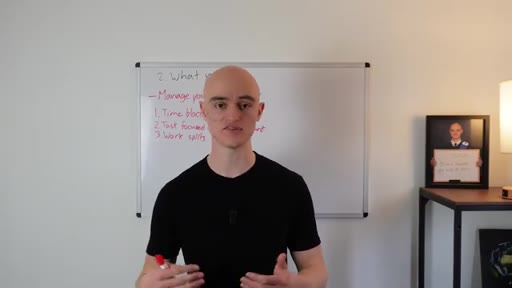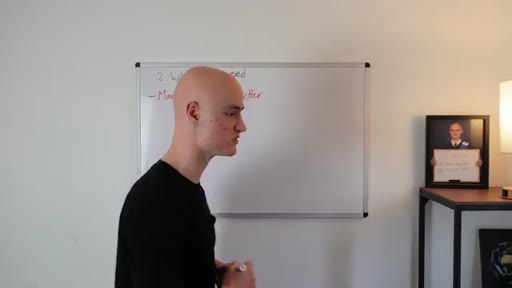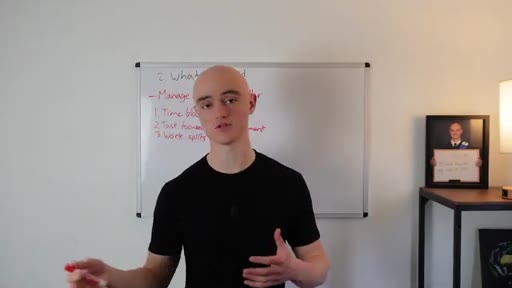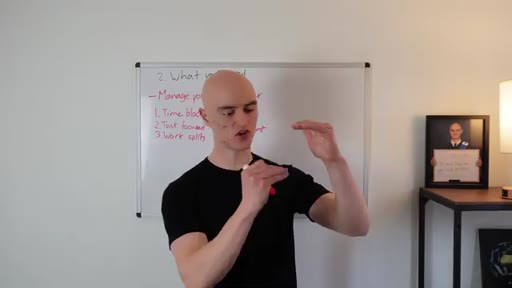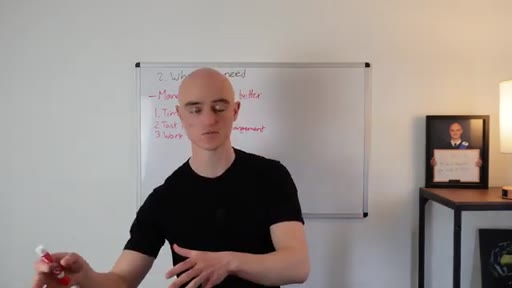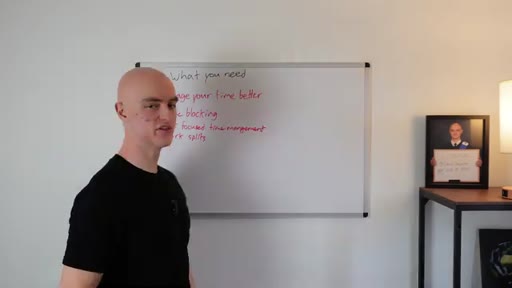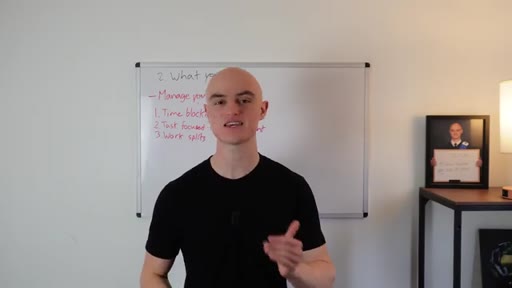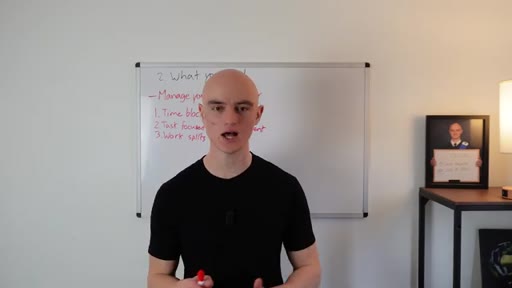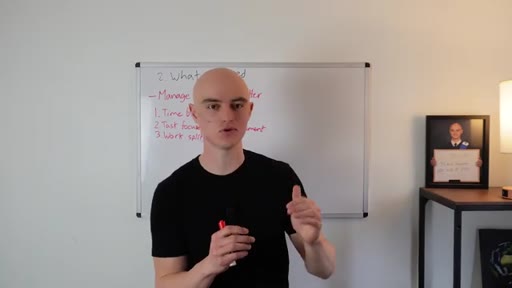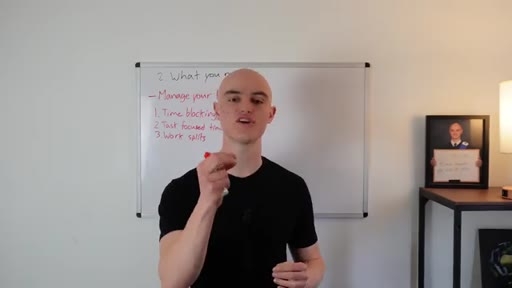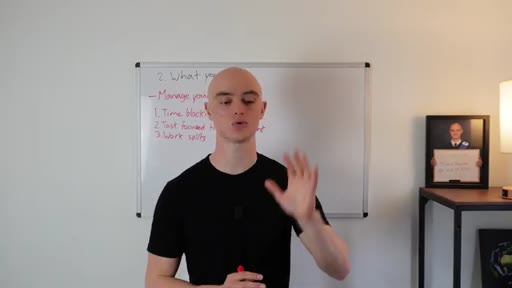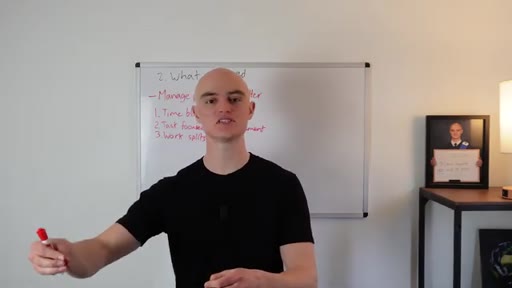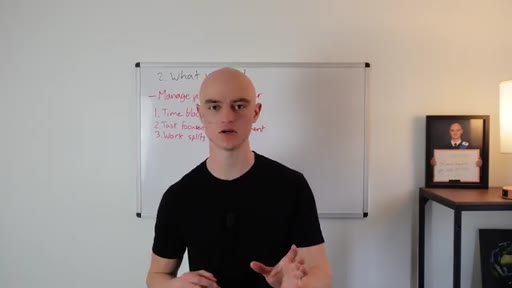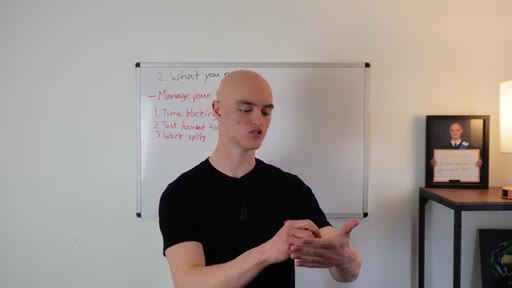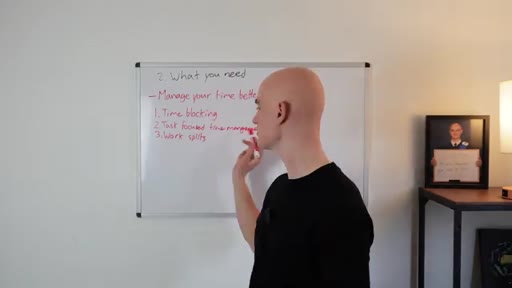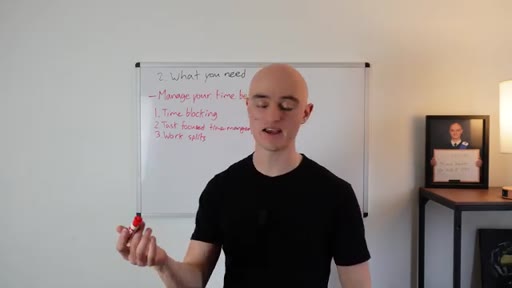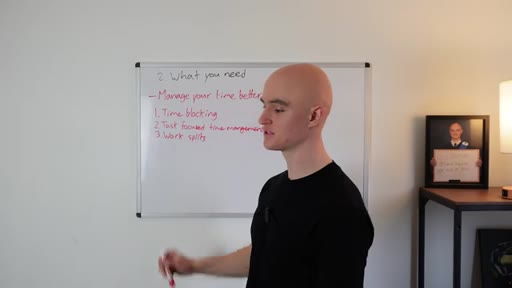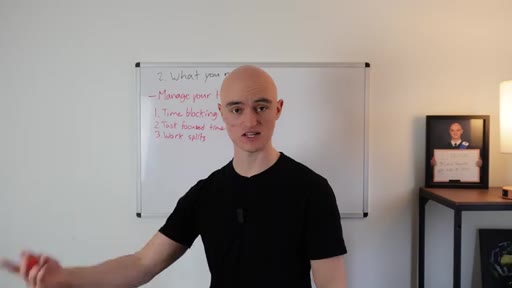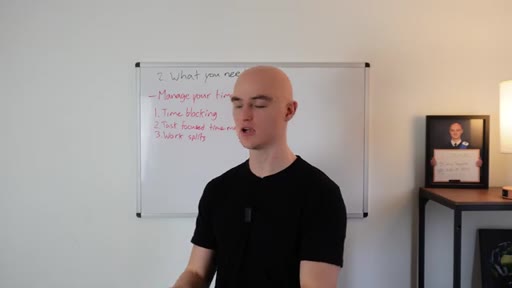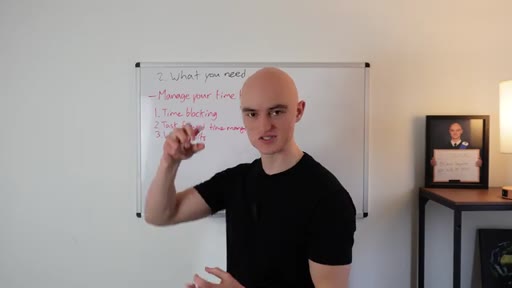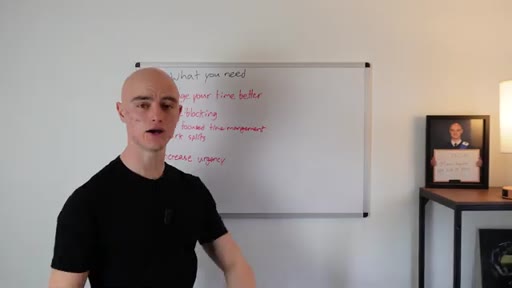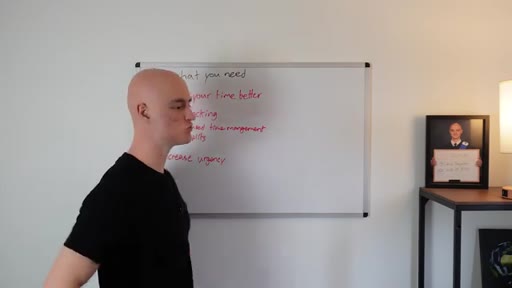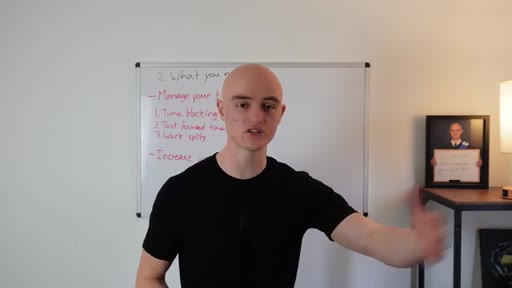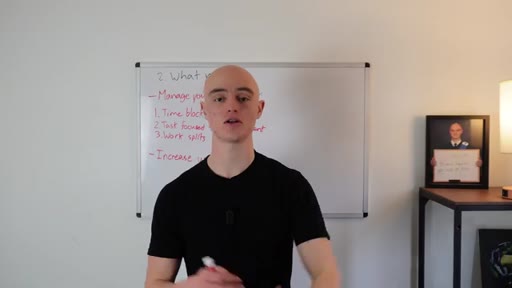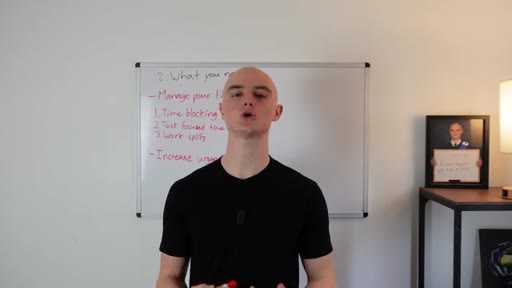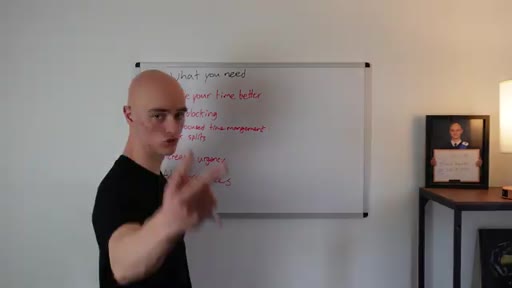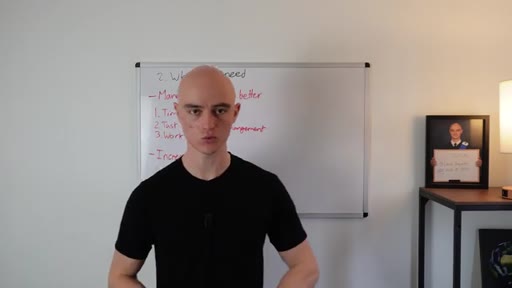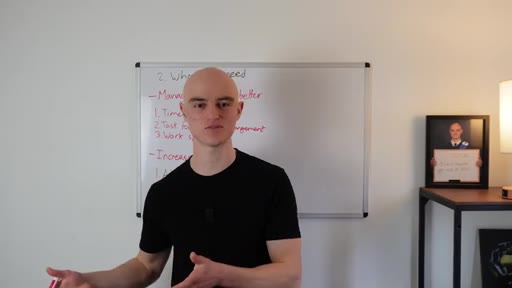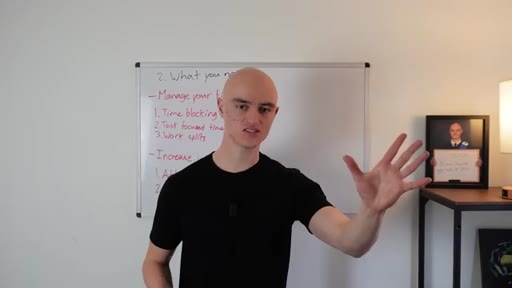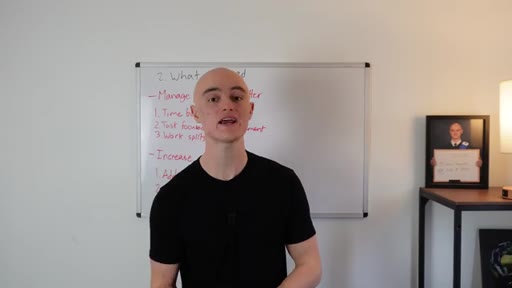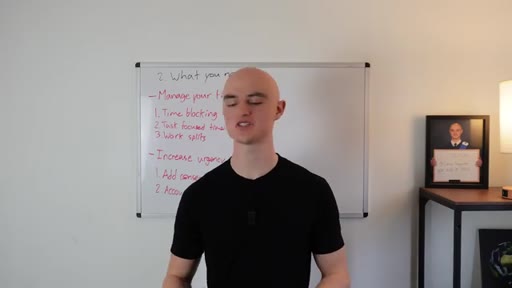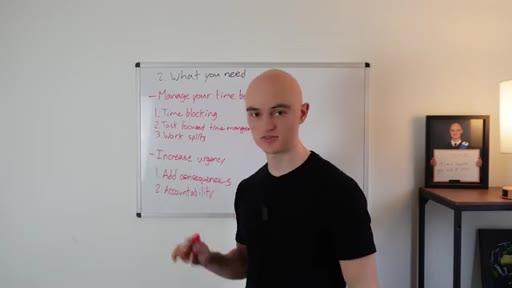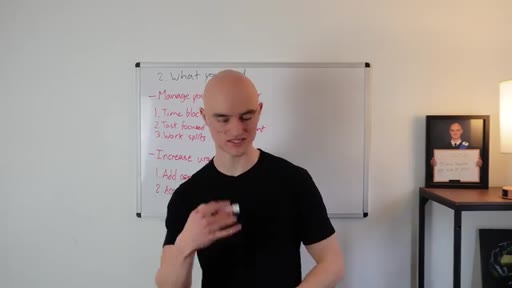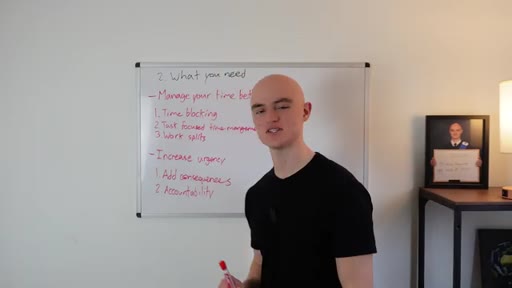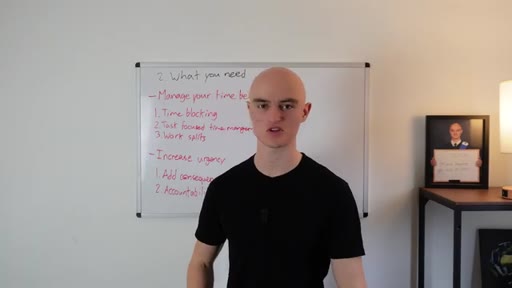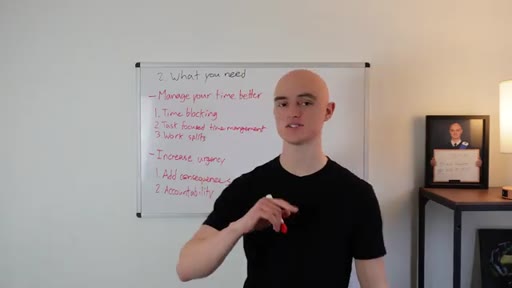

The bait, then the rug-pull.
The title makes a promise and the first sentence keeps it before the viewer has time to blink. The presenter opens mid-gesture, already inside the viewer's head, naming the exact thought most people have on a slow week — and immediately signals he's going to pull the rug out from under it.
Where the time goes.

01 · Hook and promise
Opens by voicing the viewer's excuse, then promises to explain what's actually holding them back and what they actually need.
02 · The real problem: you don't use the time you have
Argues more time would produce the same results. Lottery winner analogy: $10M to someone who can't manage money returns to zero. Lists symptoms — no planning, slow pace, bad habits.
03 · Fix 1 — Time management overview
Introduces the umbrella concept: some people get more done in 24 hours because they manage their army of minutes deliberately. Sets up the three sub-methods.
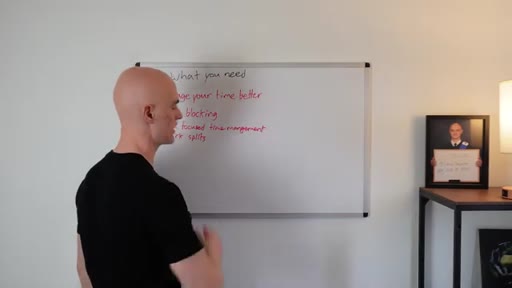
04 · Method 1 — Time blocking
Most effective but most effort. Assign every task to a specific calendar block. From 7–10am: deep work. From 10–11am: calls. Etc. Fill most of the day.
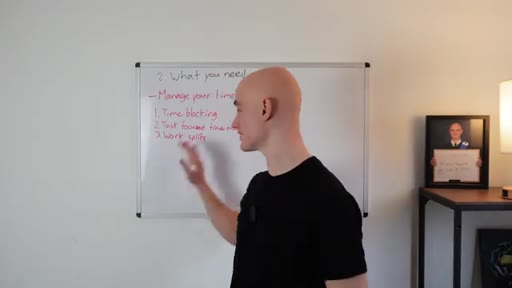
05 · Method 2 — Task-focused time management
Pick the three most important tasks for the day. Wake up and work on the most important one. Your only job: finish those three, regardless of when.

06 · Method 3 — Work splits + night-before planning
Assign task categories to days of the week. Recommend planning the day before using all three methods combined: work splits + to-do list + time blocks.
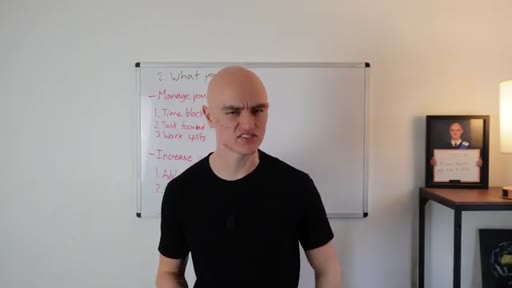
07 · Fix 2 — Urgency: consequences and accountability
Urgency is the missing ingredient. Two levers: (1) add real consequences for non-completion, (2) tell people and join an accountability group. Ends with community CTA.
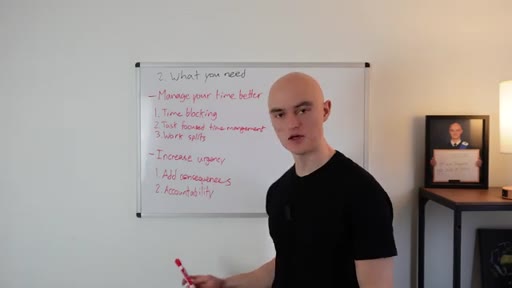
Visual structure at a glance.
Named ideas worth stealing.
Two-Part Productivity Fix
- Manage your time better
- Increase urgency
The presenter's top-level framework: poor progress comes from two deficits — not managing existing time, and not having enough pressure to act. Each has sub-components.
Three Time-Management Methods
- Time blocking
- Task-focused time management
- Work splits
Three complementary methods ranging from highest effort (time blocking) to simplest (work splits). Recommended to use all three together.
Urgency Two-Step
- Add consequences
- Add accountability (tell people)
Urgency can be manufactured by attaching a painful, public consequence to non-completion. Private consequences don't work — the social layer is what enforces them.
Lines you could clip.
"I could give you more of it, but you would still fall into the same trap."
"You give them $10,000,000, within a few years, they're back to zero or worse."
"Nothing bad happens if you procrastinate if you don't complete this task today or even this week. Lack of consequences leads to lack of urgency always."
How they asked for the click.
"The first link in the description fixes all of this because you'll be part of a group of like minded people — weekly calls, post in the community, interact with different people."
Soft pitch framed as the natural solution to the urgency problem just explained — the community is positioned as the accountability mechanism, not a standalone product.
Word for word.
Two inputs that decide how fast you move.
Progress stalls not because hours run out but because the existing hours have no structure and no pressure attached to them.
- More time without better habits produces the same results — the constraint is how you use each hour, not how many you have.
- Time blocking is the highest-leverage scheduling method: assigning every task to a specific window before the day starts eliminates the decision-cost of choosing what to do next.
- Task-focused planning is the lowest-friction entry point — commit to three priority tasks the night before and treat completion as the metric, not clock-hours spent.
- Work splits remove daily what-to-work-on decisions by permanently assigning task categories to fixed days, freeing cognitive bandwidth for the work itself.
- All three methods compound when used together: work splits set the weekly container, the task list fills it with priorities, and time blocks assign each priority a specific window.
- Urgency is manufactured, not felt — a consequence you haven't told anyone about has no enforcement mechanism and therefore no real effect on behavior.
- Public accountability converts an internal promise into a social contract; the reputational cost of failing in front of others is the pressure that makes deadlines real.