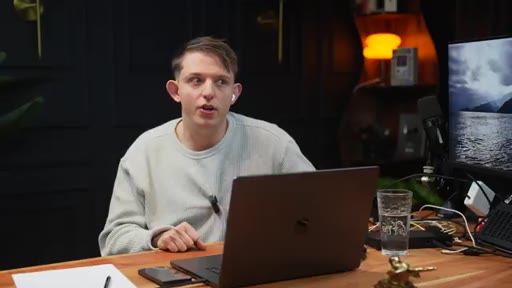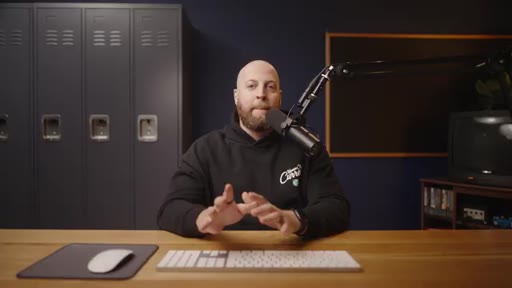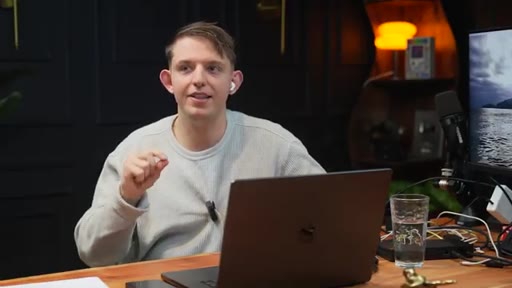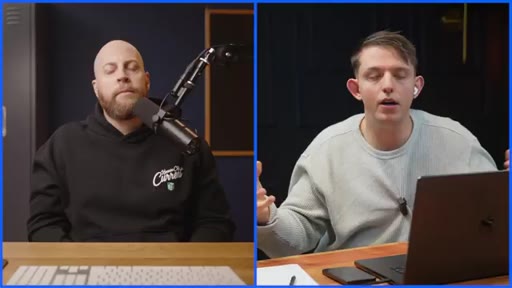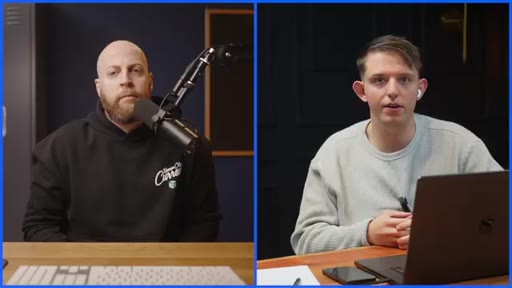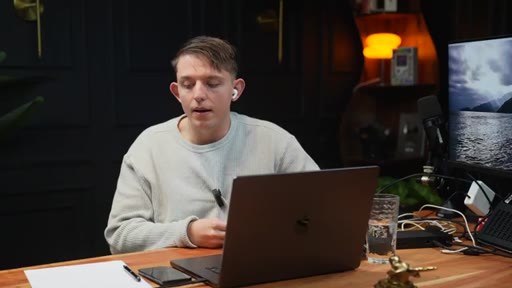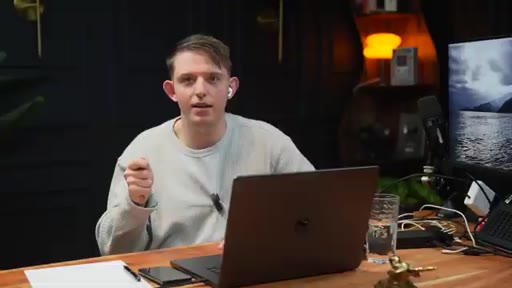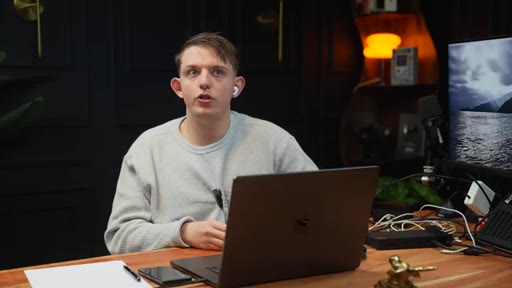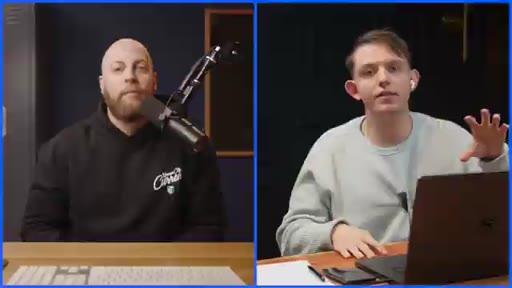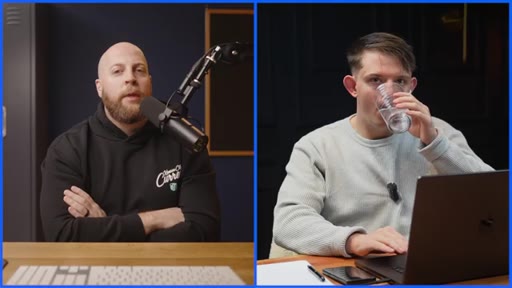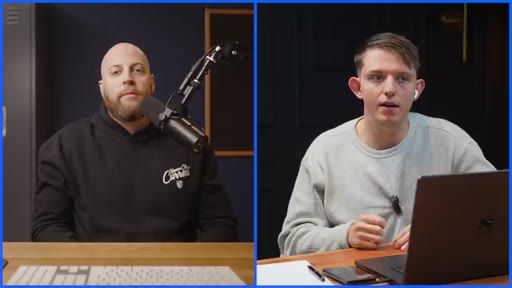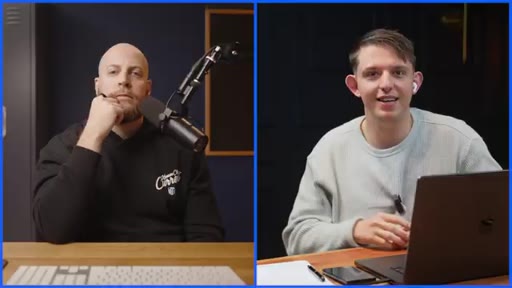
Jay Clouse · Youtube · 53:46

Inside Riley Brown's 1.5M Follower Content Machine

How a vibe-coding founder turned first-mover instinct into 1.5M followers, a $9M raise, and a seven-account repost engine that tripled revenue in two months.

Posted
April 27th 2026
21 days ago
Duration
53:46
Format
Interview
educational
Channel
JC
Jay Clouse
§ 01 · The Hook

The bait, then the rug-pull.

Riley Brown was in the GPT-3 Discord before most people had heard of it. When ChatGPT launched, he posted the first TikTok about it that same day — 20 million views, 200,000 followers in two weeks. That wasn't luck. It was obsessive niche proximity applied at exactly the right moment. Three years later, Riley has 1.5 million followers across platforms, a vibe-coding startup with $9 million raised, and a content operation so systematized that a single viral video gets reposted across seven accounts every week for the rest of the year.

§ · Voices

Who's talking.

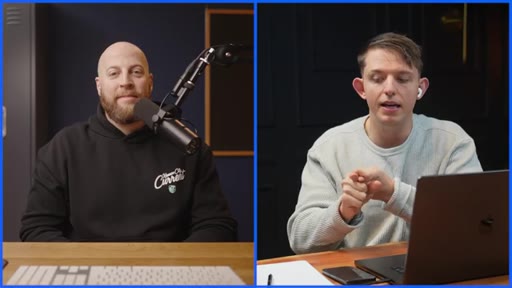
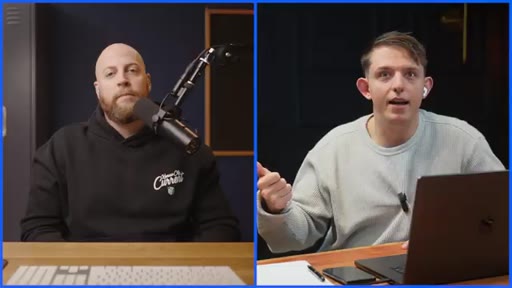
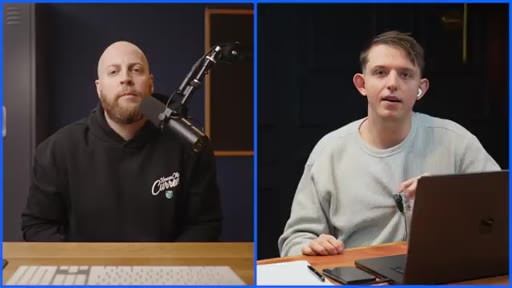
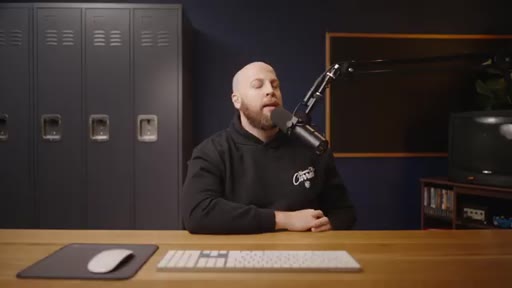
00:00hostJay Clouse
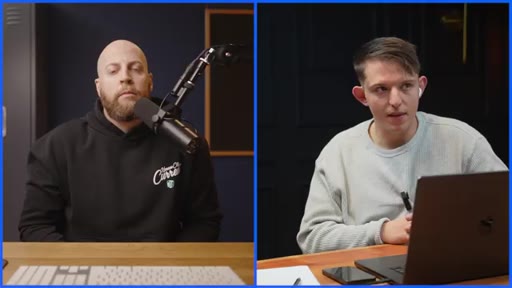
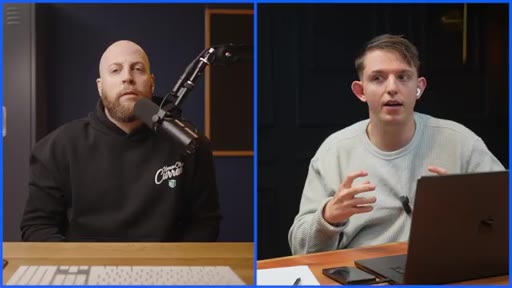
00:55guestRiley Brown
§ · Topics

Where the time goes.

00:00 – 04:55

01 · First mover origin story

Riley was in the GPT-3 Discord before ChatGPT launched, posted the first TikTok on day one, 20M views, 200K followers in two weeks. Company formation from community building.
04:56 – 11:23

02 · First mover advantage and content philosophy

Niche knowledge beats production quality. Post hook/intro after filming the body. Being obsessed with cutting-edge tech is 90% of the game.
11:24 – 21:32

03 · Structure vs. play and content operations

Two overseas editing agencies (10hr and 3-day turnaround). Separate thumbnail designer. More structure equals worse content for Riley. Having a daughter forced a machine redesign.
21:33 – 30:42

04 · Educational screen-share as the YouTube opportunity

Find paid courses, make them free on YouTube. Canva/Excalidraw one-minute intro frame. Tella chunk-film method. Get to 50K subs before over-optimizing.
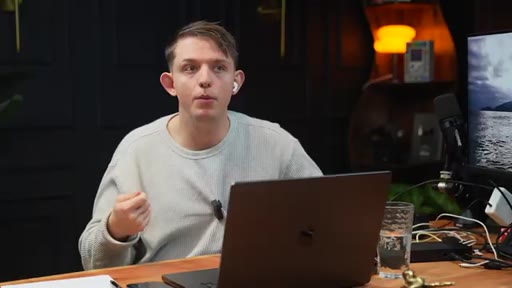
30:43 – 37:36

05 · The seven-account Twitter repost engine

Hold down video on X, repost natively across 7 owned accounts with new caption. One viral video equals 52 posts per year. Revenue tripled in 2 months. Typefully manages 9 accounts.
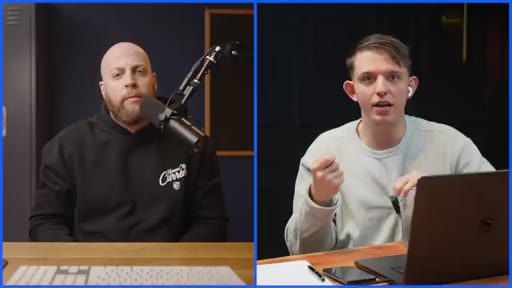
37:37 – 40:59

06 · Gimmicks that actually boost retention

Pointer fingers, giant pencils, phone-tap demos. Small physical prop plus genuine educational content equals outsized retention lift.
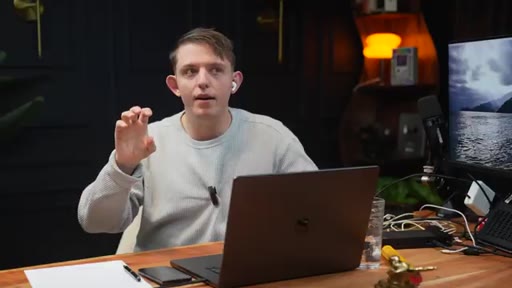
41:00 – 42:36

07 · Why AI writing your scripts is suicide

The more AI writes for you, the more you sound like AI. In the long run, that kills a personal brand. Human voice is the only durable moat.
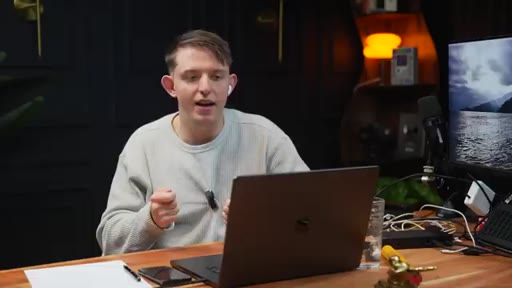
42:37 – 50:13

08 · The AI content flood and how to survive it

AI slop will flood feeds. Massive revolt or passive acceptance — both possible. Human creators who stay authentic have the best long-term odds.
50:14 – 53:46

09 · Platform rankings and how to start today

Consumer brands go TikTok/Instagram. B2B/tech: educational screen-share YouTube plus X. Webcam plus $100 mic. Hook plus demo plus subscribe. Repeat until 50K subs.

§ · Quotables

Lines you could clip.

31:33
"Find what people are paying for, do it, make it free."
Tight maxim, no setup needed. Credited to Hormozi but delivered as personal creed. → TikTok hook
41:05
"The more you use AI for writing your scripts, the more you're going to sound like AI, and in the long run, sounding like AI is suicide."
Strong counterintuitive take from an AI creator — gives it enormous credibility. → IG reel cold open
37:00
"Stop pretending that people care about you and just make videos."
Direct, harsh, liberating. Stands alone with zero context. → TikTok hook
36:40
"If your videos suck, no one will see. Like, literally no one will see it."
Removes the fear of early failure in a single sentence. → newsletter pull-quote
49:50
"I'll post 20 times in ten minutes. I just think of it like a group chat with the Internet."
Reframes X/Twitter posting anxiety as casual conversation. → IG reel cold open
46:40
"That will be posted every week for the rest of the year. I don't see a reason not to do it."
The repost engine in one sentence. Reveals the whole strategy without explanation. → TikTok hook
§ · Resources Mentioned

Things they pointed at.

25:50toolTella ↗
25:40toolDescript ↗
29:40toolCanva ↗
41:30toolTypefully ↗
45:00productSeed Dance (TikTok AI model)
42:40productvibecode.dev ↗
53:20channelThomas Frank YouTube interview
31:33channelAlex Hormozi
§ 04 · The Script

Word for word.

HOOK opening / re-engagementCTA the pitch metaphor analogy
00:00HOOKThe first video on TikTok about ChatGPT was my video. It got 20,000,000 views. I went from zero to, like, 200 k followers in two weeks.
00:08HOOKThat's Riley Brown. Riley has built an audience of 1,500,000 followers, raised 9,000,000
00:14HOOKto start a vibe coding company in San Francisco, and developed a content strategy so systematic that a single viral video gets reposted across seven accounts every week for the rest of the year. In this episode, you'll learn Riley's unique strategy for creating free content.
00:31HOOKFind what people are paying for, do it, make it free. Why using AI to write your scripts is a mistake? The more you use AI for writing your scripts, the more you're going to sound like AI, and in the long run, sounding like AI is suicide.
00:45HOOKCTAAnd stick around to the end to learn the one content strategy he's using right now that's tripled his company's revenue in two months. Thank you to one of 10 for sponsoring this video. Three years ago, I started making content.
00:58CTAActually a little over three years ago, before ChatGPT came out, I decided that I was going to fully make content on AI. This was honestly
01:07CTAa means for me to explore my curiosities. So I was in this Discord channel where people were starting to use Midjourney. I'm sure a lot of the audience has heard of Midjourney,
01:16CTAwhich is just like an AI image generator. And AI image generation seems trivial now, because so many tools allow for this, and everyone has used it, whether it's Nano Banana or within ChatGPT, you can just generate images. But at the time, I thought it was the coolest thing in the world, and it basically opened up all of these curiosities.
01:34CTAThen I ended up in a Discord group for what was going to become ChatGPT. It was called GPT three at the time, and people didn't even
01:43CTAconverse with it like a chatbot. Anyway, it became just a massive obsession for me, and I and I just decided I'm gonna dedicate my time to making TikTok videos
01:52CTAabout this. And then eventually I'll find some sort of then I'll figure out how to make a living around it, and I quickly blew up to like 500,000 followers on TikTok
02:02CTAtalking about AI. And creating content quickly became a means for me to follow my curiosities, and I was always diving as deep as I can into AI, and I always tried to get to an edge while making content.
02:17CTALike I wanted to be at the intersection between AI and content creation, and then eventually I found AI and coding,
02:25CTAwhich has become Vibe Coding. And I was the first person on long form and short form platforms to start talking about using AI to code despite being fully untechnical, and I fell in love with it.
02:39CTAI I built a massive following on Twitter mostly, where I was making videos, building apps with AI.
02:48CTAAnd people loved it, people started following me. I created a community, a free community on Circle.
02:54CTAAnd I know you're on Circle as well, I'm pretty sure you're a huge fan of the platform. For sure. And we had like 15,000
02:59CTApeople in this free community, and we didn't really know what to do with it. Eventually I started running into problems,
03:06CTAand this guy reached out to me on Twitter. He said, hey, I can help you out. I can help you create a back end
03:12CTAfor the apps that you're building. And so he ended up helping me. His name was Anj.
03:16CTAAnd I was like, dude, this was super helpful, let's make a video about this together. We ended up doing Riverside like we are now. We filmed a video of him, of us
03:26CTAmaking an app without writing a single line of code, and adding Firebase as a back end. And this video ended up blowing up, and
03:36CTAI ended up reaching out to Anj again. I said, dude, this video was awesome. Why don't we work together?
03:41CTAAnd then we basically spent the next six months together hacking away at different things and making content, and eventually he was just like, dude, I'm pretty sure we can make a mobile app that builds mobile apps.
03:52CTAAnd then that's when our company formed. And we moved to San Francisco, we raised a bunch of money. I have a massive audience that's super interested in AI and coding, And so,
04:03CTAsorry, this is a long winded answer to say that I've been using AI to or I've been using content creation to just push the boundaries
04:12CTAof my curiosities, and that ended up leading to a company. And we ended up raising $9,000,000
04:18CTAto start a company here in San Francisco. And we're one of the faster growing like vibe coding startups in all of San Francisco right now, and content is basically at the center.
04:30CTAAnd I have two separate teams of remote editors, and we just make content, again, on what we find interesting within the vibe coding space.
04:40CTAAnd we basically have unlimited content because I genuinely love the vibe coding space, and I think I think just AI agents building software is really cool.
04:50CTAAnd so, yeah, we just do it at scale, and I can hop into the details if that's interesting to you. It is. I wanna I wanna take a step back real quick because the speed at which you started growing on TikTok and then X was very, very fast.
05:04Faster than most people would experience if they started creating under a new account on a new platform. And it it seems from the outside, you know, a couple years removed now, that it was practically immediate.
05:16But did it was it really that fast? Did you really, like, hit something and it just worked and you started getting eyeballs to your your content immediately?
05:28So I was there was a period of time on TikTok where I was the only person making content on ChatGPT for like two weeks. Wild. And you can imagine,
05:37yeah, people didn't really know what it was, and I had been in this Discord learning about what GPT three was before anyone, and most people who were interested in ChatGPT were kind of nerds. They were, you know, people
05:49in the trenches of of this technology, and most of those people couldn't really articulate it enough to actually make videos on social media. I recognized this the day ChatGPT came out.
06:00I put out a video the day ChatGPT came out. The first video on TikTok about ChatGPT was my video.
06:06It got 20,000,000 views. And so I basically told all my friends and immediate family, like, this is all I'm going to do for the next six months, and I'm gonna see what happens. I think this is the biggest opportunity that I'll ever have.
06:19And yeah, I went from zero to like 200 k followers on TikTok in two weeks.
06:26Crazy. And, you know, it wasn't because of my skill of making content, it was the fact that I was the only person or one of the only people
06:35who were making videos about the most transformational
06:40technology of of our generation. So that's kind of what I can attribute it to, and then I ended up
06:47over time pushing that audience to Instagram, and then I started building a following on on Twitter, and then on YouTube, and I did a decent job like pushing my audience from one platform to the other.
06:58And now between all of the platforms, have close to 1,500,000 followers. And I still talk about AI.
07:04I love it. Still interesting. I just have a company now.
07:08It seems like there's a lesson here about the value of first mover advantage. Because I would guess, well, I I feel 100% confident that you understand content much more deeply and intricately now than you did when you started.
07:23But I think a lot of people when they're getting started, they're like, okay, I hear that a hook is important and I gotta have b roll and they get so bogged down in the minutiae of what makes a good video that they downplay some other aspects like what what is this video about? What do I have to say?
07:40And in a situation where you're a first mover, it seems like it kind of takes a lot of that out of the picture. It matters far less. Do you agree?
07:48A 100% agree. I especially think now in the current landscape, because of AI generated content, anyone can just kind of get AI to
07:58create a basic script, but to genuinely have knowledge about something that not many people have knowledge about is I think 90% of the game.
08:08And I think it's incredibly important to just like become obsessed and interested in in obscure
08:15things, because I just really think AI is coming for a lot of content creators who just talk about like the same things people have been talking about for years. And I think there's never been a better time to be in the edge of of some sort of because all of technology's changing,
08:30which impacts content creation, and I'm sure that you think about how AI is gonna impact content over time. And so I would just find some niche intersection and get really knowledgeable and be able to talk about that subject
08:44without thinking about a hook. I do think hooks are important, and the way that I film my videos is I take an interesting idea or we're gonna build something, because most of my videos are screen share, where we're actually building something,
08:57and we'll film the whole video, and then afterwards I'll just do the hook and intro. And then that is the acquired skill of actually getting really good at a, capturing attention immediately, and then framing the video so that people know what to expect, they know exactly what value
09:14they're gonna get out of the video, and mostly you wanna make sure that they know that they're not gonna waste their time watching your video, which I've gotten really good at. And as you said, yeah, the more reps you do of that, the better you you just naturally get. This is a hard question to articulate, but I'm gonna try because I've never quite asked it this way.
09:31I know from my lived experience, I wake up every day, and there's typically some thought or pattern of thoughts that's driving me forward.
09:39You strike me as a very ambitious person, so you clearly have a plan and things that you wanna accomplish each day. And I'm curious what your inner monologue is related to content when you get up in the morning.
09:52You know, before I started my company, it was way different. I would literally wake up and I would just kind of I would go to coffee, and I would just bring my phone, and I would scroll Twitter. And there was enough interesting things going on where I would just scroll until I found something interesting, whether it was eleven Labs new voice model,
10:12or some new that I could put into an app that I build. Like I would just literally find something I'm interested in, and then make a video on Like that was my day. And then once I picked the video, I'm like, okay, I'm tuning out everything except for making the video, and I'm just gonna make this really good.
10:27And you know, whether if I had I used to do a lot more paid sponsorships, so that would always influence it a little bit, but like that was basically my process. I'm like find something I'm interested in where I'm gonna be super passionate.
10:39My content where I'm really passionate in the thing is way better than content where I'm not passionate about it, And so I would always make sure that I'm deeply interested in it, and then I would make a video. And real quick, before you say like what it's like today, in that world where your process was go through Twitter, find something I'm interested in, make a video,
10:57What was the inner monologue behind that? Was it like I'm asking because some some days I feel almost panicked that I have this looming deadline of I need to create something today.
11:07And I don't think that actually leads to the best energy of what I need to create. And I'm just so curious, somebody that's as prolific as you are, what your relationship to
11:18pressure if it exists, or whether you're operating from a place of no stress, no pressure. That's a good question. Yeah.
11:27I feel like if I was ever giving my giving myself pressure to make content, my content would always be worse.
11:34And I've talked to a lot of people who are seasoned in the content game, a lot of people who are in the newsletter game. You know, they've built up these newsletters that have hundreds of thousands of people, and they turn their content engine into this kind of structured
11:49business almost where you have predictable revenue streams. The more structured I tried to get, the worse I started to perform in my content,
11:59and the more I was just playing, the better I was. The more I would grow, ironically. The more results I would get from
12:06from a the paid sponsorship shot, like everything would get better when I was playing versus when I had this like rigid structure. And I I knew that I wasn't my DNA is not in the boring business,
12:21whether it's newsletters, courses, communities. I've tried all of them. I think they're wonderful businesses, and they can super
12:28high cash flow, they can impact a lot of people and help a lot of people. It's just not for me. The only business I saw myself starting is something on the edge.
12:36You know, I talked about how I love being on the edge, I love talking about cutting edge technology and AI specifically, and so I had to start a company in that spot for me to really capitalize on what I've done so far. And that's why I went the route of moving to San Francisco and doing an actual startup, because I think in order to create an AI startup that
12:58can truly scale to nine plus figures, you need to be on the edge, and I think you do need to raise money. Cool.
13:05Okay. Well, sounds like you had a much healthier relationship to content than I currently do, which is great. I'm curious.
13:10Like, what's you you like, are you running into some, like, mental barriers with content right now? I'm I'm curious. I think in some ways.
13:17A lot of this changed when we had our daughter, and, like, time has just constricted. Because
13:24I had built a machine, I think of my business as kind of a machine, to be honest. And it's like, I know that certain inputs lead to certain outputs.
13:33And if I need to change the outputs, I need to change the inputs or I need to change the design of the machine. The machine that I had built really demanded and consumed all of my time before having a child.
13:45And then in a post child world, I had less time, but of course wanted the same or better outputs. So I've I've had a really rough go of it over the last year and a half figuring out what does this mean for the future of the machine in my content because
14:02it's just not sustainable. I think that's come through at times in the last year in my content that it was feeling a little bit more like a job than it was this place of play that it previously had been.
14:15And now with the changes that are happening in the landscape, I feel more pressure to adapt and fix this machine that I already felt pressure to fix in a more time strapped world.
14:27So it's been it's been a challenge for me over the last, call it, six to twelve months. Interesting. Yeah.
14:34Yeah. I think I I would always run into, like, every six six months, I would run into, like, I felt the format that I was doing was getting stale. I wanted to move and try different platforms,
14:46which for a lot of creators actually creates more problems than it does harm. Like the best thing to do might just be to like literally create rigidity and and stay consistent, because I've seen what consistency can do for content creators. It's hard to deal with that.
14:59And yeah, I'm sure when I have kids, I'll run into the same time constraints. So yeah, I guess I haven't dealt with that before. Oh, good.
15:06So today, you said that was your process. That was how things felt pre company. So now, today, what is your relationship to content?
15:15My relationship to content has changed a lot. Startups need to grow. And so
15:21eight months ago, we started our company, and we it was me and two other cofounders. We just moved to San Francisco.
15:29We were in a WeWork, and we were trying to build a product. And so half of my time,
15:35way more actually probably like 70% of my time is dealing with like stuff that isn't content. Whether it's helping figure out how to build the product, hiring developers. Our team right now is it's me,
15:47one other person who runs the studio, and then six developers. And we basically just build the product all day, and I make content. Now, the benefit of starting a company
15:59and raising $9,000,000 like we did is I can outsource a lot of things without really thinking about the cost.
16:06You know, obviously we we take price into consideration, but I have like two very high quality agencies overseas who edit my videos. It did take a lot of time to a train them and just hire them in general, but like once you get that down, it's incredible leverage to be able to just film a video and just send it off, and I don't really think about it, and then it just gets done correctly.
16:28And so that's incredibly high leverage. That means all I really need to do is have two spare hours to film a video, and I just film something I'm passionate about, send it off to the editor, and everything else gets done.
16:38I don't think about the thumbnail or the title, but these are all things that take a lot of time because I had to train the team to do that. Real quick, what's the turnaround on that?
16:47You you film a video for an hour or two, and then you ship it off to this agency. How quickly does a finished video get back to you ready to post? One of the agencies, it's ready in ten hours, so the next day.
16:59One agency, three days.
17:02The one that takes longer is a little bit higher quality, and so we have, I have a gauge on whether whether or not it needs to be highly polished. Some things I wanna get out sooner, whether or not whether it's like a product demo that I I just want to align with one of our announcements, or if it's like AI news, I'll I I I'd rather have it out earlier
17:23than be more polished later. I just think like certain things need to get out quick. And so I'll kind of decide,
17:30but both of them are pretty quick. I think a three day turnaround for a highly polished edited video is actually pretty solid, and so I can't complain.
17:37Do they do short form as well? That's one thing that I I'm actually currently struggling with, is figuring out how to short form cut my videos. My videos are very much screen share, and usually it's like a screen share for an extended period of time.
17:52So like taking a clip of a tutorial's way tougher than clipping something like this where it's just me talking about something, or it's it's less clippable.
18:02So I film my short form content separately. They're kind of like separate videos, and I have my whole process for doing that. It's very quick.
18:09Probably takes me thirty minutes end to end to make a short form video, and usually they're pretty good. And it's usually me building an app quickly or talking about an update.
18:18I send it off to one of my editor teams, and they'll send it back the next morning with multiple variations. So it's pretty streamlined on that part.
18:28In this hiring of these agencies, I'm sure you talk to a bunch of them. If somebody's listening to this and they're like, that sounds great. I just wanna go out and hire a team that can handle this video cutting end to end for me.
18:38How would you ballpark what they should expect to spend for that level of quality and turnaround time? For high end editors, I think a thousand dollars per video is on the high end.
18:50But if you're a big company, I think that's actually somewhat reasonable if you have an existing YouTube audience. You can expect to pay like 800 to 1,200 per episode.
19:00The most important thing for me for an editor is actually not technical abilities like in Premiere Pro or After Effects.
19:08It's domain understanding or expertise. So like, they're able to realize what's important about a video.
19:16I think that's really important, and Editor, I'm sure you've run into that. I I used to I really admire your videos when you have things pop up on screen while someone's talking. Like, maybe you'll have like a t chart that pops up.
19:27And I think a well timed t chart, very simple, no animations are can be so much more valuable than the super, you know, like, animated type of intros that that we're we're really in in, like, I would say, like, 2024.
19:40They got super animated, but we optimize for education. Obviously, we like to make things look polished, but we optimize for education. And so, like, as we continue to build out our content team, I will focus more on adding relevant charts.
19:54Like, I'm talking about some concept that's not on screen, I want a pop up to come up that, like, assists that point getting across. I think that's incredibly important. Yeah.
20:04And I'm I'm guessing those prices do not encapsulate thumbnail as well. It doesn't.
20:10We have a separate thumbnail designer who actually used to work for Matt Wolf, for those who follow the AI space. He's one of the biggest, if not the biggest.
20:18And so, I hired him. He is his old thumbnail designer and he's great. Very quick turnaround, like one day turnaround for thumbnails.
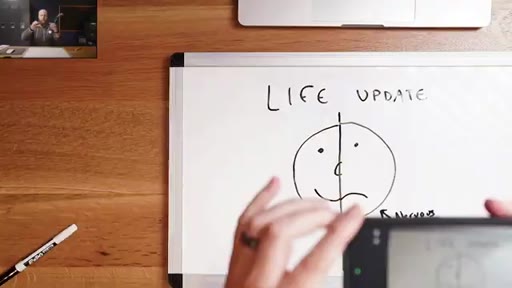
20:27Let me show you how easy it is to use one of ten's thumbnail generator to make YouTube ready thumbnails. I'm working on a solo video where I share a life update about having a second child in the fall. I'm both excited and nervous, and I wanna try to make a thumbnail here in one of 10.
20:43The first thing I'm gonna do is I'm actually gonna sketch this out because I have kind of a rough idea of what I'm going for. I'm going to take a photo of this. Now I'm gonna come back over to one of 10 and I'm going to type in the video description.
20:56I'm going to upload my reference images. I'm going to upload my sketch and let's see what happens.
21:02Okay. We got these back. I'm going to edit this one with AI.
21:07Okay. Wow. I could actually throw this directly into an AB test and see how it does.
21:12It's pretty crazy what one of 10 can do with their thumbnail generator. I recommend giving it a shot yourself. You can learn more at the link in the description.
21:19I love your style of videos because I do love that most of the time, it's like a demonstration. That's kind of how I'm architect ing this and thinking about this in my mind and where I think there's actually some opportunity for folks on YouTube today is a lot of videos now, you know, the advice for a long time was
21:34create a curiosity loop, you know. And I think it's still true. But if I can actually just close that loop by asking Gemini, like, the answer to whatever the loop was, I'm not gonna watch the whole video.
21:45If I'm not interested in the video, I just have, like, this itchy feeling that I wanna know the answer to this question. But for folks like you and Greg Eisenberg is doing a really good job of this,
21:57when I can watch a full demonstration of how this person does this thing, I'm still watching that at regular speed all the way through.
22:06I think it's a big opportunity. And sometimes you have like a presentation in Canva.
22:11And I'm just thinking, man, how much planning went into thinking through the the linear education of this video and or the creation
22:21of this deck in Canva? Yeah. So I think the video that I think you're referring to is there's a video that I did where it's like the complete guide to AI,
22:30where I literally laid out every AI tool that I've ever learned. I divided them into three chunks and made this Canva whiteboard, and I just kind of went through them.
22:40Surprisingly enough, way less planning went into the probably three hours of prep, and then I just turned on my camera and filmed for four and a half hours. I remember that video took me four and a half hours. I cut it down to two.
22:52But I think most of my prep comes from me just tinkering with the tools. What people don't see are the hundreds of hours I've spent using the tools, so I don't need to like prep for the video as much as just laying out what I wanna talk about. And what I wanna say to to the audience watching, if you're someone who
23:11understands a niche skill, especially on a computer, I genuinely believe there's so much room in the market for high quality screen share style videos, and I would encourage you to simplify it as much as possible.
23:26I would use a tool like Excalidraw or Canva, some whiteboard tool, and this is how I would structure my videos to start. I would put up the logo of whatever it is you're talking about, just make sure it's big. For me it's Claude Code.
23:37Like you put Claude Code up on the screen, and then put a stick figure on the screen, and put an arrow from like where you are now to where you'll be at the end of the video.
23:47This is just an idea. But like literally say, today, or just say something, like this is your hook.
23:53Claude Code is actually insane. You can, and then point at the little character, you can build an app in twenty minutes and show and just say that. In this video, I'm gonna show you that you can do that.
24:05We're gonna we're gonna be using this tool, this tool, and this tool. Let's not waste any more time. Let's dive in.
24:11And you can use a tool like Descript or Tele to do screen recordings. I think both are reason are pretty good. I like Tele as a as a tool because
24:21you can film it in chunks. If you've ever used CapCut,
24:27they have this like multi clip feature where you can film something, and if you mess up on just one of those chunks, can delete it. So you can do a lot of the editing while you're filming the video. Right?
24:37You can film a chunk, and if you mess up on the chunk, you can just hit restart, and you can go back to the start of that chunk, and you can film the video in chunks, and by the time you're done, you just have all of your good chunks, and then all you have to do is a little bit of cutting at the end. That's how I started.
24:51You know, I think it was a little over a year ago. I still had, I had like an editor that I would use sometimes, but I was editing my own videos, and I was just filming stuff I was interested in. Some of my videos were getting over a 100,000 views.
25:03People love to over complicate content, and it annoys me because there's some people that are so smart and so talented,
25:11and can just use a computer in a way that would blow people's mind, that would give them value, just do that. And so all you need is a one minute at the beginning of your video that explains what you're about to do, and then do it, and then at the end just say subscribe. That is literally all I would do to start until you hit 50 k subs, then worry about optimizing other things if you want to go down this type of content route.
25:35I love that. And also huge proponent of Tele. I'll put a link in the show notes because we're an affiliate, and hey, what an opportunity.
25:42I use Tele to record courses, paid courses. And I think paid courses are going the way of the dinosaur in the near future as well. And I think it's actually an opportunity
25:51if you're not afraid of this as a creator. If you have had paid courses in the past,
25:57HOOKlike we're gonna redesign the slide decks that I used in my membership course, which I think is my best course. And maybe instead of selling it, I just record that and put it on YouTube.
26:07HOOKLike I feel like that might actually be the highest leverage use of that asset, and say if you enjoy this and you wanna learn with other creators, join the lab.
26:18HOOKI think that's a wonderful strategy. And I agree with you.
26:22HOOKI think online courses are are going away. And what's funny is I will actually search the internet and find the highest grossing paid courses that that are in my domain of expertise, and I'll I'll go in and get the syllabus for this course, and then I'll just make the full video and put it on YouTube.
26:38HOOKAnd I'll do it in three hours. I I find where I think Alex Hormozi talks about this a lot. He's just like, find what people are paying for, do it, and make it free.
26:47Like, that is the best way that you could grow a following.
26:51It's which is another way of saying, find things that people think are valuable and put it on the internet for free. And I don't think people realize what good can come from this. Like it is the only reason I've been able to start a company and raise a ton of money, and we're doing very well as a company.
27:07And it came from me making a ton of content without expecting anything in return. I just threw out a ton of value. I was getting views.
27:14I was getting paid a little bit, but I knew that building the brand of being someone in a niche making valuable content is just
27:23it is so valuable to your audience, and you will just you will come up with a way to monetize it later. So I would just encourage people to just start
27:33putting out free value on the Internet. There does seem to be something unique about you in that you seem inherently
27:42just unafraid of making and posting. I think a lot of people who are getting started, like, there's there's some self censorship,
27:50there's kind of a stop start experience. There's a lot of, like, editing and agonizing over things.
27:56But it really feels like, from the beginning, you've been like, I'm gonna make something, and I'm gonna let it rip. And then you do that multiple times per day. Do you is that innate?
28:04Did you have to learn that? Yeah. I think a lot of people have a bunch of analogies to explain this.
28:09I think Greg Eisenberg talks about the Cringe Mountain. You have to cross Cringe Mountain at the very beginning of your journey.
28:16I don't know if you've ever have you seen this before? I well, I recently had Yoni Smolyar on the show, and he said the same I love I love Yoni.
28:24He's one of my good friends. But I think that, yeah, when you start, you're worried about all of the people you've met in the past judging you for making content when you have no followers.
28:33Right? You have to be the weird person making content on the internet who has no followers for a little bit of time, and you just need to get past that.
28:41For me, I started making videos, and I did obviously feel cringe. I was not natural at talking to a camera at first. I did pick it up pretty quickly,
28:48but I did blow up really early, and then all of it went away, and I wasn't afraid to say anything. And then once you make enough videos, I don't overthink any content now.
28:57Like, even if I put out something absolutely terrible, like, I'm like, no one will see it. That's the cool thing about the algorithm now.
29:03It's like, you people don't realize that if your videos suck, no one will see. Like, literally no one will see it. And you you think, like, your
29:11old friends are gonna stalk you and see that you're making a video and be like, oh, he got 50 views on his videos. Like, they don't care. So stop pretending that people care about you and just make videos.
29:22It it'll it'll pay off. And it is easier said than done. Like, I do empathize with with with people who are struggling
29:30not being authentic on camera, because it is hard. At this point, because you've had so much success, do you have
29:37hopes and expectations, hopes or expectations, for any single piece of content that you put out? Yeah. Obviously, I do.
29:44I mean, our success of a company now, which is eight people, is dependent on my ability to market the product, you know, at least in part. And obviously, I want to make content, grow our company, and then continue to make better and better content.
29:59So but I don't really do it at an individual level. I I do this thing on Sundays where I just do weekly recap, and I'll look at my videos and and just think about what I can improve.
30:09Should I even be making those types of videos? Because I've reached the point between all my platforms. I could make 20 different types of content, and so it's basically just choosing where I wanna allocate my time and effort, and then how I can delegate those.
30:22It's really hard to delegate in content, like the creative side of content. It's almost it's not impossible, but it's very difficult to outsource that, so I know that I have limited amount of time, and now I am more selective about what I do, and I've found that right now, currently, long form is just the way to go, because long form's doing really well on X.
30:43People don't realize this. Twitter is first of all, X is my favorite controversial take, my favorite platform by far
30:50to be a consumer on, and it's also becoming a great platform for long form video. People do bookmark it. Maybe they only watch a little bit of it, but like it's a great way to like go
31:02super viral on X is to post a really high quality video, have really good time stamps. You can put time stamps in your tweet, and they operate the same way they do on on YouTube, and my videos crush it.
31:13And what people don't realize about Twitter, which is actually kind of my secret sauce right now, which I'm happy to share, is I have seven accounts on X. They're all about vibe coding and
31:25combined over 200,000 followers. You can just repost the same videos over and over and over again, and the viral videos will go viral again. Oh, you mean so like account
31:35one, you post it, it does well. Account two, you post the same video natively from that account. You're not reposting yourself.
31:42On Twitter, there's a difference between quoting, quote tweeting a post with a video and reposting a video. Are you familiar with the difference between the I
31:51mean, barely. Okay. Yes.
31:54If you on the Twitter app, you can hold a video down, and you can hit repost a video. What it does is you can basically just add a new caption to the video, and it just shows the video, and then below the video it says who it's from. So it's like a way of reposting a video without reposting the whole post, you're just reposting the video.
32:14I learned this because a lot of these bot accounts from other countries started reposting my videos over and over and over again, and they were going viral. And they do this I don't know if you've seen the this guy literally on X.
32:25Yes. There's like a plague of accounts that all they do is say this guy literally does x. And so they're reposting my videos.
32:32And I saw that they were going viral. My videos, the same videos over and over again, and I just immediately thought, I'm like, I should not let them be doing this. I should be doing this from our owned accounts, and so that, like, we gain those followers.
32:46It's just too easy not to do it, and so we just started doing it. And so every week, we look at the performance of the videos of the previous week, and they're like, okay, let's schedule some video. So I like to keep them like a week apart.
32:57But yeah, like if I get a viral video, that will be posted every week for the rest of the year.
33:03I I don't see a reason not to do it. And the nice thing is because it is your face, like even if another account that is not your accounts is sharing it, like there's still massive benefit to your brand and what you're doing, but 100%. But it's still better to own the accounts than to let other people do it, you know?
33:18Wait. So are you stopping other people from doing it? Is there a way to stop people from reposting Oh,
33:22I'll let them do it as much as they want. I just you know, like I'd rather it be my accounts, and then I'll mix in a bunch of other content.
33:30And so like, I'm starting to build out our content team, and they'll be posting other accounts in between reposting my videos, so that the account in and of itself is valuable, we're gonna basically our product is a vibe coding tool.
33:43Right? You can build mobile apps, you can build web apps, and now you can build agents.
33:48And so each account is actually gonna have one narrow focus. I just think this is kind of you notice kind of like Barstool does this where they have a network of accounts, or you've seen Polymarket and Kalshi
34:00have niche accounts for one brand, and that's how I'm gonna build out our Twitter
34:07and Instagram over the next six months is just take parts of the product and make your own account for it.
34:15I I do need to hire probably like two or three people to manage all this though. Yeah. Say more about that because I'm listening to this.
34:20I'm like, okay. Not only are you operating on practically every content platform that's out there, but now you're talking about multiple accounts per platform. How is this managed right now?
34:29What type of, like, internal benchmarks or requirements do you have for these different platforms?
34:37You know, we're we're actually in the middle of like tracking everything. There's no tracking. There's very little method to the madness other than pure instincts.
34:45Know, like I we use what's called Typefuly. I don't know if you've ever heard of Typefuly. It allows you to
34:50schedule posts on Twitter, and it allows you to just like you know, you can create drafts, you can schedule posts, and you can also set up comment campaigns, so you automatically DM anyone who comments on a Twitter post. Yeah. I mean, the method is, again, on Sundays.
35:05I do like a this Sunday is all about kind of looking at the previous week, and then deciding
35:12all the videos I'm gonna make the next week, but then also reposting all the videos that did well from the previous time. So on Typefuly, it lets you it's hilarious. My Typefuly has nine accounts.
35:22I not only do I have all the ones that I own for our company, but I have my cofounder's Twitter and our our first engineering hire.
35:32His Twitter's in there, so I'll just tweet from their account sometimes. But, yeah, I basically take all the posts that have done well, and I'll just draft up a bunch of posts. And then for the videos that we haven't made yet, you can actually tag them, and I'll say, like, video about blah blah blah so I know what videos I need to make, and then I'll just schedule when I'm filming those videos
35:51through that week. So I have gotten a lot more scheduled as time goes on just because out of necessity because I'm also in other meetings as well.
35:59And so that's kind of how I think about it. I think about it in weeks, and every week I just try to get better.
36:05And I think so much about social media is about whatever's working in the moment. You know, Gary Vee talks about day trading attention, and I think that is very important.
36:14If you find an opportunity, you need to be able to just drop everything and just pour all of your energy into that. And this Twitter strategy is currently that
36:22thing that I've been doing. It is starting to taper off, so I'm I don't get emotionally attached to it, but like it literally caused our company's revenue to triple in two months. Wow.
36:32So that was pretty cool. How many assets do you think you're creating to publish each week?
36:38And I'm saying assets because like it could be long form, could be short form, could be a text based post. Just to give a for folks watching
36:46the volume that you're doing, how would you estimate this? I used to go for more quantity, but now that I can now that I'm realizing you can repost the same content over and over again, we're going for quality.
36:58Because if you get one really high quality viral video that you can post every week, that's 52 posts in one. Not to mention you can post them multiple times on other platforms, which you haven't set up yet. We're just doing it on x.
37:10We're gonna start doing it on Instagram. So I've gone for more quality as of late, so I would say
37:16I try to do four short form videos, like high quality short form videos that are educational, how to use VibeCode, and then two other posts about whatever I'm interested in. Like I made one about Clodbot last week, and it went pretty viral across all platforms.
37:31A lot of it is when something is cool, I'll make a video about it. You know, it's it's really hard to make content that's good if you don't have something good to talk about.
37:40And so some weeks, so much happens that I'll just like I've been doing this thing. I actually don't know if I have it.
37:46I don't have it here. I have this little finger. I don't know if you've seen the videos where I have this like No.
37:51Wish I had one on me. They're these little plastic fingers
37:56that you can like extend. They're like pointer pointers, and I'll just film a video of me making something on my phone, and I'll tap the screen with this pointer, and the videos, some of them get over a million views.
38:07And they're pure educational, and they convert to our product. And so I found I think short form, super underrated,
38:14just holding your phone and showing something happening, especially if you add a little gimmick.
38:21Yeah. Like I also use I also bought these giant pencils I've that I'll seen put in the video.
38:26Yes. Yeah. And so I'll point at it with these pencils, and the the retention just goes up.
38:30So I just film film something cool. You know, I have the the value of the video is my unique perspective. That's probably above
38:3999% of people because I'm deep in the niche. Once you do that, you don't need to overthink everything else.
38:45You can just show the cool stuff, find a little gimmick, put it in there, you know, get the ADHD points, and call it a day.
38:52So when Claude Bot hit, I I got on that actually pretty early, earlier than I get on most things. And I noticed that you lagged behind me a couple days on that, and I actually took that as a point of
39:06legitimacy for you. Because I have to think that your incentive is to be so on top of everything that happens in the AI space that you are once again like a first mover sharing things.
39:18But as time has gone on, you've built a brand that has a lot of trust within it. How do you how do you think about that? Because
39:25if you're just going for speed, it's really easy to not have full consideration
39:32around something. For sure. We we we think about it, and I don't really think about being early.
39:37Like, I don't try to be first now that I've built such a big brand. Like, I think if I were to make a really, really good video three days after it becomes a big thing, that is a win versus, like, trying to be first. Trying to be first first is is was my very early strategy, but not anymore.
39:54I don't need to do that anymore. The reason I was late to Claude Bot was just I saw a lot of red flags in the people talking about it.
40:03A lot of people interested in crypto were the loudest people talking about Quadbot. And just from the last five years studying
40:11how the media landscape works, anytime you have any topic where a lot of crypto people are talking about it, you're gonna end up with 90% nonsense. Like, it's unfortunate.
40:21I have nothing against crypto. I think Bitcoin's cool, whatever. But, like, I saw a lot of people just making absurd videos.
40:29I thought it was entertainment. I'd I I said that in my tweet. I said, it's 98% entertainment,
40:352% utility. I've realized it is more useful, but I think the content being made on it is still pretty bad, and people aren't actually talking about the tangible utility around Clodbot.
40:47And in fact, an hour after this podcast, I'm going to get a Mac Mini, and I'm going to make a Claude Bot that is chief marketing officer of
40:57our company, and I'm going to make it super as boring as possible. Everyone else is doing these flashy things with it. I'm going to show people exactly how I'm gonna use an AI agent to run a lot of boring parts of my company, because that's where I think Claude Bot, and again, I have no affinity to Claude Bot, think agents in general, like not enough people are paying attention to Manus, was purchased by Meta.
41:19These agents are really cool, and they can be really practical, but they the people aren't really talking about how they're practical, and so that was why I was late to that. This is Meta, but you create content about AI.
41:31Do you use AI to create content about AI? I have never used, like, AI avatars
41:40except for I early in my content days, had a character named George that I would talk to. Like, people actually always tell me to bring back George, the people who've been following me forever, but I use AI all day to just explore my curiosities.
41:55I I don't understand how people aren't always trying to learn stuff with AI. Like, my rate of learning has increased so much. You know, I'll go to Claude, and I'll be like, okay, I just learned about Claude Bot.
42:06Please look into the GitHub repo. Tell me everything about it.
42:10Explain it in simple language and lay it out in a presentation. I've been doing this thing where every day I try to print something off. I go to FedEx, which is right next door, and I'll print something off, and I'll just sit there without my phone and read it.
42:21And I'll usually have AI like print off a PDF, and I'll just use AI to learn like crazy so that making the video authentically is super easy. Right?
42:30I can just speak about it, and people will find it interesting, and I find using AI heavily in content has provided no real benefit.
42:39You know, I've tried the avatar stuff, like I don't even know how people are using it for content. I don't think people follow me for that reason. Know?
42:47I don't know if do you use AI in your content at all? One of the first use cases anytime I'm playing around with an AI tool is like, hey, here's an essay I wrote. To make some short form out of this.
42:56And I've like tried to get better at prompting it and giving it parameters and showing it what successful short form looks like, but it either doesn't sound like me or just like it doesn't feel right.
43:08Something about it doesn't feel right. I just can't I can't pull the trigger on posting that stuff.
43:12And I just don't know why. I don't know if it's a quality thing. I don't know if it's an integrity thing.
43:17But it feels like we're in a moment where there is like an arbitrage opportunity of simulating volume using tools like this. I just can't bring myself to do it. There is.
43:28But like the more you use AI for writing your scripts, the more you're going to sound like AI, and in the long run, sounding like AI is suicide. I I tell people that with content, you gotta go all in on AI, because I know the people running content farms.
43:45I've met them. I don't think people realize I'm
43:49bringing up Gary V again. Gary V has this viral clip we're going around saying AI avatars are gonna be huge, and he says, like, Sally Sally's gonna be making content of her AI avatar, Richard, and it's going to get a 100,000 views, and I just don't think that's gonna be the case.
44:04I think we're gonna see massive content farms that basically just have a ton of Mac Minis that are going to algorithmically crank out this content and flood the feeds.
44:16I think AI generated content will be the same as will it will be viewed the same as the ways people view
44:24Instagram bot comments. You know, like, you see the Instagram bot comments.
44:28Go to one of maybe it's gotten a little bit better, but, like, three months ago, you could go to one of, like, Alex Hormozi's videos, and it's all just financial scams, just complete
44:37slop, that's coming to AI video. These models are getting cheaper to create avatar content.
44:42They're getting more believable. There's a new model coming out of China, Seed Dance, that is absurd.
44:50Like, it's so good. Like, they they made a video of this, like, 10 year old girl playing one on one with LeBron. LeBron looked completely realistic.
44:59The girl was dunking. It was so entertaining. And so people are gonna be like, oh, you can hop in and be creative.
45:05The the algorithms are just gonna pump out content, and it's gonna be impossible to compete manually. You're gonna have to use AI to to create it at scale.
45:13Sorry. This is a really long winded way of saying I would avoid trying to
45:20sound like AI or use AI to write your content. You wanna sound very human because I think those are gonna be the creators who end up staying on top when AI is just cheap to flick out, you know?
45:32Yeah. It's gonna be really interesting to see because there's a world where the platforms themselves churn out content that they think will perform.
45:40And the hope like, think I think they'll absolutely test that. I think that's part of what,
45:46like, Sora was meant to test. But in that world,
45:51it's all gonna come down to advertising dollars for them. Are we keeping enough eyeballs on the platform to increase
45:59ad revenue. And if not, they're going to find ways to kind of fight that back for the more human content. So we'll have to see.
46:07Well, I I think every human would say, I would rather watch human content. But we're gonna get big data to tell us if that is true or not. Because I agree with you that the feeds are gonna get absolutely
46:18slammed with options. And competing in that world feels very daunting,
46:24even if you are being just a genuine person. Yeah.
46:29100%. And that's when we get into a more of a philosophical conversation, whether or not, like, what people want
46:36versus what people end up doing are completely different, you know, and that's just the nature of these algorithms. Know, AI's been running our society for a lot longer than ChatGPT's been around.
46:46I mean, these AI algorithms that run Instagram, TikTok, and and YouTube have been around much longer, and they're getting really powerful.
46:55And so if you pair their curation AI abilities with a creation, right, YouTube has
47:02VO. Meta is building their own video model. TikTok has Seed Dance.
47:07That is where we get into kind of this dystopian thing where these platforms just make content for you. Like, whatever you might theoretically want to see, there you go. You can see it.
47:17That's when it gets weird, and we're not that far away from it. And I try not to even predict what I think is going to be the result. I think that there is a chance there's this massive
47:27revolt thing where people are just fed up with AI content, and it's almost like cigarettes, where people
47:34like like people are just fed up with being addicted. Oh, we've been lied to about what content is, and they just leave the platforms and go somewhere else. I think that's a realistic possibility,
47:43but I also think it's a possibility that people just passively go along until everyone's watching AI brain rot. I think we will 100% refer to social media as phone cigarettes at some point. It's, like, already there.
47:54And not to say that everyone who's creating short form content is contributing to this problem, but I think it is a problem. You know, it's it's the classic I'm not saying anyone's wrong.
48:06The incentives are such that you should contribute to this problem. You know, it's it's like simultaneously,
48:13it's like the cigarettes, but it's also simultaneously the best way to build your brand. It's the best way to make money. It's the best creating short form content is one of the best ways
48:23to secure your future. As as, like, as as sad as that might sound, it is it has been way more impactful for me than my college degree for making short form content. But you can hold both beliefs as true.
48:34You can think that it's bad for society, but also what you should do. Maybe that's a difficult thing for people to hold in their head.
48:40It's kind of sad, but it is true. It is the exact cognitive dissonance that I felt in this season.
48:46It's a huge dilemma. It's it's the it's the algorithmic pull to making Brain Rot, and I've had to brain rotify my content to make it go viral, and I will do it shamelessly because it helps my business, and I want my business to grow. When we talked about these platforms, we've pretty much exclusively talked about video.
49:03So it's pretty clear to me that, like, video is your focus when it comes to creating content. Somewhat.
49:09I think this where my brand is the strongest is on x, and that comes from me just ripping posts. Twitter's the one platform, like my main Twitter account is the one platform that I don't think about in terms of like volume or anything. I just anytime I have an idea, just tweet it.
49:24It's super fun and beneficial, and it's my favorite one to make content on because it's so low friction. Do you have any
49:31data or concerns about proximity of posts on X? Like if you just posted something twenty minutes ago, and you have something you wanna rip, do you does that stop you?
49:41I don't think about the algorithm at all. I found that the more youth people think about the algorithm, the more it just stops them from making content.
49:49I'll post 20 times in ten minutes. I just think of it like a group chat with the Internet. Obviously,
49:56I'm in a niche like, Twitter is the best place to learn about AI by far. Like, you have data scientists working at x AI and OpenAI and Anthropic.
50:06They post their stuff on x because they don't have time to make a video. They just fling it up on x, and they'll just post a PDF that they they're working on, and they'll just post it, and it'll resurface, and it's like the most valuable place to share stuff.
50:18So if you're in the right niche, usually tech type stuff does really well. And
50:24one thing I do on X, for those of you who actually want to give X a try, I know it has if you only use threads or Instagram, you might have you might feel this type of way about X. I would just go in and relentlessly mute words. You can mute specific words, so every political word that you can possibly think of is just muted.
50:41I don't see them on my feed. You can click not interested in this post. When I I scroll slowly on x, every post I'm not interested, I press the three dots and pressed and pressed not interested, and now when I scroll my feed, it's all the stuff I wanna see, stuff I wanna make content on, stuff that's valuable for our team.
51:00Heavily manually curate on X, and you will have a way better experience. My last question would be, given that you are so active on so many platforms,
51:09trying to put aside the bias of your favorite platforms, how would you rank them by where you see the most opportunity for somebody starting today or wanting to like really double down on some platform today?
51:24I think if you're if you're interested in like more consumer things and you wanna end up, you know, making money through consumer, you know, selling sunscreen or something like that, like I would go TikTok or Instagram. I'm most interested in actively hiring people who are developers who wanna make content.
51:42We're actually building out kind of a developer content team, so I can make videos sitting across from them in the studio. But I I I really think the most opportunity right now is, if you're smart, is to do what I was explaining earlier on YouTube, and you can also post these on X, where you just make educational video on your computer.
52:01You can even use your webcam. Start out using your webcam. I would get I use this
52:08Hollyland mic. I would just get like a a simple wireless mic, maybe a $100, and
52:14film videos about things that you're interested in, and you can go to Google Trends and see if they're like trending, and you can find ways to make it more about a topic that's more trending.
52:26But I would just turn on your computer, one minute hook, like this tool's actually insane.
52:31You can just say that overtly. In this video, I'm gonna show you how to do x, and then you can do a little bit more outlining.
52:38CTALet's dive into the video, and then immediately hop into the value of the video. Just start going through and teach people how to use a computer. Think think teach people how to create a framework for running their business with AI.
52:50CTAThink about and, you know, obviously, I'm biased towards AI, but just show people how to do it because a bonus if it's unique to you. Because that's not in the AI training data,
53:02CTAand the more passionate you are about a topic, the better you'll do. And so that that is my format. Educational
53:08CTAvideos, screen share on YouTube, I think a massive opportunity, and I've seen people crush it in that niche, and you'll get paid sponsorships
53:16CTAfrom these AI companies. Right? We're not the only company raising millions of dollars.
53:20CTALike, AI companies are still raising a ton of money. When they do paid sponsorships, like, you can make a lot of money
53:26CTAin educational content.
53:29CTAA ton. So that that would be my advice to get started. If you wanna learn more about creating educational videos on YouTube, watch this interview with Thomas Frank.
53:38CTAThomas abandoned his 3,000,000 subscriber channel to start a new channel based on tutorials and actually grew his business.
— full transcript
§ 05 · For Joe

One video. Fifty-two posts. Zero extra work.

The systems creator playbook

Riley doesn't create more — he distributes smarter. One viral video becomes 52 annual posts across 7 accounts. That's the whole game.

  • Build 7 niche accounts on X around your product or content pillars. They don't need to be huge — they just need to exist.
  • Every Sunday, identify your top-performing video. Schedule it to repost natively across all 7 accounts on a rotating weekly cadence.
  • Use Typefully to manage drafts, schedules, and comment DM campaigns across all accounts from one dashboard.
  • Apply free course arbitrage: find the $297 paid course in your niche. Make a better free version on YouTube. Trust at scale.
  • For YouTube tutorials: Canva hook frame (logo + stick figure + arrow) + demo + subscribe. That's the full format until 50K subs.
  • Never use AI to write your scripts. Use AI to learn faster so you can speak more authentically — there's a critical difference.
§ 05 · For You

How to actually start building an audience today.

The beginner's real starting line

You don't need better gear, a bigger following, or a perfect script. You need to pick one thing you love, go deep on it, and start showing people how you do it.

  • Buy a $100 wireless mic. That's the only upgrade that matters before your first 50 videos.
  • Open Google Trends. Find a rising topic in your area of expertise. That's your first video.
  • Use Tella to film in chunks — mess up a chunk, restart just that chunk. Done filming means mostly edited.
  • Your hook is one sentence: 'This tool is actually insane. In this video I'm going to show you how to do X.' Say it, then do X.
  • Don't agonize over early videos. The algorithm won't show bad ones to anyone. The old-friends-judging-you nightmare isn't real.
  • The only real barrier is Cringe Mountain — the awkward early period with no followers. Cross it. It ends faster than you think.
§ 06 · Frame Gallery

Visual moments.