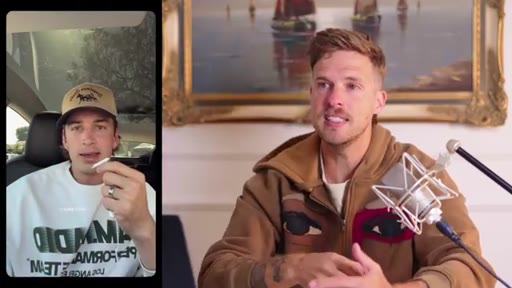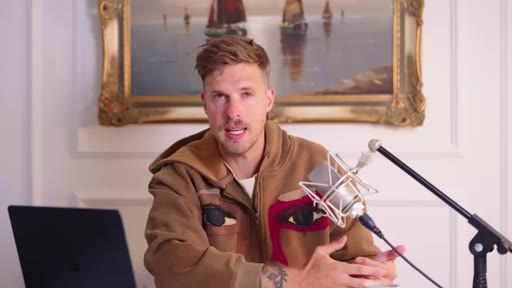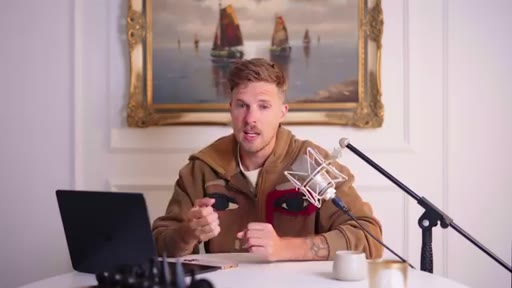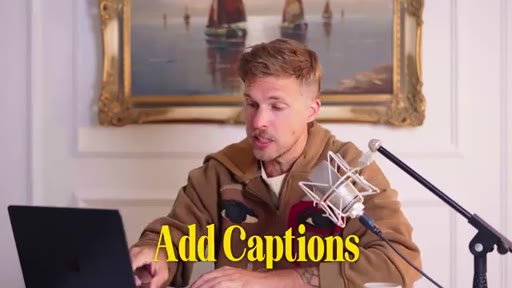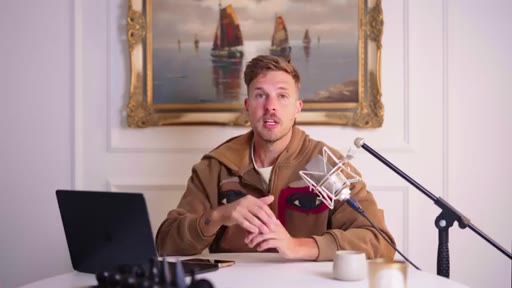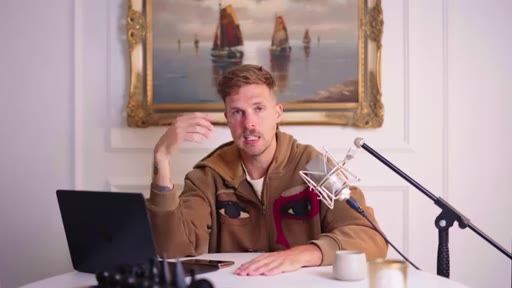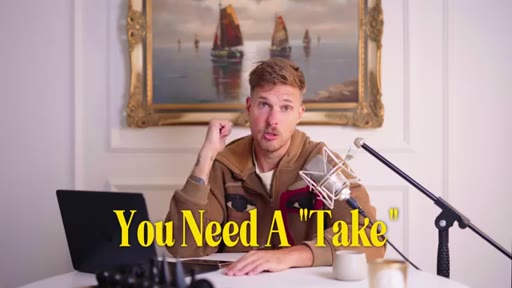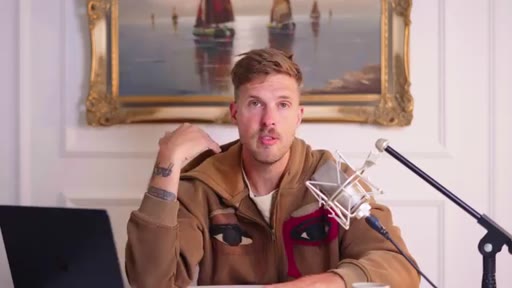

The bait, then the rug-pull.
The promise is right there in the first twenty seconds: every format, every framework, every edit trick — a complete playbook for talking into your phone. What the title doesn't say is that the real thesis runs deeper than content strategy.
Where the time goes.

01 · Hook + why yapping matters now
Sets the premise: yapping is the simplest version of talking on the internet, and the payoff extends far beyond views or followers.

02 · Three benefits of making content
Becoming a better communicator, building a more thoughtful life through idea-workshopping, and the career and business upside of free internet attention.
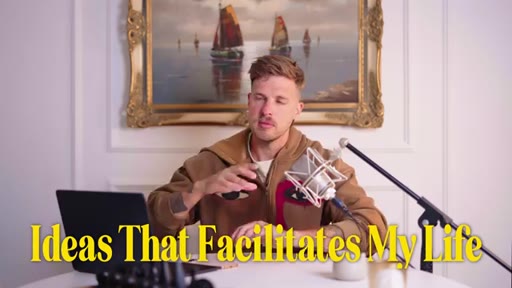
03 · Sponsor (HubSpot LinkedIn pack)
HubSpot LinkedIn starter pack — Adam Biddlecombe growth guide, Mindstream cheat sheet, LinkedIn profile playbook.
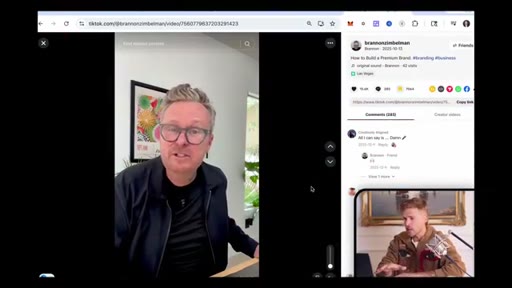
04 · Three base yap formats
Standard yap (sitting, talking), walking yap (in motion), car yap (candid, not always looking at camera). All require just a tripod.
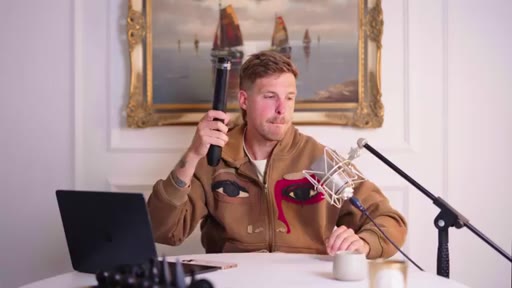
05 · Graphic yaps: three levels
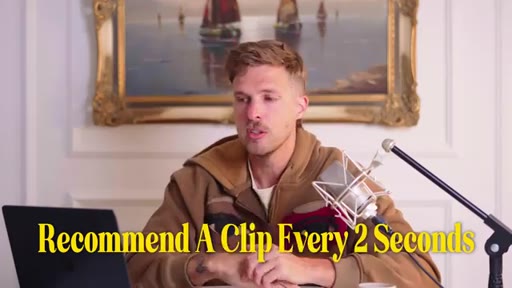
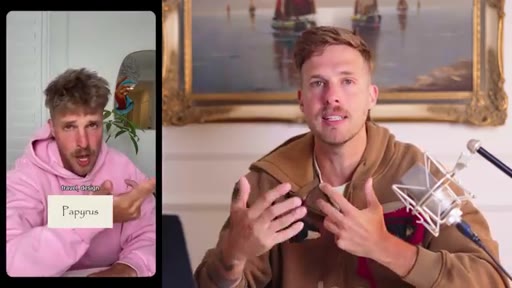
Chaotic graphic yap (random overlays), framed graphic yap (deliberate head placement with space for graphics above), full-screen overlay (9x16 Canva images every two seconds).

06 · Five content frameworks
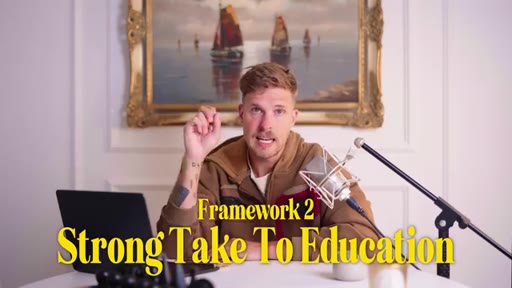
Strong take, strong take to education, small epiphany, humor yap, and story time — the taxonomy that covers 90% of viable short-form content.

07 · The Yap Map
Daily ideation system: touchpoints of your day, personal life observations, media consumed, shower and workout thoughts. Goal is 3-5 ideas per day. Every idea needs a take — strong opinion, story, or relatable breakdown.

08 · Three scripting structures
Hook-Story-Points 1+2 (anecdote anchors the value), Eight Mile (pre-empt objections before making the case), Four/Five Things (list of mini strong takes that chain retention).
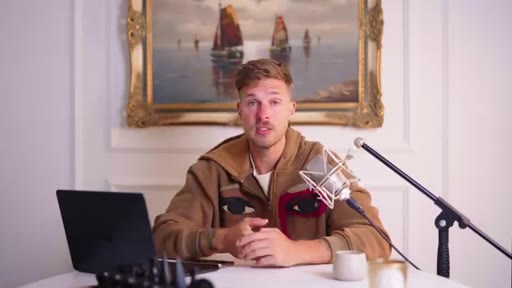
09 · Recording tactics
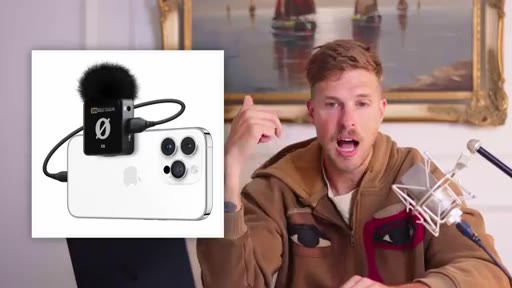
Wired mic (Rode USB-C or EarPods — AirPods don't work), the recut method (pause silently, maintain eye contact, resume), redo the intro at the end when flow is better.
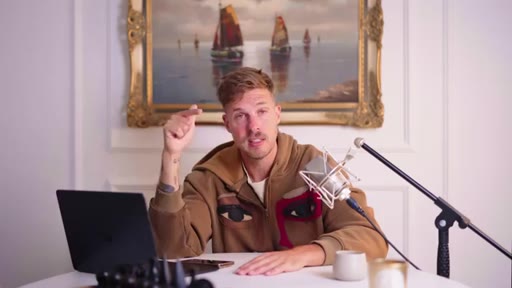
10 · Editing, captions, and CTA
CapCut or Edits for captions and title overlays. Cheat sheet in description. Community call and Cut30 bootcamp pitch. Closing call to become a creator regardless of age or niche.
Visual structure at a glance.
Named ideas worth stealing.
Yap Map
- Touchpoints of your day
- Personal life observations
- Media you consume
- Shower and workout thoughts
Daily ideation system for generating 3-5 video ideas. Each idea needs a take: strong opinion, story, or relatable observation.
Hook-Story-Points
- Hook (claim)
- Story (personal anecdote or third-party narrative)
- Point 1
- Point 2
Core yap script: lead with a strong claim, anchor it in a real story, then deliver two supporting points.
Eight Mile
- Hook
- Steel-man the opposing argument
- Disprove objections
- Make your case
Pre-empt every objection up front so viewers who were about to swipe stay to hear the reasoning.
Four/Five Things
- Strong take 1
- Strong take 2
- Strong take 3
- Strong take 4
String together 3-5 mini strong takes under one umbrella hook. Each stand-alone take creates a reason to stay for the next.
Lines you could clip.
"A complete playbook for talking into your phone to change your life."
"Short-form video is the primary method of business and personal communications now."
"The number one value I got from making content at 37 was becoming a better communicator."
"Conversation is what drives videos."
"Strong takes, small epiphanies, and story time is the foundation for 90% of the content you can make."
"You are there to light people up."
Things they pointed at.
How they asked for the click.
"The next Cut30 starts early May — thirty days of doing this with a team and coaches and curriculum."
Soft close — frames it as accountability infrastructure rather than a pitch. Community call mentioned first as a lower-friction entry point.
Word for word.
Why talking on camera makes you sharper everywhere.
The creators who stick with yapping don't just grow audiences — they rewire how they think, communicate, and generate ideas across every domain.
- Making content forces you to answer three questions you rarely ask in normal conversation: what is my actual point, how do I get attention for it, and what objection will the listener have before I finish.
- The Yap Map prevents blank-page paralysis by treating daily life as a running idea source — you're never starting from nothing when you've been logging touchpoints all day.
- The Eight Mile structure works in sales and presentations for the same reason it works on video: pre-empting an objection is more persuasive than answering it after someone has already decided.
- Talking on camera teaches you that conviction is the real differentiator — a strong take about something specific beats a balanced take about everything, every time.
- The recut method is a transferable skill: pausing silently while maintaining eye contact reads as confidence in live conversation too, not just video.
- Redoing the intro at the end exploits a simple truth about performance — the first take is the warmup, not the real thing. Apply this to presentations, pitches, and first calls.
- Captions and a one-sentence title are not optional extras — they are the minimum viable framing that tells the algorithm and the viewer what they are watching before they decide to stay.