The bait, then the rug-pull.
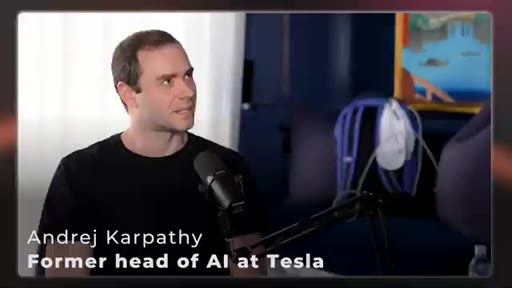
Andrej Karpathy went viral. Austin Marchese watched, took notes, and built a tutorial that strips the jargon out of Karpathy's LLM knowledge system and hands it back as three copy-paste strategies. The promise is ten minutes to a Claude Code workflow that compounds instead of restarts.
What the video promised.
stated at 00:12 "I'm gonna break down and simplify the three key strategies Karpathy uses, view how each one works, and give you actionable advice you can apply today to 10x your Claude Code projects." delivered at 09:01
Where the time goes.

01 · Cold open + hook
Authority borrow via Karpathy name-drop, simplification promise, three-strategy preview.

02 · Strategy 1: LLM Knowledge Bases
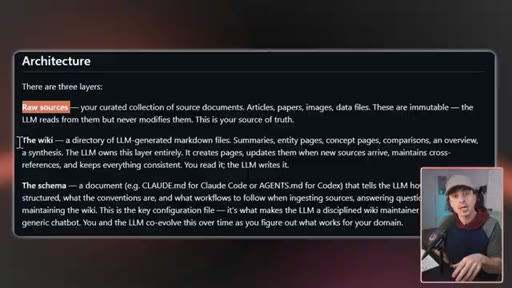
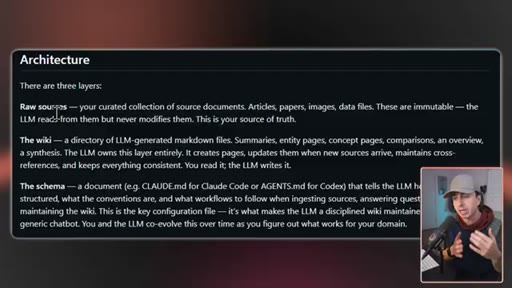
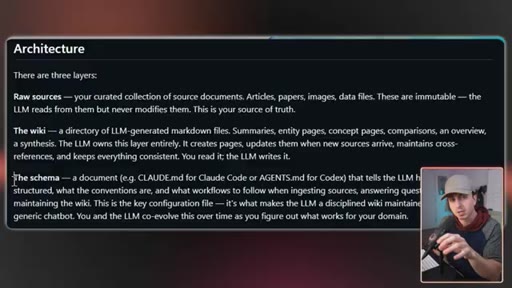
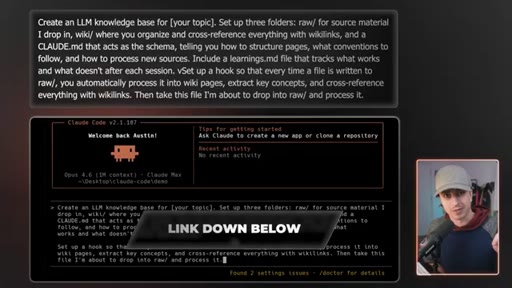
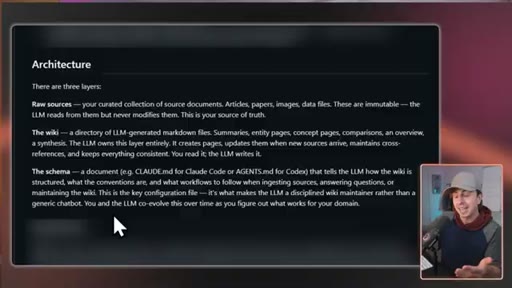
Core problem: AI starts from scratch every session. Fix: Claude-maintained wiki with three layers. Raw (immutable), wiki (cross-referenced summaries), schema/CLAUDE.md (librarian instructions). Karpathy: Humans abandon wikis. LLMs do not get bored.
03 · Strategy 2: Auto-Research
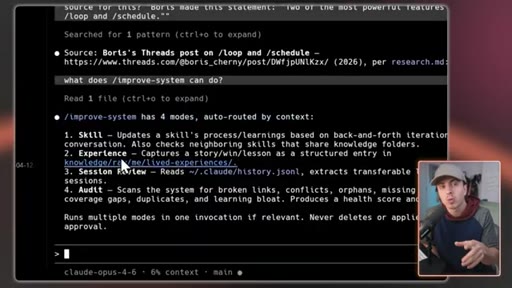
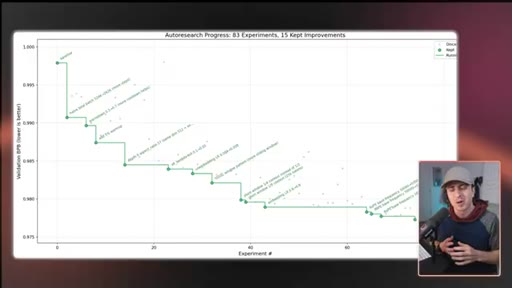
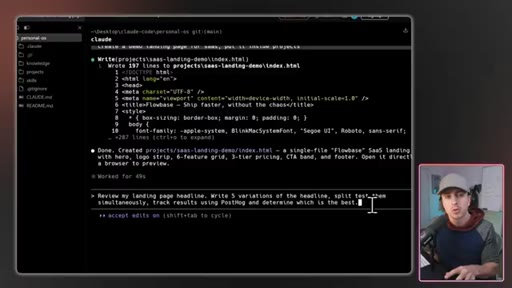
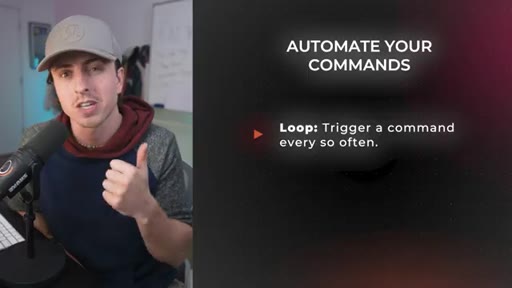
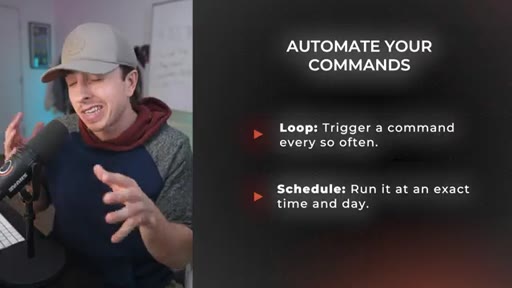
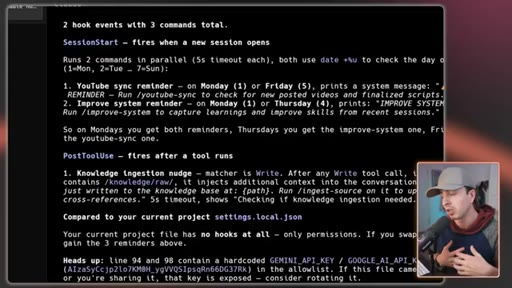
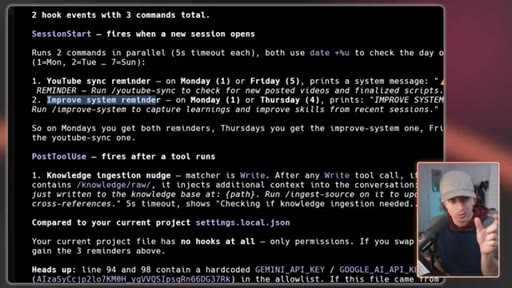
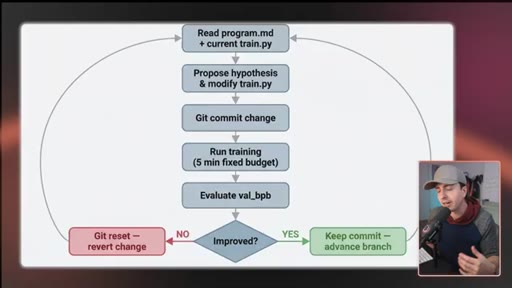
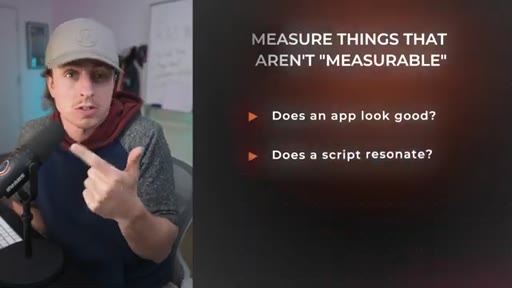
Karpathy's propose/test/evaluate/keep/discard loop. 11% gain from 20 improvements. Shopify CEO: 19% gain from 37 experiments overnight. Austin's reframe: use chat history as quality signal for non-measurable work. Hooks trigger improve-system skill on session start.
04 · Strategy 3: Context Engineering (intro)
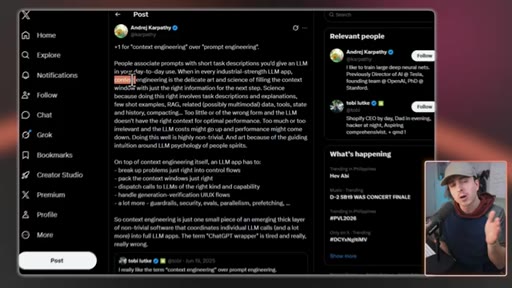
Karpathy definition: the delicate art and science of filling the context window with just the right information. Bad results are a skill issue.
05 · How to properly context engineer
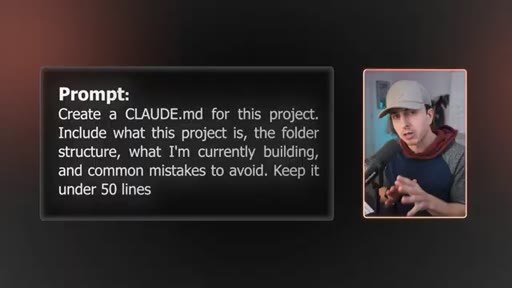
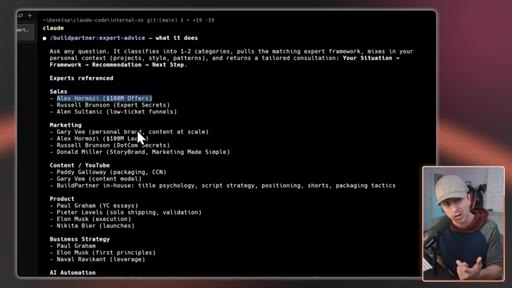
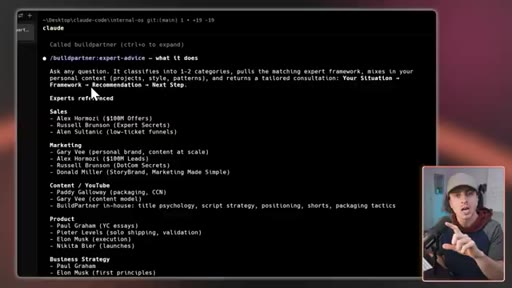
CLAUDE.md prompt and scoped knowledge via expert-advice skill. BuildPartner.ai plug.

06 · Live demo + close
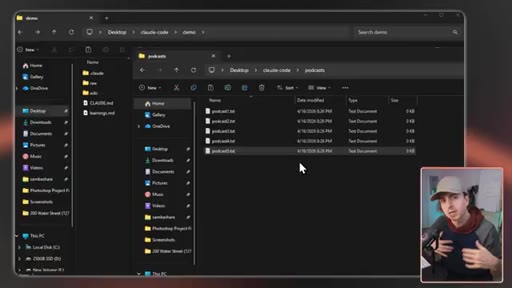
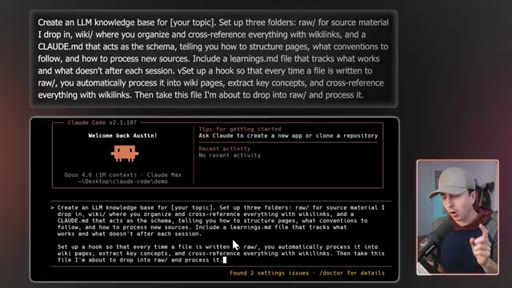
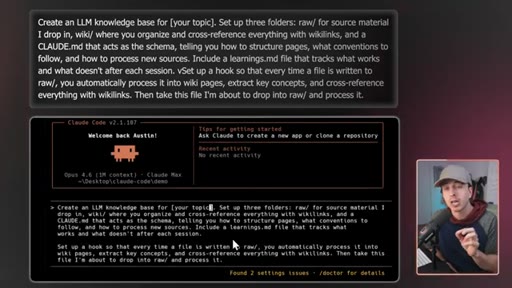
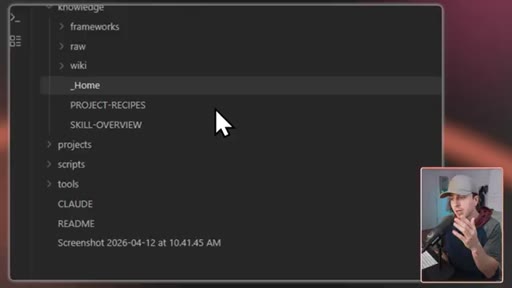
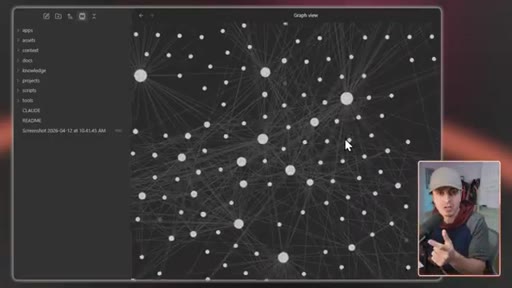
One master prompt sets up all three strategies. Obsidian graph view shown. Subscribe CTA.
Visual structure at a glance.



Named ideas worth stealing.
3-Layer LLM Knowledge Base
- Raw: immutable source documents
- Wiki: LLM-maintained summaries and cross-references
- Schema: CLAUDE.md as librarian instruction file
A folder-based wiki Claude builds and maintains from raw sources. The schema file tells Claude how to ingest, organize, and health-check the wiki.
Auto-Research Loop
- Propose
- Test
- Evaluate
- Keep or Discard
- Repeat
Karpathy's agentic improvement loop. For measurable work: runs autonomously. For non-measurable: use chat history as quality signal, feed it back via improve-system skill.
Context Engineering Hierarchy
- CLAUDE.md: session-level what/structure/mistakes
- Skill context injection: auto-load expert frameworks per topic
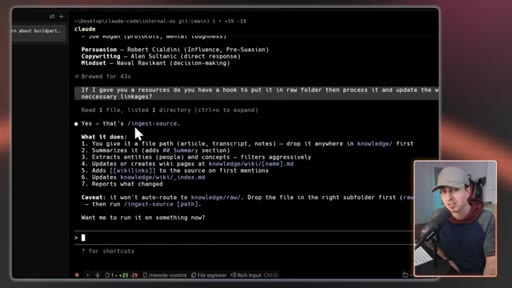
- Wiki navigation: LLM reads wiki to find raw, not scan all raw
Three tiers of context control that compound together. CLAUDE.md is the baseline; skills add dynamic context; the wiki adds navigable depth.
Lines you could clip.
"The LLM is rediscovering knowledge from scratch on every question. There is no accumulation."
"Humans abandon wikis because the maintenance burden grows faster than the value. LLMs do not get bored."
"You have to remove yourself as the bottleneck. You cannot be there to prompt the next thing."
"It's a skill issue."
How they spent the runtime.
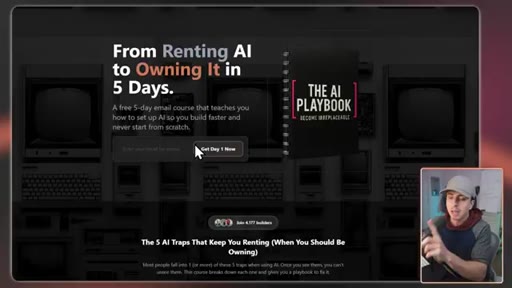
- 06:12 – 06:50 · BuildPartner 5-day email series (own product)
- 08:41 – 09:01 · BuildPartner.ai (own product, free plug)
Things they pointed at.
How they asked for the click.
"If you got this far, you are an absolute legend and I'm confident that you'll love this video where I walk through how Anthropic's team, the creators of Claude Code, actually use Claude Code."
Embedded next-video suggestion with warm compliment close. Subscribe card appears at 10:38.
Word for word.
Steal the three-layer system.
The gap between mediocre and 10x Claude Code output is almost entirely a context problem, and this video shows exactly how to solve it with folders, not infrastructure.
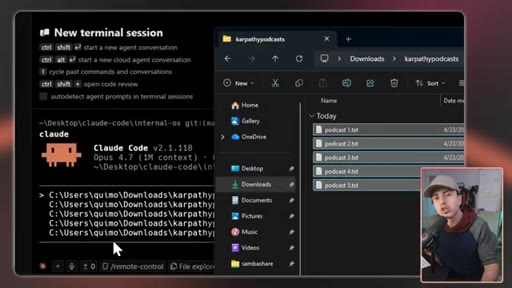
- Set up raw/, wiki/, and CLAUDE.md in every project. One prompt does it; grab it from the video description.
- The schema/CLAUDE.md is the lever most people skip. Write the librarian instructions first, not last.
- Auto-research for non-measurable work: use your own chat history as the quality signal. Run an improve-system skill after every session that took iteration.
- Hook the improve-system skill to session start so it reminds you automatically.
- Expert-advice skills that auto-load the right framework per topic are the highest-leverage context injection move. Build one per domain you work in.
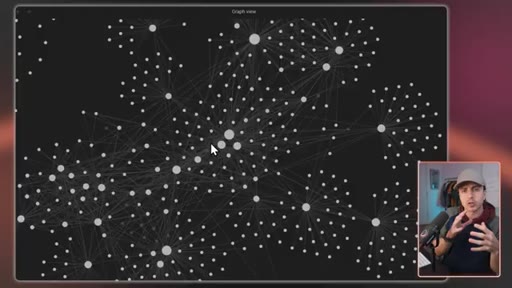
- Obsidian graph view is not just pretty; it shows you immediately when your wiki has islands (unlinked nodes equal gaps in the knowledge web).
Stop starting from scratch with AI.
Every time you start a new AI conversation it knows nothing about you or your project, but it does not have to.
- Create a folder called raw/ and dump your notes, articles, and past work into it. Ask Claude to build you a wiki from it.
- Ask Claude to write a CLAUDE.md for your project, a file it reads at the start of every session so you never have to re-explain your context.
- After a session where you went back and forth to get something right, ask Claude to update your knowledge base based on what worked today.
- Treat Claude like a junior employee you are onboarding. The more you document what works, the better the output gets over time.