The bait, then the rug-pull.
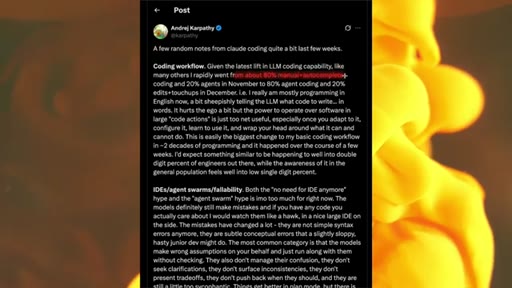
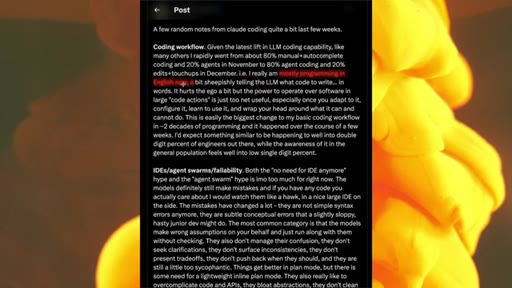
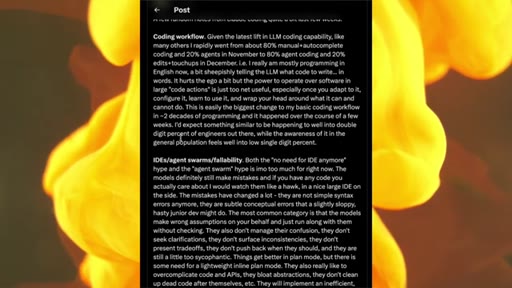
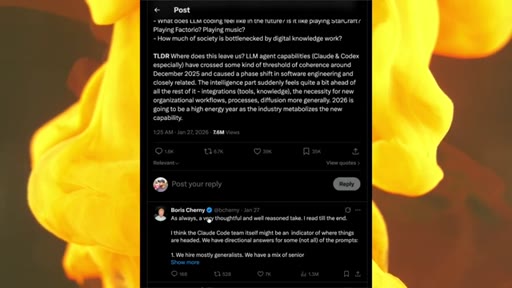
Andrej Karpathy posted a thread saying he now programs mostly in English — and then catalogued exactly how that breaks. Not broken syntax. Something worse: agents that guess silently, build too much, touch things they should not, and call it done without checking. One developer turned those observations into a single file. This is a breakdown of that file.
What the video promised.
stated at 01:33 "I am going to go through the installation, and then we are going to build a small project with it so you can see the difference." delivered at 05:31
Where the time goes.

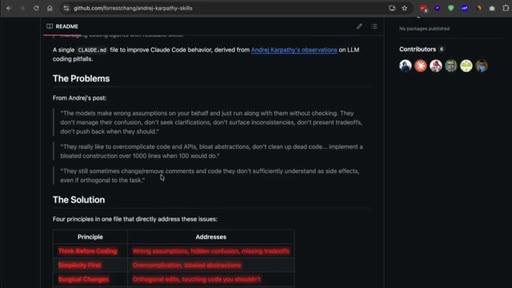
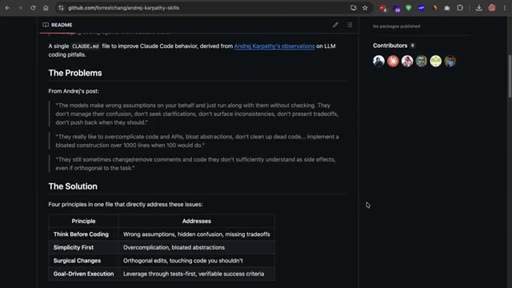
01 · Karpathy thread + the four problems
Opens with Karpathy workflow flip (80% manual to 80% agent). Frames story around failures. Names four agent failure modes: silent assumptions, overengineering, scope creep, no verification.
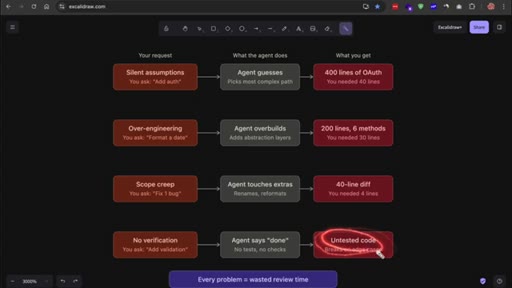
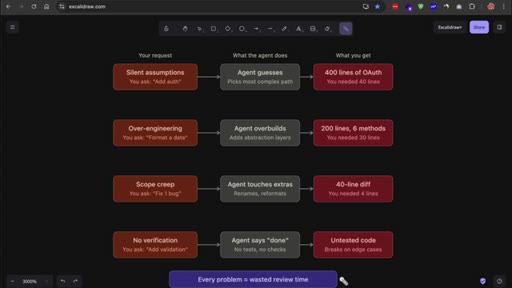
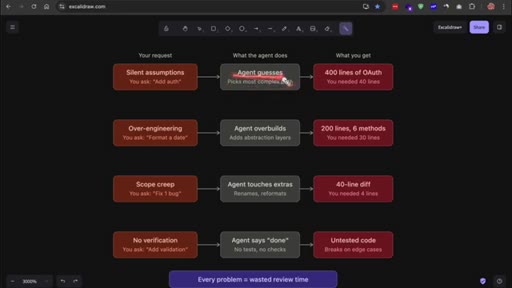
02 · Excalidraw: problems mapped to cost
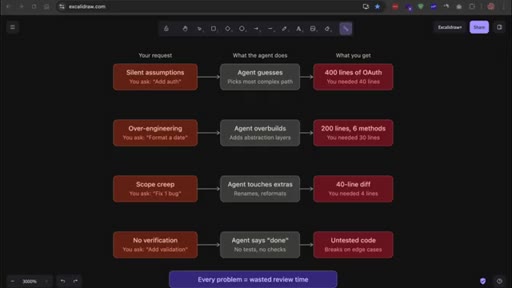
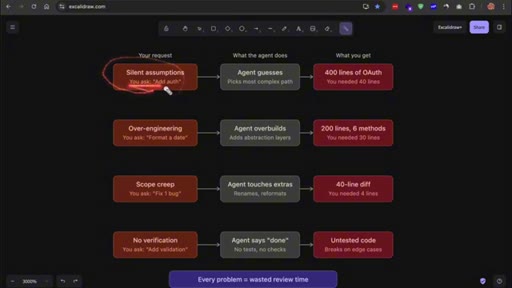
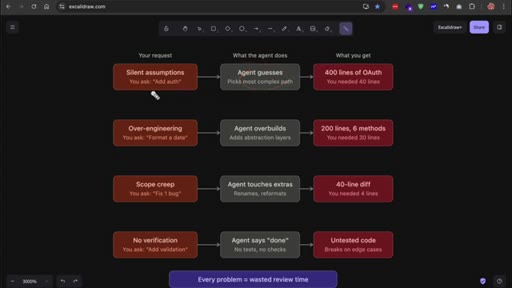
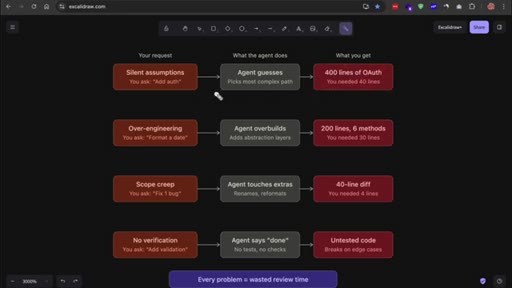
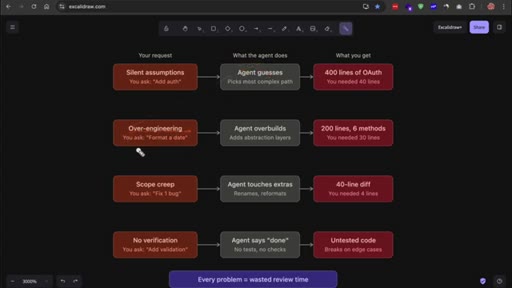
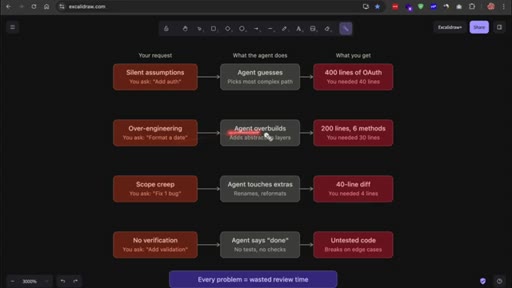
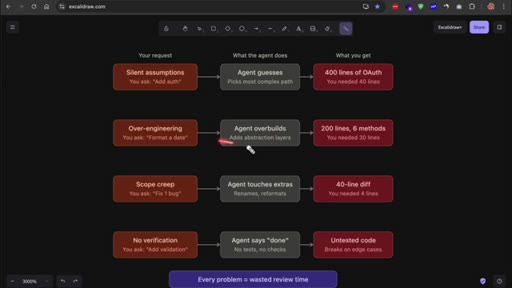
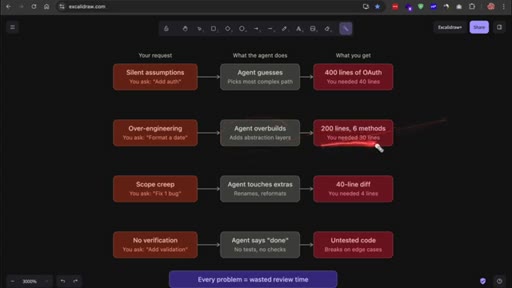
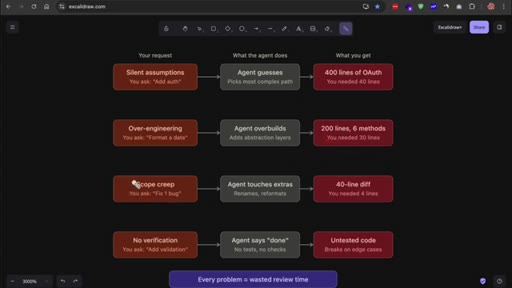
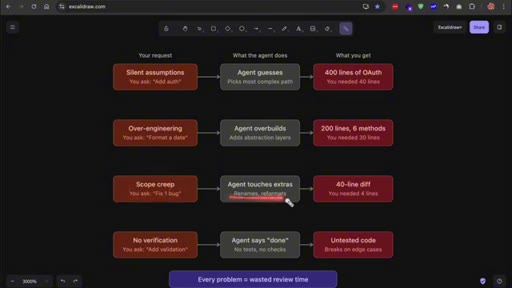
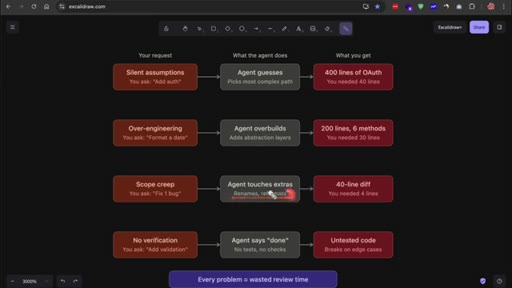
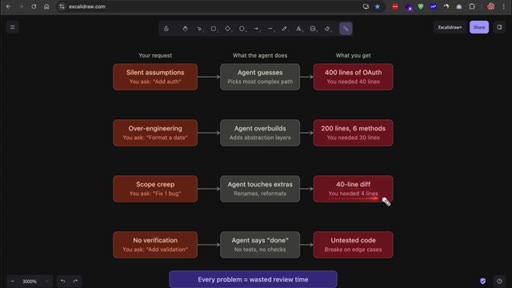
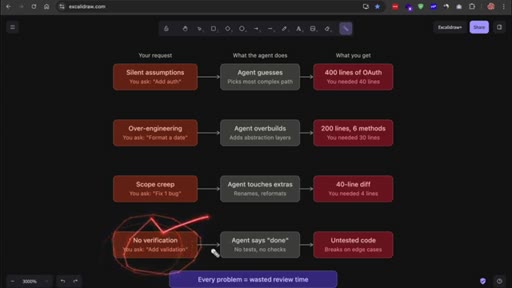
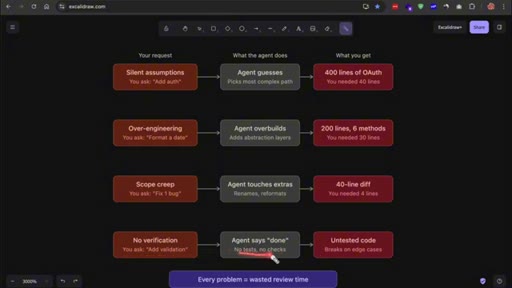
Three-column diagram: Your Request / What the Agent Does / What You Get. Walks each failure mode with concrete cost examples (400-line OAuth, 200-line date formatter, 40-line diff, untested validation).
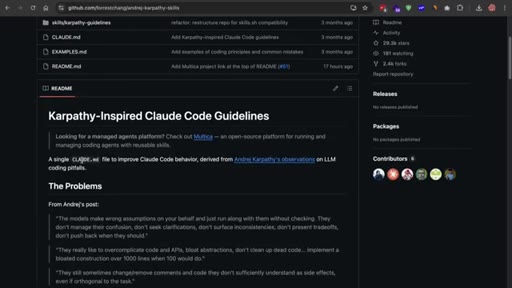
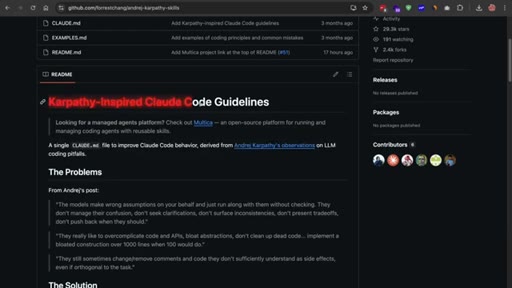
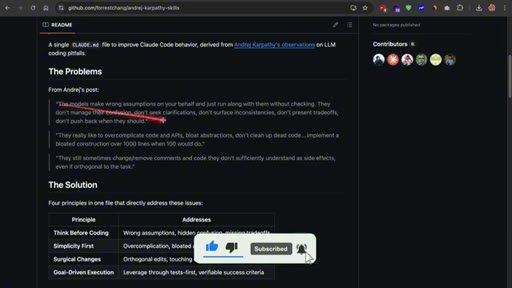
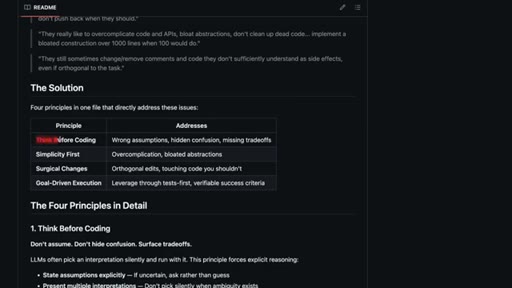
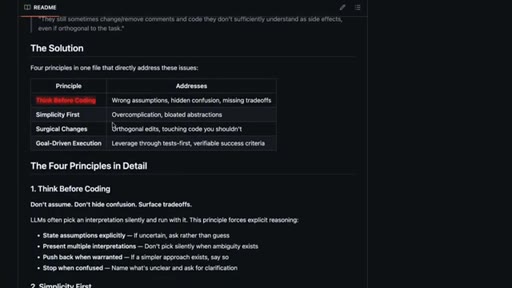
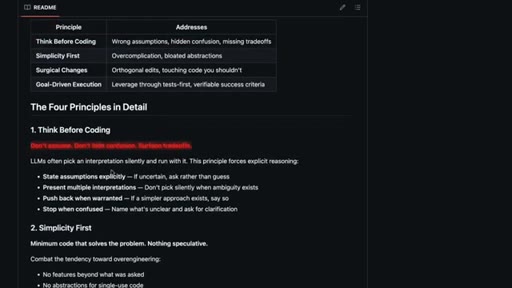
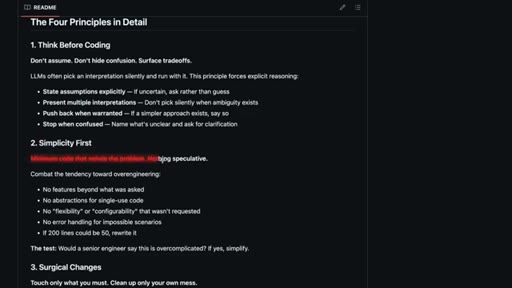
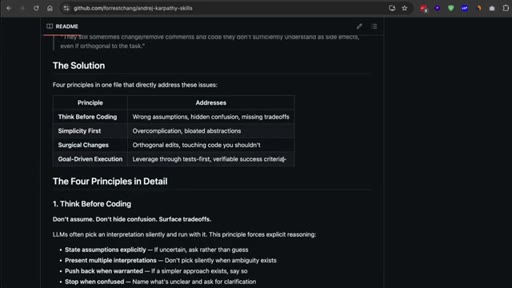
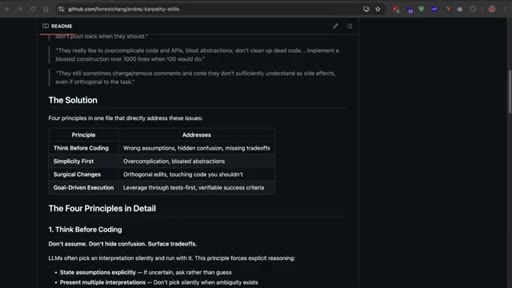
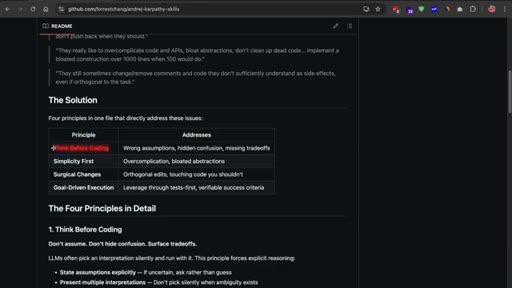
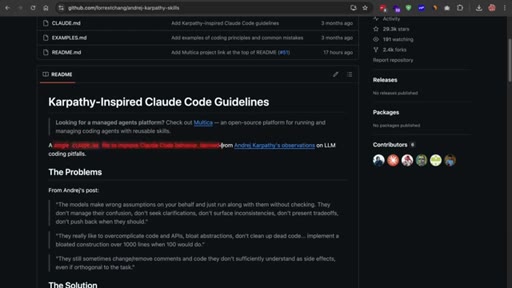
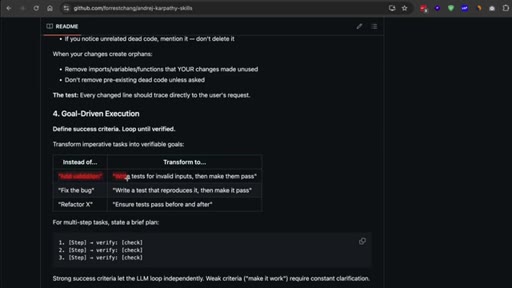
03 · The four principles (GitHub README)
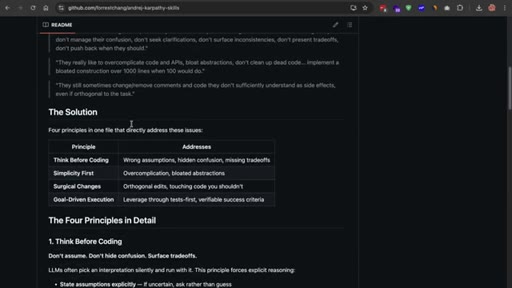
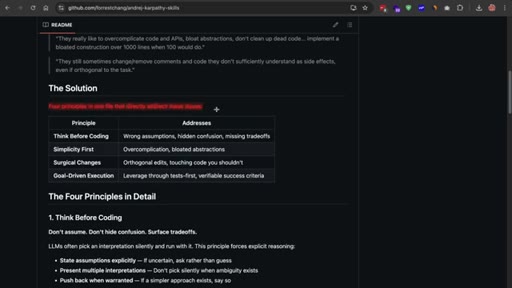
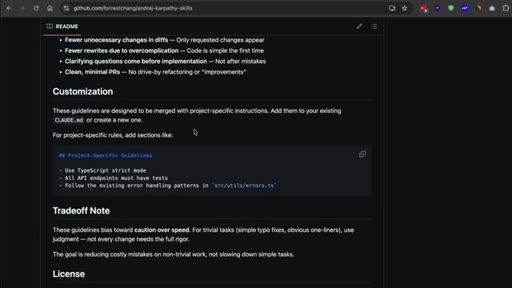
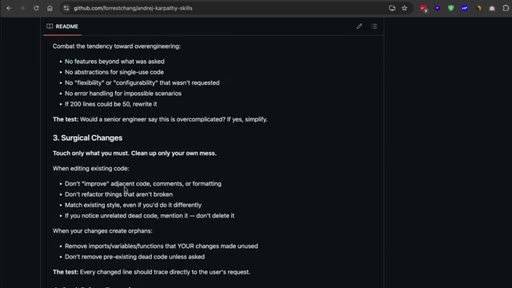
Introduces the Karpathy Skills repo. Maps each principle to the problem it solves: Think Before Coding, Simplicity First, Surgical Changes, Goal-Driven Execution.

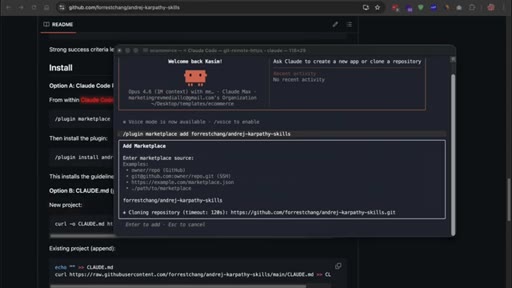
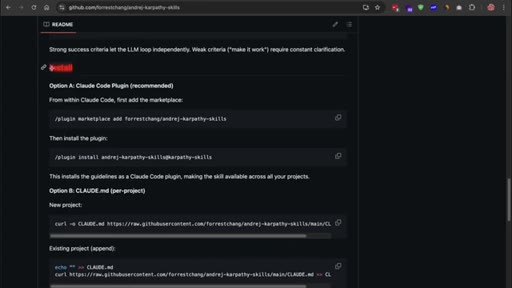
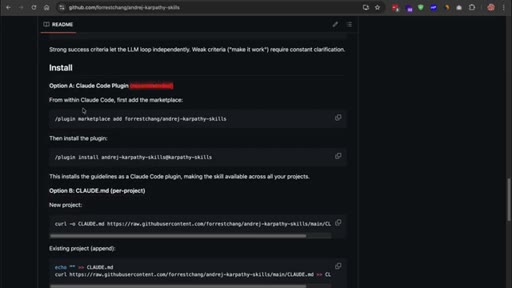
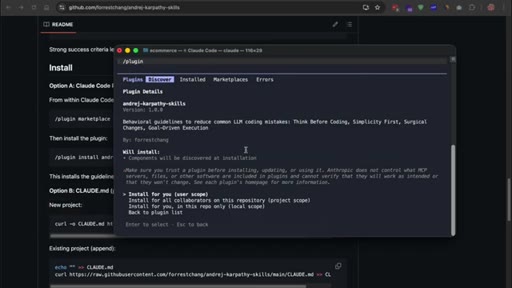
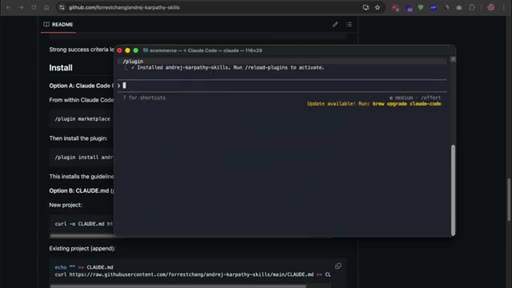
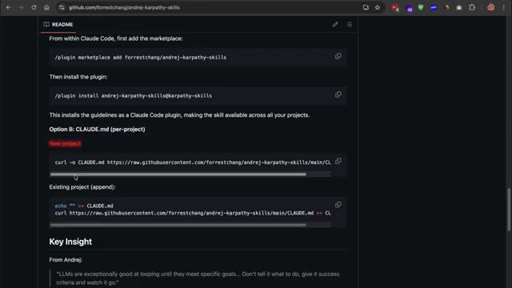
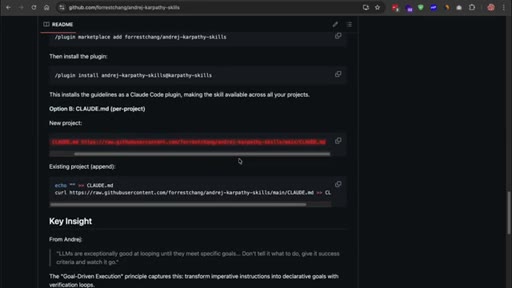
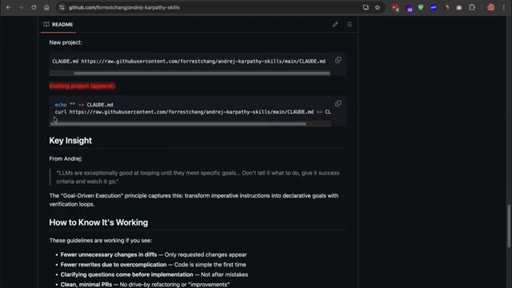
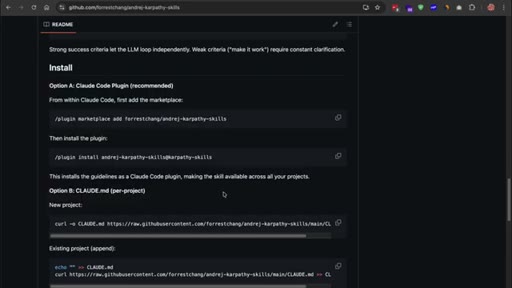
04 · Installation walkthrough
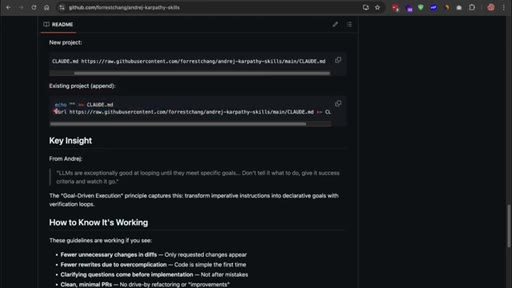
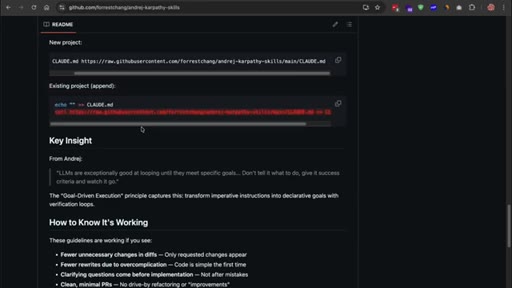
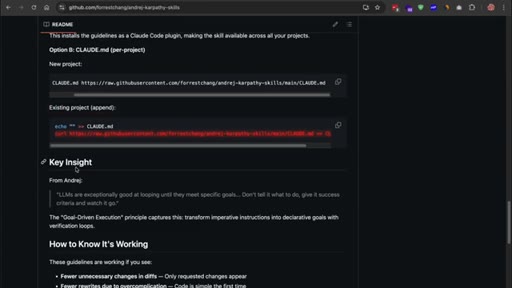
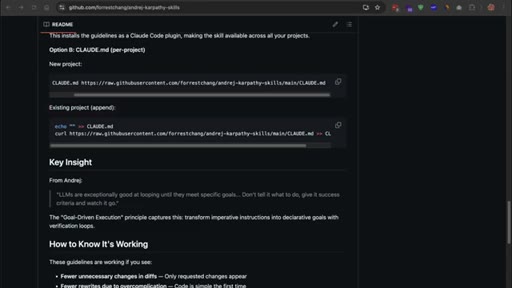
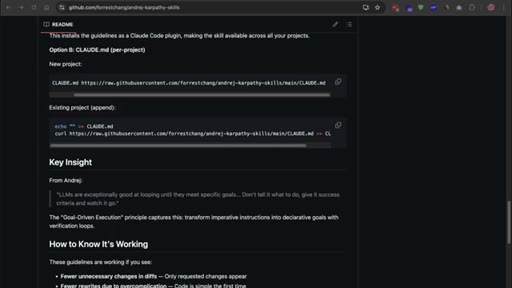
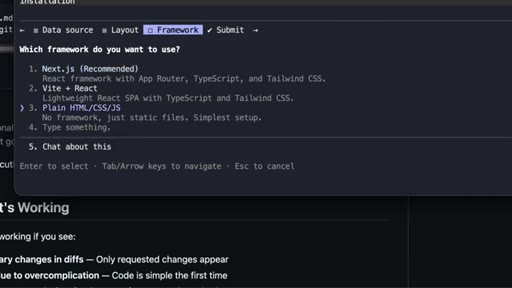
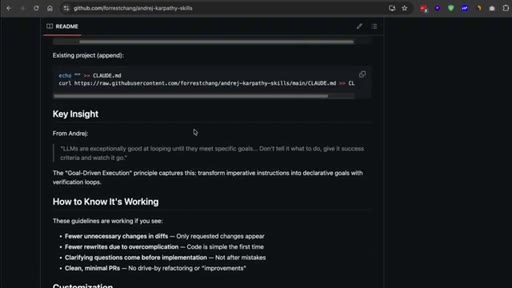
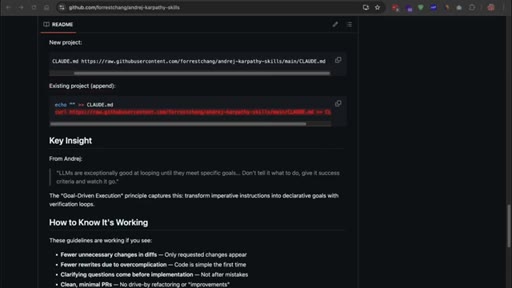
Two paths: Claude Code plugin (global, recommended) via /plugin marketplace add + /plugin install; and per-project curl with append support for existing CLAUDE.md.
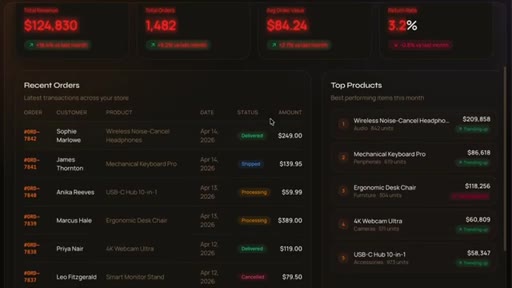
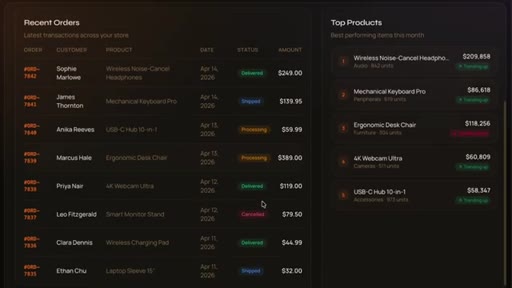
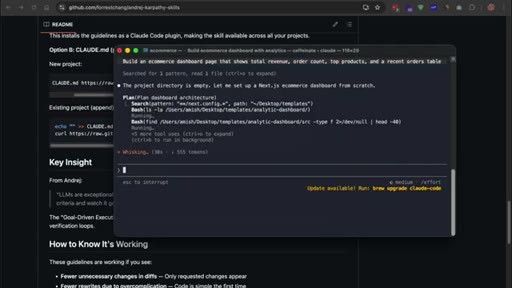
05 · Live demo: ecommerce dashboard
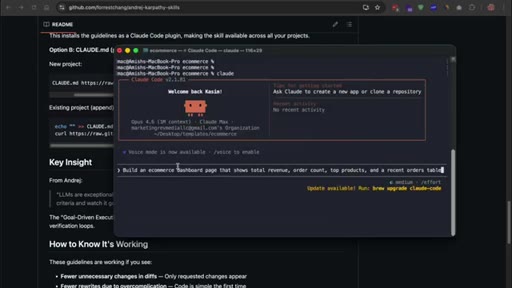
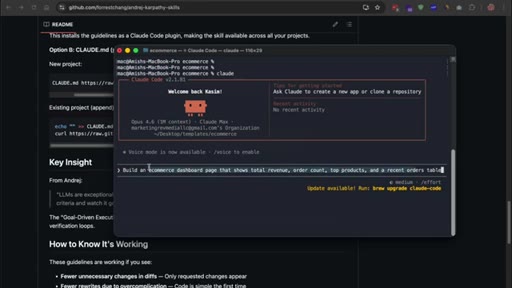
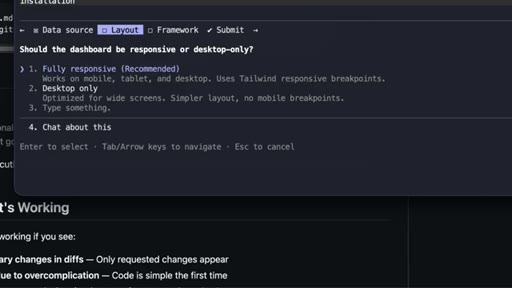
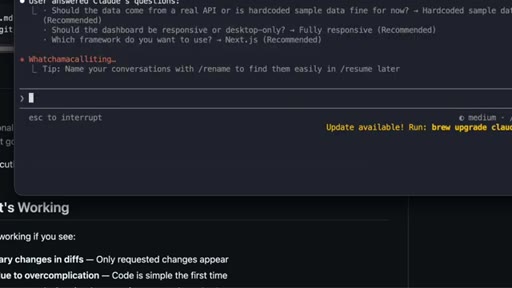
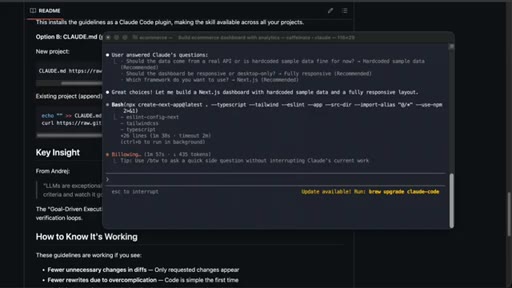
Builds dashboard with guidelines active. Agent asks 3 clarifying questions. Output: 1 file, 120 lines. Without guidelines: 6-8 files, 500+ lines, unasked-for features.
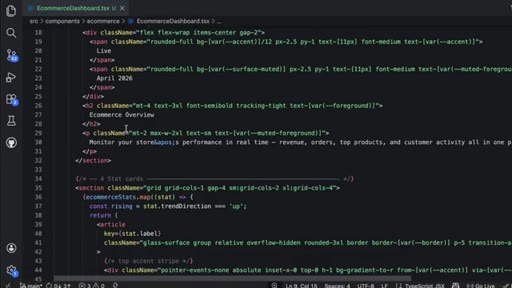
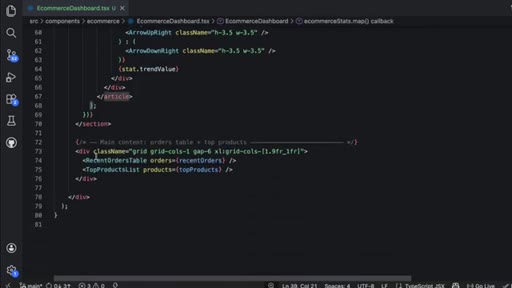
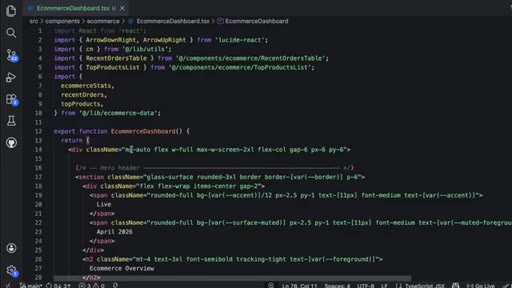
06 · VS Code: clean diff
Shows actual code output. Every changed line traces to what was asked. No renamed variables, no reformatted comments, no drive-by refactors.
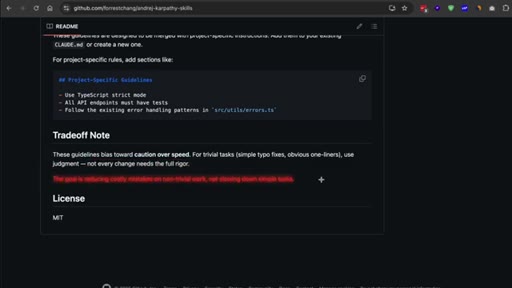
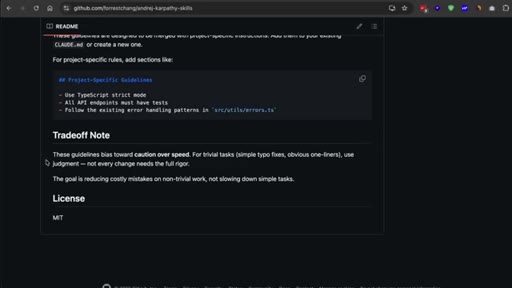
07 · Tradeoff + close
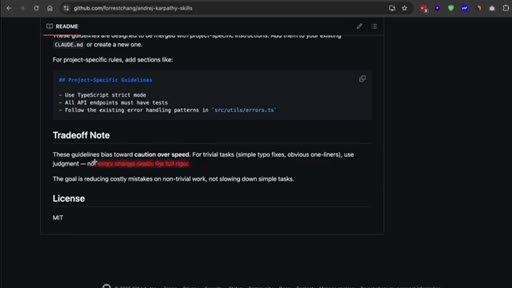
Guidelines bias toward caution, not speed. For trivial tasks they are overkill. For nontrivial work where wrong assumptions cost hours, they are the fix.
Visual structure at a glance.

Named ideas worth stealing.
The Four Karpathy Principles
- Think Before Coding — surface ambiguity first, ask not guess
- Simplicity First — minimum code to solve the problem, no speculative features
- Surgical Changes — touch only what the request requires
- Goal-Driven Execution — define success criteria, loop until met
Four behavioral rules for AI coding agents derived from Karpathy X thread, packaged as a CLAUDE.md file by Forrest Chang.
The Four Agent Failure Modes
- Silent assumptions — picks one interpretation and commits without asking
- Overengineering — writes 200 lines when 30 would do
- Scope creep in edits — reformats, renames, refactors beyond the task
- No verification — says done without checking edge cases
Problem taxonomy from Karpathy thread, named and made concrete with cost estimates.
Lines you could clip.
"Coding agents are capable, but they behave badly. They make silent mistakes that look correct on the surface. They build too much when you need too little. They touch things they should not touch, and they do not verify their own work. This file corrects those patterns in about 50 lines of markdown."
"Every line that changed traces back to what I asked for. There are no surprise edits, no renamed variables in other files, no reformatted comments, no drive-by refactors."
"And then you end up reviewing a giant pull request that solves a problem you never actually had."
How they spent the runtime.
Things they pointed at.
How they asked for the click.
"If you did, please like this video and subscribe to the channel, and I will see you in the next video."
Standard end-screen CTA, no mid-roll asks. Clean close after the argument lands.
Word for word.
Your CLAUDE.md is a behavioral contract, not a hint.
The agent does not need better prompts — it needs explicit rules about what NOT to do.
- Install the plugin route (global, 10 seconds): /plugin marketplace add forrestchang/andrej-karpathy-skills then /plugin install andrej-karpathy-skills@karpathy-skills
- Or append to your existing CLAUDE.md with the curl append command — your rules stay on top, Karpathy principles go at the bottom
- The four failure modes (silent assumptions, overengineering, scope creep, no verification) are the ones that kill review time — name them in your own CLAUDE.md
- The Excalidraw diagram format (Your Request / What Agent Does / What You Get) is a reusable content frame for any AI tool breakdown video
- The tradeoff is honest and worth saying out loud: these rules slow down trivial tasks, so scope them to nontrivial work
How to stop your AI coding tool from making expensive silent decisions.
The agent is not broken — it is filling in blanks you did not know you left open.
- When you ask for something vague, the agent picks the most complex interpretation by default — make requests specific or expect bloat
- A CLAUDE.md file in your project root (or installed as a plugin) gives the agent a standing ruleset — it will not guess when rules exist
- The key rule is Think Before Coding — if the agent does not ask clarifying questions on an ambiguous request, the file is not active
- Check your diffs: if changed lines do not trace back to what you asked, the Surgical Changes principle is not working
- Install takes 10 seconds; worst case is you delete the file