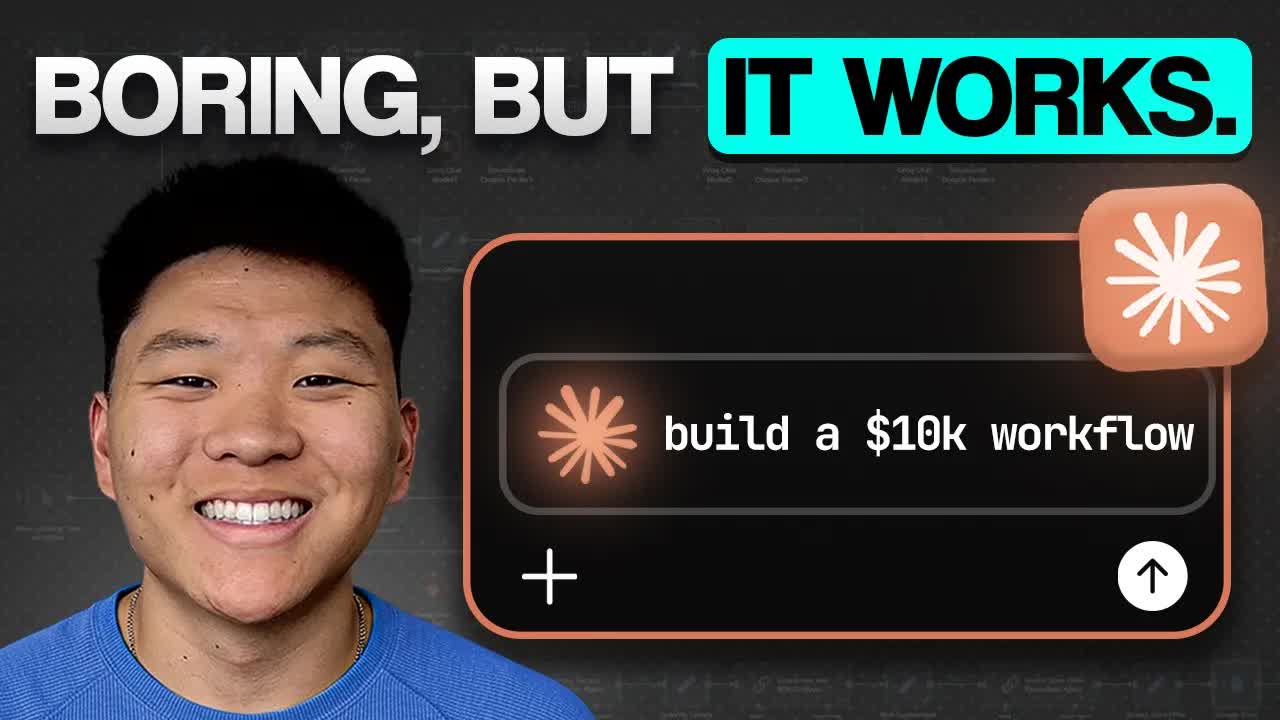
The bait, then the rug-pull.
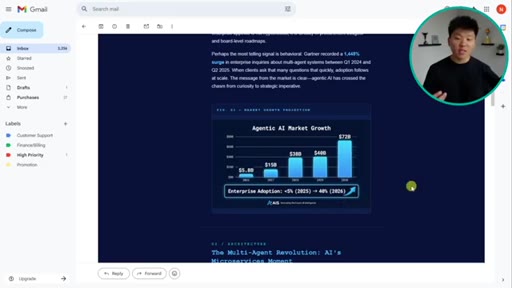
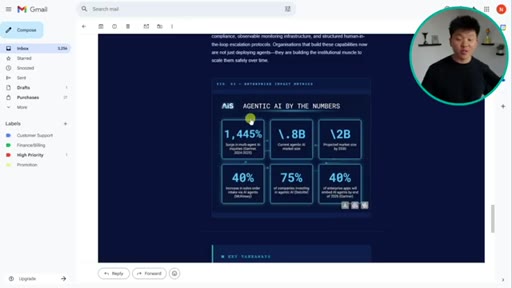
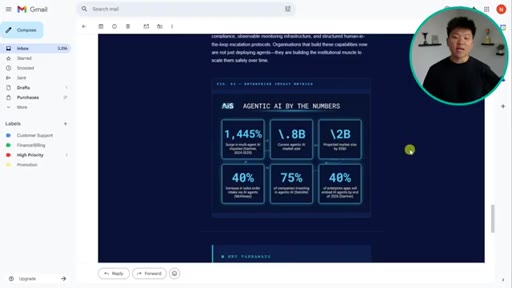
The title makes a dollar-figure promise, and the first ten seconds back it with a market-size claim — agentic AI going from $7 billion to $93 billion — before pivoting to a three-part agenda: understand why, build one live, learn to sell it.
Where the time goes.
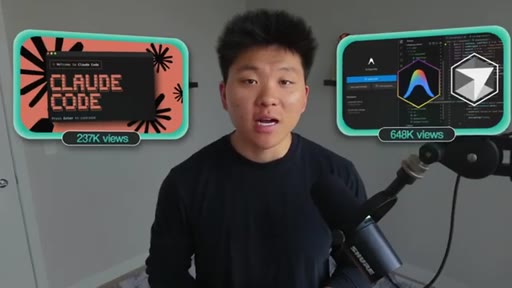
01 · Intro — why now
Market-size hook, three-part agenda stated.
02 · Big money moving in
$8B today to $40-50B by 2030; 25% to 50% enterprise adoption by 2027.
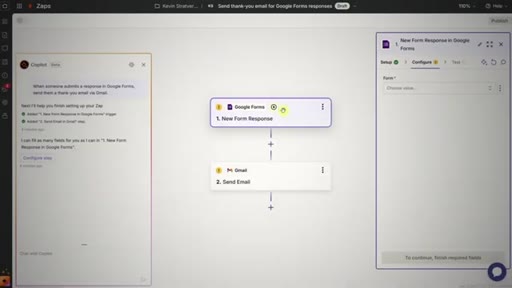
03 · Why traditional automations break
Ceiling of rule-based systems; train-track analogy for the build-phase advantage.

04 · Why the basics still matter
n8n/Zapier fundamentals prevent blind spots when reviewing agent output.
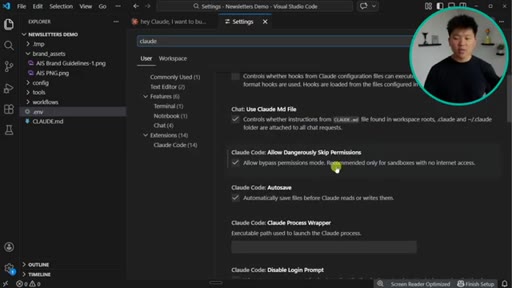
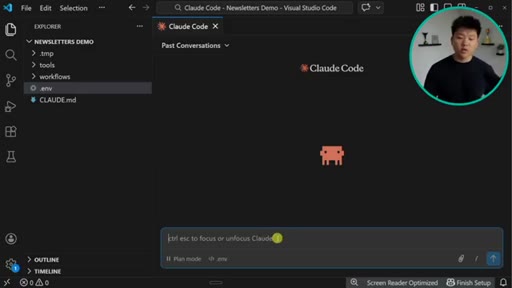
05 · Claude Code setup
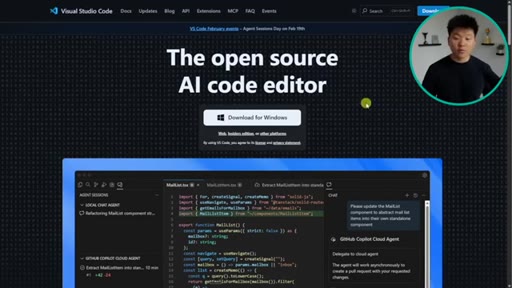
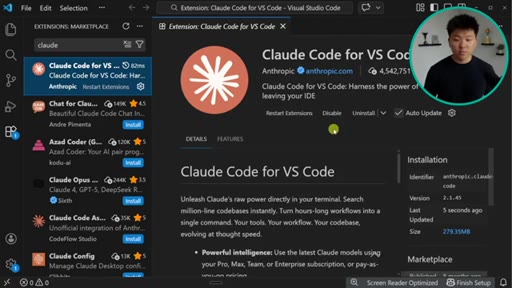
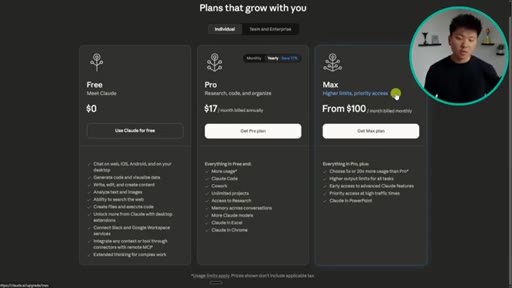
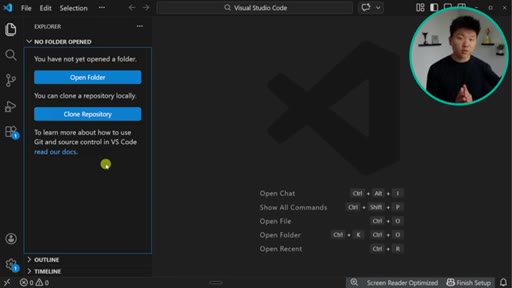
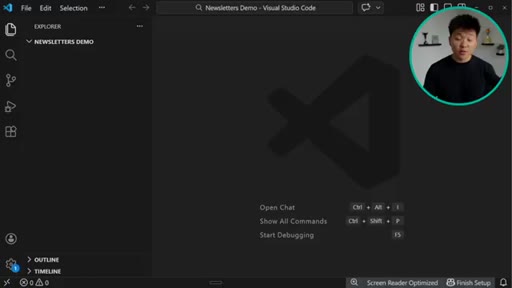
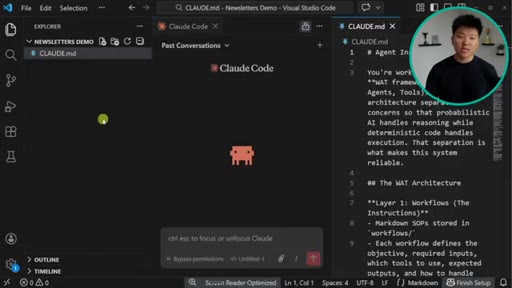
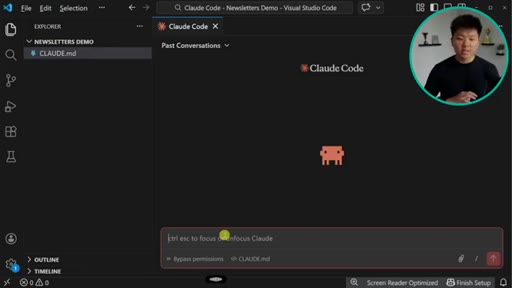
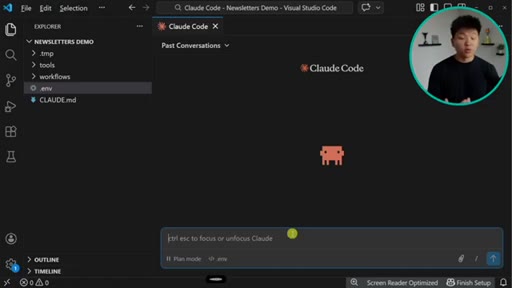
VS Code install, Claude Code extension, paid plan requirement, opening a project folder.
06 · WAT framework explained
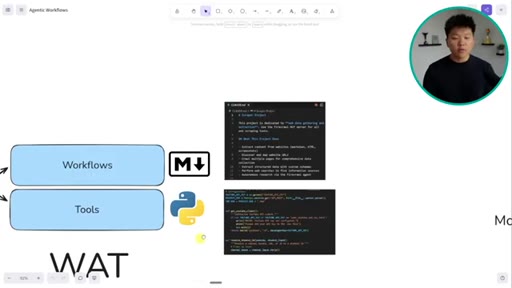
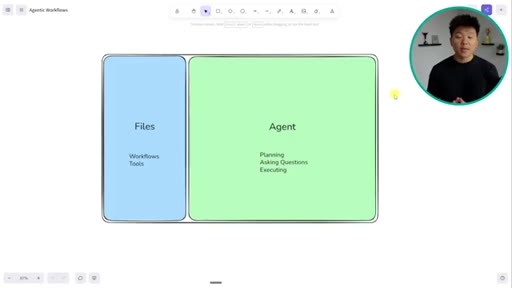
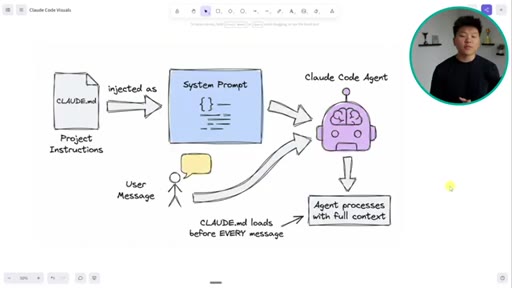
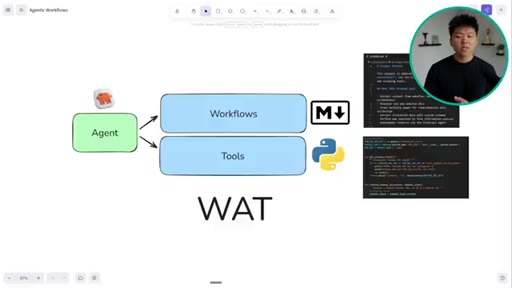
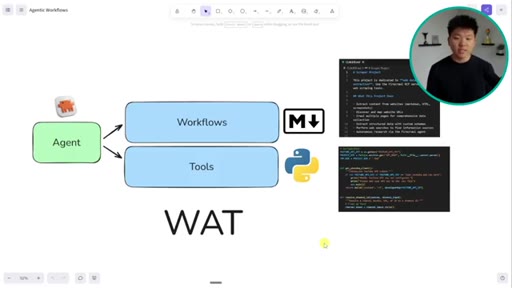
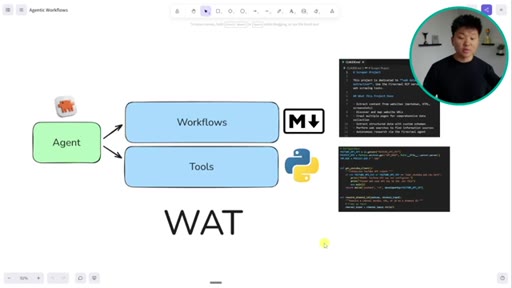
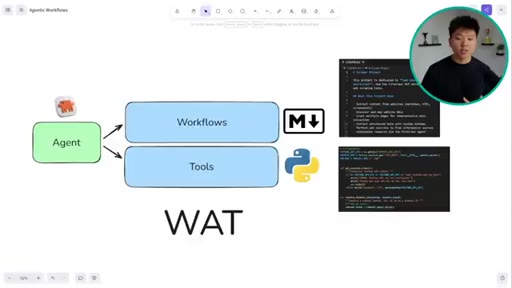
Workflows as recipes, Tools as ingredients, Agent as the cook; Claude.md as standing system prompt.
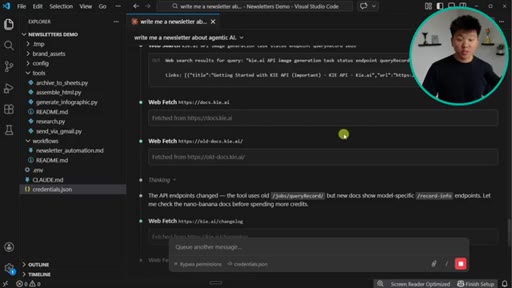
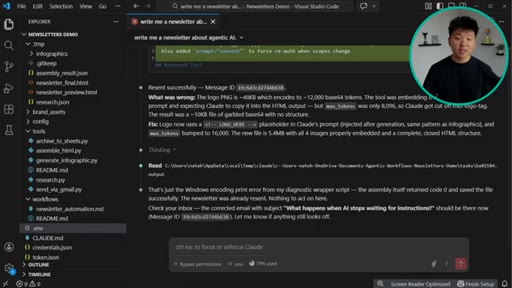
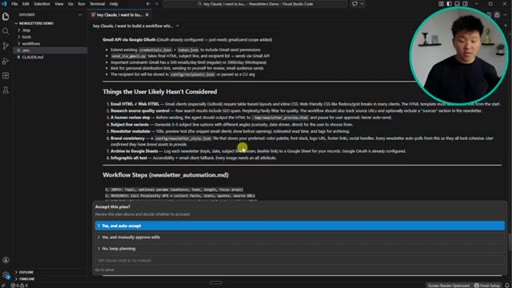
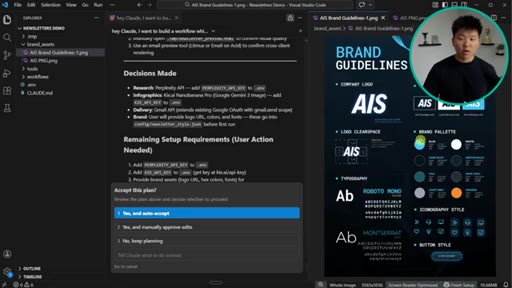
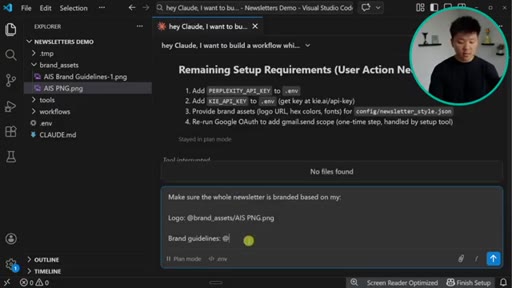
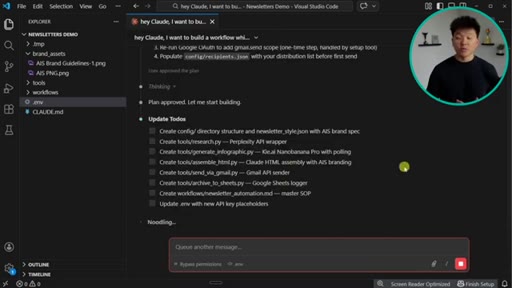
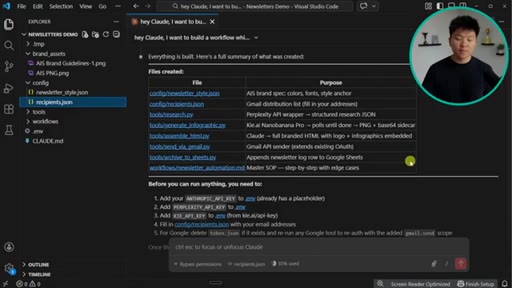
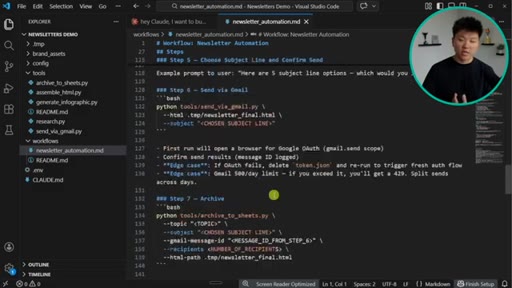
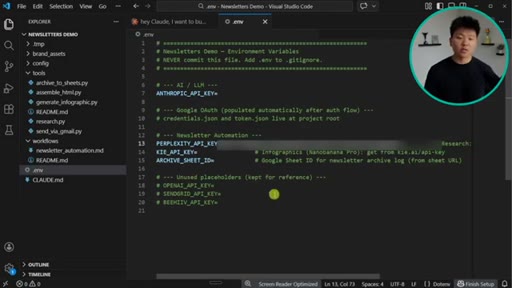
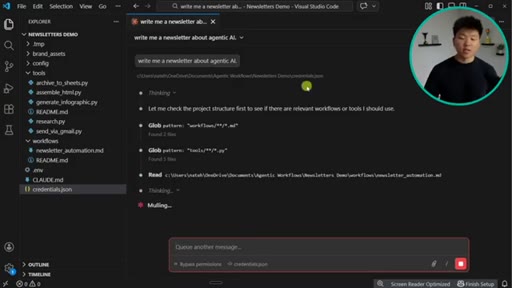
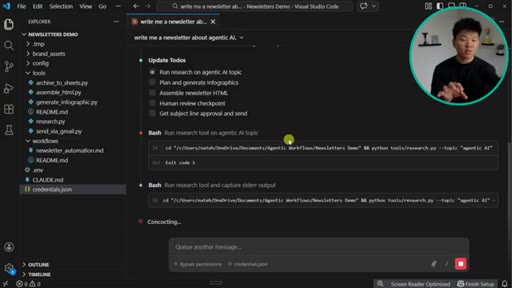
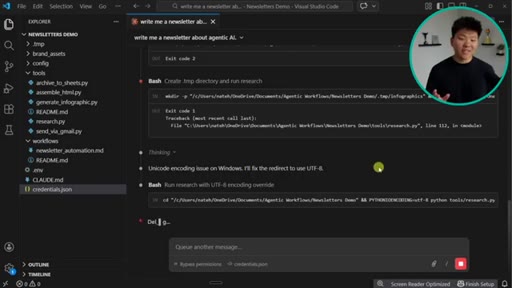
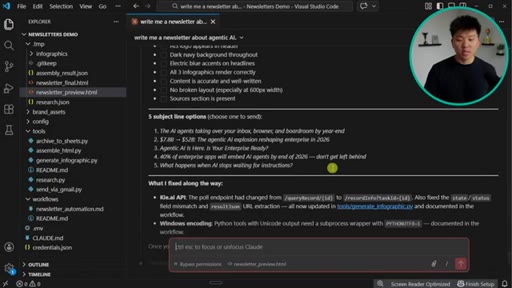
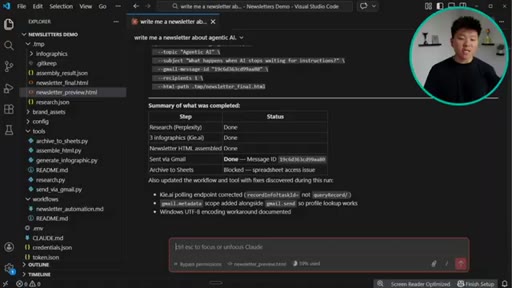
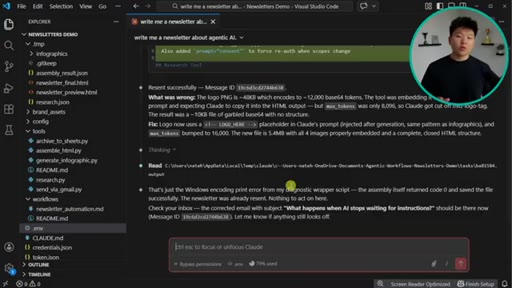
07 · Live build — newsletter automation
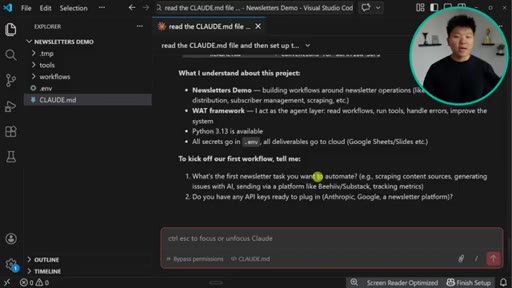
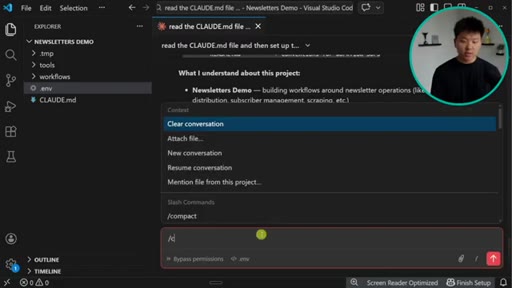
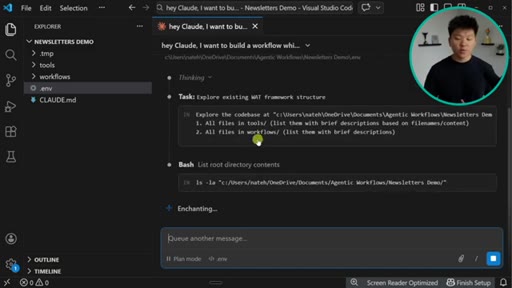
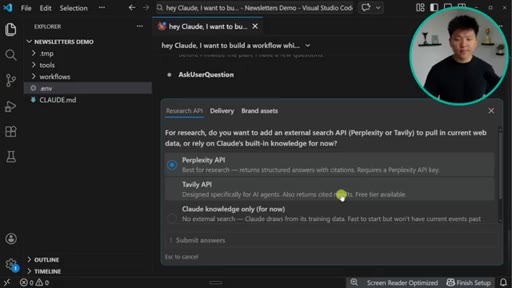
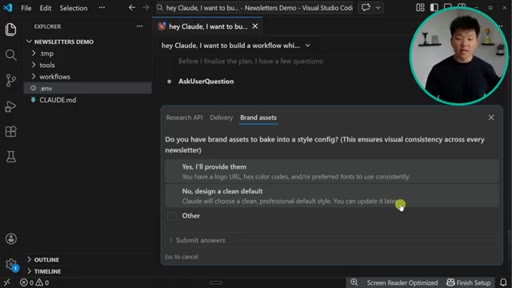
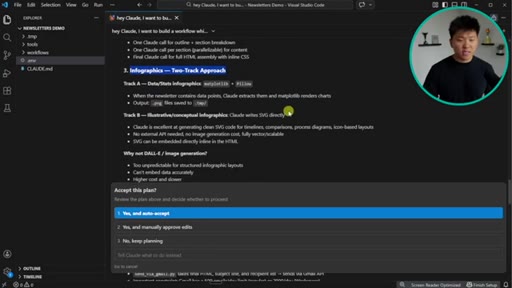
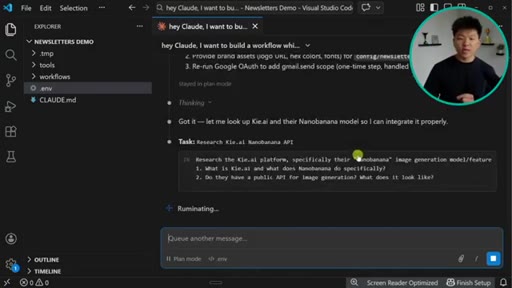
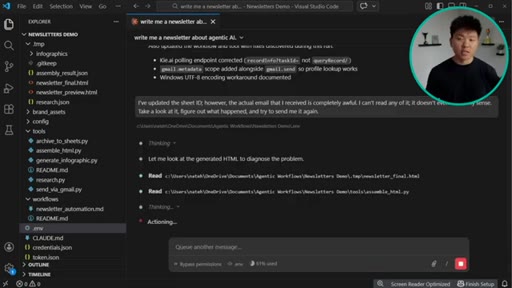
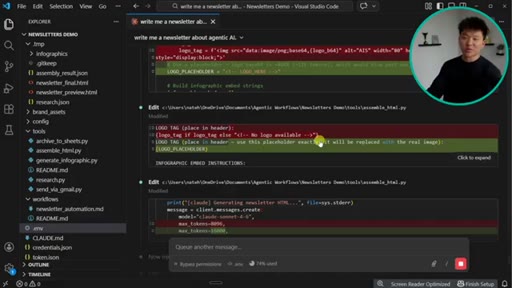
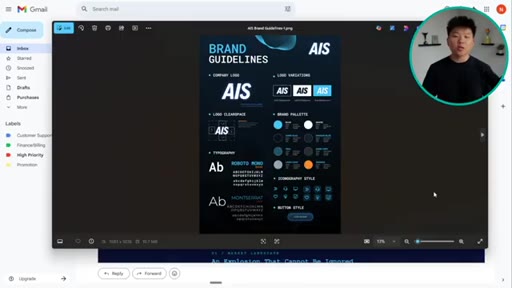
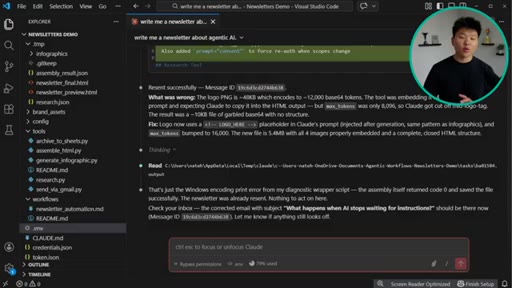
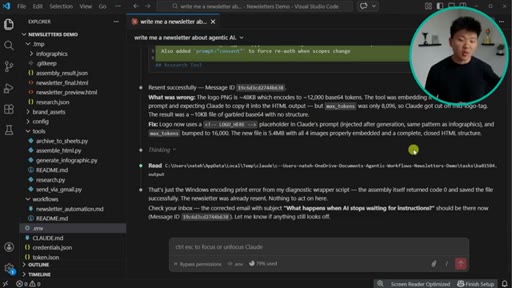
Plan mode, clarifying questions, brand assets tagged, five tools generated, API keys added, first run with self-correction, final branded email delivered.

08 · Skills concept
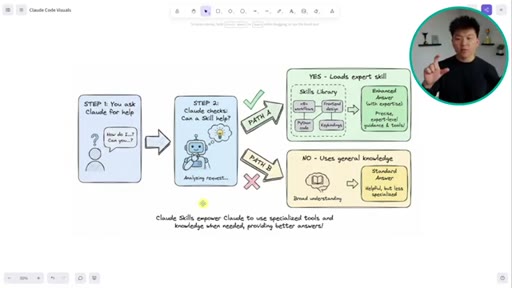
Reusable system prompts the agent loads on demand; how to create your own.

09 · How to sell it
Doctor-not-pharmacist positioning, value-based pricing, $3K build to $50K/yr relationship, client retention through metric ownership.
Visual structure at a glance.
Named ideas worth stealing.
WAT Framework
- Workflows
- Agent
- Tools
A three-layer architecture for Claude Code projects. Workflows are markdown instruction files (the recipe). Tools are Python scripts (the ingredients). The Agent reads both and executes the process.
Doctor vs. Pharmacist
A positioning framework for AI consultants. A pharmacist fills a prescription written by someone else. A doctor diagnoses before prescribing. Builders who diagnose the business constraint first command premium fees.
Battle-test before deploy
Run the agentic system through diverse edge-case scenarios while Claude Code can self-correct, before pushing the code to a scheduled or webhook deployment where the agent is no longer present.
Lines you could clip.
"Traditional automation is like building a train track by hand. Agentic workflows are like telling a construction crew where to go and letting them figure out the problems."
"If you're trying to compete on 'I can build AI automations,' you're going to be in a race to the bottom."
"A pharmacist just fills a prescription that someone else wrote. A doctor sits down with the patient and figures out what's actually wrong."
"That's how a $3,000 build turns into a $50,000-a-year relationship."
Things they pointed at.
How they asked for the click.
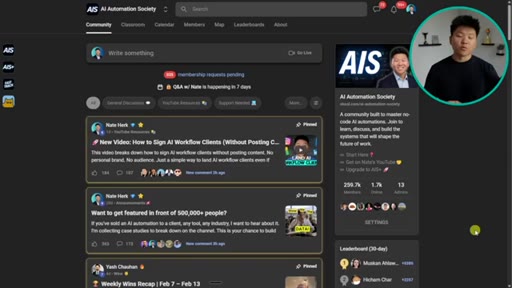
"I've got a community with over a quarter million members where I share templates, resources, and all the files from videos just like this one."
Soft double CTA at the end: free community (templates) and paid community (live Q&As, job opportunities). Neither is hard-pitched during the video body.
Word for word.
The build is table stakes. The diagnosis is the product.
As Claude Code lowers the cost of building agentic systems toward zero, the practitioners who will earn premium fees are those who can identify which problem is actually worth solving — and prove it after delivery.
- Agentic self-healing is real during the active build phase, but once code is deployed to a schedule or webhook, it behaves like traditional automation — plan accordingly and battle-test before handing off.
- The WAT framework separates three concerns that beginners conflate: the recipe (Workflow), the cook (Agent), and the ingredients (Tools) — keeping them separate makes each component auditable and reusable.
- Claude.md functions as a standing system prompt for a project; every capability or constraint you put there persists across the session without re-stating it in every message.
- Plan mode before any live build surfaces ambiguity early — one round of clarifying questions at the start prevents multiple debug rounds at the end.
- Skills are reusable knowledge artifacts: instead of re-explaining a style preference or a tool's quirks each time, encode it once in a skill file and let the agent load it on demand.
- Deploying an agentic system means pushing the Workflows and Tools, not the Agent — the model does not run in production, the code does, which is why battle-testing before deployment matters.
- Competing on the ability to build automations is already a commodity argument; the defensible position is the ability to diagnose which automation actually moves the needle for a specific business.
- Value-based pricing requires knowing the business outcome before quoting a number — if the system saves $10K a month, a $5K fee is a two-week payback, which reframes the cost as an obvious investment.
- Retention after delivery depends entirely on tracking and reporting the ROI yourself — clients do not naturally connect the running system to the value it creates unless someone is doing the accounting.
- Traditional automation fundamentals are not made obsolete by Claude Code — understanding webhooks, APIs, and data flow lets you catch agent mistakes that a beginner would miss entirely.