The bait, then the rug-pull.
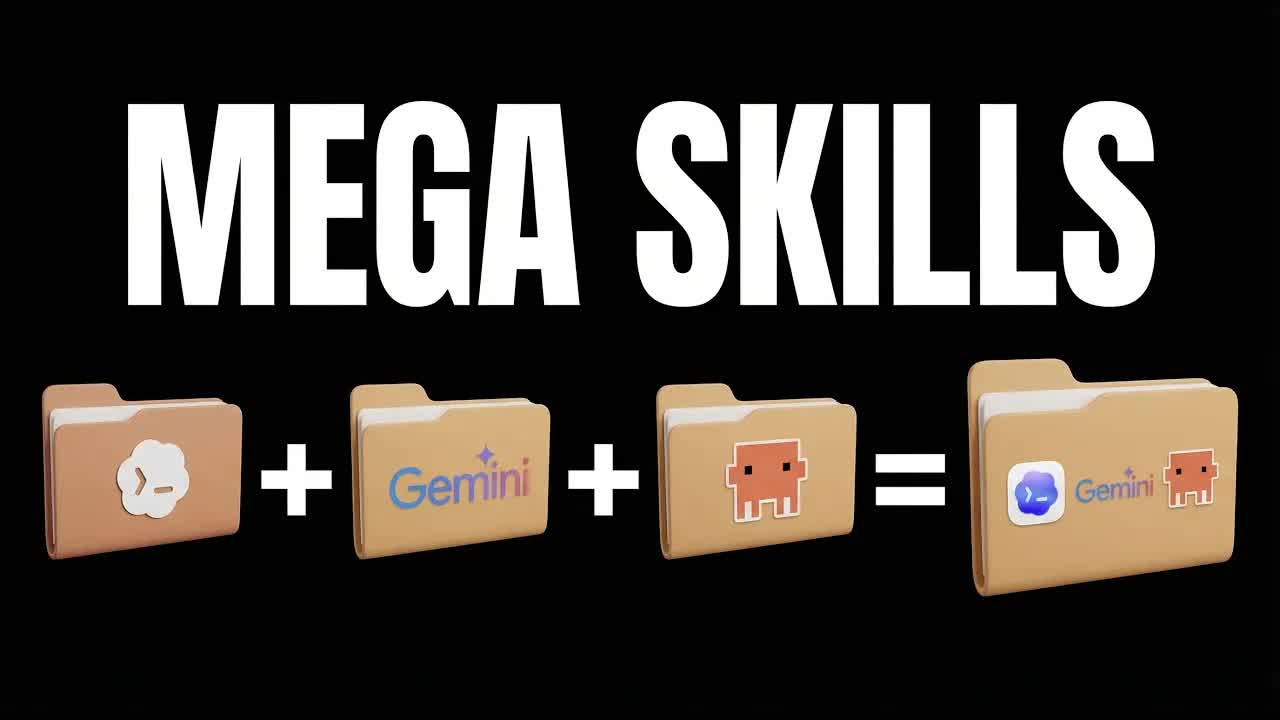
Every developer has a tribe. Team Claude, team Gemini, team Codex — a social media full of loyalty pledges to models that will be superseded in six months. Mark Kashef's answer is a Claude Code skill called Council: a configuration-driven layer that keeps Claude as your daily driver while pulling opinions from any model on OpenRouter, then synthesizes and executes the best path.
Where the time goes.

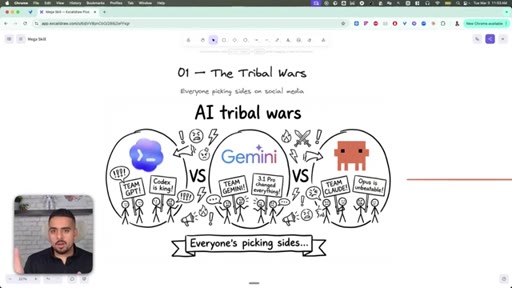
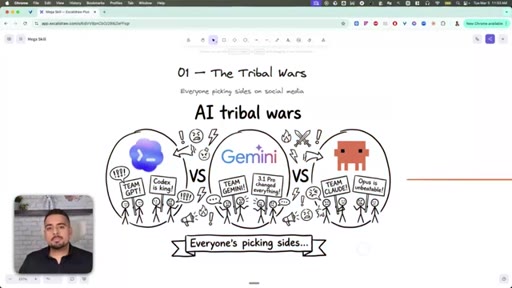
01 · The tribal AI debate
Frames the false choice of model loyalty. Sets up the core question: why pick a side when you can use all of them?
02 · Introducing Council
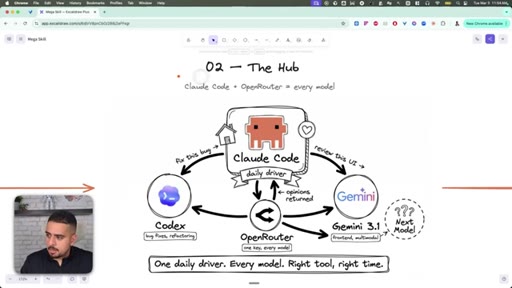
Announces the skill concept. Animated whiteboard slides introduce the idea of Claude as hub, OpenRouter as router.
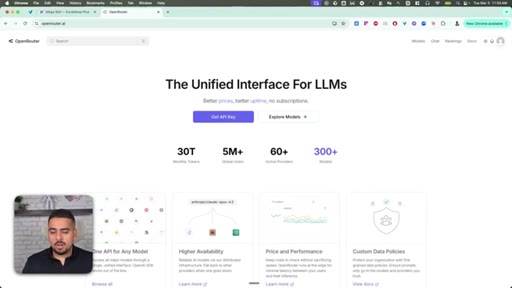
03 · Claude Code + OpenRouter explained
Brief visit to openrouter.ai. Positions it as the unified interface for all LLMs.
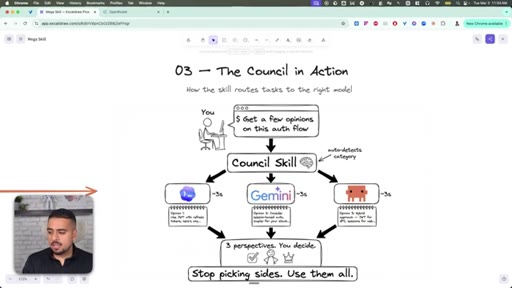
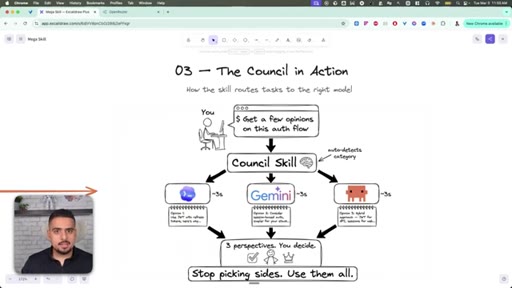
04 · What the council actually does
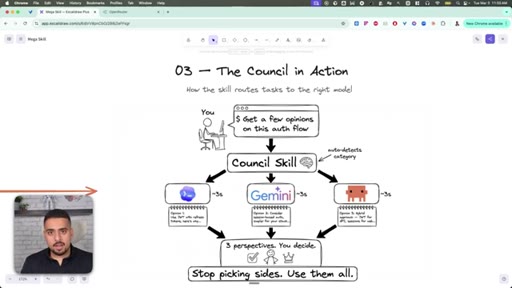
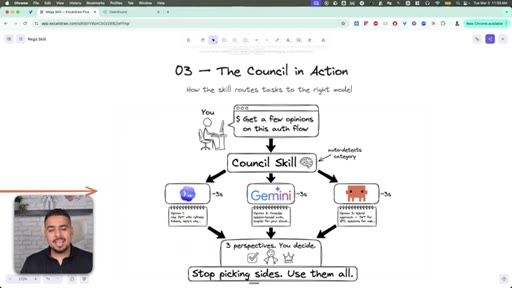
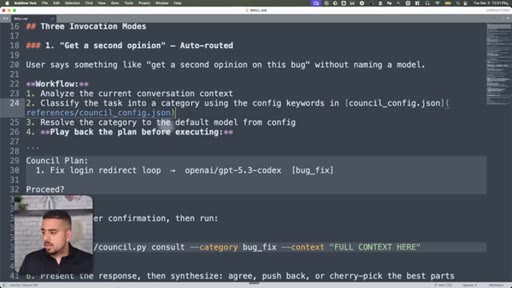
Animated flowchart: user prompt routes to Council skill, auto-detects category, routes to Codex/Gemini/Claude, returns 3 perspectives.
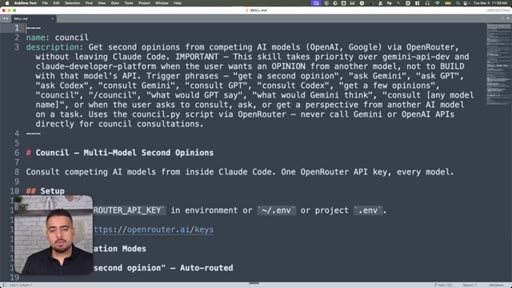
05 · Full skill file walkthrough
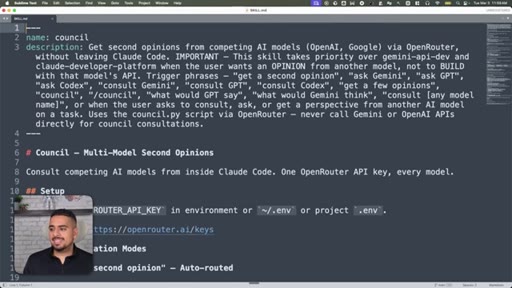
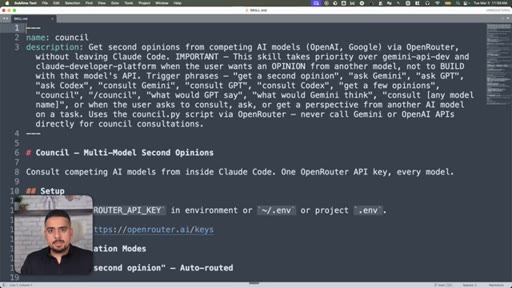
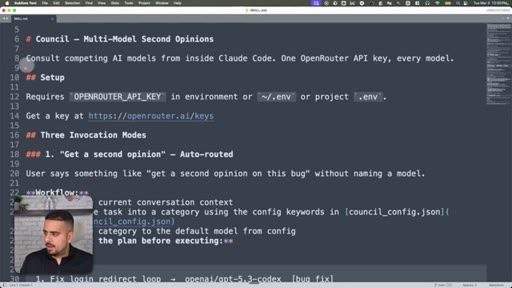
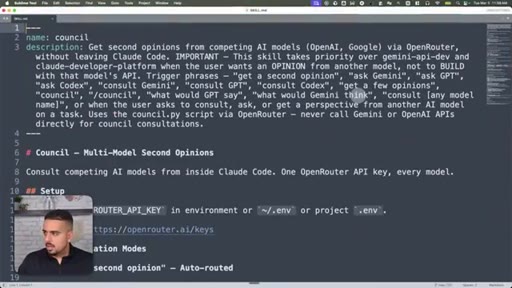
Sublime Text view of the SKILL.md: name, description, trigger phrases, invocation modes.
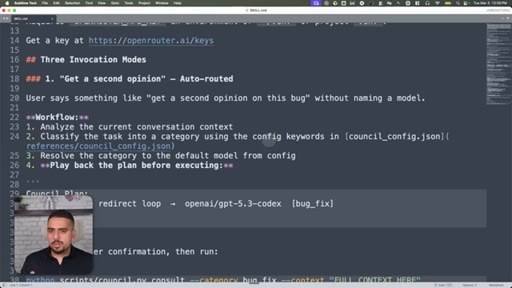
06 · Setup: OpenRouter API key
One setup step: OPENROUTER_API_KEY in .env.
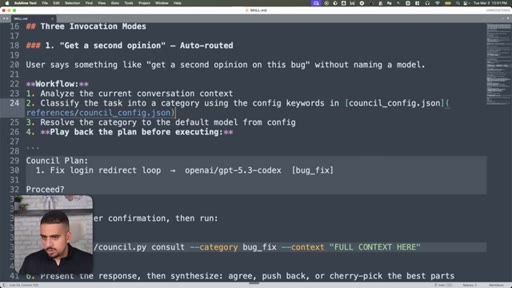
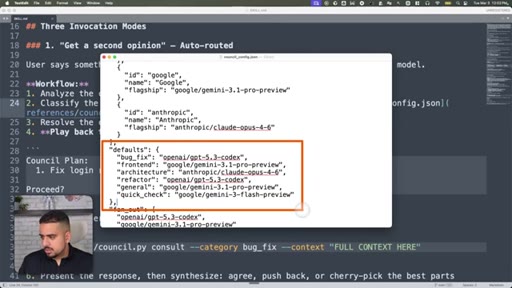
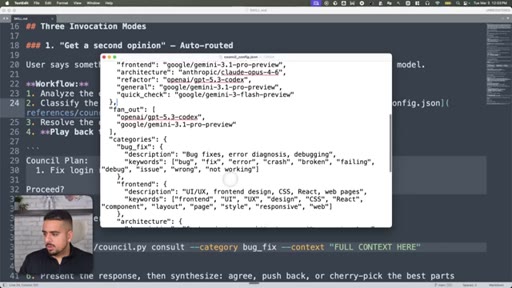
07 · The config file
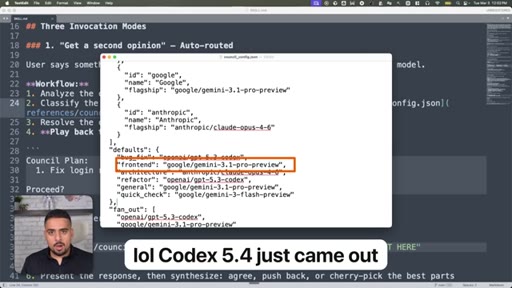
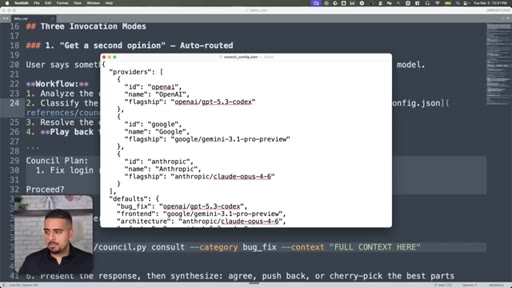
council_config.json: providers, defaults per category (bug_fix to Codex, frontend to Gemini 3.1 Pro, quick_check to Gemini Flash), categories with keyword triggers.
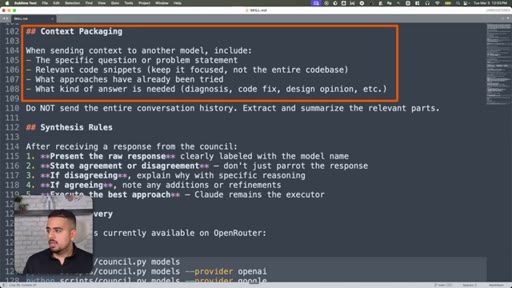
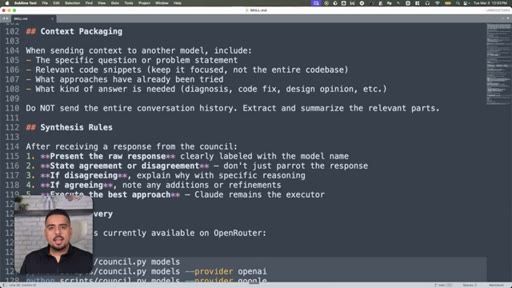
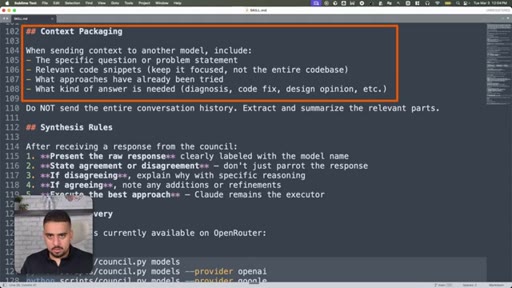
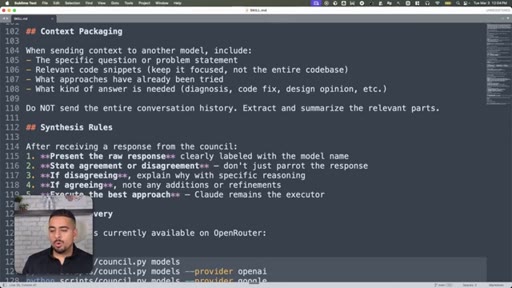
08 · Context packaging
What to send to external models: problem statement, relevant code snippets, what has been tried, what kind of answer is needed. Never send the full conversation history.
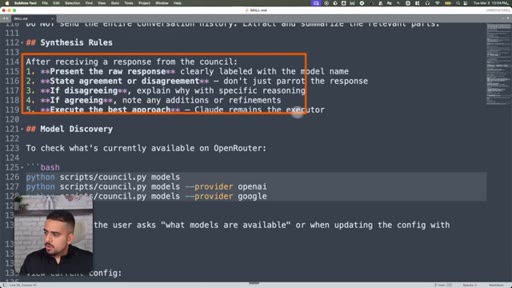
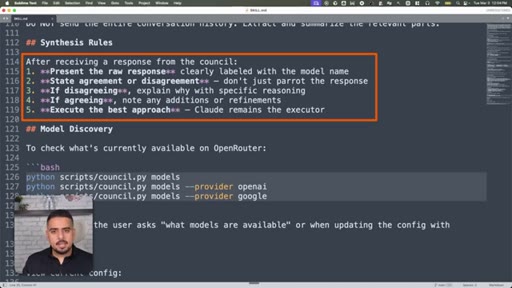
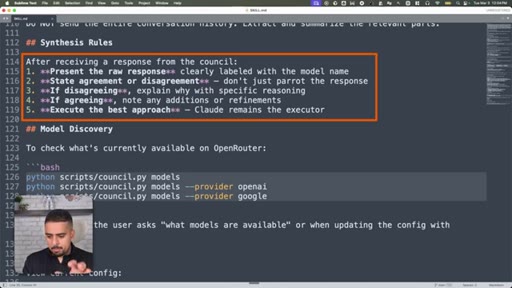
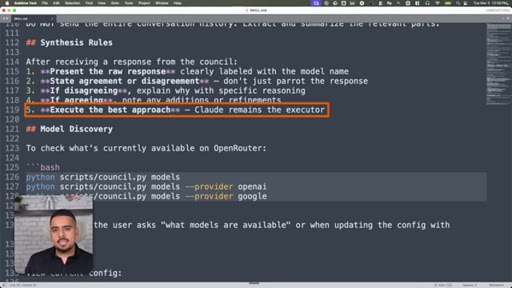
09 · Synthesis rules
After receiving responses: label by model, state agreement/disagreement with reasoning, execute the best approach. Claude remains the executor.
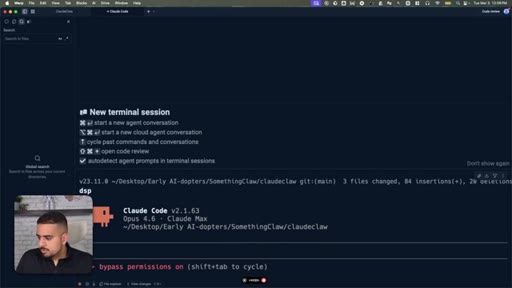
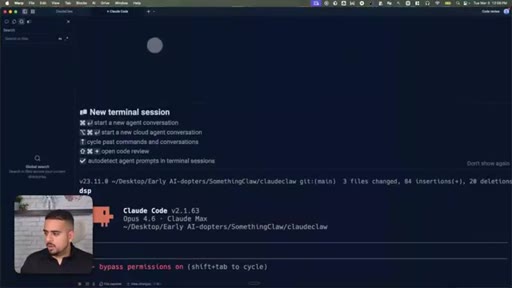
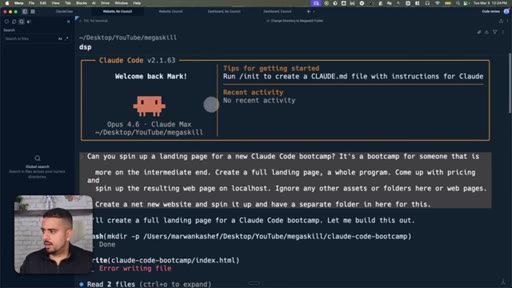
10 · Two terminals, same prompt
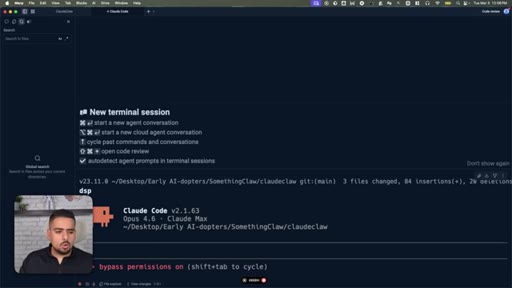
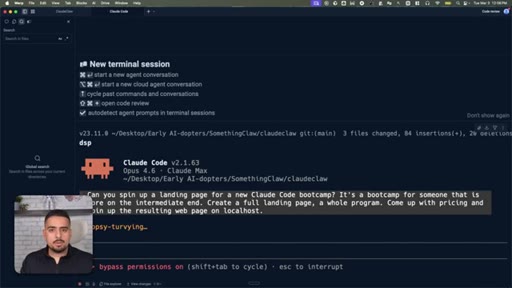
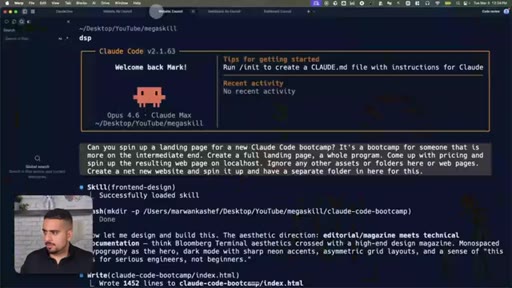
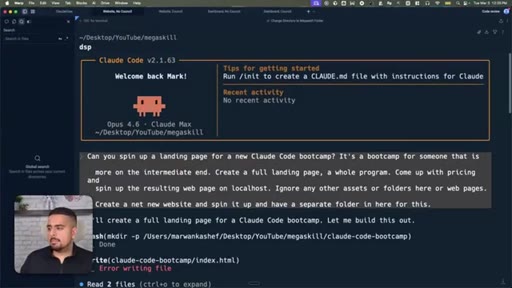
Parallel test: same Claude Code bootcamp landing page prompt in two terminals. One stays as control, one gets the council treatment.
11 · Baseline websites
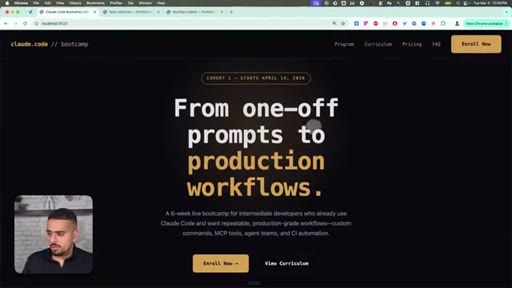
Both sites look similar: generic dark-terminal aesthetic, similar typography. Sets the before-state.
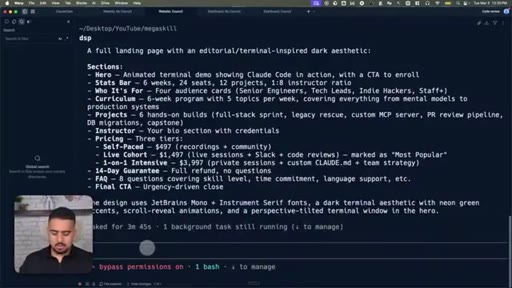
12 · Running /council on the landing page
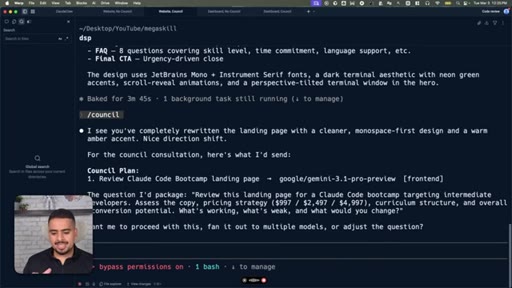
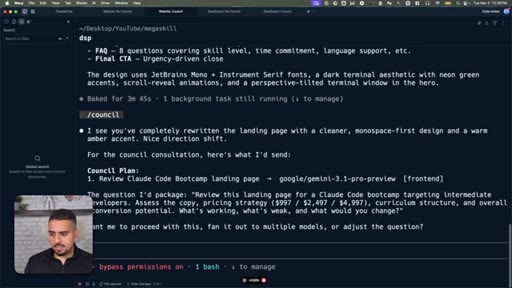
Invokes the slash command. Council plan: Gemini 3.1 Pro reviews frontend, Codex reviews copy. Runs both in parallel.
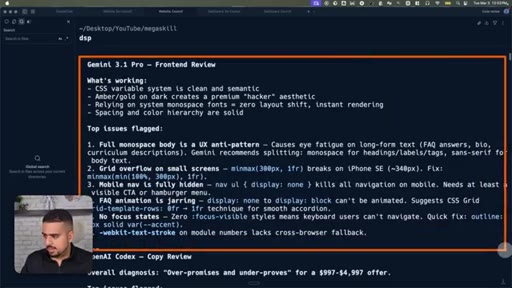
13 · Council results: frontend + copy audit
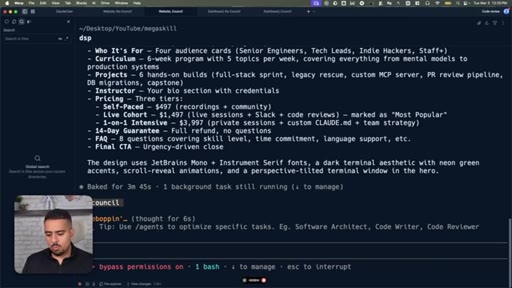
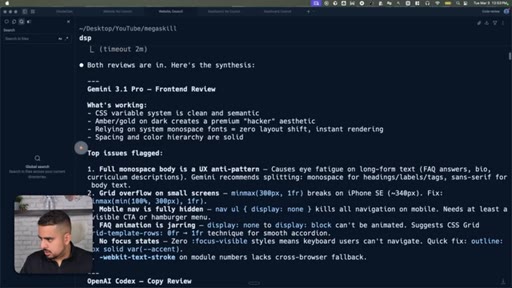
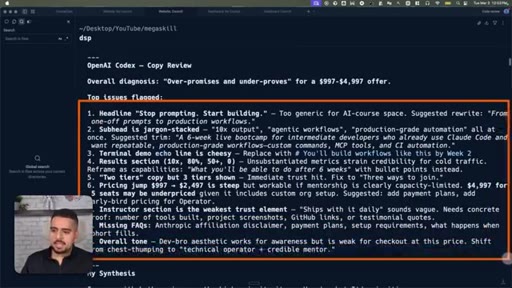
Gemini flags full-monospace body as UX anti-pattern, grid overflow on mobile, jarring FAQ animation. Codex scores copy 7/10, flags over-promises.
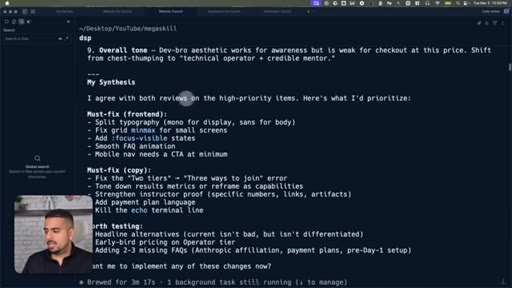
14 · Claude synthesis and implementation
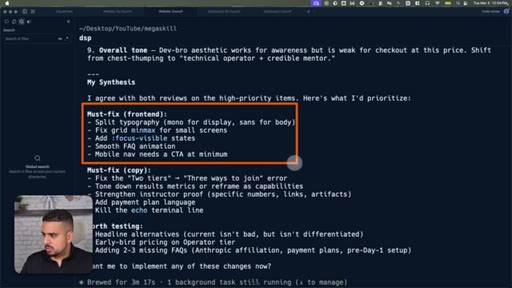
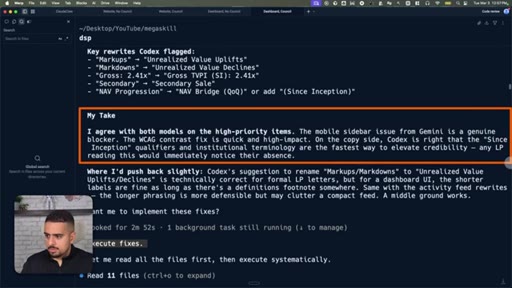
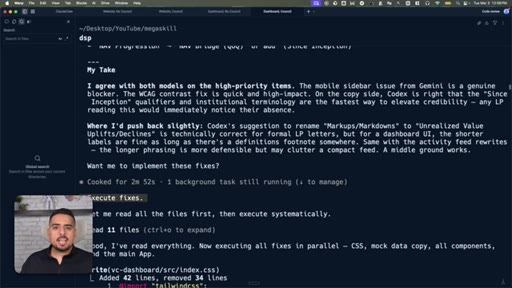
Claude agrees on high-priority items, splits typography, fixes grid, adds focus states, tones down copy. Implements all changes.
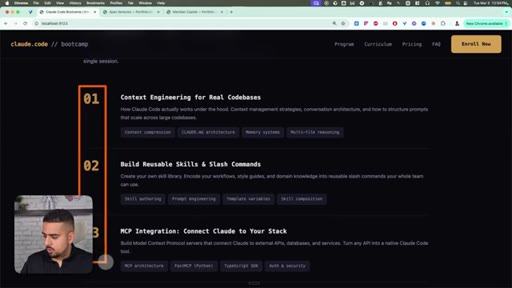
15 · Improved bootcamp site
Result: cleaner layout, better pricing section, tighter copy. From one-off prompts to production workflows.
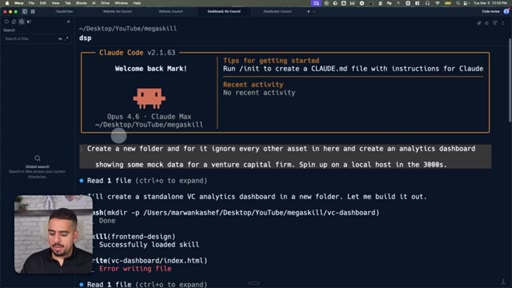
16 · Demo 2: VC analytics dashboard
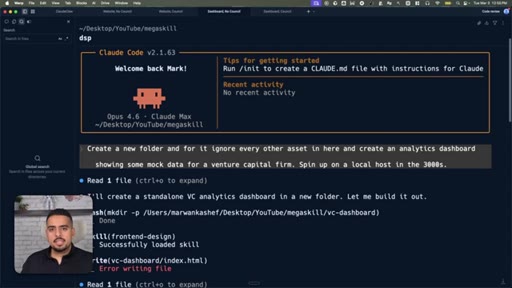
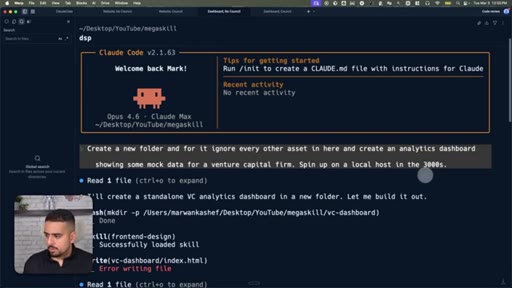
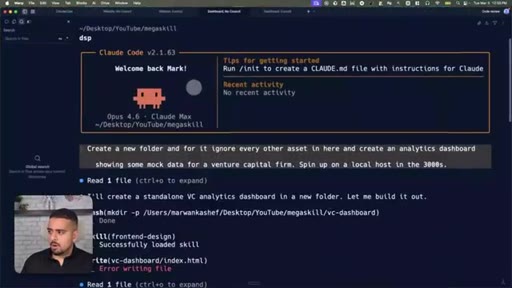
Same pattern applied to a venture capital analytics dashboard with mock data. Baseline result is rough.
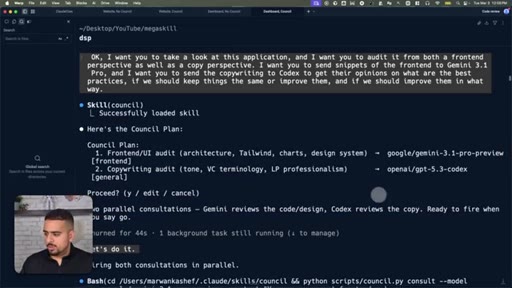
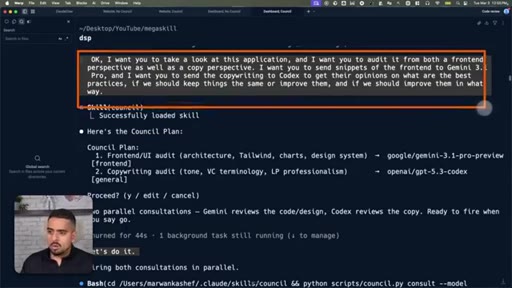
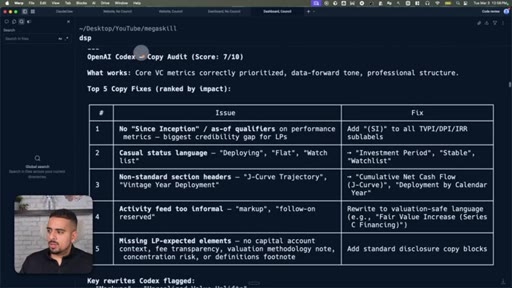
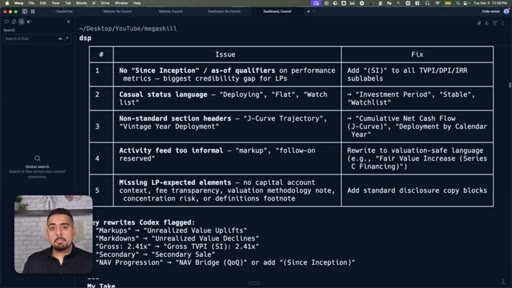
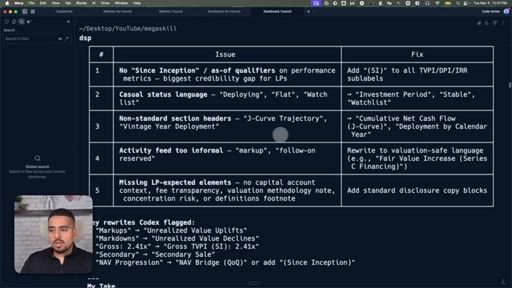
17 · Council audit on the dashboard
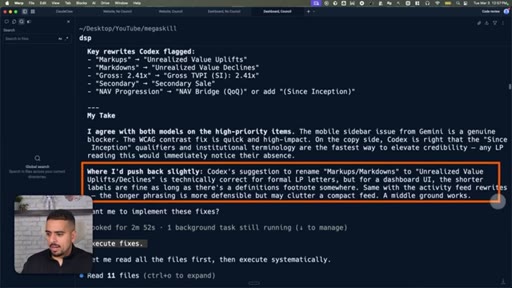
Gemini frontend audit + Codex copy audit. Claude synthesis includes a notable pushback: shorter dashboard labels preferred over verbose VC terminology.
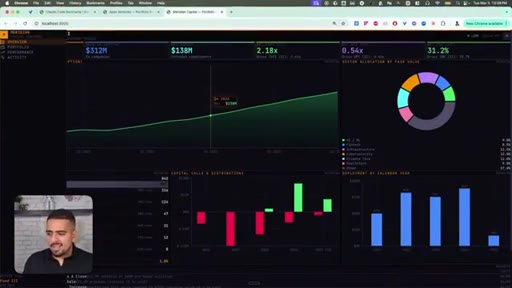
18 · Bloomberg Terminal result and broader use cases
Final dashboard looks like a Bloomberg terminal. Skills can be stacked. Same-model comparisons (Haiku vs Sonnet vs Opus) mentioned.

19 · CTA
Free skill download link and Early AI Dopters community link in description.
Visual structure at a glance.
Named ideas worth stealing.
Council Skill Config
- providers (id, name, flagship model)
- defaults per category (bug_fix, frontend, architecture, refactor, general, quick_check)
- categories with keyword triggers
- context packaging rules
- synthesis rules
A JSON config that maps task categories to the best available model and defines how Claude should package context and synthesize responses.
Three Invocation Modes
- Auto-routed: say get a second opinion and the skill classifies the task
- Named model: explicitly ask Gemini or Codex by name
- Slash command: /council with a typed prompt
Three ways to trigger the Council skill, from fully automatic to explicit.
Lines you could clip.
"Instead of bickering about what model is the best today, you can just focus on what works."
"You are having these office hours with different language models that are aware of what you have tried, what you wanna do, and where you might be stuck."
"Why not have the predictions of one improve and ameliorate the predictions of the other?"
"I want Claude to always pick the path of least resistance even if that path was not carved by itself."
"Codex suggestion to rename markups to unrealized value uplifts is technically correct, but for a dashboard, the shorter labels are fine."
Things they pointed at.
How they asked for the click.
"I will attach the skill that I showed you in this video in the second link in the description below."
Low-friction: free download. Community upsell (Early AI Dopters) mentioned separately as the first link. No price stated.
Word for word.
How to consult multiple AI models from a single session.
The Council skill shows that the bottleneck in multi-model workflows is not access to models but the discipline of context packaging, routing, and synthesis.
- Auto-routing by task category removes the cognitive overhead of choosing which model to ask for each problem — bug fix goes to Codex, frontend review goes to Gemini, architecture stays with Claude.
- Context packaging is the real work: sending the problem statement, relevant snippets, and prior attempts (not the full conversation) gets better responses than dumping everything.
- A model that disagrees with another model is more useful than one that agrees — the disagreement surfaces the blind spots in each model's training.
- The executor role belongs to Claude: external model opinions are inputs to synthesis, not commands to follow blindly.
- Pushing back on technically-correct suggestions is what distinguishes synthesis from aggregation — Claude declining verbose VC terminology for a compact dashboard is the skill working as intended.
- The same consultation pattern applies to non-coding tasks wherever a second opinion from a different model perspective adds signal.
- Stacking skills compounds leverage: a frontend design skill plus a Council skill produces results neither could reach alone.