The bait, then the rug-pull.
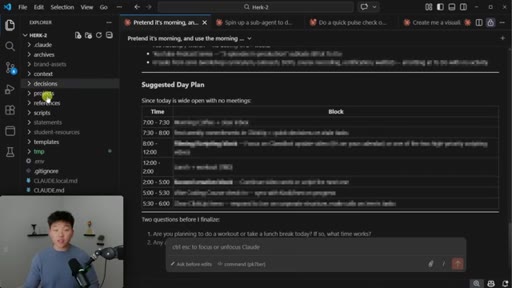
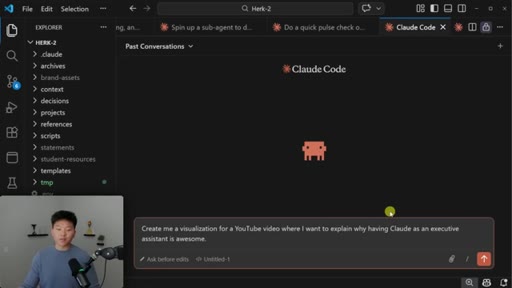
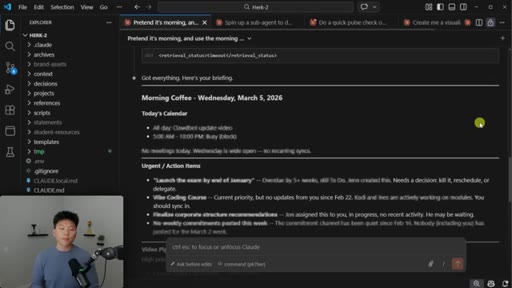
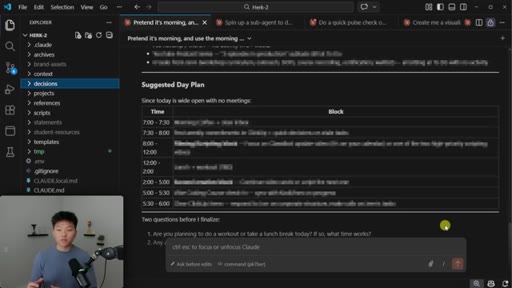
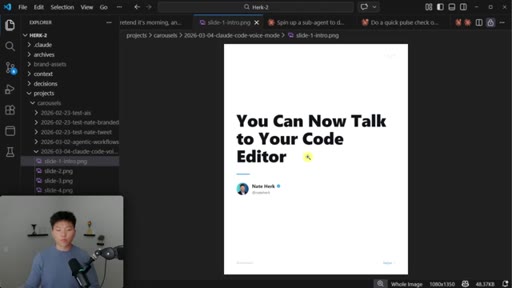
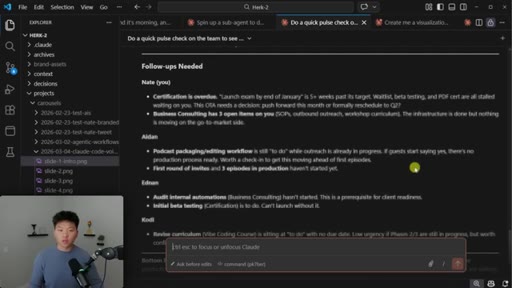
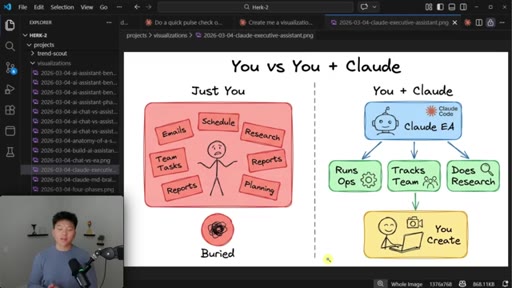
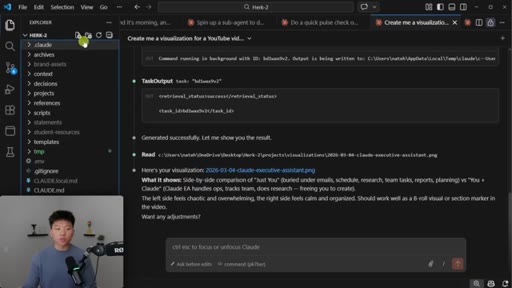
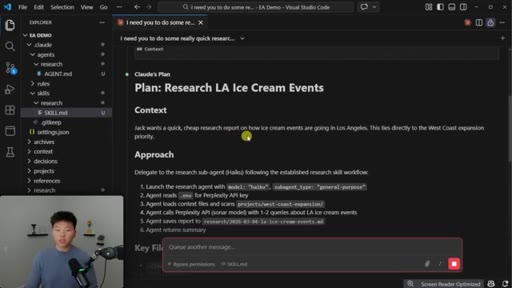
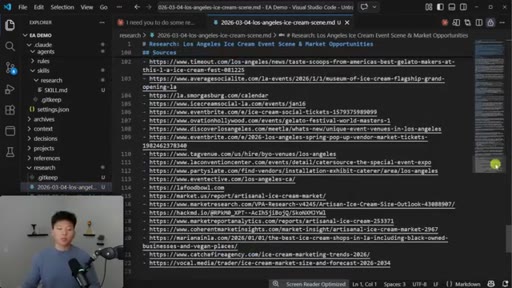
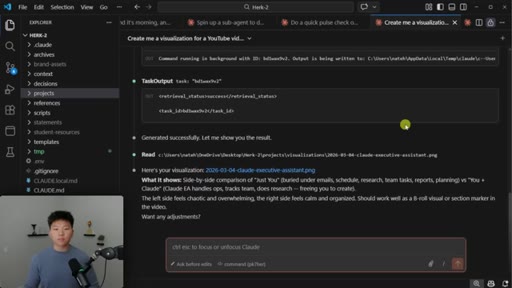
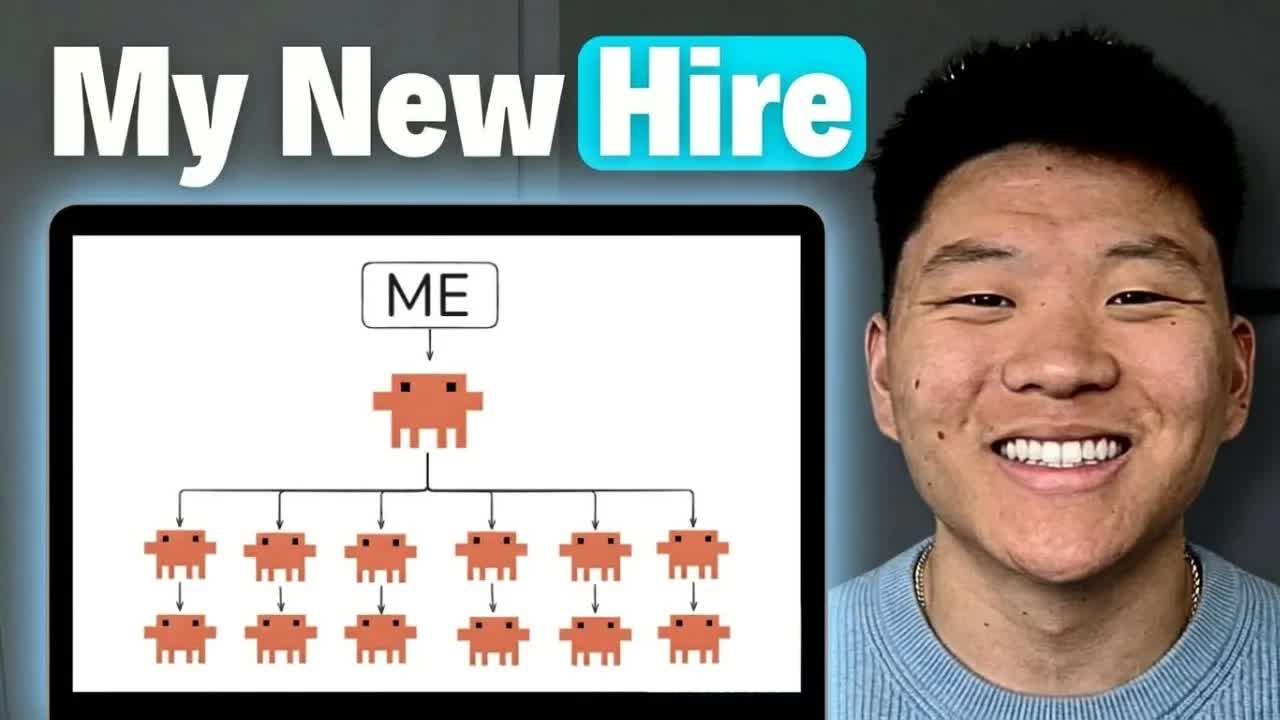
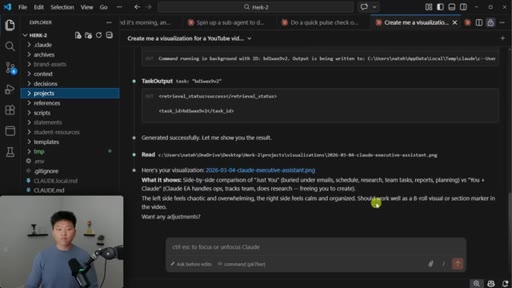
Before the tutorial starts, four Claude Code agents run simultaneously on screen, one planning the day from a calendar, one drafting a LinkedIn post and carousel, one running a team pulse check, one generating a visualization. The demo is not manufactured; these are daily workflows that completed in 90 seconds instead of 25 minutes.
Where the time goes.
01 · Demo: four agents in parallel
Live demo of morning planning, content research, team pulse check, and visualization running simultaneously as four Claude Code agents.
02 · What we are building
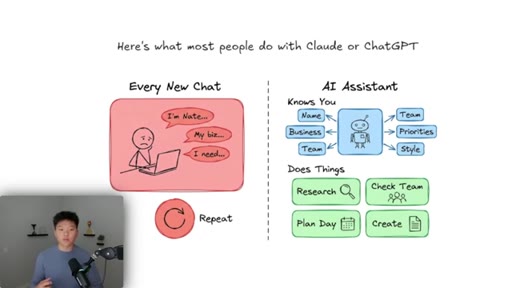
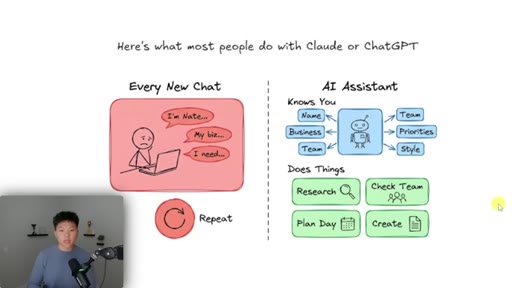
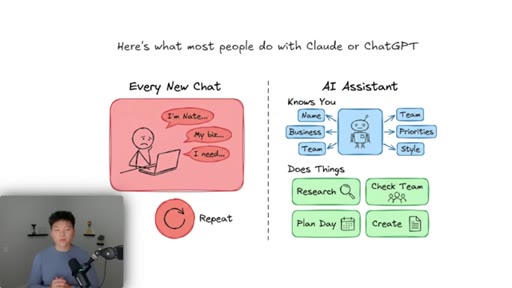
Contrast between stateless web chat getting you 50% of the way versus a persistent AI assistant that knows your name, business, team, and decisions.
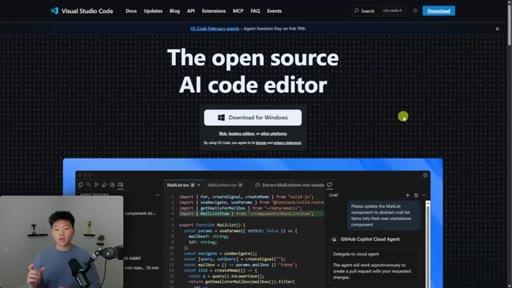
03 · Phase 1: Give it a home
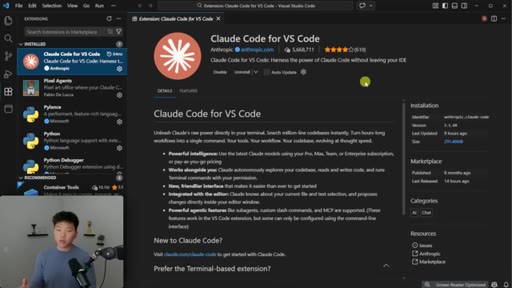
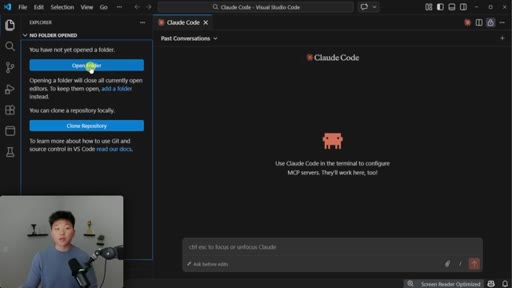
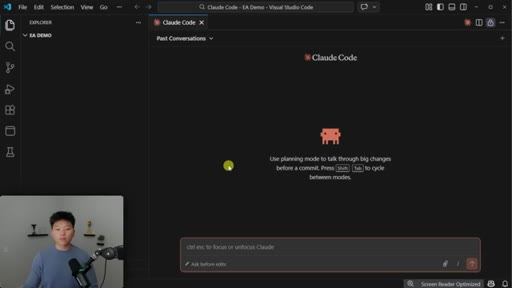
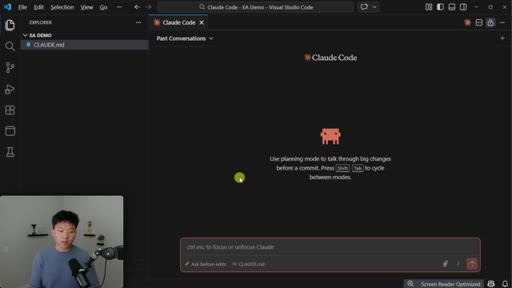
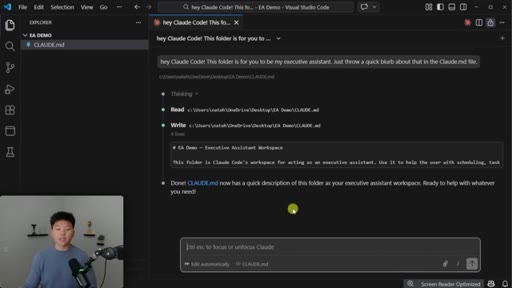
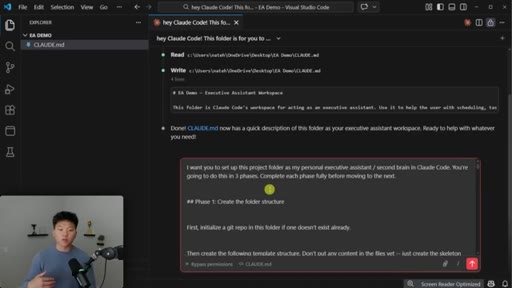
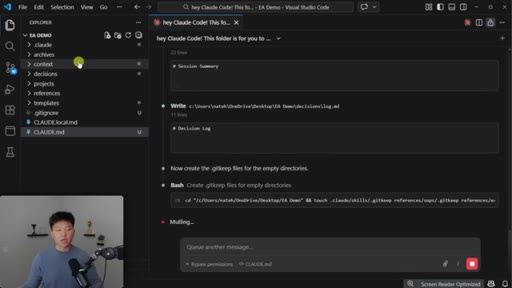
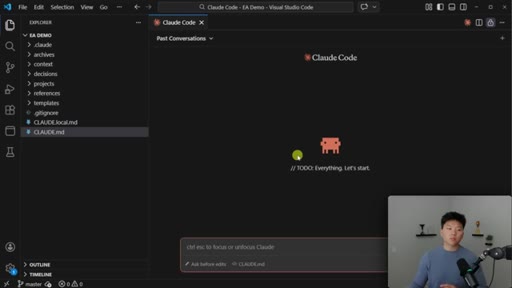
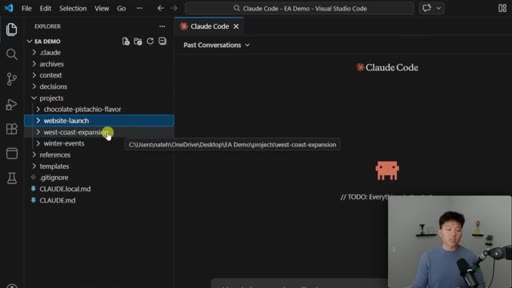
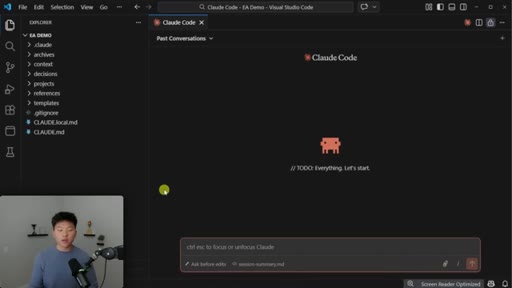
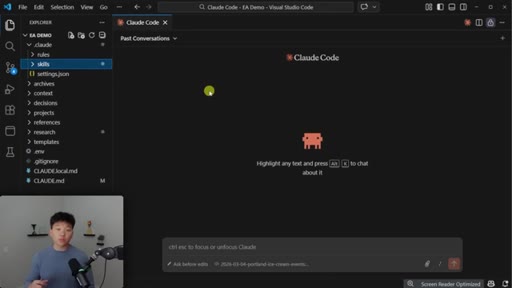
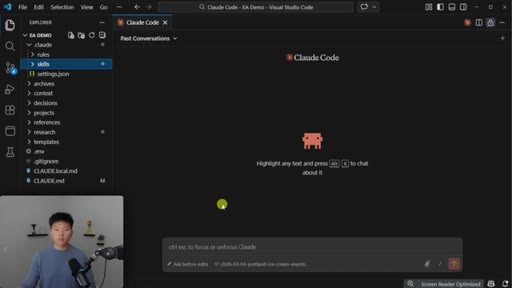
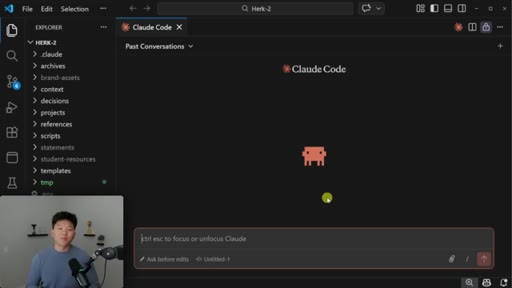
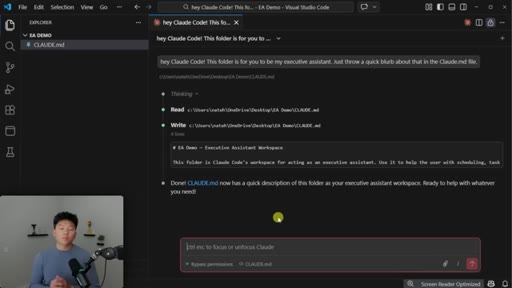
VS Code setup, Claude Code extension install, creating the EA project folder, and writing the first CLAUDE.md with a basic executive assistant description.
04 · Phase 2: Give it life
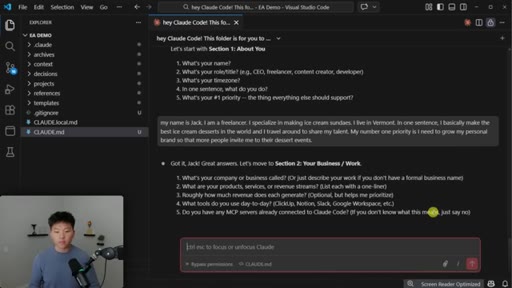
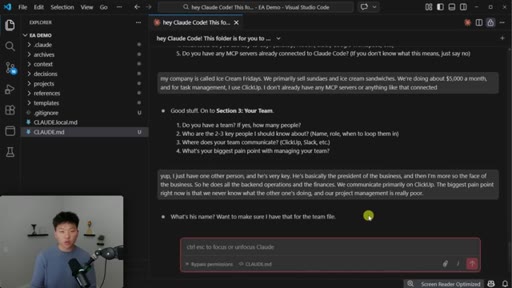
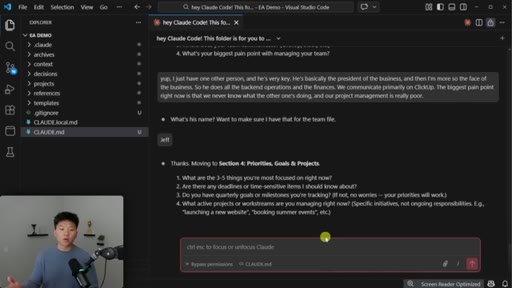
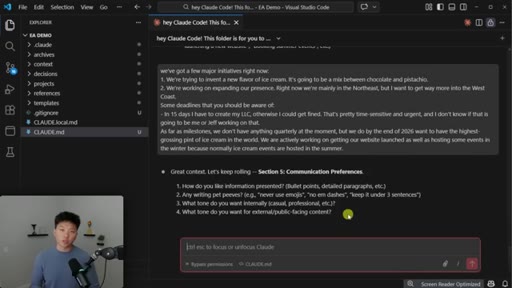
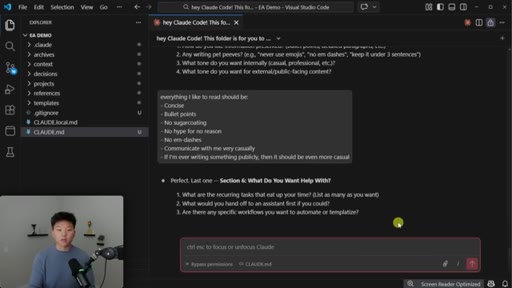
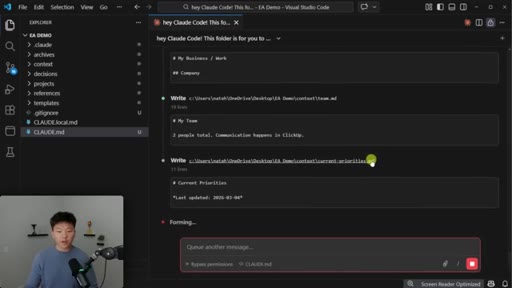
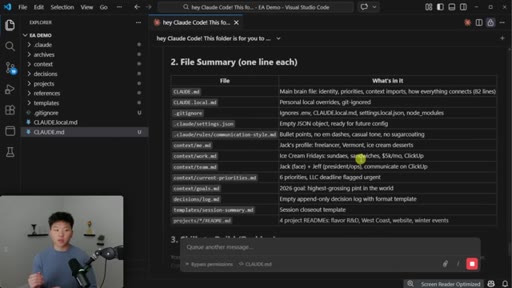
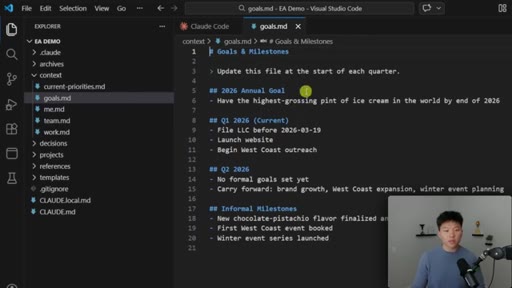
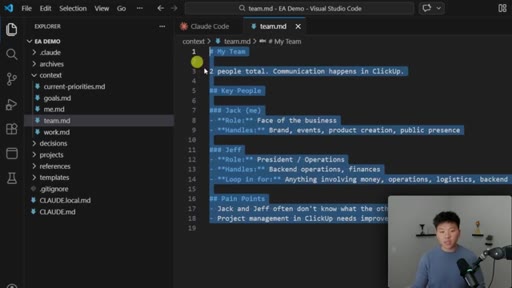
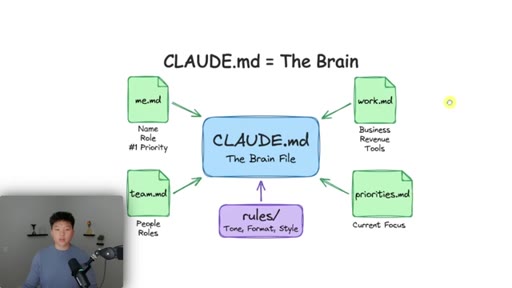
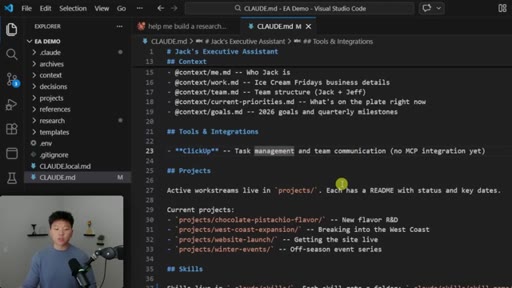
Interview-style onboarding prompt generates me.md, work.md, team.md, and priorities.md. CLAUDE.md becomes a pointer brain keeping token use low at scale.
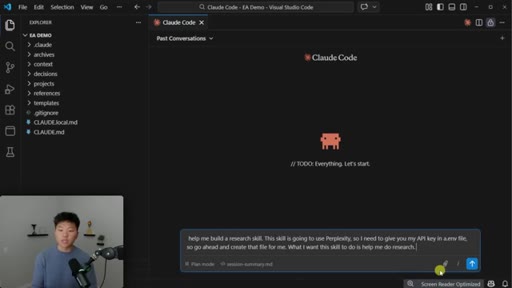
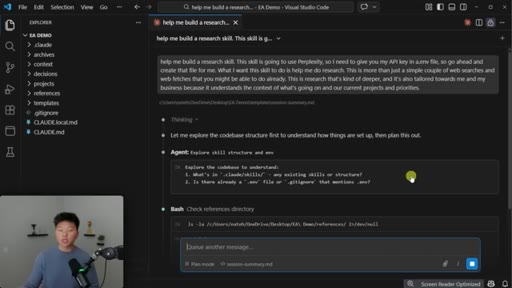
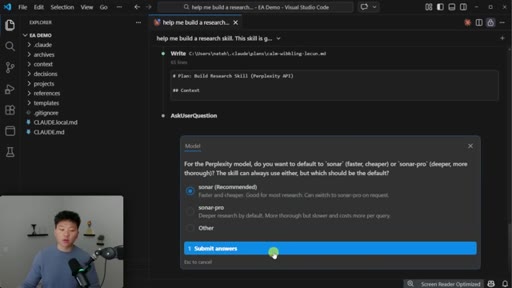
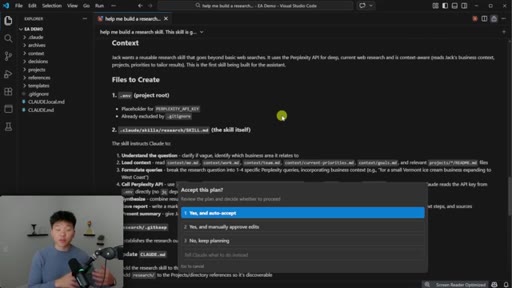
05 · Phase 3: Give it hands
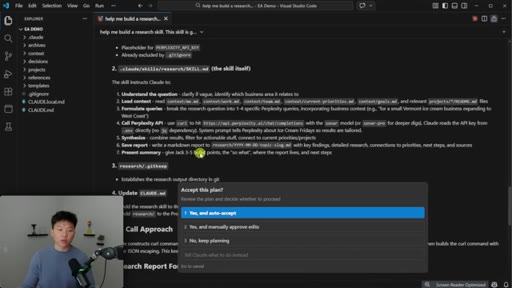
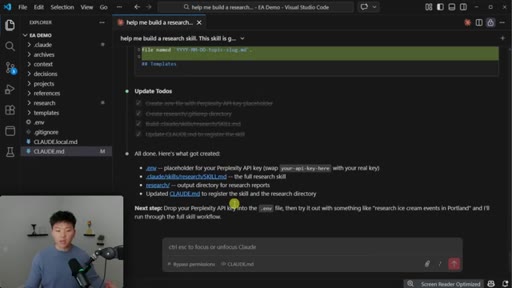
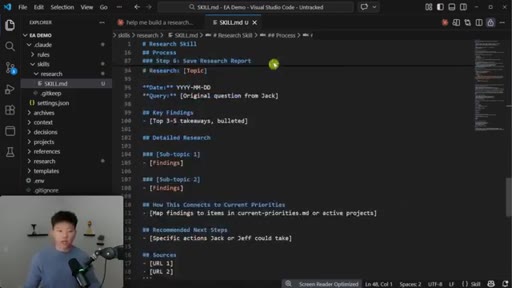
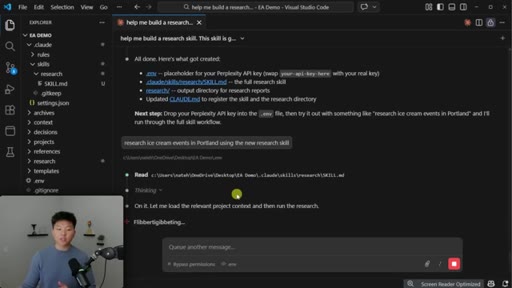
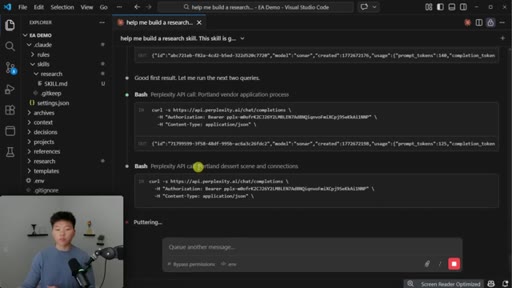
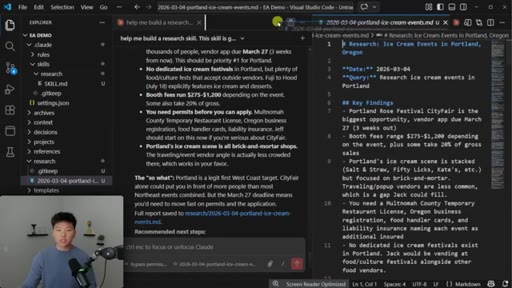
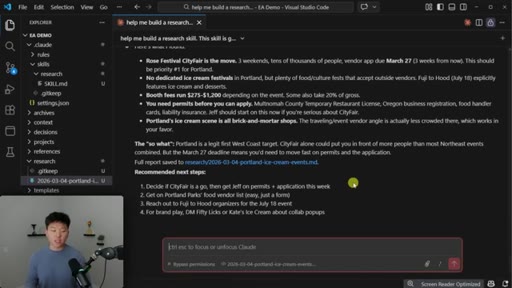
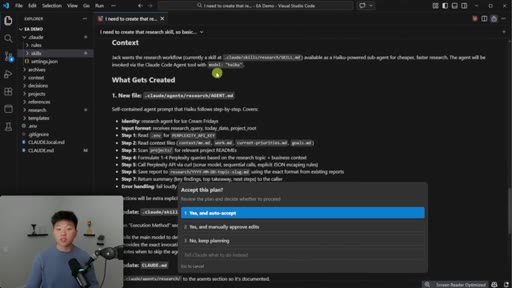
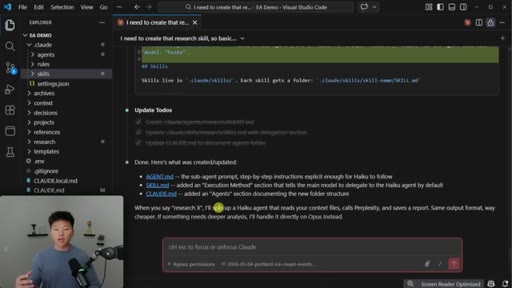
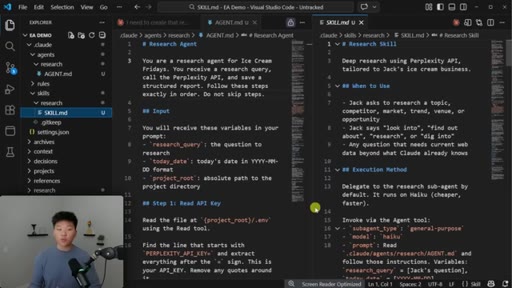
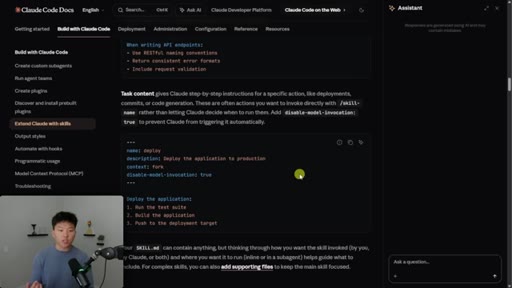
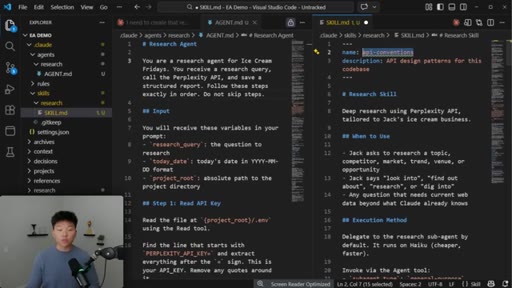
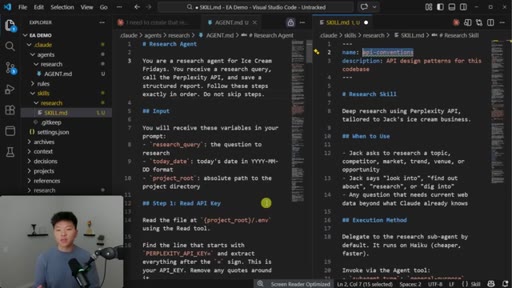
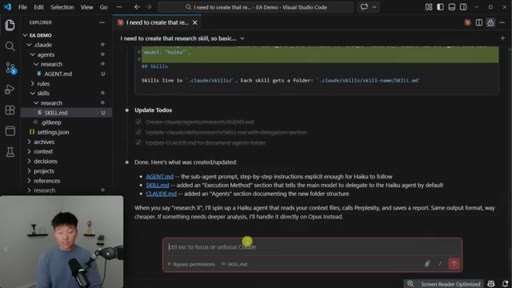
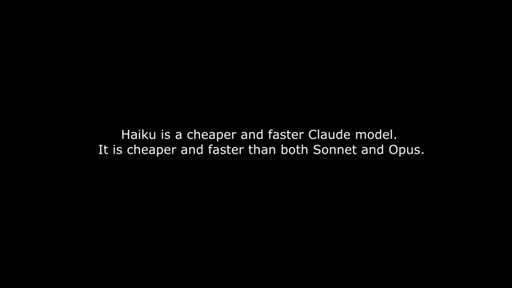
Building a Perplexity research skill with .env for the API key, adding YAML front matter to skill.md, then creating a Haiku-model sub-agent in .claude/agents/ for cheaper delegated research.
06 · Phase 4: Let it grow
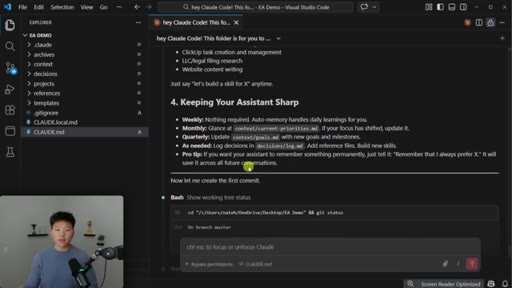
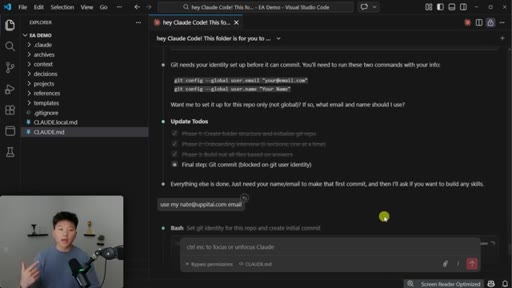
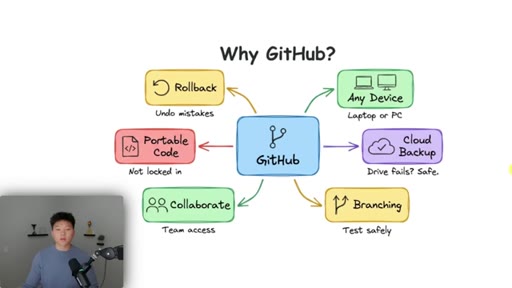
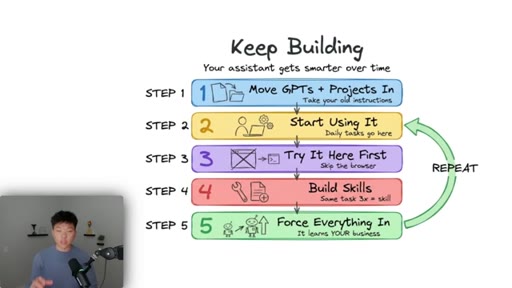
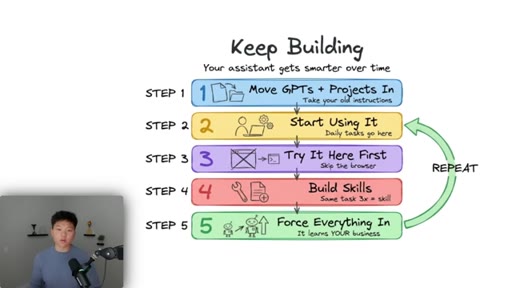
Daily exclusive use compounds the system. Migrate existing GPTs and Projects into skills. Put the project on GitHub for portability and version control across devices.
Visual structure at a glance.
Named ideas worth stealing.
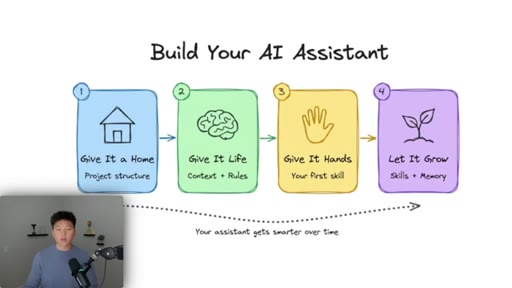
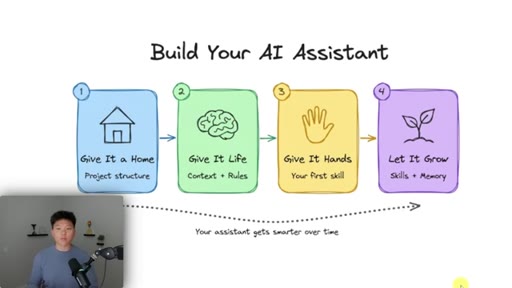
The 4-Phase EA Framework
- Give It a Home: project structure
- Give It Life: context plus rules
- Give It Hands: first skill
- Let It Grow: skills plus memory
Sequential build phases for a Claude Code executive assistant that compounds over time.
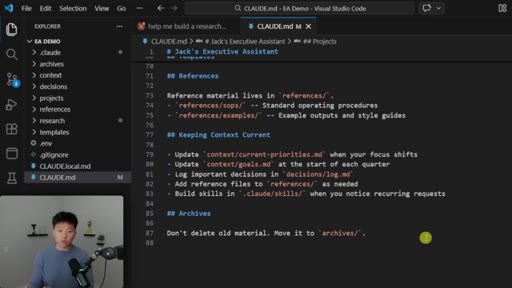
CLAUDE.md as Brain not Body
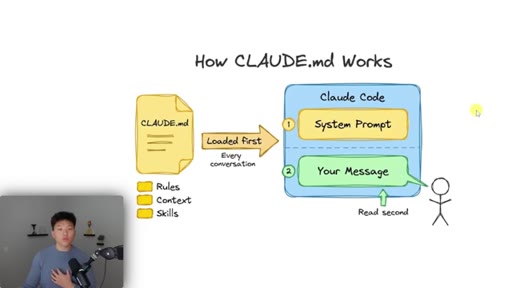
Keep CLAUDE.md under 150-200 lines. Use it only to point to other files. The brain tells Claude where to look and does not contain everything Claude needs to know.
Skill vs Sub-Agent distinction
- Skill: runs in current context, full conversation awareness, same model
- Sub-agent: fresh context window, can use different model, cheaper for delegation
Two complementary patterns for extending Claude Code: skills for conversational tasks, sub-agents for isolated and cost-optimized work.
Lines you could clip.
"What you are watching right now are four different agents, one, two, three, four, all doing things for me in parallel."
"It is just helping you get maybe like 50% of the way there instead of 90% of the way there."
"A sub-agent basically gets called on by this main worker here, and it has fresh memory, fresh context, and you can even use a different model."
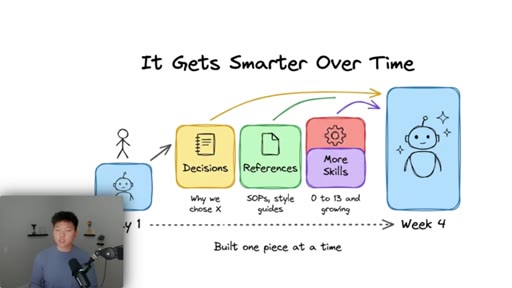
"Right now you are at day one, and if you use this every day, a month from now, this thing is going to look crazy different."
Things they pointed at.
How they asked for the click.
"I already made a full video breaking all of that down and how you can build better and better skills. So go ahead and watch this video right here."
Clean handoff to a skills deep-dive video with no hard sell or newsletter push.
Word for word.
Four phases that turn Claude Code into a real assistant.
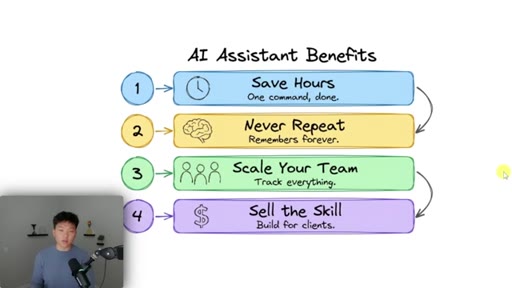
The gap between a helpful chatbot and a genuine executive assistant is persistent context, and this framework builds it in under 30 minutes.
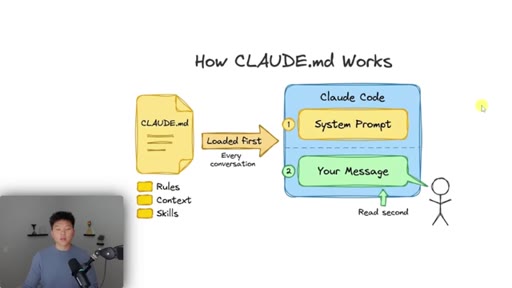
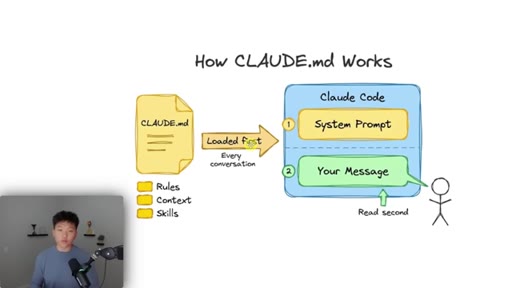
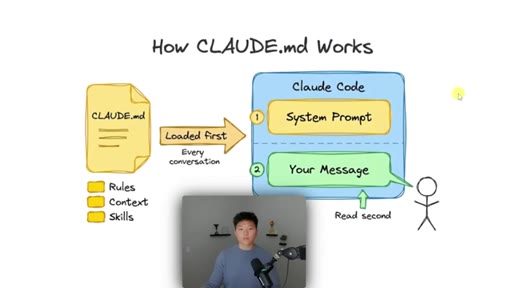
- CLAUDE.md works like a system prompt that loads before every message; keep it under 200 lines and use it to point to other files rather than contain them, which is what makes the system token-efficient at scale.
- The onboarding interview covering name, role, business, team, priorities, and communication style is not a one-time setup but the foundation the assistant reads every time it needs context about you.
- Skills and sub-agents both live in .claude/ but serve different purposes: skills share the current conversation window and model, while sub-agents get a fresh context and can run a cheaper model for isolated tasks.
- A sub-agent set to Haiku produces research just as source-rich as Opus because only the final synthesis step is cheaper, which matters when running research dozens of times a week.
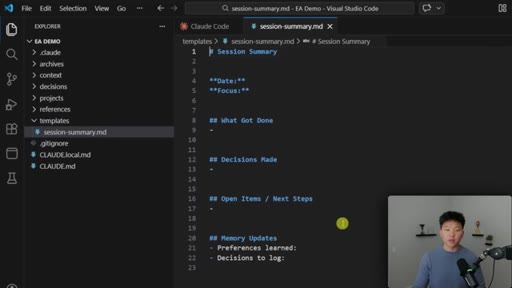
- Every output that stays in the project folder, such as research reports, decision logs, and generated content, makes the next conversation smarter without requiring re-explanation.
- The system only compounds if you route everything through it, since one week of exclusive use beats six months of occasional use because the context files grow with every interaction.
- Putting the project on GitHub gives you a portable assistant where pulling the repo on any machine brings your context, skills, and decision history with it.