The bait, then the rug-pull.
A $4-million-a-year business run primarily through AI agent skills sounds like a demo hook — but Nick Saraev spends this course making the case that most people are using skills wrong, chasing personal-assistant novelty while the real money sits in three unglamorous places: lead generation, follow-up, and cold outreach.
Where the time goes.

01 · Introduction and credibility hook
Business does over $4M/yr profit via AI agents. Course preview: five demos, then how to build.
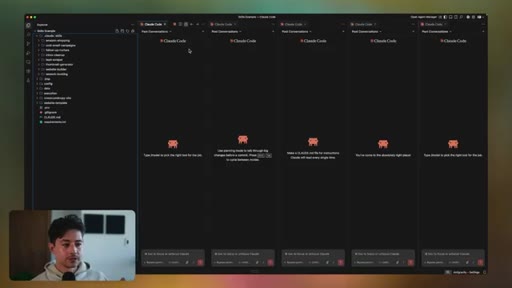
02 · The business case for skills
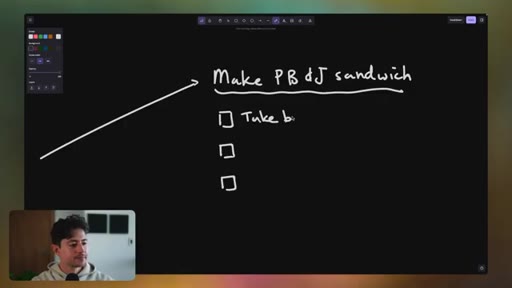
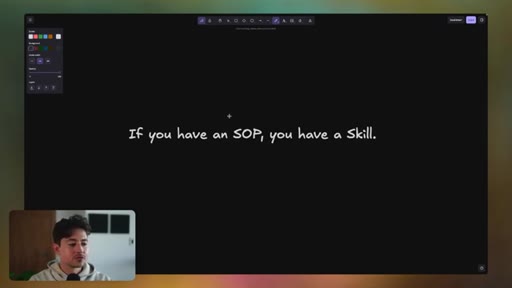
Skills are the evolution of SOPs — for agents, not humans. Most demos miss the real value.
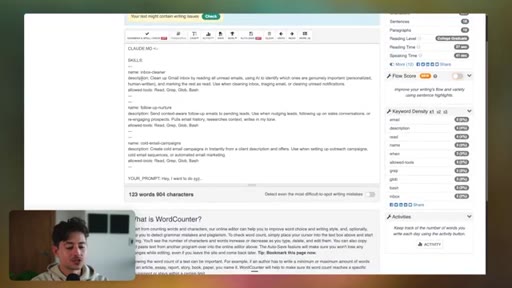
03 · Demo 1: Lead follow-up nurture
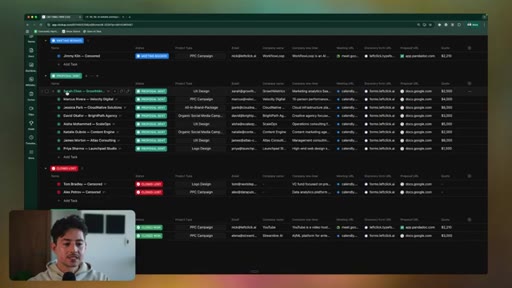
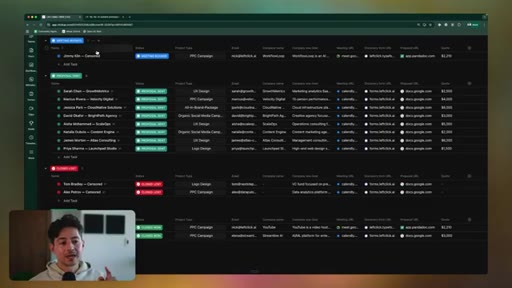
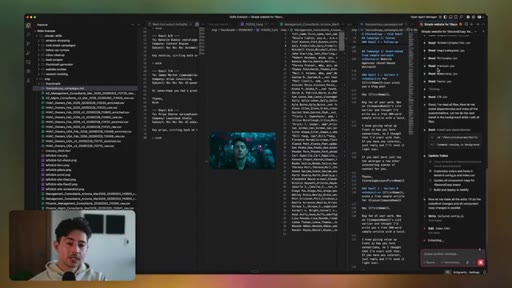
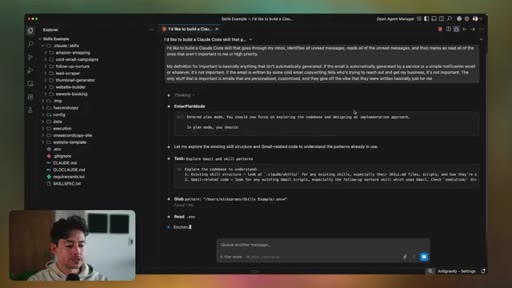
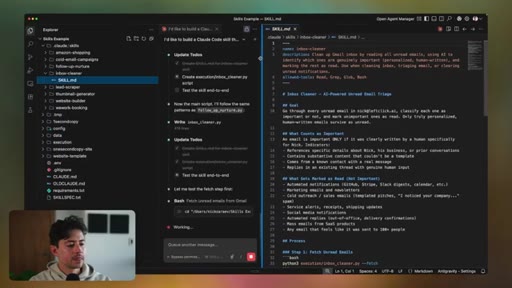
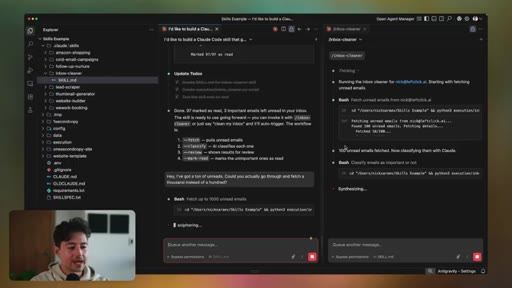
Reads CRM pipeline stages, pulls full email chain history, writes personalized follow-ups per prospect. Runs in one shot each morning.
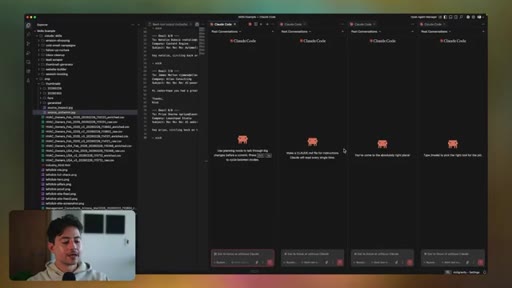
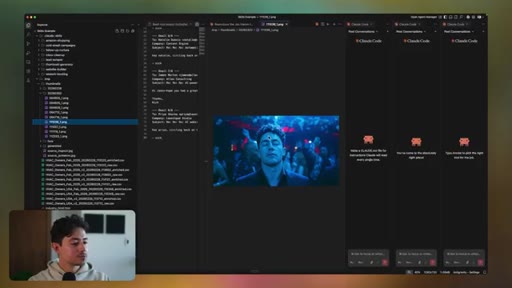
04 · Demo 2: Thumbnail generator
Superimposes host face onto reference viral image; generates multiple variants for selection.

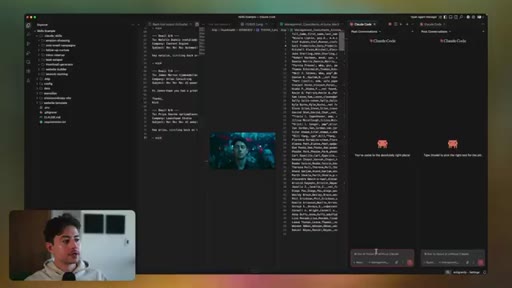
05 · Demo 3: Lead scraper
LinkedIn Sales Navigator query in natural language -> Google Sheet with full names and email addresses.
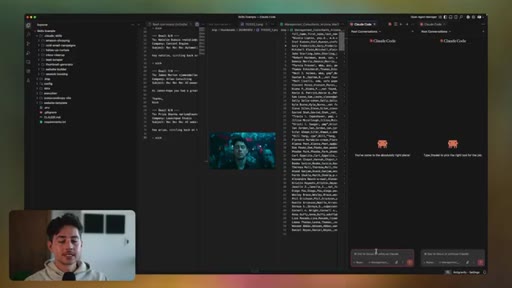
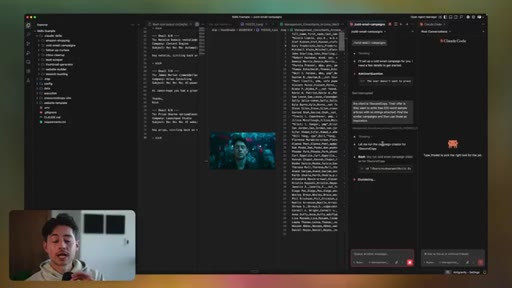
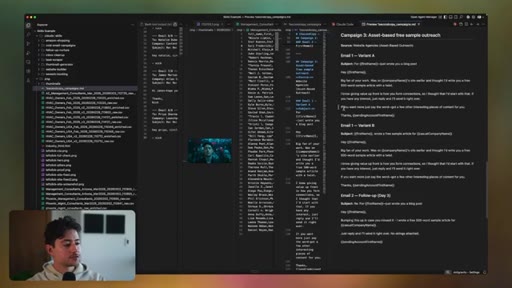
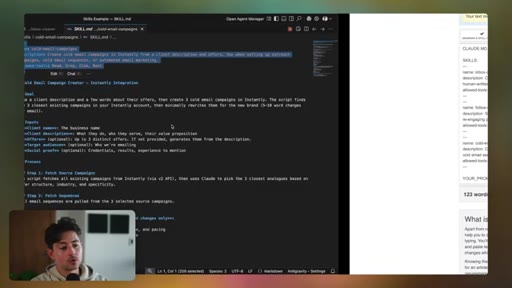
06 · Demo 4: Cold email campaigns
Reads existing high-performing campaigns, rewrites them for a new client niche, sets up in cold email platform.
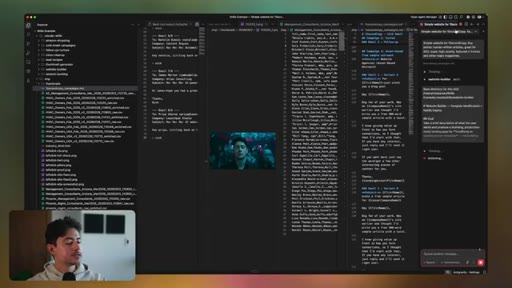
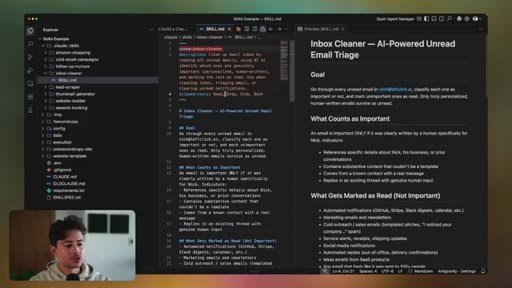
07 · Demo 5: Website builder
One-prompt website generation deployed to Netlify; used as outreach value-add for prospects.
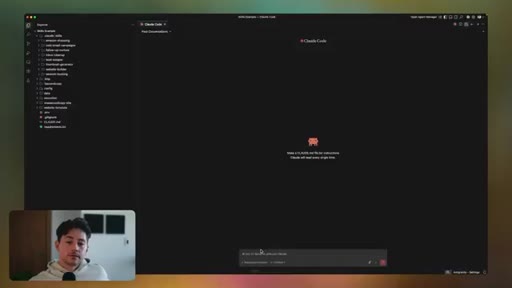
08 · Bonus: WeWork booking
Chrome DevTools MCP books coworking desks 30 days ahead automatically on trigger.

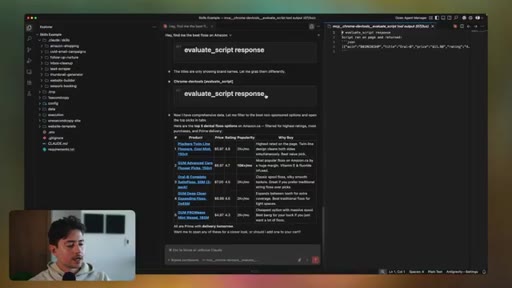
09 · Bonus: Amazon shopper
Chrome DevTools MCP compares products on Amazon, returns structured cost/quality recommendation.
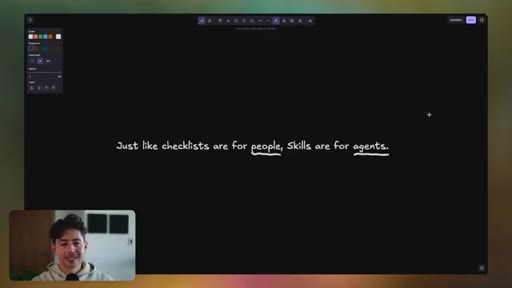
10 · How skills work mechanically
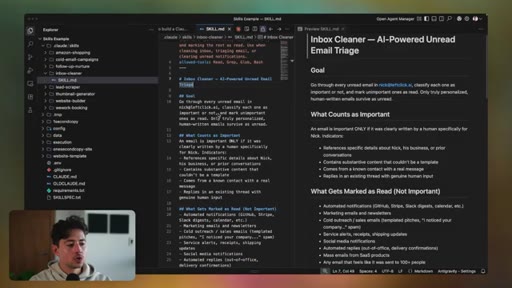
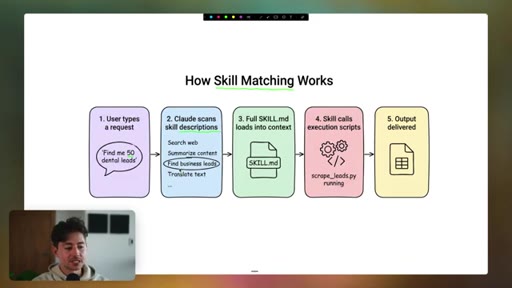
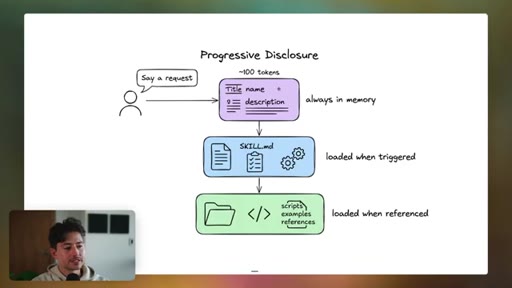
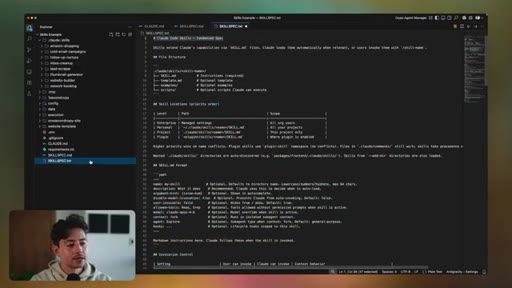
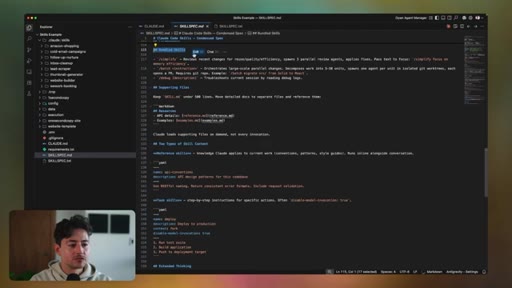
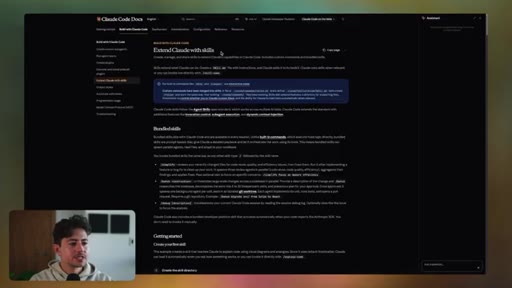
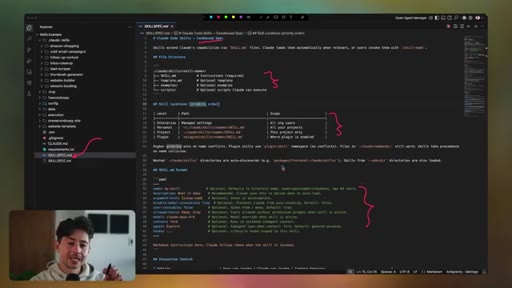
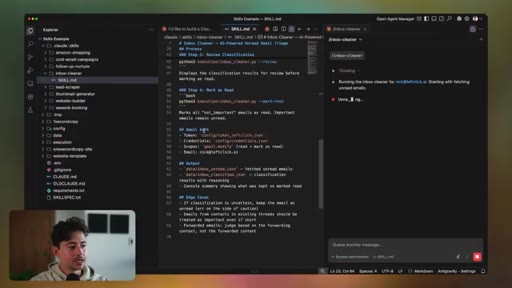
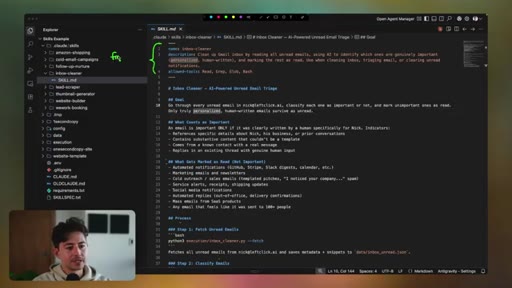
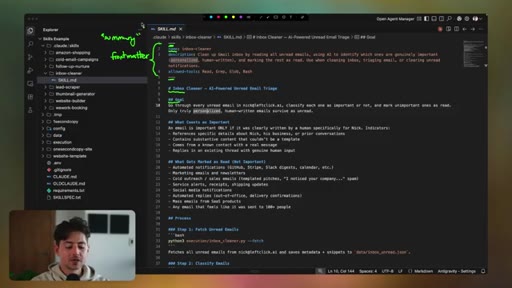
SOP to markdown translation, front matter, progressive disclosure, skill matching. Spec sheet walkthrough.
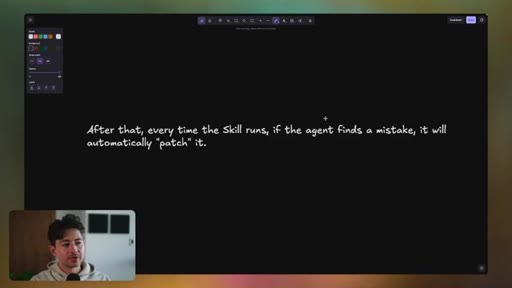
11 · Skills are self-annealing
Agent patches its own errors: identifies failure, fixes script, rewrites skill file automatically.
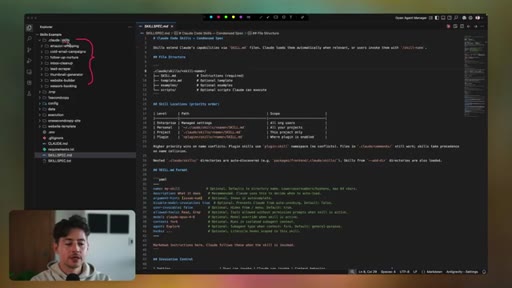
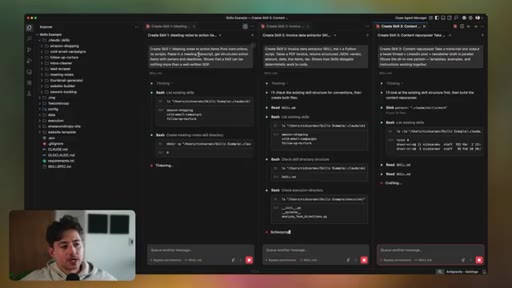
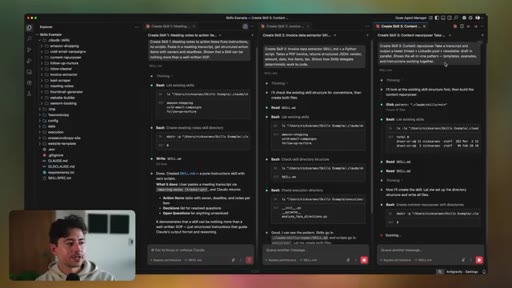
12 · Building three skills in parallel
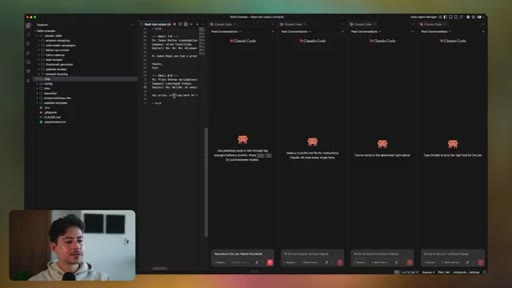
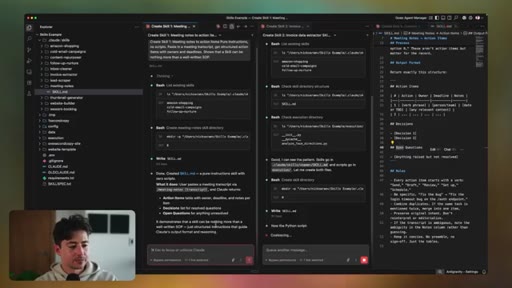
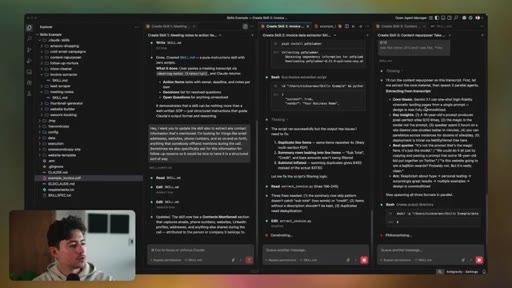
Meeting notes extractor (pure markdown), invoice data extractor (markdown + Python), content repurposer (parallel sub-agents). Live builds in three simultaneous Claude Code instances.
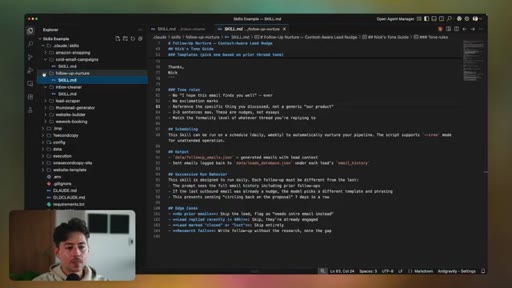
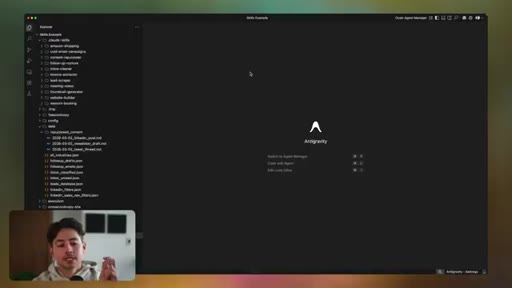
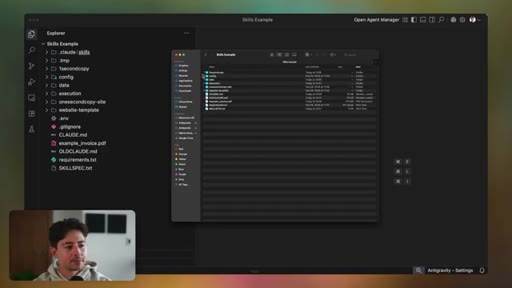
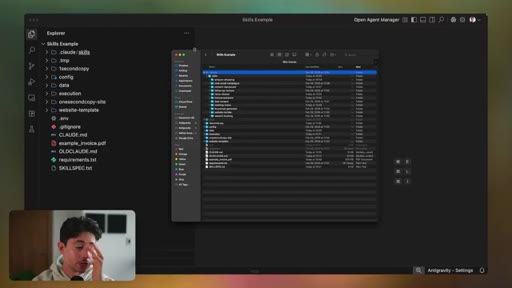
13 · File structure and hidden folder walkthrough
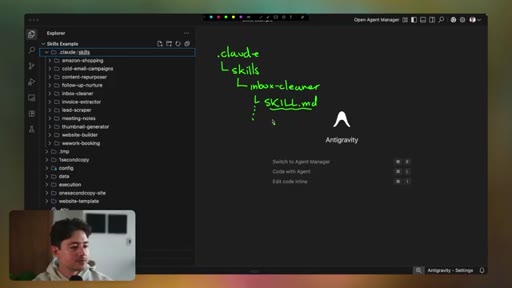
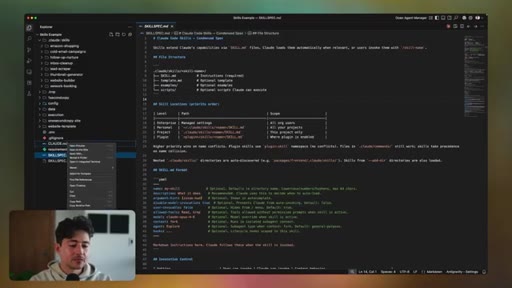
.claude/skills/<name>/SKILL.md structure. How hidden folders work on Mac and Windows.

14 · What skills are worth building
Front-end first: revenue-touching tasks only. Lead gen, outreach, follow-up beat internal fulfillment pipelines on ROI.
Visual structure at a glance.
Lines you could clip.
"If you have an SOP, you have a skill."
"Skills are self-annealing — they heal themselves, they get better, they improve constantly."
"You can do anything — but that doesn't mean you should do everything."
"I was doing somewhere between 50 to 100 cold calls every single day. When I was going door to door, it was something like 80 knocks on physical doors per day. I wish I had a hundredth of the technology we have today."
Things they pointed at.
How they asked for the click.
"If you guys like my content, please subscribe. 69% of the people that regularly watch my content are not subscribed."
Mentioned twice (5:39 and closing). Frames it as a channel growth mechanism rather than personal ask. Effective because it gives context (algorithm impact) rather than just requesting.
Word for word.
The only skills worth building touch the front end of your business
Skills are just SOPs in a format the agent understands — and all the ROI concentrates in lead generation, outreach, and follow-up, not in automating the work that already exists downstream.
- Any existing checklist converts to a skill in minutes: provide the skill spec, describe what you want, and the agent writes the markdown file and any supporting scripts automatically.
- Skills self-patch on errors — the agent identifies what broke, fixes the script, and rewrites the skill file without human intervention, compounding quality with every run.
- Front matter limits token overhead to roughly 60 tokens per skill; the full spec only loads when that skill is explicitly invoked, keeping context clean across large libraries.
- Skill matching is triggered by natural language: casual phrasing like 'follow ups' is enough for Claude to locate, load, and execute the correct skill from front matter descriptions.
- Reading full email chain history before generating follow-ups — instead of using cold templates — produces replies that prospects cannot distinguish from human-written messages because tone and thread context are matched.
- Going directly to LinkedIn Sales Navigator for B2B leads outperforms Apollo and Apify because those services re-scrape it anyway; the skill eliminates the intermediary and writes results to a structured sheet.
- Running multiple Claude Code instances in parallel to build several skills simultaneously is a production-viable workflow, not just a demo shortcut.
- The skills that fail to generate ROI are focused on internal complexity — back-end fulfillment, meta-tooling, or building frameworks — rather than on acquisition and outreach where the revenue actually lives.