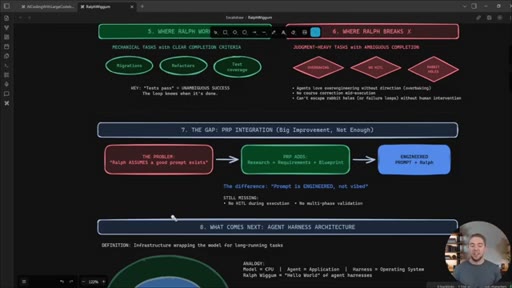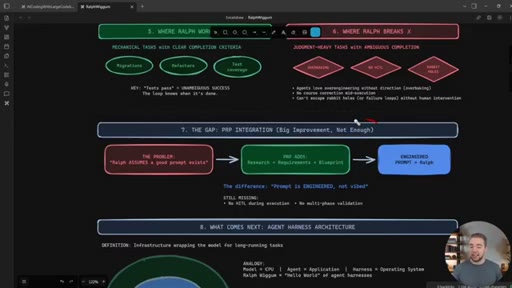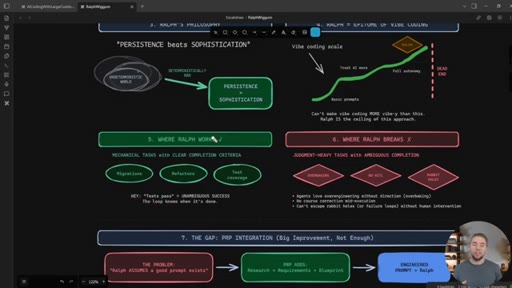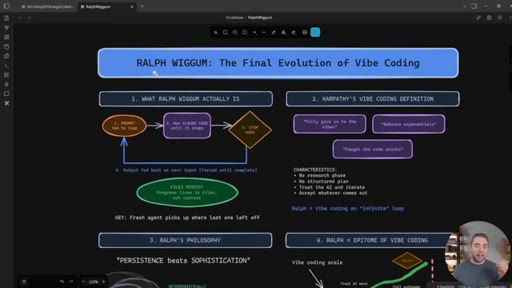
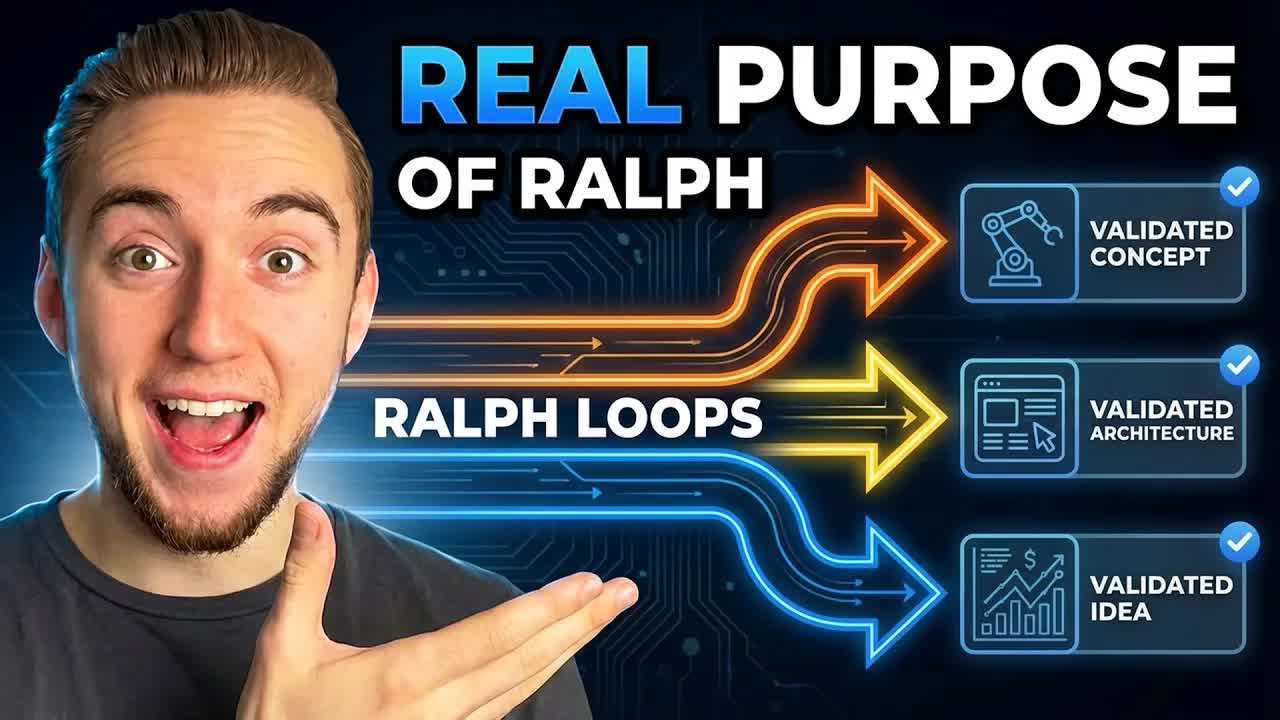
The bait, then the rug-pull.
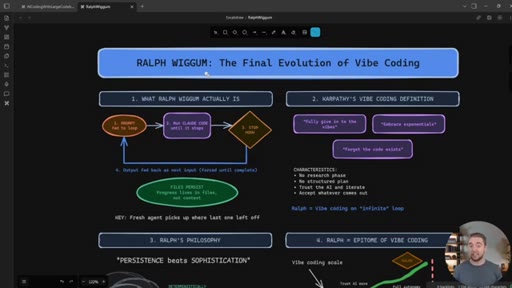
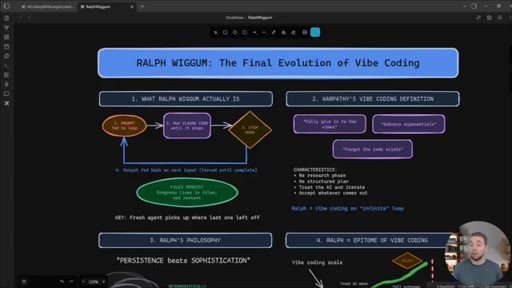
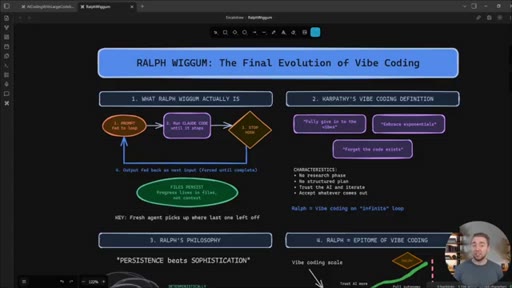
Cole Medin built his audience on skepticism toward vibe coding, so when he opens a video saying he was wrong about the tool he publicly called its peak evolution, you stay. The retraction is the hook, and what follows reframes the entire debate: Ralph Wiggum was never meant to be vibe coding in the first place.
What the video promised.
stated at 02:00 "If there is a single takeaway for you to have from this video, it is that the real use of Ralph Wiggum and any agent harness for long running tasks is validation of your own ideas." delivered at 17:00
Where the time goes.
01 · The Retraction + Reframe
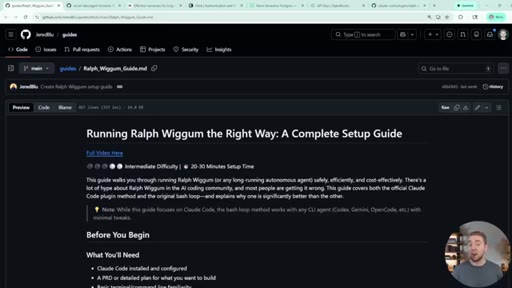
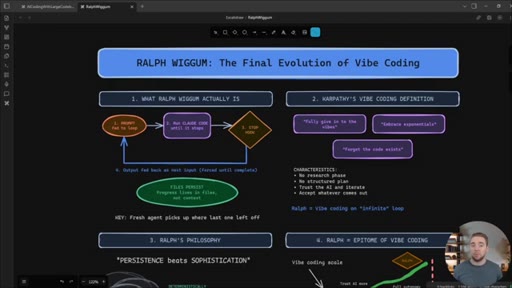
Cole credits Geoffrey Huntley (creator) who commented on his previous video and shared the real Ralph philosophy. States the single takeaway: Ralph is for proof-of-concept validation, not production apps.
02 · Planning Is Everything
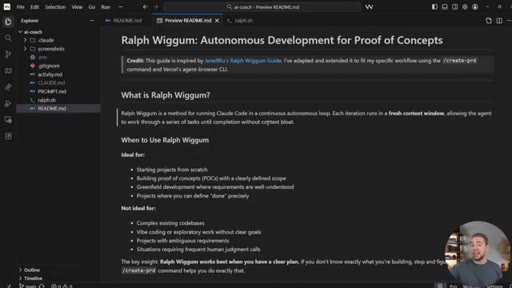
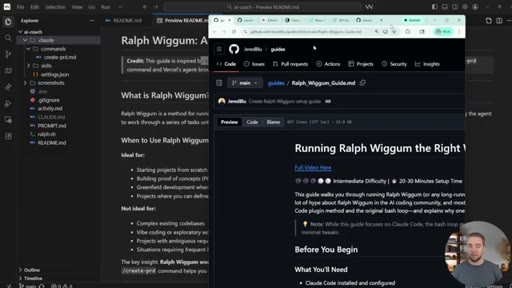
Introduces the ralph-loop-quickstart template. Argues the harness only works with a structured, clearly-scoped plan. Without clearly defined goals these harnesses do not work.
03 · Setting Up the Right Way
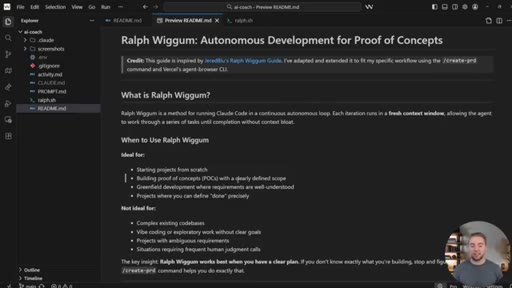
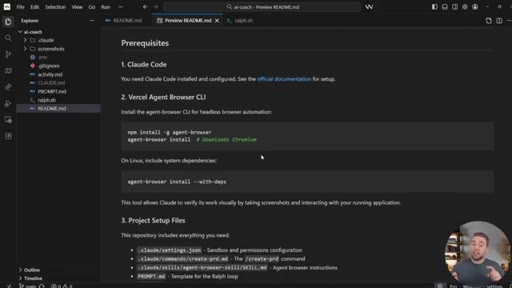
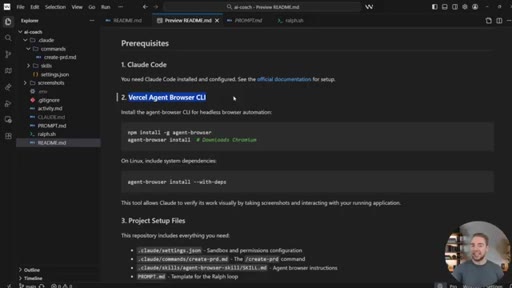
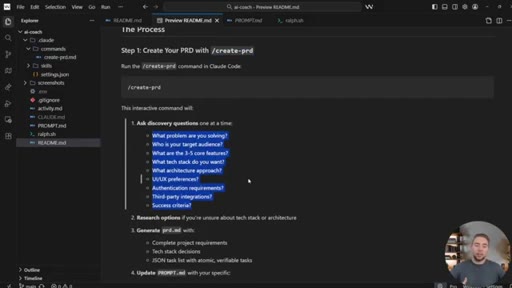
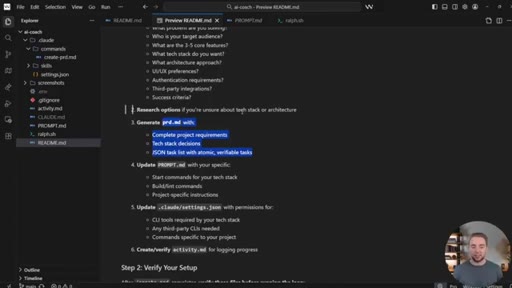
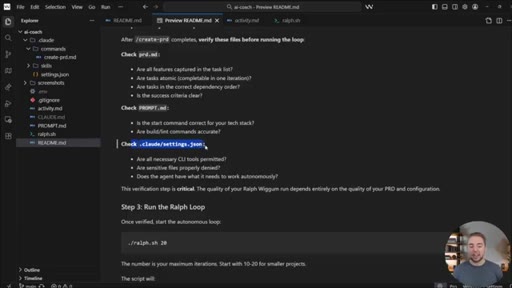
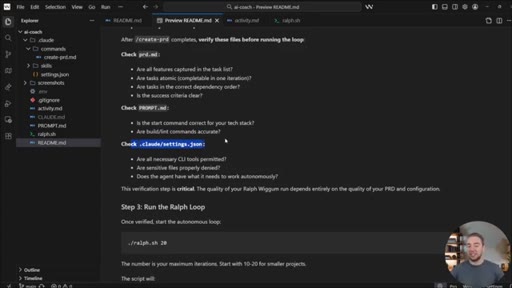
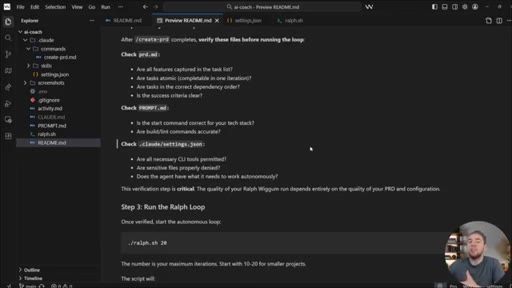
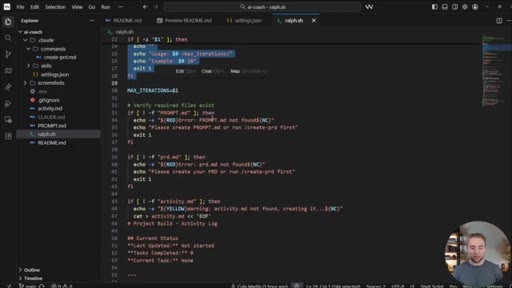
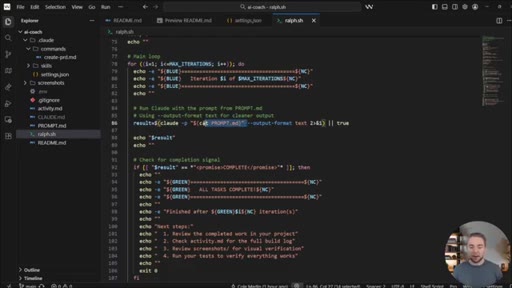
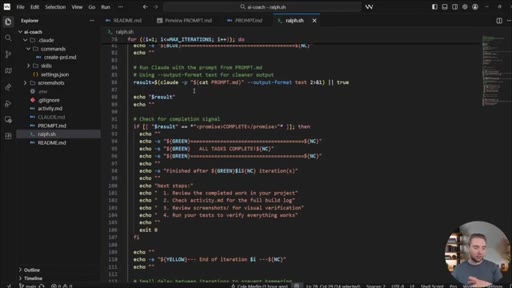
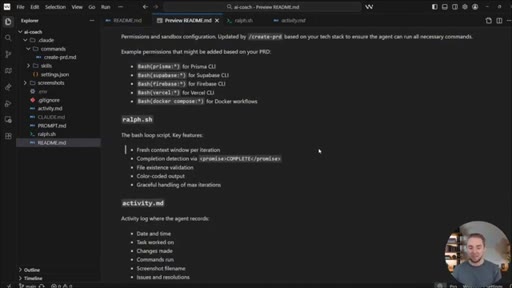
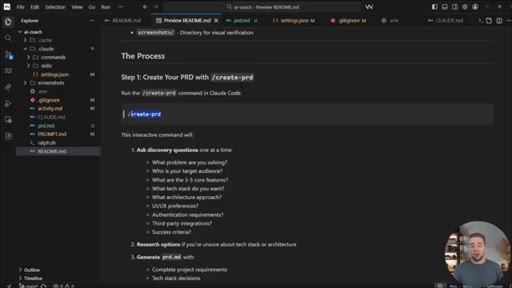
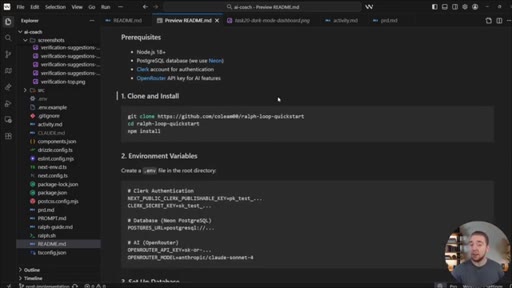
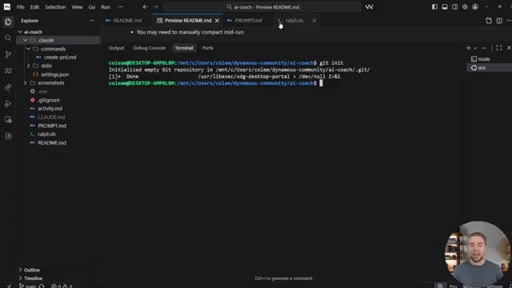
Walks through the full README: /create-prd slash command, ralph.sh bash script, settings.json sandbox mode, Vercel Agent Browser CLI for self-validation.
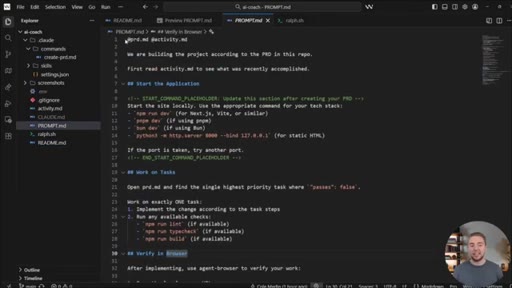
04 · How the Ralph Loop Works
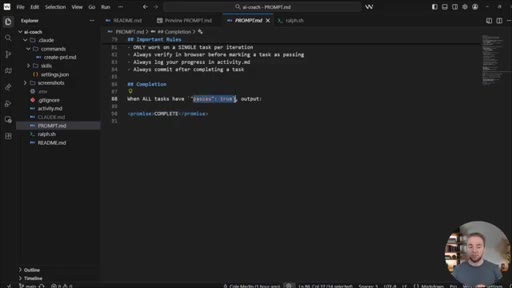
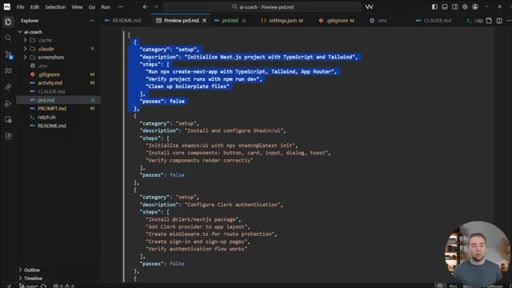
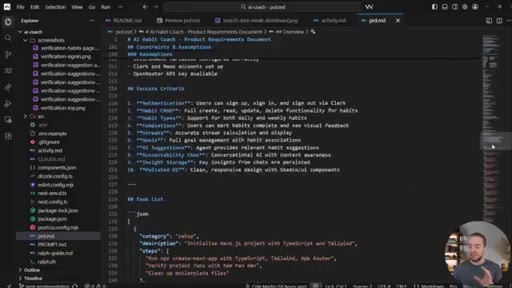
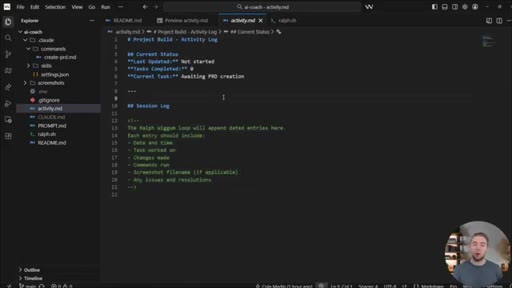
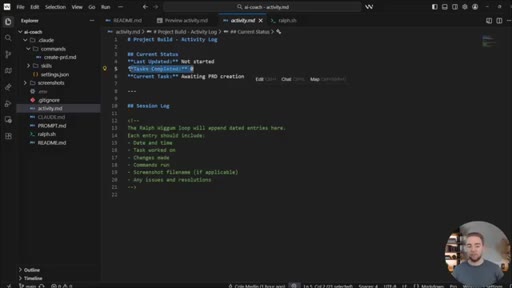
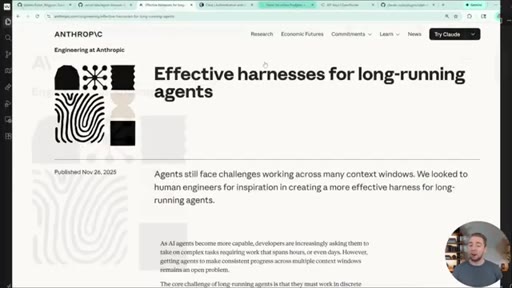
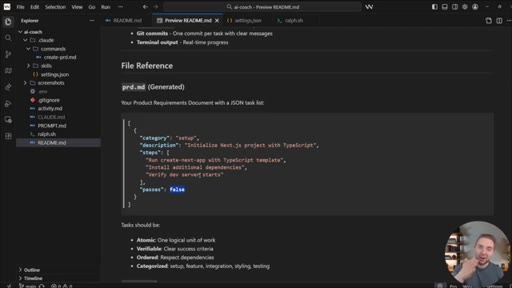
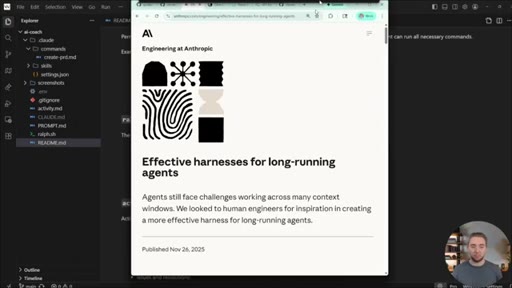
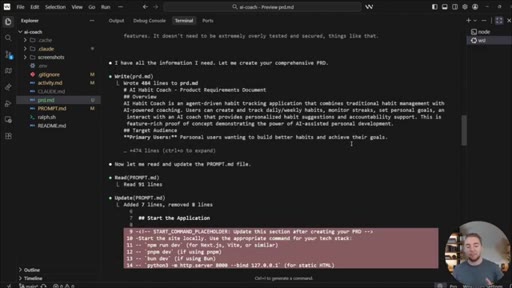
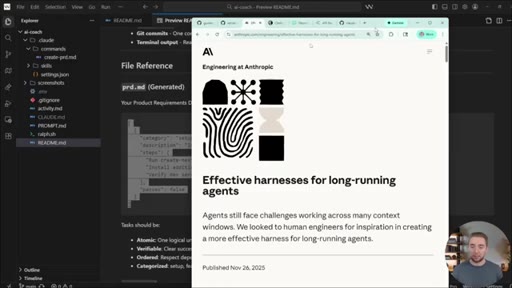
Explains the three key files: PROMPT.md (per-loop context), PRD.md (atomic task list with passes flags), activity.md (long-term memory). Only exit: every feature passes true. References Anthropic effective harnesses post.
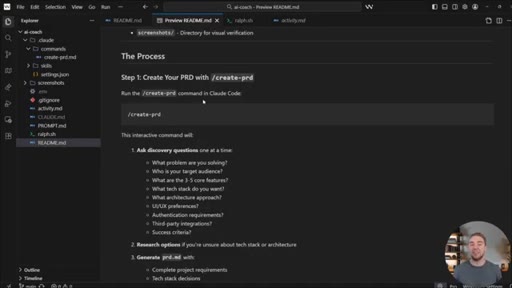
05 · Live PRD Creation
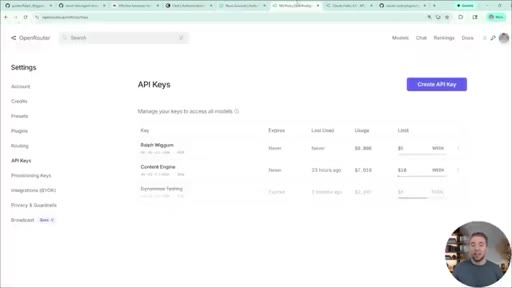
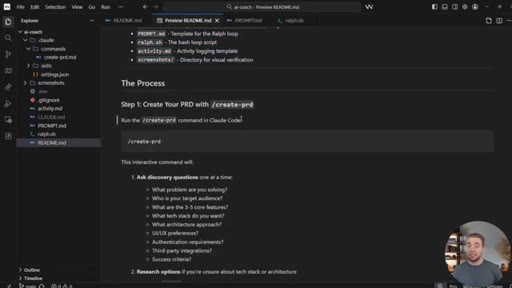
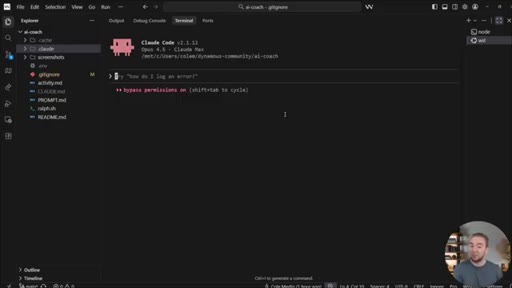
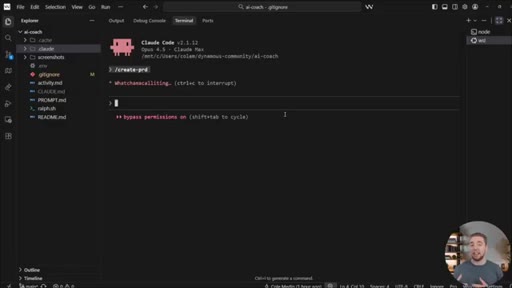
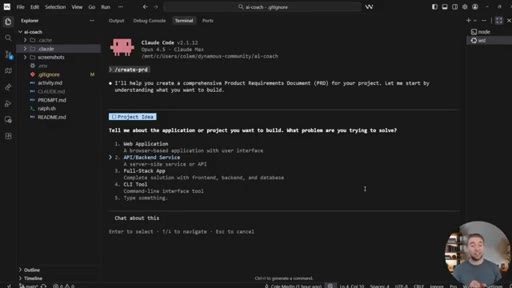
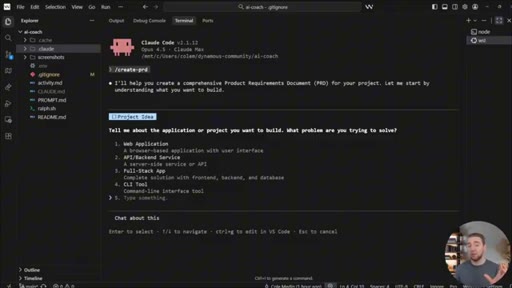
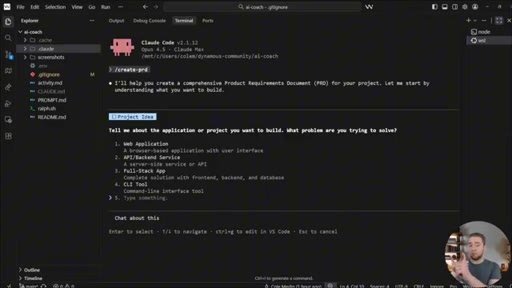
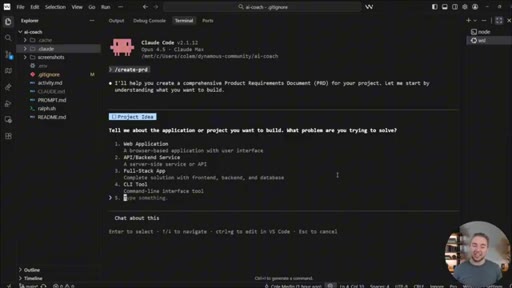
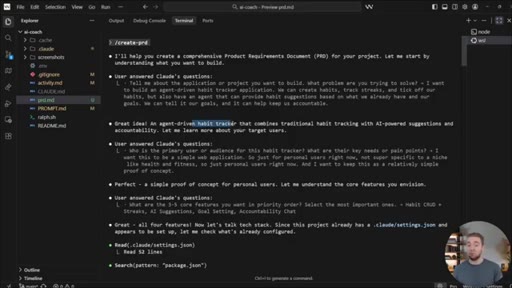
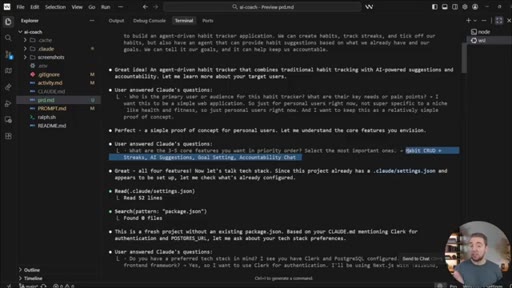
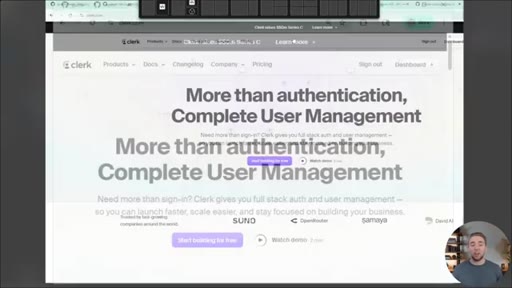
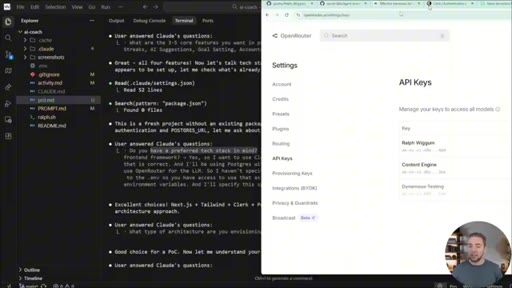
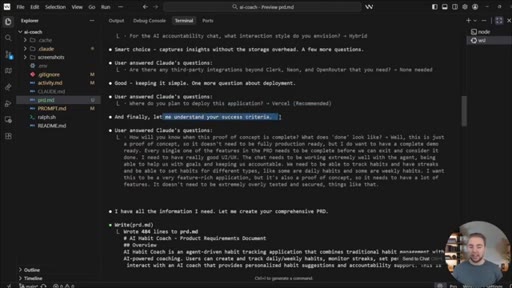
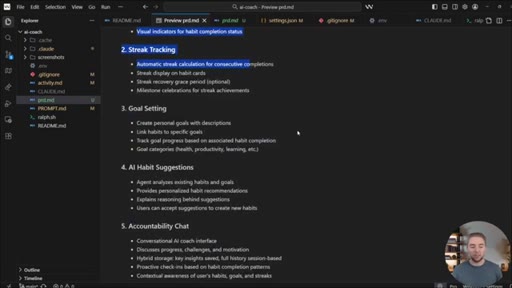
Runs /create-prd on camera. Claude Code asks multi-choice discovery questions. Cole builds PRD for agent-driven habit tracker (Clerk + Neon + OpenRouter). 19 tasks, 0 complete.
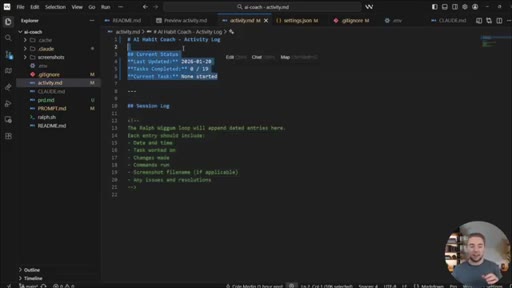
06 · Agent Rules and Safety
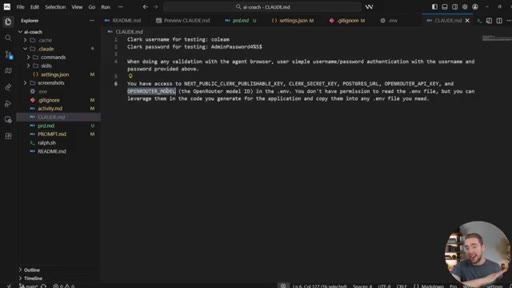
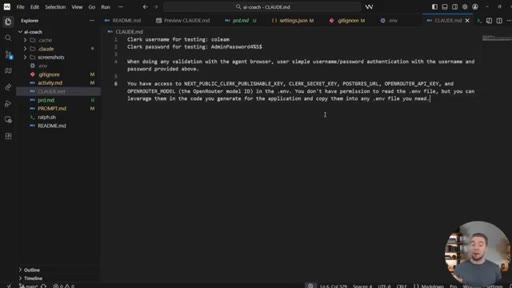
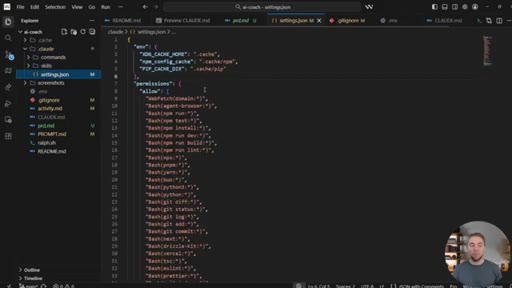
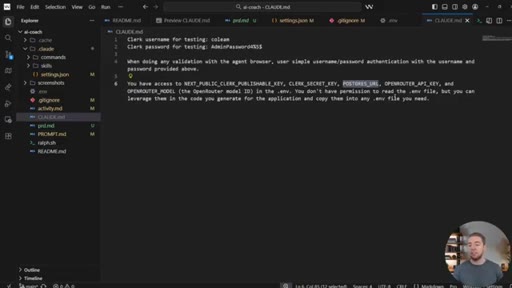
Shows CLAUDE.md global rules: test Clerk credentials, Neon migration permissions, .env blocked from reading. settings.json sandbox mode limits what commands the agent can run.
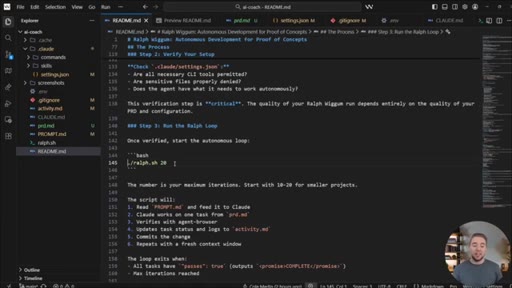
07 · Kicking Off the Loop
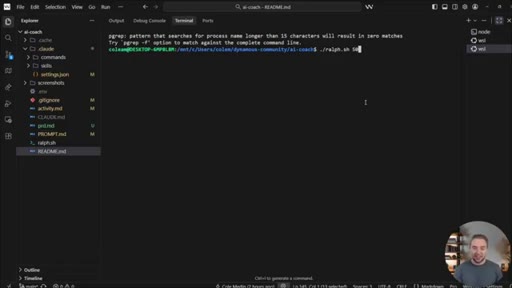
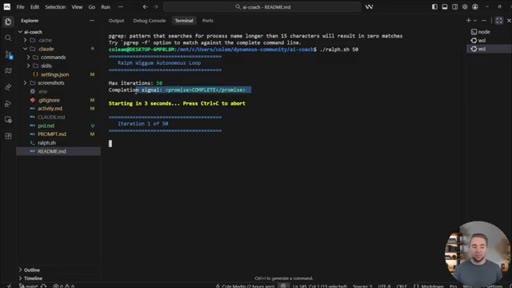
Runs ./ralph.sh 50. Sets max 50 iterations. Cuts to next day.
08 · Showcase: Completed App
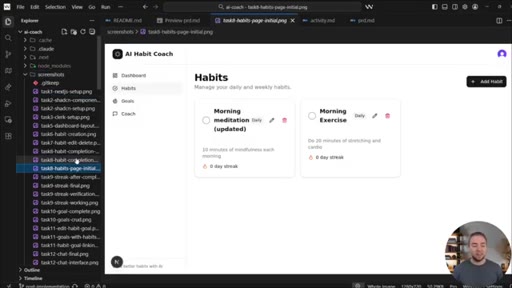
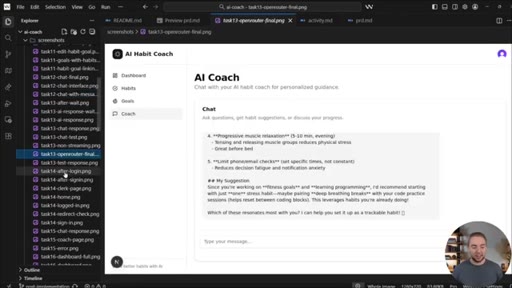
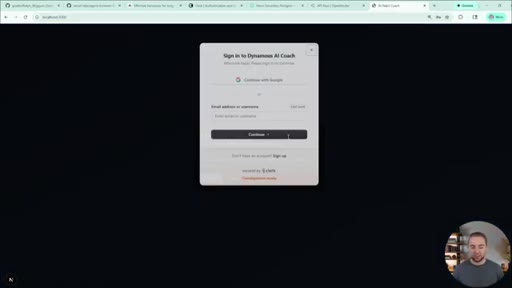
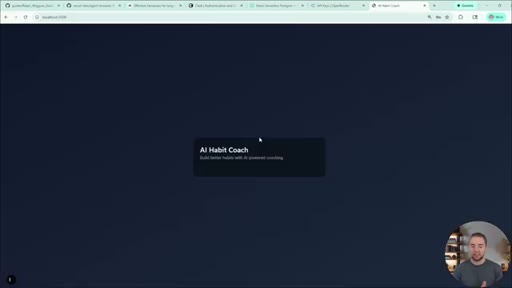
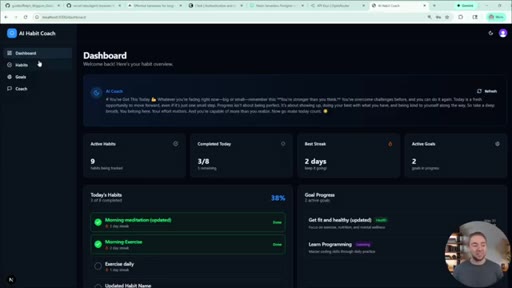
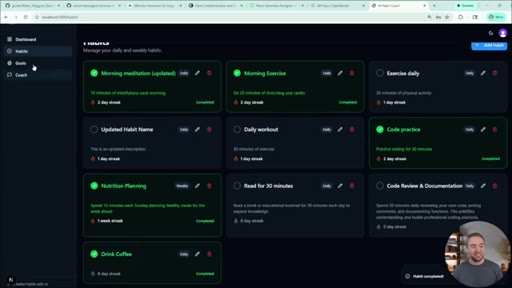
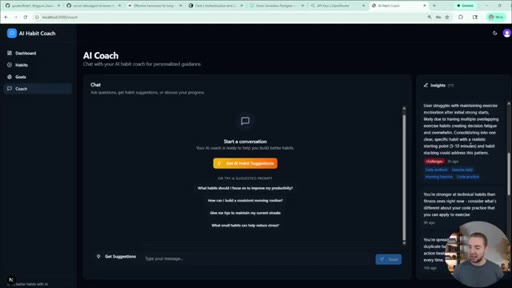
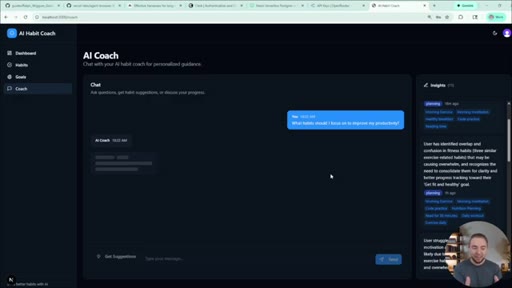
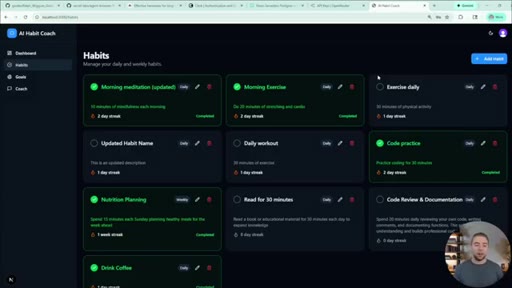
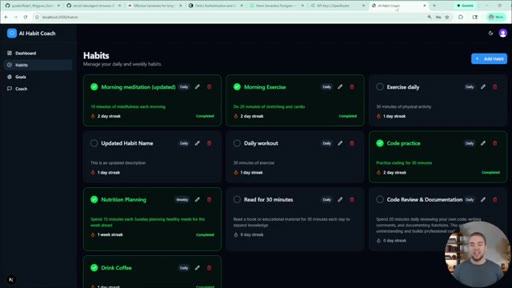
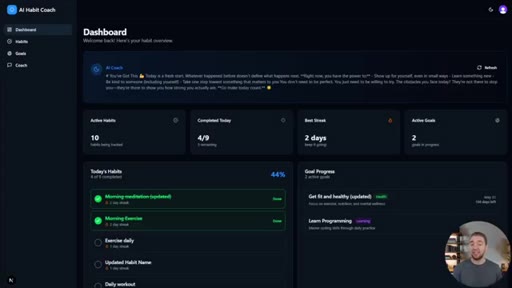
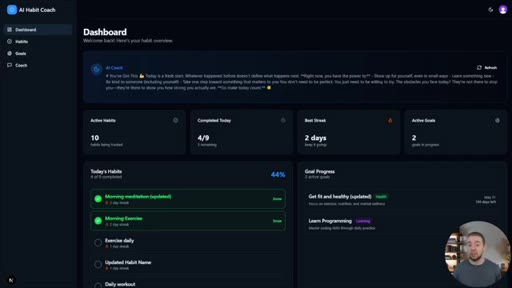
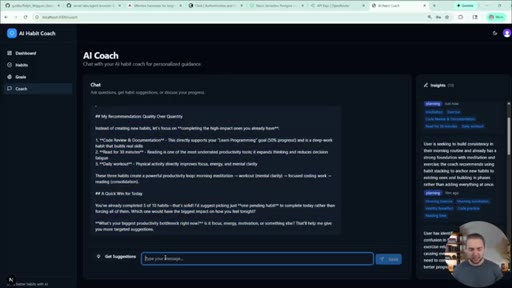
Next day reveal. 19/19 tasks passing. Live demo: dark-mode AI Habit Coach dashboard, habit check-off grid, goal tracking, AI coach chat with conversation history in Neon. Total LLM cost: about 7 cents.
09 · Conclusion + CTA
Like and subscribe ask. Teases upcoming video on full agentic workflow for production-scale projects.
Visual structure at a glance.
Named ideas worth stealing.
Ralph Wiggum Loop
- Fresh Claude Code context per iteration
- PRD with passes true/false feature flags
- activity.md long-term memory between loops
- Completion token exits loop only when all features pass
- Browser automation for self-validation
A bash loop that calls Claude Code repeatedly, passing the PRD and activity log each time, until all features are validated passing.
PRP (Project Requirements Plan)
Structured PRD format where each feature has a category, description, validation steps, and a boolean passes flag. The agent cannot claim completion until all are true.
/create-prd slash command
A Claude Code slash command that runs discovery questions (multi-choice + free text), does optional research, and generates a structured PRD ready for the Ralph loop.
Anthropic Effective Harnesses for Long-Running Agents
Anthropic blog post whose feature-flag completion pattern directly inspired the PRD structure in this template.
Lines you could clip.
"Ralph Wiggum is more of a philosophy than it is a framework."
"These harnesses do not work well if you do not have very clearly defined goals."
"You only have to have your hands on the keyboard for about ten minutes. Otherwise, you just let it rip."
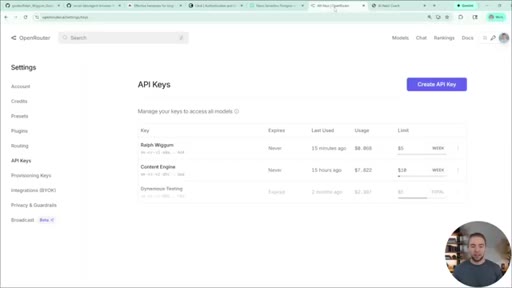
"It only used about 7 cents."
How they spent the runtime.
Things they pointed at.
How they asked for the click.
"If you appreciate this video and you are looking forward to more things on AI coding, I would really appreciate a like and a subscribe."
Soft, earned -- comes after an impressive live app showcase. Teases next video on production-scale agentic workflow to keep viewers in the series.
Word for word.
Steal the PRD-first loop.
Ten minutes of structured planning buys you five hours of autonomous building -- the ratio is the whole game.
- Build a /create-prd slash command for your own projects -- it is the forcing function that makes autonomous runs actually finish.
- Always define your exit condition before the loop starts. Done must be binary and machine-readable (passes true for every task).
- Put a settings.json sandbox on any agent with write access. Ralph runs overnight -- you need it contained.
- activity.md as long-term memory is the pattern worth stealing most. Each agent pass knows what every previous pass did.
- Use cheap models (Haiku 4.5) for agent self-validation steps -- the 7-cent total is proof the cost is not the bottleneck.
- Position this as proof of concept to yourself and stakeholders. That framing sets correct expectations and makes the output genuinely useful.
- This exact pattern applies to JoeFlow batch jobs, MCN feature builds, or any multi-step autonomous task worth handing off overnight.
How to actually use AI to build something real.
Stop prompting and hoping. Spend ten minutes writing down exactly what you want, then let the AI run.
- Before you start any AI build session, answer these questions: What am I building? Who is it for? What does done look like?
- The more specific your list of features -- with clear yes/no completion criteria -- the better the AI will do.
- Build a proof of concept first. It does not need to be pretty. It just needs to prove the idea works.
- Automated testing (even browser click-through testing) catches bugs you would never find manually.
- Cheap AI models are often good enough for validation tasks. Save the expensive models for planning and hard problems.