Nate Herk | AI Automation · Youtube · 36:57

Master 95% of Claude Code in 36 Mins (as a beginner)

A complete walkthrough of the WAT framework: one brain-dump prompt, seven Python tools, and a branded PDF report deployed to Modal in under 37 minutes.

Posted
January 21st 2026
3 months ago
Duration
36:57
Format
Tutorial
educational
Channel
NH
Nate Herk | AI Automation
§ 01 · The Hook

The bait, then the rug-pull.

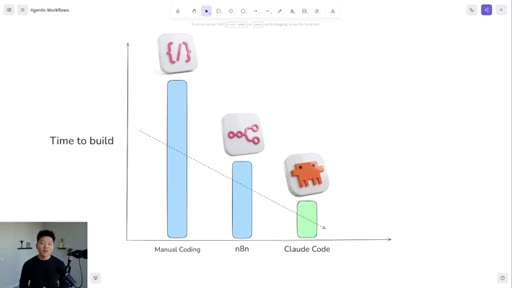
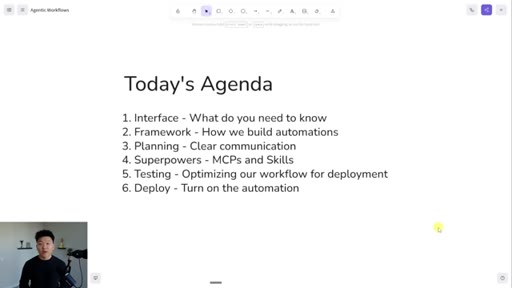
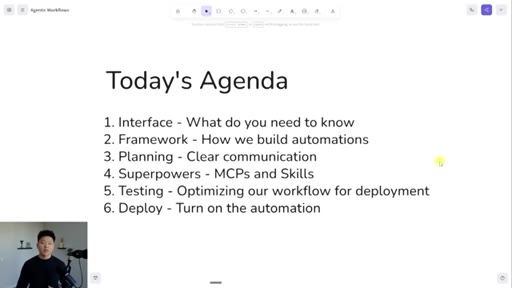
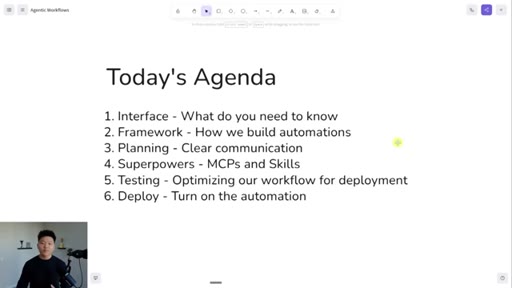
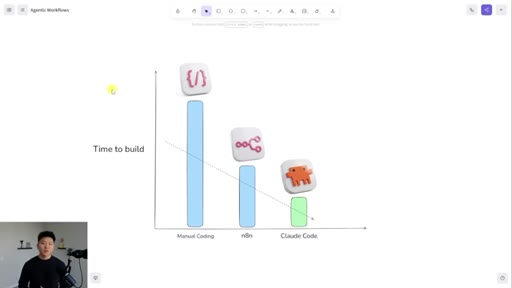
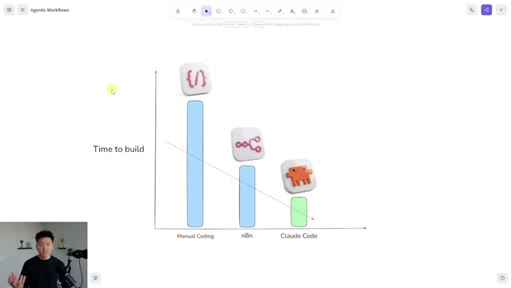
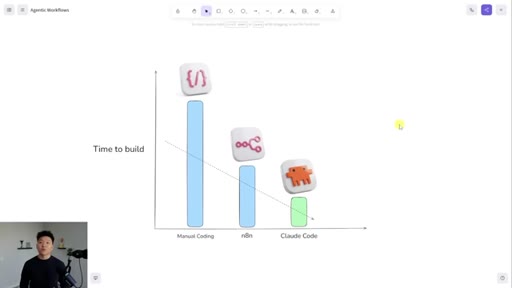
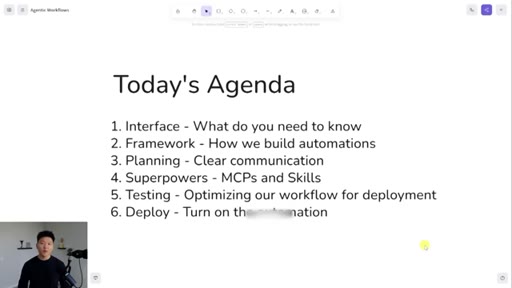
A bar chart opens the lesson: Manual Coding towers over n8n, which towers over Claude Code — Time to build compressed to nearly nothing. Nate Herk then lays out a six-point agenda and promises to build a full deployed automation before the video ends. It is the two-part tutorial hook done right: visceral visual claim, then structured curriculum contract.

§ · Stated Promise

What the video promised.

stated at 01:30 "After this video, you will have everything you need to go build your first automation in Claude Code." delivered at 36:00
§ · Chapters

Where the time goes.

00:00 – 04:45

01 · Interface

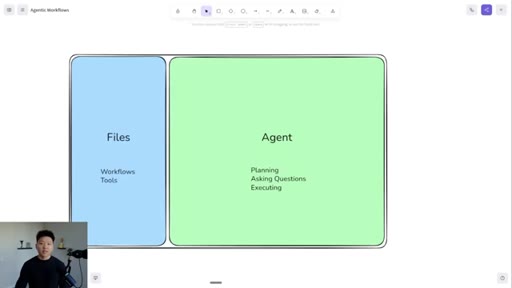
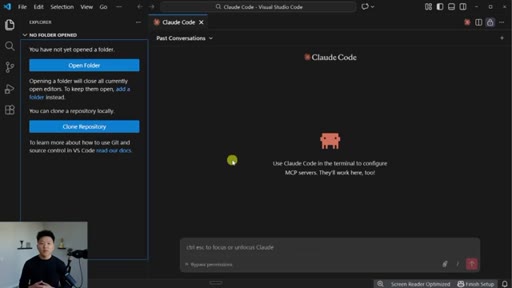
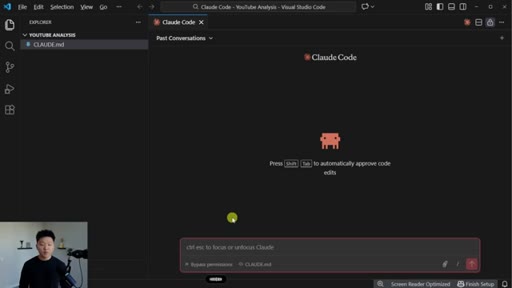
VS Code + Claude Code extension install. Left pane = files, right pane = agent. Must open a project folder. Bypass permissions mode toggle. Pricing: $17/mo Pro includes Claude Code.
04:46 – 09:28

02 · WAT Framework

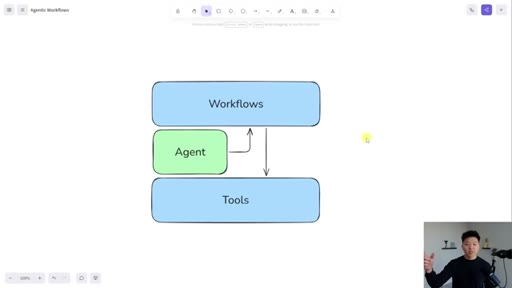
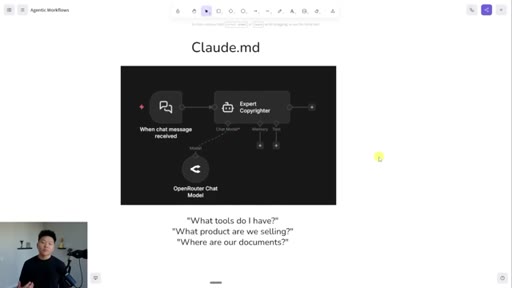
Introduces claude.md as system prompt. Walks the WAT three-layer architecture: Workflows (markdown SOPs), Agent (Claude), Tools (Python scripts). Self-improvement loop. File structure: tmp/, tools/, workflows/, .env, .gitignore.
09:29 – 14:51

03 · Planning in Plan Mode

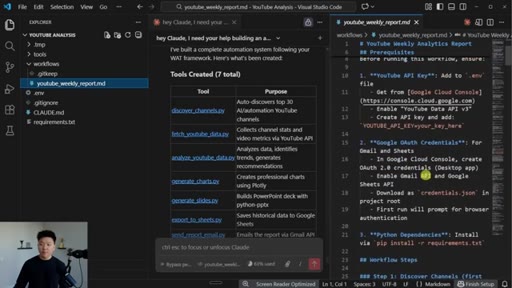
Brain-dump prompt triggers plan mode. Claude web-searches, asks 4 clarifying questions, scaffolds 7 Python tools before writing code. Key lesson: plan mode prevents rework.
14:52 – 22:15

04 · Superpowers — MCPs and Skills

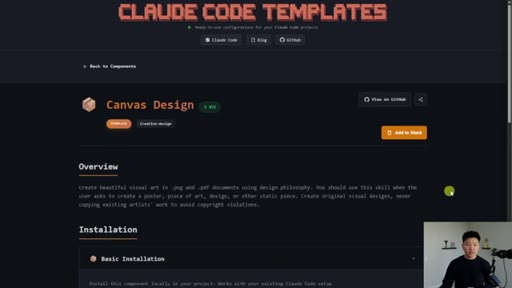
MCPs as universal USB port. Skills as dynamic instruction bundles. Installs Canvas Design skill from claudecodetemplates.com via npx. Distinguishes Projects vs Skills vs MCPs.
22:16 – 29:03

05 · Testing and Optimization

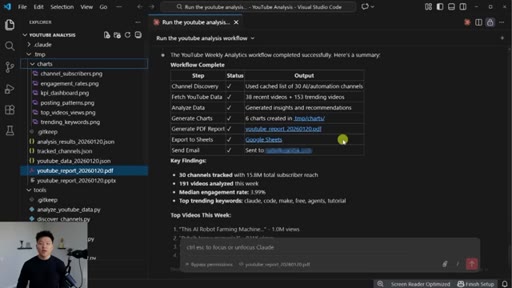
Full pipeline run: 30 channels, 187 videos, 6 charts, 9-slide branded PDF, Sheets export, Gmail send. Swaps PowerPoint for PDF with AIS+ logo. Self-healing loop: 2-page PDF fixed to 9-page in one feedback message.
29:04 – 36:57

06 · Deploy to Modal

Two Modal deploy patterns: scheduled cron (YouTube analytics every Monday 6AM) and webhook trigger (lead notification on POST). Security review before push. Modal secrets for all credentials.

§ · Storyboard

Visual structure at a glance.

Time to build chart
Agenda slide
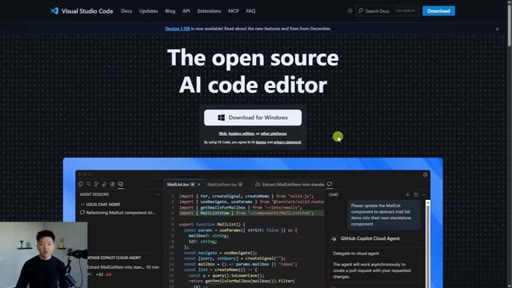
VS Code welcome screen
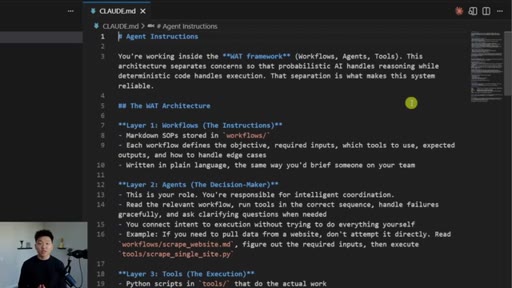
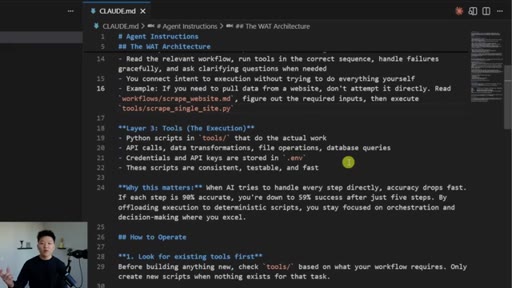
claude.md WAT architecture
Plan mode brain-dump prompt
What are Skills slide
Branded PDF report delivered
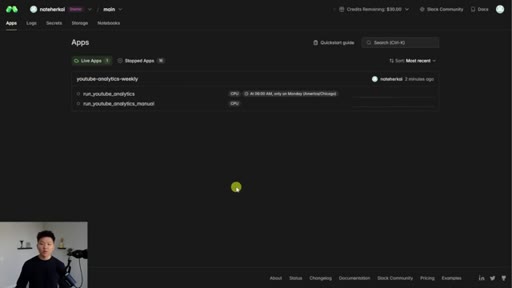
Modal Apps dashboard
AI Automation Society CTA
§ · Frameworks

Named ideas worth stealing.

06:25 acronym

WAT Framework

  1. Workflows
  2. Agents
  3. Tools

Three-layer agentic architecture: Workflows are markdown SOPs, Agents are Claude orchestrating execution, Tools are deterministic Python scripts. Separates probabilistic reasoning from deterministic execution.

Steal for Any CLAUDE.md project. Teachable as a content framework for LFB Line or MCN+ courses.
08:30 model

Self-Improvement Loop

  1. Hit error
  2. Read full error + trace
  3. Research fix
  4. Refactor tool
  5. Verify fix
  6. Update workflow to prevent recurrence

When Claude Code hits an error it should document the failure pattern and update the workflow file so the error never recurs.

Steal for Systems-thinking explainer for any Claude Code tutorial
10:40 model

Plan Mode Protocol

  1. Switch to Plan mode
  2. Brain-dump goal + features
  3. Let Claude ask clarifying questions
  4. Review plan
  5. Auto-accept or give feedback
  6. Execute

Using plan mode before any new automation forces Claude to think through edge cases and ask questions before writing code. Prevents the rework cycle.

Steal for JoeFlow Batch panel pre-flight step before spawning agents
§ · Quotables

Lines you could clip.

26:06
"You're not deploying the agent. You're deploying the workflow connected to tools."
Concise insight that reframes the entire mental model of agentic systems. No setup needed. → TikTok hook
12:46
"The only way it's truly gonna click is if you get in here and do it yourself."
Permission structure for beginners — validates learning-by-doing. → IG reel cold open
19:34
"Think of an MCP server as an app store. It's like a universal micro USB port."
Memorable analogy that explains MCPs in one sentence. → Newsletter pull-quote
08:30
"If each step is 98% accurate, you're down to 59% success after just five steps."
Counterintuitive math that quantifies why deterministic tools matter. → TikTok hook
§ · Pacing

How they spent the runtime.

Hook length58s
Info densityhigh
Filler8%
§ · Resources Mentioned

Things they pointed at.

29:04toolModal ↗
36:00productAI Automation Society (Skool community)
09:21productWAT Framework claude.md (free in School community)
§ · CTA Breakdown

How they asked for the click.

33:48 product
"If you are looking to dive deeper into this kind of stuff and connect with over 3,000 members who are also all in on AI and building businesses with AI, definitely check out my plus community."

Double CTA: free claude.md in School community (lower commitment) + paid AI Automation Society membership. Free asset drives email capture; paid community is the upsell.

§ 04 · The Script

Word for word.

HOOK opening / re-engagementCTA the pitch
00:00HOOKCloud Code has been allowing me to build things that used to take me hours in just minutes. So that's exactly what I'm gonna be teaching you guys today even if you don't know how to code and even if you've never touched an IDE before. IDE stands for integrated development environment, but if you didn't know that, it's still completely fine.
00:14HOOKIt's crazy how fast the technology is evolving every single day. When you stick people this long with manual code was significantly reduced when n n came out because we could drag and drop nodes and build workflows that way. And now that has once again been significantly reduced with the release of things like Cloud Code and anti gravity.
00:30HOOKNow I'm not out here saying that n n n is dead or that Claude code completely replaces n n n. They're slightly different, but I am gonna show you how easy it is to build automations with Claude code today. If you've never touched Claude code before or even watched a video about it, you're in the right spot.
00:42HOOKBecause my job is to make confusing things as simple as possible. So in today's agenda, I'm gonna be going over the interface, what do you need to know because there's lot of stuff, but I'm just gonna tell you what's actually important to understand. We're gonna go over the framework that we use to actually build automations.
00:55HOOKI'm gonna talk about planning and the importance of clear communication. We're talk a little bit about the superpowers that you can give Cloud Code like MCP servers and skills. We're gonna talk about testing and how you actually optimize your workflow, and then talk about deployment, which means actually kinda turning it on or pushing it into production.
01:10HOOKI'm not just gonna be talking. Throughout all of this, I'm actually gonna build a full work flow in front of you guys and deploy it by the end. So after this video, you'll have everything you need to go build your first automation in Cloud Code, and you're gonna see how easy it really is.
01:22HOOKAlright. So we're just gonna jump right into it. This is the interface.
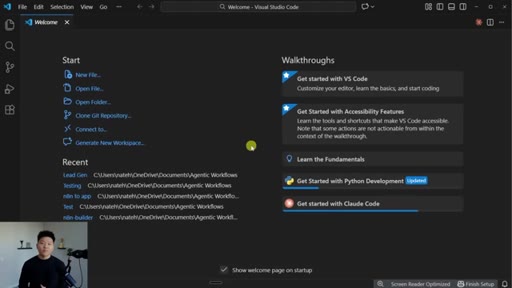
01:25HOOKWe're gonna be using Visual Studio Code, which has been around for a long time. And if you go to Google and type in Versus Code, can just go ahead and go to this link and just download it. It's free to download.
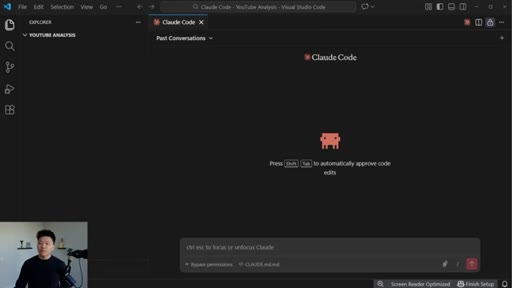
01:34HOOKAnd then in here is where we're gonna actually be using Claude Code. So this is what it should look like. What we're seeing here is just kind of the welcome page.
01:41HOOKYou can see we can open new files, new folders. Can do some of these walk throughs. But what I'm gonna do here is I'm gonna go over to this left hand side and click on extensions
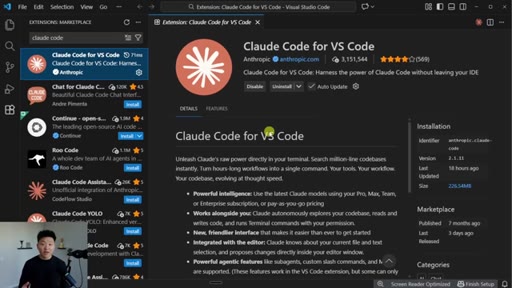
01:49HOOKand just type in Claude code. And then you'll see right here that this extension pops up which lets us use Claude code inside of Versus Code. So what you're gonna do here is go ahead and install it.
01:59HOOKYou could also do this in anti gravity or in cursor or somewhere else or you could even use the Claude code kind of app by itself and install that locally. But wherever you choose to use it, you're gonna log in and then we'll get started. I'm just using Versus Code in today's tutorial.
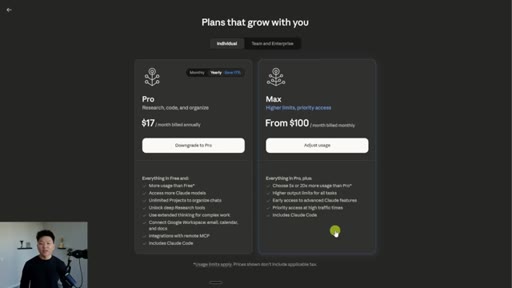
02:13It'll prompt you to sign in with your Anthropic account and then you'll be all set. Now in order to access Claude code, you do have to be on a paid plan of Claude. As you can see, if you're on the $17 a month plan of with pro,
02:22you get Claude code. But you will probably find pretty quick that you'll wanna upgrade to max or the the higher version of max because you'll be doing a lot of automations in there, and you don't wanna hit your limit and then have to upgrade. But you could always start on pro and then upgrade later.
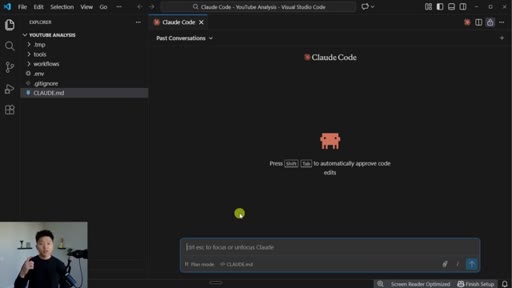
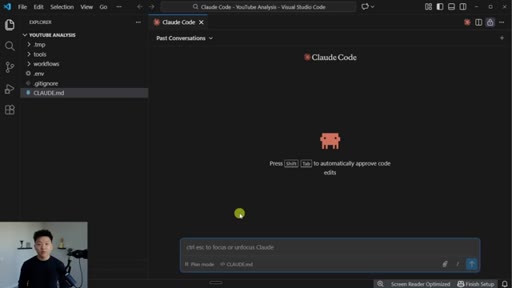
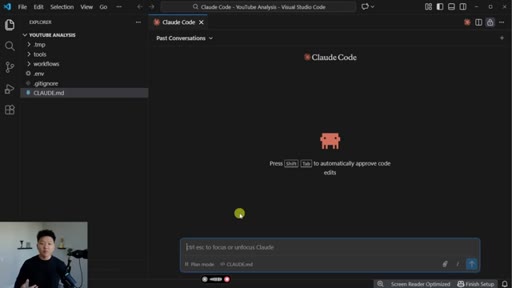
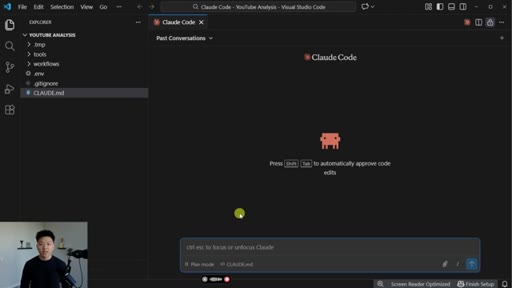
02:36So once we got that extension installed, I'm just gonna go ahead and click on this button in the top right, which looks like the Anthropic logo. And I'm just gonna open up Claude Code. I'm gonna close out of this window,
02:45and now you can see that we have basically a chat GBT like looking interface where we have Claude Code right here. So So on the left hand side, instead of looking at the extensions marketplace, we're gonna click on this button up at the top that says explore. And what it tells us right here is that you have not yet opened a folder, so it prompts you to open a folder.
03:01So before we go ahead and open one up, let's talk about why and what we're looking at. So this is kind of the environment that we're looking at right now. We've got our files on the left hand side and this is where we're gonna actually build our project, our system prompts, our workflows, our tools.
03:15And then on the right hand side, we have the agent. So this is where we talk to Claude code. We have it help us with a plan.
03:21It asks us questions, and then it actually executes on those actions. So left hand side is files. Right hand side is the agent.
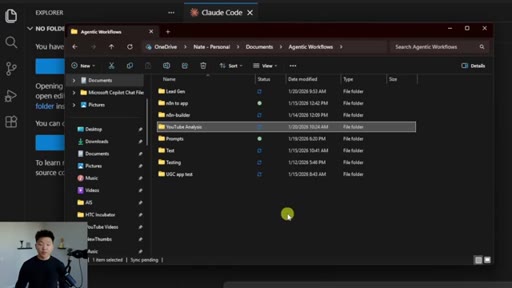
03:27It's gonna be super simple, and I'm gonna show you how we can keep our file structure really clean so it doesn't get overwhelming and confusing on this left hand side over here. So whenever you're in Cloud Code, you have to be working inside a project, and that's why it prompts you to open up a folder. So what I'm gonna do is in my documents, I've got a folder called AgenTic workflows, and I've got a bunch of ones that I've been playing around and testing with.
03:46But I'm just gonna go ahead and open up a new blank folder for today's video. I'm gonna go ahead and call this one YouTube analysis,
03:54and then I've created that folder. So now when I go back into Cloud Code, I'm just gonna open up that folder. Cool.
03:59So I just opened it up and it changed what we were looking at over here. On the right hand side, we've got, like, Versus Code's agent, so I'm not gonna worry about that and just close out of that. And then on the left hand side, you can see we're now in the YouTube analysis folder, but there's nothing in there yet.
04:12So once again, I'm just gonna reopen Cloud Code, close out of this one. You can see you can have multiple different files open on the right hand side. So if you wanted to have, like, five Cloud Code agents running or you wanted to look at five different files or system prompts, you could do so.
04:26But right now, we're just gonna keep it open to one. So the first thing that we need to do is we need to give Cloud Code a system prompt for this project, and that's the first thing that you should do whenever you open up a new project in Claude code. And we call this system prompt a Claude dot m d file, dot m d just standing for markdown.
04:40So I'll show you guys that in a sec. But without a system prompt, it's like we have an n n n AI agent like an expert copywriter, and we don't actually give it a system prompt in here.
04:48So without a system prompt, it wouldn't actually really be an expert copywriter. It would be super generic. It wouldn't understand the tools it has, the product that we're trying to sell, or where the documents live and what those look like.
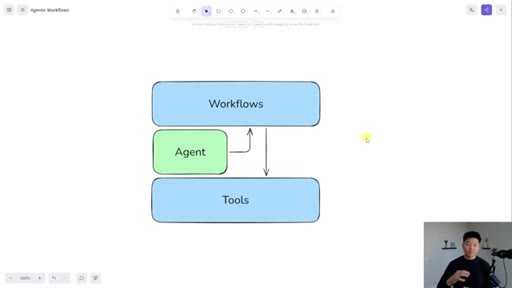
04:59So that leads me into the next part of the video, which is talking about the framework, which is how we actually build these automations. So here's a really, really simple visualization of what we're actually doing here. We've got our agent, which is Claude code, and the agent is gonna help us build workflows.
05:14Workflows meaning processes, SOPs,
05:17instructions of what we actually wanna do. And inside those workflows, we're gonna give it access to tools, and tools means actually executing actions. So send email would be a tool.
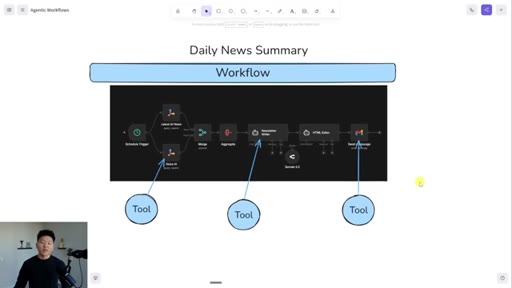
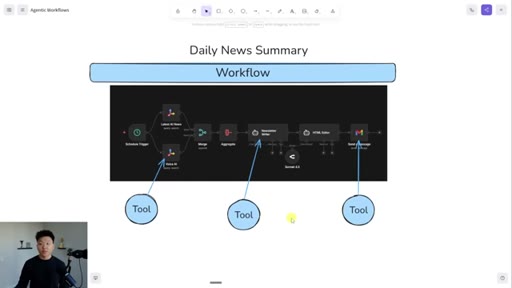
05:26Research a YouTube channel would be a tool. So it's really similar to the way that we have workflows and tools in NNN. Here you can see is an NNN workflow for a daily news summary.
05:34And inside the workflow, which is a specific set of instructions in a specific order, so it's a deterministic process, We have different tools. We've got a tool here for Tavoli to do research.
05:43We've got a tool here for an AI agent to do the newsletter writing, and we've got a tool at the end to send a Gmail message. So hopefully that all makes sense. It's gonna be really simple.
05:52We're We're gonna have a folder for workflows, and in there will be all of our processes. We're gonna have a folder for tools, and in there will be all of the actual things that it can execute. And then the agent basically helps us set up those tool files and workflow files and then execute those actions.
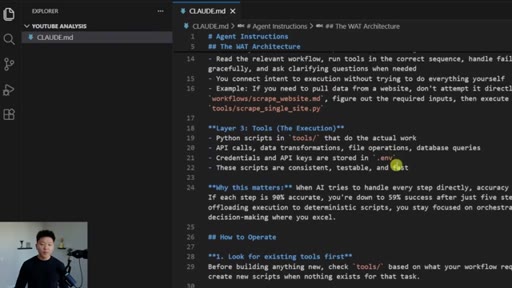
06:05So what I'm gonna do is drag in this Claude file, and you can see it's a Claude dot m d. This could be called agents dot m d, Gemini dot m d, whatever you want. In this case, we're using Claude code, so I'm calling it Claude dot m d.
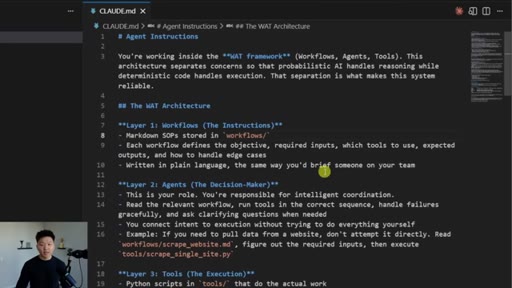
06:16But let me go ahead and expand this one, and let's briefly read through it so you understand exactly what I just talked about with the workflows agents and tools. So this is the agent instructions for this specific project. You're working inside of the WAT framework, which stands for workflows agents tools.
06:31This is a three layer framework, it basically separates concerns so that the probabilistic AI handles reasoning while deterministic code actually handles the execution. And that is what makes these systems actually reliable. So like I said, layer one is the workflows, the instructions.
06:45So these are markdown SOPs stored in the workflows folder, which will be created in a sec. Each workflow defines the objective, the required inputs, which tools to use, expected outputs, and how to handle edge cases. It's written in completely plain language the same way that you brief someone on your team.
07:01And by the way, when I say markdown, it basically just means this structure. This is a markdown file right here where we have, like, headers and subheaders and bold font and things like that. Layer two is the agent.
07:11So this is the actual Cloud Code agent that we talk to. This is your role. You're responsible for the coordination between workflows and tools.
07:18You read the relevant workflow, you run tools in the correct sequence, and you handle failures. You ask clarification questions when needed. Layer three, we have the tools.
07:26And these are actually gonna be Python files. So right here, can see Claude is a markdown file, so it's Claude dot m d. We said that our workflows were gonna be markdown files, so it will be like scrape website dot m d.
07:37But then in the tools, which we will have another folder for over here, we're gonna have tools that are gonna be dot p y, so a Python file. So in this case, we can see there's a example tool called scrape single site dot p y, which would be a Python script that would execute an action. These can be API calls, data transformations,
07:54file operations, database queries. And a lot of times in these tools, we'll need an API key, but we're not gonna actually store them in the tool code logic itself because if that got exported or pushed that onto the web, then our API keys would be exposed.
08:07So we're gonna handle secrets by storing them in dot ENV files. You have don't to understand exactly what that means or how that works right now. We'll show you.
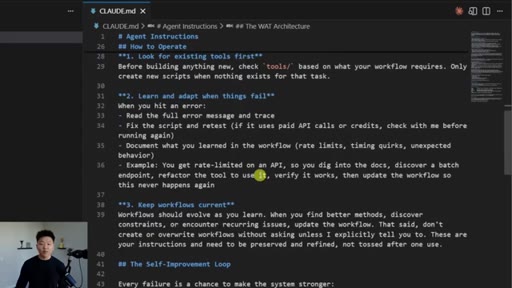
08:14So then we talk a little bit about, like, why this matters, how to operate. So you look for tools first. You learn and adapt when things fail because these agentic workflows are basically self healing.
08:23So as we're going through and building this workflow, you will see that it says, okay. I ran into an error here. Let me figure out what happened, and let me fix it.
08:30So fix the script and retest, document what you learned. So if it ran into an error and it fixed it, it will go ahead and change the workflow file so it doesn't run into that error again. So an example could be you get rate limited on an API.
08:41You dig into the docs, so you do research. You discover a batch endpoint. You refactor the tool to use it.
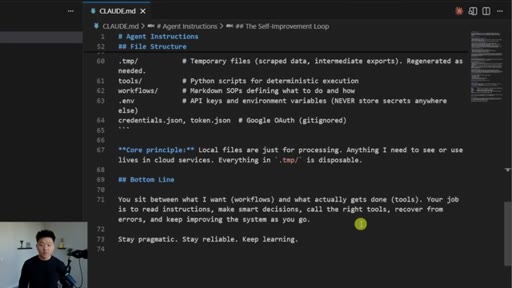
08:47You verify that that works, and then you update the workflow so that it never happens again. This is once again where we talk about that self improvement loop. We talk about the file structure, and you can see that it's gonna create this for us.
08:56And, basically, the bottom line is that you sit between what I want, which are workflows, and what actually gets done, which are the tools. Your job is to read instructions, make smart decisions, call the right tools, and keep improving the system as you go.
09:07So So I know we skimmed through this kinda fast, but you guys will get access to this exact same system prompt. I'll leave it in my free school community. The link for that will be down in the description.
09:15That way you can just go ahead and grab this, paste it in, and then when you wanna follow along and build some workflows in Cloud Code, you've got this right here for you. So now what we need to do is just set up our environment with the different folders. So I'm gonna talk to Claude code and just say,
09:27initialize this project based on the Claude dot m d file. So go ahead and shoot that off. And when we talk to Claude, what it does is it basically just tells us exactly what it's doing and what it's thinking.
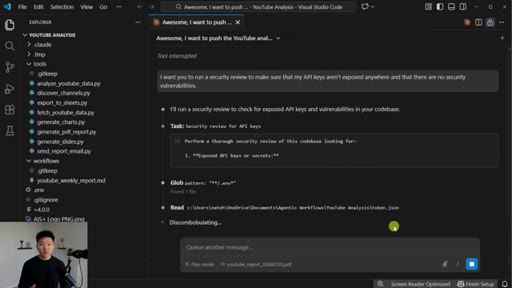
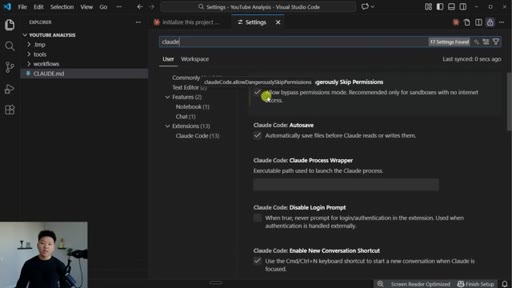
09:36What you'll notice right here is that I'm on a mode called bypass permissions, and you might not see this initially. You'll see ask before edits, edit automatically,
09:45and plan mode, but it is really helpful to be able to turn on bypass permissions. So the way that you do that is you go to the bottom left to settings. You're gonna go to settings once again.
09:53You'll type in Claude code, and then you're just gonna turn on this option that says allow bypass permissions mode, and that's what allows you to do that so that you can let your agent run and you don't have to approve every step. Now as this is running, what you'll notice is on the left hand side, we're seeing some files and folders pop up.
10:06So we've got a temporary folder, which just means anything that it needs to store and then, like, delete later just temporarily, it can do so in there just to keep everything clean. We've got our tools folder. We've got our workflows folder, and then we have a dot ENV and a dot git ignore.
10:19This So is gonna help us just basically keep our project clean, but also the agent knows exactly where everything is. Cool. So the project is now initialized using our WAT framework, and it showed us what it created.
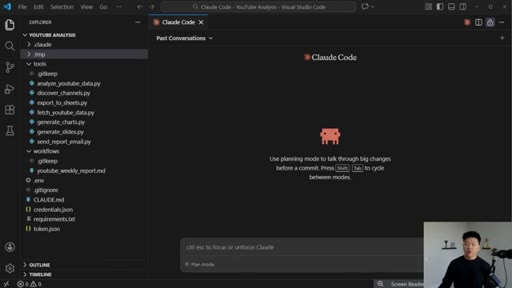
10:31So now let's move on to section three of the video where we're gonna be talking about planning and communicating with our agent. So what I'm gonna do is I'm going to clear out this conversation. If I wanted to access past conversations, I could do so up here.
10:43I'm gonna go to plan mode, and this is really important. Whenever you're doing something that actually involves, like, creating something, you need to describe the goal, and you need to be able to describe it super, super clearly.
10:54And it's not just the goal. You need to also describe the features that you want. And if you were to just describe something and then chuck clogged code at it and you would do bypass permissions, you probably wouldn't get a great output.
11:04So what you always wanna do when you're creating an idea is you wanna go on plan mode. Because what you're gonna see is when I'm on plan mode, it thinks extra hard and it looks at everything in the folder, and it's gonna ask me tons of questions that I might not have thought of, which is really, really helpful because it gets a really, really good understanding of what we want and it brainstorms options, and then it actually will do it after it's confident.
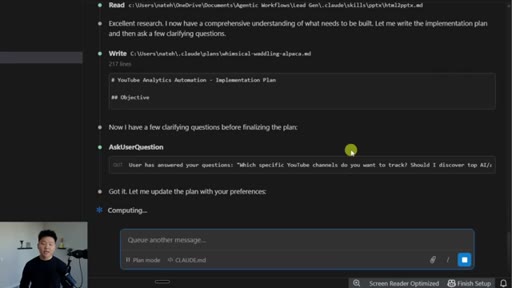
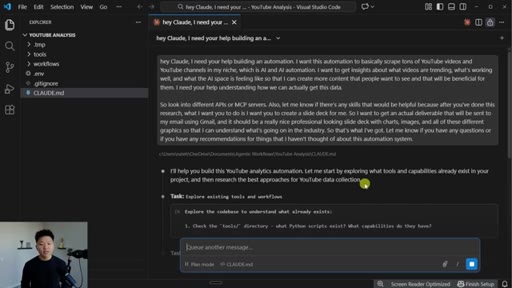
11:25So let's explain the workflow that we wanna build today. Hey, Claude. I need your help building an automation.
11:30I want this automation to basically scrape tons of YouTube videos and YouTube channels in my niche, which is AI and AI automation. I want to get insights about what videos are trending, what's working well, and kind of what the AI space is feeling like so that I can create more content that people wanna see and that will be beneficial for them.
11:49I need your help understanding how we can actually get this data. So look into different APIs or MCP servers. Also, me know if there's any skills that would be helpful because after you've done this research, what I want you to do is I want you to create a slide deck for me.
12:02So I want to get an actual deliverable that will be sent to my email using Gmail, and it should be a really nice professional looking slide deck with charts and images and all of these different graphics so that I can understand what's going on in the industry. So that's what I've got.
12:17Let me know if you have any questions or if you have any recommendations for things that I haven't thought of about this automation system. Cool. So that was my little brain dump, and it's gonna come back and ask me a ton of questions, which is just gonna help make this project a lot lot better.
12:31So I know a lot of you guys might be looking at this, and it seems overwhelming and confusing. And I agree. Like, when I first wanted to dive into Claude Code, I watched some YouTube videos, and I just it didn't click.
12:40The only way it's truly gonna click is if you get in here and you do it yourself. Because once you send off these messages, just read everything it's doing.
12:47Read every single line, and you'll start to understand the way that these models think and what they try to do. And that's truly the best way. So after this video,
12:55restart it from the beginning, open up Cloud Code, and just kinda follow along with what I'm doing, and it will all start to click. I promise. And by the way, you can see that as it's making this plan for us, it's doing research.
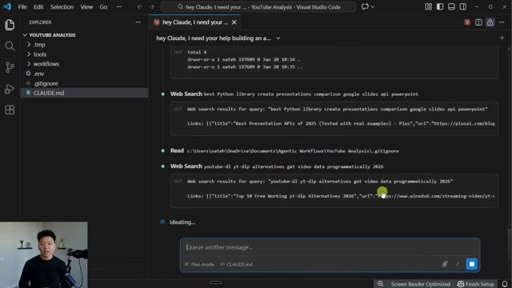
13:04So it's not just thinking. It's also searching the web to find out how we can scrape the YouTube analytics and how we can use MTP servers and things like that. Okay.
13:12So we got some questions now from Claude. It says, what specific YouTube channels do you wanna track? Should I discover top AI automation channels automatically, or do you have a list?
13:20Let's just go with auto discover top channels. Frequency is how often should this report be sent. I'm gonna go ahead and do weekly.
13:25Then it asks us if we want to track all this data in sheets. Yes. Absolutely.
13:29Let's do that. And then for delivery, it says what email address should the reports be sent to? And I'm gonna go ahead and say, send to my Gmail.
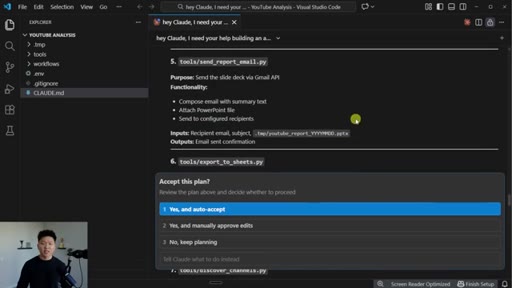
13:36So I shut off those answers, and now it's gonna keep updating the plan. Alright. So the plan is finished.
13:40The objective is to build an automated system that scrapes YouTube data for the AI niche. It analyzes trends and gets performance metrics and then generates a professional slide deck with charts and visualizations and sends that to me over Gmail. We've got the workflow, which is YouTube weekly report.
13:54We've got the agent layer. We've got different tools. It's gonna build out these seven different Python tools that it mentioned.
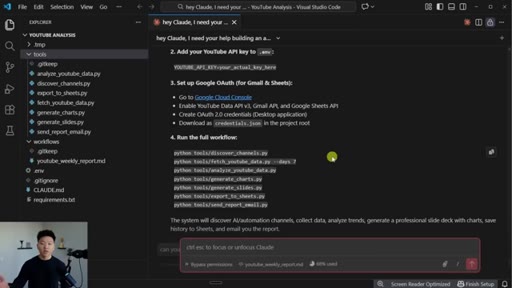
13:59So fetching YouTube data, analyzing YouTube data, generating charts, generating slides, sending the email report, exporting sheets, and discovering channels. And now it needs to actually create this workflow. So we could obviously read through all of this and we could give it some feedback if we wanted to, but I'm just gonna go ahead and accept these because I wanna see how well it did with just one iteration of our plan, took me a few minutes.
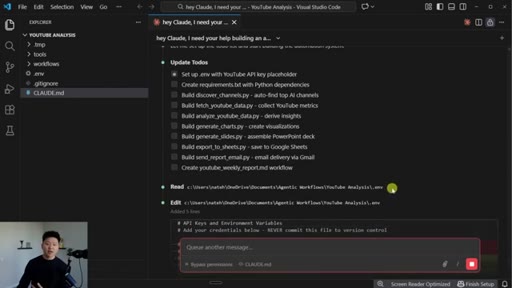
14:21So you can see what it does is it starts a to do list. So it's basically just gonna knock off one of these at a time, and that's really nice because it helps the agent stay on track, but it also means that you could go to your other monitor here and work on something else and just kind of keep peeking in on it and checking on the to do list to see how much is left to run.
14:36Okay. So the to do list is done. The workflows and tools have been built.
14:39So here's where we're at. We've got our seven tools have been created. So if I open up the tools folder, we should see we now have these seven Python files.
14:47And each of these, like I said, are actual Python code that will execute some sort of action. So those have been built. We've also got the workflow.
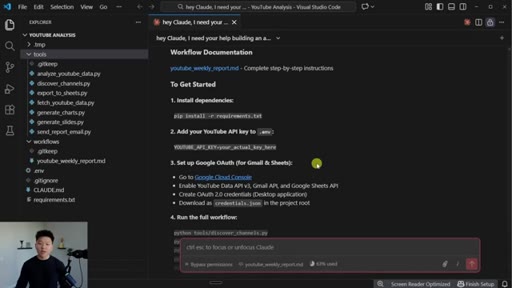
14:54So this is our markdown file, YouTube weekly report, which is an actual process. I'm So not gonna read this whole thing, but it has the actual steps that we would be doing here. So now it says to get started, we have a few dependencies.
15:05So the first one is we need to install something. The second one is to add a YouTube API key. The third one is to set up Google OAuth for Gmail and Sheets.
15:13And then the fourth one is just to run the actual workflow. So a lot of times when Cloud Code's done and it has some action items, it actually just tells you to do some stuff that it could do itself. So right now, we would obviously have to go get our YouTube API key, and then we could just give it to it and say, hey.
15:26You go update the dot ENV. I don't wanna touch that. You just go do it.
15:29But first, what it's doing is it's asking us to do this. So we could obviously just install this right now, or I could just say, can you please go ahead and install the dependencies?
15:38I'll go grab my YouTube API key. Cool. So I went ahead and installed that stuff just like I told it to, and now it's asking for a YouTube API key.
15:45So instead of just adding it to the file, I'm just gonna drop it in right here. And then the one thing I will have to go do manually is step three. So I'll have to enable the YouTube data API and Gmail and Google Sheets and then create the credentials and just drag in the JSON file, which I will do that in a sec.
15:59And here's another thing I'm doing with my API key. It should only be added to the dot ENV file. It shouldn't be listed in the workflows or the tools.
16:06Okay. So I added everything that I needed to. And if you're confused about how to do that, just say, hey.
16:10Where do I go? What do I click on? How do I do that?
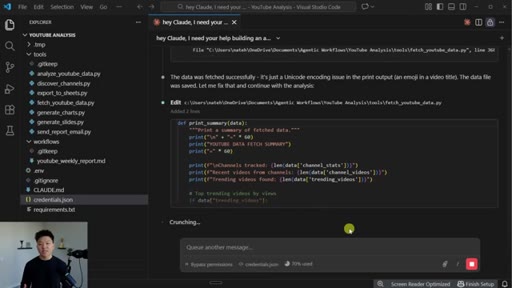
16:12And it'll walk you through. And now what it's doing is because it has all our credentials, it's actually just testing out if the things work. So you can see the YouTube API is working.
16:20Now let's run the full data collection pipeline. So it's basically just testing that the flow works, then we'll give it a full run. But we can see that it just ran the full pipeline, so that was our first initial test.
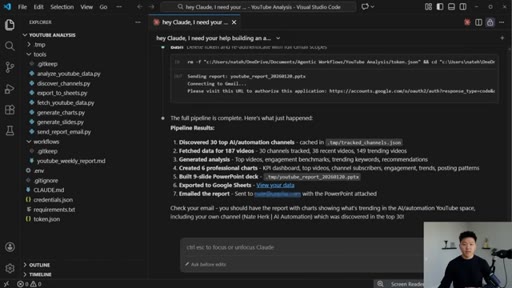
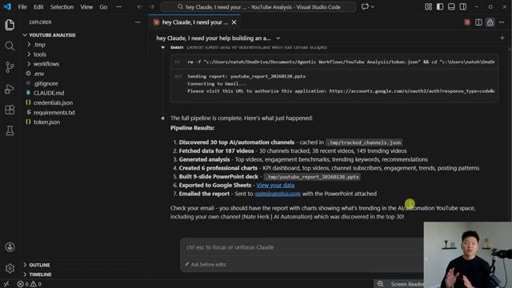
16:30It found 30 channels. It fetched a 187 videos. It generated analysis.
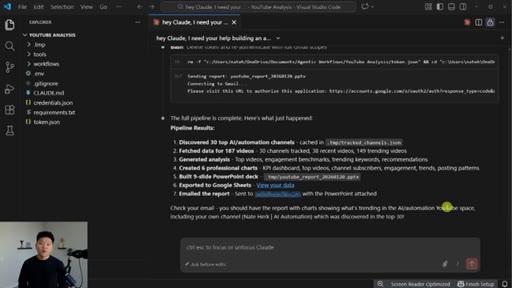
16:34It made six charts. It built a nine slide PowerPoint deck for us, exported it to sheets, and then it emailed us the report. So let's go take a look at all that.
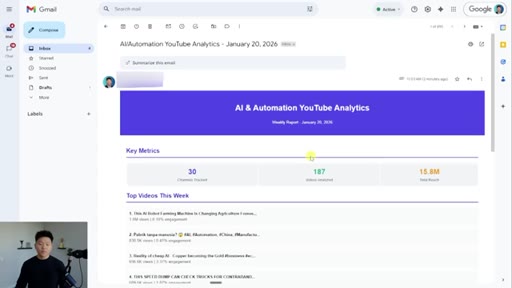
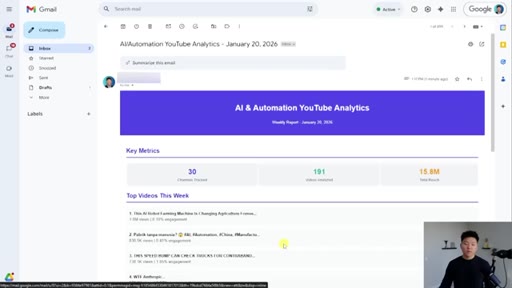
16:42Okay. So here's the email that I got. AI automation, YouTube analytics.
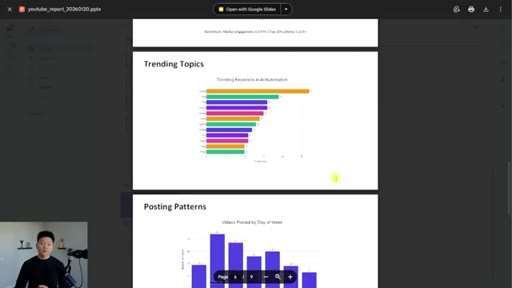
16:46So the weekly report for January 20, we got 30 channels tracked, 187 videos. We have some top videos from the week. We have recommendations, and then we also have our PowerPoint right here, which we can see we have similar information.
16:58We've got median views, median engagement, trending topics. We've got top performing videos, so we have this laid out by title and by views. We've got top channels by subscribers.
17:07Unfortunately, I do not see my name up there, so please hit the subscribe button. We've got engagement analytics. We've got trending topics by keywords in the AI automation, posting patterns, and then we have some recommendations to kind of close us off here.
17:19So keep in mind, this is not perfect, and we obviously would wanna come back and make this a little bit more tailored for us. But this was one prompt.
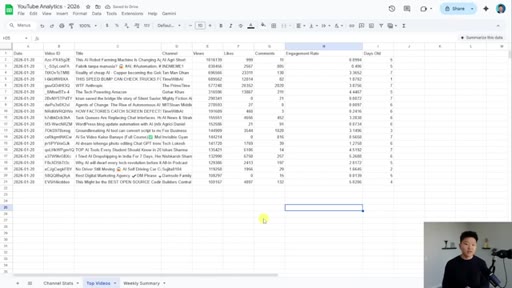
17:27Cloud Code asked us questions, and then I basically just sat down, and then I came back over here when it was done, and this is what we have ready for us. What we also see is that we got this exported to a Google Sheet. So if I click on this, remember that we didn't create the sheet, we didn't create these different tabs, or the actual, like, schema of this.
17:44But we've got three tabs. The first one is channel stats. So this pulled channel stats from today's date, which is January 20.
17:49We have the channel IDs. We have the actual channel names, and then we've got subscribers, total views, and video count. We can see nice that Nate Herc ad automation did make it in this scrape.
18:00We've also got top videos. So once again, this was ran based on today's analytics. We got the video ID.
18:04We've got the title of the videos. We've got the channel, the views, the likes, the comments, the engagement rate, which is pretty cool, and also how old the videos are. So we can see that we're getting real accurate, like what's trending right now.
18:16And then we get a weekly summary. So this is supposed to run every single week. We can see the day that it ran, the channels it tracked, the videos it analyzed, the median views, the median engagement score, and the top keyword
18:26and top keyword two, which actually it's funnily enough spells out Claude code, which is why you're seeing this video right now. Okay. So let's recap what we've done.
18:34We have familiarized with the interface. We have built out the actual structure of our project using a Claude dot m d file, which is like a system prompt. Now we have our workflows.
18:43We have our tools, and we have actually gone through the whole planning stage with Claude code to build out the initial you know, workflow automation that we need. So what comes next now is we wanna talk about a few other things.
18:55We wanna talk about superpowers, so MCPs and skills, and then we're gonna test it a little bit more, and then we're gonna actually deploy the automation live. So to start off with superpowers, MCP
19:05servers. So I'm not gonna dive super, super deep into MCP servers in this video, but I did wanna bring it up. So if you remember in plan mode, I basically said, hey.
19:12I wanna scrape YouTube data. Can you just go figure out if I should use an MCP server or, like, an API? And it ended up finding out that the YouTube API was gonna work better, so that's why we did it in this workflow.
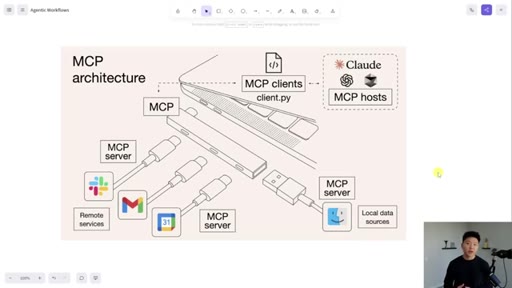
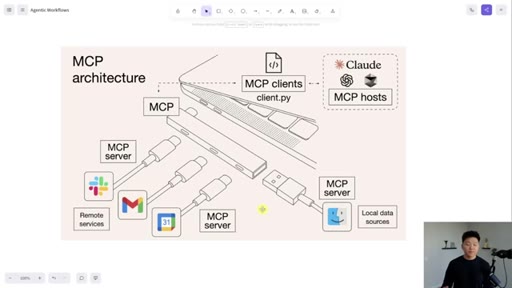
19:23But, essentially, just think of an MCP server as an app store. So Gmail has an MCP server.
19:28Calendar has an MCP server. Lots of these services do. And this is, like, one of the most common visualizations because it's like a universal
19:36micro USB port. Because instead of having to go to Calendar's API and have one different API request to create an event, one different one to update event, one different one to delete an event, All we have to do is connect once to the whole server, and then the agent can figure out how to go use different endpoints and parameters.
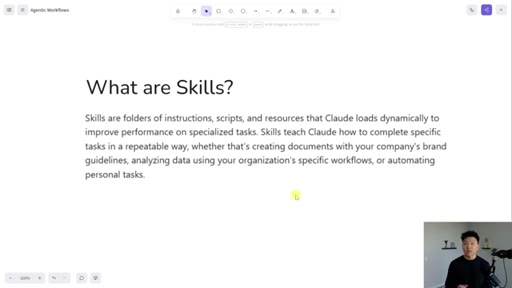
19:53It just simplifies the whole process. Now what I did wanna talk about a little bit more was the idea of Claude skills because this is a little bit newer. So, essentially, skills are instructions or resources that Claude can load in dynamically.
20:04And that's kind of the key piece here is that instead of just reading it every time in its system prompt, it basically understands what is the request. Let me go look at all the skills I have access to.
20:13If one of them is relevant, I'll pick that one. I'll read it all, and then I'll take action. And this process basically just improves Claude's consistency, speed, and performance, and also saves you tokens.
20:23Like I said, when you ask Claude to do something, it reviews the available skills. It loads in only the relevant ones, and then it applies those So we're gonna go ahead and try to implement a skill into this workflow, and I'll actually show you what the skill document entails so then it will all start to make a little bit more sense.
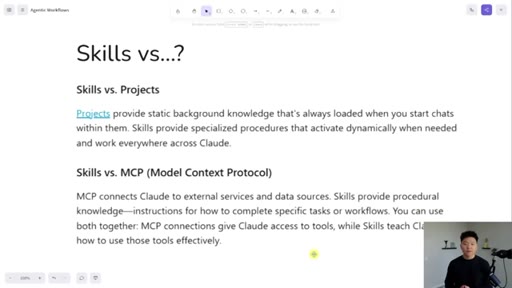
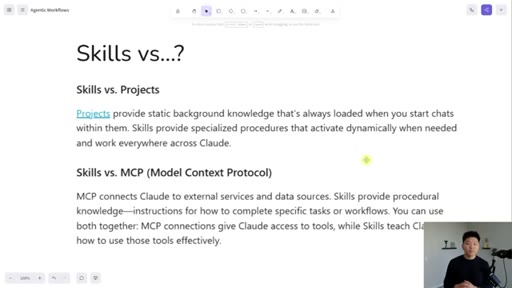
20:38But before we do that, I did wanna real quick cover the difference between skills and projects and skills and MCP. So the first one is about projects. You're in a project, and basically what we have is access to whatever is in here.
20:49So it's kind of static documents and background information. And a lot of times these skills are installed globally. So what you'll notice actually in our project is that we don't have any skills in this project.
20:58Normally, there will be like a thing that will be like dot agents and then you drill down in that folder and you'll see like agent skills or Claude skills, and that's more installed on the global level. And that's actually really good because what that means is if I close out of this project and I opened up a different one, I would still have access to all the same skills that I've already installed.
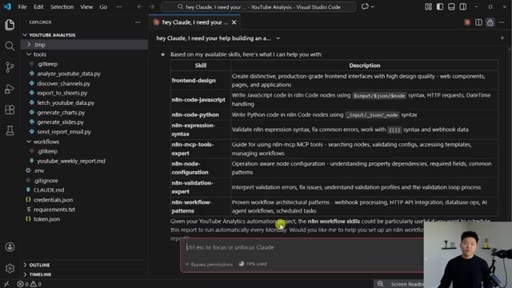
21:14So you can see right here that I just asked Claude code what skills do you have, and it came back and showed that it has a front end design, it has n and n skills, and those are the only eight that it actually has even though we don't see them in this specific project. Now we have skills versus MCP, and these are also very different.
21:30MCP is basically to get data and take action. So like I said, if you want to connect Claude to something like Gmail, to read emails, or to send emails. But skills are more like knowledge,
21:40custom instructions. So if you ever find yourself constantly repeating something to your Claude code agent, then maybe that's a good sign to put it either in the claude.md file or create your own custom skill for it. So like the example of the front end design, if you wanted to use Claude code to build yourself a landing page or a website, using the front end design significantly improves its ability to actually design things.
22:00So what we're gonna be doing in this example now is I want to use a skill, and I'm gonna be looking at this Claude code templates website, which has a bunch of agents and commands and MCP servers and skills and hooks. And I'm gonna be looking for one that helps us create, like, better looking PDFs.
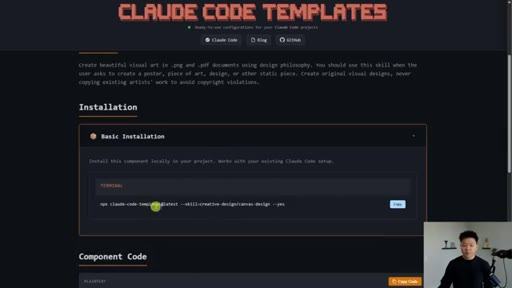
22:16I'll also leave a link to this in the description of the video. I So went ahead and searched for design, and you can see there's a skill right here called canvas design. And if I view details here, it says create beautiful visual art in dot PNG and dot PDF documents using design philosophy.
22:29So we're gonna go ahead and try this one out. I've never used it before. We'll see how it works.
22:33But this is actually like the code of the skill itself. And you can see it basically is just natural language instructions. So it's just a custom prompt that someone built or you built yourself, and now I can load this into Cloud Code.
22:45So when we have it design a PDF, it can use this, it will probably just come out a lot better because it's prompted. So we've got installation right here where we can use this code. So what I would try is just copying this, going into Versus Code.
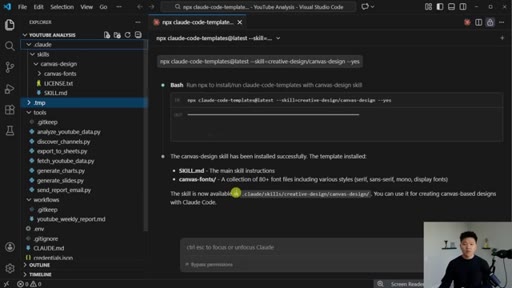
22:55I'm gonna go ahead and open up a you know, kinda clear the conversation and just paste that in and see what happens if I drop that in Okay. So I dropped it in, and then it actually ran the command in our terminal to install it.
23:06And it says that it's been installed, and we have skill.md for the instructions for the skill. And then we've also got a bunch of fonts.
23:12And what it did is it actually created a new folder here called dot claud, and then we do have skills right here. So you can see that it put it in this project. So now I'm a little confused because I don't know, okay.
23:21We have a skill here, but we also have skills globally. So I would literally just say, it looks like you created this skill in this project.
23:28Is this gonna be installed globally, or will it only be accessible through this project? So right now, it basically says, yeah. This was installed just locally in this project, and that's fine.
23:36And if you wanted it to be global instead, you would just say, okay. Actually, just make that global, and then it would. So, anyways, gonna clear out this conversation one more time.
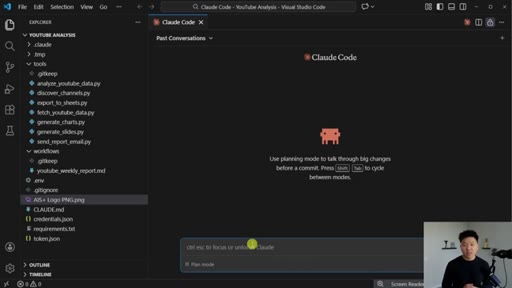
23:43I'm gonna go back into plan mode, and I'm going to give it a prompt. And actually, one more thing before I prompt it. I'm gonna drag in the AI automation society plus logo just over here on the left hand side.
23:53And you can see it's right here and the file pops up. Right? So what I'm gonna do is prompt it, but I want it to actually have this logo on all of the PDFs that it generates.
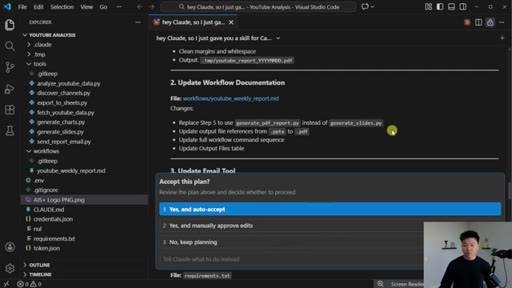
24:02Hey, Claude. So I just gave you a skill for Canvas design. And instead of outputting a PowerPoint presentation,
24:08I want you to now take the same research when you do your analysis from YouTube videos, but I want you to use that Canvas design skill to create a PDF. It needs to be professional, but it needs to be aesthetically pleasing. And what I want you to do is make sure you're including the AIS plus logo PNG that I dropped in this folder as well because I want the whole presentation to be branded so I can share it with my team.
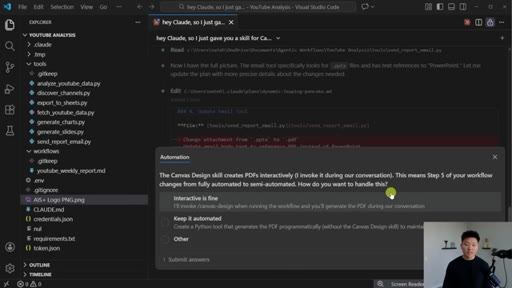
24:30So I'm shooting this off in plan mode, and I'll let you know when it comes back with some questions. Interesting. So it came back and said that that Canvas design skill that we just installed creates PDFs interactively,
24:40which means step five of our workflow changes from fully automated to semi automated. So how do we wanna handle this? Let's just go ahead and just say keep it fully automated because that's kind of the whole point.
24:48We wanna be able to push this live to run on a schedule trigger. Okay. So the new plan is to replace the PowerPoint output with a branded PDF report.
24:55So it's gonna make a new tool to replace the generate slides tool. We have our current workflow state. We've got our logo.
25:00It has some proposed changes here. We're gonna be looking at the PDF structure. And, of course, what it has to do is update the actual workflow.
25:06So it's gonna look at this YouTube weekly report markdown file, which is the actual workflow, of course. It's gonna change that. It's gonna update some of the other tools like the email tool.
25:14And then, of course, it's got some other implementation steps for us. And in this case, what I'm gonna go ahead and do is just auto accept these changes. And so right now, it's just setting up a to do list to actually implement those changes.
25:24We're not gonna be running the workflow again. We're just gonna make the changes, and then we'll go ahead and test it. And just a reminder, when you guys are in here building your own workflows, just pay attention to what it's actually doing.
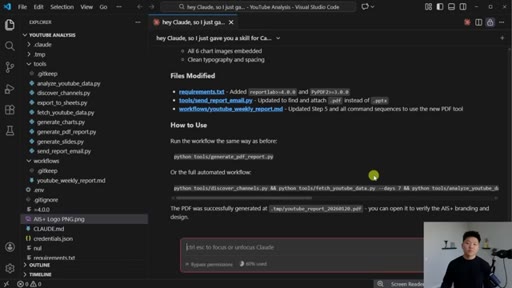
25:33It does some really interesting things like right here. It installed some dependencies to actually be able to create the PDF a little bit better. And then here it says the PDF was generated, but it's using a fallback using whatever this is, and it would look better if it had proper title and closing pages.
25:46So it's gonna install something else and then try it again. It's just a reminder of using this framework of an agent that sits between workflows and tools as it's building them out, as it's testing them, it's continuously improving them, seeing errors, seeing things that could be improved, and then just going ahead and doing that for you.
26:00So that's where it's really powerful. And this testing and optimization phase is really important because once you actually deploy your automation, you're not deploying the agent.
26:07You're just basically deploying the workflow that's connected to tools, and that's important to understand. The workflow itself would be put up into the cloud where it could run on a schedule trigger, but the agent still lives locally in Cloud Code, which means if a workflow which means if your workflow is running every week, it's not going to be self improving and self healing.
26:24So if you wanted to do that, you would come over to Cloud Code, you'd edit the workflow, you'd improve it, and then you just push that version back to modal or wherever you're hosting them. But, anyways, this finished up. So it created a new tool.
26:35It modified a few other things. It changed the actual workflow itself. And then what also it did is it made a test PDF just to see how that worked.
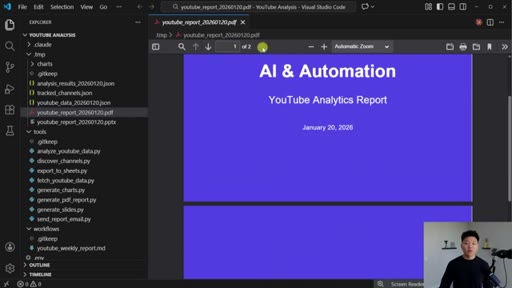
26:43And you can see here it's stored as a temporary file. So in our temp folder, which is right here, you can see right there we have a YouTube report PDF. And let me just make this bigger.
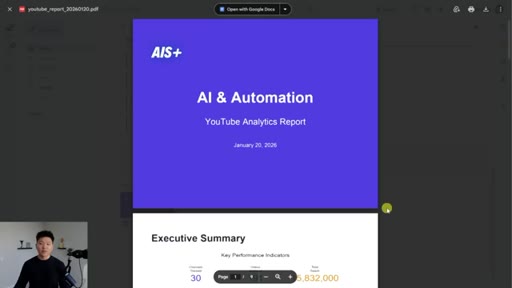
26:52We've got our logo right here. We've got our AI and automation YouTube analytics report, and we have the thank you slide.
26:58So it basically just tested to see if it worked. But now we're gonna go ahead and run that full workflow, and then we're gonna see if we're ready to actually push it up into production. So I'm on bypass permissions, and I'm just gonna shoot off run the YouTube analysis
27:11workflow. And it's not even called that, but it will be able to search through the workflows that it has, and it's gonna understand which one to run. It's gonna execute all of those Python scripts in order, and then we should have a finished product.
27:23Okay. So here's the email. It has the similar structure as far as the actual body of the email, but then at the bottom we should have our PDF which we got attached right here.
27:30But what you'll notice is that it's only two pages. So it didn't actually create the right type of PDF that we were looking for. However, it did update the Google Sheet.
27:37So it added, you know, those 30 more videos that we originally didn't have on this sheet. It added more videos, of course, and then it threw in one more weekly summary where it has a little bit of a different
27:48metrics. And what's interesting is that you can see that it did generate charts and it did do analysis because it actually generated all of these images over here, top channels, top videos, key performance indicators, posting patterns, all this kind of stuff. It just didn't actually include it.
28:01So once again, we would go back in natural language and say, hey. You know, we just got that PDF, but it was only two slides.
28:08So what I did is I said everything seemed to work except for the PDF that I received was only two slides. It was only the title and the thank you page. So it found the issue.
28:16It fixed it. It changed the workflow. It changed the tools, and now it's shot me off a new example with nine pages.
28:22And this time, we still have the logo. We still have the date, and we also now have all of the actual slides that we need in this PDF with the charts and things like that, recommendations, and then we still have the closing off slide.
28:33So hopefully you guys understand now how important the planning really is because we did kind of rush through this in this example where we auto accepted changes and we just kind of like sped through things. And it's fine because we're still able to go back and forth and let Claude code investigate and fix, but it should show the importance of if you are really, really clear up front and you know exactly what you need, it will be a lot better off the jump, but it's not perfect.
28:55Okay. So now let's say we're at the spot where we're ready to basically make this workflow live, where we actually wanna forget about it and just let it run every Monday at 6AM or whatever. So we need to deploy it.
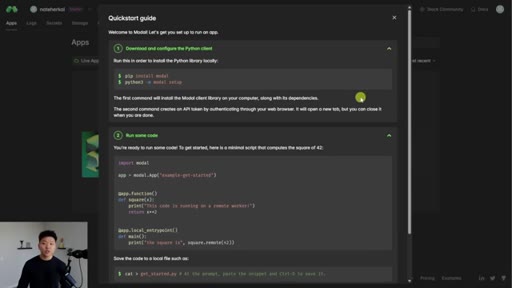
29:05So the way that we're gonna do that is we're gonna use modal, which is AI infrastructure that developers love. Essentially, modal is is it lets you spin up these kind of, like, computers in the cloud where you can host your automations, and it only charges you when they actually run.
29:17So you're not getting charged by the minute or by the day. You're only getting charged every time they actually execute. So when you create an account, you'll get $5 for free.
29:24And then if you add a credit card, even though it won't charge you yet, you'll get $30. And this $30 will last you a long long time. Trust me.
29:31So what'll happen is this screen will probably pop up and it will say that you need to download and configure the Python client. So you could basically copy this exact command right here and just put that into Cloud Code, or you could just say, hey, Cloud Code. I want to push this workflow to modal.
29:45So just help me get that initialized. But I'll just show you what would happen if you copied this and we came into Cloud Code and said, awesome.
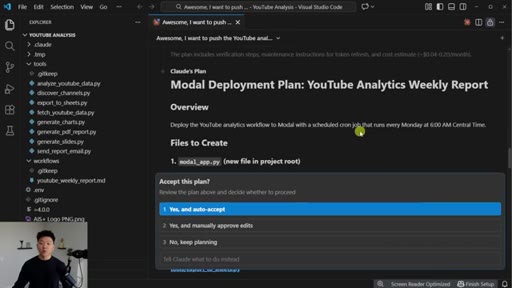
29:52I want to push the YouTube analytics workflow to modal so that it can actually run every single Monday at 6AM.
30:00And then I'm gonna go ahead and paste in those two things that we just saw, and let's actually do this in plan mode first and just shoot that off. So what it's doing is it's gonna read through the workflow structure and the tools and understand how it can package everything up so it can actually deploy it on modal as an app.
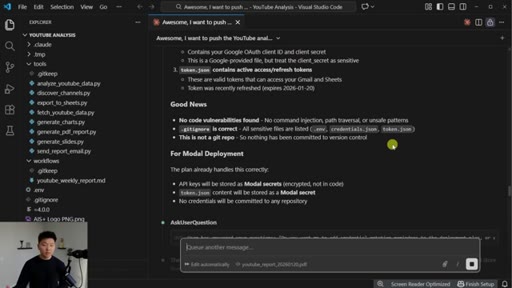
30:13So it came back with a plan to deploy this on modal, but there's one more thing that I wanna ask it about before we actually do this. And this last part is security. So I basically told it to run a security review and make sure that my API keys aren't exposed and that there's no vulnerabilities.
30:26Because the reality is we just built a ton of code, and I don't know what the code is actually doing. So it's really important to be thinking about this before you put anything out there on the web.
30:36Are any webhooks exposed? And if they are, do you have, like, you know, proper protection around that? Are secrets out there?
30:42Are API keys out there? What could people do now that this is out there? And as you start to deploy more workflows, whether that's an NNN or whether that's in code like this, you'll start to understand the things to look out for, but you also have one of the smartest reasoning and coding models right here in front of you.
30:57So you might as well just ask it, hey. Check the code and let me know if there are any risks. So the security review came back and it found three critical critical issues that need attention.
31:05But the good news is nothing is vulnerable, and there's not a GitHub repo, so nothing's been committed out there publicly. And everything is gonna be stored as a modal secret, so the API keys and the JSON token. So nothing will be committed to any repository, so we're good to go.
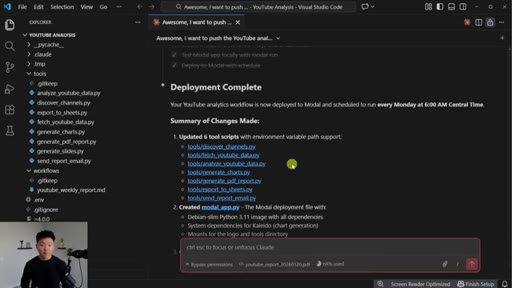
31:20And basically from there, it came back with a plan once more, and I have approved it. So it's going ahead right now, and it's creating the different tools and the different things that we need to actually be able to write this over to modal, and then we'll go ahead and test it out over there. So our deployment is now complete.
31:34It had to update the scripts to make sure that they could actually have the right environment variable path. It had to create a modal deployment file so it actually just understands the process of what it just did and schedule the cron or the schedule trigger, and then it had to create modal secrets that we could store over there.
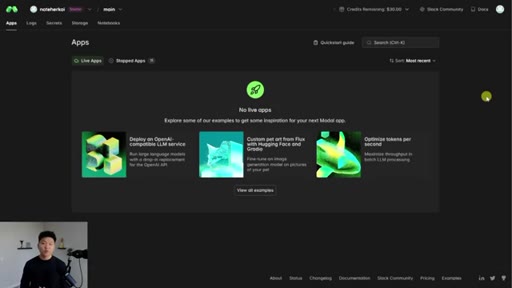
31:49So it is now deployed and scheduled. So if I click on this link, this will bring us to our modal environment right here. And what you can see is that we have two different apps.
31:57We have the analytics, and then we have the analytics manual. So it had to do a manual run just to see if it worked. So this is the actual app.
32:04So if I go back to the main dashboard, you can see that we have this app, and there's kind of, like, the two different, like, endpoints. But if I open up the app, we can see the overview. We can see deployment history.
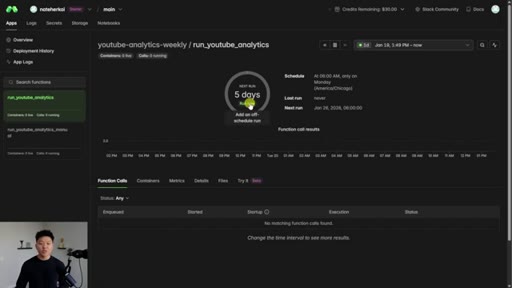
32:13So as you change something in Cloud Code and then push it back over here, you'll see a different version. And then you can also see the app logs when it's running. So when I click into the YouTube analytics one, the one that will be live, it says the next run will be in five days.
32:25So it's scheduled at 6AM only on Mondays, America, Chicago time. But what I'm gonna do just to prove to you guys that this is working or at least test if it is working is we can actually just go ahead and run one right now. So I scheduled an immediate run.
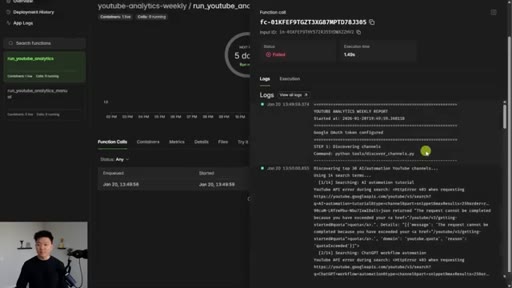
32:37CTAWe're gonna see this pop open right here, and we're gonna see the fact that it's running right now. As you can see, it took two seconds to start up, and now it's running and then we'll see the result of that execution. And actually, I'm glad that this just failed because I can show you what you need to do, but this failed.
32:49CTARight? So we'll click into this and when you click into each of the runs, you'll basically be able to see the logs and the executions. So in the log, this is what actually shows us, like, why it failed and what happened.
33:00CTASo I don't really know what this means. Right? All I'm gonna do is copy this entire string of text.
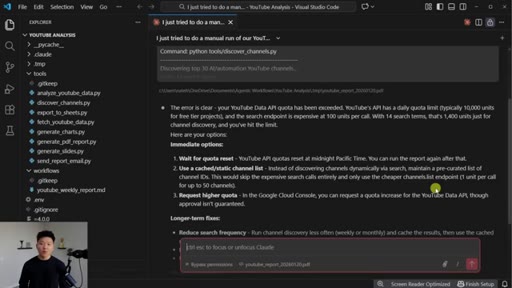
33:06CTAWe're gonna go back into Cloud Code, and I'm actually gonna go ahead and clear this because we're at 64% context. So just gonna restart fresh.
33:13CTASo I just tried to do a manual run of our YouTube weekly report app in modal, and this is the error that I got. And then I paste in all that messy stuff and shoot it off. Okay.
33:24CTASo because we tested so much and we were using the free tier of the YouTube data API, we actually just hit the daily limit, which was about 10,000 units, and we exceeded that because we were doing so much testing to see how well this thing would work. The good news is if this is actually running weekly, we will never hit that daily quota limit, so we're fine.
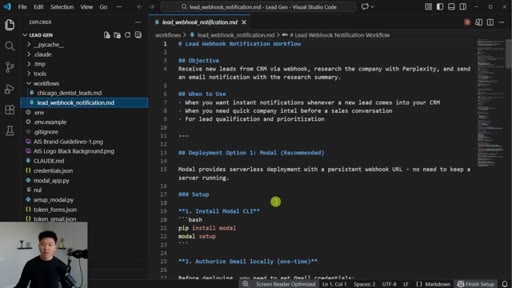
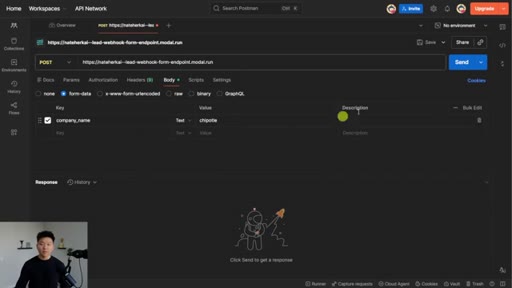
33:41CTAThe bad news is we're not gonna test this one right now, but at least it does suggest other options and some longer term fixes. But it's okay because I did wanna end off by showing how you could deploy something with a webhook trigger rather than a scheduled trigger. So what I did is I came into this other workflow that I built the other day, which is a very simple lead webhook notification.
34:00CTASo it has a webhook as the trigger. We would see a company name and some other data. We would research the company with perplexity and then send an email notification.
34:08CTAAnd so I basically just said, hey. Cloud Code, can you push this workflow onto modal as we did earlier? And now we have this app in our modal as you can see lead dash webhook.
34:18CTASo what I'm gonna do is go to postman so we can actually hit that webhook just to simulate what would happen. We've got the address. We've got the body.
34:25CTAAnd I'll shoot this off. And what this is gonna do is it's gonna trigger this form underscore endpoint in modal. So I'll click into that one.
34:32CTAAnd you can see right now we have a status of pending. This one's gonna start running, and then it will show that we actually get the email in Gmail. And so this is really just to show that once you have your stuff up and running in modal, it will work.
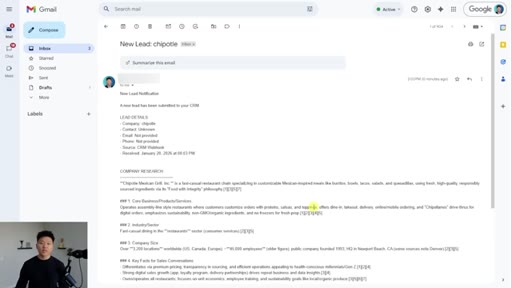
34:44CTAAnd you can also do it based on webhooks rather than just doing it on a cron. So that looks like it finished up. We can see that we just got this email for the new lead Chipotle where it did some research about them, and then, obviously, it gave us a notification here.
34:55CTAAnd now what you could do is because you just went through the process of deploying a workflow to modal and you know that it works because you just validated that it's working, you have all of that history right there. And what you could do is say, okay. Cool.
35:06CTAKeep this stored either in my claw dot m d file or let's create this as a skill so that every time later when you're building a workflow and you wanna actually push to modal, you have all that information already there whether that's a skill or whether it's in the system prompt of Claude dot m d. So I hope you guys at this point can see how Claude code makes this stuff really, really easy to get automations up and running, whether that means an automation that you wanna be there for and you trigger kind of to use that as like a personal assistant or an automation that you actually want to host somewhere and have it run on some sort of trigger.
35:38CTAAnd you can tap into all of the skills that other people have been building and using because you can find those publicly and then just add those to your own instance. So now you have the super smart model like Sonnet 4.5, Opus 4.5 paired with all of these really good prompts and really good like MCP servers. So you can pretty much do anything in that environment.
35:56CTAThe more you start to use it, the more you'll realize that you don't have to actually switch around to a bunch of different Chrome tabs and different apps on your desktop. You can do a lot of the stuff that you need to do just in the Cloud Code environment itself. So once again, that cloud dot m d file that you guys can access for free will be in my free school community.
36:10The link for that will be down in the description. And if you're looking to dive deeper into this kind of stuff and connect with over 3,000 members who are also kind of all in on AI and building businesses with AI, then definitely check out my plus community. The link for that is also down in the description.
36:22We've got full courses in here starting with agent zero for the beginners and then moving all the way up to actually monetizing AI automation knowledge. And I promise you guys, I'm gonna bring a lot more of, like, anti gravity and Cloud Code content into this plus community course as well.
36:36Also run one live q and a every week, so you can ask me questions about NNN, Cloud Code, or building an AI business, all that kind of stuff. And I'd love to see you guys in the community in those live calls, but that is gonna do it for today's video. So if you enjoyed or you learned something new, please give it a like.
36:51It definitely helps me out a ton. And as always, I appreciate you guys making it to the end of the video. I'll see you on the next one.
36:56Thanks so much.
— full transcript
§ 05 · For Joe

Steal the WAT framework.

LFB Line playbook

The WAT architecture is the missing scaffolding for every Claude Code project Joe already runs — name it, teach it, sell it.

  • Use the WAT claude.md as the default starting point for every JoeFlow Chef batch — Workflows folder = session templates, Tools folder = MCP call wrappers.
  • The bar chart open (Manual vs n8n vs Claude Code, Time to build) is a template for a JoeFlow demo: Manual typing vs JoeFlow dictation speed.
  • Plan mode + clarifying questions before any new automation is the protocol to teach in the LFB Line — it is the difference between one-shot builds and rework loops.
  • Modal webhook deploy maps directly to JoeFlow Chef triggers: one POST to a Modal endpoint = spin up a Claude Code agent batch.
  • The self-improvement loop is a teachable mental model for MCN+ members building their first agentic stack.
  • The six-point agenda slide drives 37-minute watch time — use it for the next JoeFlow demo video.
§ 05 · For You

How to actually start using Claude Code.

If you want to build your first automation

You do not need to understand code to ship a working automation — you need a clear goal, a brain-dump prompt, and a folder structure.

  • Start with VS Code and the Claude Code extension. Open a project folder. That is the whole environment.
  • Write a claude.md file first — tell Claude what your project does, what tools it has, and where files live. Without it Claude is generic.
  • Use plan mode for anything new. Let Claude ask questions before it builds. The questions are the most valuable part.
  • Put API keys in a .env file, never in the code. Claude knows to look there.
  • When something breaks, paste the full error log back and say nothing else. It will find the fix.
  • Modal gives you $30 free credit — enough to run a weekly automation for months without spending a dollar.
§ 06 · Frame Gallery

Visual moments.