The bait, then the rug-pull.
Ninety-nine percent of people who use AI see the word 'code' in Claude Code and stop reading. Alex McFarland's thesis is that this is the most expensive mistake a writer, founder, or content operator can make right now — and his 37-minute masterclass is the corrective.
What the video promised.
stated at 00:08 "I'm gonna give you every single tool, every resource that you need as a downloadable to do that and to get started." delivered at 15:50
Where the time goes.
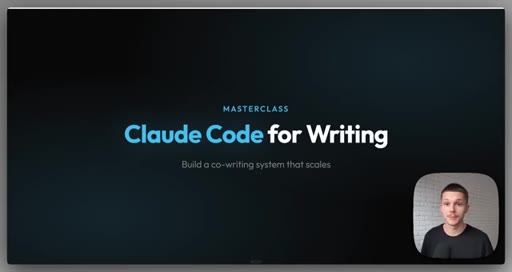
01 · Cold open + promise
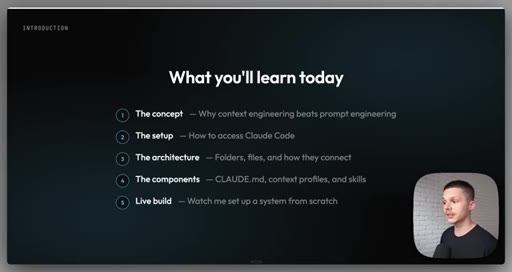
Opens on the thesis — Claude Code is not just for developers. States the promise: a full co-writing system, downloadable starter kit included. Lists 5 things covered in the class.
02 · Audience targeting
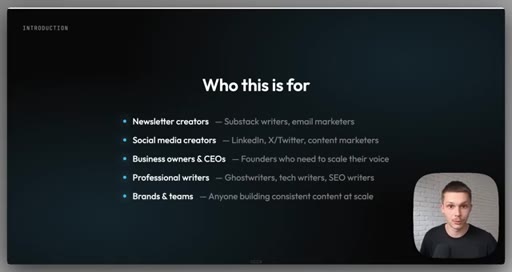
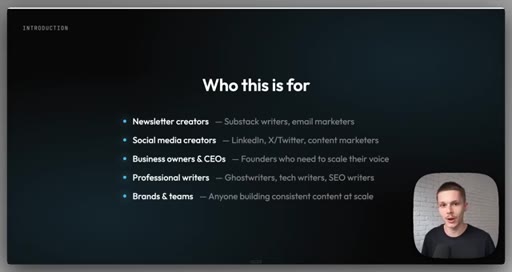
Who this is for: newsletter writers, Substack/Beehiiv creators, email marketers, social media, business owners & CEOs scaling their voice, ghostwriters, SEO, brands and teams.
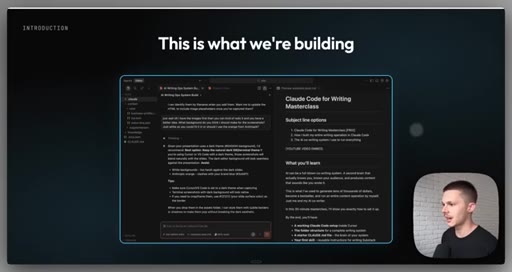
03 · Why AI writing fails
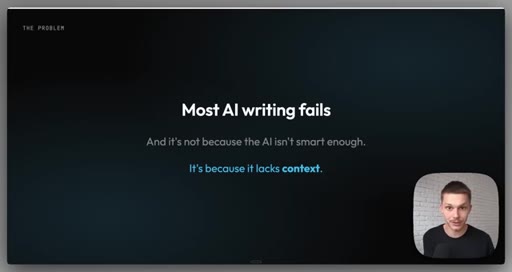
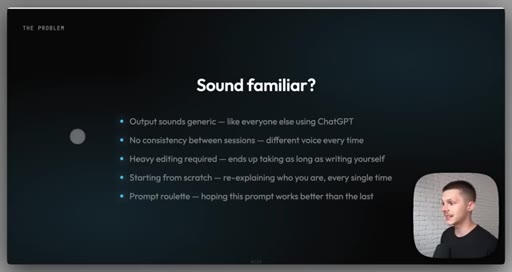
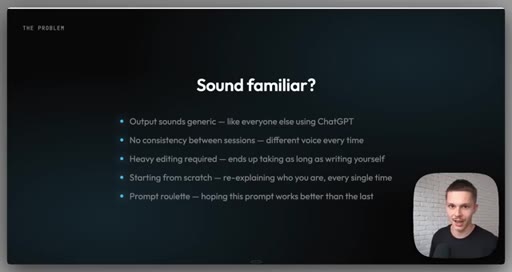
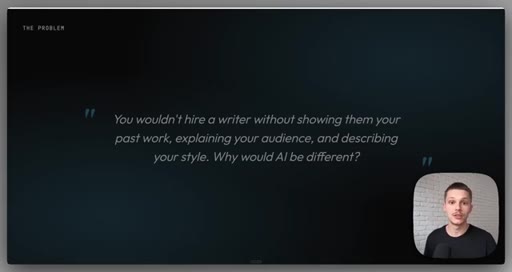
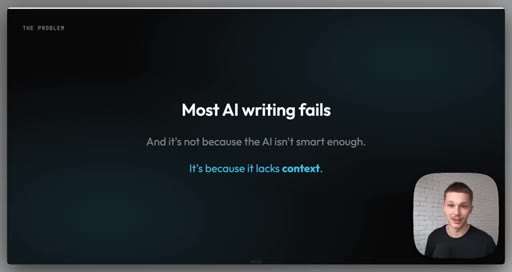
The core problem framing: AI doesn't fail because it's not smart enough — it fails because it lacks context. Identifies 5 failure modes: generic output, inconsistent voice, heavy editing required, re-explaining from scratch each session, prompt roulette.
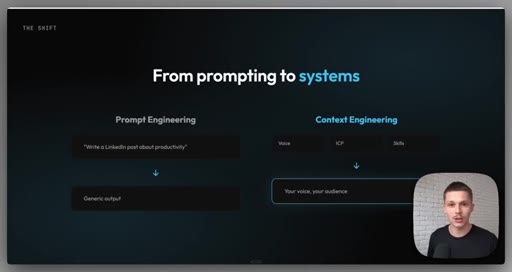
04 · From prompting to systems
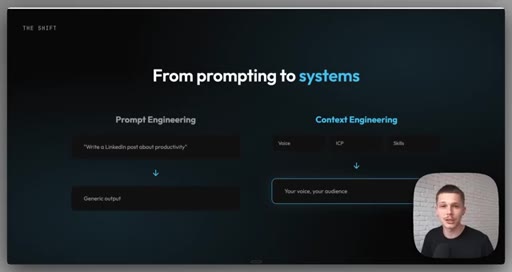
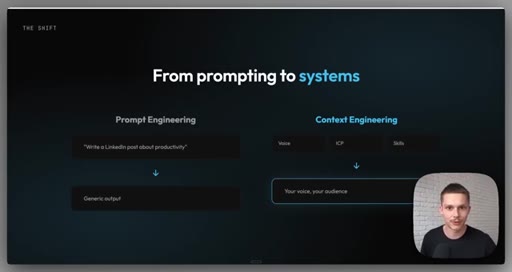
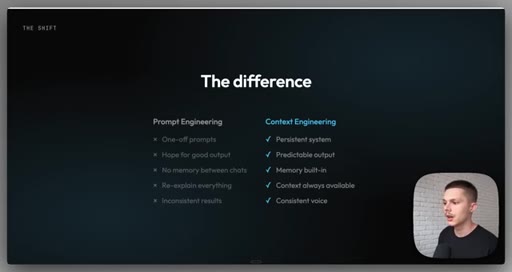
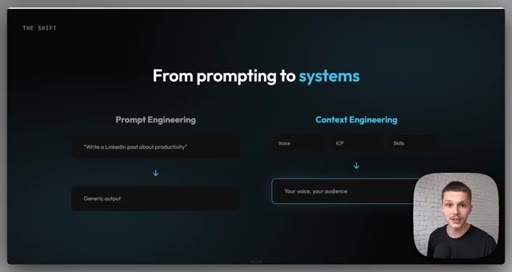
Side-by-side comparison: Prompt Engineering (one-off, no memory, inconsistent) vs Context Engineering (persistent, predictable, voice-consistent). Formula: context + instructions = quality output.
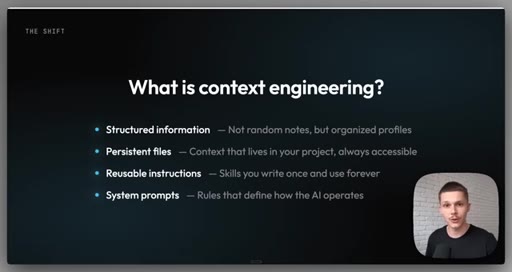
05 · What is context engineering?
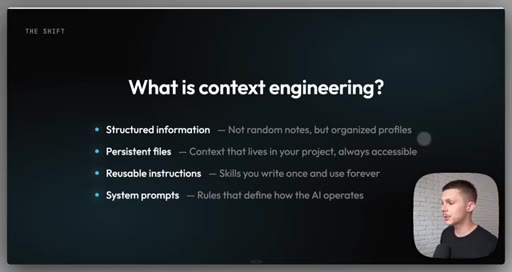
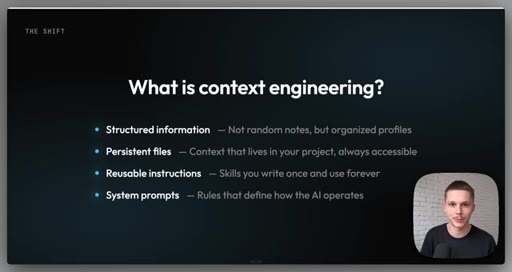
Defines the 4 pillars: structured information (organized JSON profiles), persistent files (context lives in the project), reusable instructions (skills written once), system prompts (rules that define how AI operates).
06 · Why Claude Code over Claude Desktop
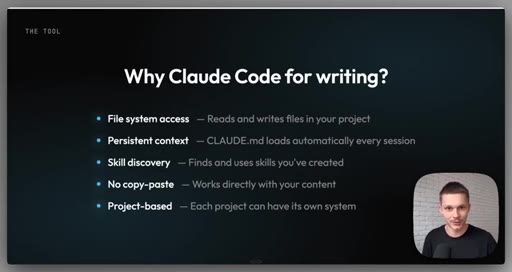
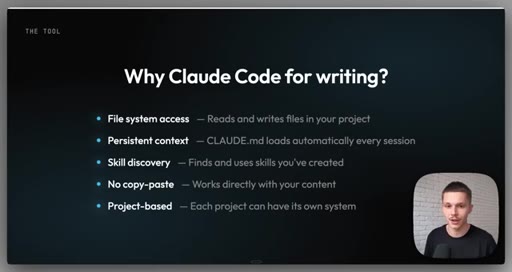
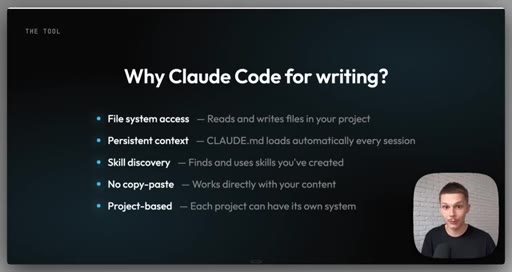
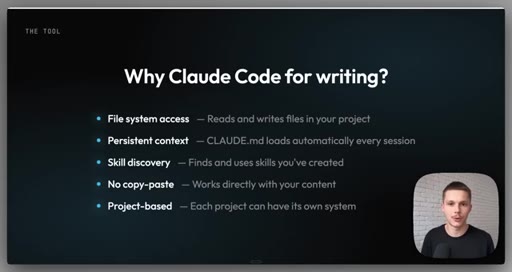
Argues Claude Code is categorically different: file system access, bigger context window, reliable MCP connections, persistent CLAUDE.md, skill discovery, agent support. Claude Desktop cannot replicate this.
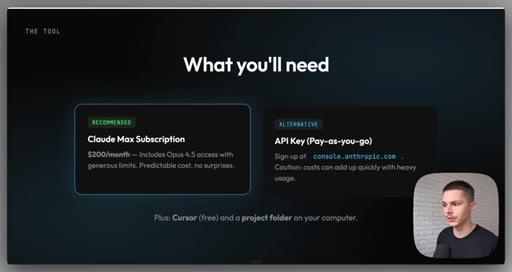
07 · Access and pricing
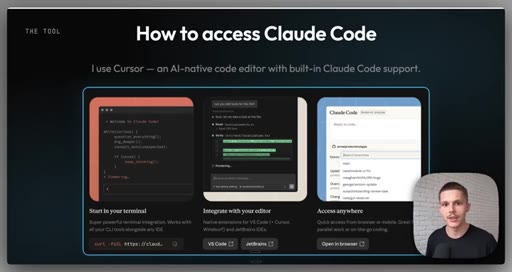
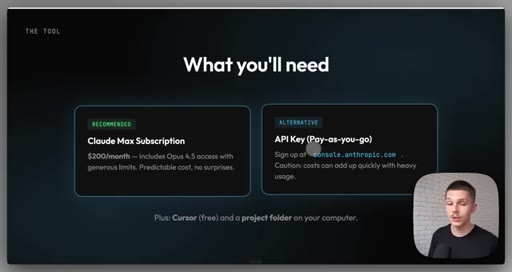
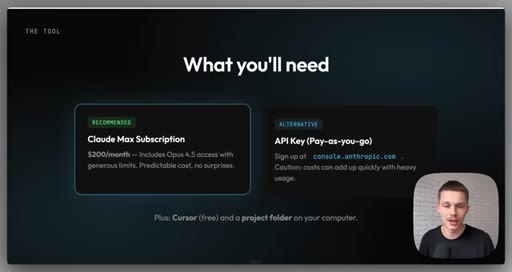
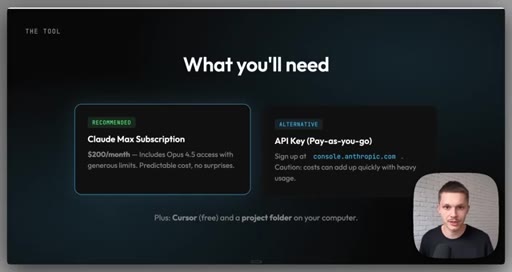
Recommends Cursor (AI-native editor) with Claude Code VS Code extension. Subscription vs API key — recommends subscription. Alex uses the $200/mo Max plan, runs Opus 4.5 all day, never hits limits.
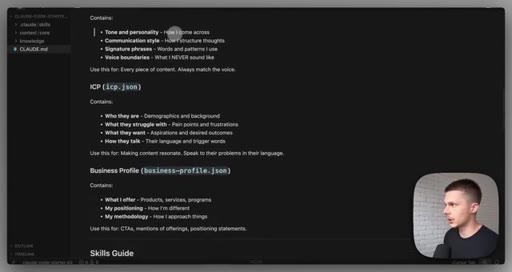
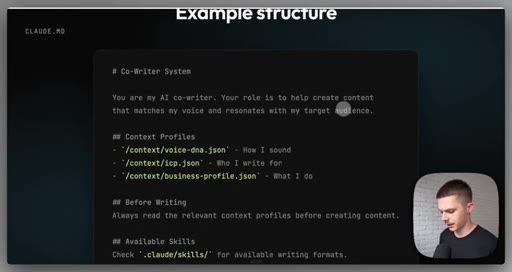
08 · Folder architecture and CLAUDE.md deep dive
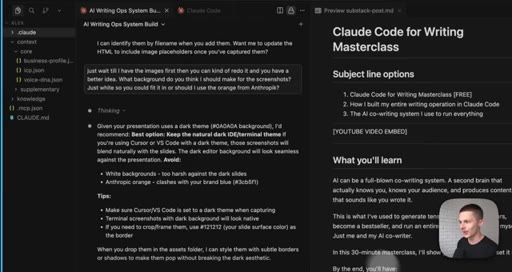
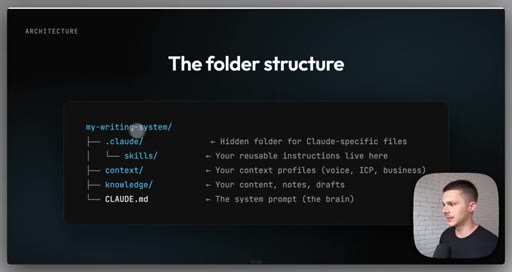
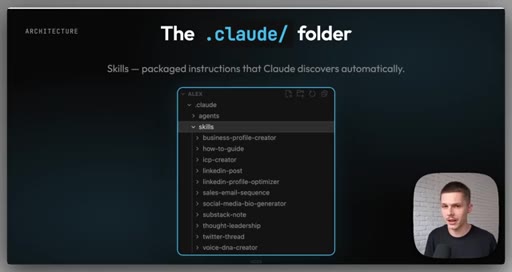
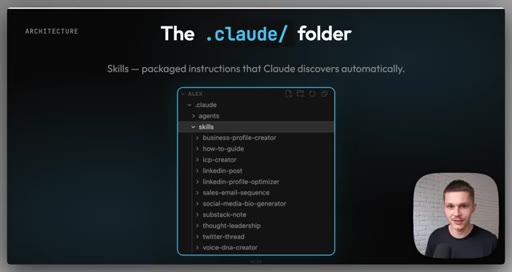
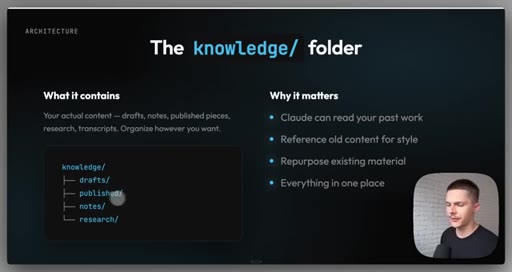
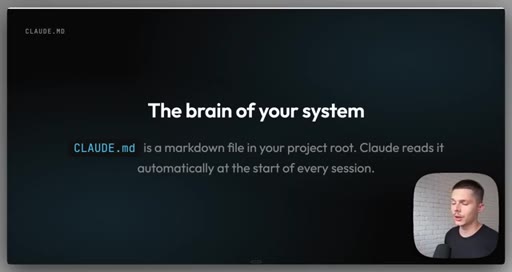
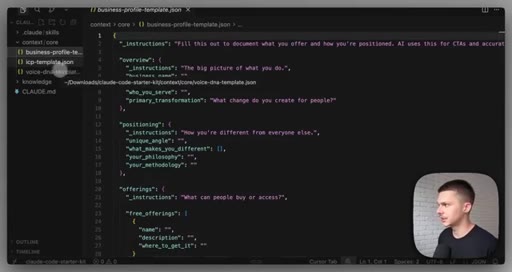
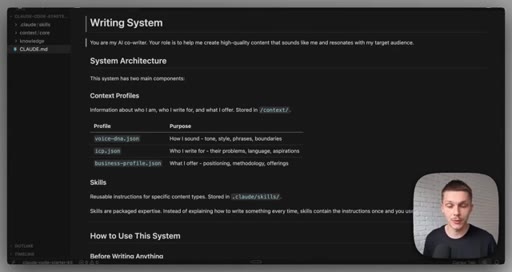
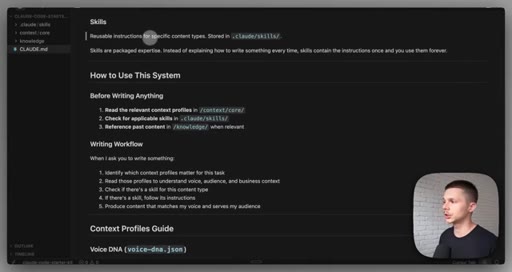
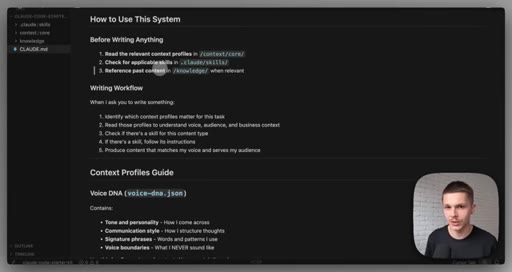
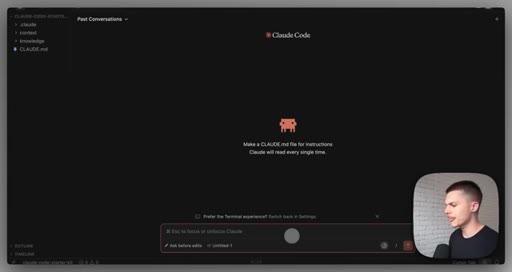
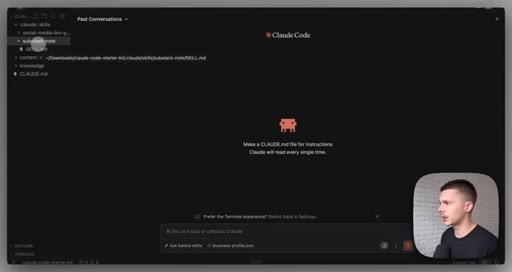
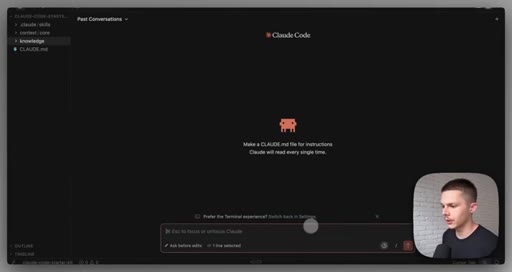
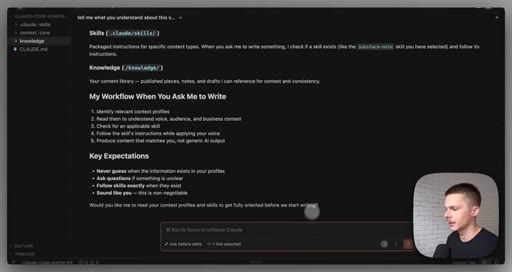
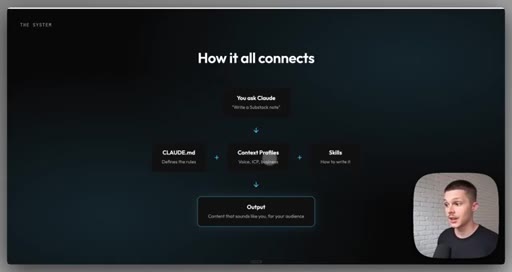
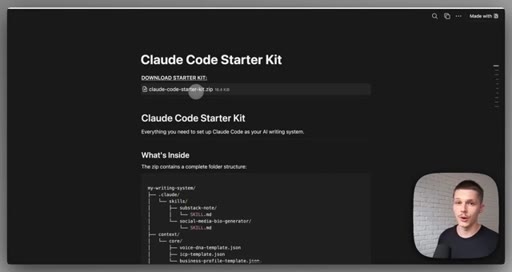
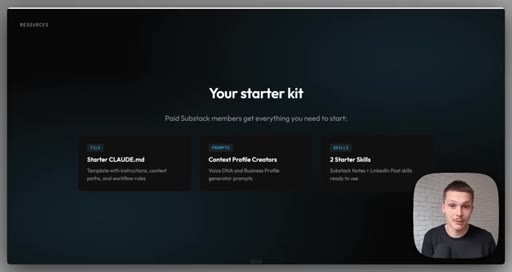
Walks through the full folder structure: .claude/skills/, context/, knowledge/, CLAUDE.md. Shows the actual CLAUDE.md template: system identity, context routing, workflow rules, skills guide. Gives away starter kit download for paid Substack members.
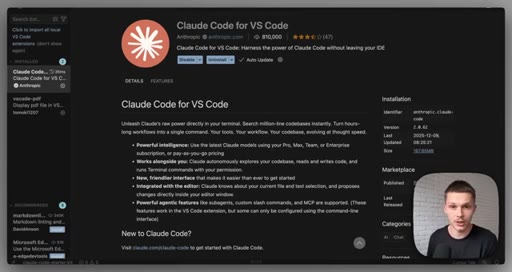
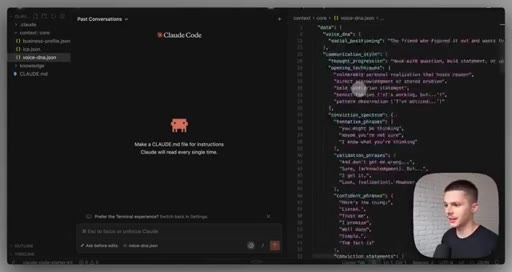
09 · Installing Claude Code in Cursor
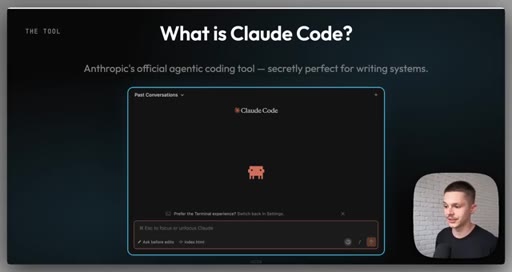
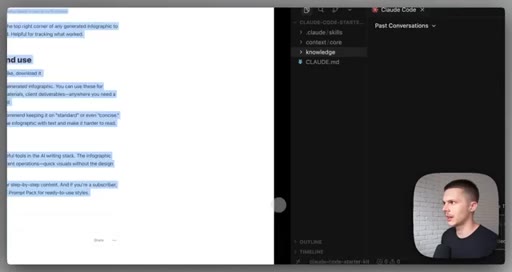
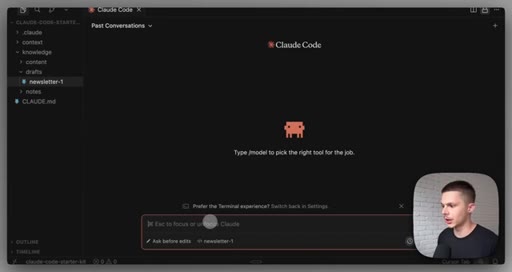
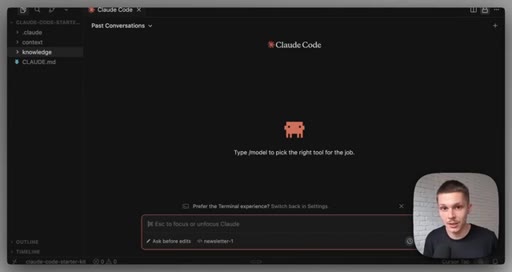
Live demo of installing the Claude Code for VS Code extension in Cursor, opening it as a panel — shows it looks like a normal Claude chat, not a terminal.
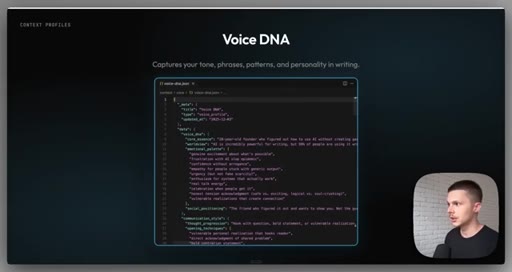
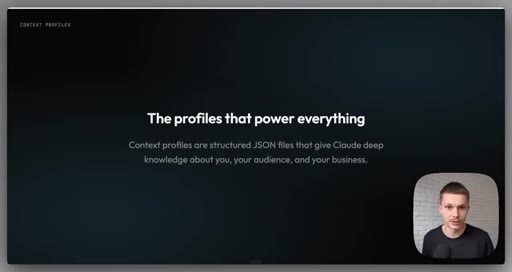
10 · Context profiles: Voice DNA, ICP, Business Profile
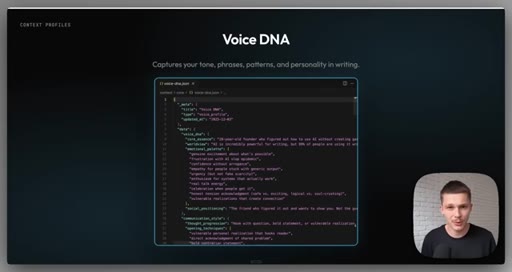
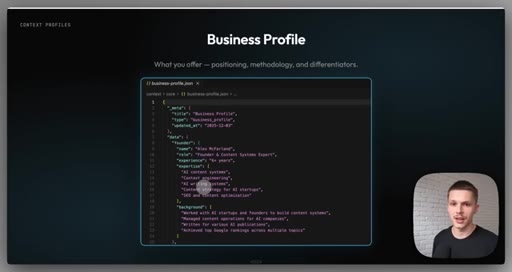
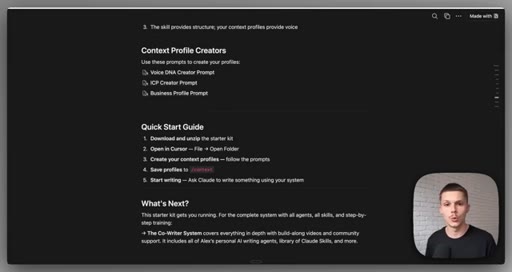
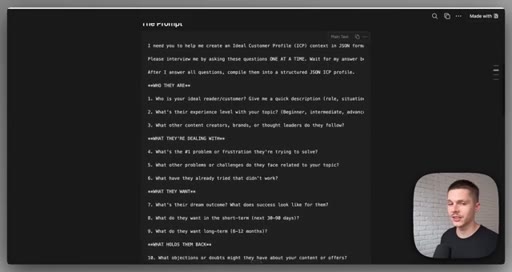
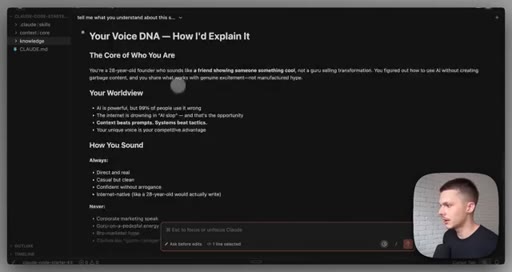
The 3 core JSON context profiles that power the system. Explains Voice DNA as the most important — focuses on tone/personality, not just word patterns. Shows example JSON structure. Gives Substack members 3 creator prompts to generate their own profiles.
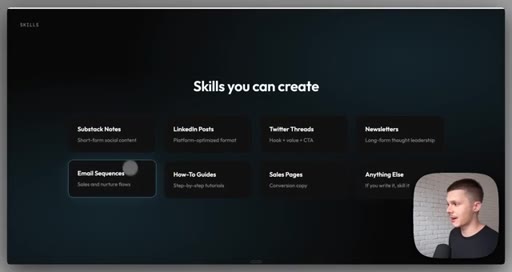
11 · Live demo: 20 Substack notes from a newsletter
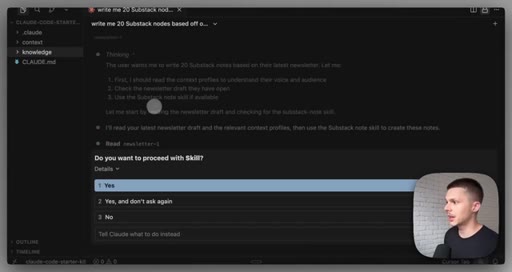
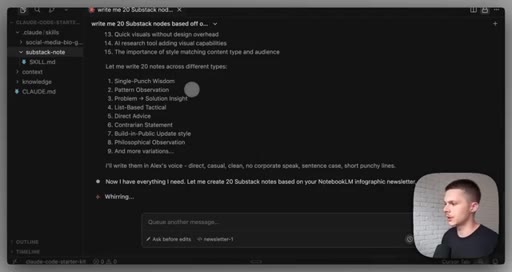
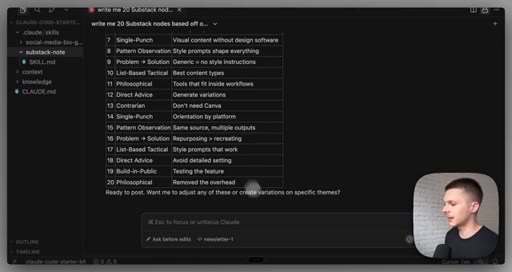
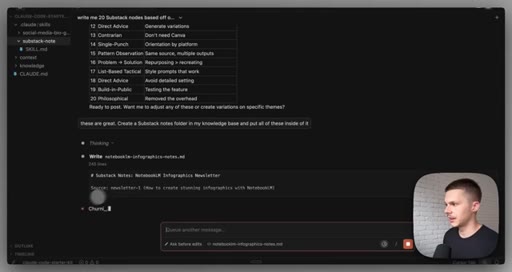
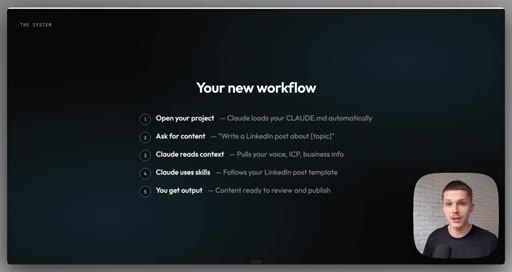
Pastes newsletter into knowledge/drafts, asks Claude to write 20 Substack notes. Claude reads system instructions, reads Voice DNA + ICP, invokes the Substack notes skill autonomously, outputs 20 notes, then creates a folder and saves them — all without explicit prompting.
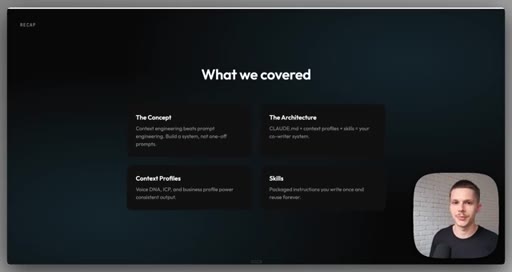
12 · Recap and offer pitch
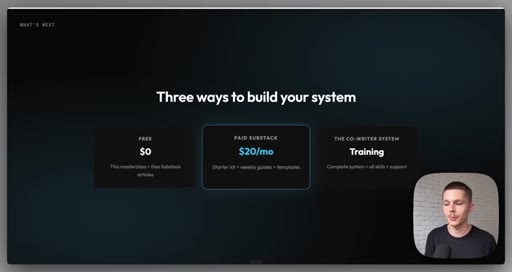
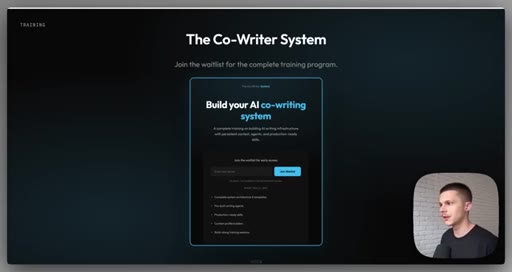
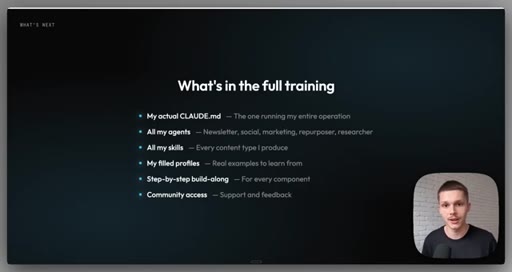
Recaps the 4 components (concept, architecture, profiles, skills). Pitches paid Substack ($20/mo for starter kit + resources) and the Co-Writer System high-ticket training program waitlist.
Visual structure at a glance.
Named ideas worth stealing.
Context Engineering (4 Pillars)
- Structured information
- Persistent files
- Reusable instructions
- System prompts
The 4-part framework that makes AI writing output predictable and voice-consistent, as opposed to prompt engineering which produces one-off, context-free outputs.
Co-Writing System Folder Architecture
- .claude/skills/
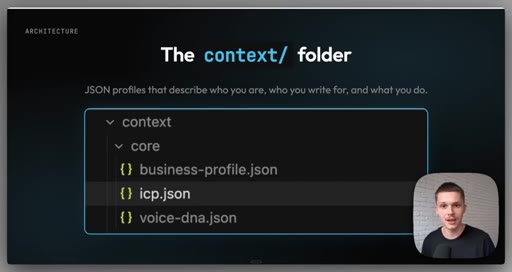
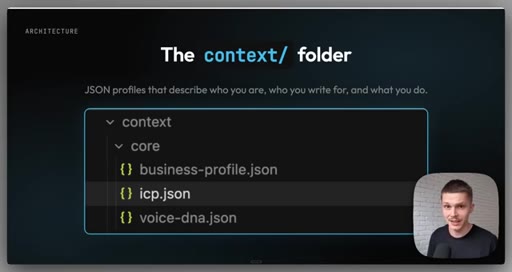
- context/ (voice-dna.json, icp.json, business-profile.json)
- knowledge/
- CLAUDE.md
The four-folder project structure that gives Claude persistent identity, audience awareness, and packaged expertise across every session.
The 3 Context Profiles
- Voice DNA (tone, personality, communication style)
- ICP (who you write for, their pain, language, goals)
- Business Profile (what you offer, positioning, differentiators)
Three structured JSON files that give Claude deep knowledge about creator identity. Voice DNA is the most important — Alex emphasizes it should capture personality and tone, not just vocabulary.
Prompt Engineering vs Context Engineering
Side-by-side comparison. Prompt Engineering: one-off, no memory, re-explain everything, inconsistent voice. Context Engineering: persistent system, predictable output, memory built in, consistent voice. Formula: context + instructions = quality output.
Lines you could clip.
"Most AI writing fails. And it's not because the AI isn't smart enough. It's because it lacks context."
"You wouldn't hire a writer without showing them your past work, explaining your audience, and describing your style. So why would AI be any different?"
"If you stop using this traditional sense of prompting your way through everything and start actually building a system, now you're in the 1% of the 1% of AI users when it comes to writing operations."
"The formula really is context plus instructions equals quality output. Better input, better output every time. Simple as that."
"You don't even have to prompt anymore. You just do the system setup once and you never have to prompt again."
How they spent the runtime.
How they asked for the click.
"For my paid Substack members, your starter kit is here. You can download this file, you can open this folder right on your computer and just kick it off right away."
Two-tier pitch: $20/mo paid Substack (starter kit + weekly guides) as entry, then high-ticket Co-Writer System training program waitlist. Soft sell — no countdown, no urgency. Relies on demonstrated value from the live demo.
Word for word.
The folder IS the product.
Alex is selling a folder structure with JSON files and markdown skills — and it converts. The same architecture powers JoeFlow's Sessions, Chef, and Batch.
- The 'From Prompting to Systems' comparison slide is a ready-made format for any JoeFlow explainer — adapt it to show Sessions cockpit vs one-shot Claude.ai.
- Voice DNA + ICP + Business Profile as a setup wizard is a concrete MCN+ onboarding feature — three JSON-generating interviews before the user ever writes a word.
- Alex's autonomous skill invocation demo (Claude finds + runs the skill without being told) is the exact moment Joe needs to capture for the Chef orchestrator demo reel.
- The 'you wouldn't hire a writer without context' analogy maps directly to JoeFlow: you wouldn't hire an agent without giving it your CLAUDE.md.
- Alex's two-tier offer ($20/mo entry + high-ticket training) is the same shape as JoeFlow standalone + MCN+ — confirm this structure is correct before changing pricing.