The bait, then the rug-pull.
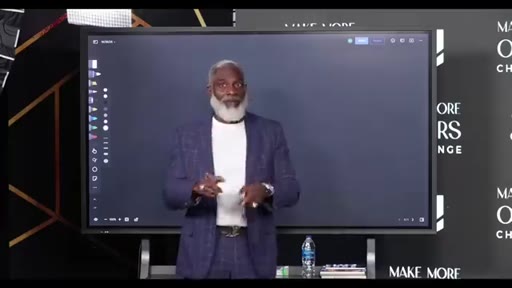
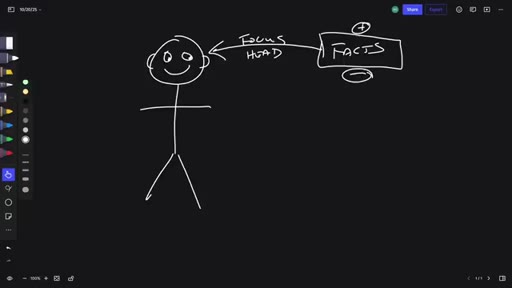
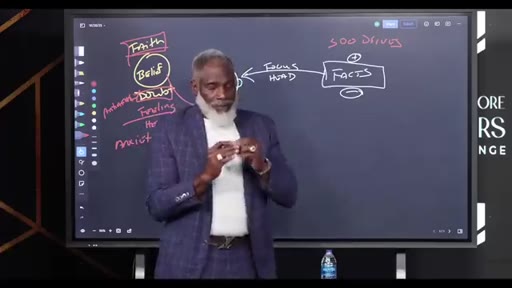
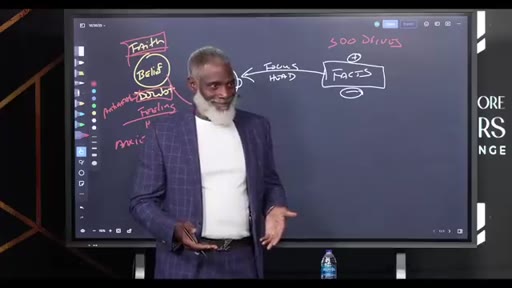
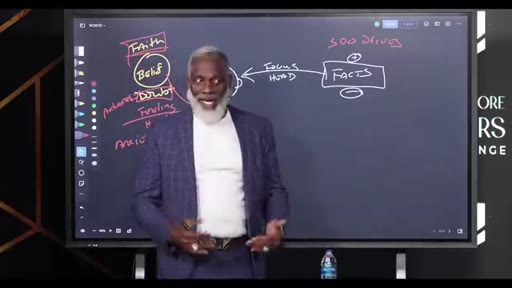
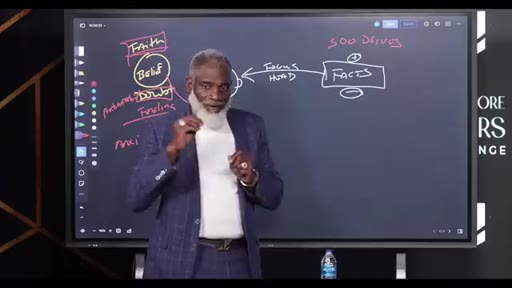
Nobody has a procrastination problem. That's the counterintuitive claim Myron Golden opens with — and it's the one that earns every minute that follows. Procrastination, he argues, is always a symptom. The disease is focus. Over seventeen minutes and a live whiteboard diagram, he builds a four-step chain — Facts to Focus to Feeling to Function — that makes the cure feel almost mechanical.
What the video promised.
stated at 00:05 "I'm gonna show you how to beat procrastination, go from excuse maker to action taker, and get it done now." delivered at 17:16
Where the time goes.
01 · Hook: procrastination is a symptom
Direct audience identification opener, then the pattern interrupt — nobody has a procrastination problem. Sets up the full teaching.
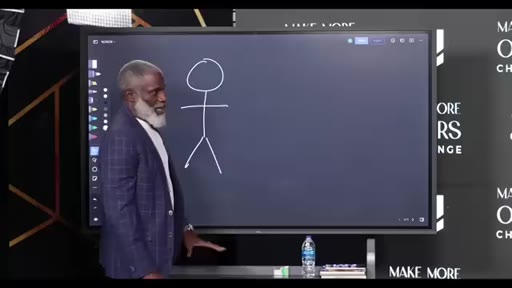
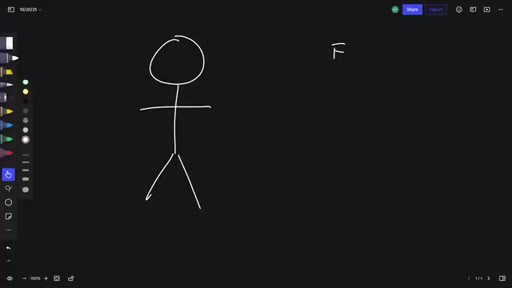
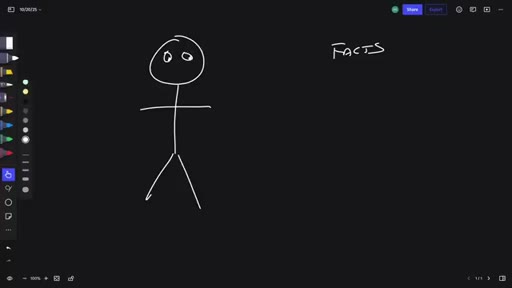
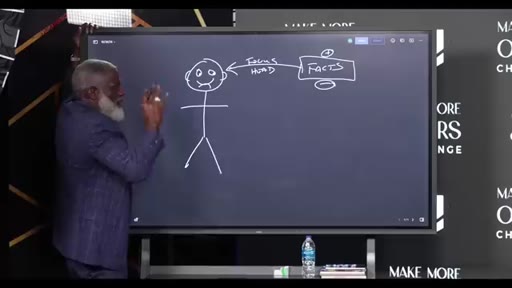
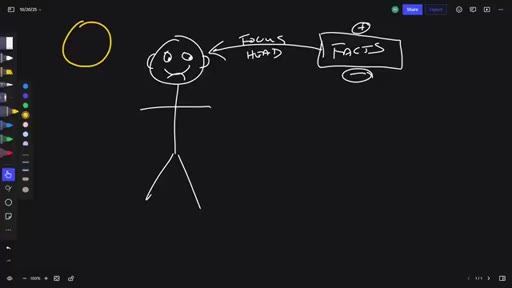
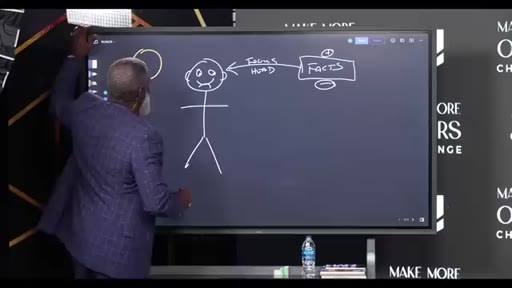
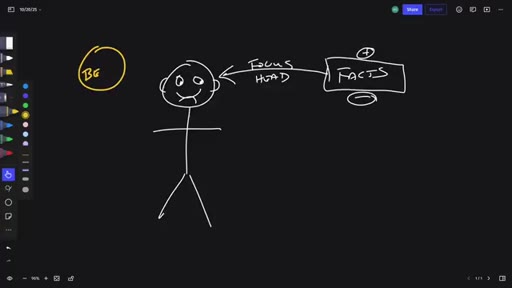
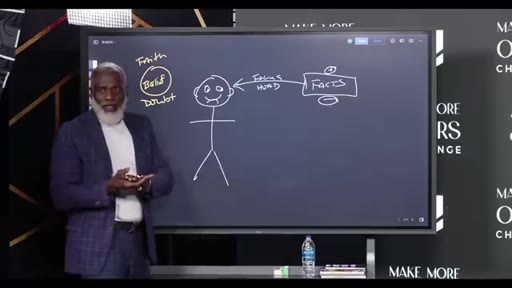
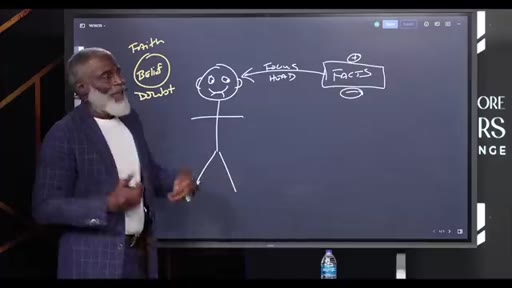
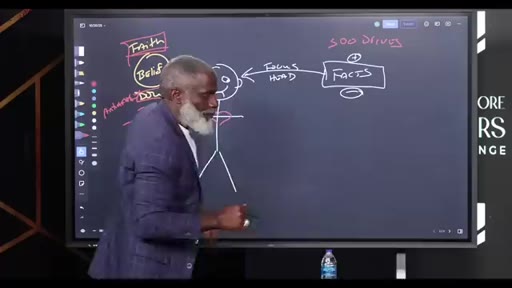
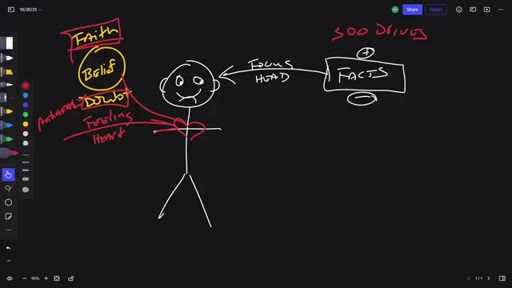
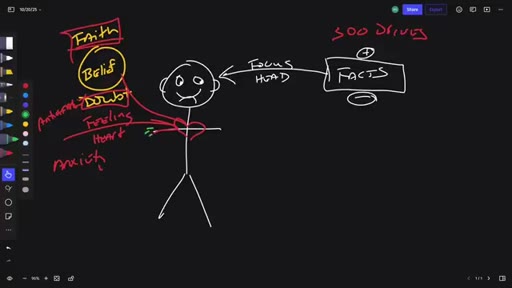
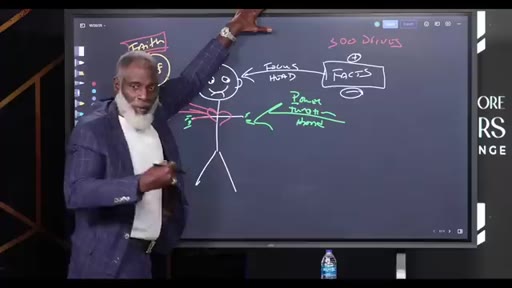
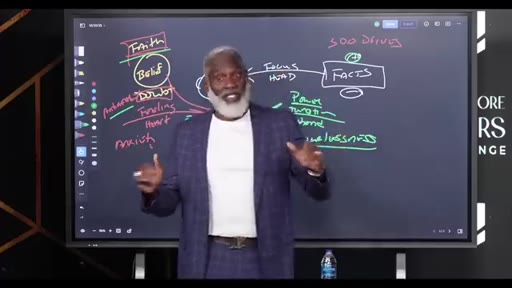
02 · This is you — stick figure
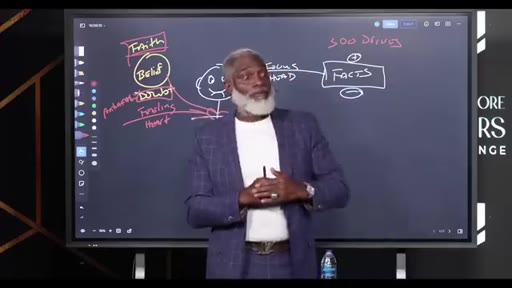
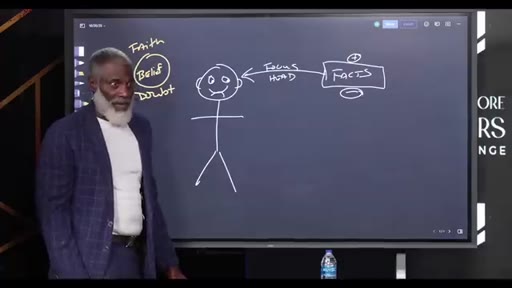
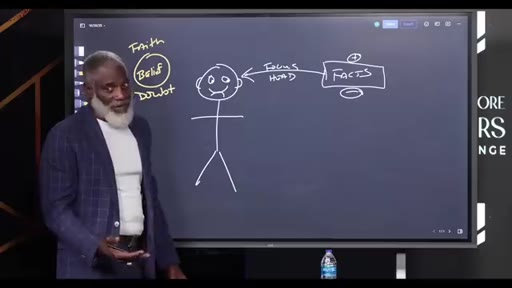
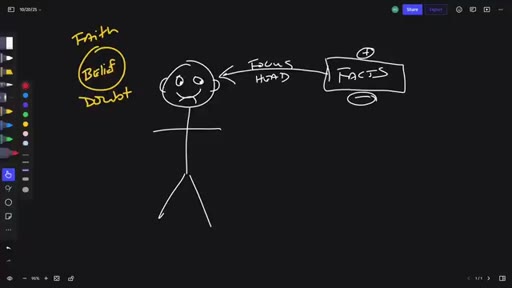
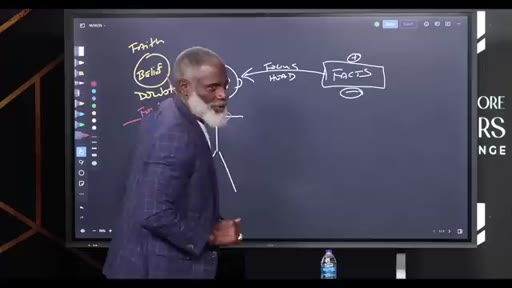
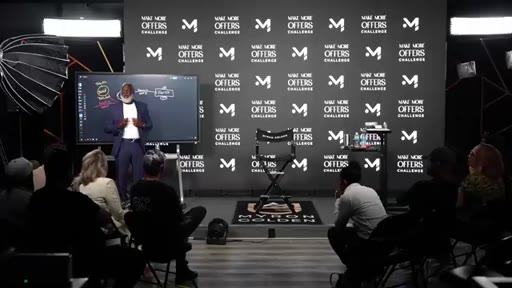
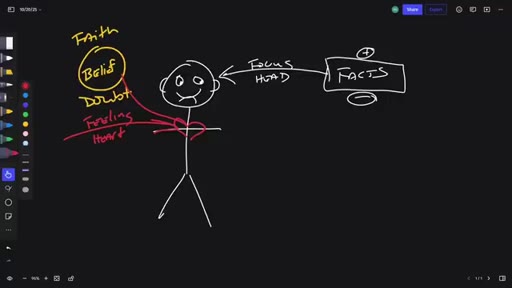
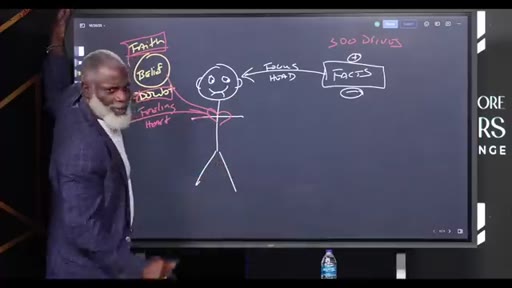
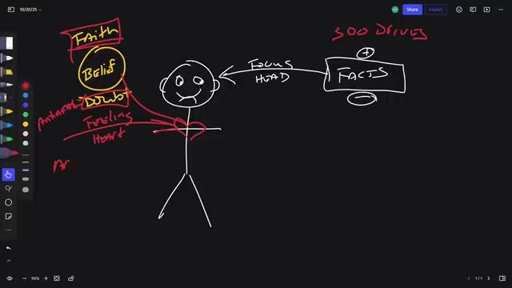
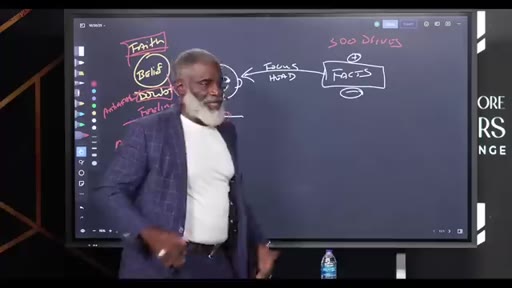
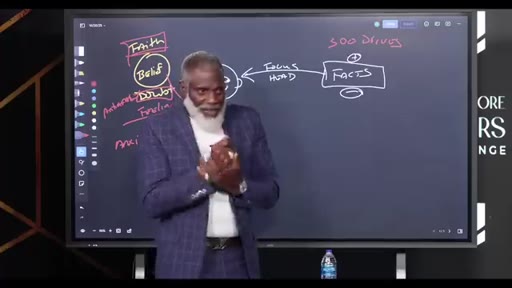
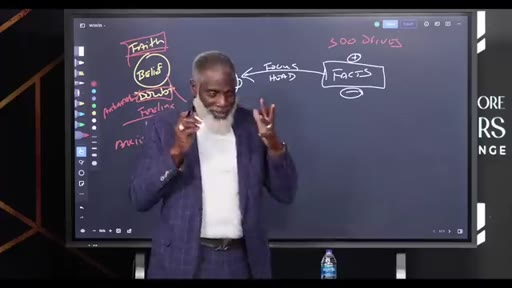
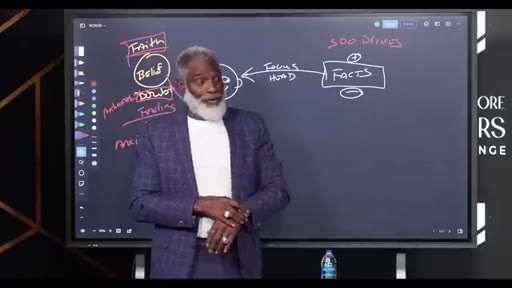
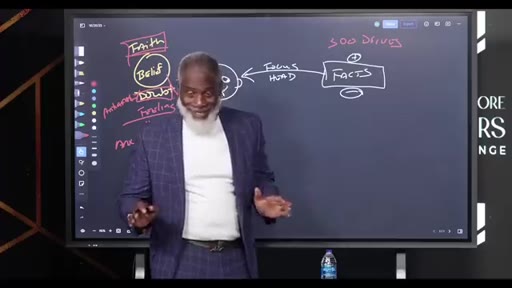
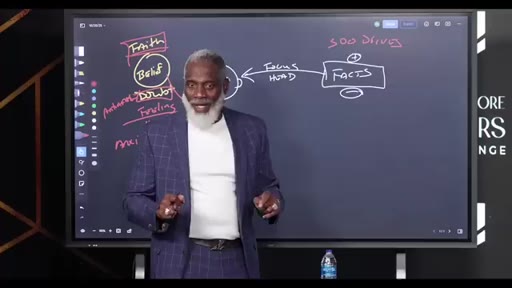
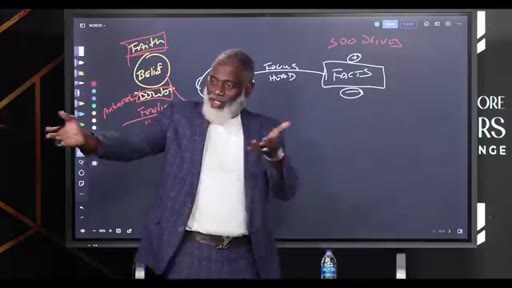
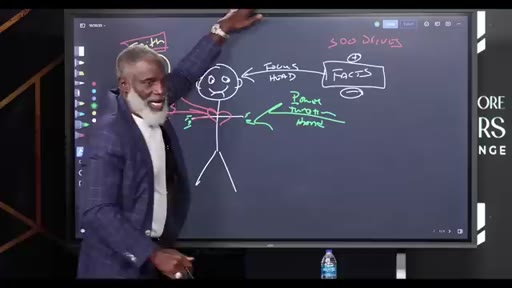
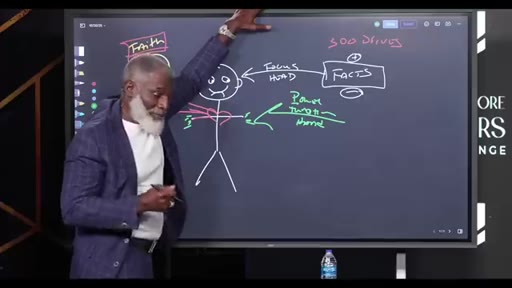
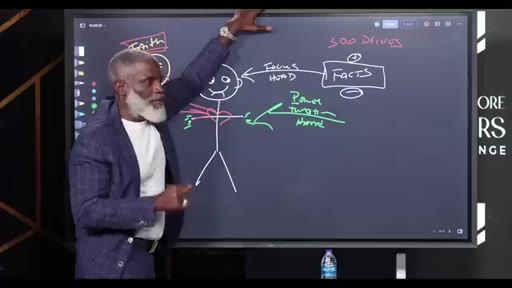
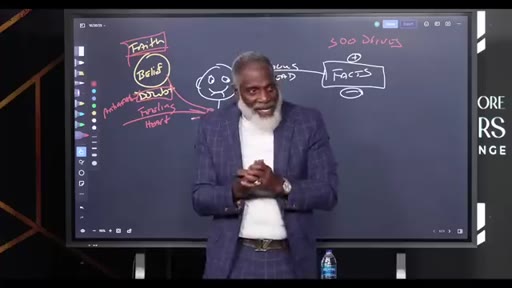
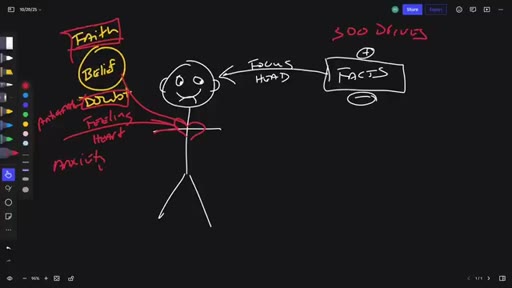
Myron draws a stick figure on the whiteboard. 'This is you.' Introduces the visual model that the rest of the lesson builds on.
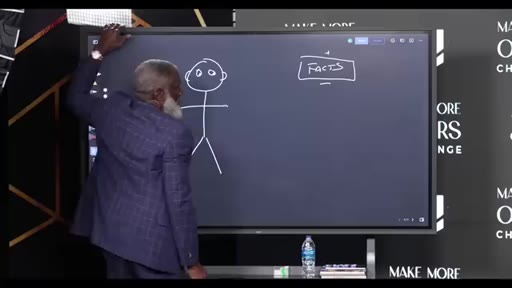
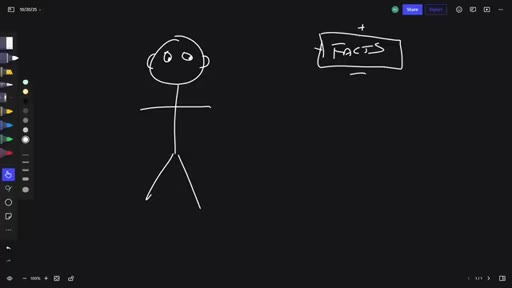
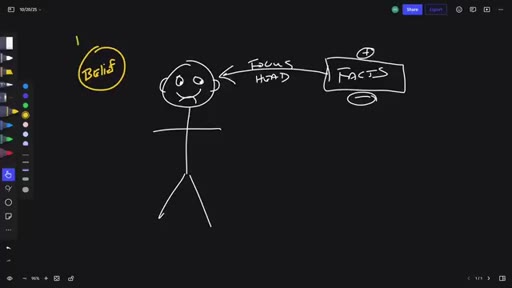
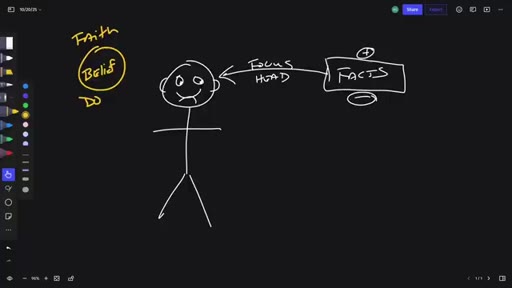
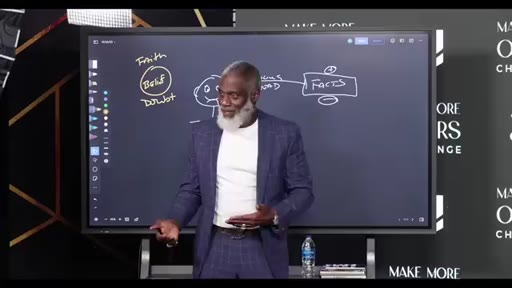
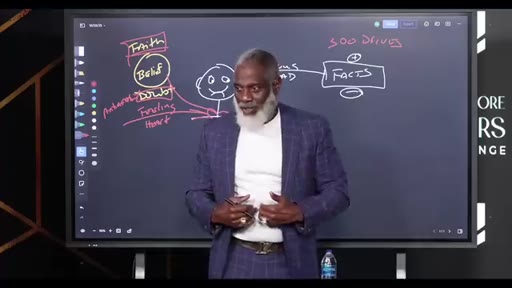
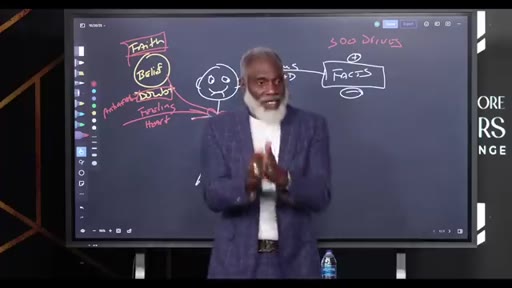
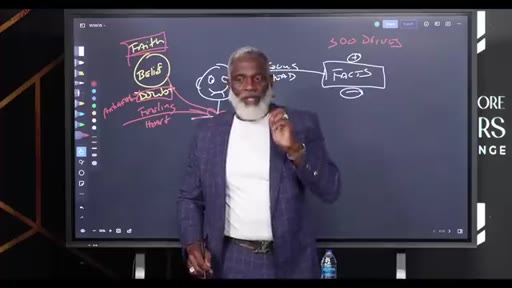
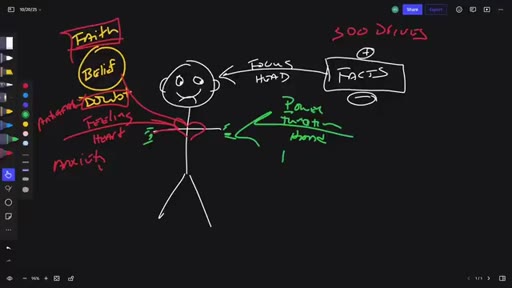
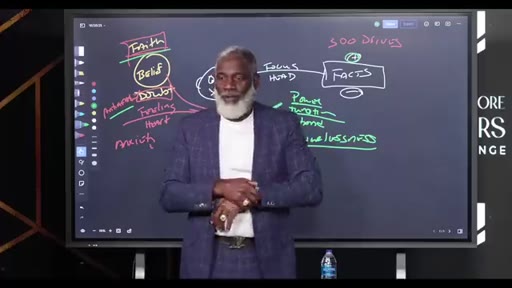
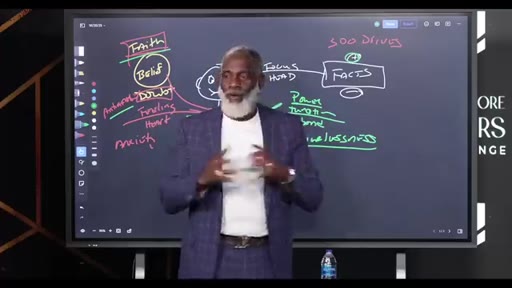
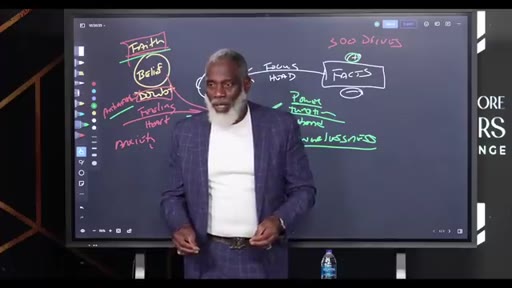
03 · Facts → Focus → Belief (Faith / Doubt)
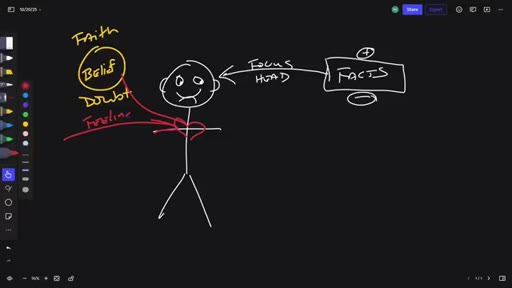
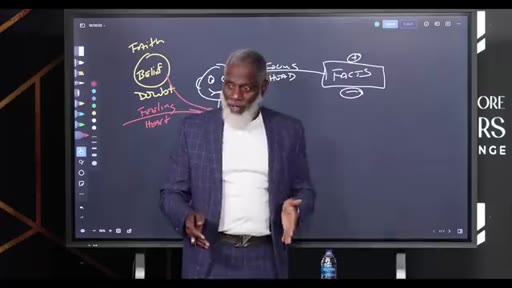
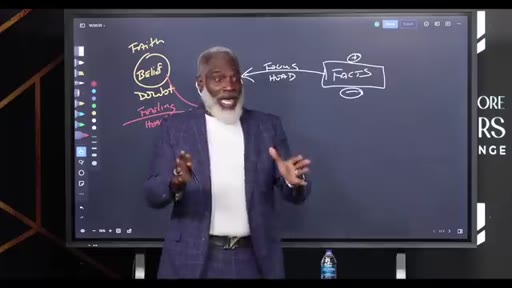
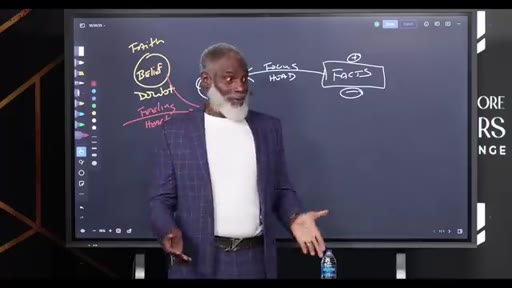
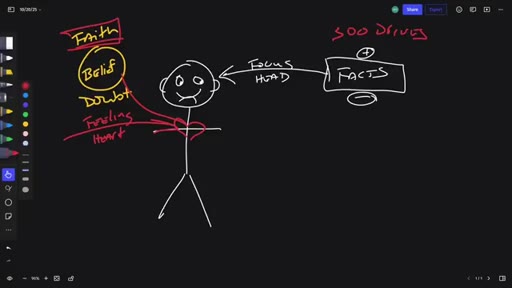
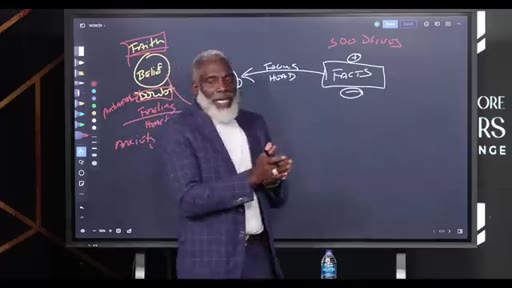
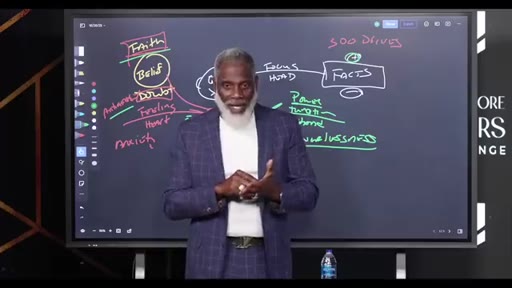
Facts have both positive and negative aspects simultaneously. What you focus on determines your belief. Faith = belief in desired outcome. Doubt = belief in undesired outcome. Both are belief — doubt is not the absence of belief.
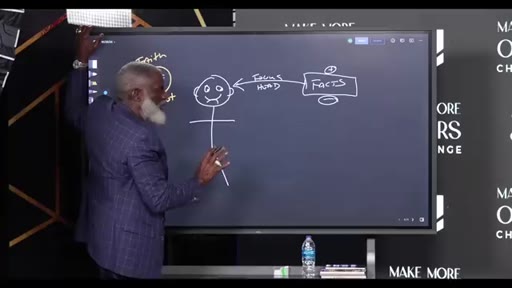
04 · When to lean positive — and when not to
Clarification: focus on the positive unless doing so would put life, health, or finances in jeopardy. The burglar example. Keeps the model from being naive.
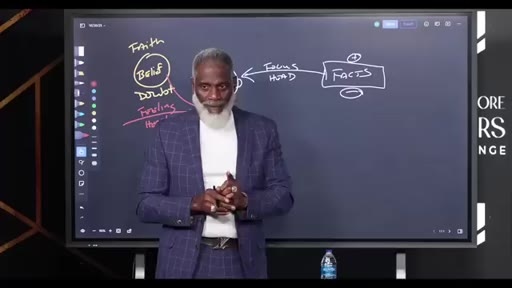
05 · Feelings are the fuel of action
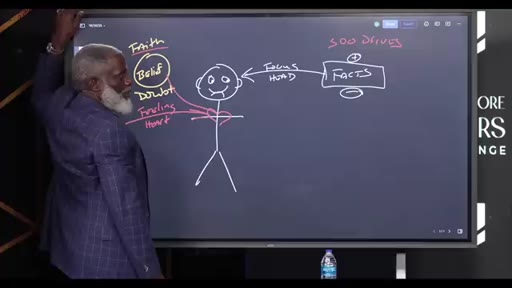
Human beings do what they do for one reason only — because they feel like it. Personal story: 5am alarm, no snooze, golf goal of hitting 300-yard drives.
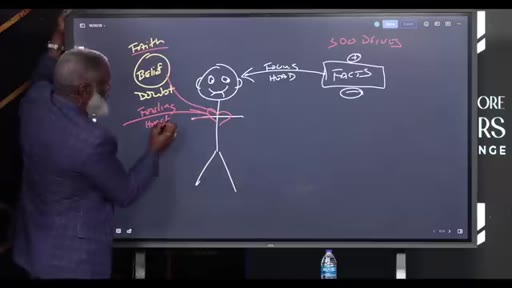
06 · Anticipation — manufactured internally
Anticipation = the energy you get when your expected outcome is desirable. Christmas Eve analogy. The key: Apple builds anticipation for iPhones; you can build the same anticipation for your goals intentionally.
07 · Anxiety — stolen anticipation
Anxiety = wasting present energy on a future undesirable outcome. Social media has colonized our anticipation-building capacity. Most people mislabel anxiety as fear.
08 · Fear vs. anxiety — the bobcat story
Fear = caution over a real and present danger. Anxiety = caution over a future imagined danger. Vivid illustration: bobcat outside the house at night without a gun. Distinguishing these is the diagnosis that enables the cure.
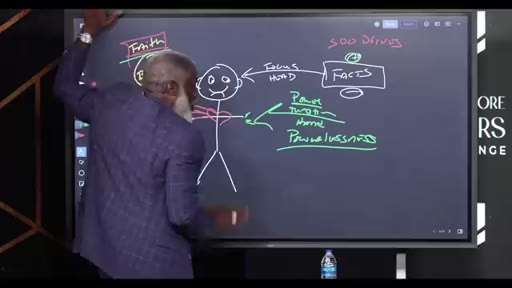
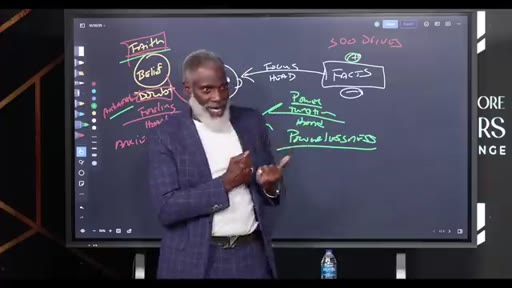
09 · Function in Hands: Power vs. Powerlessness
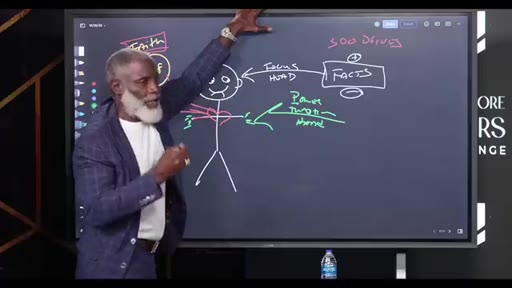
Anticipation → Power to act (end of procrastination). Anxiety → Powerlessness → 'I'll do it later.' The framework is now complete on the whiteboard.
10 · Application and close — now o'clock
Writer's block = expecting the book not to sell. Sales avoidance = expecting people not to buy. Tactical fix: write out positive outcomes, read aloud (faith created in the ears, doubt in the eyes). Close: 'It becomes now o'clock.'
Visual structure at a glance.
Named ideas worth stealing.
The F4 Framework (Facts → Focus → Feeling → Function)
- Facts (neutral — always both positive and negative)
- Focus in Head → Faith or Doubt
- Feeling in Heart → Anticipation or Anxiety
- Function in Hands → Power or Powerlessness
A four-step chain explaining why procrastination happens and where to intervene. The intervention point is always Focus — consciously shift attention to the positive aspect of any fact.
Faith vs. Doubt redefinition
Faith = belief in the outcome you desire. Doubt = belief in the outcome you don't desire. Both are belief. You don't eliminate doubt — you redirect it. Reframes the entire conversation about motivation and confidence.
Fear vs. Anxiety distinction
- Fear = caution over a real and present danger
- Anxiety = caution over a future imagined danger
Most people mislabel anxiety as fear — if the diagnosis is wrong, the cure can't work. This distinction alone is a clippable standalone concept.
Anticipation is manufactured
Anticipation is the fuel of action and it can be built intentionally — but most people outsource that to corporations (Apple, TikTok, Instagram). The question: what if you could build as much anticipation for your goals as they've built in you for their products?
Lines you could clip.
"Procrastination is never the problem. Procrastination is always the symptom of the problem."
"Feelings are the fuel of action. Human beings do what they do for one reason and one reason only — because we feel like it."
"Faith is belief in the outcome I desire. Doubt is belief in the outcome I don't desire."
"Fear is caution over a real and present danger. Anxiety is caution over a future imagined danger."
"Stop putting off your future until tomorrow because the reality is there's no such thing as tomorrow. It's always today."
How they spent the runtime.
Things they pointed at.
How they asked for the click.
"Join me November 7-8, 2025 at Wealth Accelerator Live in Orange County California."
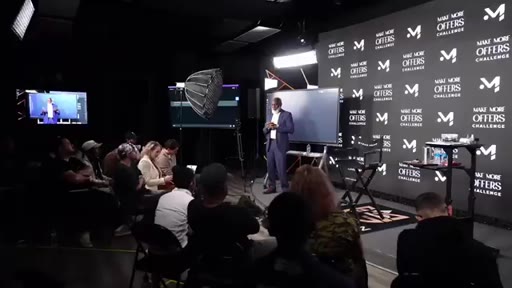
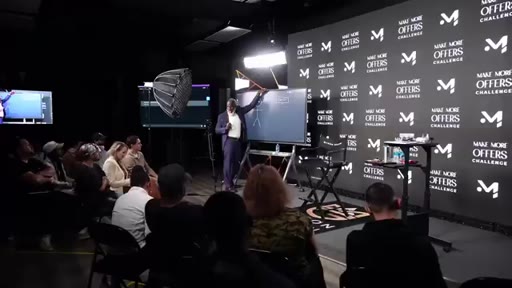
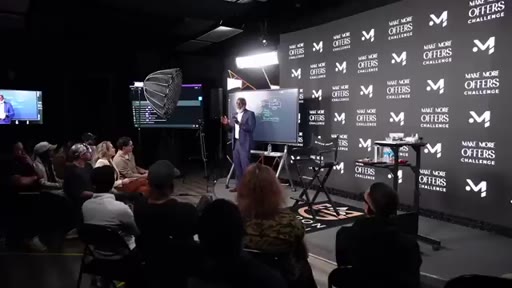
Description CTA only — no explicit in-video pitch. The event is implied by the Make More Offers Challenge banner throughout.
Word for word.
Steal the framework.
The F4 chain (Facts → Focus → Feeling → Function) is a complete whiteboard lesson in 17 minutes — and every step maps directly to the excuses creators make about why they're not posting.
- The pattern interrupt is the product: 'Nobody has a procrastination problem' earns 17 minutes of attention in the first 30 seconds. Build your next Killing Excuses open around a reframe that sounds wrong.
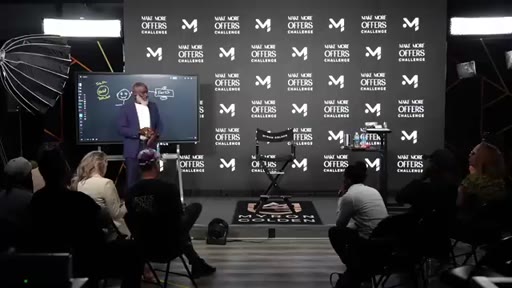
- Draw it live. The whiteboard stick figure is what makes the abstract tangible — viewers track the diagram building and feel the logic land as each node connects.
- Redefine doubt: 'Doubt is belief in the outcome you don't desire' is a one-line frame shift that invalidates every creator's excuse for not shipping. Use it.
- Steal the fear/anxiety distinction for a hot-take reel: 'You don't have a fear of failure. You have anxiety about a future imagined outcome.' That's a 45-second standalone clip.
- The anticipation angle is unexploited content gold: 'What if you could build as much anticipation for your goals as TikTok has built for their feed?' — that's a newsletter hook, a reel cold-open, a workshop opener.
- Faith is created in the ears: the tactical fix (write out positive outcomes, read aloud) is immediately actionable — give it to your audience as a homework assignment at the end of the episode.
How to stop stalling.
Procrastination isn't a discipline problem — it's a focus problem, and you can interrupt it the moment you catch it.
- Next time you feel yourself avoiding a task, ask: what am I picturing when I think about doing this? If the mental image is bad, that's the actual problem — not laziness.
- You can't eliminate doubt. But you can pivot it: write down five specific good things that happen when the task gets done, then read that list out loud.
- Anxiety and fear are different. Fear is a bobcat that's actually in front of you. Anxiety is imagining one in the dark. Notice which one you're actually dealing with.
- Anticipation is a skill. You've felt it on Christmas Eve — you can build it intentionally for anything, by getting specific about what the upside looks and feels like.
- The law of averages is your friend in sales or social situations: you don't need everyone to say yes, you need to talk to enough people that someone will.