The bait, then the rug-pull.
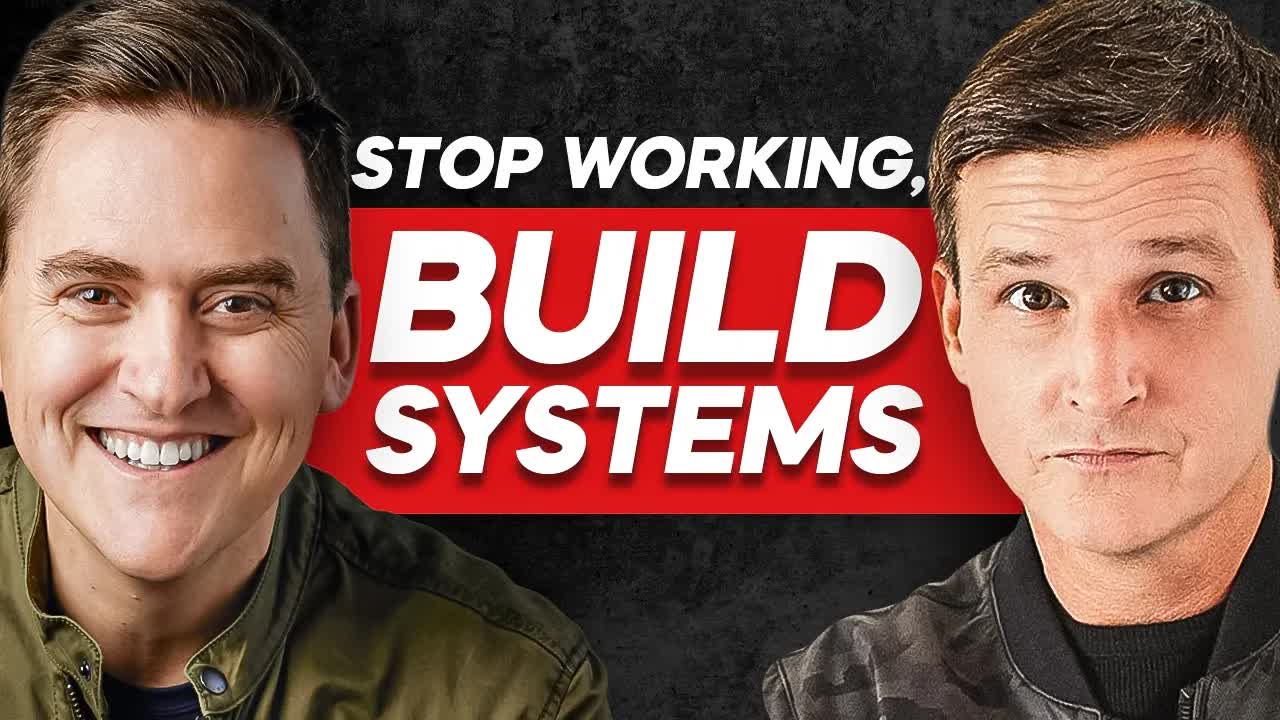
Rob Dyrdek opens this episode in mid-sentence, no music, no graphics, no preamble, delivering the thesis of his entire philosophy before the podcast logo even renders. The premise: once you build the right system and get sensitive enough to your own data, self-discipline stops being a fight. It becomes effortless.
Who's talking.
Where the time goes.

01 · Cold open - ramifications quote
Episode opens mid-Dyrdek monologue with the thesis statement before formal intro.
02 · How Dyrdek found Essentialism
Brent Montgomery introduced the books. Dyrdek describes how McKeown work clarified a philosophy he was already living.

03 · The part-alien self-myth
Dyrdek half-joking alien claim as a metaphor for living beyond ordinary paradigms. McKeown reframes it as permission to live differently.

04 · Everything is created twice
Emotionally and mentally first, then physically. Life-as-systems vs. life-as-goals. Generational preservation as the horizon.

05 · The Rhythm of Existence document
20+ page personal OS. Four subrhythms: Work, Life, Health, Sleep. Built 2015, took 5 years to fully operate. Chief of staff and assistants run within it.

06 · Balance vs Harmony vs Dynamic Equilibrium
McKeown introduces dynamic equilibrium. Dyrdek settles on harmony. The seesaw metaphor of work-life balance is rejected.

07 · Data-driven health gamification
Six years of daily 0-10 qualitative scores for Life, Work, Health cross-referenced with quantitative health behaviors. 2020: 18.2 of 30. 2021: 21.4 of 30, 92% compliance, only 12 bad days.

08 · Capacity management and mega trade-offs
2021 overload: 6 companies, 250 TV episodes on 30% of time. Health and family time protected absolutely. Trade-offs lived inside the work bucket only.

09 · Relationship systems with Brie
Built-in marriage protocols: Thursday breakfast, Wednesday date night, Sunday sushi, Tuesday talk night, daily 6am email, biweekly house-call therapist, daily relationship score.

10 · The Machine Mindset
You are a living system whether you like it or not. Default systems compound disorder. Designed systems compound harmony. The output of your system is the quality of your life.

11 · Legacy and closing
Dyrdek legacy will be the philosophy of how to create any life you desire. Living proof: quit school at 16 in Ohio, now designing heaven on earth.
Lines you could clip.
"You have got to get things to automation before you can begin to optimize them. Because optimization is where the extraordinary happens."
"The output of your system is essentially the quality of your life."
"You are a living system whether you like it or not. You just have an entire system that is disorder by design."
"You expand into a goal. And it reveals itself about a third of the way through."
"You don't just decide to be balanced one day. You being balanced is difficult. There are so many aspects of balance that you need to do self-discovery and realize what rhythm you can live in in order to have balance."
"A lot of us don't have a reason not to do these things. When the trigger happens, you go along with it. This game, the gamification of your life around what is essential to you, is helping you to go in that moment, okay, now I have a reason not to."
Things they pointed at.
Word for word.
The automation-first playbook.
You cannot optimize what you have not automated, and Rob Dyrdek spent five years proving it.
- Document your operating rhythm. Dyrdek 20-page doc is special because it exists. Most creators run on invisible defaults.
- Track qualitative data daily. A 0-10 score for how you feel about your work, life, and health takes 30 seconds and produces years of signal.
- Cross-reference behavior with feeling. The correlation between what you did and how you felt is more motivating than any goal.
- Protect your non-negotiables first, then trade off inside what is left. Dyrdek launched 6 companies in a year without touching family or health time. Trade-offs lived inside the 30% allocated to work.
- Gamify the trigger moments. The system does not remove cravings, it gives you a concrete reason to decline them. The score is the reason.
- Build for automation first. Design the system, then learn it, then get good at it, then optimize. Trying to optimize before automating is the mistake most creators make with their content workflow.
You already have a system. You just did not design it.
Every habit, default, and routine you have is already producing an output. The only question is whether that output matches the life you want.
- Start by rating three things each morning: your life, your work, your health on a 0-10 scale. Do this every day for 30 days before you try to change anything.
- Track what you actually do each day as binary yes/no checks alongside those scores. The correlation will tell you more than any book.
- Decide what your non-negotiables are before the week starts, not in the moment when you are tired. Make that decision in advance so the answer is already made when the trigger hits.
- Replace willpower with a reason. When the trigger hits, having a tracking streak or a score you care about is more reliable than trying harder in the moment.
- Accept that you cannot fix one area of your life without touching all the others. Diet, sleep, relationships, and work output are not separate problems. They are one interconnected system.