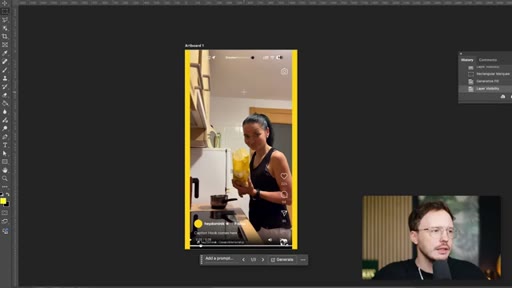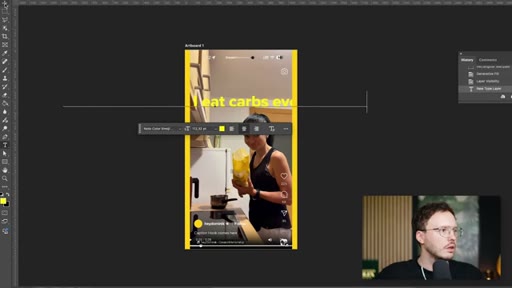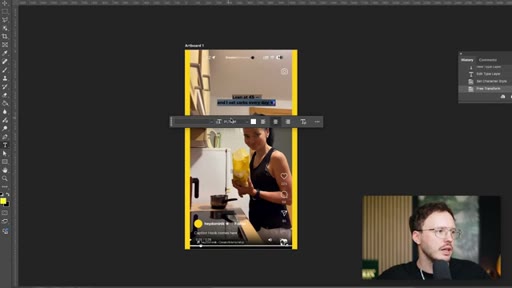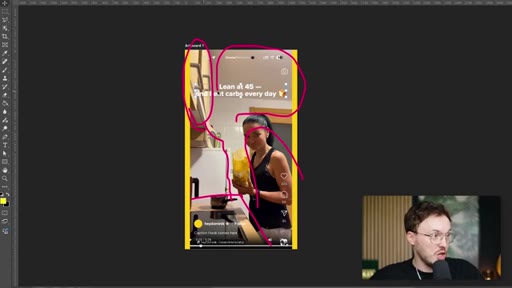
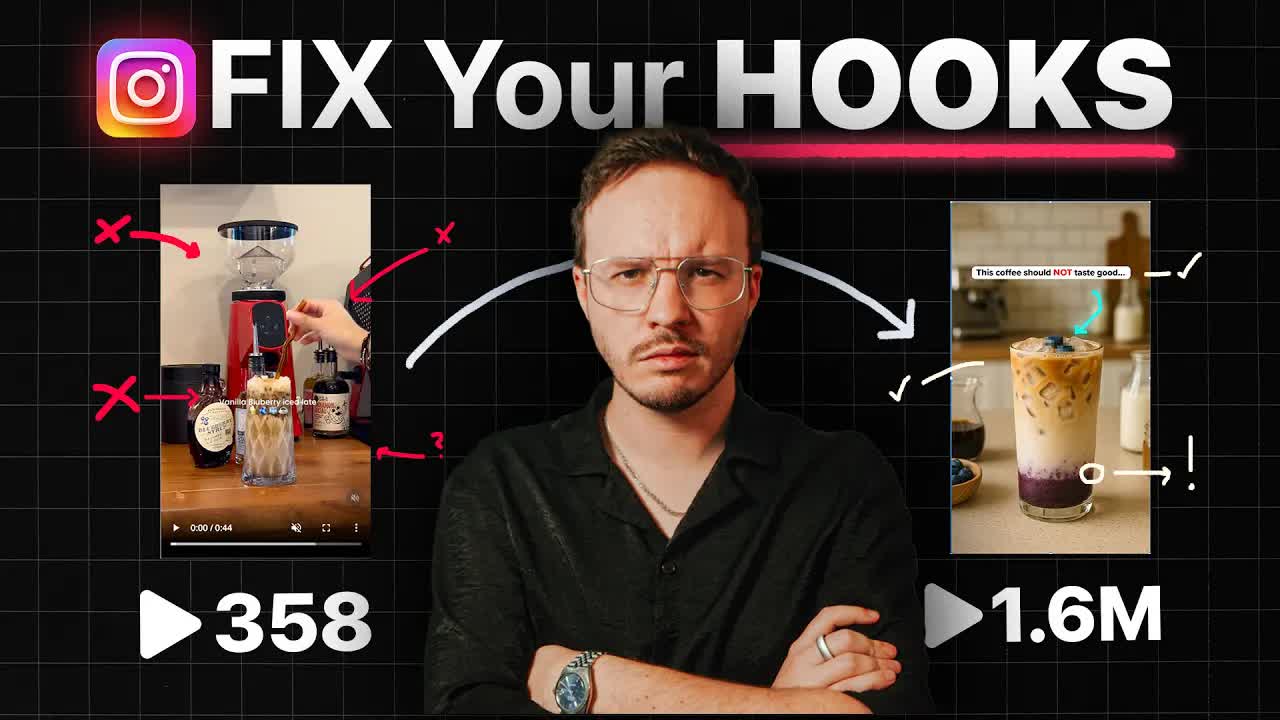
The bait, then the rug-pull.
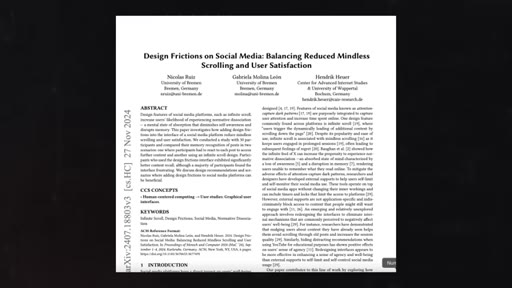
Start with a number that sounds like a credential and you have already bought yourself five seconds. The title makes a research claim — a thousand hooks studied — and the opening line cashes it immediately: bad hooks are the single most reason your reels fail. Everything that follows is proof.
Where the time goes.

01 · Mastering the Scrollback
The neurological frame: autopilot scrolling, the swipe-back behaviour, and open loops as the interrupt mechanism.

02 · Context and The Bit-by-Bit Framework
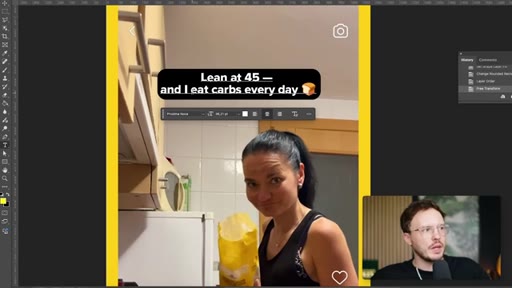
Creator 1 (Max): hook fails because there is no context. Fix — state who you are and challenge the belief simultaneously.
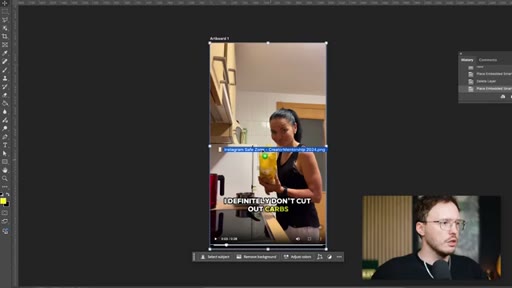
03 · The Safe-Zone Mistake
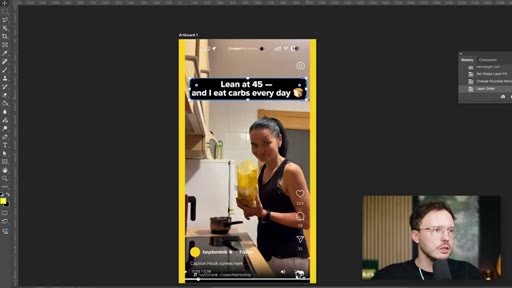
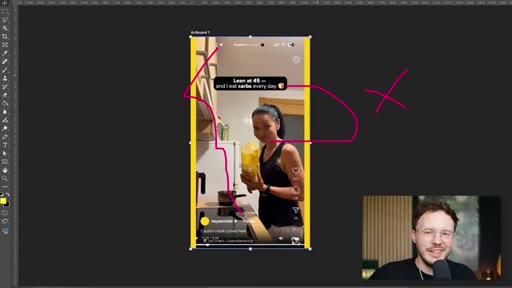
Caption placement and size — the safe zone rule and why oversized captions destroy credibility.
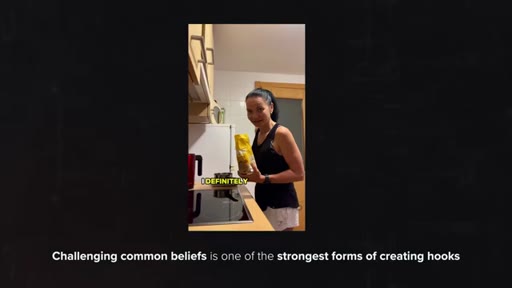
04 · Challenging Common Beliefs
The strongest hook framework: find what the video already challenges and lead with that contradiction.
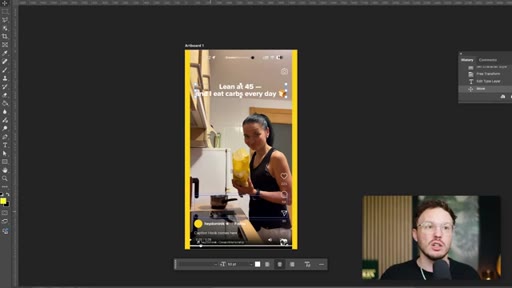
05 · Fix This And You'll Get More Views
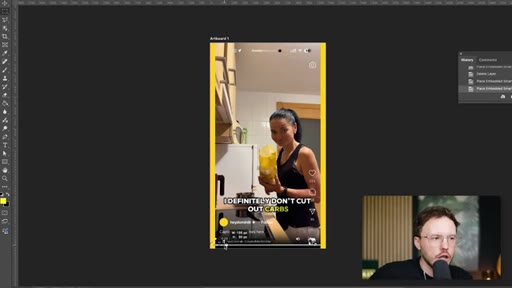
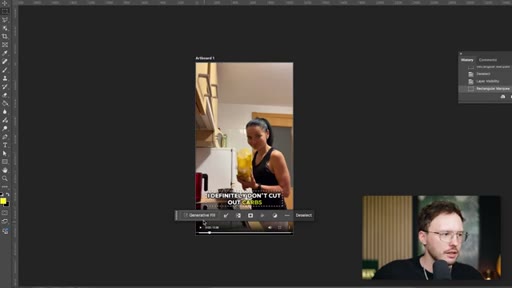
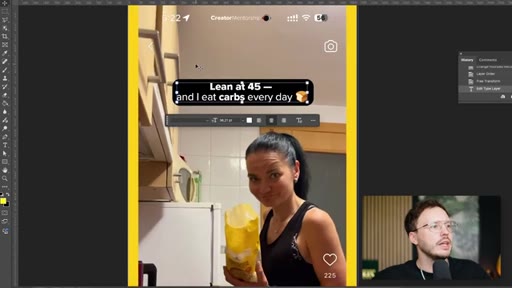
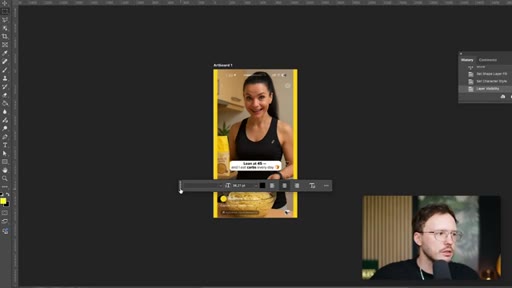
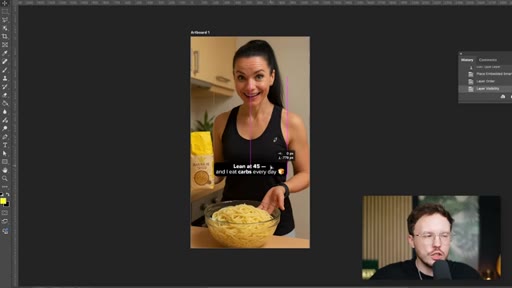
Live Photoshop fix of Max's hook: font weight hierarchy, background overlay, safe-zone text positioning.
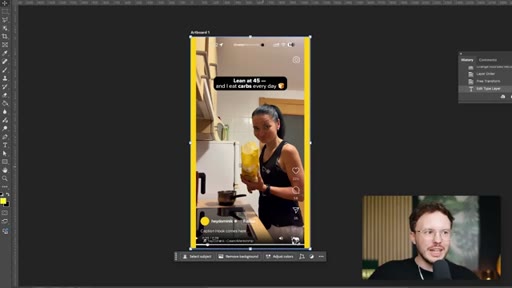
06 · Without This You Won't Get Views in 2025
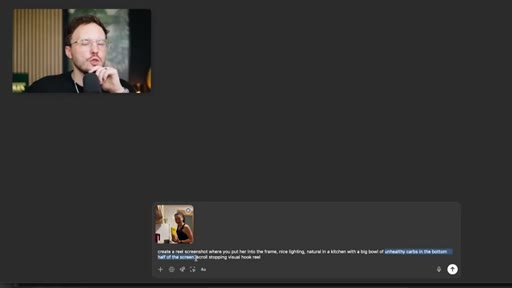
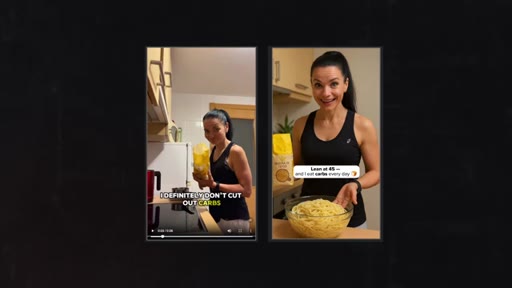
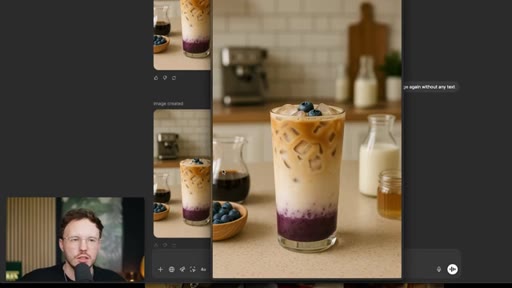
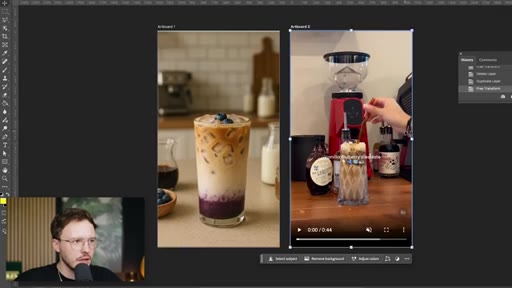
Using ChatGPT image generation to create a better first-frame visual; before/after side-by-side comparison.
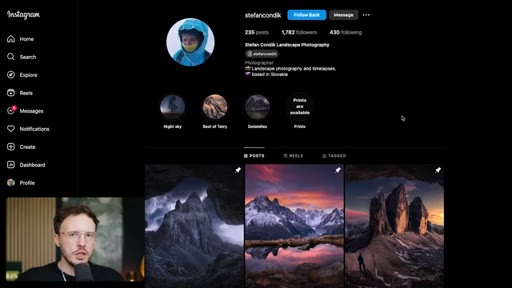
07 · The First Impression Mismatch
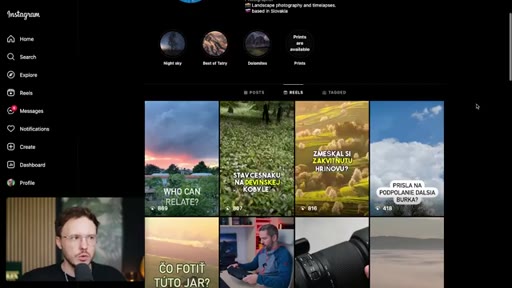
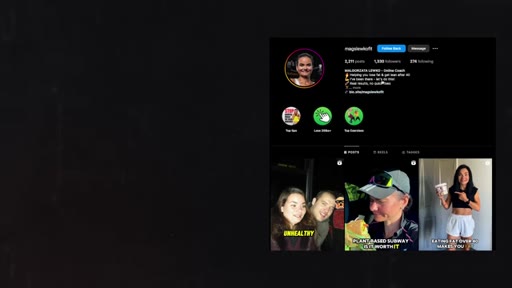
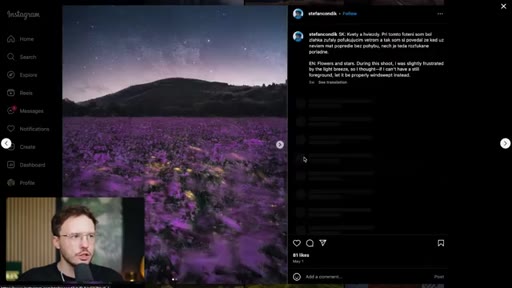
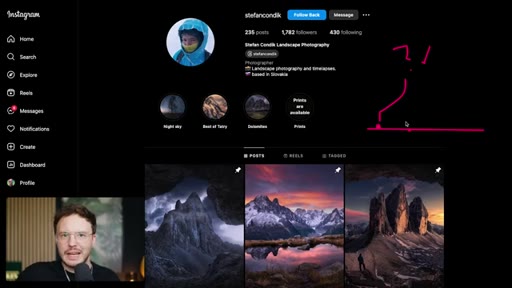
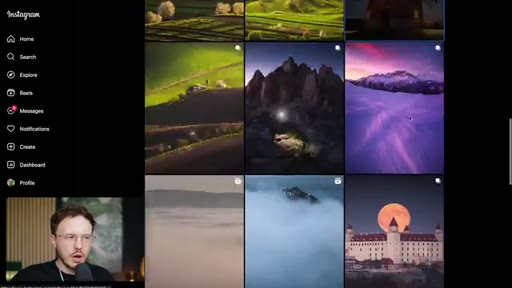
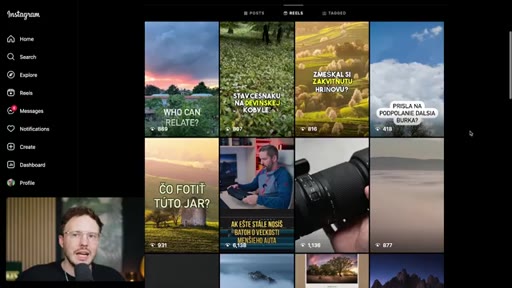
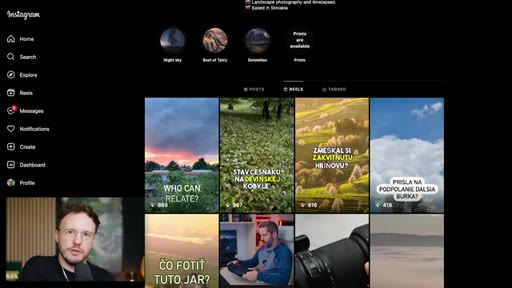
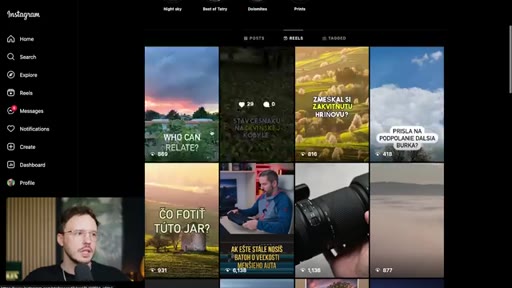
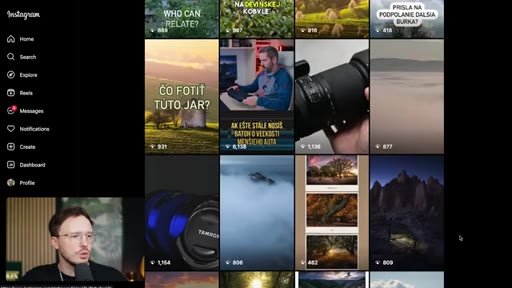
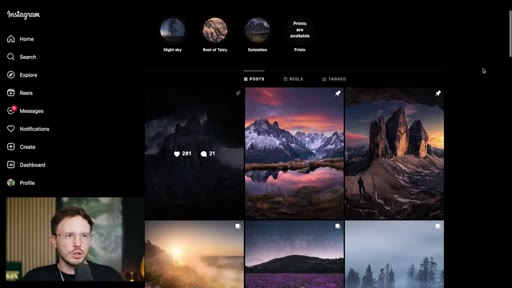
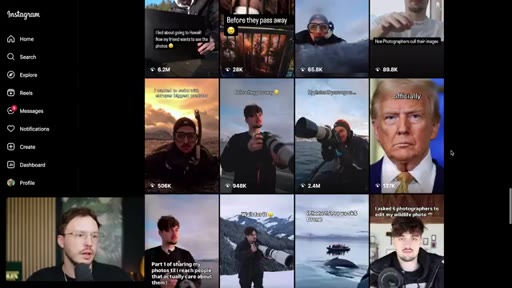
Creator 2 (Stefan): his reels feed and photo feed are completely mismatched, destroying trust on landing.
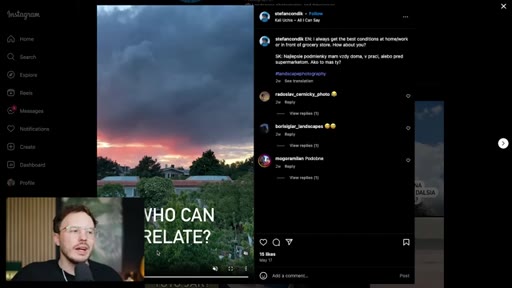
08 · Planting Questions To Hack Retention
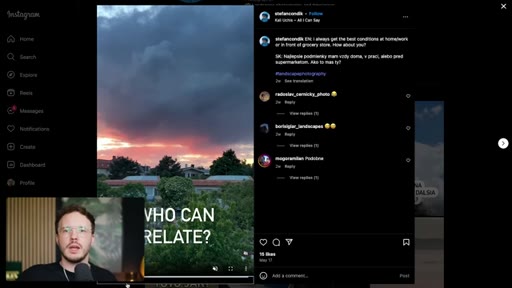
Why 'Who can relate?' is a dead hook: no context, no question, no target-audience filter.
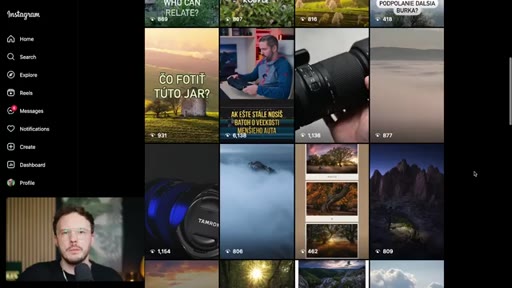
09 · Simple Storytelling Hooks
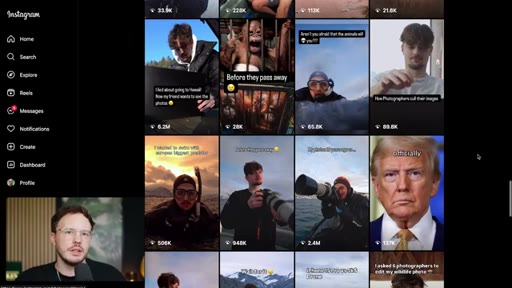
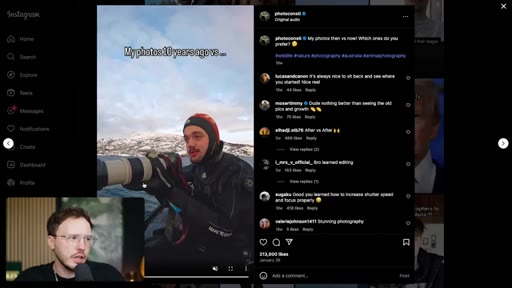
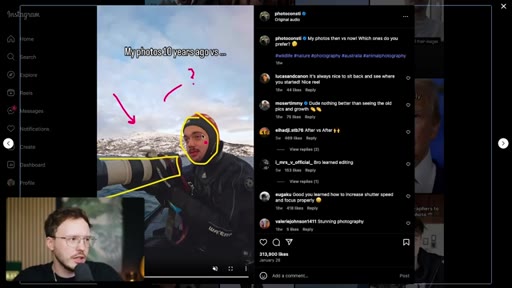
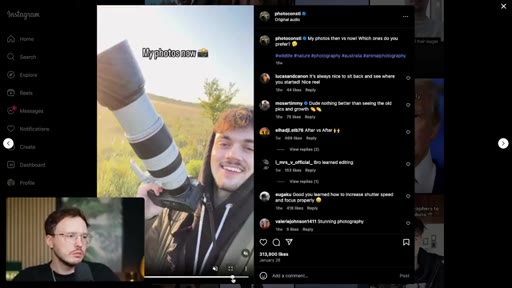
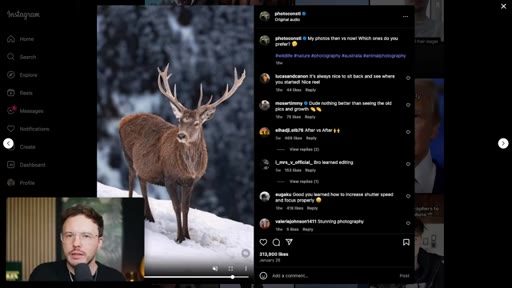
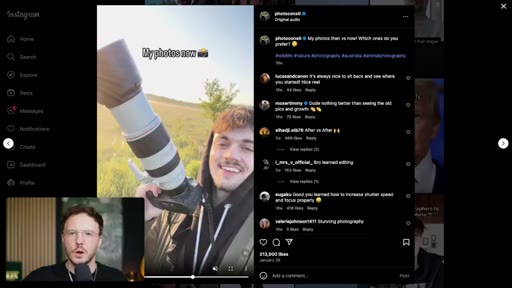
The contrast: Stefan's cold photography vs client Constanti's 'my photos 10 years ago vs now' — story plus emotional investment.
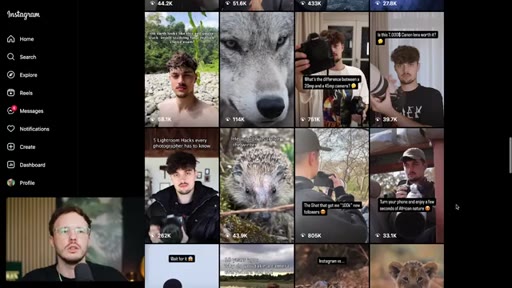
10 · If Your Views Are Stagnant, Here's Why
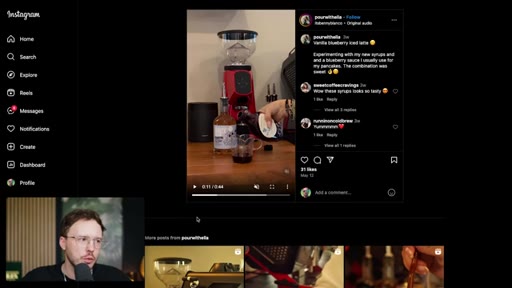
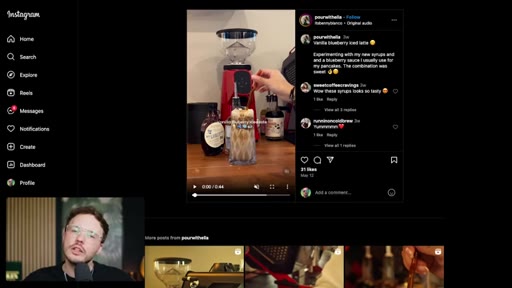
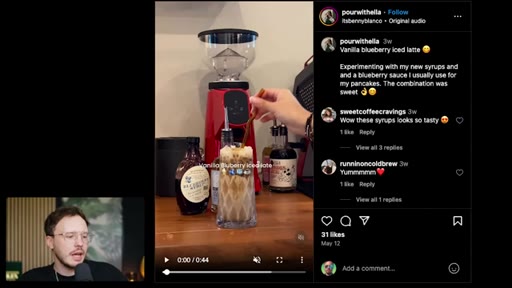
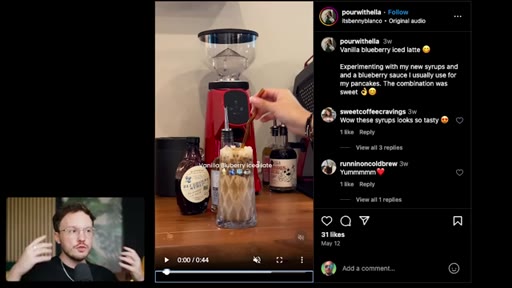
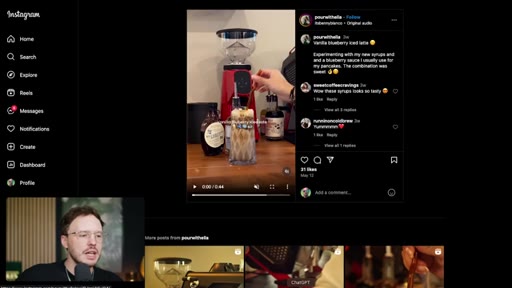
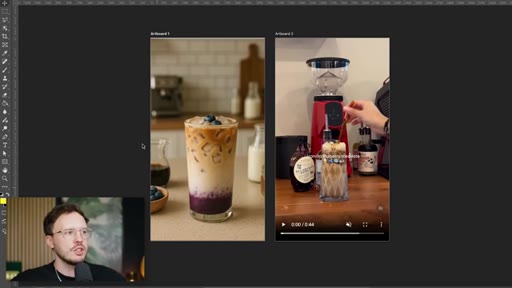
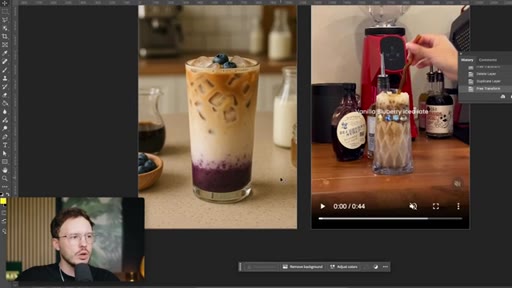
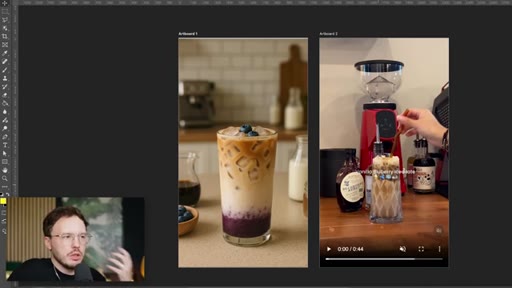
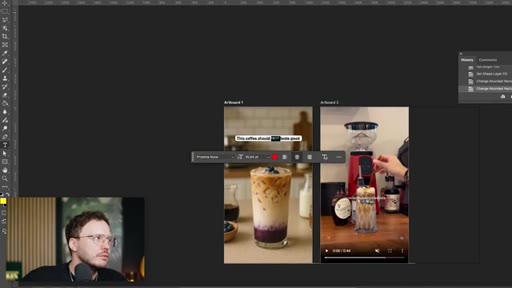
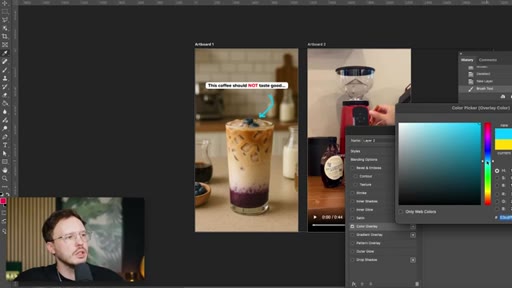
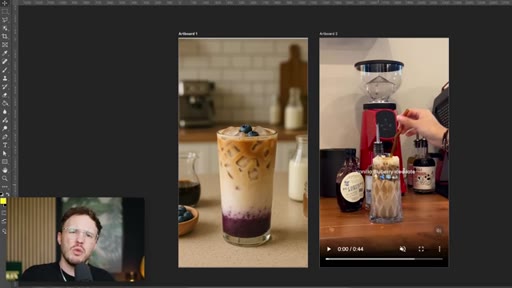
Creator 3 (Ella): coffee creator, hook score 3/10. Problem: visual clutter and zero curiosity loop.
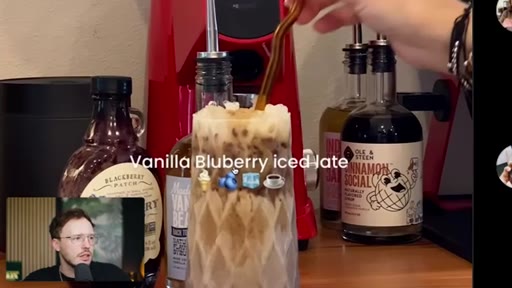
11 · The 3 Hook Elements Together
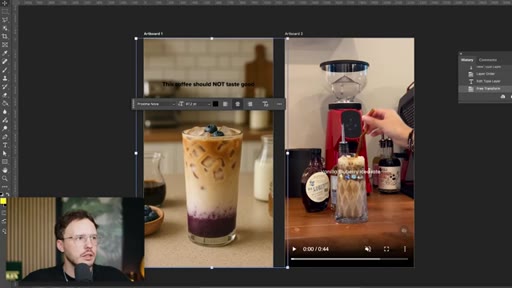
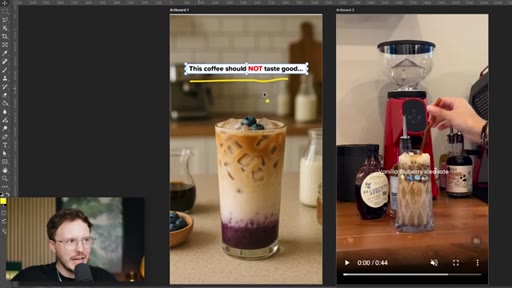
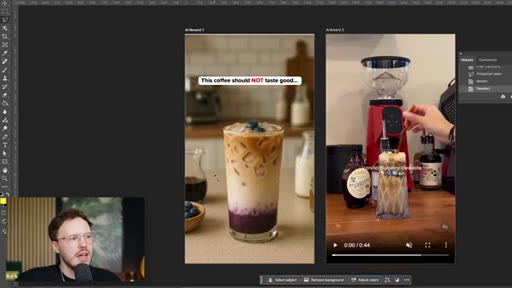
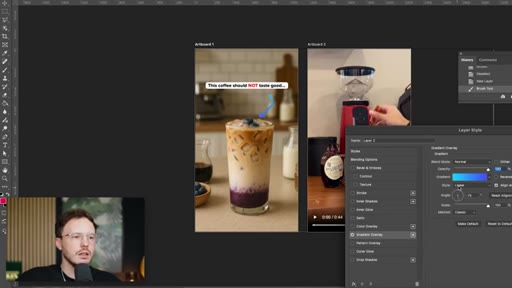
Live rebuild for Ella: AI first-frame, text hook 'this coffee should NOT taste good', deliberate withholding of the product reveal.
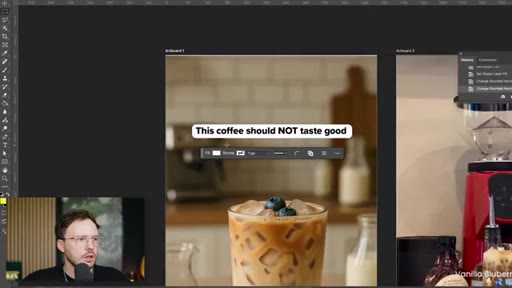
12 · The Color Theory Trick
Color picker live demo: red reads cheap, yellow with outer glow wins; blur the key ingredient to deepen the loop.
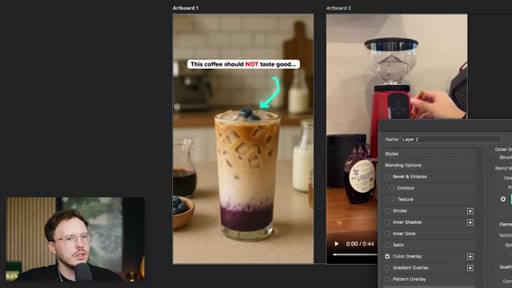
13 · The Before / After
Recap and CTA: free account review link and next-video bridge.
Visual structure at a glance.
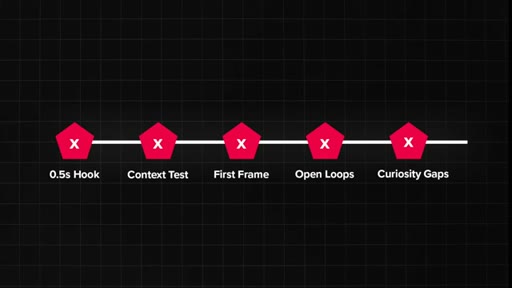
Named ideas worth stealing.
Open Loop Architecture
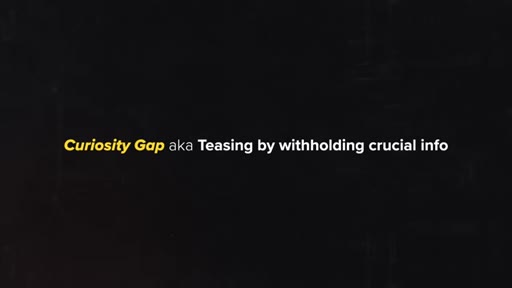
Open a question in the viewer's mind as early as possible, withhold the answer as long as possible, and open a new loop the moment you close the previous one.
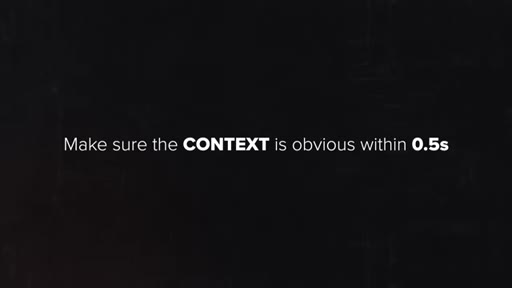
The 0.5-Second Context Test
A viewer must understand who the content is for within half a second of seeing the first frame. If they cannot, the algorithm loses the targeting signal and the viewer swipes.
Belief Challenge Hook
Find the claim in your content that contradicts what your audience already believes. Lead with the contradiction, not the explanation.
Visual Loop Deepening
- AI-generated or styled first frame
- Text hook that withholds the subject
- Blur or obscure the key visual element
Stack three layers of ambiguity — visual, textual, and subject-level — so that resolving any one of them still leaves the others open.
Lines you could clip.
"You wanna open loops and don't close them as long as possible. Basically keeping them dangling at all times."
"There's a very fine line from being borderline criminal and getting people's scroll-stopping attention."
"Challenging a common belief is one of the strongest forms of creating hooks."
"Who can relate is not a strong question. Because I'm like, I don't know what this is even about so I'm gone."
"There are a gazillion photographers out there and you're not special — that is until they get to understand your personality."
How they asked for the click.
"If you wanna get your accounts and content reviewed for free, link is in the description."
Soft lead-in then bridges directly to a next-video CTA — two-step conversion play.
Word for word.
The question is the hook — not the answer.
Every hook that fails does so for the same reason: it either skips the question entirely or accidentally gives the answer away before the viewer is committed.
- Context must land within half a second — not to give away the content, but to tell the viewer whether this is for them. Without that signal, even a compelling claim goes unheard.
- Challenging a common belief is the most reliable hook structure because it creates cognitive dissonance the brain must resolve — and the only resolution available is to keep watching.
- The safe zone is not a design preference. Text that bleeds into the interaction bar or overlaps the subject reads as amateur before a single word is processed.
- Font weight hierarchy does the work of emphasis: making secondary words smaller guides the eye to the key phrase faster than emphasis alone.
- A caption that reveals the subject defeats the hook. If the viewer can answer the question from the thumbnail alone, there is no reason to watch.
- Profile feed coherence is a trust signal. A mismatch between static posts and reels tells a new visitor that the account does not know what it is — and that ambiguity is a swipe.
- Storytelling hooks outperform informational hooks in saturated niches because they create emotional investment before the viewer decides whether to care about the topic.
- Visual loops compound text loops. Blurring the key ingredient while the text hook withholds the name creates two simultaneous open questions — closing one does not close the other.
- AI-generated visuals are a legitimate production tool for first frames when your phone footage cannot achieve the composition, lighting, or focal clarity the hook requires.
- The loop-within-a-loop principle scales: every time you close one question, open the next one immediately. Retention is not about one great hook at the start; it is about never letting all loops close at once.