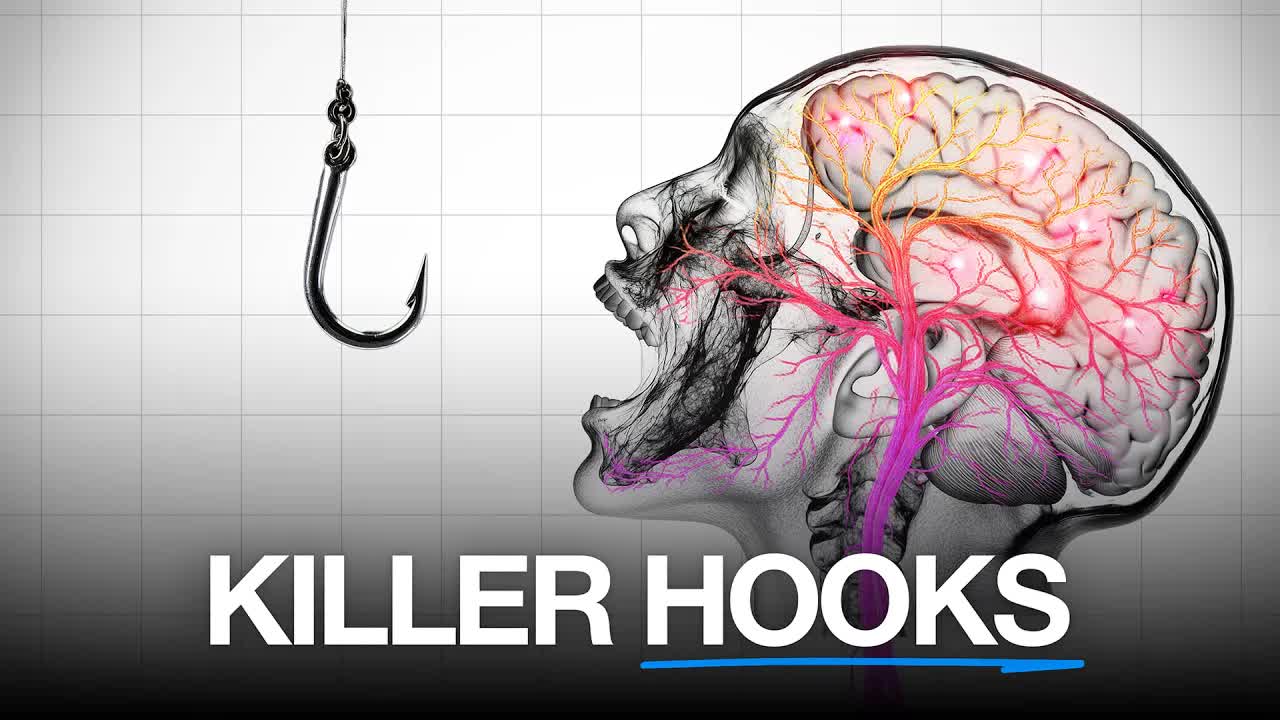
The bait, then the rug-pull.
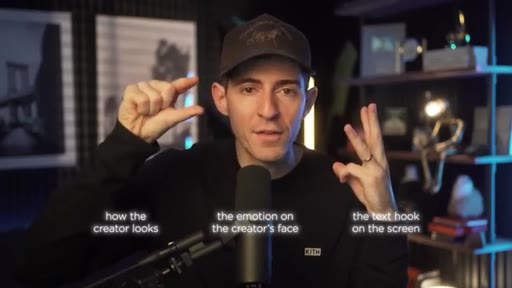
The title makes a specific promise -- fifteen minutes, hooks that stick -- and the video actually keeps it. Kallaway opens by framing hook failure as a diagnostic problem: if your hooks are not working, there are only four mistakes you could be making, and every one of them has a fix.
Where the time goes.
01 · Cold open
Promise: four hook mistakes, tactile examples, immediate fixes. Credibility stake: 1M followers, billions of views.
02 · What a winning hook does
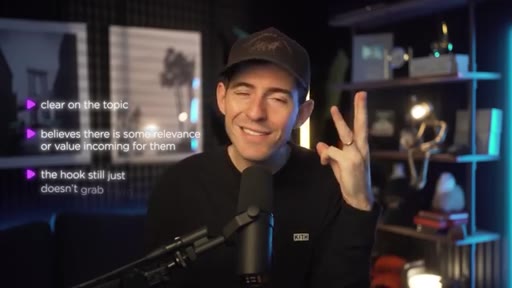
One job -- help the viewer opt in. Requires topic clarity and on-target curiosity.
03 · Mistake 1: Delay
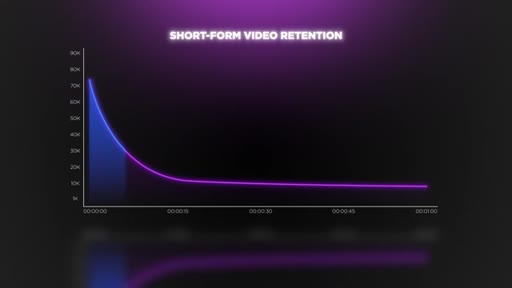
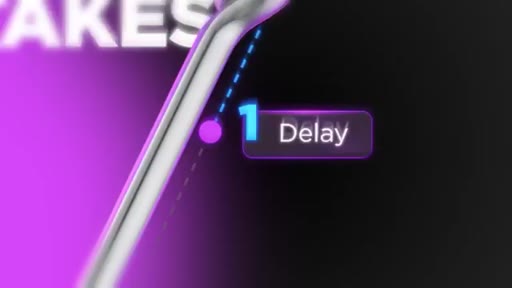
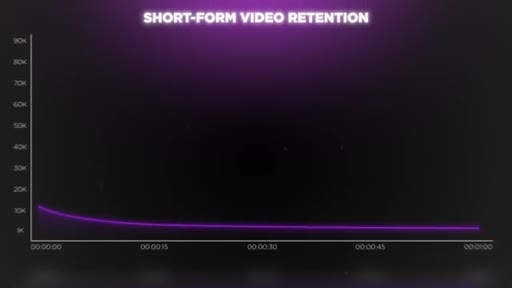
Context arrives too late. Fix: speed to value -- move topic to first 1-2 seconds. Shows exponential decay retention chart. Before/after gut-health hook example.
04 · Mistake 2: Confusion
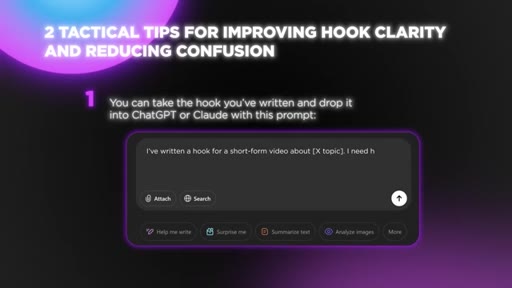
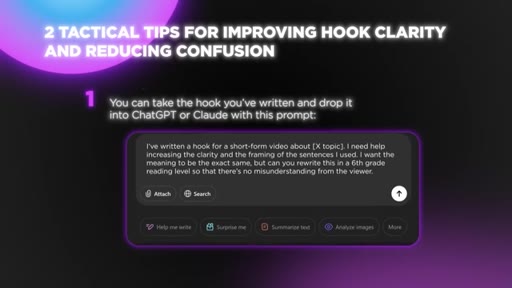
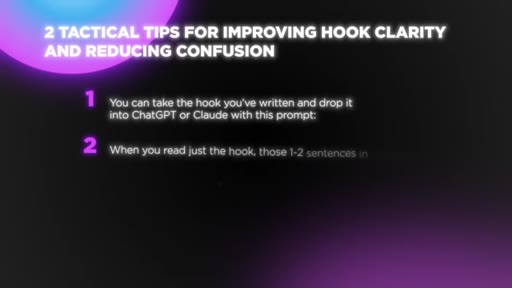
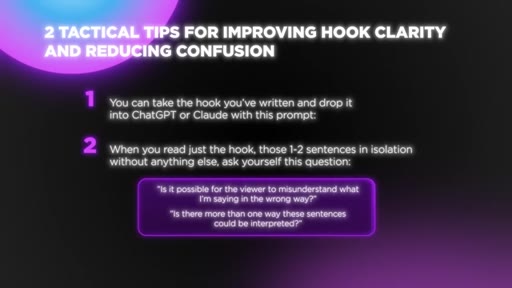
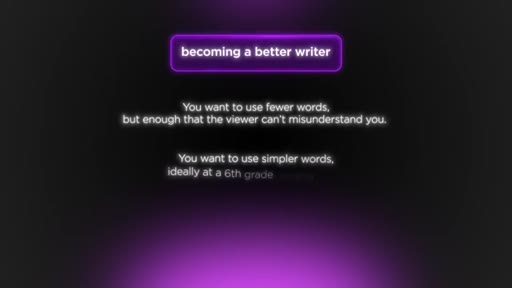
Language too dense to parse. Fix: sixth-grade reading level, active voice, fewer words. Two tactical tips: drop hook into ChatGPT/Claude, self-audit for multiple interpretations.
05 · Mid-roll pitch
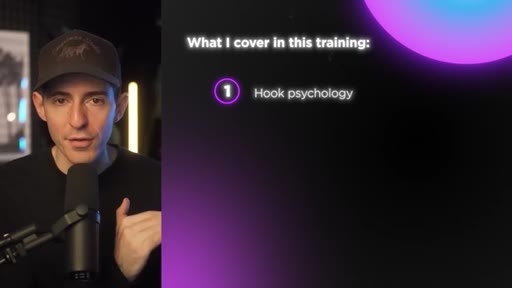
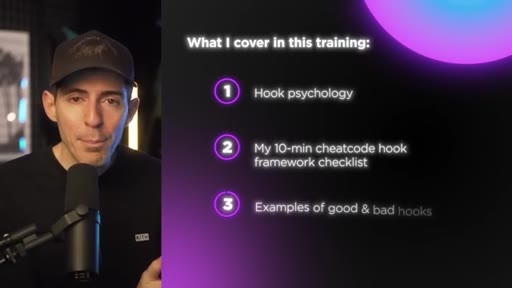
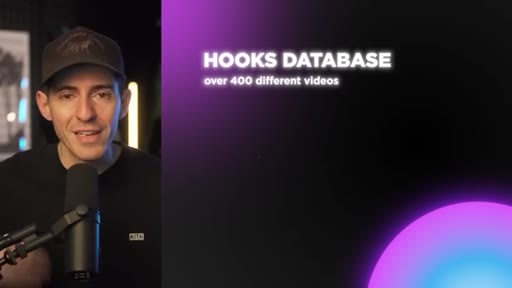
Hooks masterclass promo: hook psychology, 10-min checklist, 400+ video database tagged by hook format/strategy/visuals/audio.
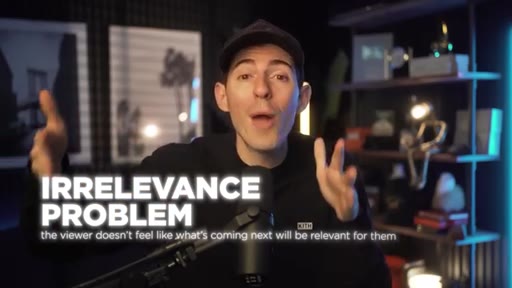
06 · Mistake 3: Irrelevance
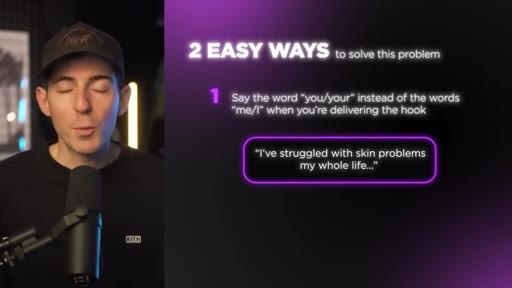
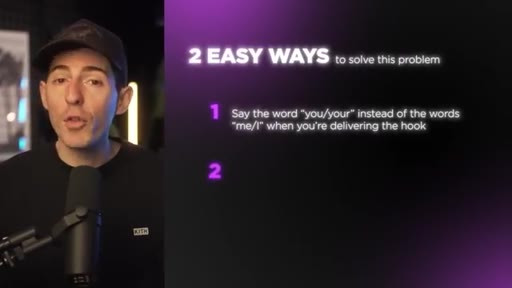
Viewer cannot tell if video is for them. Fix 1: say you/your not I/me. Fix 2: agitate a known pain point (need vs. nice-to-have framing).
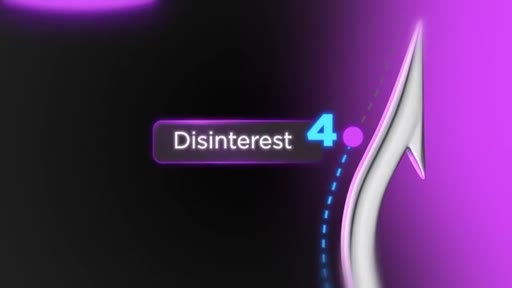
07 · Mistake 4: Disinterest
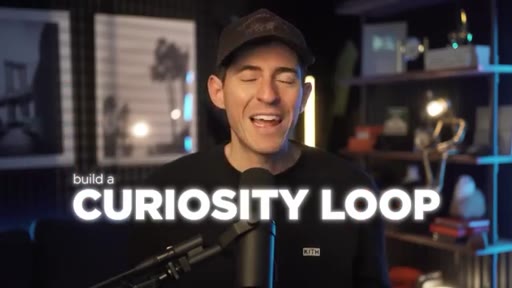
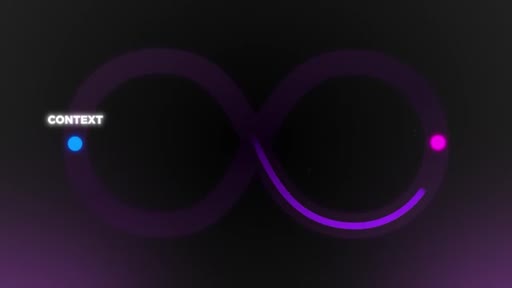
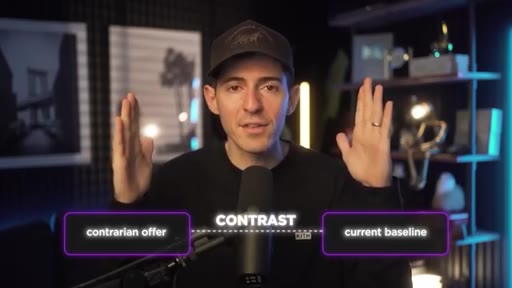
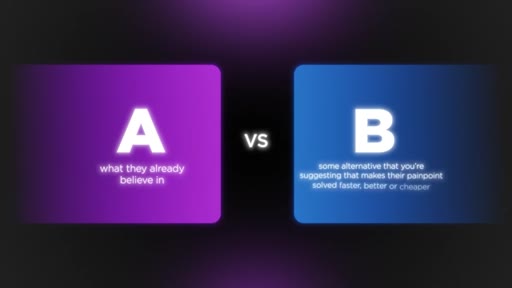
Hook does not open a curiosity loop. Fix: contrast -- gap between baseline belief and contrarian alternative re-agitates pain and drives curiosity.
08 · Stated vs. implied contrast
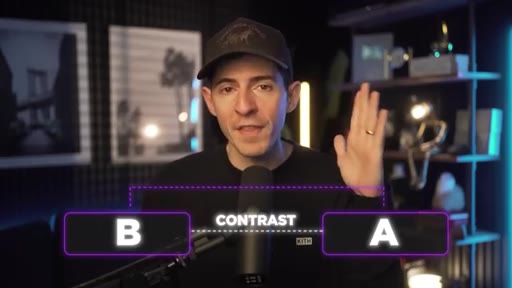
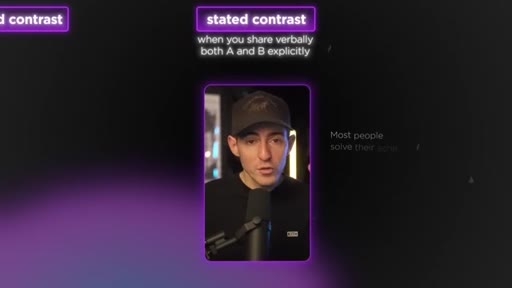
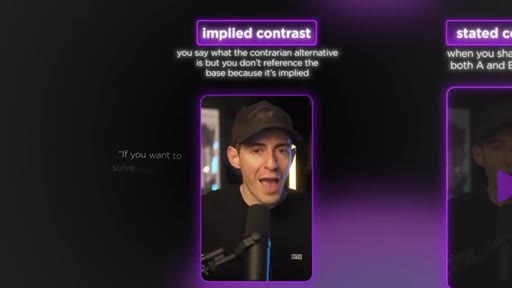
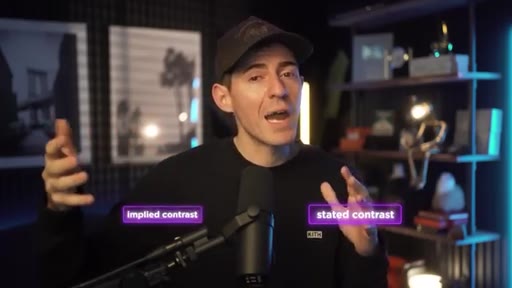
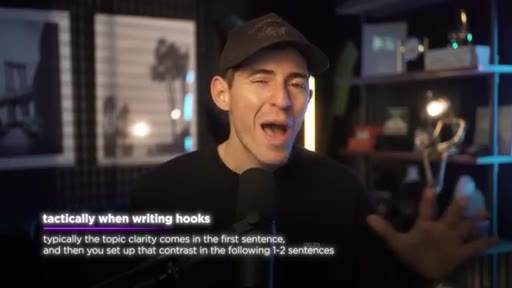
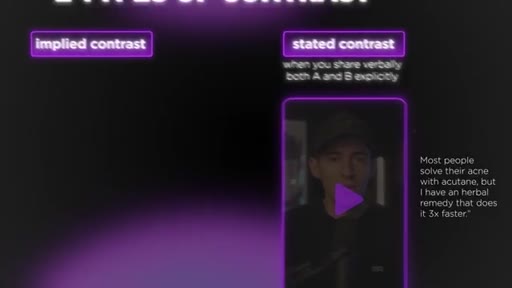
Two execution modes: stated (explicit A vs. B) or implied (contrarian only, baseline assumed). Hooks are 2-3 sentences: clarity first, contrast next.
09 · Recap + CTA
Restates four mistakes. Plugs hooks masterclass and Wavy World free community (22K+ members).
Visual structure at a glance.
Named ideas worth stealing.
The Two Hook Requirements
- Topic clarity
- On-target curiosity
Every hook must deliver topic clarity and on-target curiosity.
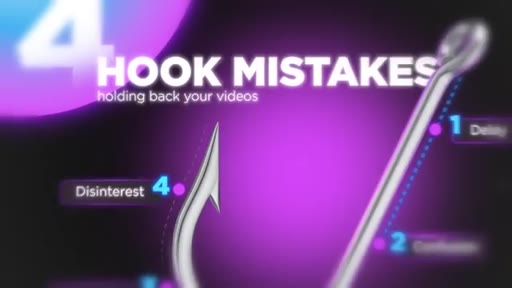
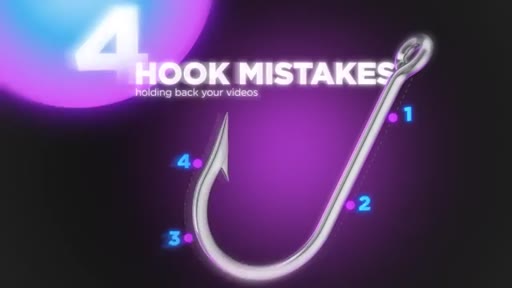
The Four Horsemen Hook Mistakes
- Delay
- Confusion
- Irrelevance
- Disinterest
A diagnostic framework: if a hook fails, it is because of one or more of these four root causes, each with a specific counter-move.
Speed to Value
Topic introduction should happen in the first one to two seconds. Every additional second of delay costs viewers at exponential decay rate.
Contrast Mechanics (A vs. B)
- Stated contrast (explicit A vs. B)
- Implied contrast (B only, A assumed)
Contrast is the distance between the viewer current belief (A) and a contrarian alternative (B). This gap re-agitates an unsolved pain point and is the mechanical source of curiosity.
Lines you could clip.
"Hooks really only have one job, to help a viewer decide to opt in and continue watching the video."
"Speed to value. You wanna increase the speed that the viewer can get to clarity or get to value."
"A curiosity loop is when the viewer sees something, asks a hypothetical question in their mind, gets some additional context to answer it, but that spurs a new question, more context, new question, more context, and so on."
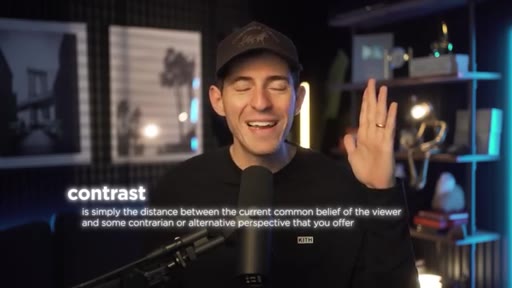
"Contrast is simply the distance between the current common belief of the viewer and some contrarian or alternative perspective that you offer."
Things they pointed at.
How they asked for the click.
"If you wanna become god tier at hooks and just write bangers every single time without thinking about it, I just filmed the most comprehensive training on short form hooks ever created."
Mid-roll placement at roughly 7 minutes is aggressive for a 15-minute video. Framing the current video as covering only 1-2 percent of the full playbook makes the masterclass feel necessary, not supplementary.
Word for word.
Four root causes, one checklist.
Every hook that fails does so for one of four diagnosable reasons -- and each has a single mechanical fix that requires a rewrite, not a personality transplant.
- Topic clarity must land in the first one to two seconds; every extra second of delay before the viewer knows what the video covers bleeds audience at an exponential rate.
- Active voice and sixth-grade reading level are not dumbing down -- they are compression; the viewer comprehension rate determines whether they can make a keep-watching decision at all.
- Framing hooks around you and your instead of I and me removes the burden of self-identification; the video becomes for the viewer by default, not by inference.
- Pain-point hooks outperform interest hooks because a need-to-have creates urgency that a nice-to-have never can.
- Contrast -- the gap between what the viewer already believes and a contrarian alternative you offer -- re-agitates an unsolved pain point and is the mechanical engine of curiosity.
- Stated contrast names both sides explicitly and is the safer default; implied contrast works only when the baseline is widely understood and the viewer can supply it without being told.
- A hook is typically two to three sentences: the first delivers topic clarity, the next one or two set up contrast and curiosity -- not one punchy line, not a paragraph.