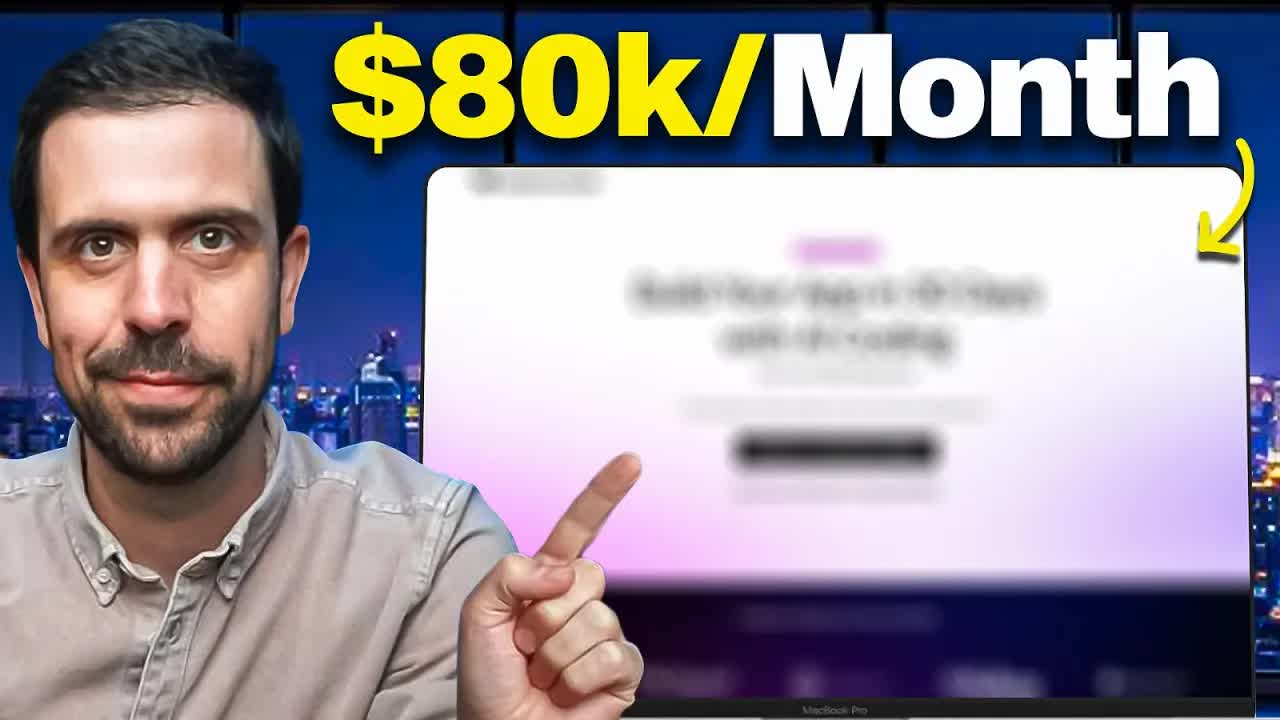
The bait, then the rug-pull.
One page. Three weeks. Eighty thousand dollars. The host opens with the receipt before the lesson — a proof-before-promise structure that earns attention in the first breath and holds it for sixteen minutes of dense, actionable instruction.
Where the time goes.
01 · Hook and proof
Revenue claim with evidence and tutorial promise.
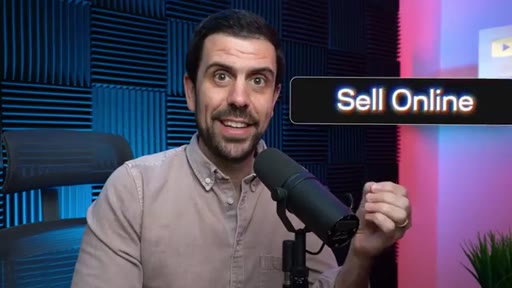
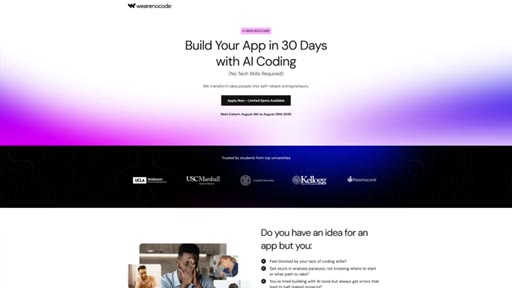
02 · Landing pages vs. websites
Why landing pages are the actual selling tool; the four-step visitor journey.
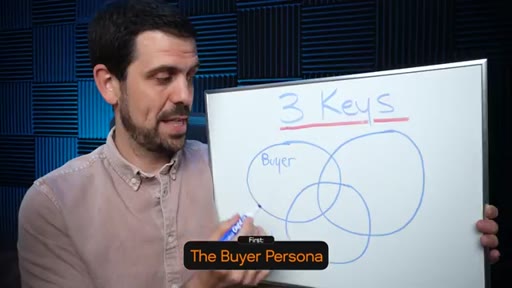
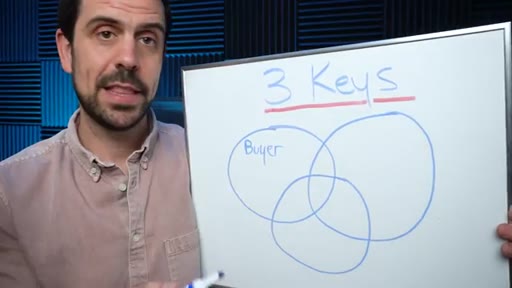
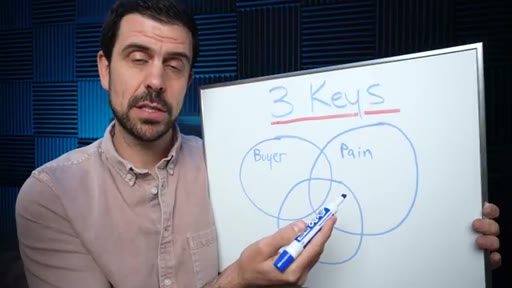
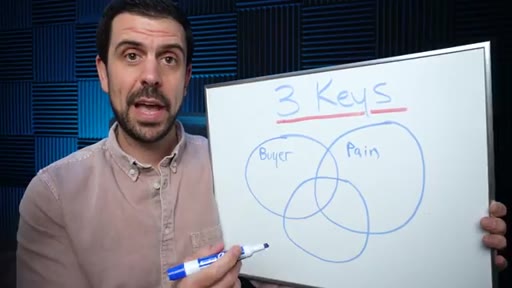
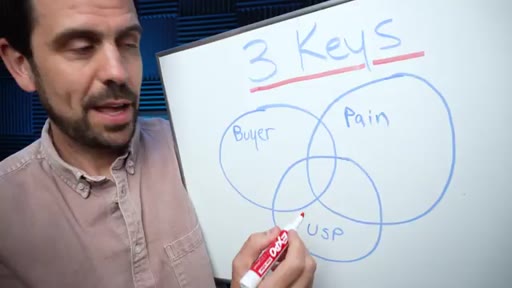
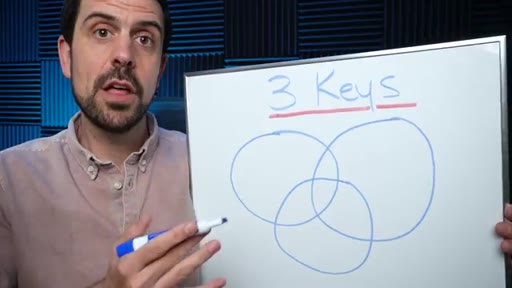
03 · Three strategic keys
Buyer persona, pain point, and USP as the foundation of any converting page. Whiteboard Venn diagram.
04 · Comedic prep routine
Satirical montage of cold plunge, Alex Hormozi book, carnivore diet before building.
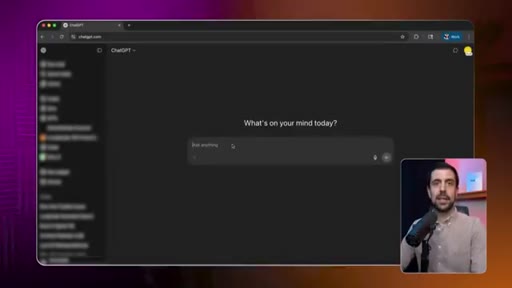
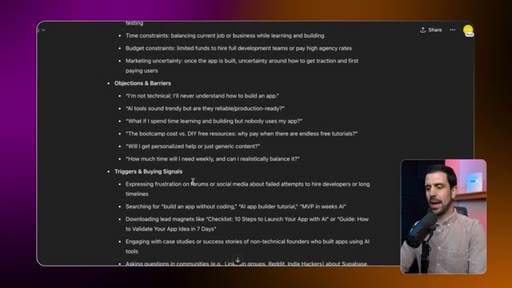
05 · ChatGPT: generate the buyer persona
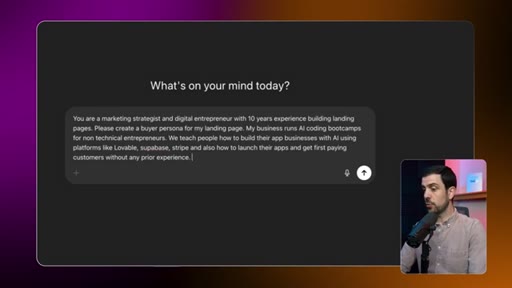
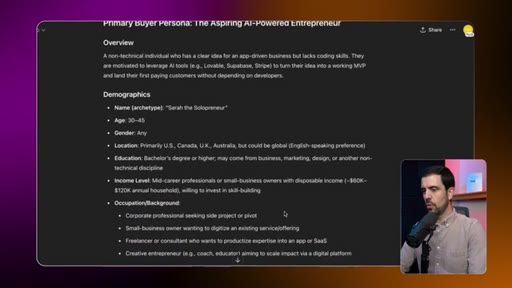
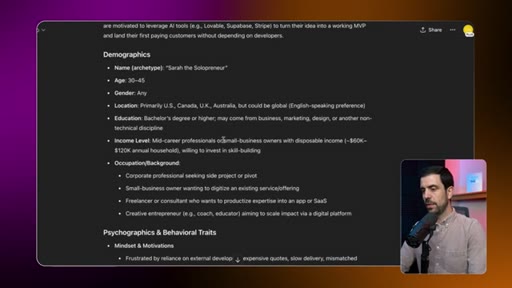
Live ChatGPT prompt to produce a full persona with demographics, pain points, objections, and buying signals.
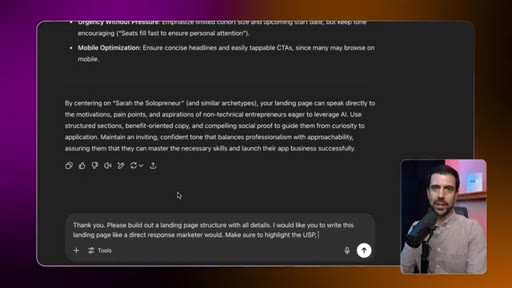
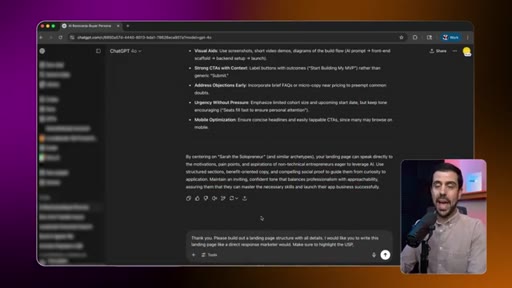
06 · ChatGPT: write the landing page structure
Direct-response copywriting prompt; copy is primary, design secondary.
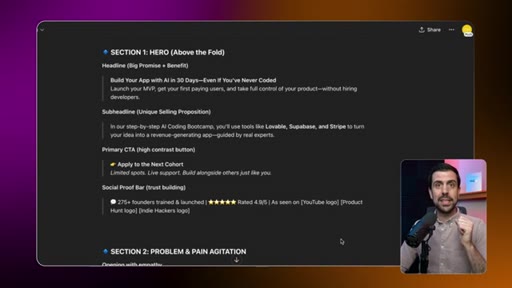
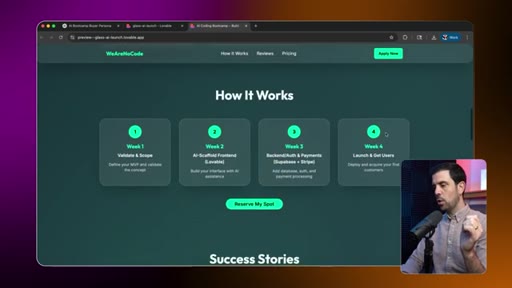
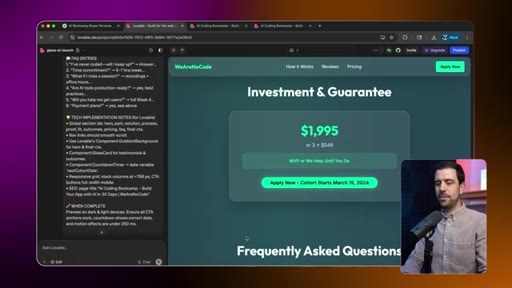
07 · Section-by-section walkthrough
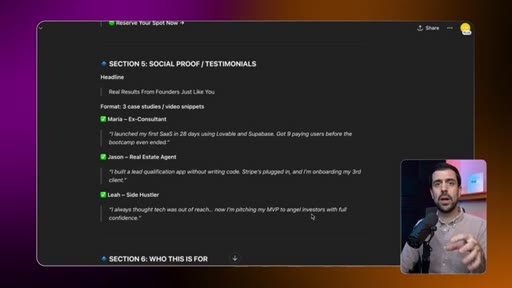
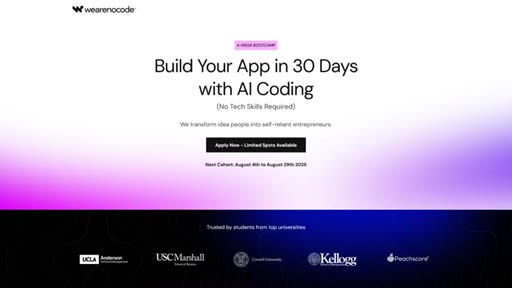
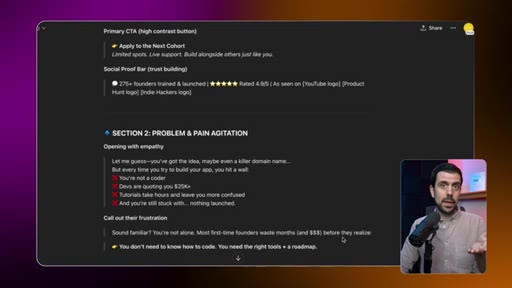
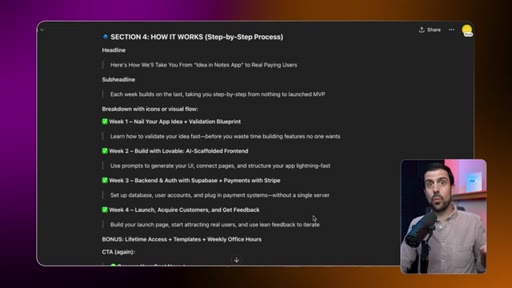
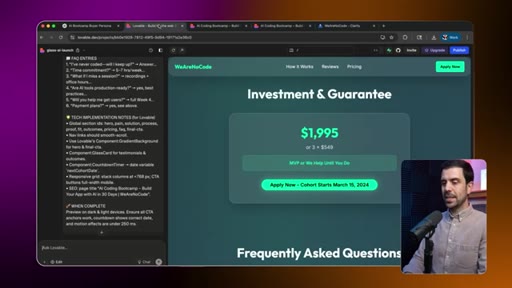
Hero, problem, solution, how it works, testimonials, pricing, FAQ, final CTA — theory and structure explained.
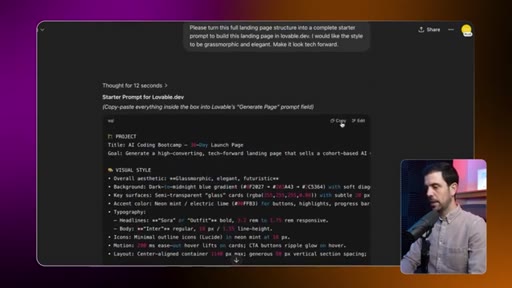
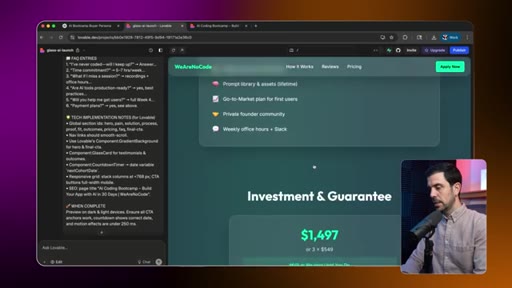
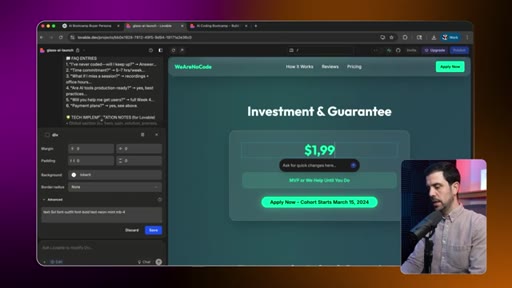
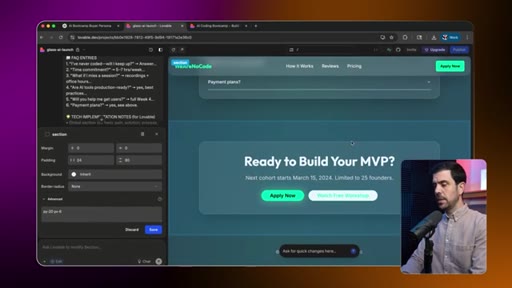
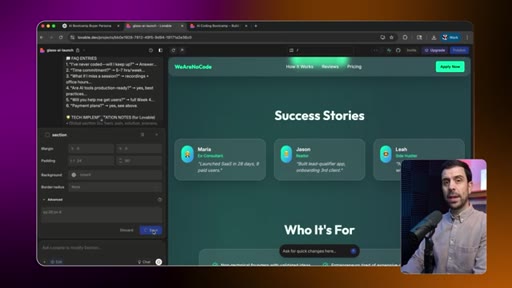
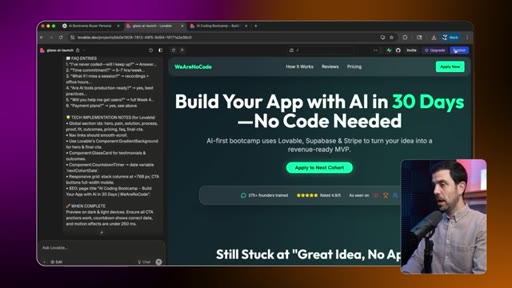
08 · Lovable: build the page
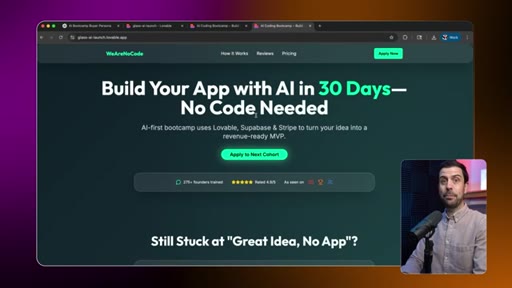
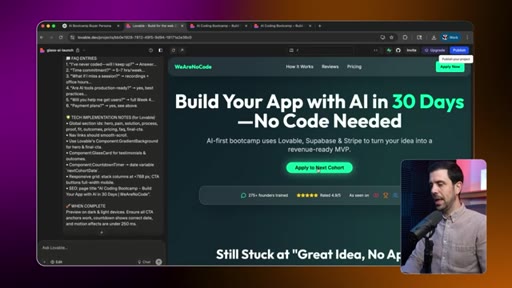
Convert ChatGPT structure into a Lovable prompt; page generated in ~90 seconds.
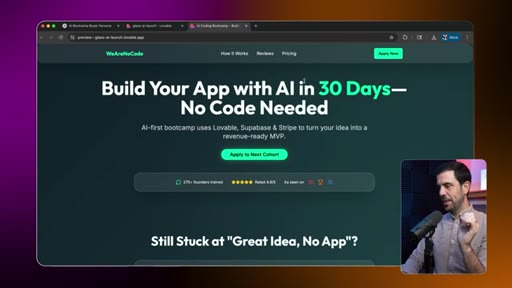
09 · Editing and publishing
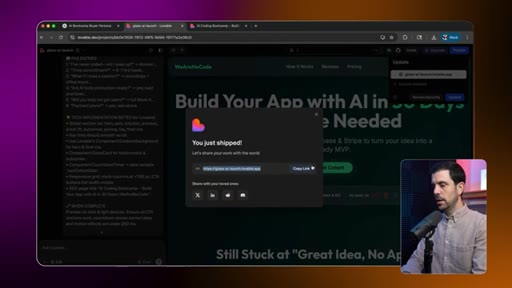
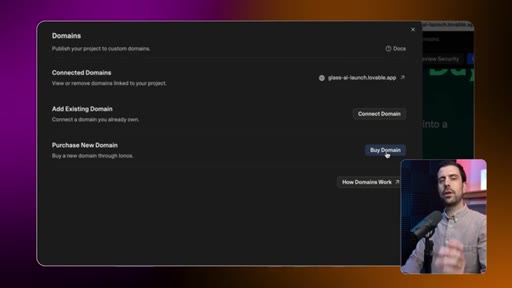
Manual edits (price, copy), save discipline, publish to subdomain, connect custom domain.
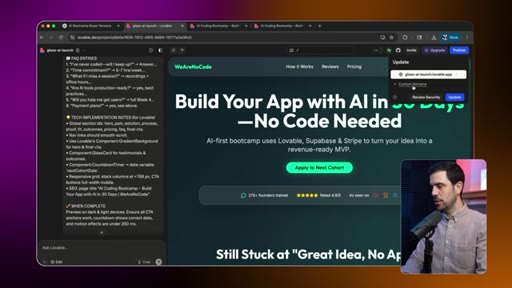
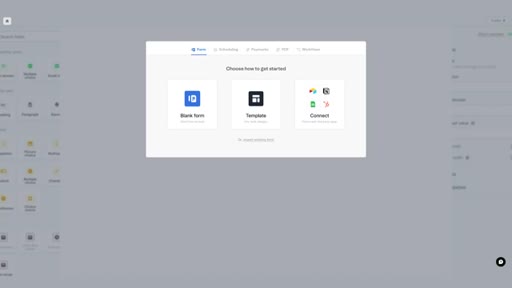
10 · Form builder integration
Connecting Fillout or Tally behind CTA buttons for lead capture.
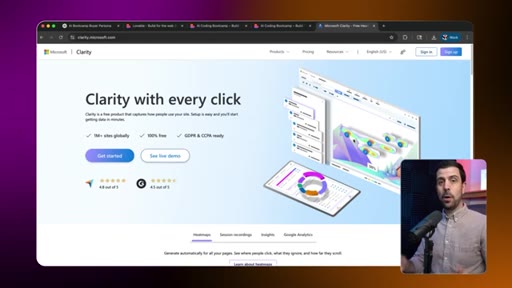
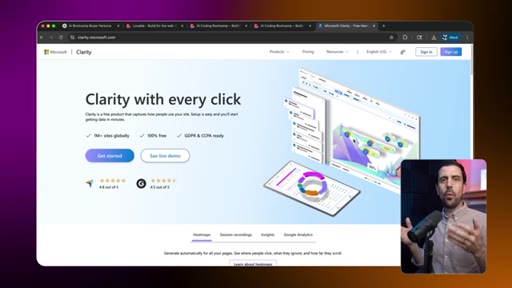
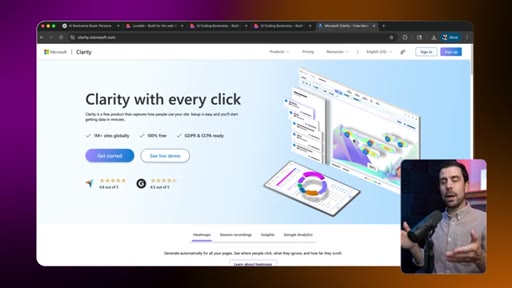
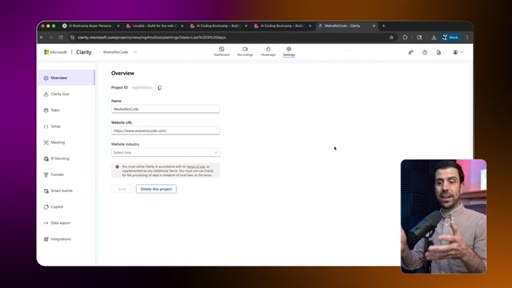
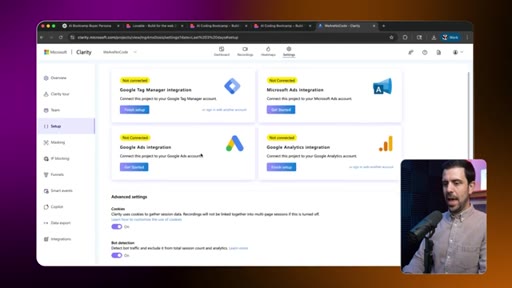
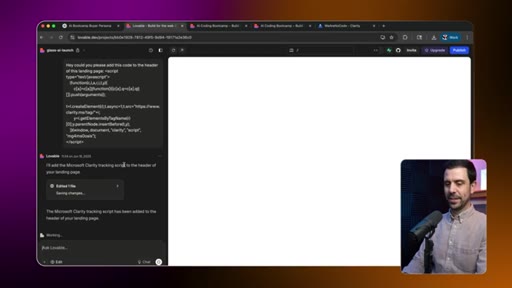
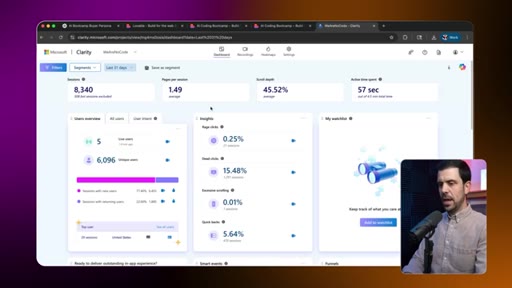
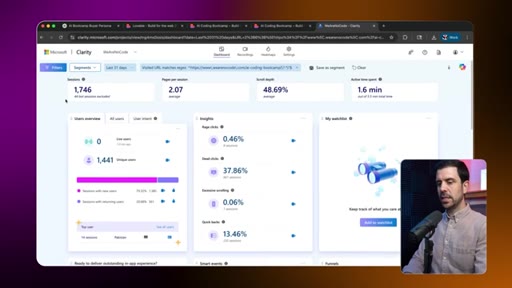
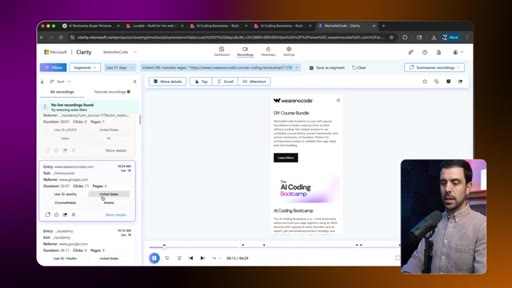
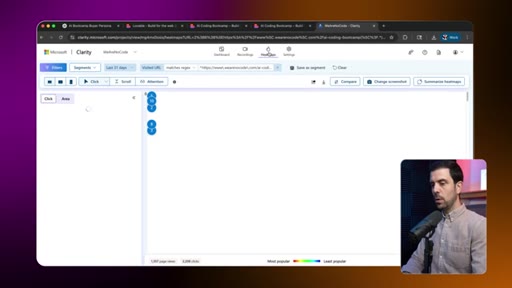
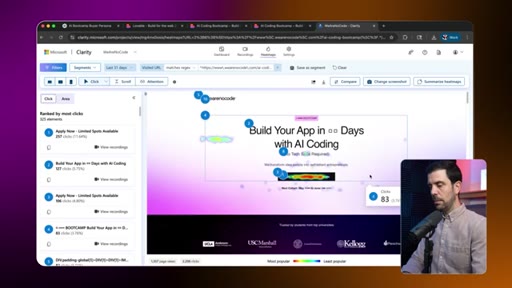
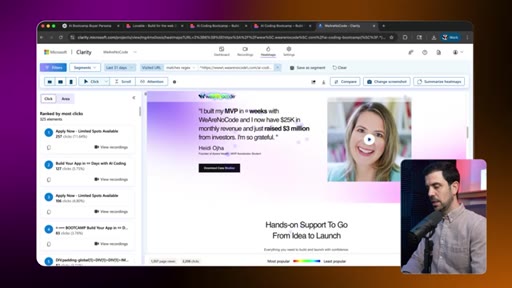
11 · Microsoft Clarity: track and optimize
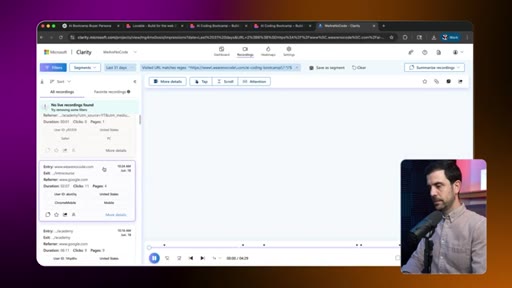
Free heatmaps and session recordings to find drop-off points, rage-clicks, and CTA optimization opportunities.
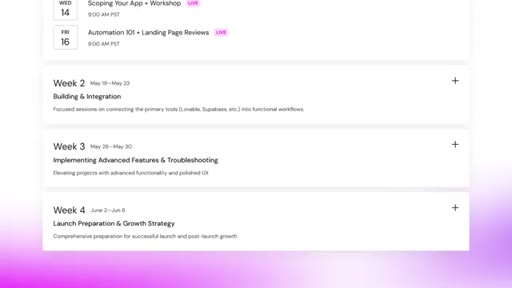
Visual structure at a glance.
Named ideas worth stealing.
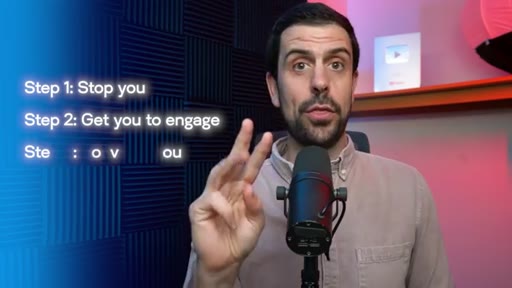
The Four-Step Landing Page Model
- Stop (grab attention)
- Engage (get them reading)
- Convince (build belief)
- One action (single CTA)
Every element of a landing page serves one of these four sequential goals — if a section doesn't advance the visitor to the next step, it shouldn't be there.
Three Keys Framework
- Buyer Persona
- Pain Point
- USP
The intersection of knowing exactly who you're talking to, what frustrates them, and why your offer is uniquely positioned — the strategic foundation before any copy is written.
Standard Landing Page Section Order
- Hero (headline + CTA)
- Problem (agitation)
- Solution (USP)
- How It Works
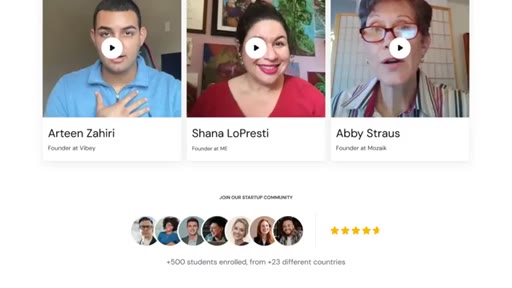
- Testimonials / Social Proof
- Who It's For
- Pricing
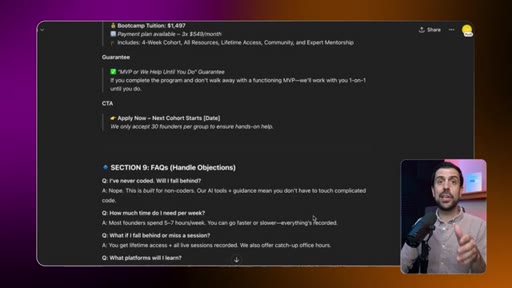
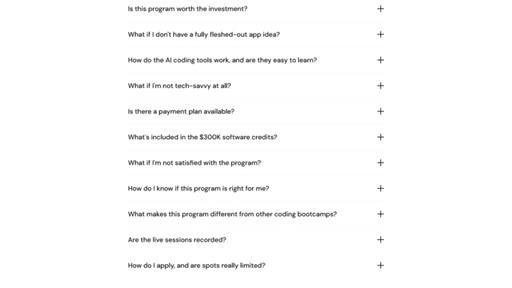
- FAQ (objection handling)
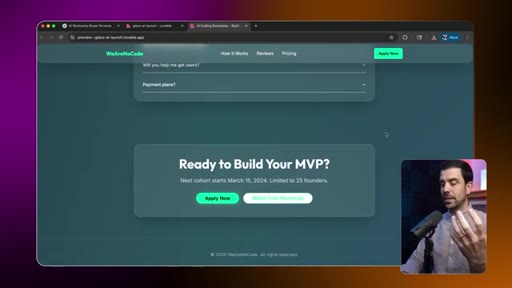
- Final CTA
A proven section sequence that mirrors the buyer's psychological journey from awareness through conviction to action.
Lines you could clip.
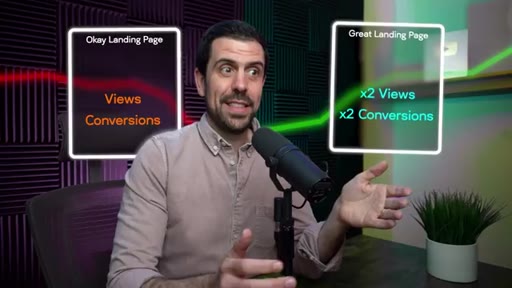
"The difference between an okay and a great landing page can mean double the number of eyeballs and the number of conversions. That pretty much means you can double your business overnight."
"Most people think that websites are selling tools. They are not. Landing pages are."
"Copywriting is probably the most important part of any given landing page. Design is definitely secondary."
"The goal, my friends, is to sell the promise. The product is the place that gets us there."
Things they pointed at.
How they asked for the click.
"If you're not actually interested in building a landing page and you really wanna be building an app, then I highly recommend you check out this video."
Soft pivot CTA — funnels viewers to a related tutorial rather than an external product offer. Subscribe ask appended.
Word for word.
Copy is the conversion variable, not design.
A landing page lives or dies by its headline and copy — the design is a container for words, and no amount of visual polish compensates for messaging that misses the buyer.
- Define your buyer with enough specificity that a stranger reading the page would either strongly identify with it or immediately opt out — vague targeting is why most landing pages underperform.
- The hero section is the only real estate every visitor sees; a weak headline makes the rest of the page irrelevant regardless of how strong the offer is.
- Prompt an LLM to write as a direct-response marketer, not a general copywriter — the output framing changes significantly and produces more persuasive copy.
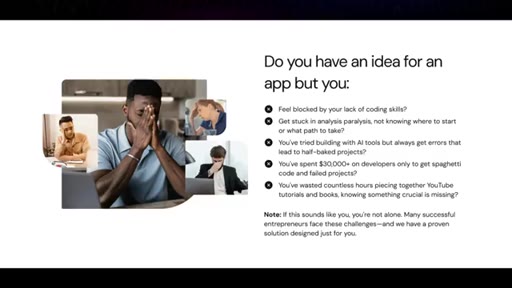
- The problem section's function is empathy before pitch: make the reader feel understood first, then introduce the solution.
- FAQ sections handle the objections you cannot address in person — a well-built FAQ is more valuable than most testimonial sections on a cold-traffic page.
- Behavior analytics (heatmaps, session recordings, rage-click data) reveal the gap between what you intended visitors to do and what they actually do — run them before any redesign.
- Two metrics matter in the first weeks of a live landing page: unique visitors and action rate. Every other metric is a distraction until those two are stable and measured.