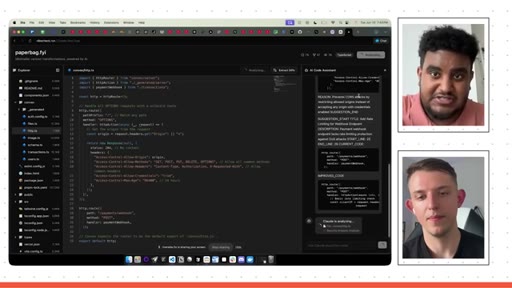

The bait, then the rug-pull.
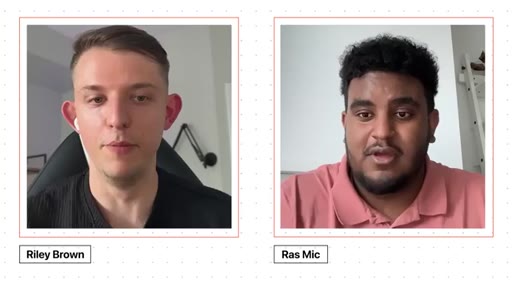
Riley Brown opens with the cold thesis and then steps out of the way. The whole 37 minutes is really one argument with three acts: why Claude Code is winning, where Cursor / Windsurf / Codex / Devin / CodeRabbit each fit on the map, and how a vibe coder should actually start a project today. The lesson for creators isn't the take itself — it's the whiteboard. Ras Mic builds the entire frame live in Excalidraw, which makes a take that could've been a tweet feel earned over half an hour.
Who's talking.
Where the time goes.

01 · Intro — "Claude Code is better than Cursor"
Riley sets the thesis cold: many people now think Claude Code is the best AI coding tool. He brings on Ras Mic to defend it and walk through what makes Claude Code different.

02 · Why Claude Code is best
Mic frames the lanes: OpenAI is going B2C / companion, Anthropic is going programming. He attended a Claude Code conference where Anthropic told him 95% of their own engineers use Claude Code internally — the rest are 'rebels' on Cursor, Windsurf or Vim.
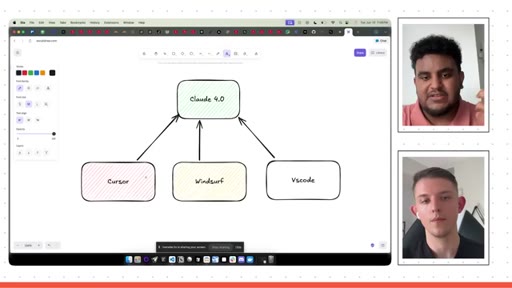
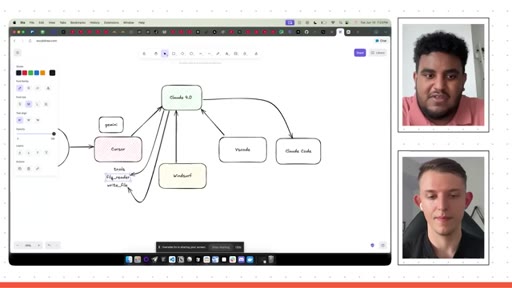
03 · Whiteboard — Cursor / Windsurf / VSCode all use the same model
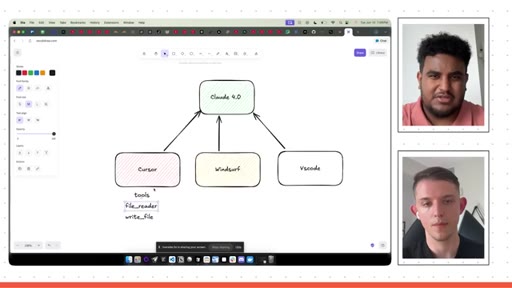
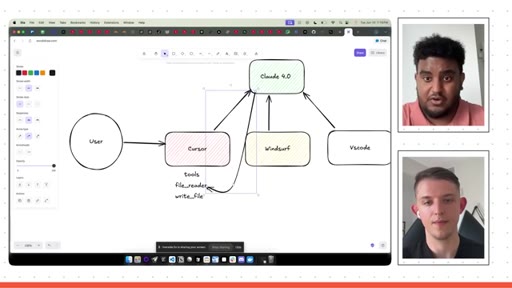
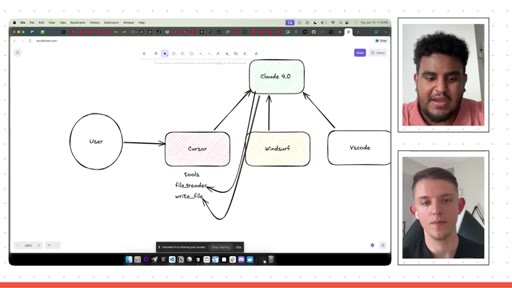
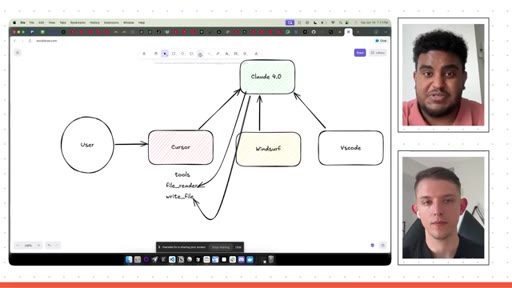
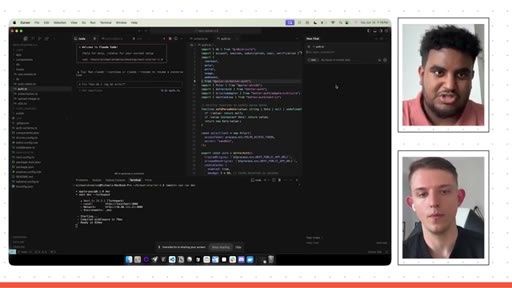
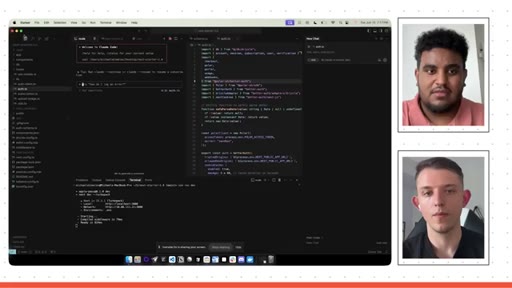
Mic shares his screen and draws an Excalidraw diagram: Claude 4.0 sits on top, three forks (Cursor, Windsurf, VSCode) all call into it. The model is just a knowledge store; the differentiator is the tools each IDE builds — file_reader, write_file, context handlers. That's the 'secret sauce' Cursor and Windsurf have been fighting over.

04 · Using Claude Code with another IDE
Mic's actual setup: pin Claude Code top-left in the terminal, keep Cursor chat open on the right, use Claude 4 in Cursor as the 'assistant who answers questions about the code base' and Claude Code as the 'executor that ships changes.' He recommends pairing both — never raw-dogging Claude Code alone in VSCode.

05 · Future of AI coding tools & Claude's SDK
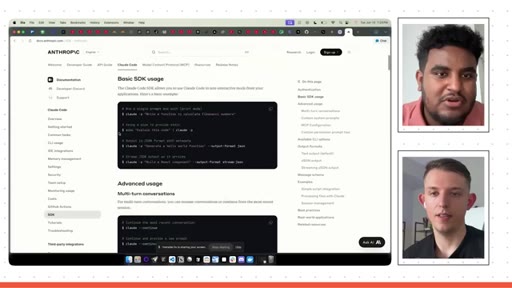
Cursor raised $900M and Windsurf is rumored OpenAI-bound; both need their own models now because the tool moat is gone. Anthropic has shipped a Claude Code SDK (CLI today, TypeScript and Python SDKs coming). Mic's prediction: niche vibe-coding tools — React-specific, WordPress-specific — will win by wrapping Claude Code and adding fine-tuned UX.

06 · Codex vs Claude Code
The clean-line distinction: Codex runs in the cloud, Claude Code runs locally. Cloud-based means OpenAI controls what you can install — Mic argues local wins for power users because you can install whatever you want (and he says 'I could start malware' as the punchline). But Codex could win the mass-consumer market if ChatGPT plugs it in as a tool.

07 · Code review tools — Devin and CodeRabbit
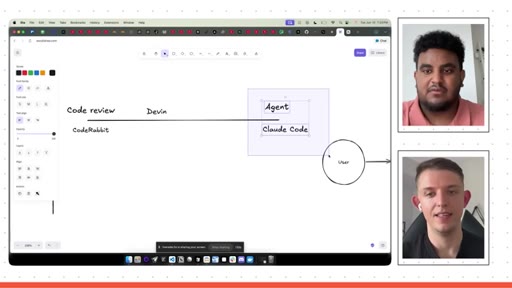
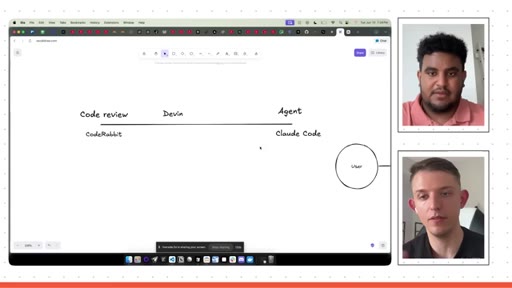
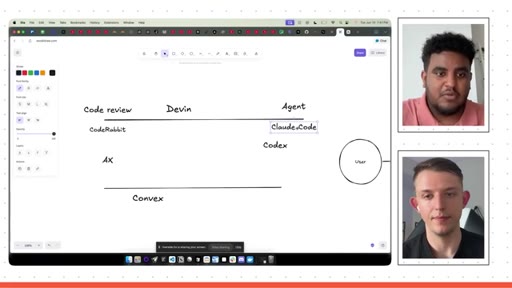
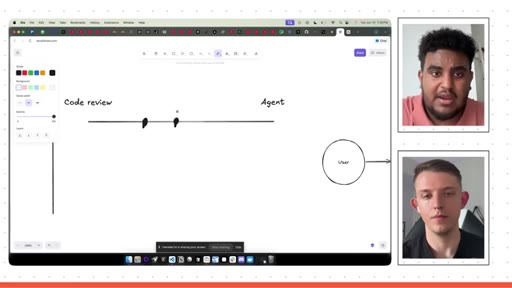
Mic adds a second axis to the whiteboard: code review on one end, agent on the other. CodeRabbit is the pure code-review side (great free tier, catches bugs and security misoptimizations after a session ends). Claude Code is the agent end. Devin sits in the middle — 'AI software engineer' for feature work on existing codebases. His vibe-coder stack: Cursor or Windsurf + Claude Code + CodeRabbit.

08 · Building an app with Claude Code — the starter-kit playbook
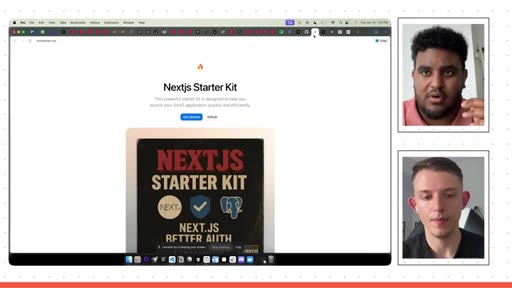
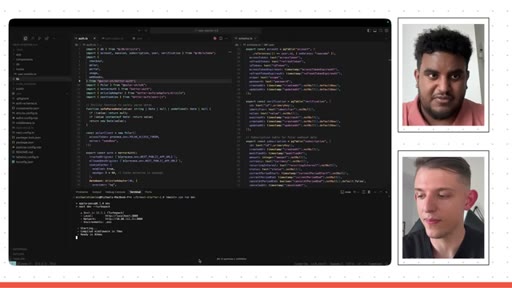
Mic's recipe for vibe coders: stop debating Supabase vs Convex vs Firebase, it doesn't matter until PMF. Every project needs the same base — landing page, auth, DB, payments. Find a solid template (he has two — React + Convex, Next.js + Postgres), download it, then tell Claude Code to analyze the codebase and generate a markdown file explaining how the app works. That markdown becomes the knowledge base Claude Code uses to build features. He demos vibecheck.run — his own CodeRabbit-like web app, 70% written by Claude Code in roughly four hours over two days.

09 · Future plans — "we're going to build it live"
Riley locks in the sequel: next episode they'll build a full app from Mic's starter template using Claude Code end-to-end, with auth and payments, and ship it live with a public link. Mic's closing line: have fun with the tools, most are a couple bucks a month, don't take it too seriously until you have to.
Lines you could clip.
"Underlyingly, they all use the same model. So the model in and of itself is useless — it's just a resource store."
"What makes Cursor, Windsurf, and VSCode unique is they have tools that they've built."
"95% of their engineers use Claude Code. Very few are using Cursor and Windsurf. The other 5% are just rebels who want to use Vim."
"If the model provider is finally building the tools that make tools like Cursor and Windsurf better — who better to build it than the one developing the model?"
"Cloud Code is the first time where I'm like, yeah — this this is real. Like, this is powerful."
"On my computer, I can install whatever I want. I could start malware."
"When I see vibe coders debate which database platform makes more sense — it doesn't matter. Believe me. Until you hit PMF and it scales, then you can worry about it."
"It's gonna come down to grit, determination, and discipline in actually building the one feature that you need to make a solid app, which is where I think a lot of people go wrong."
"I would tell Claude Code to analyze the code base and create a markdown file explaining the flow of the app — and that file becomes the knowledge base for every future feature."
"70% of this code is written by Claude Code. This took me two days — two hours each day, four hours total."
Things they pointed at.
Word for word.
Steal the whiteboard.
Don't argue your take — diagram it live, then place every competitor on the diagram.
- Hook with the spicy take, then immediately hand the floor to the expert. Riley speaks for 28 seconds in the whole opening — Mic carries the rest. Authority by proximity.
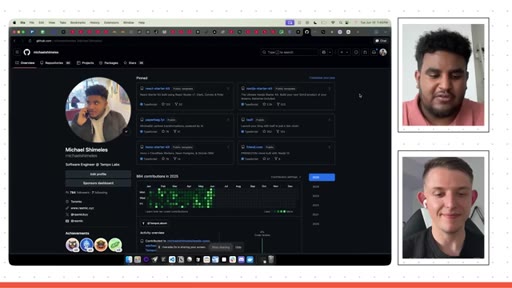
- Force a screen-share within the first 3 minutes. Mic gets out of his face cam and into Excalidraw at 02:38 — that's what makes a take feel earned instead of opinionated.
- Build the explanation incrementally. The whiteboard starts as Claude 4.0 + Cursor + Windsurf + VSCode, then gradually adds User → tools (file_reader, write_file) → memory layer → context. Each new arrow rewards you for staying. This is the visual equivalent of escalation comedy.
- When the category gets crowded, add an axis. At 21:14 Mic draws a single line — code review on the left, agent on the right — and lands CodeRabbit, Devin, Codex and Claude Code on it. One diagram replaces ten minutes of words.
- Always end with a sequel hook. They locked in the 'next episode we build it live and ship a public link' commitment — the audience now has a reason to subscribe, not just to watch.
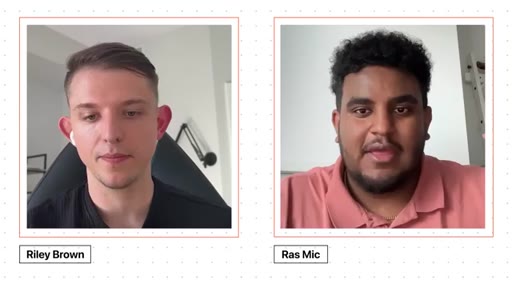
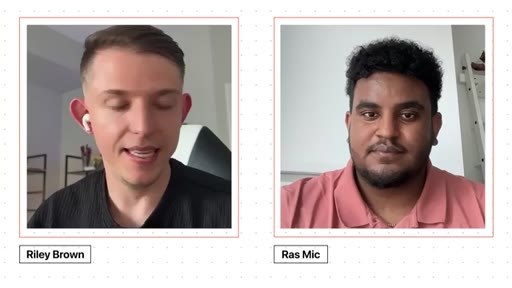
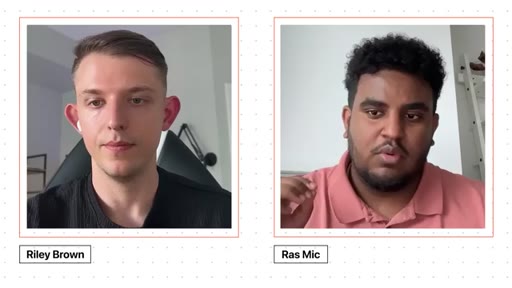
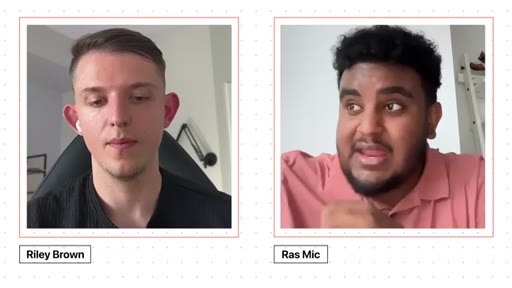
- Have a 'photocard' frame ready. The Riley Brown / Ras Mic side-by-side card with name labels appears 8+ times — it's an instant identifier viewers can screenshot. Brand it once, deploy it whenever you cut to wide.
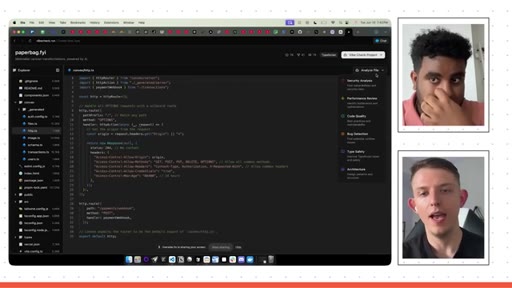
- Let the guest plug a real artifact, not just channels. Mic demos vibecheck.run (his actual product) at 34:00 — the demo IS the proof of the thesis, and it gives Mic something to take home from the appearance.
If you want to try Claude Code today.
Stop debating which AI IDE is better — pair Claude Code with whatever IDE you already use, and have it write its own onboarding doc for your codebase before you ask it for anything.
- Don't raw-dog Claude Code in a blank VSCode. Pin Claude Code to a terminal pane, keep Cursor or Windsurf open on the side, and treat them like 'assistant' and 'executor' — ask one, ship with the other.
- Use a starter kit. Don't begin every project at zero. Ras Mic's open-source React and Next.js starters already have auth, database, and payments wired up — clone, then build features on top.
- First prompt to Claude Code on any new repo: 'Analyze this codebase and write a markdown file explaining how the app works, including how payments and auth flow.' That file becomes the persistent context for every future task.
- Stop arguing about Supabase vs Convex vs Firebase. Pick one, ship, and only switch when you have revenue forcing the decision. The 'midwit meme' applies — beginners pick whatever, experts pick whatever, only mid-curve people obsess.
- If you're shipping anything serious, add CodeRabbit. Free tier on public repos catches bugs and security issues your agent will happily miss in long sessions. It paste-back-able prompts make it work with whatever tool you're already using.
- Codex is fine, but local beats cloud for power users. If you want to install your own dependencies or care about keys staying on your machine, Claude Code wins by default.