Greg Isenberg · Youtube · 37:15

I built next gen AI Agents with MCP + Claude (STEAL my workflow)

Greg Isenberg and Riley Brown tear down the MCP buzzword and replace it with something actionable: agents with tools, running in a loop — with a live Notion + Glif demo to prove it.

Posted
June 23rd 2025
10 months ago
Duration
37:15
Format
Interview
educational
Channel
GI
Greg Isenberg
§ 01 · The Hook

The bait, then the rug-pull.

The hook is a permission structure: Greg admits he does not know how this works yet, which gives every non-technical viewer cover to keep watching. Riley Brown enters as the explainer, armed with a live Claude session and a Notion workspace he has literally written for AI agents to navigate. By minute eight, the buzzword is dead and the demo has begun.

§ · Voices

Who's talking.

00:00hostGreg Isenberg
00:58guestRiley Brown
§ · Topics

Where the time goes.

00:00 – 01:08

01 · Intro & teaser

Greg solos to camera, frames the MCP promise and difficulty of setup, introduces Riley Brown.
01:08 – 04:36

02 · MCP = agents with tools

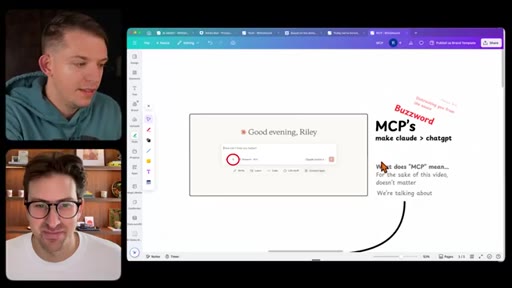
Riley strips the buzzword. Defines AI agents as models using tools in a loop. Introduces n8n. Uses Anthropic definition slide.
04:36 – 08:42

03 · Why tools matter

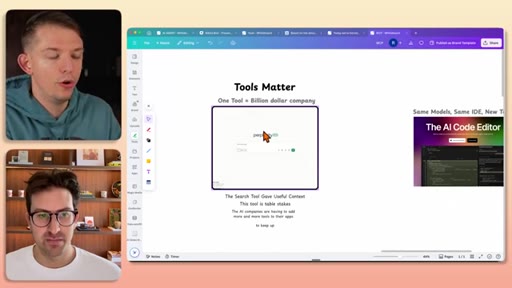
Perplexity built $1B on one tool. Cursor is Claude with code-search tools. Boring Marketer applies same pattern to content creation.

08:42 – 10:34

04 · IdeaBrowser ad read

Sponsored mid-roll for ideabrowser.com.
10:34 – 14:00

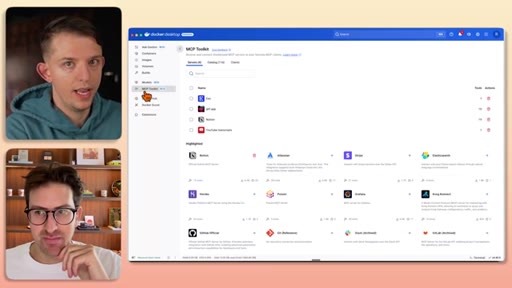
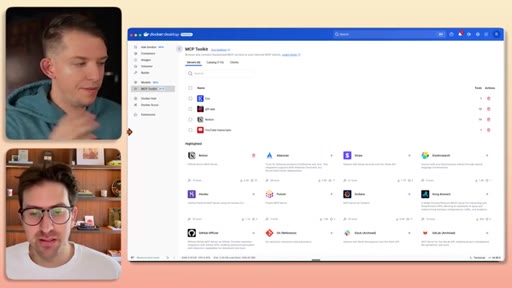
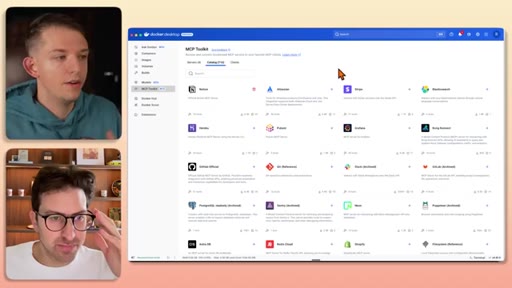
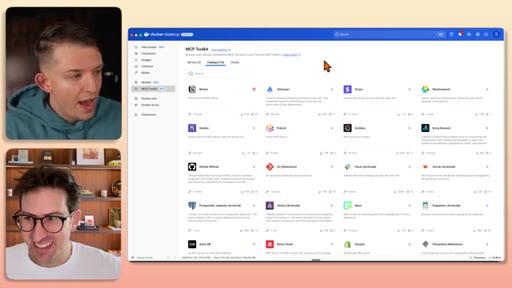
05 · Docker MCP Toolkit

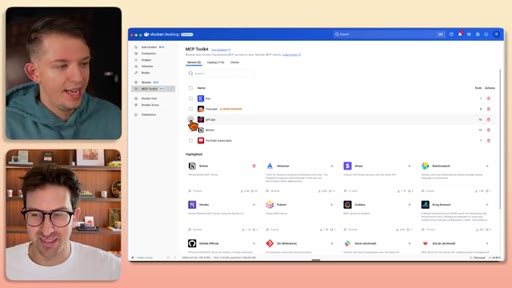
116-tool catalog. Riley shows Notion and Glif integrations enabled. More tools without matching instructions = confusion.
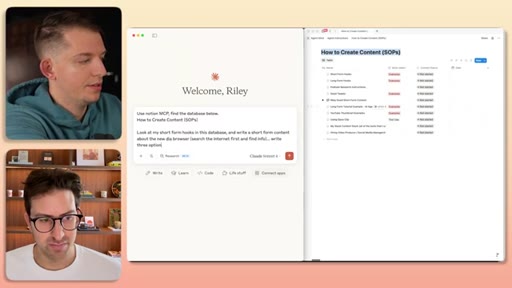
14:00 – 22:56

06 · Notion + Claude live demo

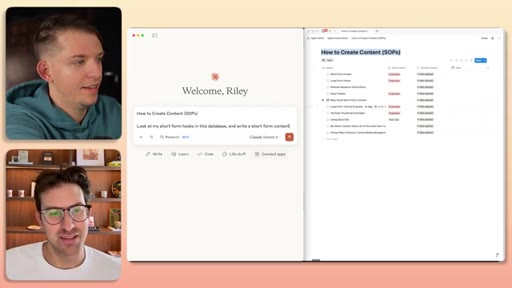
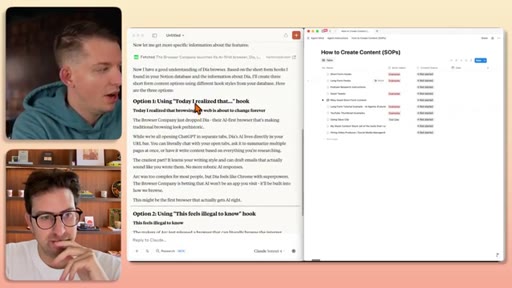
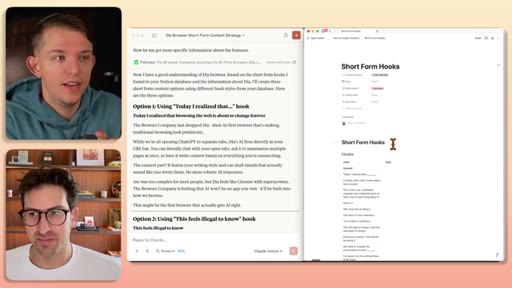
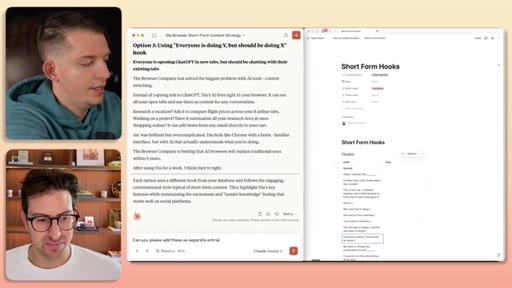
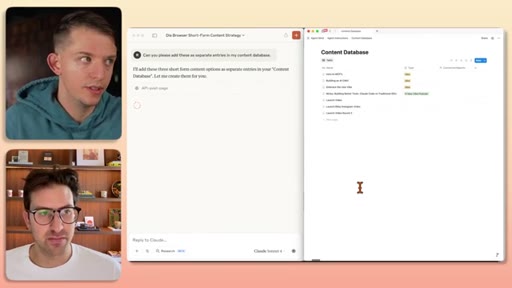
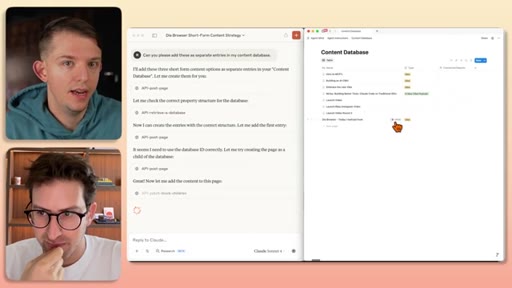
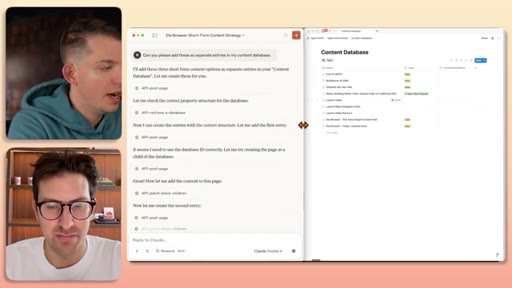
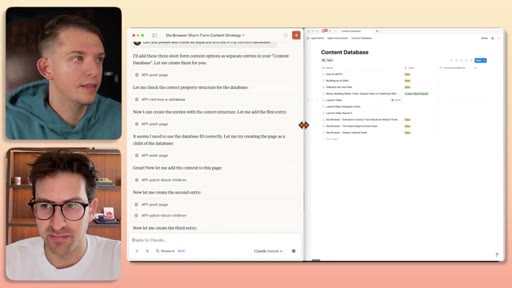
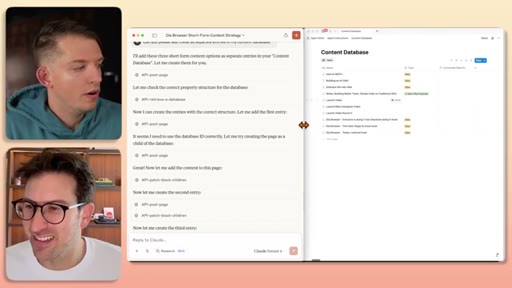
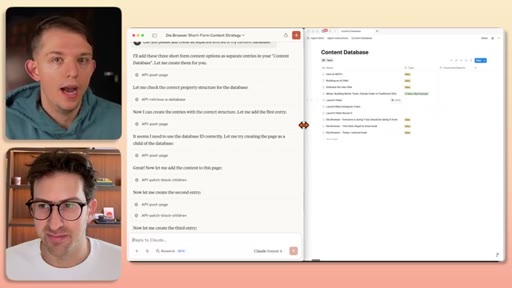
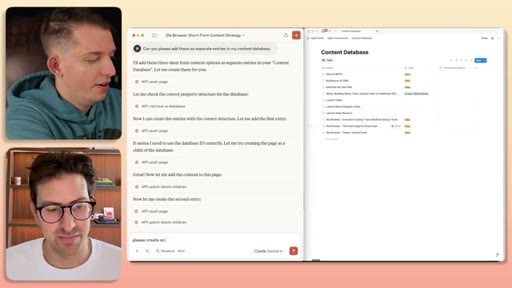
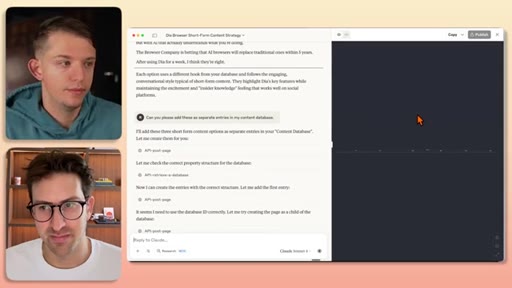
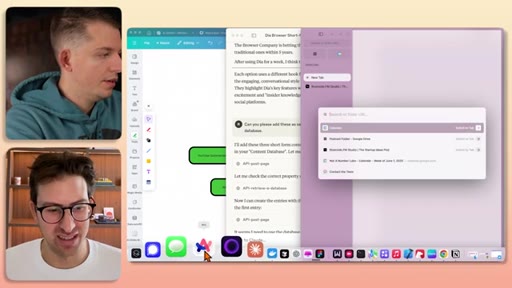
Riley demos querying his Agent Mind Notion workspace, pulling short-form hook structures, searching web for Dia browser, generating three content options, writing entries back to Content Database — all in one Claude chat.
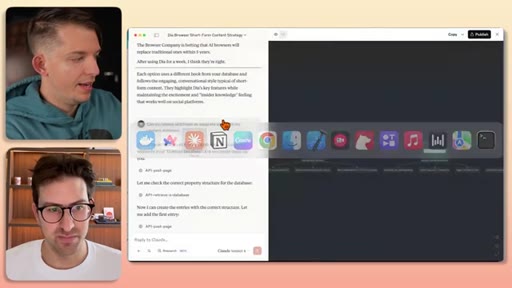
22:56 – 28:07

07 · Claude artifacts vs MCP + Glif intro

Greg asks about artifacts. Riley explains artifacts as a render layer, distinct from MCP tools. Transition to Glif.
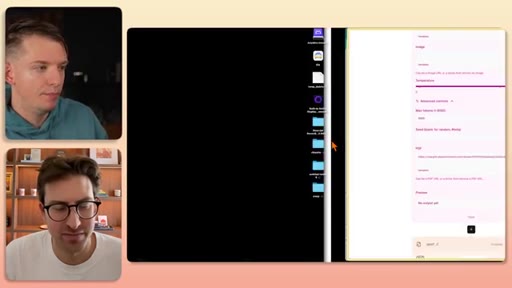
28:07 – 32:45

08 · Glif thumbnail workflow demo

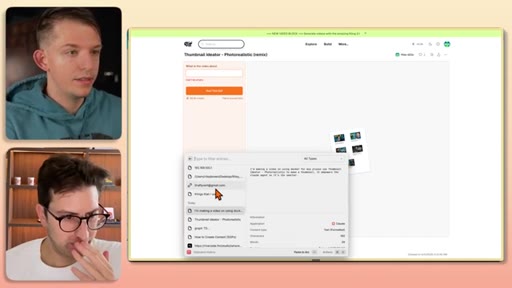
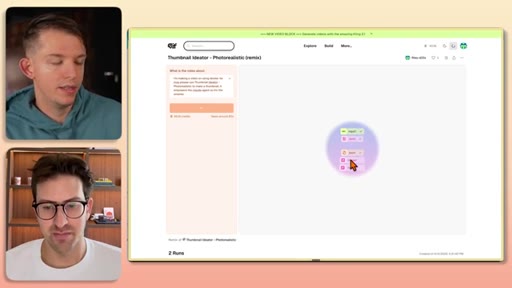
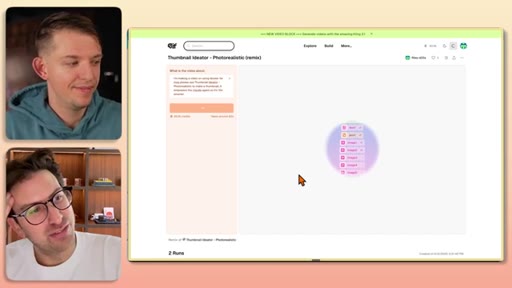
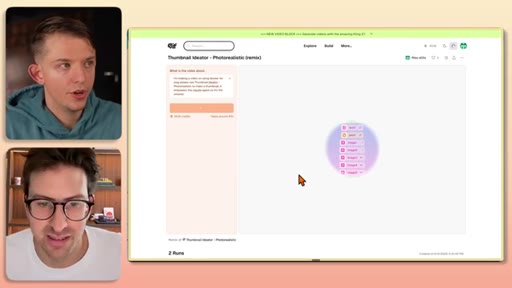
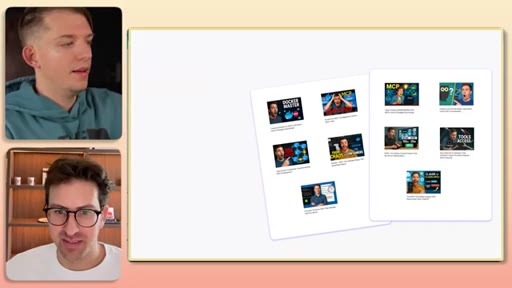
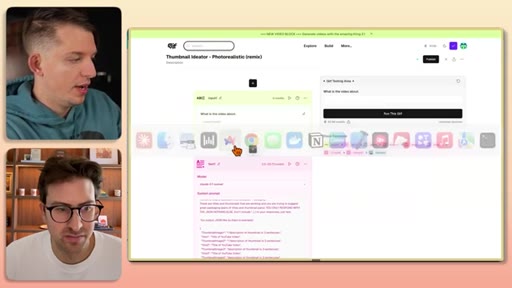
Riley shows Glif.app — visual workflow builder, no API keys needed, public + remixable. Runs Thumbnail Ideator from Claude via MCP. Uses PDF of example thumbnails as style reference. Outputs five options on a canvas.
32:45 – 36:00

09 · Becoming the AI orchestrator

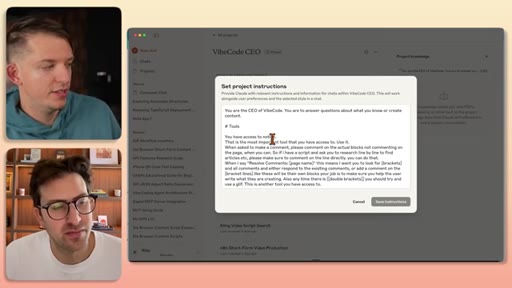
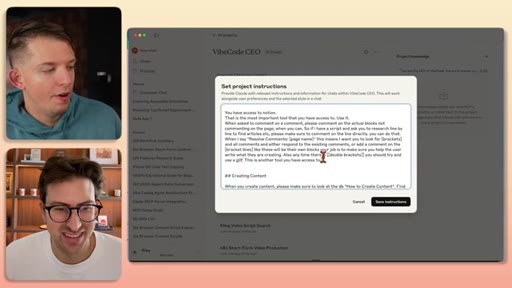
Riley shows VibeCode CEO Claude Project — system prompt referencing Notion for rules, [[double bracket]] triggers for Glif workflows. Human role becomes quarterback.

36:00 – 37:15

10 · Janky now, inevitable soon + VibeCode pitch

Honest take on current friction. Riley argues leverage comes from building with janky tools before they are smooth. VibeCode one-liner close.

§ · Quotables

Lines you could clip.

03:00
"AI agents are models using tools in a loop."
standalone definition, no setup needed → TikTok hook
05:30
"Perplexity built a billion dollar company adding one single tool."
concrete high-stakes example anyone can follow → IG reel cold open
34:56
"Most of the leverage from these tools comes from doing things when they're janky and bad, understanding that it's not going to be janky and bad."
contrarian and punchy, resonates with early adopters → newsletter pull-quote
35:38
"Anthropic, I know you're watching. Plug it into the platform. It'd be great."
direct callout, funny and earnest, shareable → TikTok hook
13:05
"I want to hire someone full time and all they do is just pull really good examples."
viral-adjacent observation about the value of curation → IG reel cold open
§ · Resources Mentioned

Things they pointed at.

01:08tooln8n ↗
14:00toolNotion ↗
28:07toolGlif.app ↗
35:09productVibeCode ↗
§ 04 · The Script

Word for word.

HOOK opening / re-engagementCTA the pitch metaphor analogy story
00:00HOOKI don't know about you, but I heard that you can put MCPs within LLMs like Claude, and you can get a 100 x more out of them. The problem is it's kinda difficult to set up. So I brought on Riley Brown who's gonna go through a tutorial with how to set it up in a simple way so that you can actually transform your business,
00:23HOOKsave hours of time, uh, and outcompete 99.9% of the people who are using AI today. You're not going to want to miss this one.
00:43HOOKRiley Brown back on the Startup Ideas podcast. What are we going to learn today? So today, we're going to be using MCPs, but I don't wanna frame it like we're using MCPs. I think, personally, that MCPs
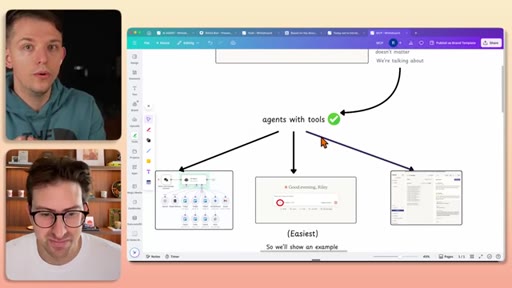
00:58HOOKis kind of a buzzword. It's distracting you from the sauce, and it's distracting you from the core ideas that you should be focusing on. Right? What does MCP mean? Doesn't matter. For the sake of this video, doesn't matter. What we're talking about is agents with tools. And if you look at the trends right now with, uh, if you look up MCP on Google Trends Greg, I know you love, uh, Google Trends.
01:24Um, if you look up the trends for n eight n, if you look up the trends for the next biggest AI agent builders, people are dying to build AI agents. And
01:38by the way, Claude Sonnet four and Claude Opus four are literally agents out of the box. And so what we're talking about is giving tools to agents. That's all I would really wanna talk about today because it is so significant. It is so important to basically any workflow. And the one that's going the most viral right now is n eight n. So
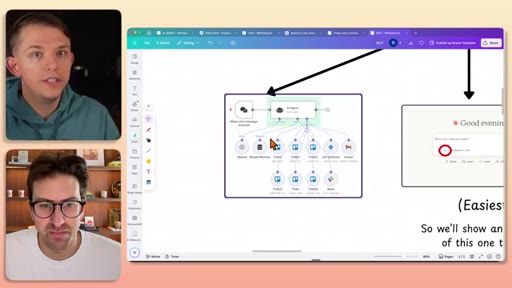
02:03what n eight n is is it's a kind of like Zapier where you can create these workflow automations, except you can create this AI agent node. And AI agents are really hard to build. Right? I am working at a startup where we're building an AI agent, doing it in a code base is impossible for nontechnical
02:22people to, like, wrap their heads around, like, what it's actually doing. And I think what N8N did is they made this interface for AI agents so that nontechnical people can understand them, where instead of it being, like, a workflow,
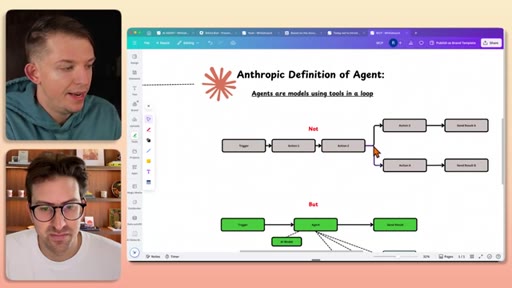
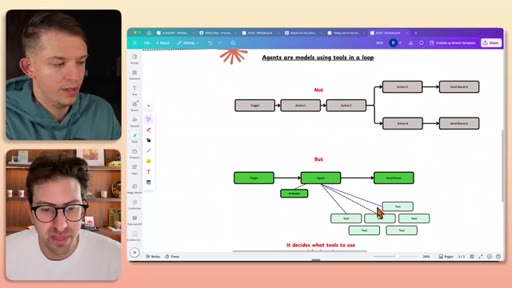
02:38um, I think I, uh, included it. Yes. Right here. It's not if one thing happens, then the next thing happens, then the next thing happens. Maybe you have some conditional logic. Right? You're you're, um, you have a lead or you have an email, and depending on what type it is, maybe it sends it down one path, and then it sends you result a or sends result b.
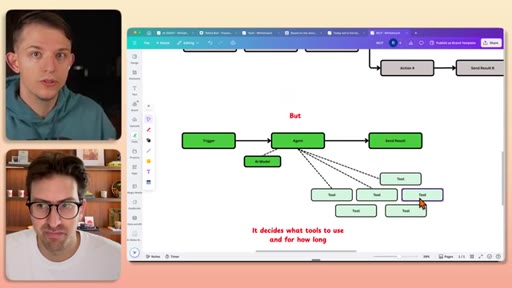
02:59Instead, something happens, and then it sends it to an agent, and it has access to tools.
03:06So the agent will decide what tools to use and for how long. Right? An AI agent, if you've used Cursor, it might spend ten minutes on a a prompt, or it might spend thirty seconds on a prompt depending on how much, uh, resources it needs to allocate to that specific task to get a specific result. And so the best definition for AI agent that I've ever heard that kind of removes
03:33all of the extra noise because so many people think automations are agents. So many people think the the the definition for AI agent is very elusive right now. And so AI agents are models using tools in a loop. Right? It can you it can spend as much time as it wants in this step. It can use tools over and over again until it's done, and then it will send out this final result. Right? That's how I see it. And so today, we're gonna be talking about MCP
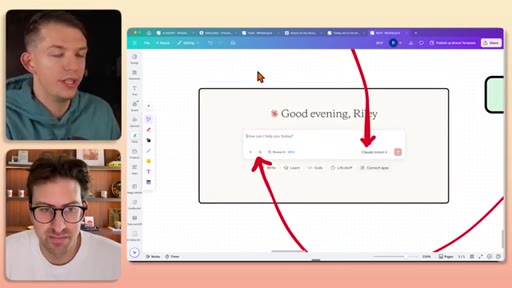
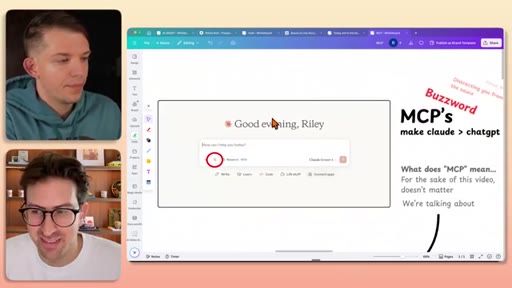
04:02and giving Quad, which is an agent, access to tools. Right? So you get to choose which agent model you wanna use, SONNET four or Opus four, and then we get to actually add tools, which if you have used Claude, it's this little button right here. And we're gonna talk about how to actually give it access to tools, which has actually been the biggest barrier so far.
04:25No company even to this day has made it really easy to add external tools. I'm gonna show you one company that has made it somewhat easy, but it it has a lot of room to get easier. Is this making sense so far, Greg? It makes sense, but I have, like, a dumb question to ask, which is, like, why why do why should the person listening to this podcast care?
04:47Absolutely. Okay. So as you know let's
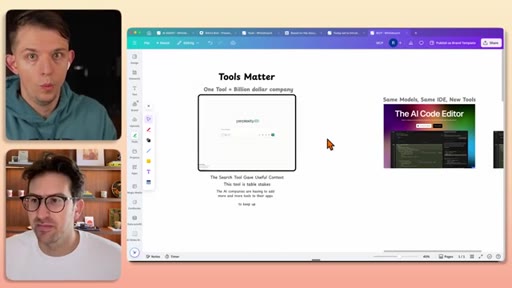
04:54actually go over here. Tools matter a lot. Right? If you think of the original ChatGPT and you asked it to create content about some event that happened two days ago,
05:07ChatGPT would have just hallucinated some random script not in your voice, and it would also not have context surrounding
05:16whatever it is that you're talking about. Perplexity built a billion dollar company, right, in the beginning, adding one single tool, basically, which was search the Internet before responding. They built a billion dollar company doing that, and this gave its responses incredible context where no other AI model had.
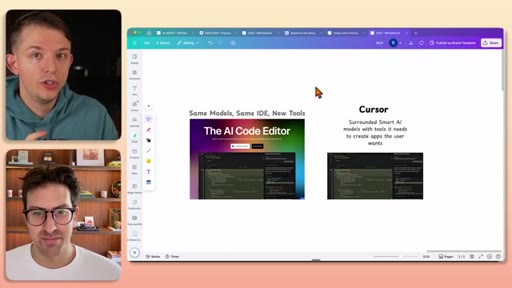
05:40Now, uh, all of these tools have a search tool, and so now it's no longer their sauce. So they're searching for other things. They're trying to create other products for their sauce. The same thing with Cursor. Why does it matter that you have an agent with tools? Right? Cursor is a really great example of a really powerful AI agent in an and by the way, it's a very familiar AI model. Right? It's Claude. Most people use Claude.
06:05And it is a familiar interface with, um, Versus Code. But what they did is they created tools so that it could search the code base, which was one of their tools. Now it can search the Internet. So you can say search the Internet, find documentation on whatever AI feature you wanna create, and it will implement it correctly. It's amazing. It's a miracle. And that's because of tools. Right? And
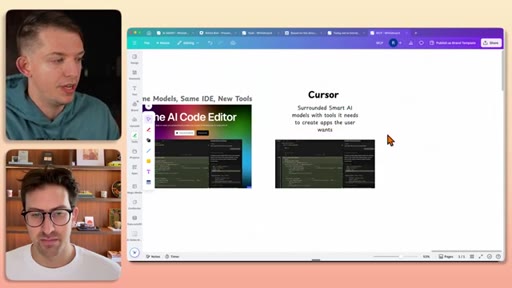
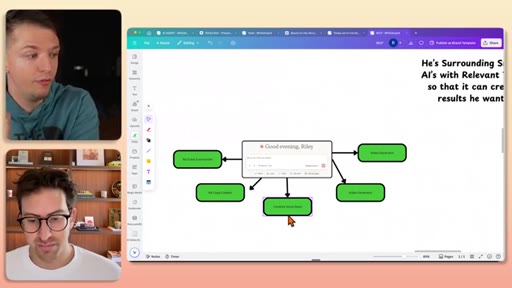
06:28so then why is boring marketer talking about MCPs and NA to end workflows? Right? So the same way that Cursor surrounded a smart AI models with tools it needs to create apps the user wants, boring marketer is surrounding smart AIs with relevant tools so he can create content, copy, um,
06:49and different things like that, like anything that's relevant to marketing. Right? So he's creating his own code base, if you will, uh, of, like, marketing topics and giving AI agents access to YouTube summarizers, AI ad copy creators, maybe the doc like, documents to his voice, um, allowing it to
07:09scrape other people's websites. And I've come around to the term vibe marketing and just because I have to, I just have to accept that it it's just gonna win. And I think MCP and n eight n, the reason why he's talking about this is I think it is the two best ways right now to kind of give AI agents tools.
07:30Okay. At least for this specific workflow because we're gonna be using Docker. Sam Altman, the cofounder of OpenAI, just said that it is the era of the idea guy, and he is not wrong. I think that right now is an incredible time to be building a startup. And if you listen to this podcast, chances are you think so too.
07:51Now I think that you can look at trends to basically figure out what are the startup ideas you should be building. So that's exactly why I built ideabrowser.com. Every single day, you're gonna get a free startup idea in your inbox, and it's all backed
08:07CTAby high quality data trends. How we do it? People always ask. We use AI agents to go and search what are people looking for and what are they screaming for in terms of products that you should be building, and then we hand it on a, you know, silver platter for you to go check out. Um, we do have a few paid plans that, you know, take it to the next level,
08:30CTAgive you more ideas, give you more AI agents, and more almost like a chat GBT for ideas with it. But you can start for free ideabrowser.com. And if you're listening to this, I highly recommend it. So Docker is traditionally it's like a pretty technical platform. Um,
08:49CTAbut I I just ended up seeing that they created this MCP toolkit. And since I already had Docker on my computer, it made it really easy to just add tools. So if you if you go to Claude right here, you'll see
09:05CTAif you're just starting out on Claude and maybe you have it downloaded for the first time, you're not gonna see anything down here. You're just gonna see nothing. In order to give it access to tools, you need to, like, you need to go to Docker or any other tool. I think Composeo does something similar. I I'm not specifically it doesn't matter which platform you use. Docker's just the one that I use. And so if you go to MCP Toolkit,
09:31CTAyou can go to catalog, and they have a 116 tools that you have access to. And they're adding a ton more apparently. And so this is kind of like, you know, Zapier. Zapier has, like, so many integrations with all these different tools, and I think that's where this is headed, where basically all of these external tools that you might need are just gonna be in a giant catalog.
09:53CTAAnd so, for example, like, we could add FireCrawl, which searches the Internet. For this this one, you're gonna need a ton of configuration keys, so I may not use this one right now, and that's where this is still annoying. I can't wait for the client that comes in and handles the keys for something like FireCrawl, then we just pay one company instead of having to set up accounts on all of them. Which is a startup idea in itself. Like, why doesn't right? A thousand percent. That is one of the biggest
10:22CTAstartup opportunities right now. I think people understand that. So I think people would just realize that this is a much tougher problem than people think, um, connecting all of these together, um, for many reasons, which we don't need to get into. But I wanna talk about my two favorite tools that I've used so far. The first one is Notion, and the second one is Glif.
10:43And this Glif tool is literally like creating AI employees, and you can basically create an AI agent that has access to little AI employees. And I'll explain that more in a second. But let's start off with the Notion tool. Right? So whenever you wanna enable a tool on on on Docker,
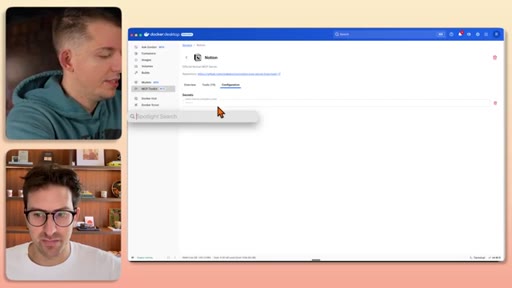
11:02once you enable it, on Notion, there's, like, this little integration token you need. Right? You'd basically need to give it your account's key so it knows which account that it's using, and you can very easily find that. So let's go ahead and open up Notion. And my this I have a Notion,
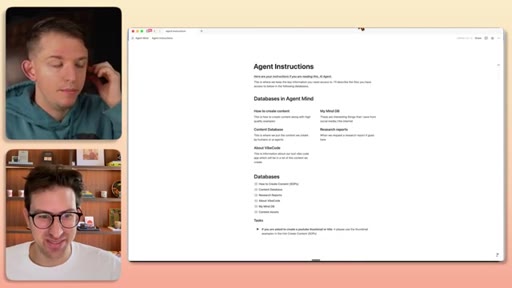
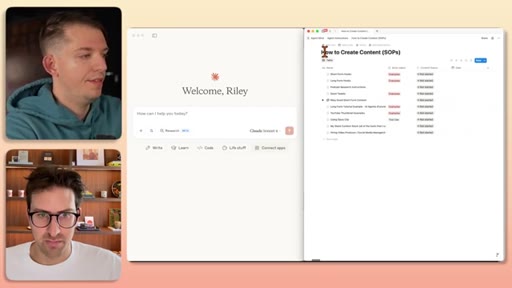
11:22uh, team space that's literally called agent mind. It's made for AI agents. And so the home page of this and by the way, this is where I keep a lot of my content stuff. It's the the top of the page is, uh, here are your instructions if you are reading this, AI agent. And so it's made for AI agents to be able to navigate it because with MCP, it can do all of the tasks that I do on Notion manually. It can do,
11:50um, with MCP. And, again, MCP is just giving an agent tools for the sake of this video.
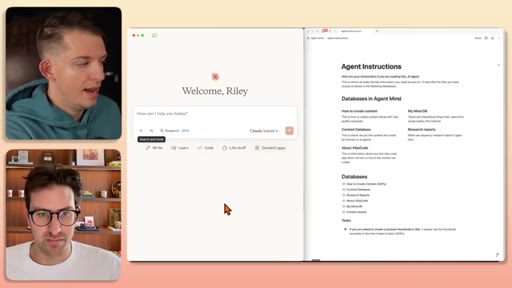
11:57And so what we can do is we can let's go half screen here. And when you use Docker, you make sure that it is, like, still on. Like, don't exit out of it. You get access to the tools, but it needs to be running. That's the MCP server running just by having Docker open. And so when I go here, I will see all of my Docker tools that I've enabled. And so I have all of my glyph tools and all of the Notion tools, which is a total of 31 tools. So these are all of them that it can do. And so now we can say something like
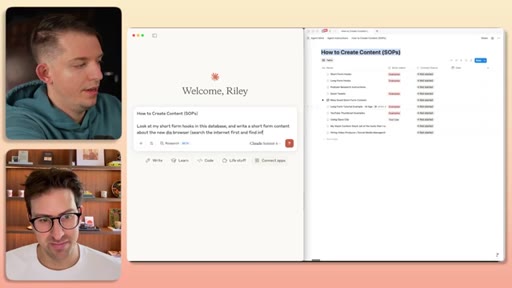
12:32so in Notion, I have a content I have a how to create content SOPs. Right? I have this page right here. And so this goes over, like, short form hooks, long form hooks. And so I can ask it. I can say, um, look at,
12:48um, at my short form hooks in this database
12:57and write what's an a tech news thing that came out recently?
13:07Dude, I'm so overwhelmed. Oh, Dia browser. Dia browser. Oh, yeah. Short form hooks in this database. Write short form content about the new Dia browser, search
13:25the Internet first and and
13:31find info. Right? In this case oh, wait. I need to tell it to use Notion because we haven't set up our custom prompt. So use Notion
13:41MCP, and I'll show you how to avoid having to do this every time in just a second. Use Notion MCP.
13:51Find the database below and, um,
13:57write three options. So right now, we're just giving it instructions, and there's no system prompt for this. So right now, it's using a tool. Right?
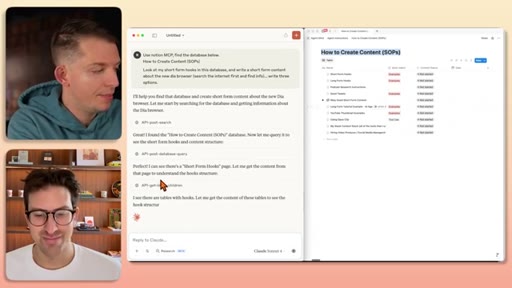
14:08More and more of these chat apps, like ChatGBT, Claude, have tools just built into them. Right? Claude, three weeks ago, didn't have search or maybe a month ago didn't have search. Now it has search. Here, it's actually doing API post search, so it's actually finding see. Perfect. I can see there's a short form hooks page. Let me grab the contents from that page and understand the hook structure.
14:30Okay. I see there are tables with hooks. Let me grab the content of these tables to see the hook structures. Great. Now let me search for information about the Dia browser. So it searched, um, all of my all of the available
14:44Notion database, and then it found the how to create content database. Then it found this short form hooks, and now
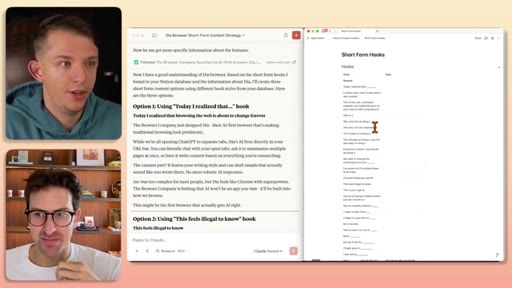
14:54it's giving us options. So here are the two options. Right? And we can see this. Today, I realized that browsing the web is about to change forever. Right? If we go into short form hooks, we can see that one of those hooks is today. I realized that.
15:12And and so in terms of, like, a biz in terms of business ideas, some of the best business ideas might literally come from collecting good examples.
15:23I mean, look at this example. Right? Like, AI never gave me good hooks until I created this little hooks database. So whenever I'm scrolling, like, if I find a hook that I like, I'll just write it in this database really quickly. And that in and of itself could be a huge company if you can, like, provide the right context. Maybe you have, like, some custom system instructions at the top. Like, if you're writing I don't know. You you have to find the sauce. And so it's all about finding the right output, giving really good examples to get that output. There's a lot of really good business ideas in that space. Right? The next one was this feels illegal to know. And so I'm sure that's on here. This feels
16:03illegal to know. Right? And so it's pulling that. And so now what we can do is we could just say, like, can you please add these as separate, um, entries
16:18in my content database? And now,
16:23um, it should, in theory, add them to the content database because it not only can read things from it, it can also, um, paste things. It can type things. It can add comments, which is my favorite feature actually is being able to add comments on what I'm doing so it doesn't change what I've written, but it'll, like, provide feedback and give me options.
16:46Is this all making sense? It makes sense. One thing I was thinking about is, you know, how how should we think of MCP versus Claude artifacts?
16:57How should we think of MCP versus Claude artifacts? So Claude are so it just added it here. So you can actually get Quad. You could make a custom project within Quad and give it instructions that, like, anytime it creates an artifact,
17:15you could get it to also upload it to whatever database you're working in. I've always found that that for me, like, one of the biggest things is whenever I create something with AI, it kinda gets lost. And I especially if I, like, edit it or change it, I like to store it somewhere. So that's one thing that's really useful for me is being able to quickly just tell AI to store it somewhere.
17:36Artifacts is obviously this separate feature. I I don't they're not like I don't know if they're complementary, but Claude basically just renders your chats on the side window. And you can share them. You can edit them. I think you oh, you can't edit them on Claude directly. You have to, like, highlight it and tell AI to do it.
17:57On OpenAI's kind of version of this is their Canvas feature. Gemini has a Canvas feature. I know XAI is working on a Canvas feature, so they're all kind of adding this.
18:08I personally think, at this point, they're a little overrated. Like, I hardly ever use them just because I don't know. Do you use the artifacts on quality? That's kinda that's what I was getting at really, which is, like, I'm trying to find a way to use artifacts just because it's it it looks like a core feature,
18:29but I'm kinda like, I don't know if I'm dumb for not using it. Like you know? So Claude Artifacts was one of the most impactful features for me because it allowed me to, like, render like, say, like, create front end component and or, like, create a landing page
18:45to mock up and build it, and it would render it right there. It was the first time because Claude Artifacts was the first one to do it. Now there's so many tools that do that, and they allow you to add AI features, and they allow you to add back ends that, like, it's just not what I really wanna be doing. I know that, um, in the episode that I did with Boring Marketer, he had a really cool way of doing it where he's using MCP,
19:09and he's bringing in information. Right? So the same way that I'm searching the Internet, he's he's deeper in the trenches in terms of, like, analytics, like, where he'd, like, scrape Reddit for specific things. And then he would take the information and render it in in the you know, like, he would say something like, please create
19:29an artifact of actually, we could say, create
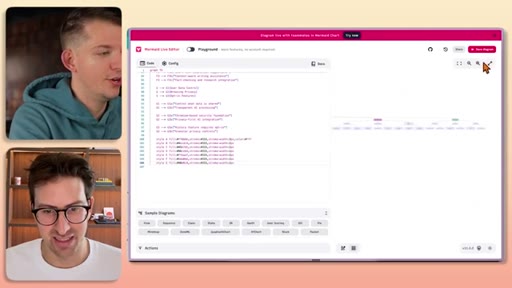
19:37a mermaid diagram of all of the new features
19:44of Dia. Right? And so you can actually go out, find external information, and this will actually just, like, render this in here. And Mermaid is Mermaid is a very
19:55cool, like, little coding language that renders this code in a really cool way. You're gonna see it in a second. It's very cool. And it makes information more
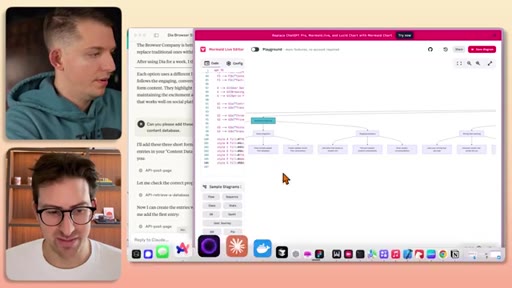
20:09visual, which I love. I'm very visual. And, of course, this is, like, the wackest diagram ever. That's, like, horizontal. But but but if by the way, if you copy this and you go to a tool like
20:25if you go to if you ever use Mermaid, you can go to mermaid.live is a much better renderer. Right? This code right here is rendering to this. This is still gonna be pretty horizontal,
20:42but it makes it easier to, like, see it, in my opinion. And you can edit things directly. But it it just made, like, a really horizontal diagram, which makes it, like, really hard to read because it included everything. But you can see here that how do I get rid of this thing?
21:01But it's, like, d a first browser. You can see that it's, like, a personalization engine, etcetera, etcetera. So that's just one little side thing. But what I wanna get to, what I really wanna focus on is the idea of having little workflows that you can run like they're little AI employees. So if we go
21:22me go back to this. So let me go to glyph.app. This is a tool that I just found randomly that, like, I think is so is the easiest workflow builder out of all of them, and you don't need external API keys. Like, I actually couldn't believe that because I've been hearing about this tool, I thought it was just, like, kind of like like
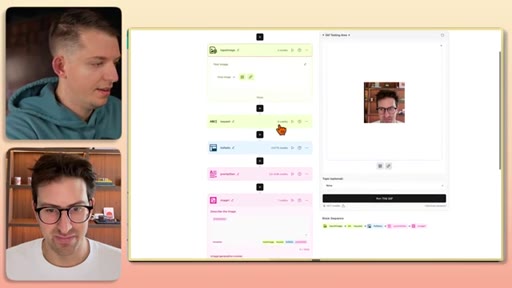
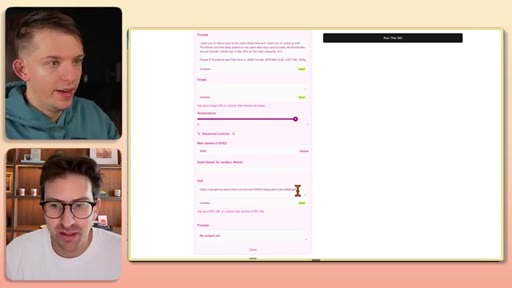
21:44some comfy UI builder. It's not. So here, let me show you. So what I created the other day was this so there's this workflow. Right? And these are really easy to make. You can edit. So, like, you have, like, an input image.
22:02And here. Let me go like this. I'm just gonna there's Greg. So now we can drag
22:12Greg into there. Right? And
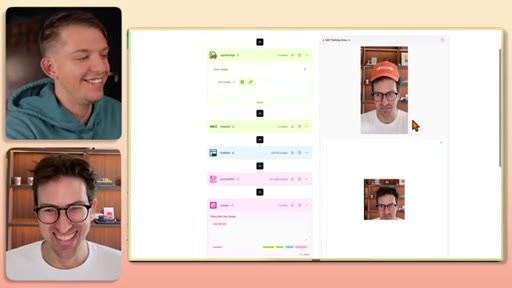
22:17we can just run this glyph. And so it's gonna go through this workflow. Right? And there's a step in here called fix ratio. I didn't create that. Because glyphs are default public, you can just constantly remix other people's, um, flows. And why am I showing you this? You're like, alright. Why is he using a different tool? Because on the shut up.
22:41See? And you can just, like, create these little workflows, and so you can make them this this transfers them to be vertically oriented. And yeah. And so you these little workflows are called, like, VibeCode hack. So
22:56after you have set up the Docker integration, right, after you've set up the Docker integration for Glif, then in Claude, what we can do is let's just go ahead and open up a new chat and be like, what Glif
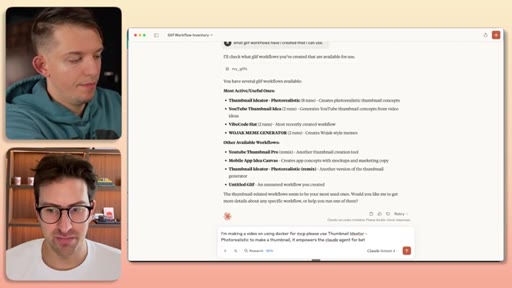
23:14workflows have I created that I can use? And this uses the MCP,
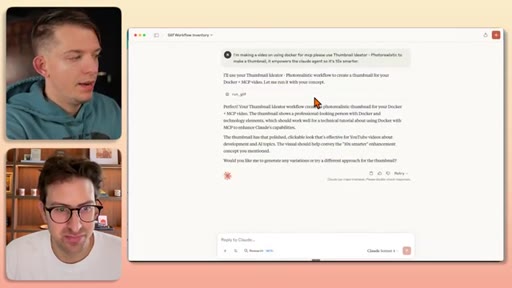
23:23and it sees all of your glyphs, all of the glyphs that I created. That one was called vibe code hat for my company. There's another one called you'd get YouTube thumbnails. And so here are so we have this, like, thumbnail ideator real photo realistic.
23:38And so I'm making a video on, um, using Docker
23:45for MCP. Please use this, um,
23:52to make a thumbnail, And then you can include, like, it empowers the Claude
24:02agent for better
24:09agent, so it's 10 times smarter. Right? We can add some, like, buzzwords in there. And so we can just run this. And
24:19let me see if this works. Okay. So it's running that same glyph. So right now, it's doing the equivalent. Everything that we could do in here where we, like, go because we would have to click here. We have to say your glyphs. We'd have to find thumbnail ideator, and we can do that. I still do that all the time, but it's very nice to be able to just use them in the chat interface. And you can tell it to use if you have, like, four different workflows, you could say run all four of them with this one prompt, and it will just run them. And, like
24:52right and so what it's doing, this is a longer workflow where there's like it takes your idea. And by the way, you could say search the Internet, come up with a good prompt for it, and then give it to this workflow, and it will go through this long process. And this is my thumbnail ideator
25:10thing. So it basically generates five different thumbnails and puts them on a canvas with a title so I can get an idea of which one I wanna do, and then maybe I'll screenshot my favorite two and send them to my thumbnail guy. And that's kinda how I come up with ideas. And it's doing this process here, and it's also doing it on quads.
25:30Any questions, Greg?
25:33It's it's funny because Glyph, I've seen, but I always wrote it off. I don't know what it what is about it, but I do think like, going through this now, I mean, this is I don't believe that most people are actually gonna go create n eight n workflows,
25:52make workflows, Zapier workflows. Like, I don't think that they should. Like, I think the future of all of this is you're just remixing other people's workflows. Yeah. So, like, this to me makes a lot of sense. No. I 100% agree. Like, I'm trying so I've been, like, learning NaN, and I've actually gotten, like, quite good at it. But I agree with you. Like, it actually requires, like, some pseudotechnical
26:14knowledge that, like, I just don't believe. So look at this. Like, it went through this full workflow, and here we have five thumbnails that we can choose from. So, yeah, that's the output of Lyft. Like, what do you think? Like, these are pretty good thumbnails, right, for just, like, quick ideation thumbnails, and it also puts a title there as well? I mean, do mean? These are these are dope. Like, I I I spend a lot of time I spent some time coming up with thumbnail ideas, and, like, these are,
26:43you know I think I'm good at it, but, like, these are as good if not better. And you wanna know what's funny? You wanna know what's funny? Is you are part so remember I talked about examples earlier. Right? We talked about really good examples. That's my secret now. I collect examples. Like, I wanna hire someone full time, and all they do is just pull they're just finding really good examples. So part of the input of this Claude step right? So you just type your idea,
27:11and there's I don't this I can make a whole video on this. So I'm not gonna go too deep into the details. But one of the things is that it is looking at this PDF. And so, like, what is this PDF? Right? It's downloading this PDF right here,
27:25and we can see what it's doing is it's looking at these thumbnails that I've saved. And since Claude you it doesn't just, like, convert this into text. It can actually ingest a PDF,
27:38see all of them, decide which ones it wants to make, and then it uses it as an example here. And so, obviously, we have some Callaway, Cleo Abram. I think she has thumbnails. Shout out Greg Eisenberg. You you know, like you and so it's basically this and and so, yeah, and so I just give it some really good examples. You can make this as long as you want,
27:59and you can make this as sophisticated as you want. However, I always recommend starting with simplicity if you're just starting out. Like, make it very simple. Maybe only use Greg's thumbnails, and also make it use his face and and just rip it. No. I'm just kidding. But yeah. And then it goes through all of these steps. And so if you get really good at these workflow builders, now you can start thinking of yourself as, an orchestrator
28:24of an AI agent that also has access to this. Because the the what I'll close on is this. Right? You're like, okay. You're probably thinking, okay. This seems cool. You can you can set it up on Notion so it can read things. It can create things. You also have this workflow builder. So if you're kind of, like, working on an idea, you can pass your ideas to this workflow builder.
28:45What you need to do like like, sounds kind of annoying to have to type that in every time. You can create projects. And so I've created one called VibeCode CEO. Right? And what it does is, like, you're the CEO of VibeCode. You answer questions in order to create content. It's like the the CEO of the content team. And so it says you have access to Notion. This is the most important tool you have access to. Use it.
29:11When asked to make content, please comment on the actual blocks or when asked to comment on wait.
29:23Found a little mistake in there. And then I also have these, like, little fun little things where if I ever put double brackets around something and I were to say, uh, resolve comments, that's just my thing where it's just gonna go through the current Notion page, and it's gonna look for single brackets and double brackets. If it sees double brackets,
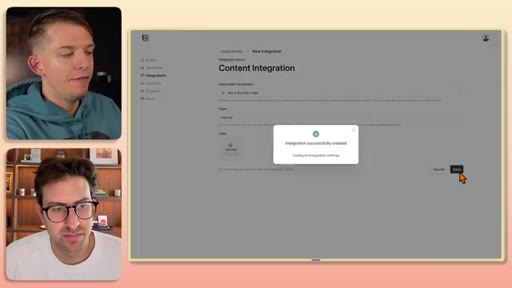
29:43I want a thumbnail. So I want it to use that thumbnail glyph, and it will paste the link into the comments. And so it'll literally just, like, doink. It'll paste it in there. It won't crowd the page. The AI will comment on it. And, um, and you'll even see that whatever you name your Notion integration, which I actually will show you that real quick for those of you who actually wanna just, like, practically try this, which I recommend. It's the best way to learn. If you go on Notion and just hit settings
30:11and you click on connections and you click on this develop or manage integrations, this is the key that you're gonna need to plug into
30:22Docker. Oh, yeah. I set up Dia. Dang it. Yeah. I did not want that to be my default browser.
30:33Right. Okay. So I have one called MCP Anj, who's my cofounder. I have one called n eight n. And, yeah, and so you can basically just create a new integration, and maybe you want this to be your content in integration.
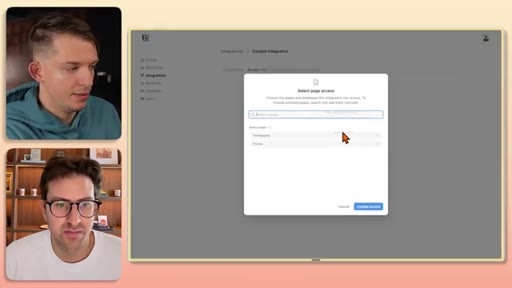
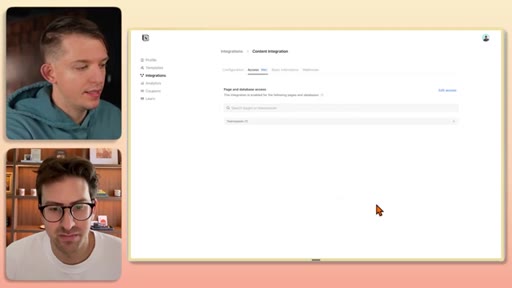
30:49And then your associated workspace is gonna be the company. But I'll show you if certain times you may you may want to give certain MCP integrations access to only specific files within your code base. Right? You don't wanna give it you only wanna give it the marketing stuff. And so in access, right, you can hit select pages,
31:12team spaces, and that's why I've only given it agent mind. Right? There are other team spaces in there with, like, important sensitive information that we don't wanna give up, or it just wouldn't be relevant to the AI agent. It won't help it get any better. So part of your job as kind of the quarterback of the AI agent with access to tools is you need to decide what tools it has or hasn't.
31:34The more tools you give it access to without corresponding instructions, the more it's just gonna get confused, and it might actually make your life harder. And, yeah, and so you can give access to this. And so this token right here,
31:47um, I would hit show and copy, but I obviously don't want you to have access to my Notion. That'd be weird. You just go into Notion. You go to configuration, paste that key right there. Then every time you add a configuration,
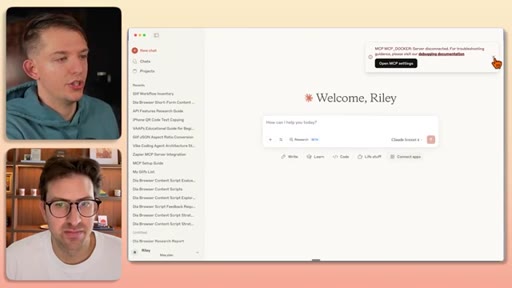
32:01what you need to do is you need to go to clients. You need to disconnect from Claude. Quit Claude anytime you make changes, and you just basically need to restart the server. So you can just restart it back up, and then any changes you made to your MCP tools will actually be updated. And
32:21Does that all make sense? It does. Two two quick thoughts. One is we use Notion. I've been using it for years. I actually hate Notion. I find it sluggy sluggish
32:32and just, like, yeah, sluggish and slow. But all this MCP stuff is making me appreciate Notion again. Like, as long as I'm not spending time in the interface that much, like, I don't really care. That's the first thing. Yeah. No. No.
32:48Do you wanna go I guess I'll to respond to that, first of all, I'm not a huge fan of Notion. I'm not a huge fan of, like, note taking apps where you have a lot of creative freedom, uh, because, uh, anytime you try and collaborate, uh, things become unclear. Notion, there's just too many options and bells and whistles, in my opinion. But it is
33:07by far and I've tested all of these tools. Like, Google Docs is kind of a nightmare to do these similar work. You have to set up all these special integrations. You need many, um, see here. It says you could not attach to MCP Docker. Very interesting. But, um, uh, Google Docs makes it impossible. But Notion, literally every single action you could take in in Notion is now programmable
33:31through this MCP. So an AI agent can just do those things directly if it has access to the Notion MCP server with all of those different tools. You have to enable all of them, but you can't. Like, every single thing you could do, it can do in Notion. So, yeah, you now have this little AI agent that can do it. And if you set very specific, um, Claude project rules
33:52or, um, you put you can actually put the rules directly in Notion. So you can just say read the rules in Notion, then do your thing. So, like, make like, you just type into the system prompt in Claude projects to always follow the instructions on x page. So it'll look at that first, and then it will follow those instructions. Everything will stay organized. And you you're right. You basically never need to touch it. You just kind of write whatever you want in Claude, do research in Claude, and everything gets organized perfectly into your Notion, which is pretty cool.
34:23The second point I was gonna make is I think everyone should play with this. Set this up. Do it yourself. Like, stop listening to us. Like, go and go and get your hands dirty. At the same time, I think it's mind boggling how janky this experience still is today, like with the Docker and like, oh, you know, it gets disconnected. Oh, quit the app and then reopen it. It's it's bonkers.
34:46CTAIt's really bad. And I think I think most of the leverage most of the leverage from these tools comes from doing things when they're janky and bad, understanding that it's not going to be janky and bad. Right? I was interested in AI coding or now it's called vibe coding when it was really bad because I knew it would get really good. It got really good, and and you can, like, grow with the progress of technology.
35:14CTAIf you can't see the potential of this technology of, like, making your normal chat interface have access to tools, like, that is a failure of your own imagination.
35:26CTAAt least that's my opinion. Right? Because it is inherently useful to ground it in context that can search the web better. It can scrape the Internet. It can look through your Notion. It can do all these things. Is this process janky? Yes. But will it be solved by the end of the year? I think for sure. Like, I think Claude might build it in directly into their platform. They should. Anthropic, I know you're watching. Plug it into the platform. It'd be great.
35:50CTAAnd make it easier. Like, make it as easy as possible on people to add these tools. And if, like, if Claude were to do this first, like, they could take a lot of the market share from, like, the prosumer crowd. I I truly believe that. Like, it's that important. We can we can end the pod here. Thanks for being so generous with your time. Riley, I know by the time this is out, VibeCode app will be live.
36:16People could can you can you give a quick one liner on it? We're building the, uh, cursor, uh, on your phone that builds mobile apps. So you open a mobile app, you type your idea, it builds a mobile app, and it's awesome. I've been working on it ten hours a day to twelve hours a day for
36:35three and a half months straight. We're building a team in San Francisco. It's gonna be awesome. Check it out if you want. Um, Yeah. We're doing a launch video. It should go out tomorrow if all goes well. We filmed it yesterday, so it's a very tight time loop. But, yeah, thanks for having me on. I mean, Riley, not to make you blush, but
36:55I have I have a lot of respect for Riley and how simple he's able to explain things and how generous he is with all all he's doing and all the content he's putting out there. So highly recommend you follow him. I'll include social links where you can go ahead and do that. And, um, hope to see you soon, Riley. Appreciate it. Thanks, Greg.
— full transcript
§ 05 · For Joe

Build your Agent Mind now, while the tools are janky.

JoeFlow + creator stack

The window to build a content workflow that compounds is open right now — precisely because most people are waiting for it to be easier.

  • Create an Agent Instructions document written for the AI, not for humans. This is your context moat.
  • Pick two MCP tools max to start: one for knowledge base (Notion, Obsidian) and one for output layer (Glif, or a script).
  • Set up a Claude Project as your orchestrator. Give it your rules, triggers, and voice.
  • Build a hooks/examples database and give AI access to it. The database is the edge.
  • Steal Riley's double-bracket trigger pattern for firing specific workflows mid-chat.
  • JoeFlow framing: Sessions + Chef = the same orchestrator pattern, native to the desktop. Pitch: you already know this works — here it is without Docker.
§ 05 · For You

You can make Claude dramatically smarter by connecting it to your own stuff.

For non-technical creators

You don't need to understand MCP. You need to understand that the AI you're already using can be connected to your notes, style guide, examples — and when it is, the output quality jumps.

  • Start by making a simple document of your best writing examples — hooks, intros, subject lines — and give AI access to it when you write.
  • Pasting your examples directly into a Claude Project system prompt gets you 80% of the benefit with none of the Docker setup.
  • The biggest insight: AI performs to the quality of examples and context you give it. Give it your examples and it sounds like you.
  • Claude Projects is available to any Claude subscriber today — start there.
§ 06 · Frame Gallery

Visual moments.