Myron Golden · Youtube · 51:32

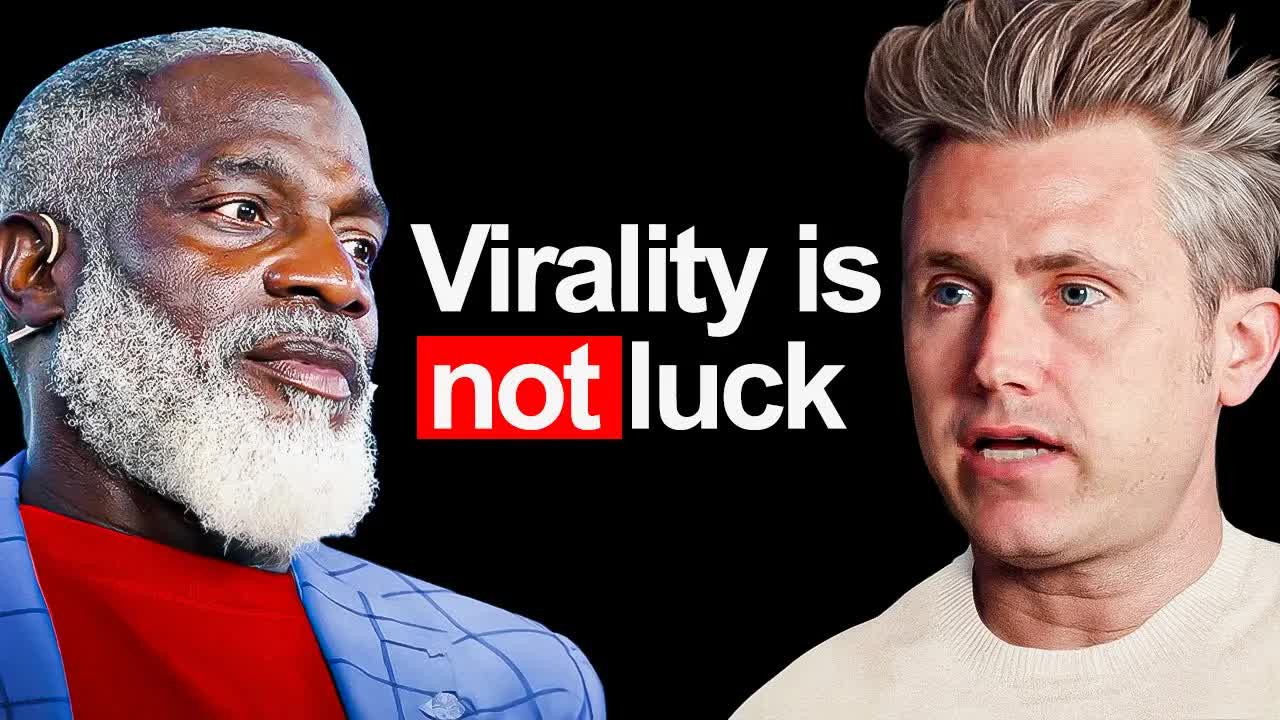
How To Go Viral Without Getting Lucky

Brendan Kane's 51-minute keynote dismantling the 5 biggest social media lies — backed by real client case studies with before/after view counts.

Posted
June 6th 2025
11 months ago
Duration
51:32
Format
Tutorial
educational
Channel
MG
Myron Golden
§ 01 · The Hook

The bait, then the rug-pull.

Brendan Kane opens by playing the payoff first — the thesis he will spend 51 minutes proving: any business, any industry, can go viral if you understand the science. Then he rewinds to build the case from the ground up, starting with what social media actually is and why the algorithms are not your enemy.

§ · Stated Promise

What the video promised.

stated at 00:48 "We're gonna be diving into the five biggest lies in social media and how they are holding you back from achieving the success that you deserve." delivered at 50:05
§ · Chapters

Where the time goes.

00:00 – 00:39

01 · Cold open — thesis statement

Myron Golden introduces Brendan Kane as 'the ultimate viral scientist.' Kane opens with the payoff claim: virality is achievable for any business.
00:39 – 03:20

02 · What is social media? What is going viral?

Kane defines social media as a communication revolution — democratized reach. Going viral = capturing the attention you need to hit your business goals. Not views for vanity; views that translate to objectives.
03:20 – 10:26

03 · How algorithms actually work

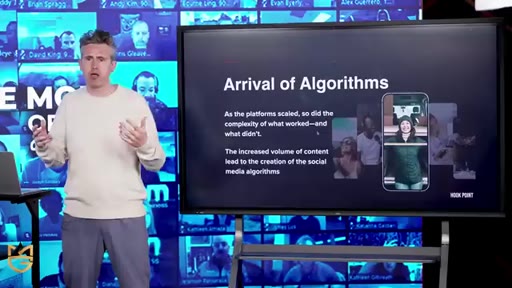
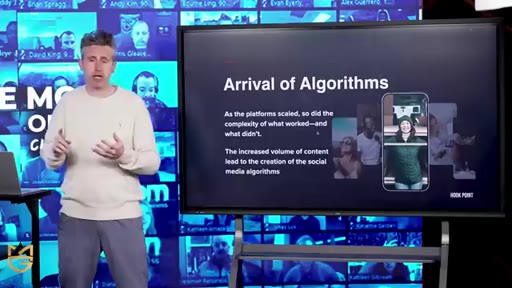
Social grew from 40M to 5.2B users; algorithms were invented to prioritize the best content from 150,000 possible pieces. Algorithms want to partner with creators — they reward content that grabs and holds attention because that keeps people on platform, enabling ad revenue.
10:26 – 11:53

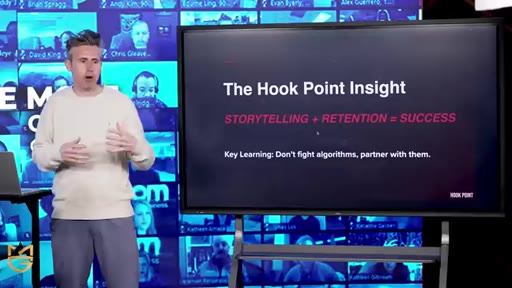
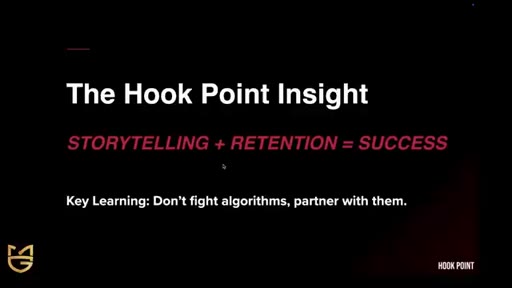
04 · The Hookpoint insight: Storytelling + Retention = Success

After 10,000 hours of research, Kane's core formula: storytelling drives retention, retention feeds the algorithm, the algorithm drives reach. Stop fighting the algorithm. Become a better storyteller.
11:53 – 21:17

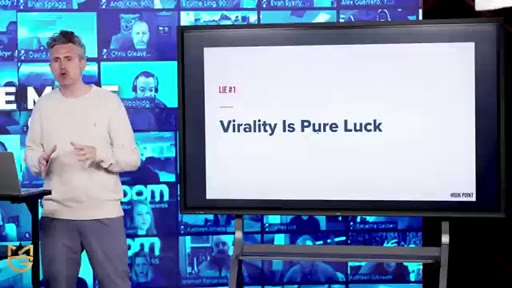
05 · Lie #1 — Virality is pure luck

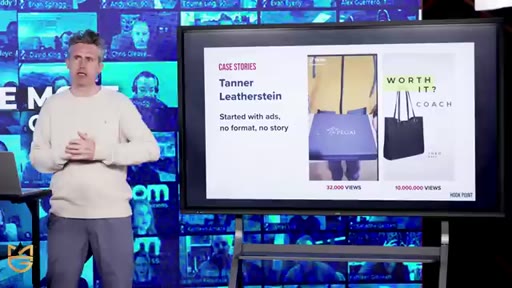
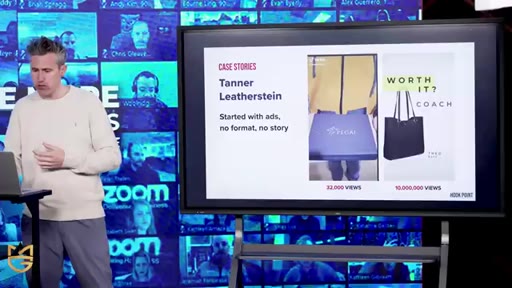
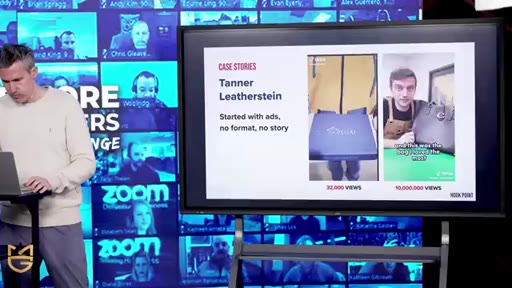
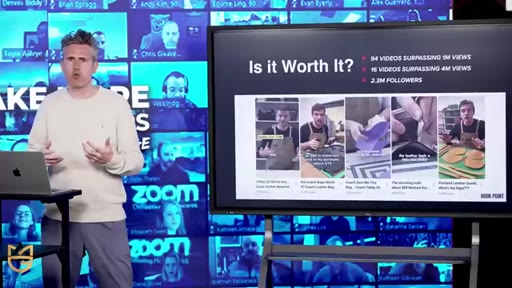
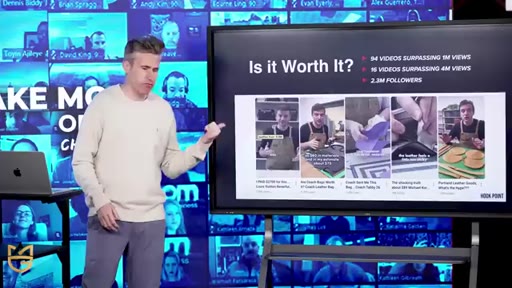
Virality has a repeatable science rooted in 300+ catalogued storytelling formats. Case study: Tanner Leatherstein — 'Is It Worth It?' format → 32K to 10M views, 2K to 2.3M followers. Actionable: find formats that exist, choose one that fits your message, analyze why it works.
21:17 – 26:06

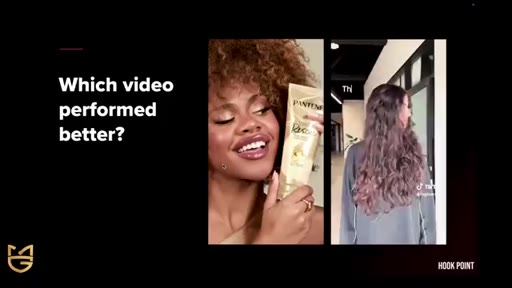
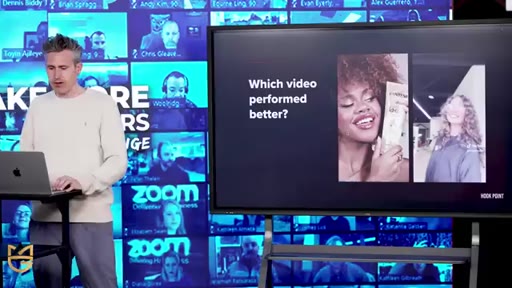
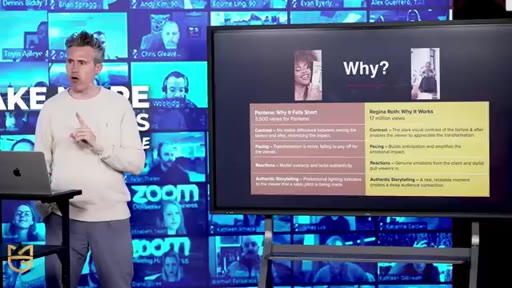
06 · Performance Drivers — live quiz (Pantene vs. Regina Roth)

3,500 views vs. 17M views on hair transformation videos. Four performance drivers: contrast, pacing, genuine reactions, authenticity. Regina went from $3K/mo to $16K/mo booked one year out after one video.
26:06 – 31:44

07 · Lie #2 — You need big budgets and large teams

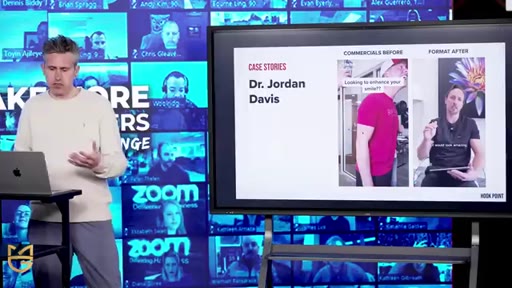
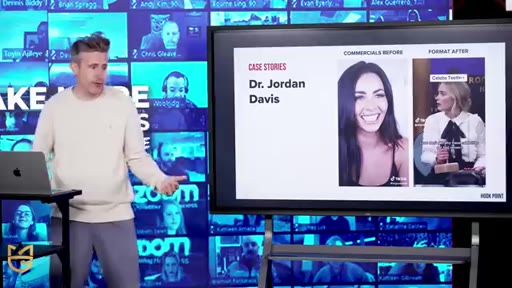
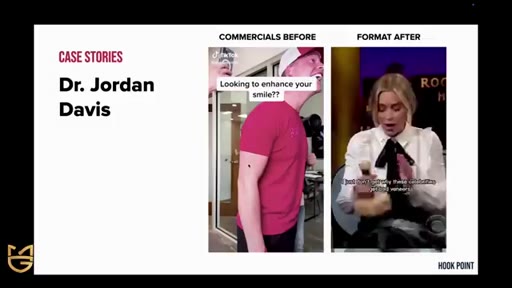
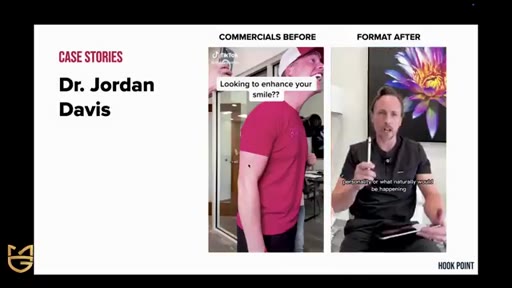
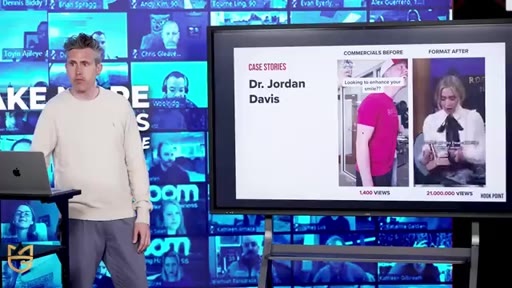
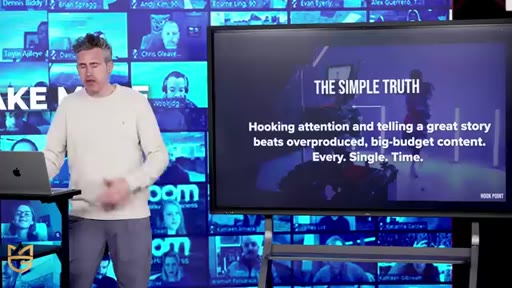
Overproduction triggers subconscious 'this is an ad' signal. Case study: Dr. Jordan Davis (dentist) — commercial video: 1,400 views; iPhone 'celebrity teeth breakdown' format: 21M views. Simple truth: hooking attention + great story beats budget every time.
31:44 – 42:10

08 · Lie #3 — My industry is not sexy enough

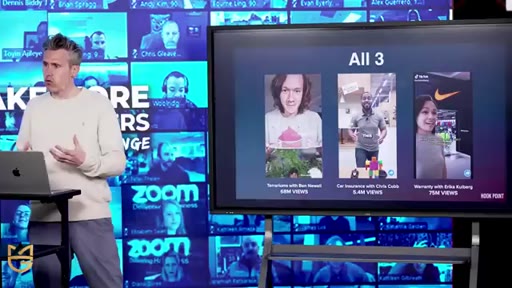
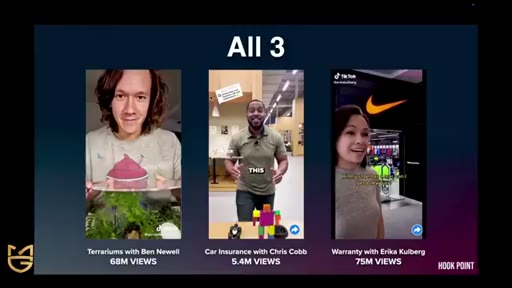
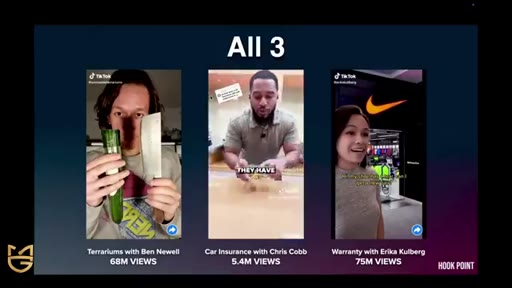
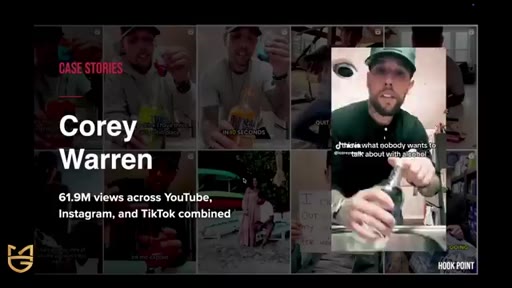
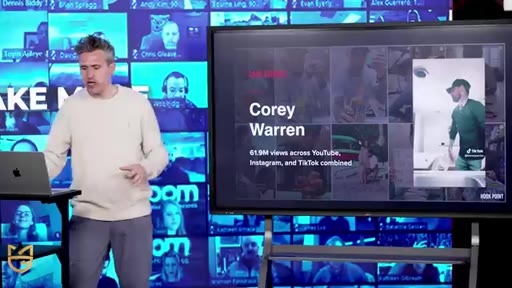
Terrariums (68M), car insurance (5.4M), warranties (75M). The Generalist Principle: make niche content accessible to the widest audience. Shift mindset from 'what do I want?' to 'what experience do I want the viewer to have?' Case study: Corey Warren (recovering addict) — visual metaphor format → 61.9M views across platforms.
42:10 – 45:23

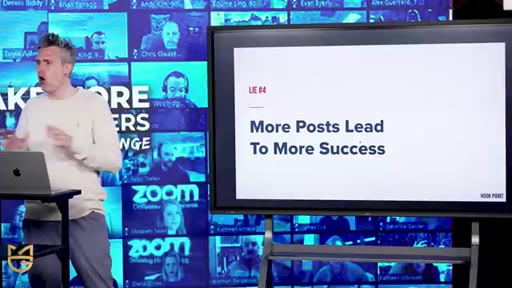
09 · Lie #4 — More posts lead to more success

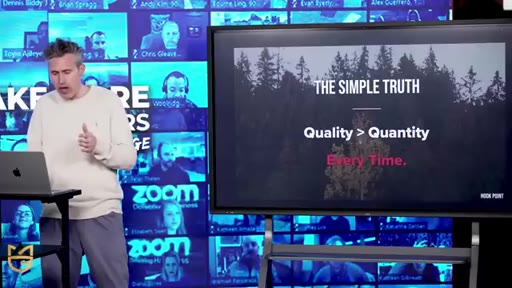
Mark Rober: 300M views in a year posting once a month. Algorithms reward quality not quantity. Pre-posting rubric: solves a problem, tells a compelling story, holds attention start to finish. Master the format first, then scale frequency.
45:23 – 50:05

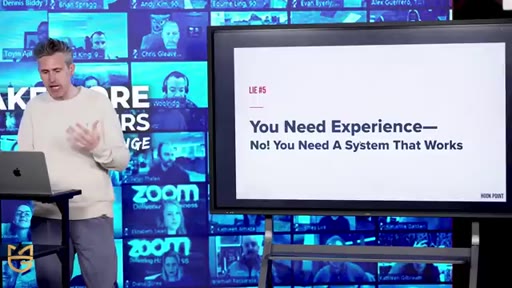
10 · Lie #5 — You need experience

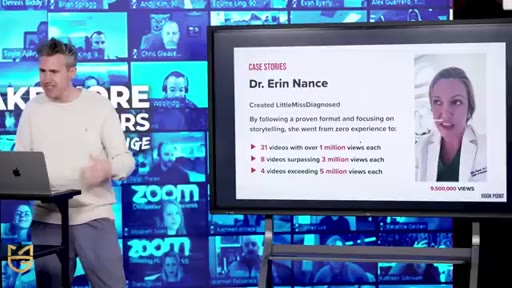
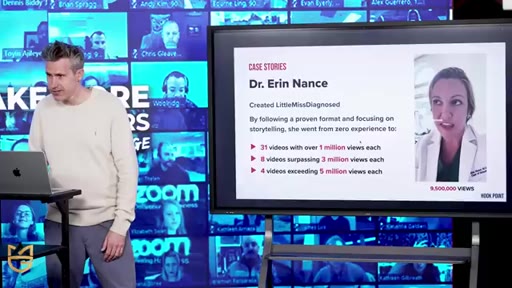
The IKEA Effect: you don't need carpentry skills, you need the right system. Case study: Dr. Erin Nance — zero followers, zero experience, hand surgeon on iPhone → 'Little Misdiagnosed' format → 750K followers, 31 videos over 1M views, Harper Collins book deal, reality TV and podcast deals. CTA: free book via QR code.

§ · Storyboard

Visual structure at a glance.

intro / Kane introduced
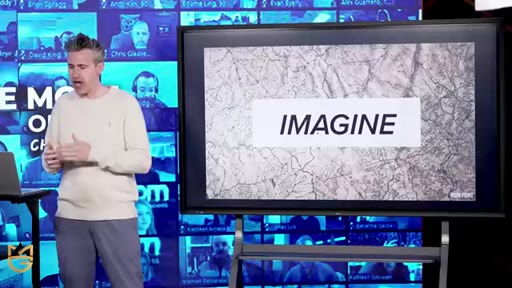
treasure map analogy
the Hookpoint formula
Lie #1 — virality is luck
Lie #2 — big budgets
Lie #3 — sexy industry
Lie #4 — more posts
Lie #5 + CTA
§ · Frameworks

Named ideas worth stealing.

10:26 model

Storytelling + Retention = Success

  1. Storytelling
  2. Retention
  3. Algorithm partnership
  4. Success

The master formula: effective storytelling drives retention, retention signals quality to algorithms, algorithms distribute content, distribution drives success.

Steal for Any content strategy conversation — the simplest possible frame for why format matters more than production value
14:08 concept

300+ Storytelling Formats

Proven structural blueprints with repeatable success. Examples: 'Is It Worth It?' (deconstruction), 'Visual Metaphors' (abstract concepts made tangible), 'Two Characters One Light Bulb' (persona-swap debunk), 'Little Misdiagnosed' (cliffhanger medical story). Formats persist for decades; trends are weekly.

Steal for Joe's 'Killing Excuses' two-character persona-swap is a named format in Kane's taxonomy — validate and systematize it
23:50 list

Four Performance Drivers

  1. Contrast (clear before/after)
  2. Pacing (builds anticipation)
  3. Genuine reactions (emotional truth)
  4. Authenticity (relatable over polished)

The four nuances that differentiate a 3,500-view video from a 17M-view video on the same subject matter. Subconscious-level signals that determine scroll vs. watch.

Steal for Pre-publish checklist for any piece of content
36:00 concept

Generalist Principle

Create content that speaks to your core buyer but is accessible and engaging to the widest possible audience. Niche content still competes against 150,000 other pieces. Broad hooks with niche depth win.

Steal for Positioning any specialty content for maximum distribution
45:00 list

Quality Pre-Posting Rubric

  1. Does this solve a problem for my audience?
  2. Does it tell a compelling story?
  3. Does it hold attention from start to finish?

Three questions to ask before publishing any piece of content.

Steal for Content operations SOP — bake into any content workflow
46:00 analogy

IKEA Effect

IKEA turned non-carpenters into furniture builders by providing the right system. Social media success works the same way — you need the right blueprint, not years of experience.

Steal for Selling any done-with-you offer or course
§ · Quotables

Lines you could clip.

10:26
"Storytelling plus retention equals success."
The entire talk's thesis in five words — clips clean with zero setup → TikTok hook
11:11
"Ignore the algorithms, ignore the hacks, the tips, the tricks — just learn how to become a better storyteller, and through that, you will have success."
Counter-intuitive advice that challenges what most creator accounts say → IG reel cold open
31:13
"Hooking attention and telling a great story beats overproduced big-budget content. Every. Single. Time."
Declarative, punchy — the 'full stop' delivery is clippable on its own → TikTok hook
42:14
"Any business product or service can go viral. Don't let that hold you back."
Permission-giving line — speaks directly to the creator who thinks their niche is too boring → Newsletter pull-quote
43:10
"Success isn't about posting frequently. It's about posting strategically."
Tight contrast pair — gets screenshot-shared → IG reel cold open
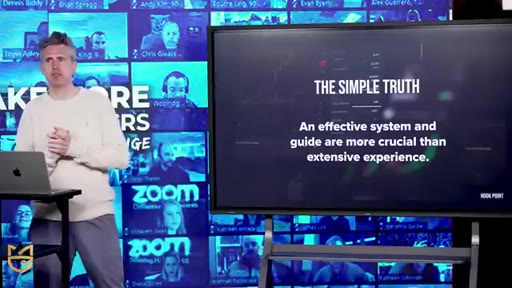
50:02
"An effective system and guide are more crucial than extensive experience."
Removes every excuse beginners have → Newsletter pull-quote
§ · Pacing

How they spent the runtime.

Hook length39s
Info densityhigh
Filler8%
§ · Resources Mentioned

Things they pointed at.

14:08productHookpoint ↗
14:08book1,000,000 Followers (book)
14:08bookHook Point (book)
14:08bookThe Guide to Going Viral (book)
16:30channelTanner Leatherstein / Pegai
27:00channelRegina Roth (hairstylist)
27:16channelDr. Jordan Davis (dentist)
32:40channelBen Newell (terrariums)
32:50channelChris Cobb (car insurance)
33:00channelErica Kolberg (warranties / lawyer)
38:16channelRyan Serhant (real estate)
40:04channelCorey Warren (addiction / recovery)
42:13channelMark Rober (engineering / NASA)
47:23channelDr. Erin Nance / Little Misdiagnosed
§ · CTA Breakdown

How they asked for the click.

51:00 product
"If you guys wanna get access to my recent book for free, the Guide to Going Viral, you can just screenshot that QR code."

Soft CTA at the close — free book as lead magnet via QR code. No hard sell during the talk, consistent with the relationship-building philosophy Kane preaches throughout.

§ 04 · The Script

Word for word.

HOOK opening / re-engagementCTA the pitch analogy story
00:00HOOKSo the reality that we wanna come to here is any business product or service can go viral. Don't let that hold you back.
00:14HOOKLadies and gentlemen, we have the privilege of having with us in studio today none other than the ultimate viral scientist himself, a three time international best selling author of 1,000,000 followers, Hook Point, and the guide to going viral, Brendan Kane. He's gracing us with his presence, and he's gonna share a presentation
00:31HOOKthat will assist you in taking your content and helping it go viral. So without any further ado, ladies and gentlemen, give it up for Brendan Kane. Thank
00:39HOOKyou, Myron. Appreciate it.
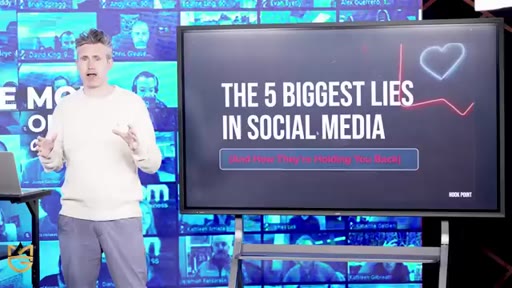
00:42HOOKThank you. I'm so excited to be here today, and we're gonna be diving into the five biggest lies in social media and how they are holding you back
00:54HOOKfrom achieving the success that you deserve and that you're looking for. So
01:00HOOKjust to kind of give some context, over the past twenty years, I've dedicated my entire career to one thing and one thing only, and that is understanding how and why things break through.
01:14HOOKWhat gains attention? What fails to gain attention? Essentially,
01:18HOOKwhat goes viral and why? To the point that I have founded a company called Hookpoint where we have spent over ten thousand hours of research on the subject matter. And no, it's not ten thousand hours just because Malcolm Gladwell said it was ten thousand hours.
01:32HOOKOur team has actually logged that many. Truly understanding what this world is about, how we can stand out at the highest levels.
01:41HOOKOver the past two decades, I've had the pleasure of working with clients such as Yahoo, Mindvalley, Paramount, Vice, Taylor Swift, IKEA.
01:50HOOKYes, going from rock stars to furniture. Pretty much worked in every single industry. And as Myron mentioned, I have three books, 1,000,000 followers, hook point, and the guide to going viral.
02:03And the reason I mentioned that is if you've read that in my books or checked them out, they all have the same dedication. And that dedication is I firmly believe that there's people all over the world just like you that have the power to transform the world in a positive way through your message, through your product, through your services,
02:20but you just need that helping hand. You need the right insights, that your voice is being suppressed for any number of reasons.
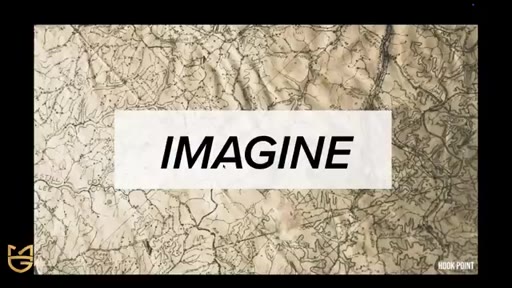
02:26And my mission here today and to all of you is to deliver as much value so that you can break through and have your voice being heard. So I I would like to start here, and I want you to imagine that you are given a treasure map.
02:43Okay? And on this treasure map, there
02:46are no instructions, and you are given no compass, and you have no idea where you're going.
02:51However, you know there is gold out there, but you're aimlessly wandering around just digging holes at random trying to find that gold, and you're just hoping to strike it rich.
03:03Now the interesting thing is social media, most people are treating it the exact same way. They just keep digging holes in the form of creating content, creating content, creating content,
03:14hoping to strike it rich because we see those people with millions of followers. We see those people with tens of millions, hundreds of millions of views, but you just don't have that clear blueprint. You don't have that clear map, and we're gonna dig into to what that is today.
03:30So I like to kind of do this because I think it's really important. Like, what is
03:35social media? Like, I wanna level set and start here because to me, social media is actually, it's more than a platform.
03:44It's a revolution in communication. Now why do I say that?
03:48If we think back before social media twenty years ago, well, how did we reach the masses? You need to you need to go through a television station, a radio station, a newspaper, a magazine.
04:00You need to have a publicist. You need to have big budgets or connections. It wasn't available to everyone.
04:07But today, social media has truly democratized communication.
04:11Any one of us with one of these and a great story can reach millions and millions of people,
04:18which was never previously there. So now I wanna talk about,
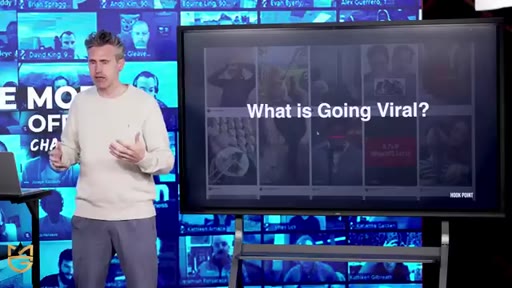
04:24like, what is going viral? So because that's that word that that term is thrown out a lot. To me, going viral is just capturing attention.
04:34Are you capturing the tension that you're looking for, that you're hoping for? Now some people will say, well, Brendan, how many views is going viral? Well, it's the number of views that you need to have in order to have the impact
04:47that you're looking for. For some people, 10,000 views will hit their goals. You know, whether it's, you know, building their brand, getting their message out there, selling their products or services.
04:57Other people, they want a million views or they want tens of millions of views, hundreds of millions of views. The most important thing is, are you getting the attention
05:06that you're seeking, and is that attention translating into your business goals and objectives?
05:12I am never gonna say in with all the clients we work with work with at Hookpoint is it's never about going viral for the sake of going viral. This should always be tangibly tied to the goals and objectives that you have for your business.
05:26Now one of the biggest determining factors in what causes content to get attention or or or reach your views is the algorithms. They control the distribution of content. They control whether it's a thousand views
05:41or 10,000,000 views on your content. Now I'm gonna define what algorithms are and why they do this in in just a little bit, but I wanted to set the bar here is, like, going viral in everything that we're covering today is just not about
05:55just getting as many views as possible. We wanna translate that into our goals and objectives. Now
06:01as I mentioned, I started in the space in 2005. There's Myspace was the predominant player, 25,000,000
06:10users, and Facebook was at was at 6,000,000. And the interesting thing about social media way back then is
06:18you just had to connect with people. You people would friend you, people would follow you, subscribe to you, and you would post and people would see it.
06:26Like, how magical is that? How simple is it? Like, you quote, you post something, and people see it.
06:31Like, I think a lot of us here wish that that was the case today. So what what actually changed? Well, a lot of things changed.
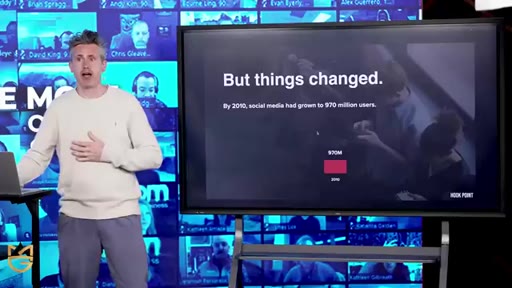
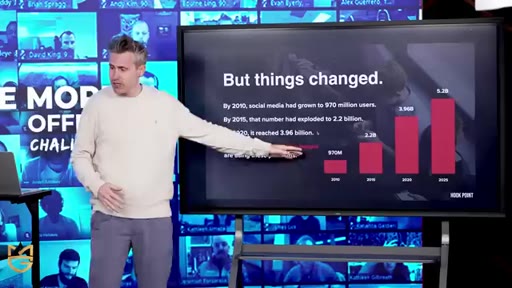
06:40In 2010, social media had grown from, you know, roughly thirty, forty million users to 970,000,000.
06:50And then 2015, at 2,200,000,000. At 2020, 3,960,000,000.
06:56And today, we're at over 5,200,000,000 people using these platforms. Again, I started here when there was nothing.
07:05Thirty, forty million. It was it was different. So so what changed because of this?
07:10Well, you probably have all heard the algorithms. Well, the algorithms were invented
07:15because so many people were joining these platforms and posting on these these these new social media channels. So
07:26the algorithms were invented to do one thing, and that was to prioritize what content you get seeded. So if we imagine if any one of us
07:35opens up our favorite app on this thing, whether it's TikTok, Instagram, Facebook, YouTube, no matter what your favorite app is, there's probably a 150,000 pieces of content
07:45it could seed to you based upon the accounts that you follow, the content you've engaged with. Now, obviously, it can't seed you a 150,000
07:53pieces of content because it would be super overwhelming. You close the app and leave. So these algorithms are there
08:01to prioritize what are the first five pieces of content you're gonna see, the next 10, The next 15? Now what these algorithms are looking for, and no, it's not trying to suppress your reach so that you can boost your post.
08:14I know this for two reasons. One, I've managed over $200,000,000 in ad spend,
08:19and the people that spend the most where the most money is made is off of major corporations and brands that spend billions and billions of dollars a year. In addition, you wouldn't have influencers like a mister beast or that teenage influencer down the street with millions of followers scaling and growing.
08:36It would just be reserved for people with the biggest budgets. And we know the most successful people on social media are typically the ones that don't start out with the biggest budgets, the biggest teams, the biggest equipment. So these algorithms
08:50are there to prioritize the best content. Why?
08:54Because we are the fuel that runs them. This is not like Netflix or Disney where they're investing billions and billions of dollars in original content.
09:02They rely on us. We are the fuel that runs these platforms. However,
09:07these platforms, the algorithms have one goal, and like any business, is to make money. So how do they make money? Well, they serve ads.
09:15So the content that keeps people on the platforms longer means they can serve more ads. So when the algorithms are prioritizing content, they're prioritizing content that grabs and holds attention longer than other content.
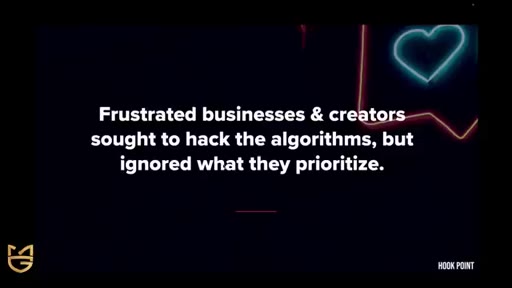
09:29So as you can imagine, as the algorithms take shape, then we went from simply post and people see your content to post and maybe people will see your content or you're probably lucky if they see your content. Well, that created a lot of frustration
09:46with content creators and businesses where they started to try and hack the algorithms, try and find tricks and things like that without, again, trying to understand what these algorithms prioritize. These algorithms are there
10:00to partner with us. They want to see us succeed because we are the fuel that runs them, but we have to prove that we're good content creators amongst those under other 150,000 pieces of content to prove that we can actually
10:15HOOKgrab and hold attention over other content. So after doing ten thousand hours of research
10:25HOOKat my company Hookpoint, we came to this very simple insight and that is
10:31HOOKstorytelling plus retention equals success. So what does that mean?
10:37HOOKI mean, if we think about think about a the last movie you saw. You saw a trailer.
10:43HOOKYou're super inspired. I wanna go see this amazing movie. Well, what happens when you sit down to watch that movie?
10:49HOOKWell, you wanna see what happens at the end. So what does that do? It holds your attention.
10:54HOOKOr if you think about anybody that has young kids, you start to start a bedtime story. What does the kid want? They want to hear the end of the story.
11:03HOOKSo storytelling effective storytelling allows us to build that retention,
11:09HOOKwhich is what the algorithms want to keep people engaged with content longer so they can serve more ads, and that equates to success. So social media is not about fighting algorithms.
11:20HOOKIt's about partnering with the algorithms, becoming a better storyteller. And that is, like, one of the the the simplest pieces of advice I could give you today is
11:31HOOKignore the algorithms, ignore the the the hacks, the the tips, the tricks,
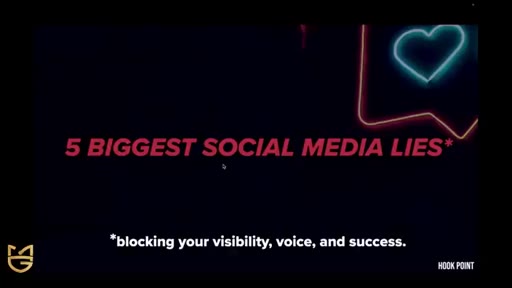
11:37HOOKjust learn how to become a better storyteller, and through that, you will have success. So I'm gonna break down now the five biggest social media lies and how they are blocking your visibility,
11:50HOOKyour voice, and success. So let's start with one.
11:55Lie number one. And that is virality is just pure luck.
12:00Now have you ever, like, created a lot of content, put a lot of time, energy, resources, money into either a single piece of content or a lot, and it just you you're like, this thing is amazing.
12:13This is amazing content. And then you post it, and it's just like, what happened?
12:17Like, what did I just do? Like, I wasted all that time.
12:20Oh, if that's you, I feel your pain. I I listen. I've been there.
12:23I've been doing this for twenty years. And the reality is I know how painful that can be, but there is a science to this.
12:32And I promise you, anyone can learn this science. And as I have alluded to, that science is rooted
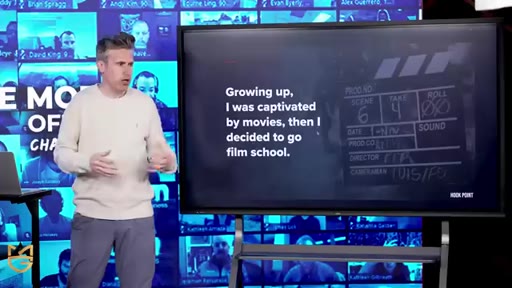
12:41in storytelling. So growing up, I was captivated by movies.
12:47I was so captivated in movies. I loved it as a young kid that I decided to go to film school to study films. I wanted to be a movie producer.
12:55Now the interesting thing about going to film school is that even though I wanted to be a producer, they still made me take acting classes. They still made me learn how to light sets.
13:06They made me write screenplays. They made me direct things. Why?
13:11Because there's all these small nuances that make up successful movies. Now when I started my career, I worked for Academy award winning producers.
13:19And the amazing thing is even seeing people that have reached the pinnacle, they could have everything. They could have a great director,
13:26a great script, a great idea, but if one small element was off in making that movie, the whole thing would fall apart. Maybe the actors didn't have chemistry. Maybe the the director and the actor didn't have chemistry.
13:37Maybe the cinematographer just failed in the lighting or they got the wrong locations. Just one small element, I'm sure a lot of you have probably seen, you know, really bad movies,
13:48and then you kind of can pinpoint, well, that's something was off with it. So there's all these little nuances that cause a movie to be successful
13:57or unsuccessful. And the reality is the same thing applies to social media. It's no different.
14:04Like, these platforms are purely storytelling platforms.
14:08This is not social media is not about hope. It's not about luck. There is a repeatable process
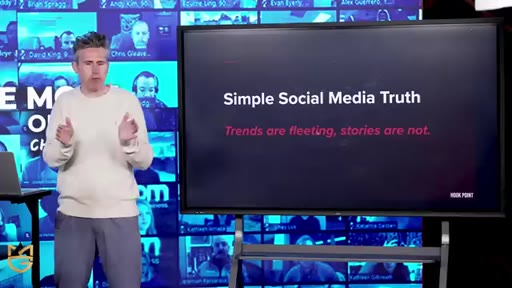
14:15to it. So I wanna break down an important simple truth about social media, and I'm sure a lot of you have heard trends.
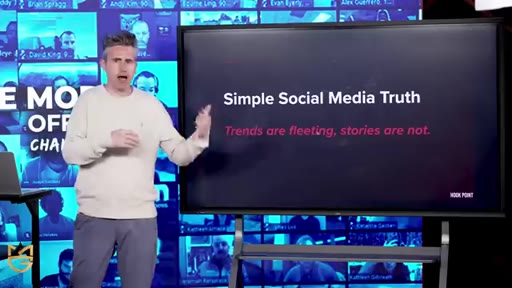
14:24Probably a lot of people say chase the trends, create trends, trends are success, but the reality is trends are fleeting and stories are not. And
14:34we have proven this again with doing ten thousand hours of research into what we call storytelling formats,
14:42structures that have repeatable success. Now at this point, we've analyzed over 300 of these formats. So a format is it's basically a blueprint.
14:51It's it's a proven structure to have repeatable success over and over over again. And I want you to think about that blueprint or structure as something that you can insert your message or your content into.
15:02So it's it's very flexible in that nature. Movies for the past hundred years have all followed the same format. And if you think about any movie that you see, they all feel distinctly different.
15:12You know, horror, action, sci fi, drama, comedies, they feel different, but they all use the same format.
15:19And directors can be super creative within that specific format. So we're gonna I'm gonna actually show you a few examples
15:29in a minute. But in terms of in terms of another kind of analogy of thinking of of trends versus formats, If we think about learning a musical instrument, the trend route would say, week one, let's learn the piano.
15:43Week two, let's learn the drums. Week three, let's learn the guitar. Week four, it's the violin.
15:47You keep switching the goalposts, and you never become a master of anyone. Versus, like, the format approach, it would be, you know, let's master the piano.
15:57Let's sit down for years in doing that. So that's the power of formats versus trends. Now people think that social media is constantly shifting and changing and that you always have to be
16:08on top in innovating and things of that nature. But the reality is a lot of these formats have been used for decades, have been used for a long period of time.
16:19So I wanna just start putting this into practical, like, experience and actually, like, showing you examples because it's one thing for me to talk about these things, and it's another thing to actually show it in real life and to prove it. So
16:33we have an amazing guy, and I'm a break down this case story of Tanner Leatherstein, a client of ours. And at age 11, he fell in love with making leather goods.
16:43He created his first leather jacket and just loved the process, loved the art of it. To the point when he grew older, he founded his own leather goods company called Pagai.
16:54Now as we'll see, when he came to us, he was struggling with social media. Like, his content wasn't breaking through,
17:04and he was really focusing on ads and trends. He had no format. He had no storytelling skills.
17:10So we helped him design a format. So first, I'm gonna show you an example of what he was doing before, and then we're gonna show an actual format, a storytelling format and structure of what it looks like when you kind of use this.
17:24So this first video, um, is 32,000 views.
17:44So as you can see, there's no real story. He's just trying to sell his products and services.
17:50So in Tanner coming with us coming to us, we helped them design a format that matched his business, matched his expertise and passion, and it's called, is it worth it?
18:01And you'll just see it's pretty self explanatory. He takes expensive a
18:06leather good deconstruction on screen and tells you whether it's worth the money that you paid for it. Coach leather bags. Are they worth it?
18:14I went to the Coach store yesterday, and this was the bag I love the most. Sales associate told me this was made out of glow tan leather, and the inside was suede.
18:23But I have my doubts. And as you can see, this is all fabric, not suede.
18:35In my opinion, about six feet of leather to put this bag together, about $5 a foot, $30 for the leather, Insanely good brass accessories. They used a lot of them. With the fabric, I give it another $30,
18:48so $60 in materials. And in my estimate, $70 should be enough to put this bag together. In total, $1.30 for the materials and labor.
18:55I paid $4.50. Doesn't sound like a bad deal. I love the leather, the feel and look of it.
19:01I hate that I was told inside was suede and it's fabric, and they used PU leather for the story patch inside. I wish it was real leather. So you can kinda see the difference between just doing an ad versus this structure, this is it worth it, 32,000 views versus 10,000,000 views.
19:18But this is the remarkable thing. Now Tanner really struggled.
19:22Like, he didn't even feel comfortable being on camera before we helped him find this format. So with this single format, this is it worth it format, he has 94
19:31views or videos with over 1,000,000 views, 16 surpassing 4,000,000, and he went from 2,000 followers to an audience of 2,300,000. Now
19:40this was just a leather goods guy. Like, the people in the fashion industry are scared of him. They're like, what is he gonna is he gonna break down my products?
19:48He even got invited to Paris Fashion Week to, like, parties with, like, celebrities like Kendall Jenner and stuff because they want to kinda build this relationship. Now Tanner, an amazing guy, has a lot of authenticity to him, so he will not
20:01take products for exchange for for for money or things of that nature. So now some of you may be thinking, well, Brendan, I wanna build a business. This is great.
20:09He's getting viral viral and stuff. Well, how does this translate into monetary gain? Well, the reality is he saw that video.
20:16He's not saying buy my products or services. Go to my website. He is getting people to know, like, and trust him to the point where people naturally want to take that next step.
20:25So previously, he was spending money on Google pay per click ads, generating about 10,000 visitors a month but paying for every click. Once he started this, it jumped to a 100,000 visitors a month organically.
20:36His most expensive products, the ones that are thousands of dollars that that handcrafted leather goods, he can't even keep them on the shelf. Why?
20:45Because people trust him. You can see like his passion comes through. He's proving he knows leather,
20:51Like, he's being truthful and honest with it, and that's where people gravitate towards those relationships. So going viral
20:59is not luck. It is storytelling. And and just I want you to remember, storytelling
21:05plus retention equals success because we're playing in to what the algorithms want. We are the fuel that runs them, and we are trying to partner with the algorithms, not try and beat them or hack them.
21:17So what are the actionable strategies that we can take away here? Well,
21:23the first thing is just understanding that these storytelling formats exist, that they are out there in the world because most people are just passively
21:33consuming content and they don't see that there's clear patterns, there's clear structures to how things work. And we're gonna again I'm gonna show you a few more formats in a little bit so you can get more examples of it, but just start looking for it and understanding that exists.
21:48Then you wanna choose the one that fit fit best fits your message. So we've done an analysis in over 300. There are plenty to choose from.
21:55You wanna choose the one that excites you, that feels authentic to who you are. And then you want to analyze that.
22:04Don't just look at a video and just be like, oh, it's got millions of views. Try and understand why in the same way that I went to film school, like break it down. What makes it successful?
22:13So I wanna do a little fun little quiz with you guys here in the audience and whoever's tuning in, you can participate as well. But I'm gonna break down I'm gonna play two videos, and you're gonna guess which one performed better, and then I'm gonna break down why.
22:30So let's start with the first one.
22:43K. So that's the first one. I don't wanna egg.
22:47You guys can't cheat. You can't you can't tell the answer before you watch two videos. You gotta give it a chance.
22:52Okay? Okay. So here's the second one.
23:23Okay. So which one performed better? Raise your hand if you think it's number one.
23:29Number two? Okay. Some of you guys cheated though.
23:34Okay. So for for the for the next ones, try to at least give it a chance. Okay.
23:40So you guys are right. So the first video is by Pantene.
23:44It got 3,500 views. And the second video is by Regina Roth, who's actually a client of Hookpoint. They got 17,000,000
23:51views. So so what is the the the difference here? Well,
23:57if we think about and we have these four things on the screen, they're they're called performance drivers. So these are like nuances and storytelling that contribute to the success or detract from the success
24:09of the video content. So if we look at this, we have the first one is contrast. So when we think about that first video, the Pantene video, there's no visible difference between seeing the before and after.
24:21So it really completely minimizes the impact versus with Regina's,
24:26there is a stark visual contrast that is happening. There is a clear before and after after that enables the viewer to appreciate
24:34the transformation that is happening. The next one is pacing. The underperformer, the transformation is is very minor.
24:41It fails to pay off for the viewer versus the high performer. It builds anticipation.
24:47It amplifies the emotional impact. And again, a lot of these things can happen on the subconscious level because we're you know, this is obviously these are short videos. So oftentimes, our subconscious
24:58is registering these things before we do and causes us to scroll or to keep watching. The next one is the reactions. Like, the first one, the model, it feels staged.
25:07It feels like she's just acting versus Regina's, it feels genuine.
25:12Like, the emotions feel genuine and it builds that connection. It brings the viewers in. And then the authenticity of it.
25:20Again, the Pantene video, it just feels like it's on a stage, a soundstage shot with fancy cameras, models, things of that nature versus with Regina,
25:30there's a relatable moment that creates, you know, deep audience connection. Now the interesting thing about this, just to show you the power, is before Regina started using the hook point model, she was stuck at, like, $3,000 a month as a hairstylist in in Florida,
25:45and this single video booked her out one year in advance. Wow.
25:50And her revenue jumped to 16,000 a month with one video. So that's the power of it.
25:56And do you see her saying sign up for my hair salon? You see, you know, book here? See, that's the thing.
26:03It's it's building that relationship with the audience. So what is lie number two?
26:08Well, that's you need big budgets and large teams. Like, we just saw that. Like, oftentimes, overproduction
26:14can work against you. Why? Because we're professional content consumers.
26:18We consume so much content in this day and age with social media and Netflix and things of that nature. There are subconscious that's so smart within a split second if something feels too over polished, we're like, this is an ad.
26:31Even if it's not an ad, it can feel that way. So that's where sometimes that production value can work against you. I'm not going to say all the times, but I just want to a lot of people hold themselves back from success because they got they say, well, I need to wait till I have enough budget to hire a team or I need fancy equipment or things of that nature.
26:50So I want to show another example of us. Again, I don't want to just tell you these things. I want to to show these things in practical environments.
26:57So another case story is with doctor Jordan Davis, and he initially wanted to be a rock star until he met his wife and was like, no, you need to get a real job. And he became one of the top dentists in Utah and has a has a beautiful family. But like Tanner,
27:12he was thinking that commercials, fancy camera, editing, and things of that nature are the way to success.
27:20So let's walk look at, again, what a lot of people are doing on social media to drive success is creating things like this. So let's watch this first video.
27:45I don't know about you, but I'm pretty sure I've heard that music used in in many different commercials. I mean, it's it just screams commercials.
27:54So if we and even if we look here, you you can see, like, the fancy cameras in the background, the the edits, the fancy camera angles, and things like that. But again, with working with a dentist, again, like a dentist, you you think that, like, how are you gonna make that work?
28:10Well, there's a format for everybody. So we helped them design this format, and I'll just kind of share. It's pretty self explanatory.
28:17Like, he's using his expertise to break down celebrity teeth and things of that nature. So let's just watch this one.
29:46So, again, it's a pretty simple format. He's breaking down celebrity teeth and how he would approach it to match the person's personality being authentic. But if you look at the setup here,
29:57like, literally, like, he's just sitting in a desk, in a chair. He you can even see the microphone there.
30:02Like, you could shoot that on your iPhone. It's not super fancy, not high value
30:09production. And then if we look at the results
30:19if we look at the results here oh, I don't know why it's doing that. I don't get why these celebrities get So it's
30:2621,000,000 views to 1,400
30:29views. Wow. So 21,000,000
30:32views, and he stripped out the fancy camera. He stripped out, you know, the whole team. He had a microphone plugged here.
30:40So the the reason I kinda wanted to show you that example is is you literally can reach millions of people
30:49with a phone as long as you have a great story.
30:54Now you may feel that success is for celebrities, famous budgets, cameras, but literally, do have the tools with you. And there's creators from every background, every part of the world that are driving success with great storytelling.
31:09So the simple truth here is hooking attention and telling a great story beats overproduced big budget content
31:17every single time, full stop.
31:21So what are the the actual strategies that we can take away? Again, we wanna find that format that fits your resources. We wanna focus on storytelling,
31:31not advertisements. Again, as we talked about this with Regina, with Tanner, you don't need to sell in your content.
31:39You just build that relationship and prioritize emotional connection over polished production. Okay.
31:46So again, no cheating here. We're gonna do another quiz before we move on to line number three. But
31:53I want to ask which video went viral? There's three videos on three different subject matters.
32:00We have terrariums, car insurance, and warranties.
32:06Any answers? Which one do you guys think? Warranties?
32:10Terrariums. Terrariums? Terrariums.
32:11Terrariums. Terrariums. Terrariums.
32:13Thanks. I think we're all all across the board, and it's a trick question.
32:18All three. So we got my friend Ben Newell with Terrariums with 68,000,000 views.
32:25Chris Cobb, a client of ours, 5,400,000 views, and Erica Kolberg with 75,000,000 views. So let's watch these like, let's look at these three.
32:34How did they actually do this?
33:10So Ben basically tells these stories in these micro environments that he builds around terrariums. He's built an audience of 2,900,000
33:18people that tune in to to do his he is the leading expert in the world in terrariums because of social media at this point. So let's look at another one, car insurance. Super
33:27boring, not really sexy, but Chris Cobb uses a format called visual metaphors.
33:36This is how car insurance works in sixty seconds. So here we have John who just got a new hot ride, and that's when the insurance company comes in and says, hey, John. Nice car, but have you thought about what would happen if you get in an accident?
33:48And he's like, no. They said, well, John, if you pay us $1 a month, it's called a premium, we'll cover your car. He's like, okay.
33:55That's a no brainer. So John speeds off. He's having a good time.
33:57On the highway, he's texting and driving. God, please don't do that because he actually gets to the fender bender with his friend Marcus. And John is freaking out because he's thinking, how to fix Marcus' car?
34:08How to fix my own car? And that's when the insurance company says, John, you've been paying the $1 premium. So here you go.
34:14Here's $10. Go fix Marcus' car and go fix your own. And John is super relieved because
34:20he did not have $2 to fix his car. And you may be wondering, how does the insurance company afford this?
34:27Well, they have thousands of jobs who put money into a jar every single month, and they're not giving you accidents. But the insurance company is smart. They're saying, John, I'm glad you're safe,
34:38but I'm sorry to give you the bad news. You're a risky driver. You're costing us too much.
34:43So instead of $1 in premium, I'm gonna have to charge you two every single month. And that's how car insurance works.
34:49John is paying a little bit to cover a lot, but because John is more risky now, the insurance company is gonna charge him more. But even worse, they may drop his coverage. If you like the
35:00So 5,400,000 views with car insurance. Now this is another example of a format called visual metaphors
35:06where you're using metaphors to explain a, you know, complex or abstract subject matter. So let's watch the last one, Erika Kolberg.
35:14This is called two characters one light bulb where the same person plays two different characters and breaks down a subject matter or debunks a common myth. My shoe has a tear. Can I get a new pair?
35:26You bought that almost two two years ago, there's nothing we can do since it's been over sixty days. She has no idea, know, watch this. I'm not talking about the sixty day return policy, I've actually read your terms and I know that as long as it's been less than two years since the manufacture date found here, it's covered under the warranty.
35:40And Nike will either give me a brand new pair or a gift card for the same value. Oh, fine. We don't carry that one anymore, so here's your $100 gift card.
35:48Who taught you this? Erica did. She's a lawyer and reads the fine prints, but I don't have to.
35:52That's why I follow her. So 75,000,000 views on warranties,
35:58and she's built an audience of 15,000,000 people. So
36:02this is the lie that I hear a lot of times. It's lie number three, and that is, you know what? I'm not succeeding because my business, it's not sexy enough.
36:10It's not interesting enough. I'm not a celebrity. But the reality is
36:15you can succeed. Now I feel your pain and the frustration if you see other people in other industries, you're like, how are they succeeding? And I'm not.
36:24But I guarantee there are people just like you all over the world that are succeeding with great stories. Again, we just looked at a guy talking about terrariums. Terrariums of all thing going viral.
36:34Warranties going viral. So how do we actually apply this?
36:40So it's it's called the Generals Principle. That's why we call it hook point.
36:44And it's it is all about how
36:47we can ensure that our content is very clear, engaging, and widely accessible to breakthrough.
36:56So we definitely want to create content that speaks to the people that buy our products and services that is in a very specific, you know, niche, but we wanna break through.
37:05How do we make it also interesting to the wider possible audience? Why?
37:10Because the algorithms only care about content that holds and and retains attention at scale. In addition, as we've talked about, you're competing against a 150,000
37:20other pieces of content. So even though you create a piece of content that's targeted specifically
37:27to your audience, it's still competing against all that other content that's not your direct competition. So with the generalist principle, it's all about making it accessible against your core customer but to a wider possible audience.
37:40So in order to do this, we wanna break things down simply. We want to use clear and easy to understand language,
37:47not just, you know, language that people understand. And if you guys remember before when we were breaking down some of Myron's thumbnails, like the difference between, like, language that everybody knows versus a subset and what it does to performance. Storytelling, obviously, relatable stories with emotions
38:04and, again, broad appeal connecting through universal themes and challenges. So as we look at this, the actual strategies is,
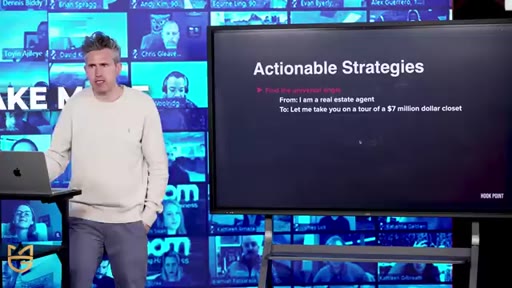
38:13for example, finding a universal angle is, you know, going from I'm a real estate agent to let me take you on a tour of a $7,000,000 closet. This is an actual video, and this is coming from a a creator Ryan Serhant. And he proves that this translates to commerce.
38:29He sells properties that are 15 to $250,000,000 in Manhattan, New York. Super niche, super small audience.
38:36But because he generates tens of millions of views using the generalist principle, he will sell a $30,000,000 property off a YouTube video because he needs less than 1% to be his core target audience. And that less than 1% beats out all of his competition because they're not generating tens of millions of views a month.
38:55The next is turn specifics into relatable stories. Again, going from the benefits of proper dental hygiene to ninety percent of people are ruining their teeth without realizing it.
39:09Then using analogies and unexpected comparisons. The example, imagine if all the bread in the world suddenly doubled in price overnight. This is how inflation works.
39:23And then one of the most important things is as content creators, we're often thinking just about our goals.
39:30What do we want to achieve with our content? But when reality, we need to we really need to reshift that focus and change our mindset to what is the effect that we want to have on the viewer?
39:43What is that experience that we want them to have when we create that piece of content? Because without it, you get lost in that connection with the other people on the other side of the screen. So I wanna show
39:57another example of case story here with Corey Warren who is a recovering addict,
40:05and he's from Lansing, Michigan, and he's really passionate about helping people that are struggling from addiction. So, again, addiction, not a super sexy subject matter, But as you'll see with this, he is also like Chris Cobb using the visual metaphor format.
40:20And this is again important in that formats can be used for different industries. We're going for from car insurance
40:27to talking about addiction in the exact same storytelling format. So let's watch this video real quick.
40:34This is what nobody wants to talk about with alcohol. My
40:39name is Corey. I'm an alcoholic. And for the longest time,
40:44I thought that alcohol was my problem. I thought that if I could just put the alcohol down, everything would be okay.
40:54What I realized is that alcohol is not my problem. Alcohol is my solution.
41:01When I had a bad day, alcohol was my solution. My wife and I were fighting,
41:06alcohol was my solution. If I couldn't pay my bills, alcohol was my solution. See, alcohol was never the problem.
41:14The problem was I didn't know how to handle my life. So once I put the alcohol down and all that alcohol got up out of my cup, I could finally start to focus on me.
41:26And once I started focusing on the problem, I no longer needed the alcohol. You wanna quit drinking?
41:32Hit me up. I'll do it with you. Peace.
41:35So this video generated 61,000,000 views across YouTube, Instagram, and TikTok. Nice.
41:41Wow. Just think of the impact that that has. Wow.
41:45The reality that we wanna come to here is any business product or service can go viral.
41:52Don't let that hold you back. We've walked through several examples from addiction to car insurance to terrariums to warranties.
42:02You can have success no matter what industry or sector you're in if you find the right format, the right story that you're looking for. So another little quiz here. There
42:14is an educational YouTube channel that explores science engineering and innovative problem solving,
42:21but they only post on average once a month. So how many views
42:28do you think that this channel generated in the past year? A is 10,000 views, b is a 100,000 views, c is 1,000,000 views,
42:38or d is 10,000,000 views? What do you guys think? C.
42:43B c d? Okay. Let's see.
42:47The answer is 300,000,000 views. And this is from Mark Rober.
42:53And he is another creator that proves that, you know, success isn't just about a sexy subject matter.
43:00He's talking about engineering. He's a former NASA engineer. And he proves
43:04that success isn't about posting frequently, it's about posting strategically. So lie number four, more posts
43:12lead to more success. Now I hear this all the time that frequency is the key to success. Now that's just simply not true.
43:21Now frequency can play a role once you've mastered the things that we're talking about today in terms of storytelling in formats. And maybe ten, fifteen years ago, these platforms would reward reward frequency when there was less content on the platforms. But when these algorithms have you know, there's over a billion pieces of content posted across social media channels.
43:39When you have that much content, why would they just reward a creator for posting more when their sole goal is to keep people on the platforms longer?
43:48They wouldn't. You just think about it from the standpoint of Netflix. When you think about
43:54that that frustrating thing is you get into a Netflix series, you watch the first season, and they cancel it. You're like, man, why did they do that? Well, they did it because people weren't watching it.
44:03They weren't either they they started and didn't finish the end or they just want didn't watch it at all. They have to be cutthroat about it the same way that the albums are. So the simple truth here is that quality
44:14meets quantity every single time. So what do I mean by that?
44:18Well, we're all audience members. We create content.
44:22We don't pay attention to the amount of content. We pay attention to the content that really resonates with us.
44:29Like, what was the last show that you guys decided to watch? Did you decide based upon the number of episodes that it had? The length time?
44:36The run time? No. You saw a trailer and you're like, that looks cool.
44:40I wanna watch that. Or maybe you had a friend recommend it to you. Like, we care about the quality,
44:46not about the quantity. So that's where mastering storytelling, mastering formats drives growth.
44:52And then once you've done that, then you can choose to increase the frequency, but you wanna crawl before you run. So what are the actual strategies here? I have a little bit of a rubric that we can we can follow here of of
45:05creating quality every time. So before posting, ask yourself, does this post solve a problem for my audience? Does it tell a compelling story?
45:14Does it hold attention from start to finish? So those are things that you can just take away and start asking yourself as you're creating content.
45:24So I wanna talk a little bit about the IKEA effect before we move on to lie lie number five. Now I actually got brought out to speak to IKEA's creative global team in Sweden. The fascinating thing about IKEA is there's actually a thing that's called IKEA hotels,
45:37and they put me up in one it's all IKEA furniture and stuff. It's pretty cool. But it got me as I was training the team
45:45over there, it's it's it made me think. It's kind of interesting. Like,
45:51I IKEA is all about you can go into you can go into a store, you can pull a table off the shelf, it's typically in a box, and they have instructions and tools so you can put it together yourself. And I thought, well, what was it like before IKEA?
46:03So IKEA was created in 1943. They started the instructions in 1956. But what was it like seventy five, ninety years ago?
46:11Like, you had to go out into the woods and chop things down and saw it and sand it and things of that nature. But if you think about what IKEA has done is they changed everything.
46:21They made us professional furniture builders. Like, I can't build anything for my life, and I can go in there at IKEA and and pull off a table and and assemble it.
46:32Like, if they turned everyday people into professional furniture builders. So that's where we get into the final lie, lie number five. You need experience.
46:41No. You actually just need a system that works. Again,
46:45to go to IKEA, we don't need to be professional builders. We can actually put it together because success is not necessarily all about experience.
46:53It's about having the right guide or the right blueprint, and that same applies to social media. So another example
47:01of this, just to show in practical terms, is a case story of doctor Erin Nance.
47:06Now when she she's a a really amazing woman. So at seven, she broke her arm, went to the emergency room, and ever since she wanted to be a surgeon, that was her dream. And when she came to us, she had zero followers, zero views, no experience, and no idea where to begin.
47:21On top of that, she's a hand doctor. I mean, how do you create content around a hand doctor? So again, I sound like a broken record, but it comes from mastering a single format.
47:30So we helped her create a format, it's the name of her channel on TikTok, little misdiagnosed. And as we'll see, she's creating content on an iPhone herself
47:40with a storytelling format. So let's let's just kind of dive into this. This video has over 9,500,000
47:46views. There are some sounds in medicine that once you hear them,
47:53cannot be unheard. This is the story of a 27 year old male screaming for help from his mother and how he ended up in that place. So I'm the junior on call for ortho,
48:05and I'm already in the ER seeing a bunch of consults, and I hear someone screaming.
48:11Now I take care of people who are in car accidents, who are in burns, who are being bitten by dogs, but I have never. Do you guys wanna know the end of the story?
48:23Well, that's proof of a good story. You wanna hear the ending.
48:28So you'll have to go to her channel and look at it. But so so, again,
48:35just to prove here, like, she had zero social media experience creating content in her iPhone. But as you guys all said, she's doing an amazing job telling a story.
48:45She has 31 videos with over 1,000,000 views with this format, eight surpassing 3,000,000, four surpassing 5,000,000. She went from zero followers
48:54to 750,000. She got a book deal that's coming out with Harper Collins next month. She got a reality TV show deal and a podcast deal,
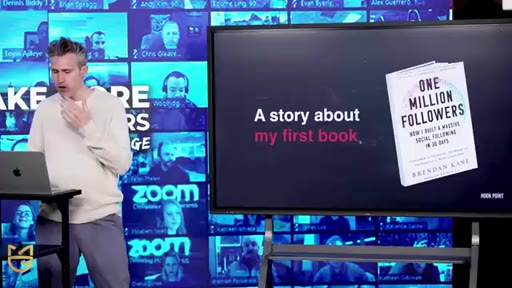
49:03all through the power of storytelling. Now as I wrap up, I just wanted to give a little bit of backstory about my first book, 1,000,000 followers, that I that I really haven't told anywhere.
49:14And it's I had this vision to do this book, but there was a lot of doubt in creating it.
49:20It's like, am I gonna fail? Like, I had never written a book before. Who am I to write a book?
49:25Like, I thought, you know, I I'm gonna fail with this. That that I don't have the experience. It's not gonna resonate.
49:31And I had all these beliefs holding me back. So I decided to go to an expert and somebody that has written 20 books
49:39to help me shape the ideas, give me the confidence, and structure it. I had the right guide even though I'd never written a book, I had a guide to break bring me down that path and luckily, I did because the book was so successful. It allowed me to get another publishing deal and another one.
49:55So the simple truth that I just really want you to take away is there an effective system and guide are more crucial than effective experience.
50:06So the actual strategies that we can wrap up with is follow a proven blueprint, learn from those who have proven it,
50:15and don't wait now. Take action. Because a lot of people are using these lies to hold back when in reality success
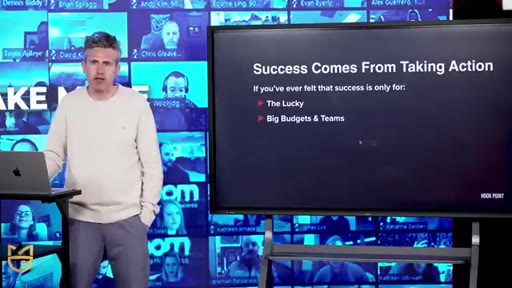
50:23comes from taking action. You can't succeed unless you take that next step. So if you've ever felt that social media success and virality is only for the lucky,
50:34that you need big budgets and large teams, that that you need a sexy industry or celebrity status, or that you need to constant post, be posting, or have some insider knowledge
50:45CTAto succeed, just remember that these are all lies that are holding you back. The key here is storytelling.
50:53CTAJust simplify it. If you focus on storytelling, you will have the success that you look for.
50:58CTASo as a big thank you, if you guys wanna get access to my recent book for free, the guide's going viral, you can just screenshot that QR code.
51:08CTABut I wanna appreciate appreciate everybody staying here until the end and listening to this. I I really appreciate it, and thank you. And I really look forward to seeing your content in my feed and having success.
51:20CTASo thank you again. Truly appreciate it.
— full transcript
§ 05 · For Joe

Format-first beats production-first. Every time.

Brendan Kane's Hookpoint playbook

Pick one storytelling format that matches your expertise, commit to mastering it, and stop trying to hack algorithms you should be partnering with.

  • The format is the container, your expertise is the content inside. 'Is It Worth It?', 'Visual Metaphors', 'Two Characters One Light Bulb' — identify your equivalent before you film anything.
  • Joe's 'Killing Excuses' two-character persona-swap is already a named format in Kane's 300+ taxonomy. The structure exists. Now systematize and repeat it with consistent production cadence.
  • Use Kane's four performance drivers as a pre-publish checklist: contrast, pacing, genuine reactions, authenticity. Score any piece before posting.
  • The Generalist Principle is the key to breaking a niche ceiling. Ask 'what experience do I want the viewer to have?' before 'what do I want to achieve with this post?'
  • Stop treating posting frequency as a proxy for effort. One well-crafted piece beats seven mediocre ones — Mark Rober posts once a month and gets 300M views a year.
  • The IKEA Effect is the best frame for selling any coaching or done-with-you offer: you do not need experience, you need the right system. Use this in JoeFlow and LFB Line positioning.
§ 05 · For You

You do not need to go viral. You need to be found.

If you are a creator or business trying to grow

Virality is not a lottery ticket — it is a skill you can learn, and the first step is picking a storytelling format that matches what you are already good at.

  • Stop chasing trends. Find one storytelling format that fits your expertise and repeat it until you have mastered it.
  • Your subconscious detects staged vs. genuine in milliseconds. Authenticity outperforms production value — every case study in this talk proves it.
  • Before your next post, ask three questions: Does it solve a real problem? Does it tell a real story? Will someone watch it all the way through?
  • The algorithm is not your enemy. It rewards content that people actually watch. Become a better storyteller and the algorithm works for you, not against you.
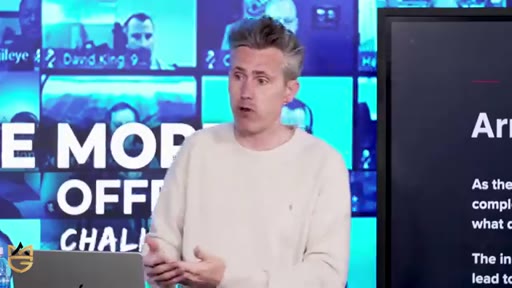
§ 06 · Frame Gallery

Visual moments.