
The bait, then the rug-pull.
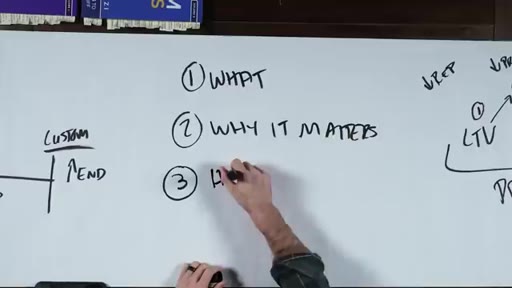
Before Alex Hormozi says anything else, he puts the diagnosis on the table: your business is hard because your customers are wrong. In the first fifteen seconds he promises to break down what that means, why it matters, and exactly what to do about it — then he does exactly that, in order, for the next twenty-six minutes.
What the video promised.
stated at 00:04 "I'm gonna break down what that really means, why it matters, and why it's probably holding you back, and then finally, what to do about it in terms of how to actually make the transition." delivered at 17:40
Where the time goes.

01 · What: the wrong avatar
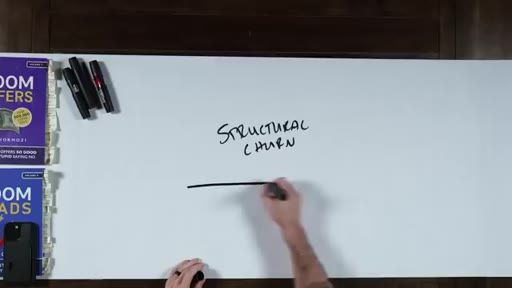
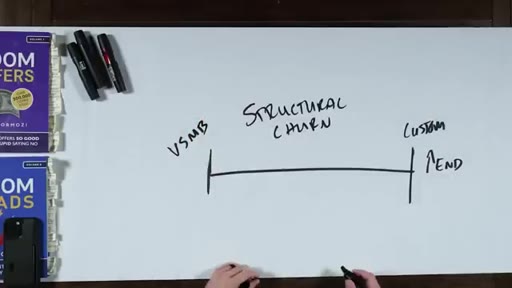
Cold open diagnosis. Agency example: selling $1,500/mo services to small businesses who cancel marketing when revenue dips. Introduces structural churn via gym CRM story (3% monthly = 30% annual death rate). Barbell model: custom for high-end only, templated/DIY for SMBs. The deadly middle.
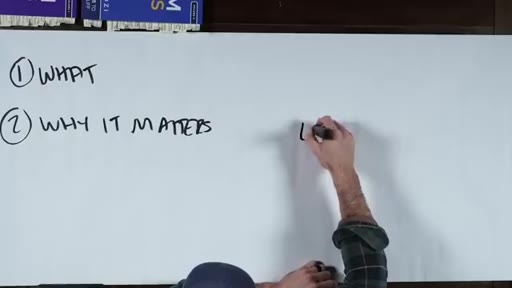
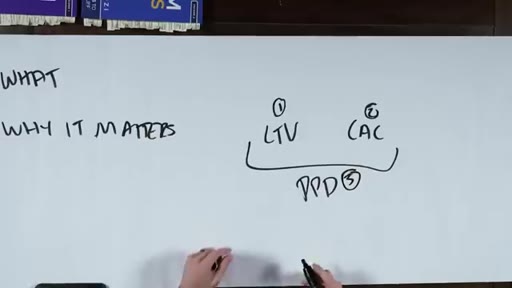
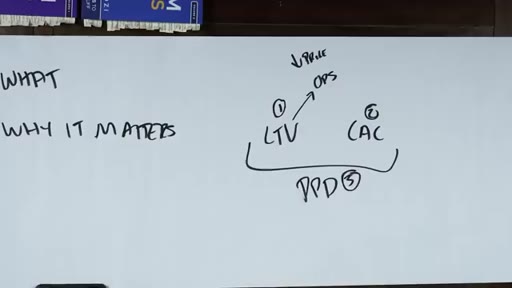
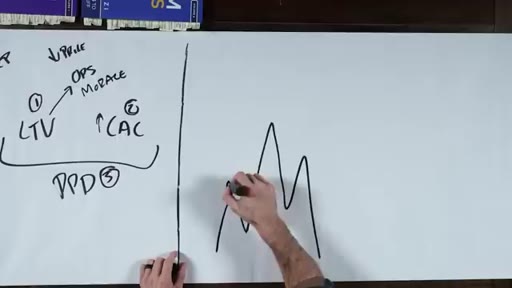
02 · Why it matters: LTV/CAC/payback cascade
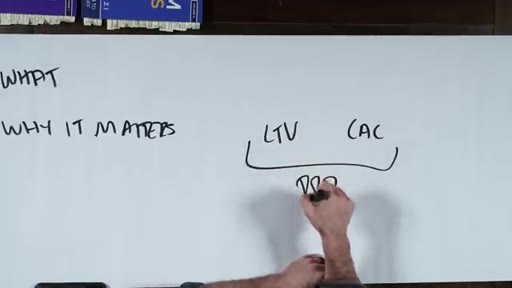
Wrong customers simultaneously crater LTV (operational strain + price compression), raise CAC (word-of-mouth destruction), and extend payback period (cash conversion cycle slows). Business stops scaling. Team morale destroyed by revolving-door onboarding/offboarding.
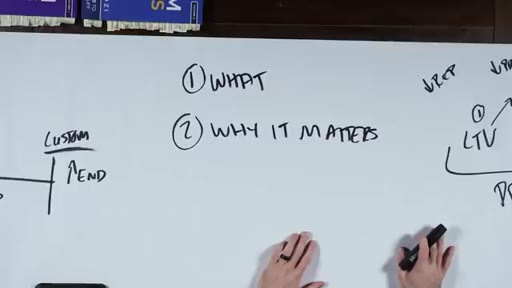
03 · The recap + mid-video CTA
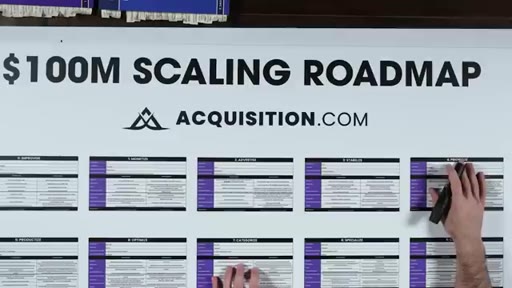
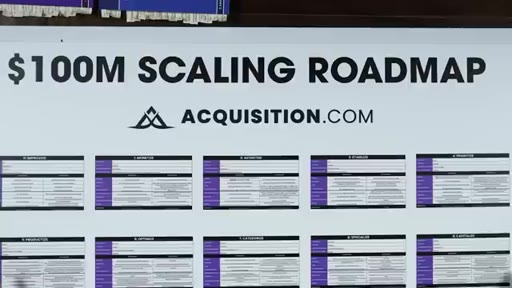
Verbal recap of WHAT and WHY. Acquisition.com scaling roadmap plug — free tool. Workshop invite for businesses doing $1M+.
04 · The emotional block + local maximum
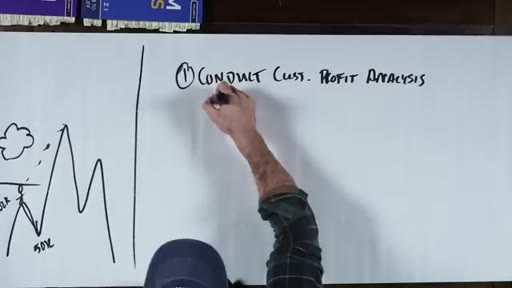
Why this is hard emotionally: bills, payroll, ego attachment to current revenue. Local maximum concept — sometimes you must go backward to find the real peak. Rule: if something has to happen eventually, do it today.
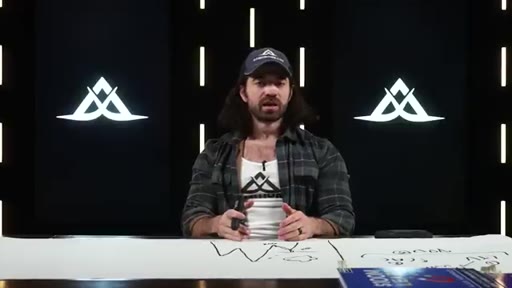
05 · The 5-step fix
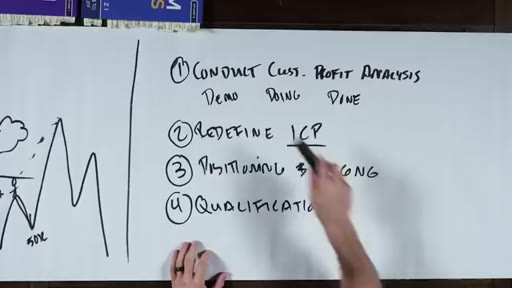
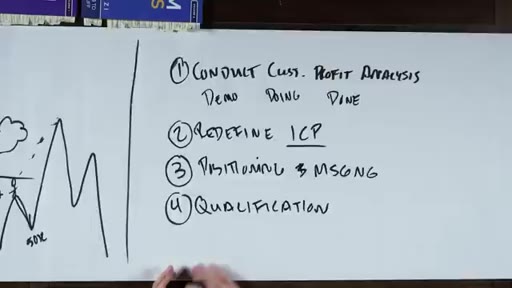
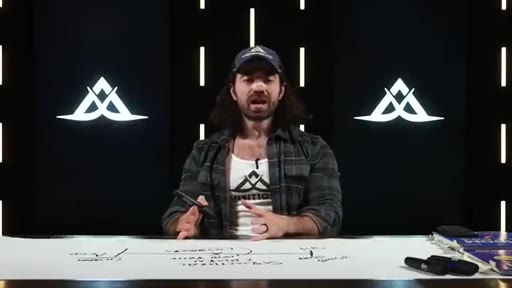
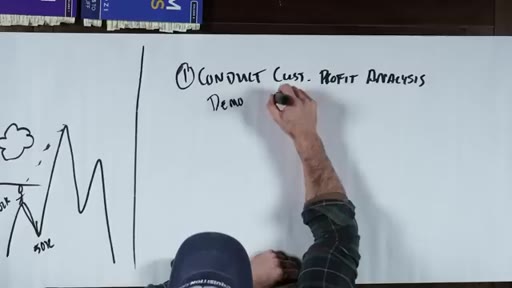
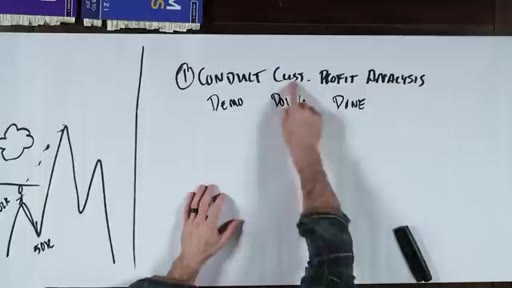
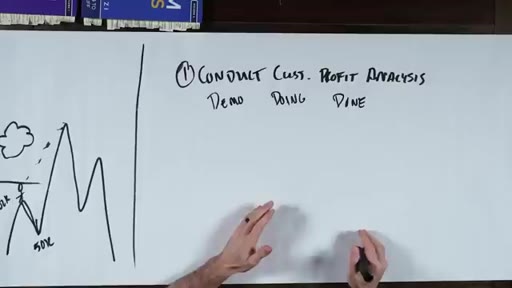
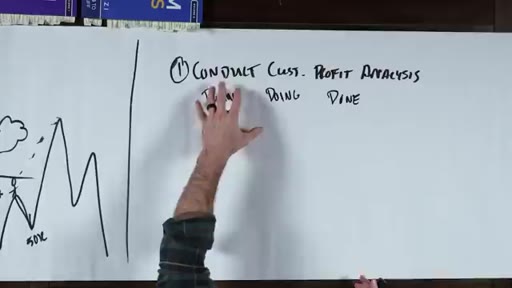
Tactical whiteboard section. (1) Customer profitability analysis: Demo/Doing/Done framework. (2) Redefine ICP. (3) Align positioning and messaging. (4) Qualification — say no. (5) Stop selling brokies — cap percentage, phase out.
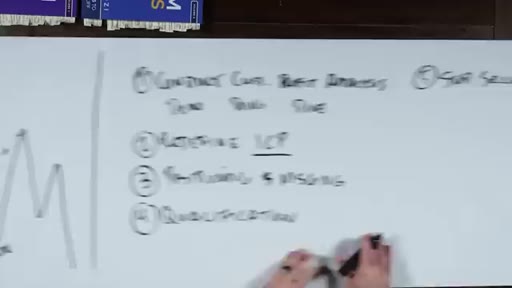
06 · The transition + leadership responsibility
Executing the pivot: decrease bad-customer slice while growing good-customer slice. Hard truth about layoffs — you made the mistake, pay the burden, leave doors open. Chess metaphor: you cannot win without sacrificing pawns. Closes: solve for customers who don't want to cancel.
Visual structure at a glance.


Named ideas worth stealing.
Structural Churn
Churn caused not by bad delivery but by customers whose businesses fail. Gym CRM example: 3% monthly churn = 30% annual customer death rate regardless of service quality. Creates a hard retention ceiling.
The Barbell Rule
- Custom — high-end only, full service
- Templated/DIY — SMB/prosumer, self-paced
- DANGER ZONE — mid-price to small customers
Two viable positions in any service market: custom for buyers who can afford it, or templated/DIY for small buyers. The mid-price/mid-touch middle is where service businesses die.
LTV/CAC/Payback Period Cascade
- LTV falls (operational strain + price compression)
- CAC rises (negative word-of-mouth, rising ad costs)
- Payback period extends (cash conversion cycle slows)
- Growth stops
Wrong customers degrade all three core acquisition metrics simultaneously, creating a compounding spiral that makes scaling impossible.
Local Maximum
You have climbed the hill you were on, but a higher peak exists across a valley. You cannot reach it without going down first. Ego attachment to current revenue prevents the necessary backward step.
Customer Profitability Analysis: Demo / Doing / Done
- Demo — demographics: who are they?
- Doing — behaviors on entry: what state were they in when they came in?
- Done — actions they took inside your program that correlate with success
Three-axis framework for identifying your best 20% of customers. Find who they are, what state they arrived in, and what they did that made them successful. Then clone that profile as the new ICP.
The 5-Step Customer Transition
- Conduct customer profitability analysis (Demo/Doing/Done)
- Redefine ICP
- Realign all positioning and messaging top to bottom
- Implement qualification — actively say no to bad-fit buyers
- Stop selling brokies — cap percentage, phase out, eventually eliminate
Sequential process for transitioning a service business from a bad-fit customer base to an ideal one without killing cash flow.
Lines you could clip.
"If you try to build a big business off of small businesses, it's basically having a terrible foundation. It's building a castle on a foundation of sand."
"You never wanna sell to somebody who wants you to be their savior."
"One of the telltale signs of a small business that they suck is they say yes to everyone."
"If I know something has to happen eventually, I might as well do it today."
"If anybody's gonna destroy my business, it's gonna be me."
"How do I sell something that people don't wanna cancel out of? And sometimes the way that you do that is you change who you're selling."
How they spent the runtime.
- 13:15 – 14:30 · Acquisition.com scaling roadmap (own product) + workshop
Things they pointed at.
How they asked for the click.
"You can go acquisition.com/roadmap and you get this whole thing for free."
Mid-video, sandwiched between WHAT/WHY and the solution section. Uses the stage-four diagnosis as a natural lead-in. Low-pressure, free resource. Workshop upsell on thank-you page.
Word for word.
Stop selling to people who can't afford to stay.
The ceiling on your revenue is the ceiling on your customer's business — fix the customer, fix the ceiling.
- Run the Demo/Doing/Done analysis on your actual customer data before changing any offer.
- Pick a side on the barbell: custom (high-touch, high-price, real businesses) or templated/DIY (SMBs at self-serve). The middle kills margins and morale.
- If structural churn applies to JoeFlow (small creators who cancel when money is tight), the real ICP may be agencies, power-user freelancers, or lifetime-license buyers — not monthly subscribers.
- Price for your best 20%, not for the median prospect. The good customers will pay more; the bad ones self-select out.
- A revenue dip now beats a compressing business in 18 months. Do it on purpose.
- The local maximum concept is a permission slip for any pivot you already know you need to make.
Why your freelance or consulting business might be stuck.
The hardest thing to see is that your clients are the problem, not your effort.
- If your best clients and your worst clients are paying roughly the same price, you are subsidizing the bad ones.
- Track which clients have ever asked for a discount, an extension, or a refund. That list is your structural churn risk.
- Before spending on marketing or hiring, ask: would doubling down on the top 20% of clients (and raising prices) make the business healthier?
- Saying no to a client who can't afford you is not a lost sale — it's avoided debt on your time and reputation.
- Going from $80k to $50k in revenue while cutting bad clients is not failure. It is the down-slope before the real peak.