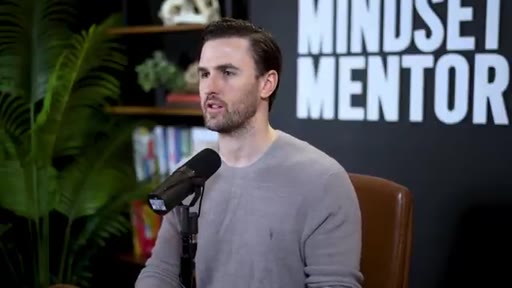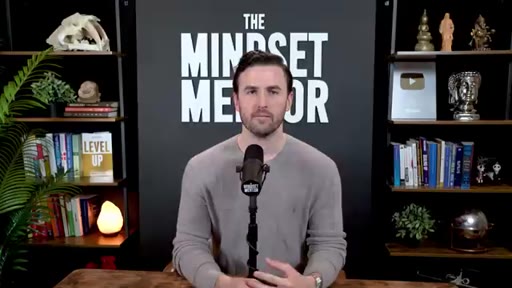
The Mindset Mentor Podcast · Youtube · 20:40

How to Stop Feeling Anxious about Anxiety

A 20-minute solo breakdown of why anxiety misfires in modern life and the body-first, thought-second protocol to interrupt it.

Posted
January 27th 2025
1 year ago
Duration
20:40
Format
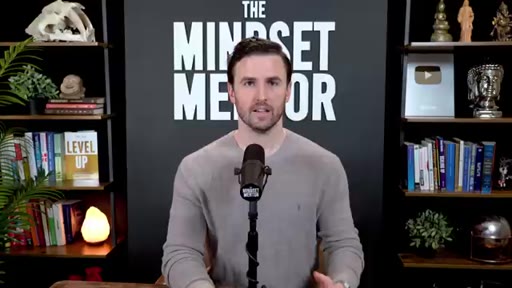
Talking Head
educational
Channel
TM
The Mindset Mentor Podcast
§ 01 · The Hook

The bait, then the rug-pull.

Most people want to eliminate their anxiety entirely. The Mindset Mentor argues that is the wrong goal — and that misunderstanding the mechanism is exactly why the anxiety keeps compounding.

§ · Chapters

Where the time goes.

00:00 – 00:54

01 · Cold open + podcast intro

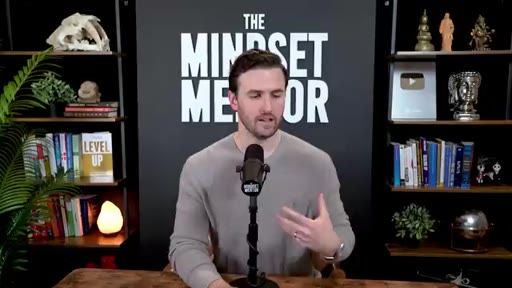
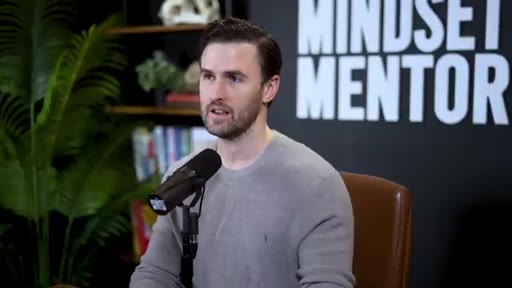
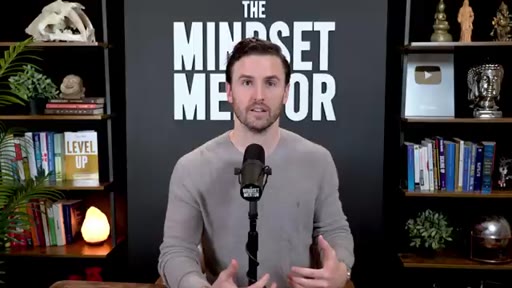
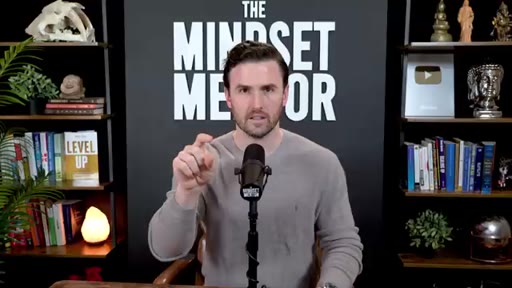
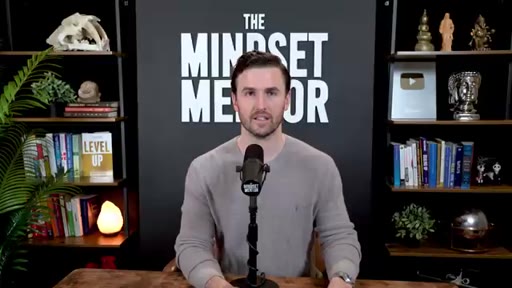
Host challenges the goal of eliminating anxiety; podcast logo card sting.
00:54 – 03:20

02 · What anxiety actually is

Definition: brain projecting into the future to prepare the body for perceived threat. Core belief: 'I am not safe.'
03:20 – 06:30

03 · Why anxiety misfires in modern life

Six concrete scenarios where the threat-response fires on non-threats: boss email, social events, health googling, being late, mom calling.

06:30 – 08:09

04 · Strategy 1 — Deep breathing

Fight/flight shuts down executive function; 5s in / 10s out activates the relaxation response and must happen before any cognitive work.
08:09 – 12:52

05 · Strategy 2 — Cognitive restructuring

Three-step CBT sequence: identify the anxious thought, challenge its accuracy (97% of worries don't materialize), replace with realistic alternative.
12:52 – 17:22

06 · Strategy 3 — Exposure therapy

Name the fear, then systematically increase contact with it. Extended public-speaking example: read aloud -> practice at home -> practice in the actual room.
17:22 – 19:19

07 · Lifestyle levers

30-min daily exercise, whole-food nutrition (cut caffeine/sugar/alcohol), regular sleep schedule, reduce screen time.
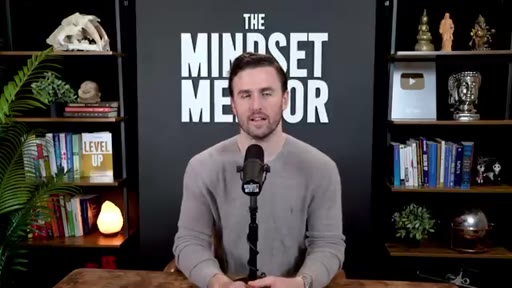
19:19 – 20:40

08 · Close + CTA

Reframe: anxiety is built in, chronic anxiety is the problem. Instagram share CTA. Sign-off.

§ · Storyboard

Visual structure at a glance.

open
podcast sting
definition
breathing strategy
cognitive restructuring
exposure therapy
lifestyle levers
CTA
§ · Frameworks

Named ideas worth stealing.

00:46 model

Threat-Perception Model

Anxiety = brain projecting into the future + body preparing for perceived threat. Core belief underneath: 'I am not safe.' Explains why anxiety fires in non-dangerous modern situations.

Steal for any mindset or mental health content explaining why people self-sabotage
08:09 list

Body-First, Thought-Second Sequence

  1. Breathing (calm the body)
  2. Cognitive restructuring (challenge the thought)
  3. Exposure therapy (build tolerance to the source)

Must-do-in-order protocol: you cannot think clearly while in fight/flight, so physical calming must precede cognitive work.

Steal for any anxiety, stress, or high-performance content
09:30 list

Cognitive Restructuring (3 steps)

  1. Identify the negative thought
  2. Challenge its accuracy
  3. Replace with a balanced, realistic thought

Rooted in CBT; backed by research showing 97% of worries either don't happen or turn out better than expected.

Steal for sales objection handling, negotiation scripts, decision-making frameworks
12:52 model

Exposure Therapy Ladder

Identify the source, name it, gradually increase contact, repeat until the body stops treating it as a threat.

Steal for any fear-of-failure or confidence-building content
§ · Quotables

Lines you could clip.

00:46
"Anxiety is our brain projecting into the future and telling our body, get ready."
clean standalone definition, no setup needed → TikTok hook
02:08
"At the core of anxiety is the thought of I am not safe. Really, that's what it is."
reframe moment — sounds counterintuitive until he explains it → IG reel cold open
11:24
"Psychologists have found that 85% of what we worry about never happens. Never."
striking statistic with a one-word punch at the end → newsletter pull-quote
09:09
"The fastest way to change your state is to go back to your breath every single time."
actionable, repeatable, no setup needed → TikTok hook
§ · CTA Breakdown

How they asked for the click.

19:57 next-video
"Share it on your Instagram stories and tag me in it. Rob Dial Jr."

Soft social share ask framed as a favor; no product pitch. Followed by YouTube next-video end card.

§ 04 · The Script

Word for word.

HOOK opening / re-engagementCTA the pitch metaphor analogy
00:00HOOKAnxiety is on the rise, but anxiety itself is very natural. And so people are like, I wanna get rid of my anxiety.
00:08HOOKAnd I'm like, no. You wanna get rid of certain aspects of your anxiety because anxiety is a natural response to fear, into stress, into uncertainty,
00:18HOOKand more specifically, perceived threats.
00:24HOOKToday, I'm gonna be talking about your anxiety and how to stop feeling so anxious about your anxiety. I'm gonna take you through the ultimate guide to beating your anxiety, and we're also gonna talk about why anxiety exists in the first place. And if you can understand
00:39HOOKwhy anxiety exists and why it's in us, it makes it easier to work through it. And so, you know, I'm gonna give you evidence based strategies to overcome your anxiety. And there was a a study that was done in the the Journal of Anxiety Disorders,
00:54which has gotta be a really fun journal to read. The Journal of Anxiety Disorders have found that anxiety has gone up over three hundred percent over the numbers that they had pre pandemic levels.
01:07And so anxiety is on the rise, but anxiety itself is very natural. And so people are like, I wanna get rid of my anxiety.
01:16And I'm like, no. You wanna get rid of certain aspects of your anxiety because anxiety is a natural response to fear into stress, into uncertainty, and more specifically perceived
01:28threats. And so if you have anxiety when you're walking down, like, you start getting a real anxious feeling when you're walking in the dark going through a
01:39crowded, dark room and you start getting anxious. Well, maybe that's something that's telling you you should be anxious so that you protect yourself.
01:45Or if you're going through a dark alley and you get anxious, that's a good thing. But when you're anxious and feel anxiety when you're sitting in your house watching TV or just
01:57hanging out, probably not the best time to be anxious. There's nothing to really fear in that moment. And so it's a good thing for humans because what it is is it is our brain
02:06projecting itself into the future and then telling our body to prepare for some sort of possible threat. So think about that for a second.
02:15Anxiety is our brain projecting into the future and telling our body, get ready. So at the core of anxiety is the thought of I am not safe.
02:28Really, that's what it is. No matter what form of anxiety shows up, it's the thought of I'm not safe. I need to prepare my body for some sort of attack
02:37or to be able to run or to be able to fight or to be able to freeze. And so your safety in some way feels threatened, believe it or not.
02:48And so the question is, what does it feel threatened by? That's what you really need to figure out. You need to take a step back when you're feeling anxious and saying, like, where do I not feel safe right now?
02:57So if you get I'll give you a couple of examples. You get anxious about public speaking. It might show up in sweaty palms and your heart's racing,
03:05and you start to think about, oh my gosh. This is this is I'm getting really anxious about this public speaking that I need to do. The fear behind it might be, I'm not safe because I might be humiliated,
03:16or I have to give a a presentation at work. I'm not safe because what if I screw up this presentation in public speaking, and then I get fired,
03:25and then I lose my house, and then I go broke, and they live on the street. That's my safety being taken from me in some sort of way. So my body's preparing for some form of attack.
03:35If you start to get real anxious when you go out to social events, it might be like, I'm not safe.
03:42I may might say something wrong, or I might be rejected, or I might be kicked out of the tribe, and so I don't feel safe. And so I I have this feeling of anxiety when I think about social events.
03:53Maybe it's, uh, you were raised by a mother who, like, was really, really worried about health concerns. And so, you know, you maybe get anxiety about your health, and so how it shows up is you're, like, excessively googling anytime your elbow hurts or something like that, and so you get body scans or you're doing frequent doctor visits all the time.
04:13And it might it was like, I'm not safe because there might be something wrong with me. There must be something wrong with me. I gotta make sure that anything that's wrong with me, I've gotta fix.
04:23You know, maybe you you're you're getting really anxious about being late somewhere, so you're rushing, and you're frantic, and you're sweating, and your heart's racing, and you're irritable. And it's like, I'm not safe because if I show up late, nobody's gonna everyone's gonna see that I'm late.
04:38Others might think that I'm irresponsible, and then they might not wanna hang out with me. So once again, I'm getting kicked out of the tribe again in some sort of way. Maybe
04:45you're sitting at work and you're having a great day, you're just putting your stuff together and just writing your emails. You're sitting there, and then bing, a notification from your boss pops up, and it says, hey.
04:57Are you free today at four? And you just get anxious immediately. And you're like, oh my god.
05:03I'm not safe because I might get fired. There must be something that I did wrong. Maybe they're downsizing.
05:08Maybe I'm not good enough in some sort of way. I can't lose my job because I gotta feed my children. I've gotta feed myself.
05:13I've gotta pay my mortgage. Or maybe you're you're sitting there, and your your your phone buzzes, and it says, mom calling. And you get all anxious.
05:23You get all tight. You're you're you can feel yourself starts getting anxious. And you're like, oh my god.
05:28You know, I'm not safe. Maybe there's something going on with her. Maybe there's something going on with dad.
05:32I might have to deal with something stressful. Maybe she tells me that, you know, dad fell down the stairs. And it's like, there's all of these safety and these fears that are there.
05:40And so in some sort of way, when you have these anxious feelings, it's you feel like there's a threat in your environment in some sort of way. But, you know, it's good to have anxiety
05:51when you need it, like I said, when you're walking through a dark alley to have those anxious feelings to prepare you just in case. It's not good when it's, an everyday, all day kind of thing. You know?
06:02Chronic anxiety interferes with your daily life, and we need to address it, and it can be overcome. That's the best part about it.
06:10Anxiety almost always comes from your thoughts. So, really, when we feel anxious, we need to take a step back and be like, what was I just thinking?
06:19And so we're gonna go over some research backed techniques to kind of help you overcome that anxiety, those anxious thoughts, and to be able to pull your body out of that anxiety that that anxious feeling that you have. And so
06:31when you look at anxiety, first off, the definition of anxiety itself is a feeling of unease such as worry or fear that can range from mild to severe. It is normal and essential human emotion that serves as an adaptive response to danger
06:46or challenges. That's the definition of anxiety. So let me say it one more time just so you can understand the actual definition.
06:52It is a feeling of unease, such as worry or fear, that can range from mild to severe, and it is normal and essential human emotion that serves as an adaptive response to danger or challenges. See how we think that there's some sort of danger?
07:09And so anxiety can show up in two different ways for you. It can be emotional symptoms, worry, fear, irritability,
07:16difficult concentrating, restlessness. It can be physical symptoms,
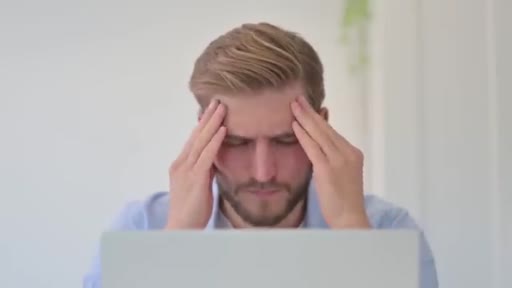
07:21muscle tension, headaches, sweating, trembling,
07:25rapid heartbeat, shortness of breath. You can even have gastrointestinal issues. So that's how it shows up in the body.
07:33And so let me just show you a few ways that you can kind of let it out of the body. Okay?
07:39The first strategy is a relaxation technique for reduction of your anxiety. You've heard me say it over and over and over again.
07:46Deep breathing. When your emotion is high, in some sort of way your logic is low, you're actually not thinking very well. And so when you're really anxious, you tap into your fight, flight, or freeze,
07:58and that's where your animalistic survive survival part of your brain turns on, and your thinking and processing and executive
08:07decision making turns off. And so get yourself feeling a little bit better by using the next few strategies where you can calm yourself back down so that you can think the right way so that you can realize that maybe it's not that much of a threat.
08:22So the first thing I always recommend is deep breathing, because if I'm gonna sit there and go, oh my god. I'm anxious.
08:28What was I just thinking? What am I fearing? Why do I not feel safe?
08:32But, like, I'm not calmed down at this point, it's gonna make it really hard for me to think in a smart way. And so deep breathing exercises help activate your body's relaxation response and in turn reduces your anxiety levels.
08:45And so it's real simple. I always recommend five seconds in, ten seconds out,
08:50and it slows your heart rate down. It releases more carbon dioxide from your body, and it lowers your stress levels. So as soon as you start to notice anxious feeling, immediately go back to the breath.
09:00The fastest way to change your state is to go back to your breath every single time. K? That's the first thing.
09:07You gotta deal with the body. You gotta calm it down. Then we can start to talk about the thinking side of things and how to change it, which goes to strategy number two, which is something called cognitive restructuring.
09:18It's a technique that involves identifying and challenging negative thought patterns or fears that are contributing to your anxiety.
09:27Right? This is where you're gonna be like, well, what was I just thinking? I was thinking this.
09:30You know, email from my boss. I'm definitely getting fired. It's like, well, hold on.
09:36Let me let me not just go down that road. It might be, you know, we he wants to talk with me because I've been doing so well. Might be because of the fact that we have a presentation for a competitor,
09:46uh, to, you know, beat a competitor out in a week or something like that. And so what you wanna do with cognitive restructuring, it's it's rooted in cognitive behavioral therapy, and it's been shown to be effective with treating anxiety disorder specifically.
09:59So the first thing you're gonna do is you're gonna identify your negative thoughts. That's the first step is to become aware of the negative thoughts that fuel your anxiety. Notice when you don't feel good,
10:08become aware of how your body feels, and, usually, you'll start to notice the anxiety inducing thoughts after
10:18you notice your body's reaction to it. Most of the time, our anxiety like, our thoughts around anxiety come under the conscious mind, the subconscious.
10:29So it's like, bing, the email from the boss comes through. Immediately, it's like, almost immediately,
10:37holy shit. I feel anxious. I'm feeling all this anxiety.
10:41You don't even notice the thought that is in between the bing and the body, but there's always some sort of thought. And so you have to understand when you take a step back, when you do the breathing, and then you say, like, what was I just thinking?
10:55You'll usually start to notice the thought after that. You can usually start to use cognitive restructuring. And so what you wanna do, that's the first step, to notice it and all that.
11:04And the second step is to challenge the negative thoughts. Once you identify the negative thoughts, evaluate
11:10the accuracy of these thoughts. Try alternative explanations.
11:15Try another perspective. How valid is your thought that is making you anxious?
11:22You know, psychologists have found that 85 of what we worry about never happens. Never.
11:28Out of the remaining 15%, only 3% of it happens the way that we think that it will. The other 12% of that 15% doesn't happen as bad as we think, which means 97%
11:39of what we think and worry about and have anxiety over and mull over and ruin our day, 97% of it doesn't happen or turns out better than we think that it's going to.
11:51And so it's like, how can I take a step back and use cognitive restructuring to challenge the thought that is giving me anxiety? So that's the second thing.
12:00And number three is to replace your negative thoughts. So after you challenge the negative thought, replace the negative thought with a more balanced,
12:09realistic thought that can help you reduce your anxiety levels. Okay.
12:14I'm starting to notice I'm getting anxious. Why is that? It's because my boss just emailed me.
12:17What was I just thinking? What am I afraid of? Where do I not feel safe?
12:23I feel like maybe my boss is gonna fire me. Okay. Alright.
12:28Is that real? Am I actually gonna be fired? Probably not.
12:32Is there possibly another explanation for why he's sending me an email about wanting to meet with me at 04:00 today? Well, actually, yeah, that does make sense because I was talking to him yesterday about x, y, and z, and maybe he wants to meet with me about it.
12:47Okay. That makes more sense. So that's strategy number two, use cognitive restructuring.
12:52Strategy number three is to use something called exposure therapy. So it's a proven technique that involves gradually and systematically
13:00confronting whatever situations your
13:04situations or objects or thoughts that you fear until the anxiety subsides in some sort of way. And so this process will help you learn that your fears,
13:15most of the time, are pretty irrational, and it allows you to start to tolerate the discomfort of those fears and the anxiety that you're starting to have. And so what you're gonna do is you're going to, first off, identify what's causing your anxiety.
13:30This alone, when you just are able to kind of shine a light on the actual fear or the limiting belief or the, quote, unquote, lack of safety that you're feeling, just being able to kind of put it into words and to identify it helps a lot of people feel less anxious. A lot of people feel
13:48less anxious after they identify it, and people feel less anxious when they take a step back and they find out what they're anxious about, which is real funny because most people think they know what they're anxious about, but then they take a step back and they realize that they're not anxious about that thing. They're anxious about the way that they're perceiving that thing or the thoughts around that thing.
14:07And so you identify your anxiety inducing thoughts, and that alone in turn can make you feel less anxious.
14:14You think that it'll make you feel more anxious, but it actually makes you feel less anxious because you're like, oh, yeah. It's usually not that big of a deal, or it's less of a deal than you thought it was. So
14:24maybe you notice that you've had this, like, underlying feeling of anxiety all week long, and you don't know why. You're like, I've just been feeling it's Thursday, and I feel like I've been anxious the past four days. You're not really sure why.
14:35Okay. We'll take a step back, breathe, realize that you felt anxious
14:41Since what time? When did you start noticing your anxiety? Oh, yeah.
14:47That's right. Since I had the meeting with my boss on Monday, today's Thursday, and on Monday, he told me I'm gonna need to give a presentation for work in two weeks. And I am terrified of public speaking,
14:58and I'm even more terrified to do it in front of the entire company. Okay. So that's the first thing is to identify
15:05the anxious feeling, and then maybe I give myself gradual exposure to this presentation. And so that's why when you're doing public speaking and you have to give a presentation,
15:16try to finish it and then practice it as many times you possibly can. You're trying to expose yourself to it. The same way if someone's, like, terrified of a snake, you don't wanna just take a snake and put it on their lap.
15:27But if you have them in one room on the complete opposite side of the room and on the opposite side of the room, they have a snake, they might start to freak out. But if snake is in the box, it can't get out.
15:37They might start to freak out. They might start to freak out. Gradually,
15:40their body will calm down. Gradually, it'll calm down. You bring it a little bit closer.
15:44Gradually, the body will calm down. This is what exposure therapy is. So you can expose yourself to the thing that's making you anxious.
15:50And so what you do is you finish your presentation, and what you're gonna do is you're gonna read it out loud maybe 10 times the first day. And then what you're gonna do is you're gonna go home, and the next day, you're gonna practice the entire presentation. You're gonna take your slides.
16:04You're gonna put it on your TV at home. You're gonna present it for nobody, maybe your your children's teddy bears when everybody goes to sleep, and you're gonna go through the entire thing.
16:15Practice it in your living room with PowerPoint 10 times. Okay.
16:21That's a little bit more exposure. Okay. I feel a little bit more confident about this.
16:24And then what I'm gonna do is maybe the week before the presentation, I'm gonna stay late at work one night after everybody leaves, and I'm gonna practice it in the room that I will be presenting.
16:38And I'm just gonna practice it 10 times over and over and over again. And then the night before, I'm gonna be practicing it again, and I'm gonna come in early the day of, and I'm gonna practice it before anybody else gets there. And what happens is I've had so much exposure to this presentation.
16:54By the time I actually give the presentation, I've already done it 50 times, and I've done it multiple times in the room that I'm actually giving the presentation. The only difference now,
17:04besides the fact that it's basically memorized, is that there's humans inside of the seats. This is what exposure therapy to your anxiety will look like, and so that's really where where to help you.
17:13And so that's the the three tips to the three strategies to help you with it. Um, there's some simple lifestyle changes that I wanna give you guys to help you reduce your anxiety that are just proven that you can do, if you have more anxiety, this is just ways to help.
17:26First thing is exercise regularly. Physical activity has been shown over and over and over again to reduce your anxiety by increasing your endorphins. It promotes relaxation and improves your overall mood.
17:38And so regular exercise, at least thirty minutes per day, can have really massive long term benefits on your anxiety anxiety reduction.
17:47That's the first thing. Second thing is your nutrition. When you have a really good, well balanced nutrition,
17:52it manages your anxiety as well. If you have too much coffee, it gives you more anxiety. If you have too much sugar, gives you more anxiety.
17:59If you eat too much, you know, bags of chips and shit food, it's gonna give you more anxiety. So try to eat more whole foods. Try to limit your caffeine.
18:07Try to limit your sugar. Try to stay hydrated. Dehydration can actually increase
18:12your anxiety levels. So many people just don't drink enough water. Like, so many of your problems will be fixed if you just drink more water.
18:19Your anxiety, your, you know, fat, you might have less fat if you end up doing it. You might have better bowel movements.
18:26So stay hydrated. Drink less alcohol. That's another thing as well that will help you.
18:32So that's number two. Pay attention to your nutrition. Number three, prioritize your sleep.
18:36Sleep is really important. Uh, poor sleep can worsen your anxiety a lot. I don't know about you, but if I have a really bad night of sleep, sometimes I notice that I'm more anxious throughout the day.
18:47And so prioritize your sleep. Have some sort of regular sleep schedule. And then the fourth thing that is huge that I recommend that you guys do is spend less time on your phone, spend less time in front of your TVs.
18:57There's been study after study after study that has shown that people that spend more time in front of screens have more anxiety than those that don't. Put your phone away. Get away from your TV.
19:07Go for a walk in nature. Be around people who you wanna spend time with.
19:13CTAAll of these things help with your anxiety as well. And so I just really think that it's important for you to understand that, first off, anxiety is not a bad thing. Chronic anxiety is a bad thing.
19:21CTAAnxiety is built into you for a reason. It is a protection mechanism. When it is happening when you're sitting at your desk at work, what is that protection mechanism trying to protect you from?
19:32CTAAnd then also to understand that anxiety is something that we can all work through. As long as it's not a chronic, like, actual anxiety disorder
19:40CTAthat is something that's happening inside of your brain that is incurable or whatever it might be.
19:46CTAUsually, most of us are just anxious because of our thoughts and because it's just simple adjustments that we can make in our lives. And so that right there is the, uh, ultimate guide to stop feeling anxious about your anxiety. So if you love this episode, please do me a favor.
19:59Share it on your Instagram stories and tag me in it. Rob Dial Jr, r o b d I a l j r. Um, there are many people, I'm sure, that follow you on all of your platforms that have anxiety, and I just wanna help them hopefully
20:11be able to free themselves from that. So if you would do that, um, it's the best way of saying thank you for the podcast and putting it out there for you. And so if you do that, would greatly, greatly appreciate it so we can impact more people's lives.
20:21And with that, I'm gonna leave the same way leave you every single episode. Make it your mission to make somebody else's day better. I appreciate you, and I hope that you have an amazing day.
20:28Hey. Based off of you watching this video, YouTube thinks that this video right here is the best video for you to watch to help you learn and grow and improve yourself right now. So
20:39click that.
— full transcript
§ 05 · For Joe

Anxiety is a misfiring alarm, not a character flaw.

WHAT TO LEARN

The reason most anxiety interventions fail is that people try to think their way out before they have calmed the body down enough to think clearly.

  • Every anxious episode contains a core belief — 'I am not safe' — and identifying the specific safety threat (job loss, rejection, humiliation) shrinks the fear by making it concrete and examinable.
  • Breathing must precede cognitive work: fight-or-flight literally shuts down executive function, so challenging thoughts before calming the body is physiologically backward.
  • The 5-in/10-out breathing ratio works because a longer exhale releases more carbon dioxide and activates the parasympathetic response faster than equal-ratio breathing.
  • Cognitive restructuring is not positive thinking — it is accuracy checking. Research shows 97% of worried-about events either do not happen or resolve better than feared.
  • Naming the fear out loud often reduces it immediately: most people discover under examination that the real fear is one level deeper than they thought.
  • Exposure therapy works by volume: repeating a feared situation enough times teaches the nervous system that survival is the norm. Fifty practice reps in the actual room removes the novelty that fuels the fear.
  • Chronic anxiety has four lifestyle accelerators — caffeine, sugar, poor sleep, and heavy screen use — all of which raise the baseline nervous-system activation that makes situational triggers tip faster.
§ 06 · Frame Gallery

Visual moments.