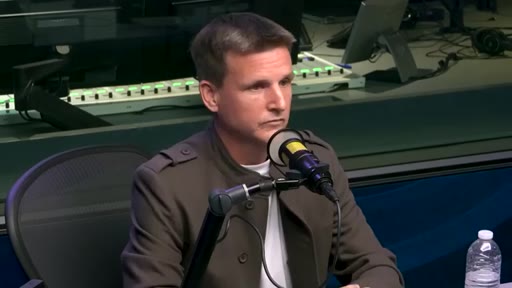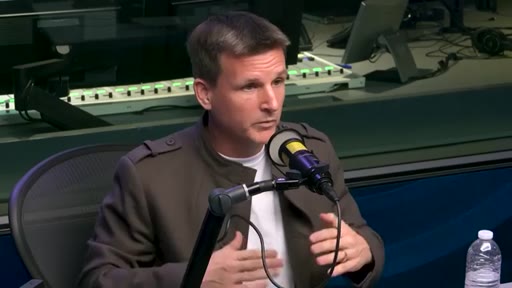

The bait, then the rug-pull.
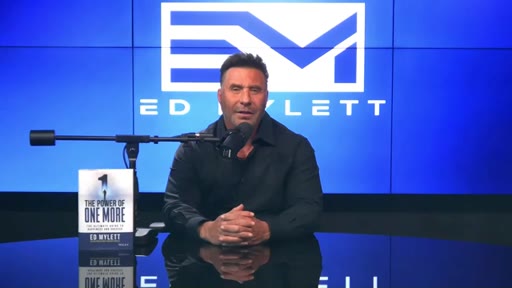
Before the episode even starts, Ed Mylett plays the payoff -- McConaughey's voice cutting through with the clearest articulation of identity-by-subtraction most people have never heard stated that way. It's a producer's move: hook with the substance, not the promise.
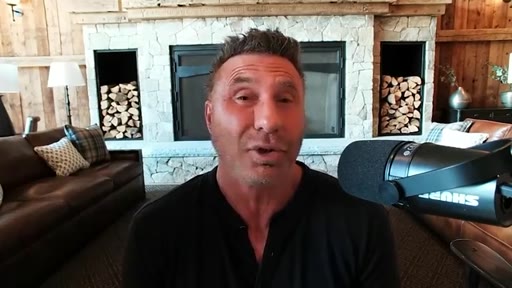
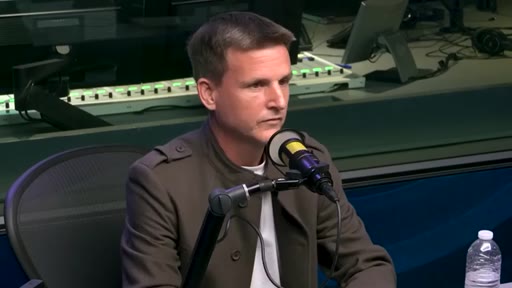
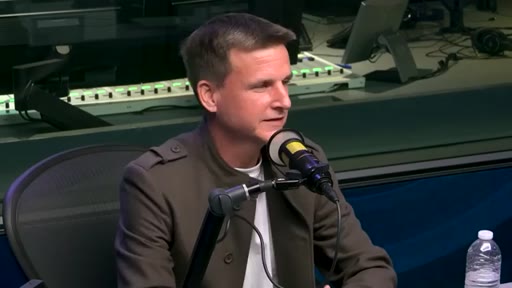
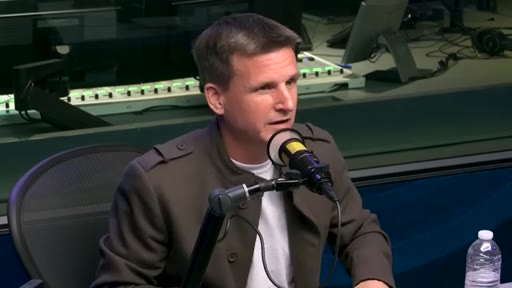
Who's talking.
Where the time goes.
01 · GrowthDay Ad + Teaser Clip
Sponsor message then best-quote teaser. Hooks with payload before the episode starts.
02 · Identity as Elimination
McConaughey: identity uncovered by eliminating what drains you. ROI metaphor for habits and people. Green lights = being cool to your future self. Science of Satisfaction = engineered habits + consistency.

03 · Need vs. Want -- The Hollywood Story
McConaughey sleeping on a producer's couch, desperate for an agent. Sent to Europe on motorcycle. Returns detached, lands William Morris on first meeting. Need repels; want attracts.

04 · Need in Love and Relationships
Mylett extends need/want to dating. McConaughey on meeting Camilla: only possible once he stopped hunting and became okay with possibly not finding her.

05 · Modeling the Opposite -- Parents and Chaos
McConaughey parents: married 3x, divorced 2x. His mother became great mom by doing opposite of her horrific stepmother. Process of elimination applied to family identity.

06 · Joy vs. Happiness
Happiness = result-oriented if-then, perpetually moving target. Joy = verb, doing what you're fashioned to do. Finish line bumped to unreachable place. Dallas Buyers Club: McConaughey and Jared Leto did not introduce by real names until wrap day.

07 · Third-Person Living and Outcome Obsession
Dyrdek: society has us living in the third person, performing for the jumbotron. Fear of missing a putt = fear of what people will think. Singular process immersion = vacation.

08 · Sponsor Breaks (Babbel / BetterHelp)
Mid-episode sponsor reads by Mylett.

09 · Rob Dyrdek's Time Matrix System
Rhythm of Existence (built 2015): tags every hour, Google Calendar script produces time dashboard. 8,760 hrs/year. Optimized TV production from 60 exhausting episodes to 336 at 4% of his year.

10 · Meeting Optimization and Practical Application
Mylett: why are all meetings one hour? Moved to 15-minute meetings. Dyrdek: your availability creates scattered schedules in everyone around you.

11 · Capacity vs. Time -- The Second Edge
Designing time is one edge; knowing your physical and mental capacity is the other. Fatigued decisions are worst decisions.

12 · One Million Hours -- Living to 114
Dyrdek's goal: 1,000,000 hours = 114 years, 54 days. Intention-setting as self-fulfilling prophecy. Data proves optimizing for balance elevates output.

13 · The Human Experience -- Closing
McConaughey closes: you can only assess wellbeing in the present moment, in your own mind. Feel the vividness and richness of being alive.
Lines you could clip.
"The reasonable first step to figuring out who we are is let's define who we're not."
"Being cool to your future self."
"You need it too much. Hollywood smells need, and you're one and done, buddy."
"When I quit hunting, that's when she showed up."
"You are the machine, and you design the machine to go from thing to thing to thing -- exhausted."
"I spend nearly as much time shooting a television show as I will picking up my kids and taking them to school for the year."
Things they pointed at.
Word for word.
Steal the system, not the lifestyle.
Dyrdek's time matrix is not a productivity hack -- it's a total redesign of your operating system, and you can start with one question: how long does this actually need to take?
- Tag every hour for one week -- not to judge yourself, just to see where the time actually goes versus where you think it goes.
- Convert everything to percentages of your year (8,760 hours) -- suddenly spending 30 mins/day on X becomes 3.4% of your waking year. Changes what you commit to.
- Before saying yes to anything new, calculate its second and third-order time cost -- the tail is always longer than the headline.
- Every meeting defaults to one hour because of calendar defaults. Ask: what's the minimum time this needs? Run it shorter first.
- For batching content: Dyrdek's 6-episodes-in-a-day model only worked after he stripped every piece of friction from pre-shoot, shoot, and post-shoot flow. Map your own friction first.
- McConaughey's process-of-elimination framework applies directly to your stack: what tools, clients, projects, and commitments don't compound? Cut those first.
- The need-repels principle is live in creator work -- desperate platform-chasing reads in the content. Head-down process is both better content and better energy.
You can design your life instead of surviving it.
You're not disorganized -- you just haven't been taught that time is a design problem, not a discipline problem.
- Identity clarity starts with subtraction: list the habits, relationships, and commitments that drain you more than they give back. That list is the first draft of who you actually are.
- Joy and happiness are not the same thing. Chasing happiness (the finish line) is exhausting. Joy is already available in whatever you're doing well today.
- Need repels -- in jobs, in relationships, in friendships. The moment you can genuinely be okay without the thing you want, you become far more likely to get it.
- You don't need a 57-minute system -- start by asking: what is one hour in my week I'm spending on something that doesn't feed me? Cut that first.
- Capacity is real. If you feel overwhelmed, you're not weak -- you've exceeded a hard limit. Rest isn't a reward; it's part of the operating system.